
Watching your cat strain at the litter box, vomit undigested food, or refuse meals because of a sensitive gut is heartbreaking and frustrating. IBS in cats isn’t a single diagnosis — it’s a complex inflammatory response that demands the right balance of highly digestible protein, targeted prebiotic fiber, and minimal trigger ingredients to calm the gastrointestinal tract.
I’m Mo Mahin — the founder and writer behind Furric. I’ve spent years analyzing veterinary nutritional standards, evaluating ingredient safety profiles, and cross-referencing thousands of aggregated pet-owner reports to identify which foods genuinely support cats with irritable bowel syndrome.
This guide filters the overwhelming market down to five proven formulas so you can stop guessing and start feeding with confidence. To help you choose the best foods for cats with ibs, I’ve broken down exactly what to look for in each product and why it matters.
How To Choose The Best Foods For Cats With IBS
Selecting a diet for a cat with IBS goes beyond marketing claims. You need to match the food’s ingredient profile to your cat’s specific triggers, which often means prioritizing digestibility over flavor variety.
Protein source and limited ingredients
IBS cats often react to common proteins like chicken and beef. A limited ingredient diet (LID) with a single novel protein — such as duck, turkey, or venison — reduces the chance of an immune-mediated flare-up. Check that the food lists one primary meat source and avoids poultry by-product meals.
Prebiotic fiber and stool quality
Not all fiber is equal for IBS. Inulin and psyllium husk gently regulate transit time without fermenting too aggressively, which can worsen gas and bloating. Look for a blend that includes both soluble and insoluble prebiotics to promote formed, consistent stools rather than loose or watery output.
Form and moisture content
Dry kibble can be too abrasive for some inflamed GI tracts. Wet pate formulas deliver higher moisture, which eases digestion and maintains hydration — vital for cats with chronic diarrhea. If your cat tolerates dry food, choose a ring-shaped or textured kibble that encourages slower eating and reduces vomiting.
Quick Comparison
On smaller screens, swipe sideways to see the full table.
| Model | Category | Best For | Key Spec | Amazon |
|---|---|---|---|---|
| Hill’s Prescription Diet GI Biome | Prescription | Clinical digestive support | ActivBiome+ prebiotic technology | Amazon |
| Blue Buffalo Basics Mature | Limited Ingredient | Senior cats with multiple sensitivities | Turkey & Potato single-protein formula | Amazon |
| Royal Canin Digestive Care | Veterinary Diet | Slower eating and stool regulation | Ring-shaped kibble for slow consumption | Amazon |
| Purina Pro Plan Sensitive Duck | Wet Pate | High-moisture nutrition plus skin relief | Duck-based novel protein pate | Amazon |
| Purina Cat Chow Gentle | Economical Dry | Multi-cat households on a budget | Turkey-based prebiotic kibble (4-pack) |
Amazon |
In-Depth Reviews
1. Hill’s Prescription Diet Gastrointestinal Biome Stress

Hill’s GI Biome is formulated with proprietary ActivBiome+ ingredient technology, a blend designed to rapidly activate beneficial gut bacteria and restore microbiome balance in IBS cats. Clinical data shows it can promote regular healthy stool in as little as 24 hours, which is critical for managing stress-induced flare-ups common in irritable bowel syndrome.
High levels of omega-3 fatty acids (DHA and EPA) further reduce gut inflammation and support a healthy coat.
As a veterinary prescription diet, it requires a vet consult, ensuring your cat is put on a therapeutically dosed formula rather than a general sensitive-stomach recipe. This is the most targeted choice for moderate to severe IBS.
Why we love it
- Clinically proven 24-hour stool improvement for IBS cats
- Stress-reducing hydrolyzed casein supports emotional well-being
- High DHA and EPA reduce GI tract inflammation
Good to know
- Requires a prescription from your veterinarian
- Contains chicken meal; not suitable for confirmed chicken allergies
2. Blue Buffalo Basics Mature Grain-Free Dry Cat Food

For cats with confirmed chicken or grain sensitivities, this limited ingredient formula uses turkey as a single animal protein source and potato as the carbohydrate base — both easy on the inflamed lining of an IBS-affected gut. The LifeSource Bits provide antioxidant support to boost immune function without adding unnecessary fillers.
It is specifically labeled for mature indoor cats, which means the protein-to-fat ratio is calibrated for lower activity levels while still delivering enough energy for weight maintenance. Omega-3 and omega-6 fatty acids help repair damaged skin and coat, a common secondary issue in chronic digestive disease.
The bag is comparatively small at 5 pounds, which works well for trial feeding — you won’t be stuck with a large supply if your cat rejects the recipe or needs a different formulation.
Why we love it
- Single novel protein reduces trigger risks for IBS cats
- Grain, corn, wheat, soy, and poultry by-product free
- LifeSource Bits deliver targeted antioxidant protection
Good to know
- Market primarily as a senior formula
- Some cats with severe IBS may need a hydrolyzed diet instead
3. Royal Canin Feline Care Nutrition Digestive Care

Royal Canin addresses two specific IBS pain points: eating speed and stool consistency. The exclusive ring-shaped kibble physically forces cats to chew more deliberately, reducing the inhalation-emptying-gag cycle that many IBS cats suffer. Internal studies show over 95% healthy stool quality after ten days of feeding.
The prebiotic and dietary fiber blend is calibrated for optimal stool form without causing excessive gas — a common complaint with lower-tier fiber supplements. Highly digestible protein minimizes the workload on an already stressed digestive system.
This is a non-prescription veterinary diet, meaning you can purchase it without a vet visit while still getting targeted digestive benefits. It pairs well with Royal Canin’s Digestive Care wet food for cats that need extra moisture.
Why we love it
- Ring-shaped kibble physically reduces speed-eating and vomiting
- Proven 95%+ healthy stool quality after 10 days
- Non-prescription but vet-formulated for sensitive digestion
Good to know
- Chicken-based recipe — not suitable for chicken-allergic cats
- Kibble shape may not suit cats with dental issues
4. Purina Pro Plan Sensitive Skin and Stomach Wet Cat Food
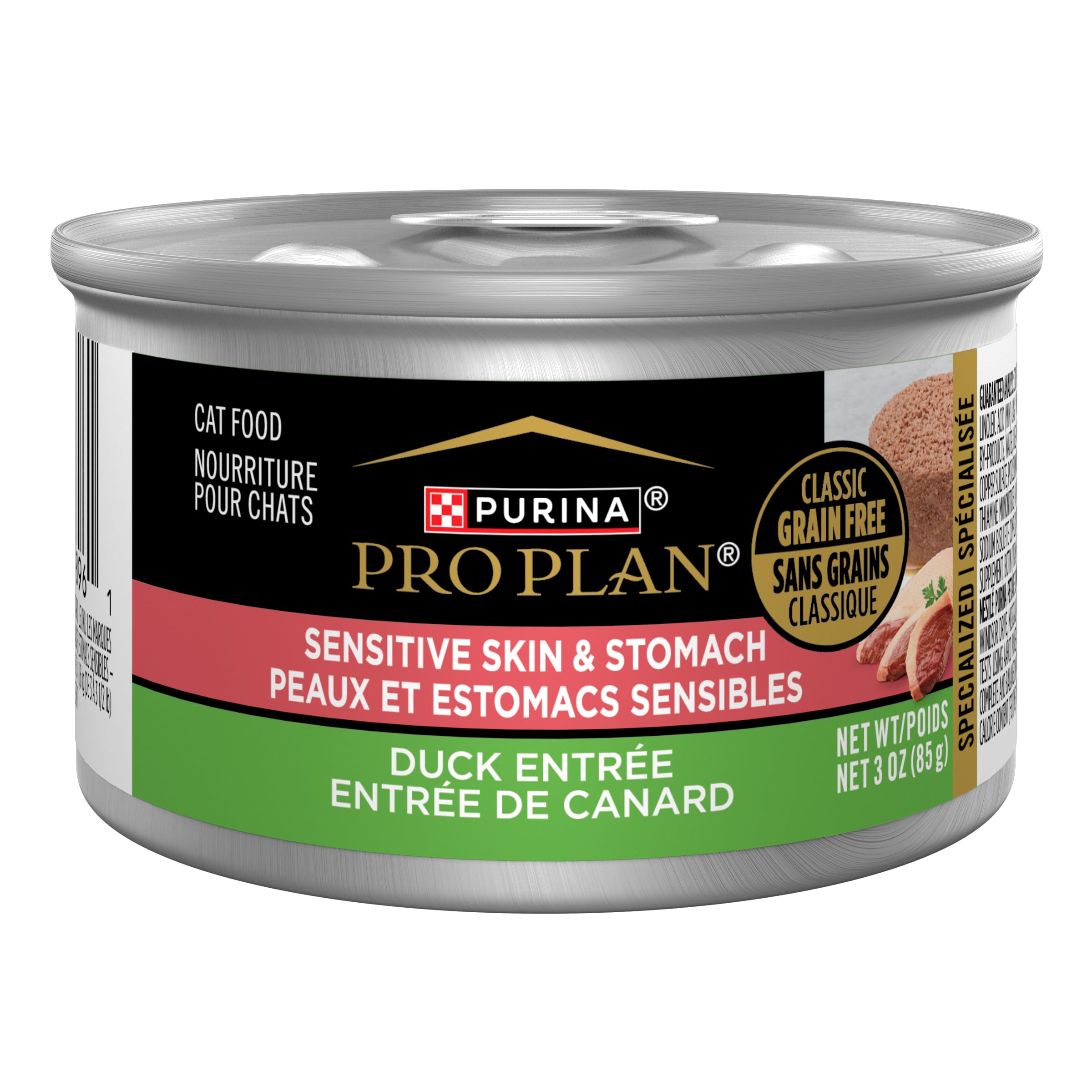
IBS cats with chronic loose stools lose critical hydration, making this high-moisture pate an essential tool. Duck serves as a novel protein that is less likely to trigger an adverse response than chicken or fish, and the smooth pate texture is easier on an inflamed esophagus and stomach lining than chunkier formulas.
Natural prebiotic fiber supports digestive health without artificial gums or thickeners that can aggravate sensitive bowels. Antioxidants and taurine bolster immune function and heart health, both of which can be compromised in chronically ill cats.
The 24-pack of pull-top cans is convenient for daily feeding and reduces the risk of portion spoilage. It is manufactured in Purina-owned U.S. facilities with no artificial colors or preservatives.
Why we love it
- Novel duck protein ideal for cats avoiding chicken
- High moisture content supports hydration with loose stools
- No artificial colors, preservatives, or gums
Good to know
- Some cats may not enjoy pate texture consistency
- Requires refrigeration after opening
5. Purina Cat Chow Gentle Sensitive Stomach and Skin
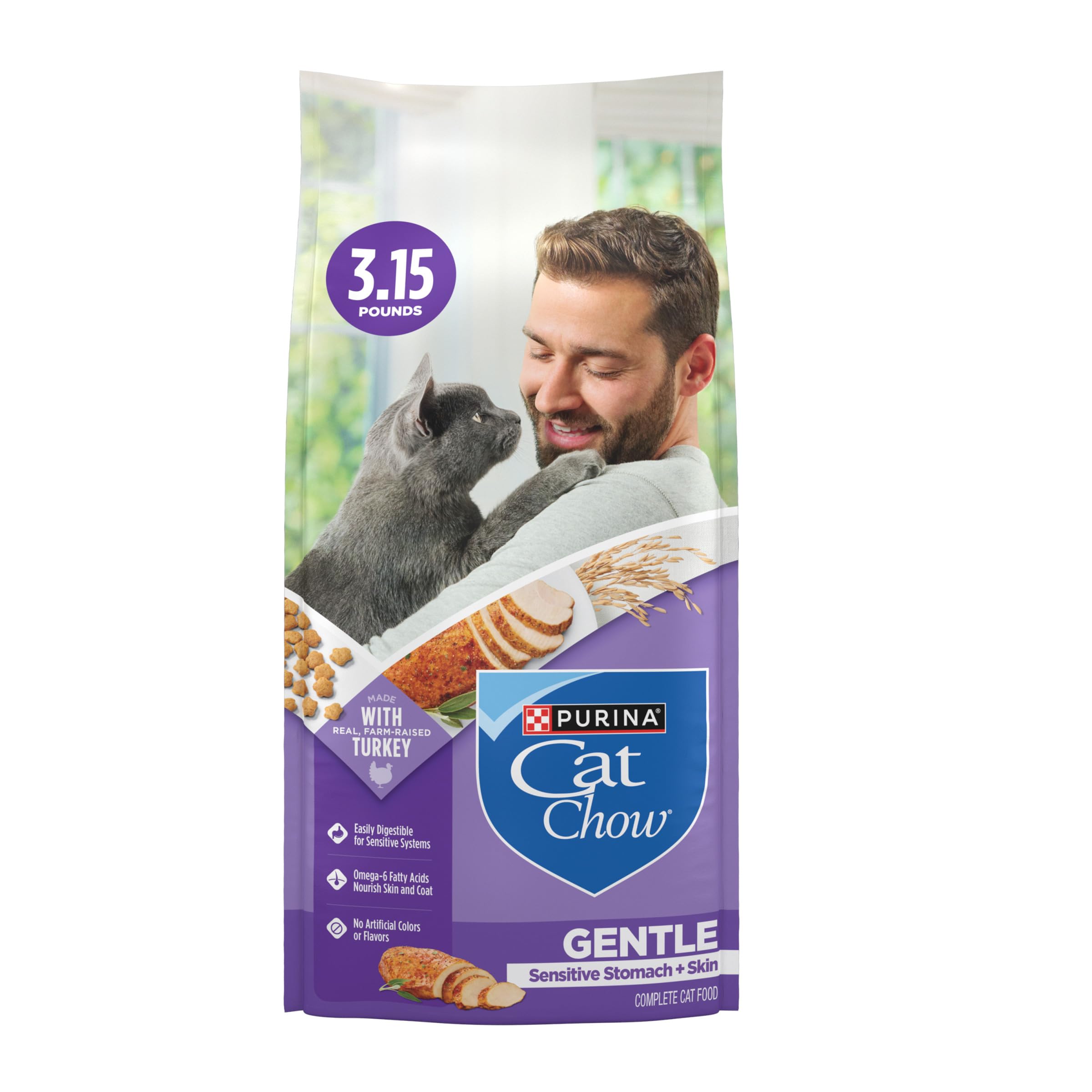
If you have multiple cats with sensitive stomachs or are on a tighter budget, this 4-pack delivers decent prebiotic support without the premium price tag. Real turkey is the primary protein, and the formula includes omega-6 fatty acids for skin and coat health — though it is not a strict limited ingredient diet.
The kibble is crunchy and textured, which helps with tartar control but may be too abrasive for cats with severe inflammatory bowel disease. It contains no artificial colors or flavors, and includes essential vitamins and minerals for overall health.
Because it is certified as a “Veterinary Diet” by the manufacturer, it is a step up from generic grocery-store cat food, but it lacks the targeted novel proteins and specialized prebiotic blends found in higher-tier IBS-specific formulas. Use it as a maintenance diet for mild cases or as a transition food into a more therapeutic option.
Why we love it
- Affordable 4-pack for multi-cat households with sensitive stomachs
- Turkey is a gentle protein source for many IBS cats
- Prebiotic fiber included without artificial additives
Good to know
- Contains corn and wheat — potential IBS triggers for some cats
- Not a strict limited ingredient or novel protein recipe
FAQ
How is IBS in cats different from IBD?
Can grain-free food cure my cat’s IBS?
How long until a new IBS diet shows results?
Should I feed wet or dry food for IBS?
Final Thoughts: The Verdict
For most pet parents dealing with chronic IBS symptoms, the foods for cats with ibs winner is the Hill’s Prescription Diet GI Biome because its ActivBiome+ technology delivers rapid microbiome restoration and stress reduction in a single therapeutic package. If you want a budget-friendly, multi-cat solution that still offers prebiotic support, grab the Purina Cat Chow Gentle. And for a high-moisture novel protein option that hydrates and soothes, nothing beats the Purina Pro Plan Sensitive Duck.