
A backyard feeder should be a hub of activity, not a source of mess or wasted money. Choosing the wrong food means uneaten hulls pile up, fewer species visit, and your budget feeds the ground instead of the birds. The difference between a quiet feeder and a bustling avian diner comes down to seed composition, oil content, and ingredient sourcing.
I’m Mo Mahin — the founder and writer behind Furric. I spend my time analyzing nutritional profiles, comparing seed-oil percentages, reviewing customer feedback for spoilage complaints, and tracking which blends consistently deliver high visitation rates across different regions and seasons.
This guide breaks down five distinct options based on nutritional density, species appeal, and feeder compatibility, so you can confidently choose the best foods for wild birds for your specific backyard setup.
How To Choose The Best Foods For Wild Birds
Not every bag of seed is equal. The nutritional makeup, ingredient list, and processing method directly determine which birds visit and how much waste accumulates under the feeder. Focusing on a few critical specs simplifies the choice.
Seed Oil Content and Shell Thickness
Black oil sunflower seeds have a thinner shell and higher oil content than striped sunflower seeds. This means smaller birds like chickadees and finches can crack them open easily, and the elevated fat content provides more usable energy per seed. A high black oil sunflower percentage is the fastest way to increase variety at the feeder.
Filler Ingredients vs. High-Value Components
Milo, wheat, oats, and red millet are common fillers that most songbirds ignore. A premium blend keeps these to a minimum or excludes them entirely. Safflower, sunflower hearts, peanut pieces, and white millet are high-value ingredients that attract cardinals, jays, woodpeckers, and finches.
Waste Free or No Mess Formulas
Shell-free blends eliminate hulls entirely, leaving only edible pieces. This reduces cleanup and prevents sprouting under the feeder. It also reduces the bulk weight you pay for, since you are buying only edible kernel rather than inedible shell material.
Quick Comparison
On smaller screens, swipe sideways to see the full table.
| Model | Category | Best For | Key Spec | Amazon |
|---|---|---|---|---|
| Desert Valley Black Oil Sunflower Seed | Straight Seed | Maximum species variety | 3 lb resealable bag | Amazon |
| Happy Wings Black Oil Sunflower Seeds | Straight Seed | Clean feeding with no growth | 5 lb no-grow formula | Amazon |
| Cool Birds All Birds Wild Bird Seed | Classic Blend | All-around year-round feeding | 10 lb multi-ingredient bag | Amazon |
| Valley Splendor Songbird Melody | Premium Blend | Vitamin-enriched winter food | 7 lb berry-scented mix | Amazon |
| Audubon Park Waste Free Wild Bird Seed | No Mess | Patio/deck clean feeding | 12 lb shell-free blend | Amazon |
In‑Depth Reviews
1. Desert Valley Black Oil Sunflower Seed

This 3-pound bag of straight black oil sunflower seeds offers the highest nutritional density per dollar in this roundup. The thinner shell and elevated oil content mean cardinals, chickadees, nuthatches, and grosbeaks can crack them quickly, which translates to more visitors per hour. The resealable bag design keeps the seeds fresh between refills — a practical detail that matters more for smaller packaging where moisture exposure is a risk.
Desert Valley sources these from domestic growers and hand-packs them in small batches, which reduces the chance of dust, broken shells, or moldy seeds entering the mix. The non-GMO and all-natural claims are verified by the ingredient sourcing, and the raw diet type means there are no artificial coatings or preservatives that might deter finicky species.
For a straight seed product, the value is straightforward: you pay for high-oil sunflower without any filler weight. The 3-pound size is ideal for a single tube feeder or for testing a new species population before committing to a larger bulk purchase.
Why we love it
- Thin shell makes it accessible to small-beaked species
- Hand-packed in small batches ensures consistent quality
- Resealable bag protects against humidity and pests
Good to know
- 3-pound bag may refill quickly in high-traffic feeders
- Whole shells will accumulate under the feeder area
2. Happy Wings Black Oil Sunflower Seeds – 5 lb
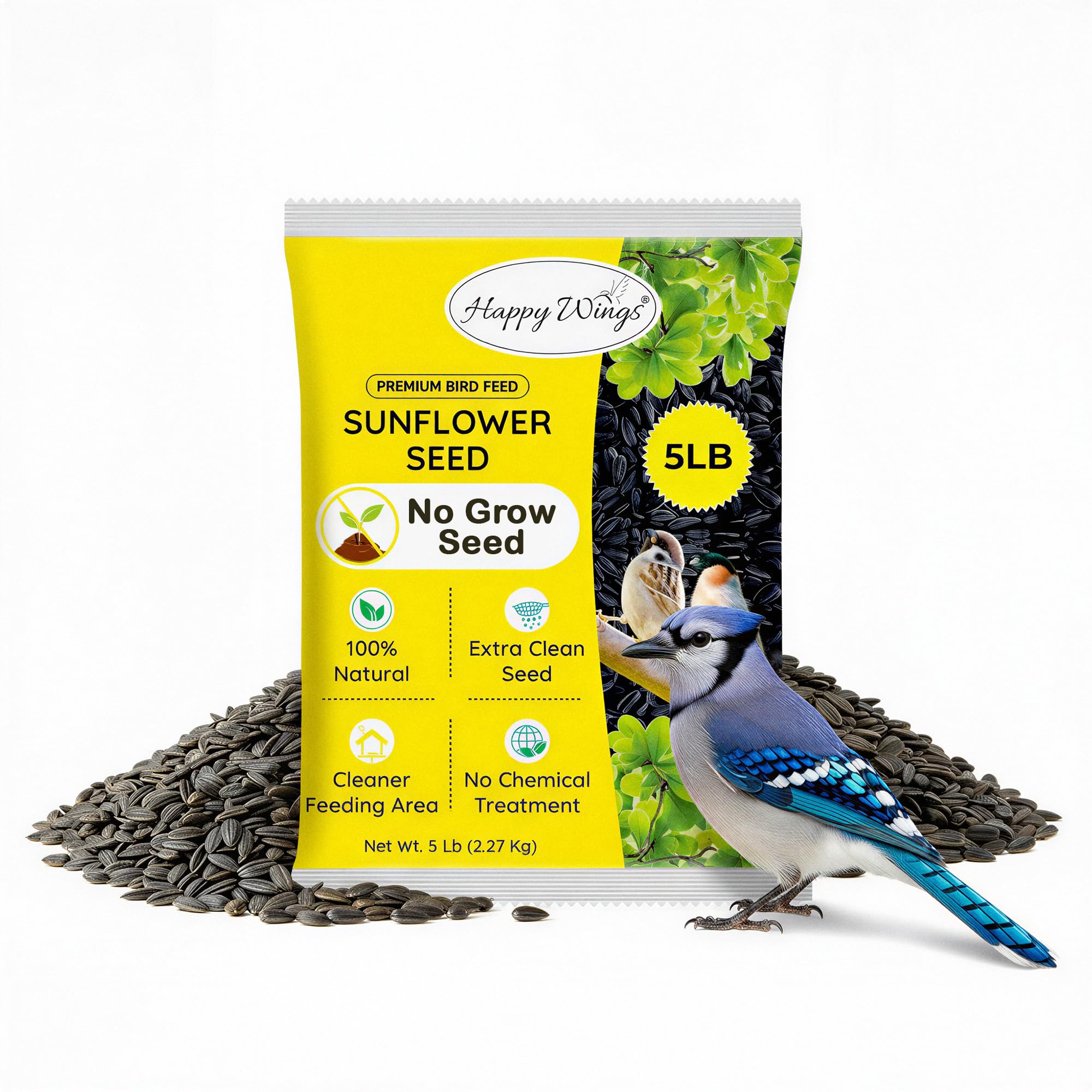
The defining feature of this 5-pound bag is its no-grow formulation. The seeds undergo a heat-treatment process that deactivates germination, which means zero sprouts will emerge beneath the feeder even if seeds spill onto moist soil. This makes it a strong choice for feeders placed over lawns, patios, or landscaped beds where volunteer sunflower shoots become a nuisance.
Happy Wings processes this seed in USDA- and BRC-GS-approved facilities, which adds a layer of quality assurance that matters for consumables. The high-oil content supports year-round feeding for cardinals, finches, sparrows, and chickadees, and the waste-free claim holds up because birds consume nearly the entire seed thanks to the thin hull structure.
At 5 pounds, the bag hits a sweet spot between trial-size and bulk. It is large enough to sustain a moderate feeder for several weeks but small enough to store without requiring a dedicated container. The plant-based diet type and all-life-stage suitability mean it works for fledglings as well as mature birds.
Why we love it
- No-grow treatment prevents weed sprouts under feeders
- Processed in USDA-approved facilities for safety
- High oil content delivers sustained energy
Good to know
- Heat treatment may slightly reduce germination appeal for ground feeders
- Whole shells still create mess under feeding zone
3. Cool Birds All Birds Wild Bird Seed – 10 lb
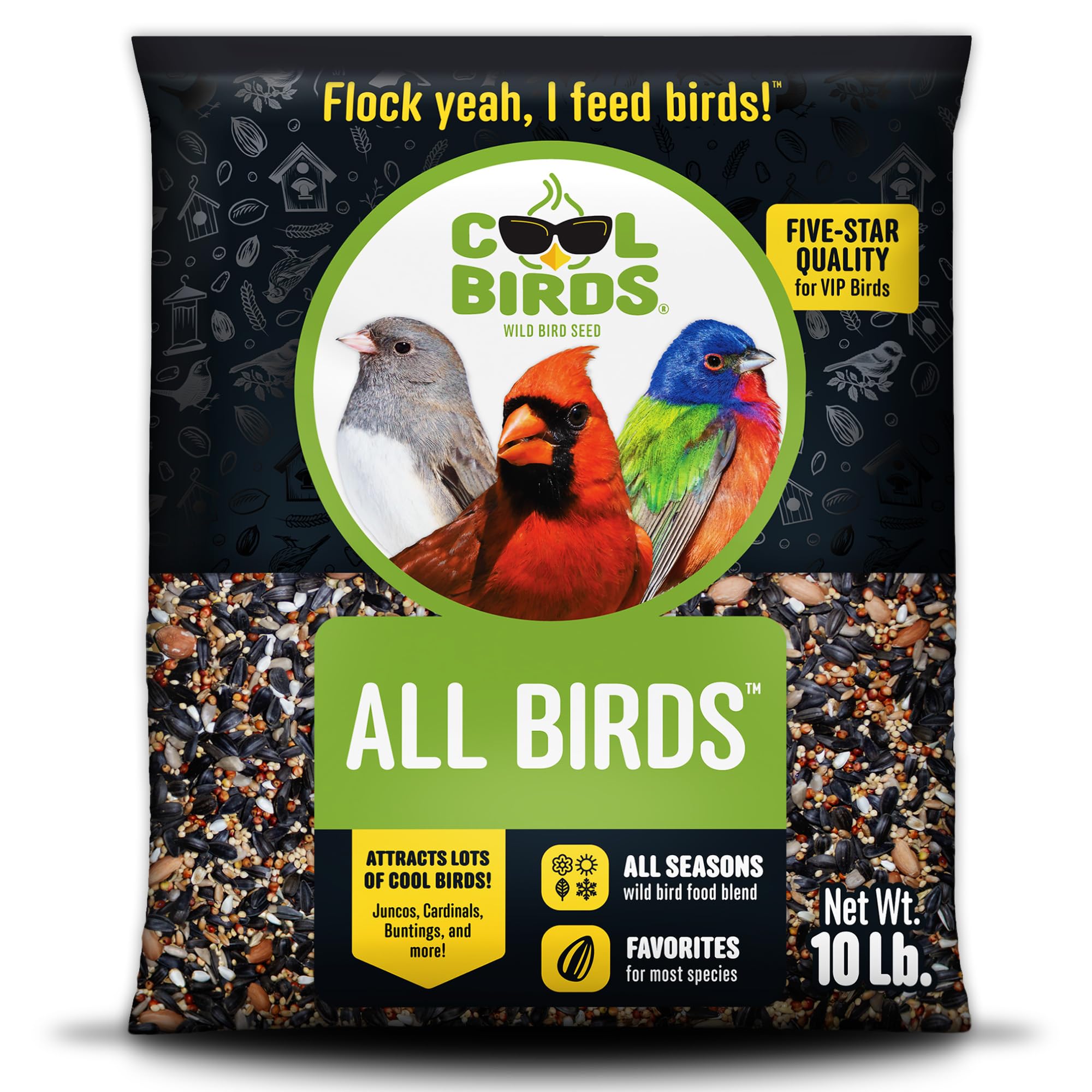
This 10-pound classic blend combines black oil sunflower, white millet, safflower, peanuts, and sunflower hearts into a single bag designed to attract both perching and ground-feeding birds. The ingredient diversity is the core strength here — doves and sparrows prefer the millet, while jays and cardinals target the sunflower and peanut components. This makes it a one-bag solution for feeders aiming to maximize species count without maintaining multiple single-seed dispensers.
The formula is engineered for compatibility with tray, tube, hopper, platform, and smart camera feeders. No artificial colors are added, and the protein content supports year-round feeding cycles. The 10-pound weight offers good volume for the mid-range tier, and the resealable bag construction maintains freshness between refills.
One practical consideration: because this is a whole-seed blend rather than a shell-free mix, some waste material will accumulate. The safflower and sunflower hearts are high-value components that birds consume completely, but the whole sunflower shells and millet hulls will require periodic cleanup depending on feeder placement.
Why we love it
- Multi-ingredient variety attracts both perching and ground-feeding birds
- Compatible with all major feeder types including smart feeders
- No artificial colors or filler ingredients
Good to know
- Whole seed shells will accumulate under the feeder
- Some larger birds may scatter millet while searching for peanuts
4. Valley Splendor Songbird Melody
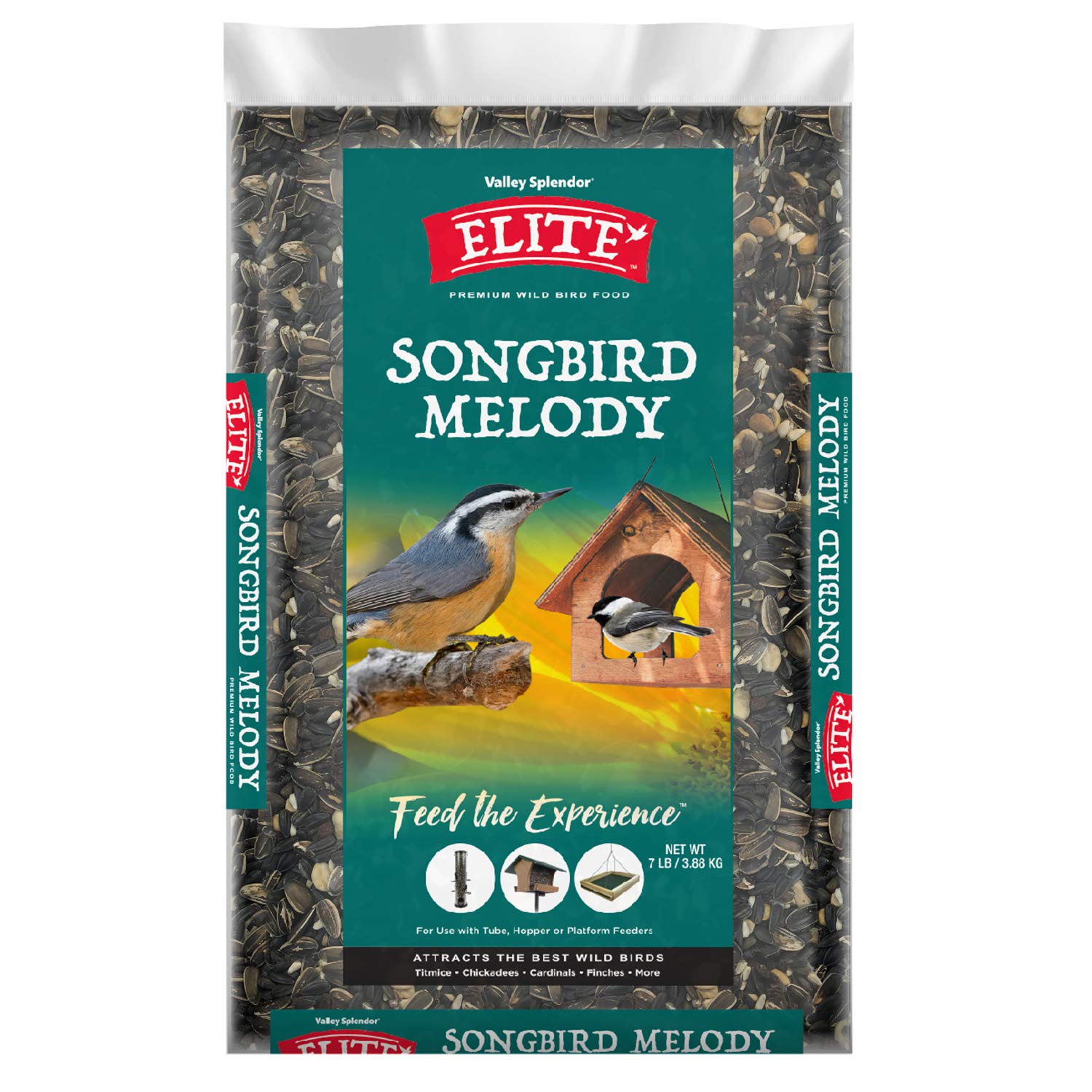
What sets this 7-pound blend apart is the enrichment with vitamin A and D and the addition of raisins alongside black oil sunflower, safflower, peanuts, and striped sunflower. The vitamins support feathering, bone development, and reproduction — making this a targeted choice for late winter and early spring feeding when breeding cycles begin. The berry scent is a unique differentiator that may help attract otherwise cautious species to a new feeder.
Valley Splendor positions this as a high-protein, high-fat blend with no added fillers. The inclusion of striped sunflower seeds, which have a thicker shell than black oil, adds variety for larger-beaked birds like grosbeaks while still offering the thin-shelled black oil for smaller species. The raisins provide a natural sugar source that is especially valuable during cold snaps when birds need quick energy.
At 7 pounds, the bag size is moderate, and the premium ingredient mix means the volume cost is higher than straight seed options. This blend is best used as a specialty rotation — swap it in during migration periods or extreme weather when birds need the extra nutritional boost.
Why we love it
- Fortified with vitamins A and D for breeding season support
- Includes raisins for natural sugar energy during cold weather
- Berry scent helps attract cautious new visitors
Good to know
- Higher cost per pound compared to straight seed options
- Striped sunflower shells are tougher for very small birds
5. Audubon Park Waste Free Wild Bird Seed – 12 lb
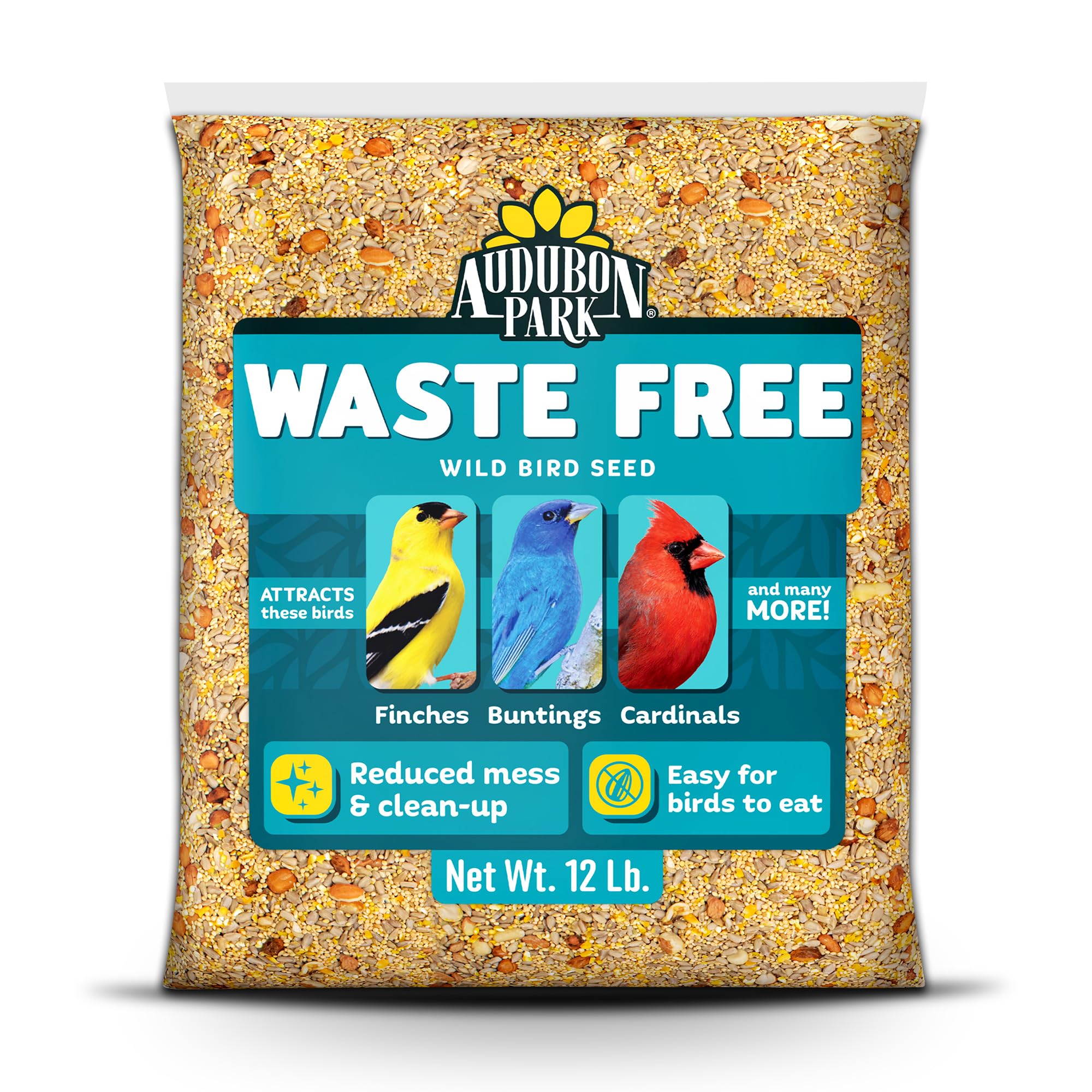
The 12-pound waste-free formula consists entirely of shell-free sunflower hearts, sunflower chips, and peanut pieces. Because there are no hulls, every gram in the bag is edible — zero waste weight, zero shells accumulating under the feeder. This is the most practical choice for feeders placed on decks, patios, or near windows where mess is a real problem. The ingredient weight efficiency is excellent: a 12-pound bag of this product delivers roughly the same edible mass as a 20-pound bag of whole sunflower seeds.
Audubon Park targets this blend at finches, cardinals, thrushes, wrens, and buntings. The shell-free composition means smaller birds expend less energy cracking seeds, which is especially valuable during winter months when calorie conservation is critical. The blend works with tube, tray, hopper, and platform feeders, and the lack of hulls reduces the risk of feeder jamming in wet conditions.
One trade-off: shell-free seeds spoil faster than whole seeds once exposed to moisture. This bag should be stored in a dry, sealed container, and the feeder should be checked more frequently during rainy or humid periods to prevent mold growth on uneaten pieces.
Why we love it
- Zero waste — 100% edible content with no shells
- Ideal for decks and patios where mess is unacceptable
- Shell-free composition reduces feeder jamming in wet weather
Good to know
- Shell-free seeds spoil faster in humid conditions
- Higher cost per pound reflects the absence of filler shell weight
FAQ
What is the single best seed for attracting the most species?
Why do some birds ignore my feeder even when seed is available?
Does no-mess or waste-free seed cost more in the long run?
Final Thoughts: The Verdict
For most gardeners, the foods for wild birds winner is the Desert Valley Black Oil Sunflower Seed because it delivers maximum species variety per dollar through high-oil, thin-shell sunflower with no filler weight. If you want a shell-free clean feeding experience for deck or patio placement, grab the Audubon Park Waste Free Blend. And for targeted vitamin support during breeding or cold weather, nothing beats the Valley Splendor Songbird Melody.