
Choosing a puppy formula isn’t like picking an adult dog food—puppies need precise calcium-to-phosphorus ratios for skeletal development, DHA for retinal and cognitive growth, and a protein profile that fuels rapid tissue formation without overwhelming immature kidneys. The wrong balance can lead to developmental orthopedic disease or long-term metabolic stress.
I’m Mo Mahin — the founder and writer behind Furric. I’ve spent years analyzing veterinary nutritional studies, comparing guaranteed analysis panels, and cross-referencing AAFCO feeding trial data with real-world owner experiences to separate marketing fluff from genuinely sound puppy nutrition.
Whether you’re raising a Giant breed or a Toy variety, this guide breaks down the essential specs behind the best formula for puppies and reviews five top contenders that deliver on growth-stage needs.
How To Choose The Best Formula For Puppies
Puppy formulas are regulated by AAFCO as “growth and reproduction” diets, meaning they must meet higher minimums for protein, fat, calcium, phosphorus, and DHA than adult maintenance foods. Knowing which specs to verify prevents both nutritional gaps and excesses that can harm developing joints.
Calcium Levels and Large-Breed Considerations
Calcium should fall between 0.8% and 1.5% on a dry-matter basis for large-breed puppies (adult weight over 50 lbs). Levels above 1.8% can accelerate growth plates, leading to hip dysplasia and osteochondritis. Most premium puppy foods land near 1.2% calcium, which is the sweet spot for skeletal safety.
DHA for Brain and Vision Development
Docosahexaenoic acid (DHA) from fish oil or marine microalgae is directly linked to improved cognitive function and retinal health in puppies. Look for a minimum of 0.1% DHA in the guaranteed analysis—this is especially important during the first six months when neural connections form fastest.
Kibble Size and Digestive Support
Small-breed puppies (adult weight under 20 lbs) often require smaller kibble diameters—around 6-8 mm—to prevent choking and encourage chewing. For sensitive stomachs, a single novel protein source like salmon or lamb combined with prebiotic fiber (inulin, chicory root) and probiotics (Lactobacillus, Bifidobacterium) reduces loose stools and gas.
Quick Comparison
On smaller screens, swipe sideways to see the full table.
| Model | Category | Best For | Key Spec | Amazon |
|---|---|---|---|---|
| Hill’s Science Diet Puppy Sensitive Stomach & Skin | Premium | Sensitive stomachs + skin support | Salmon #1 ingredient, DHA, prebiotic fiber | Amazon |
| Open Farm Ancient Grains Puppy | Mid-Range | Grain-inclusive, traceable ingredients | 90% animal protein, non-GMO, 4lb bag | Amazon |
| Hill’s Science Diet Puppy Lamb & Brown Rice | Mid-Range | Balanced growth, vet-recommended | Lamb meal, DHA, antioxidant blend | Amazon |
| Merrick Lil’ Plates Small Breed Puppy | Mid-Range | Small-breed digestive health | Deboned chicken #1, glucosamine + chondroitin | Amazon |
| NutriSource Puppy Small & Medium Breeds | Budget-Friendly | Heart health + digestibility | Chicken meal #1, prebiotics + probiotics | Amazon |
In‑Depth Reviews
1. Hill’s Science Diet Puppy Sensitive Stomach & Skin
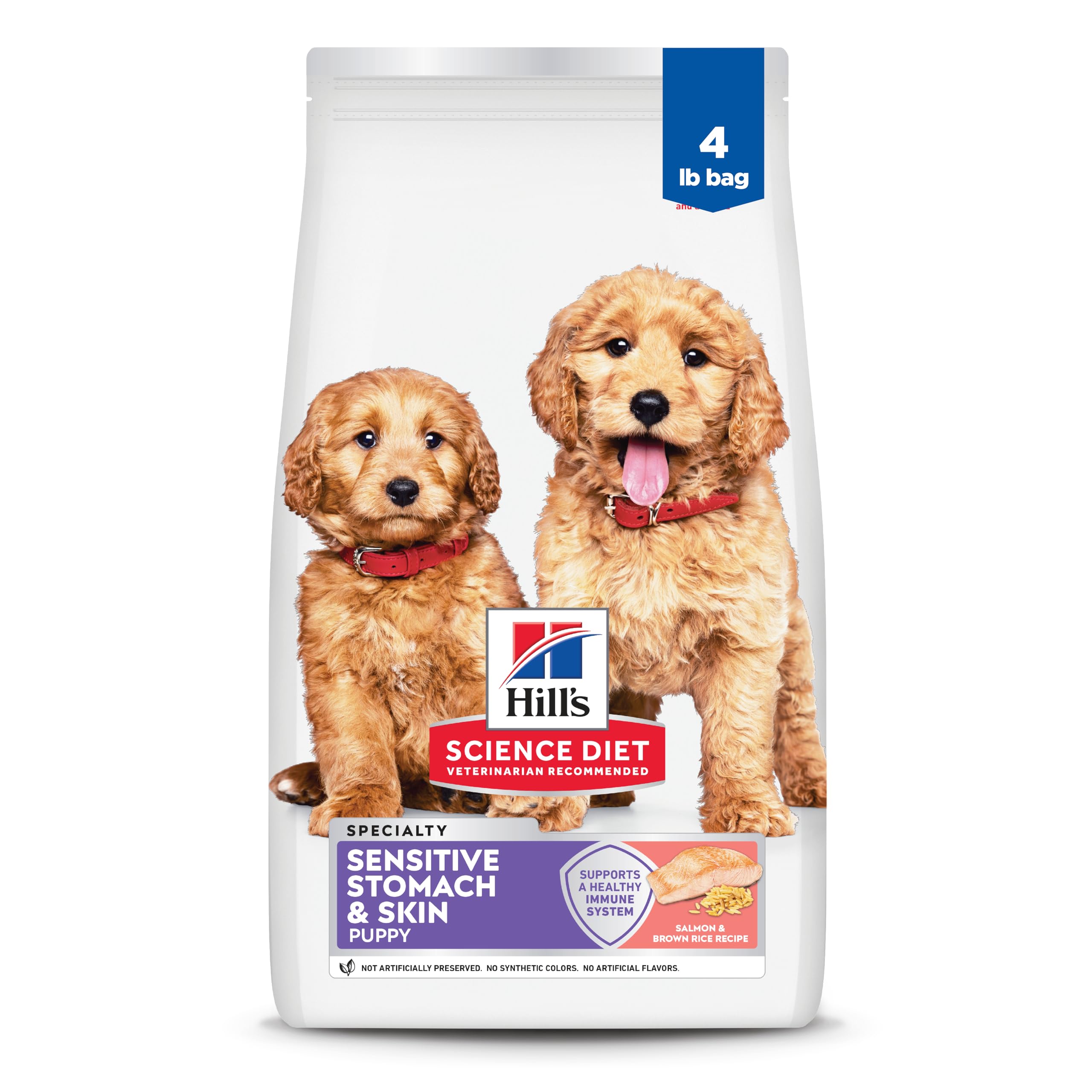
This formula uses high-quality salmon as the #1 ingredient, delivering a novel protein source that minimizes allergic reactions while providing DHA for brain development. The addition of prebiotic fiber (inulin) supports a balanced gut microbiome, which translates to firmer stools and less gas for puppies with digestive sensitivity—a common pain point during transition from mother’s milk to solid food.
Vitamin E and omega-3/6 fatty acids are included at clinically proven levels to reduce skin inflammation and improve coat luster. The calcium content is held around 1.0% dry matter, making it safe for medium-breed puppies while still meeting large-breed requirements. Hill’s is the #1 veterinarian-recommended brand globally, backed by feeding trials rather than just nutrient profiles.
The 4-lb bag size is ideal for first-time buyers who want to test palatability before committing to a larger volume. Several owner reviews noted that their sensitive-stomach puppies (including a Mountain Doodle) showed marked improvement in skin itchiness and stool consistency within two weeks.
Why we love it
- Single novel protein source (salmon) reduces food sensitivities
- Prebiotic fiber + probiotics promote digestive stability
- DHA from fish oil supports cognitive and retinal development
Good to know
- 4-lb bag is small for multi-puppy households
- Priced at a higher per-pound cost than some competitors
2. Open Farm Ancient Grains Puppy

Open Farm’s Ancient Grains blend features oats and quinoa—low-glycemic carbohydrates that provide sustained energy without spiking blood sugar. The 90% animal protein content is notably high for a mid-range formula, sourced from wild-caught salmon and humanely raised chicken, both free from antibiotics and added hormones.
The inclusion of superfoods like pumpkin, coconut oil, and turmeric adds antioxidant and anti-inflammatory benefits. This formula is also free from peas, potatoes, and legumes, making it an excellent choice for puppies who may have sensitivities to those common fillers. The calcium level (approximately 1.1%) fits within the safe growth window for all breed sizes.
A standout feature is the “traceable” ingredient system—every lot number on the bag links to a farm-level origin report. While the 4-lb bag is compact, the ingredient transparency and ethical sourcing justify the slightly higher per-pound cost. It’s particularly well-suited for owners who prioritize supply-chain visibility.
Why we love it
- High 90% animal protein from traceable sources
- Ancient grains (oats, quinoa) support gentle digestion
- Free from peas, potatoes, and legumes
Good to know
- Some puppies may not accept the larger kibble size
- Limited flavor variety compared to bigger brands
3. Hill’s Science Diet Puppy Lamb & Brown Rice

This lamb meal and brown rice formula is a long-standing favorite among breeders and veterinarians. Lamb provides a digestible protein source that is less likely to trigger immune responses compared to chicken or beef, making it a smart first choice for puppies with unknown allergy histories. Brown rice offers medium-glycemic carbohydrates for steady energy without rapid insulin spikes.
DHA from fish oil is present to support brain development, and the antioxidant blend (Vitamins C + E) bolsters the puppy’s developing immune system. The calcium-to-phosphorus ratio is carefully balanced at approximately 1.2:1, which aligns with AAFCO guidelines for all breed sizes. The kibble texture is designed to provide mild abrasive action for dental health.
Owner feedback consistently praises the formula for supporting healthy growth without digestive upset—multiple reviews mention seamless transitions from milk replacer to this kibble. The 4-lb bag is a practical trial size, and Hill’s extensive feeding trial data provides confidence in the nutrient density.
Why we love it
- Lamb protein reduces allergy risk
- Balanced calcium-phosphorus ratio for skeletal safety
- Antioxidant blend strengthens developing immune system
Good to know
- Not grain-free; unsuitable for gluten-sensitive puppies
- Some owners report a mild “fermented” smell
4. Merrick Lil’ Plates Small Breed Puppy

Merrick Lil’ Plates is specifically tailored for small-breed puppies (adult weight under 20 lbs). The kibble diameter is approximately 7 mm, small enough for toy breeds like Chihuahuas and Miniature Dachshunds to chew comfortably. Real deboned chicken is the first ingredient, providing lean protein for muscle growth, and the recipe includes glucosamine and chondroitin at levels that support developing joints in active small dogs.
The formula is grain-free, relying on sweet potatoes and potatoes as carbohydrate sources. Omega-6 and omega-3 fatty acids are added in a 5:1 ratio to promote healthy skin and a shiny coat. Probiotics (Lactobacillus) and prebiotic fiber support digestive health—owner reviews frequently note “better poops” and improved stool consistency after switching to this food.
One limitation is the small bag size (4 lb), which may be consumed quickly by a growing small-breed puppy. Some owners report that palatability is lower than the Blue Buffalo counterpart, though taste-test feedback from litter reviews suggests high acceptance overall.
Why we love it
- Small kibble size ideal for toy and small breeds
- Glucosamine + chondroitin for joint development
- Grain-free with probiotics for sensitive stomachs
Good to know
- Small bag size requires frequent repurchasing
- Not suitable for puppies with grain allergies to potato
5. NutriSource Puppy Small & Medium Breeds

NutriSource’s chicken meal and rice formula offers a solid nutritional profile at a budget-friendly price point. Chicken meal provides concentrated amino acids for muscle development, and the inclusion of brown rice, oatmeal, and barley delivers easily digestible carbohydrates for sustained energy. The calcium level is approximately 1.0%, which is suitable for both small and medium breeds.
The formula is supplemented with L-Carnitine, taurine, and choline chloride to support cardiovascular development—a feature often missing from lower-cost puppy foods. Prebiotics (inulin) and probiotics (Bacillus coagulans) are added to promote gut health, and the omega-3/6 fatty acid ratio (6:1) helps maintain skin and coat condition.
Owner reviews are overwhelmingly positive, with many noting that their puppies transitioned smoothly without digestive issues. The kibble shape is round and medium-sized (approximately 10 mm), making it a good fit for small- and medium-breed puppies. For the price per pound, it’s one of the strongest values in this segment.
Why we love it
- Chicken meal provides concentrated protein at low cost
- Cardiovascular support with L-Carnitine and taurine
- Prebiotics and probiotics support digestive regularity
Good to know
- Contains wheat—not for gluten-sensitive puppies
- Some owners report a strong fish-meal odor
FAQ
At what age should I switch from puppy formula to adult food?
Can I mix grain-inclusive and grain-free puppy formulas?
What calcium level is safe for large-breed puppies?
Final Thoughts: The Verdict
For most puppy owners, the best formula for puppies is the Hill’s Science Diet Puppy Sensitive Stomach & Skin because it combines a novel salmon protein source with DHA for brain development and prebiotic fiber for digestive stability. If you prioritize traceable, high-animal-protein ingredients, grab the Open Farm Ancient Grains Puppy. And for the best value in balanced growth nutrition, nothing beats the NutriSource Puppy Small & Medium Breeds.