
A dog that pulls can turn a relaxing walk into a frustrating, shoulder-wrenching ordeal. Standard harnesses often amplify the problem by giving a strong puller even more leverage. The dedicated front clip design shifts the attachment point to the chest, redirecting momentum and discouraging pulling without yanking on your dog’s neck.
I’m Mo Mahin — the founder and writer behind Furric. I’ve spent countless hours sifting through owner feedback, comparing webbing strength, buckle materials, and clip placement to find the front clip harnesses that actually deliver on their promise of controlled, comfortable walks.
After cross-referencing hundreds of verified reviews and manufacturing specs, these selections represent the safest and most effective front clip dog harness options for owners dealing with a persistent puller.
How To Choose The Best Front Clip Dog Harness
A front clip harness works by attaching the leash to a D-ring centered on the dog’s chest. When the dog pulls, the tension turns their shoulders sideways, making forward motion less efficient and encouraging them to slow down. This is a training-friendly alternative to back-clip or choke methods. Here is what separates an effective design from a painful or loose one.
Clip Strength and Hardware Material
The single most important detail on these harnesses is the chest D-ring. Look for a solid, welded metal ring—not a stamped, thin wire loop. Some budget harnesses feature a sewn fabric loop that can fray under heavy strain from a 70+ pound puller. Premium models use 2,800-Newton rated metal buckles and rotating V-clips that distribute force to the webbing rather than the seam.
Y-Shaped vs. H-Shaped Front Geometry
An H-shaped harness places the front clip on a strap that crosses the sternum, which can shift sideways during pulls. A Y-shaped harness has a central chest panel that positions the clip directly in the center of the sternum. This keeps the redirecting force symmetrical, preventing the harness from twisting and rubbing the dog’s armpits. Y-shaped designs typically offer better long-term comfort for daily walkers.
Padding and Chafing Prevention
Front clip harnesses apply pressure to the chest and shoulders. Without adequate padding, repeated tension can cause chafing, especially in short-haired breeds like Pitbulls and Boxers. Look for neoprene lining or spacer mesh on the sternum panel. Avoid raw nylon webbing that sits directly against the skin if your dog is a committed puller who walks hard every day.
Quick Comparison
On smaller screens, swipe sideways to see the full table.
| Model | Category | Best For | Key Spec | Amazon |
|---|---|---|---|---|
| ICEFANG GN8 | Tactical | Heavy pullers & large breeds | 4 metal buckles rated at 2800N | Amazon |
| Spark Paws No Pull | Padded Y-Front | Powerful breeds & long walks | Soft neoprene lining on chest | Amazon |
| Carhartt Nylon Duck | Martingale | Everyday training & durability | 500-denier duck with DWR coating | Amazon |
| Auroth Tactical | Budget Tactical | Budget buyers with medium dogs | Molle system & dual rings | Amazon |
| Wilderdog Lightweight | Ultralight | Hiking & active small/medium dogs | 6.7 oz total weight | Amazon |
In‑Depth Reviews
1. ICEFANG GN8 Tactical Dog Harness
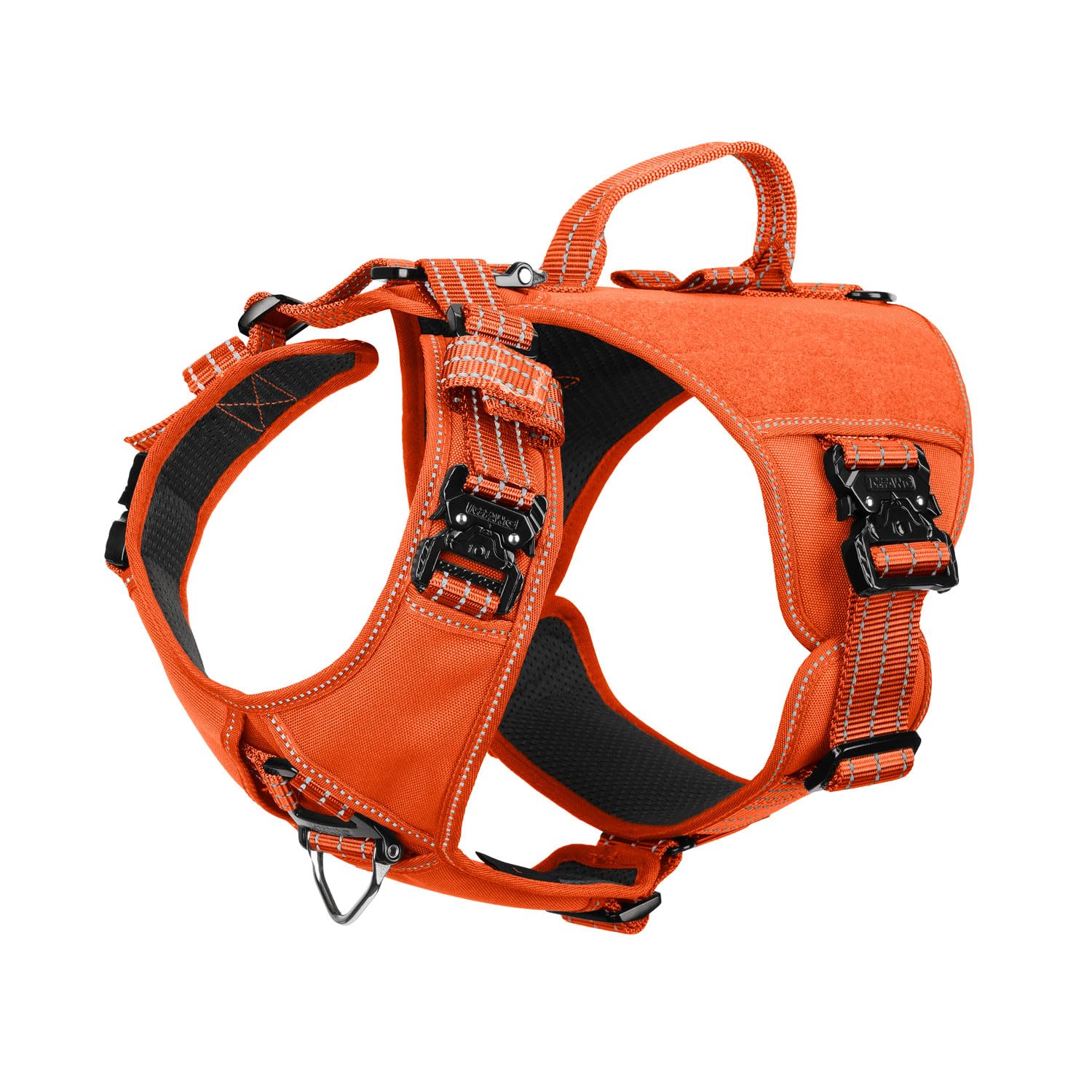
The ICEFANG GN8 is built for owners who need absolute mechanical security. Unlike lighter harnesses, this model integrates four quick-release metal buckles rated at 2,800 Newtons—a specification usually found on working K9 gear. The rotating V-shaped clip at the front is fused into a metal base plate, so when a 110-pound dog lunges, the force stays on the metal components rather than the nylon webbing stitches.
The Y-shaped chestplate is designed with three separate body panels and five adjustment points, allowing a precise fit around the sternum. This keeps the front clip centered even during hard left-right pulls. Owners of muscular Labrador Retrievers and Beagles noted the reflective weave improves night visibility, and the handle on top provides extra control in crowded areas like patios. The large side loop panels measure 3×5 inches for personalized patches.
One minor consideration is the learning curve with the cobra-style buckles—some buyers lubricated the clasps during initial setup to ensure smooth operation. The harness is not padded with neoprene, so short-haired breeds may prefer a softer lining for all-day wear. For heavy pullers who snap standard buckles, this is the most structurally robust option in the lineup.
Why we love it
- Four metal buckles eliminate seam-failure risk
- Rotating V-clip transfers force to hardware, not stitching
- Five adjustment points for a snug, twist-free fit
Good to know
- No neoprene padding for short-haired dogs
- Cobra buckles may need initial lubrication
2. Spark Paws No Pull Dog Harness
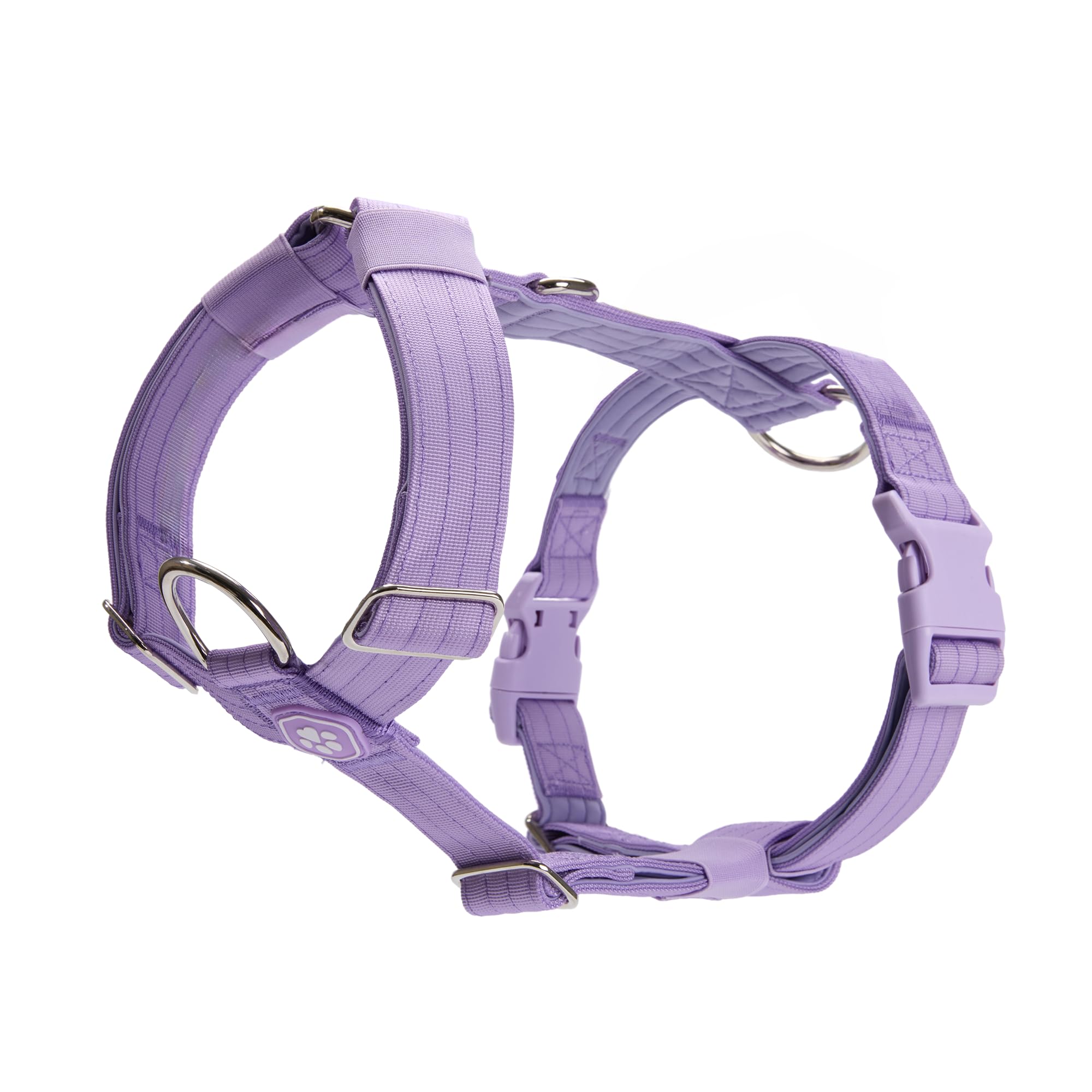
Spark Paws focuses on a problem many heavy-duty harnesses ignore: chafing. The chest panel is lined with soft neoprene, a closed-cell foam that prevents rubbing even when a powerful Pitbull or Boxer is pulling at full tension. The nylon webbing is heavy-duty and reinforced with triple-stitched quick-release buckles, matching the durability of tactical gear while maintaining a cleaner, more streamlined profile.
The Y-shaped halter positions the front metal D-ring directly on the sternum center. The neck and torso adjustments provide a tailored fit for breeds with broad chests and narrow waists, like Staffordshire Terriers and Dobermans. Owners reported that the neoprene lining reduced pressure points during summer walks, making this a strong pick for hot climates where nylon alone can cause irritation. The purple color option adds a distinct aesthetic.
Some users noted the harness runs slightly large for its size label, so measuring your dog’s chest girth before ordering is essential. The pull-on closure type means you slip it over the head rather than stepping in, which can be a challenge for dogs who dislike overhead handling. For owners seeking maximum padding without sacrificing structural security, this is the most comfortable front-clip option for strong breeds.
Why we love it
- Neoprene lining prevents chafing on short-haired breeds
- Triple-stitched buckles withstand strong pullers
- Y-shaped front keeps chest ring centered
Good to know
- Runs slightly large—measure chest girth carefully
- Pull-over style may not suit head-shy dogs
3. Carhartt Nylon Duck No Pull Dog Harness

Carhartt applies its workwear ethos to dog gear with this 500-denier polyester duck harness. The martingale chest strap design tightens slightly under tension, triggering a natural no-pull response without a hard jerk. The Rain Defender DWR (Durable Water Repellent) coating ensures the harness shrugs off light rain and retains its shape after repeated wet walks. Owners of muddy, water-loving retrievers appreciated how the duck material resisted absorbing moisture and odor.
The over-the-head step-in design uses a single side-release buckle, making the pre-walk ritual fast for dogs that bounce with excitement. The spacer mesh backing provides breathability along the ribcage while maintaining structural stiffness. Reflective low-light stitching runs across the yoke, improving visibility without adding bulky reflective panels. A 110-pound dog owner reported the harness held up without fraying against sticker weeds and rough brush.
The lack of thick padding means this harness is not the best choice for dogs that pull hard for hours daily. The nylon duck material is sturdy but can feel stiff against very short coats. Some users wished for a top grab handle for extra control in tight spaces. For an all-weather training harness that balances durability with workwear aesthetics, this is a solid mid-range choice.
Why we love it
- DWR finish repels light rain and mud
- Easy single-buckle slip-on design
- Reflective stitching for low-light walks
Good to know
- No top handle for extra control
- Less padding than neoprene-lined harnesses
4. Auroth Tactical Dog Training Harness
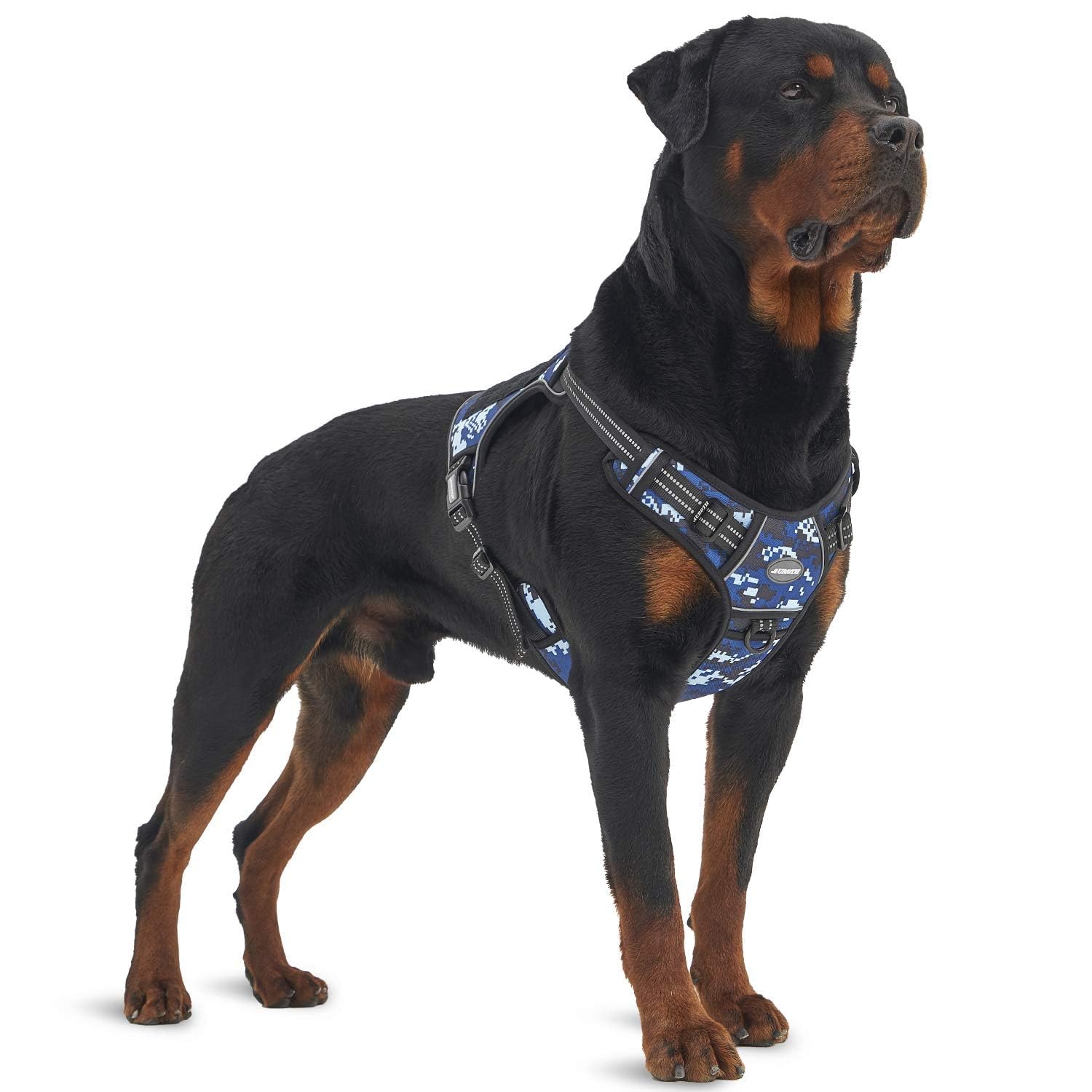
The Auroth Tactical harness offers an affordable entry point to the front-clip category without sacrificing the core feature. It includes two metal leash attachment rings—one on the front chest for training and one on the back for casual walks. The nylon oxford material is reinforced with heavy stitching, and the padding at pressure points is adequate for medium-sized dogs that pull moderately.
A standout detail for the price point is the Molle webbing on both sides, allowing owners to attach small pouches, water bottles, or an ID badge. The four fully adjustable points—two on the shoulders, two on the chest—help achieve a snug fit for breeds in the 45-80 pound range. The quick-release buckles make removal simple, and the breathable air mesh helps with airflow during warmer months.
The harness lacks the dense metal buckles and reinforced hardware found on premium tactical options, making it less suitable for extremely strong pullers over 80 pounds. The camo pattern may not appeal to owners looking for a clean urban aesthetic. For budget-conscious buyers with a medium-sized dog who pulls occasionally, this delivers the front-clip function at a lower investment.
Why we love it
- Side Molle panels add gear-carrying versatility
- Four adjustment points for a custom fit
- Dual front and back ring options
Good to know
- Hardware lighter than premium tactical harnesses
- Not recommended for persistent pullers over 80 lbs
5. Wilderdog Lightweight Dog Harness
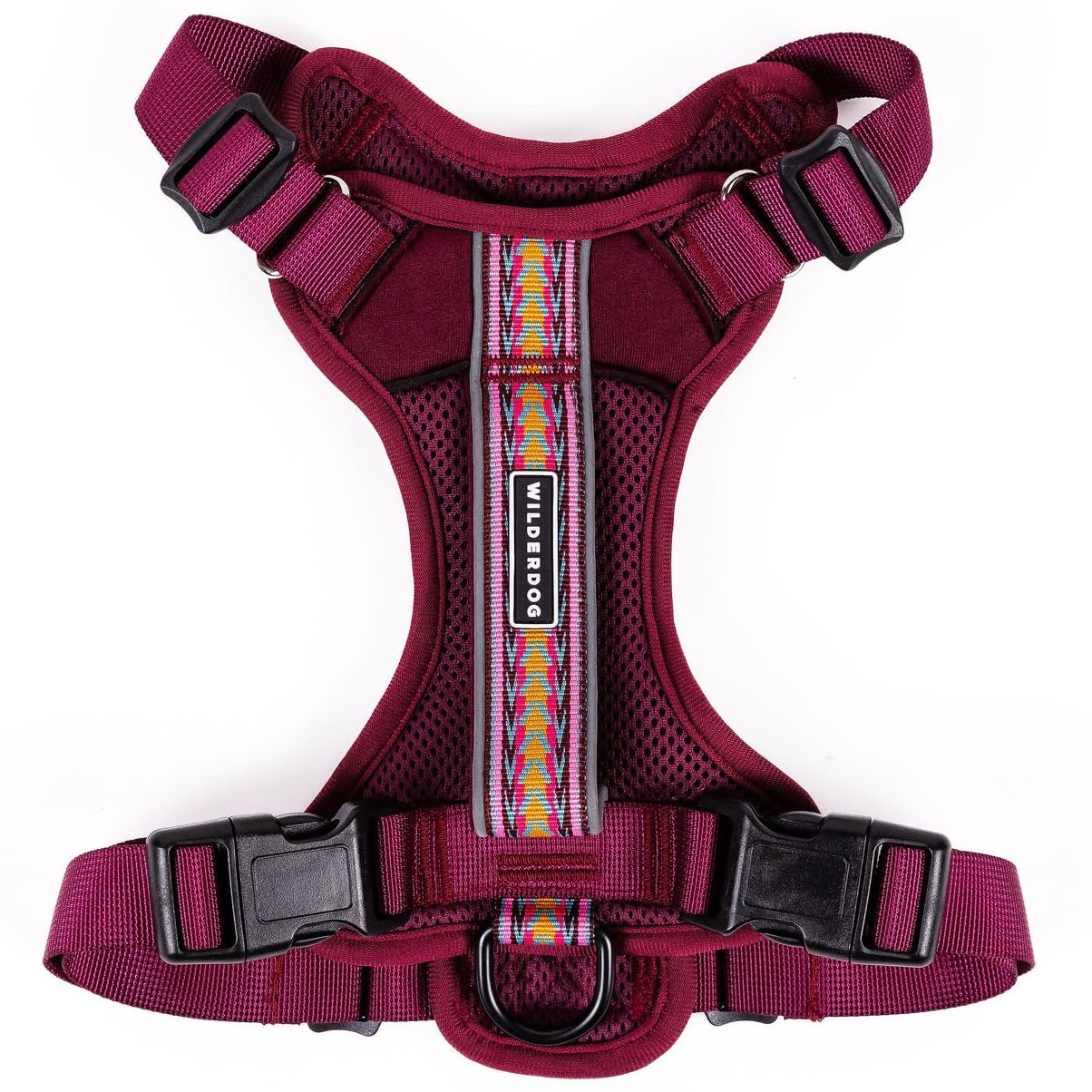
Wilderdog’s Lightweight harness is the outlier in this lineup, weighing only 6.7 ounces in the medium size. It is designed for active dogs who hike, run, or swim—not for heavy pullers who need thick padding. The harness slips over the head and secures with two side-release buckles at the chest, allowing all four paws to stay on the ground. The polyester blend material dries quickly after water exposure, preventing the sagging that plagues soft harnesses at dog parks.
Two D-ring attachment points—one on the chest and one on the back—give owners the flexibility to switch between no-pull training mode and standard walking. Reflective stripes improve visibility on trail runs, and the top handle helps lift your dog over boulders or secure them in a car seat. Owners of smaller breeds like Corgis and 20-pound mixed breeds reported that the shorter cut maximized breathability without restricting shoulder movement.
The lightweight design means there is minimal padding, so it is not suited for strong pullers who lean into the harness constantly. The webbing is sturdy but not reinforced with metal buckles or thick neoprene. For small to medium dogs on trail adventures where weight and dry-time matter more than brute-force control, this is the best trade-off for freedom of motion.
Why we love it
- Extremely lightweight at 6.7 oz
- Dries quickly after water exposure
- Front and back clip versatility
Good to know
- Limited padding for heavy pullers
- Over-the-head design may not suit every dog
FAQ
Why does a front clip stop pulling better than a back clip?
Can a front clip harness cause shoulder problems?
How do I measure my dog for a front clip harness?
Final Thoughts: The Verdict
For most owners dealing with a persistent puller, the front clip dog harness winner is the ICEFANG GN8 because its 2,800-Newton metal buckles and rotating V-clip provide the highest mechanical safety margin for large breeds. If you want neoprene comfort for a muscular breed prone to chafing, grab the Spark Paws No Pull. And for ultralight trail use with a small-to-medium dog, nothing beats the Wilderdog Lightweight harness.