
When your cat receives a diabetes diagnosis, the world tilts. Suddenly you must become a home nurse, a blood sugar tracker, and a stress manager for a creature who hates being handled. The right monitoring gear should make that transition easier, not harder. Choosing a smart, accurate system gives you back control and peace of mind.
I’m Mo Mahin — the founder and writer behind Furric. I’ve spent countless hours analyzing veterinary guidelines, studying glucose monitoring accuracy standards, and reading real feedback from cat owners managing feline diabetes at home.
This guide breaks down the top contenders for home testing so you can match your cat’s temperament and your care routine to the perfect device. My goal is to help you confidently select the best glucose monitor for cats without wasting money or causing your pet unnecessary distress.
How To Choose The Best Glucose Monitor For Cats
Feline diabetes management depends on consistent, accurate data. A monitor that reads too high or too low can lead to improper insulin dosing and dangerous health swings. Before you buy, focus on these three critical areas.
Species-Specific Calibration
Human glucose meters do not reliably measure feline blood because cats have different glucose distribution in their red blood cells. Always choose a meter labeled for veterinary use or one that includes separate code chips for cats. Products like Pet Control HQ include two code chips — one calibrated for dogs, one for cats — giving you lab-grade accuracy for your feline friend.
Blood Sample Size and Lancing Comfort
Cats have tiny veins and thin skin. A device that requires a large blood drop will frustrate both you and your cat. Look for meters that need 0.3 to 0.8 microliters of blood. Pair that with a lancing device designed to avoid pain nerves. The Genteel vacuum lancing system, for example, draws blood without squeezing and lets you test on the palm instead of sensitive ear tips — a game changer for skittish cats.
Data Tracking and Portability
Diabetes management requires tracking trends over time. Monitors with built-in memory or Bluetooth connectivity allow you to share glucose curves directly with your veterinarian. A portable kit with a sturdy carrying case makes testing during travel or at the vet’s office seamless. Whole kits that include strips, lancets, and control solution reduce the chance of missing a critical component.
Quick Comparison
On smaller screens, swipe sideways to see the full table.
| Model | Type | Best For | Key Feature | Amazon |
|---|---|---|---|---|
| AlphaTrak 3 Test Strips | Strip | Vet-backed accuracy | Small 0.3 µL droplet size | Amazon |
| PawDiag Pet Glucose Kit | Kit | Double supply starter | 100 strips and 100 lancets | Amazon |
| Pet Control HQ Glucose Kit | Kit | Dual code-chip precision | 0.6 µL sample, 10-second results | Amazon |
| Koko Genetics DNA Test | DNA | Breed & health genetics | Tens of thousands of markers | Amazon |
| Accu-Chek FastClix Starter Kit | Starter | Bluetooth data logging | 108 lancets, 100 test strips | Amazon |
| Genteel Lancing Device | Device | Pain-free blood draws | Vacuum technology, 6 contact tips | Amazon |
| BERRY AM1000A-Vet | Monitor | SpO2 & pulse in clinic | Bluetooth app data storage | Amazon |
| PetTest Classic Genteel Kit | Kit | Painless pet glucose checks | Genteel device + phone app | Amazon |
| Pepultech Vet BP Monitor | Monitor | Blood pressure tracking | Silent operation, 1000 readings | Amazon |
| BERRY AM6100 Vet Monitor | Monitor | Multi-parameter clinical use | SpO2, ECG, pulse in one device | Amazon |
| SmartRef Digital Refractometer | Refractometer | Urine specific gravity testing | ±0.001 USG accuracy, Bluetooth app | Amazon |
In-Depth Reviews
1. AlphaTrak 3 Test Strips for Cats, Dogs, and Horses

AlphaTrak is the name you hear most often in veterinary clinics, and for good reason. The AlphaTrak 3 strips work exclusively with the AT3 monitor to deliver results veterinarians trust for insulin dosing decisions. The new strip design features a channel that guides blood directly into the reaction zone, reducing the chance of errors from incomplete fills. That matters when you are wrestling a nervous cat at home.
The tiny 0.3 microliter sample requirement means you can use the smallest possible lancet puncture. Owners of diabetic cats often report that the AT3 meter pairs well with low-pain lancing devices, and the strips store in a humidity-controlled vial that preserves enzyme activity for months. Each vial holds 50 strips, and the expiration dates are generous.
If your veterinarian already uses AlphaTrak in the clinic, your home readings will align perfectly with professional data. That continuity is invaluable. The only catch is that the strips are proprietary and cost more per test than some universal options. For peace of mind and clinical-grade accuracy, AlphaTrak remains the gold standard.
Why we love it
- Number one vet-recommended brand in clinics
- Ultra-small blood sample minimizes discomfort
- Intuitive strip channel reduces user error
Good to know
- Strips only work with AlphaTrak 3 monitor
- Higher per-test cost compared to universal strips
2. PawDiag Pet Blood Glucose Monitor Kit
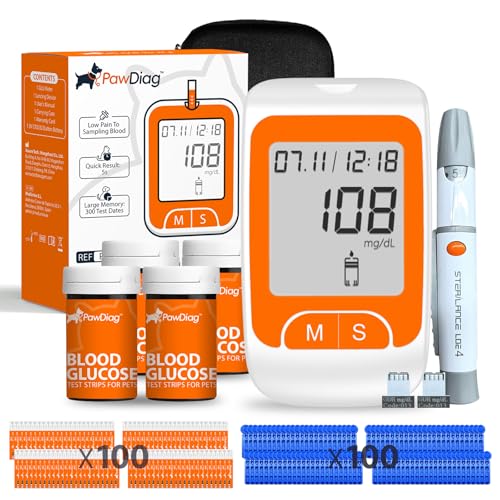
PawDiag delivers a rare combination — a complete starter kit with a double supply of test strips and lancets at a budget-friendly entry point. The meter is specifically calibrated for dogs and cats, and the manufacturer clearly states it is not validated for other species, which builds trust in its feline accuracy. The kit includes 100 strips and 100 lancets, enough for multiple daily tests during a glucose curve without scrambling to reorder.
The device reads in five seconds with a 0.8 microliter sample, and the adjustable lancing device offers several depth settings so you can find the shallowest effective puncture for your cat. The memory function stores previous readings, making it easy to spot trends before your next vet appointment. The durable zippered case keeps everything organized and ready to grab during travel or emergencies.
Busy cat parents appreciate the straightforward one-button operation — no coding, no complex menus. The generous supply means you can test as often as your veterinarian recommends without worrying about cost per strip. If you are starting diabetes management and want a complete setup that will last through the first few months, PawDiag is a smart, budget-conscious choice.
Why we love it
- 100 strips and 100 lancets in one kit
- Fast 5-second results for quick decisions
- Portable case keeps everything together
Good to know
- Not validated for species other than cats and dogs
- Requires a slightly larger sample than some competitors
3. Pet Control HQ Pet Glucose Monitoring Kit

Pet Control HQ stands out because it acknowledges that cats and dogs have different insulin physiology. The kit includes two separate code chips — one calibrated for canine blood, one for feline blood — ensuring your test results reflect your cat’s unique glucose metabolism. The GDH enzyme strips are stored in a temperature-controlled vial to preserve accuracy, and the required sample size is only 0.6 microliters.
The full kit comes with 50 test strips, 50 lancets, a lancing device, control solution, logbook, and a carrying case. The meter displays results in ten seconds, and the one-button design is intuitive even for owners who feel anxious about blood testing. The included logbook helps you track daily numbers and share them with your veterinarian during check-ins.
Feline enthusiasts who manage multiple pets will appreciate the flexibility of switching between code chips for accurate readings across species. The vet-approved reputation adds confidence, especially for first-time users. The only downside is the slightly slower read time compared to 5-second meters, but for lab-accurate results, ten seconds is a small trade-off.
Why we love it
- Separate code chips for cats and dogs
- Lab-accurate GDH enzyme test strips
- Complete kit includes control solution and logbook
Good to know
- 10-second read time is slower than some alternatives
- 50-strip count may require frequent reorders for heavy testing
4. Koko Genetics DNA Test for Cats Starter
While not a glucose monitor, the Koko Genetics DNA Test is an essential companion tool for any cat owner managing health conditions. It analyzes tens of thousands of genetic markers to reveal breed ancestry, physical trait inheritance, and potential predispositions — including markers that may affect glucose metabolism and insulin sensitivity. Knowing your cat’s genetic background can help your veterinarian tailor a diabetes management plan.
The test requires a simple saliva swab, and results arrive within four to six weeks. The online interface is clean and easy to navigate, showing a detailed family tree and trait breakdown. Koko guarantees free updates as new research becomes available, so your investment grows in value over time. European privacy standards keep your cat’s genetic data secure.
For cat parents who want a complete health picture, combining a glucose monitor with a DNA test gives you both real-time blood data and long-term genetic insight. The starter kit is affordable compared to other feline DNA panels, and the upgrade path means you can add health reports later without buying a new test.
Why we love it
- Tens of thousands of genetic markers analyzed
- Free automatic updates as research advances
- Simple saliva collection, no blood needed
Good to know
- Results take 4–6 weeks to process
- Not a diagnostic tool for active disease
5. Accu-Chek FastClix Glucose Monitor Starter Kit

Accu-Chek is a household name in human diabetes management, and the FastClix Starter Kit brings that same precision to your cat’s care. The Guide Me meter is Bluetooth-enabled and syncs with the mySugr app, allowing you to log, track, and share glucose readings with your veterinarian effortlessly. The large LCD display makes it easy to read results even in low light during middle-of-the-night checks.
The FastClix lancing device is designed for one-handed use with precision-guided technology and 11 depth settings. The lancets come pre-loaded in a drum so you never touch a needle — a huge safety and convenience upgrade. The kit includes 108 lancets and 100 test strips, giving you months of supply right out of the box. The child-resistant battery door adds an extra layer of safety for homes with kids.
While the meter is designed for human use and is not officially calibrated for cats, many feline diabetes owners report consistent results that correlate well with veterinary readings. If you pair it with species-specific strips or use it as a secondary tracking tool alongside app-based trend analysis, it becomes a powerful ally. The mySugr app alone is worth considering for its data visualization and reporting features.
Why we love it
- Bluetooth sync with mySugr app for data sharing
- Pre-loaded lancet drum eliminates needle handling
- Large, bright display for easy reading
Good to know
- Not officially calibrated for feline blood
- Requires smartphone for full data features
6. Genteel Lancing Device (Butterfly Blue)
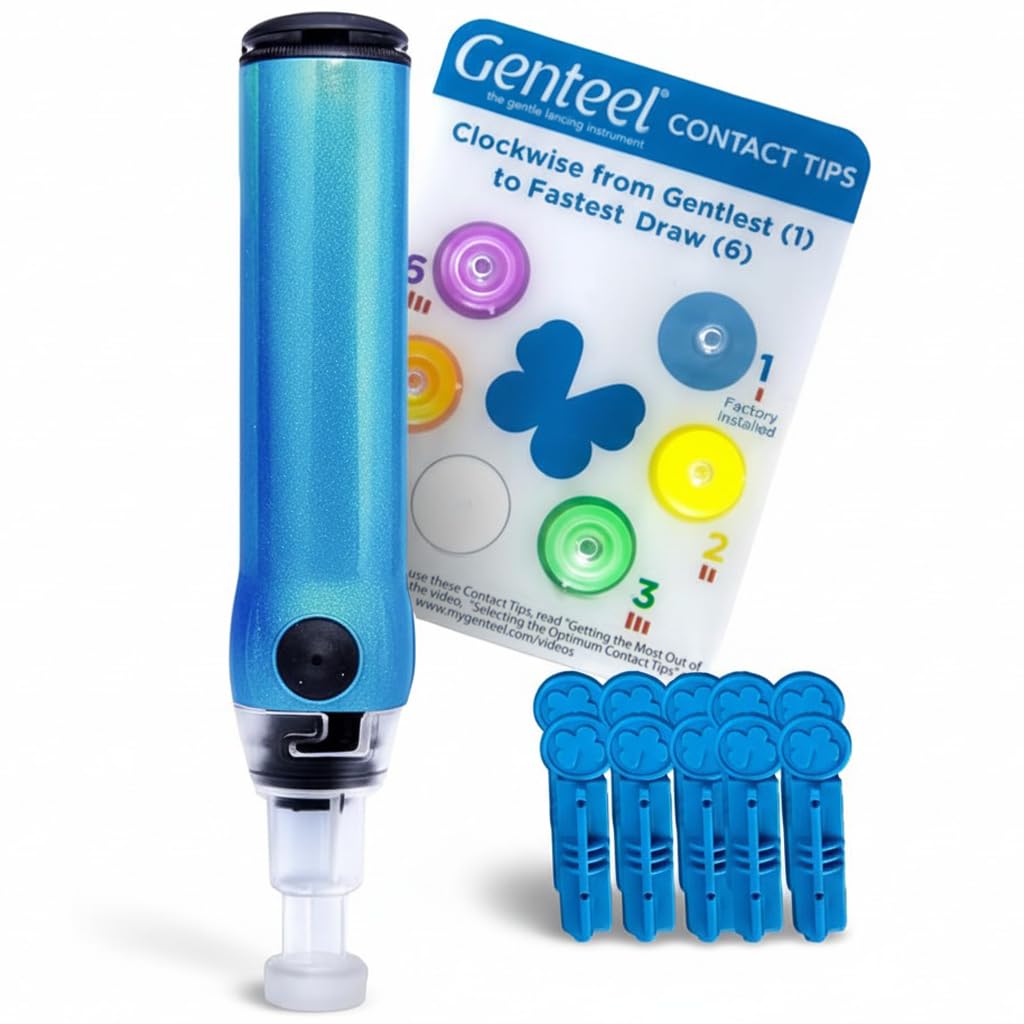
The Genteel lancing device is a breakthrough for cats who hate ear pricks. It uses vacuum technology to gently draw blood to the surface without squeezing, and the six patented contact tips let you control depth with extreme precision. Because it avoids pain nerves, many cats tolerate testing on the thenar area of the palm — an alternative site that matches finger blood sugar levels even during dynamic changes.
This device works with any meter and any test strip on the market, making it a universal upgrade for your existing monitoring kit. The butterfly blue design is compact and easy to grip, and the included 10 Butterfly Touch Lancets get you started immediately. You can also use standard square-shaft lancets, which keeps ongoing costs low. The vacuum action means you need a smaller puncture, which heals faster and causes less anxiety.
Busy cat parents who test multiple times per day will find Genteel dramatically reduces the stress for both human and feline. It does not include a meter or strips, so you need to pair it with a glucose meter separately. But for the comfort it provides, it is one of the best investments you can make for a reluctant cat.
Why we love it
- Vacuum technology eliminates painful squeezing
- Universal compatibility with any meter and strip
- Six depth settings for customized comfort
Good to know
- Meter and test strips sold separately
- Learning curve for proper vacuum seal technique
7. BERRY AM1000A-Vet Handheld Pulse Oximeter
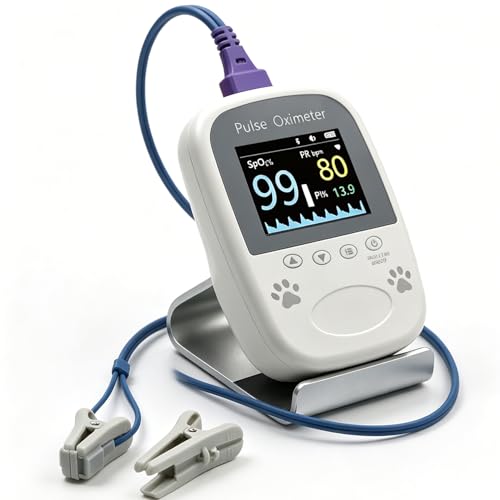
The BERRY AM1000A-Vet expands your monitoring beyond glucose to include blood oxygen saturation and pulse rate — two critical parameters for diabetic cats who may face secondary complications. The handheld device is small and lightweight, fitting easily into a pocket or medical kit. It connects to your phone or tablet via Bluetooth, and the companion app stores and analyzes data over time.
The device automatically powers down after ten seconds of inactivity to conserve battery life. It includes adjustable audible and visual alarms for out-of-range values, giving you immediate alerts if your cat’s oxygen drops or pulse becomes irregular. The measurement accuracy is ±2 percent for SpO2 readings between 80 and 100 percent, which is consistent with clinic-grade equipment.
For cat owners managing advanced diabetes or concurrent respiratory issues, the AM1000A-Vet provides a broader picture of your cat’s health. The ability to export data and share it with your veterinarian enhances collaborative care. Just note that it requires AA batteries, which are not included, and the app setup takes a few minutes.
Why we love it
- Monitors SpO2 and pulse alongside glucose
- Bluetooth app stores and analyzes trends
- Adjustable alarms for abnormal readings
Good to know
- AA batteries not included
- Not a glucose meter — must be used alongside one
8. PetTest Classic Genteel Monitoring Kit for Dogs & Cats

PetTest bundles everything you need into a single painless package. The Classic Genteel Kit includes the Genteel lancing device, 50 individually foil-wrapped test strips, 50 lancets, control solution, and a soft carrying case. The strips require only 0.3 microliters of blood — among the smallest sample sizes available — and each strip is sealed individually to protect against humidity and contamination.
The meter delivers results in five seconds and requires no coding. It features a one-button switch for different animals, which is handy if you have both a diabetic cat and dog. The phone app stores and organizes test results, making it easy to spot patterns and share data with your vet. The Genteel device itself, as described above, uses vacuum technology to avoid pain nerves.
Feline enthusiasts who prioritize comfort above all else will find the PetTest kit the most complete solution. The individually wrapped strips are a thoughtful touch for owners in humid climates. The only trade-off is the initial investment, which is higher than basic kits, but the included Genteel device alone justifies the cost for a cat that resists testing.
Why we love it
- Includes the pain-free Genteel lancing device
- Individually sealed strips for humidity protection
- App integration for trend tracking
Good to know
- Higher upfront cost than basic kits
- Phone app required for full data features
9. Pepultech Veterinary Blood Pressure Monitor
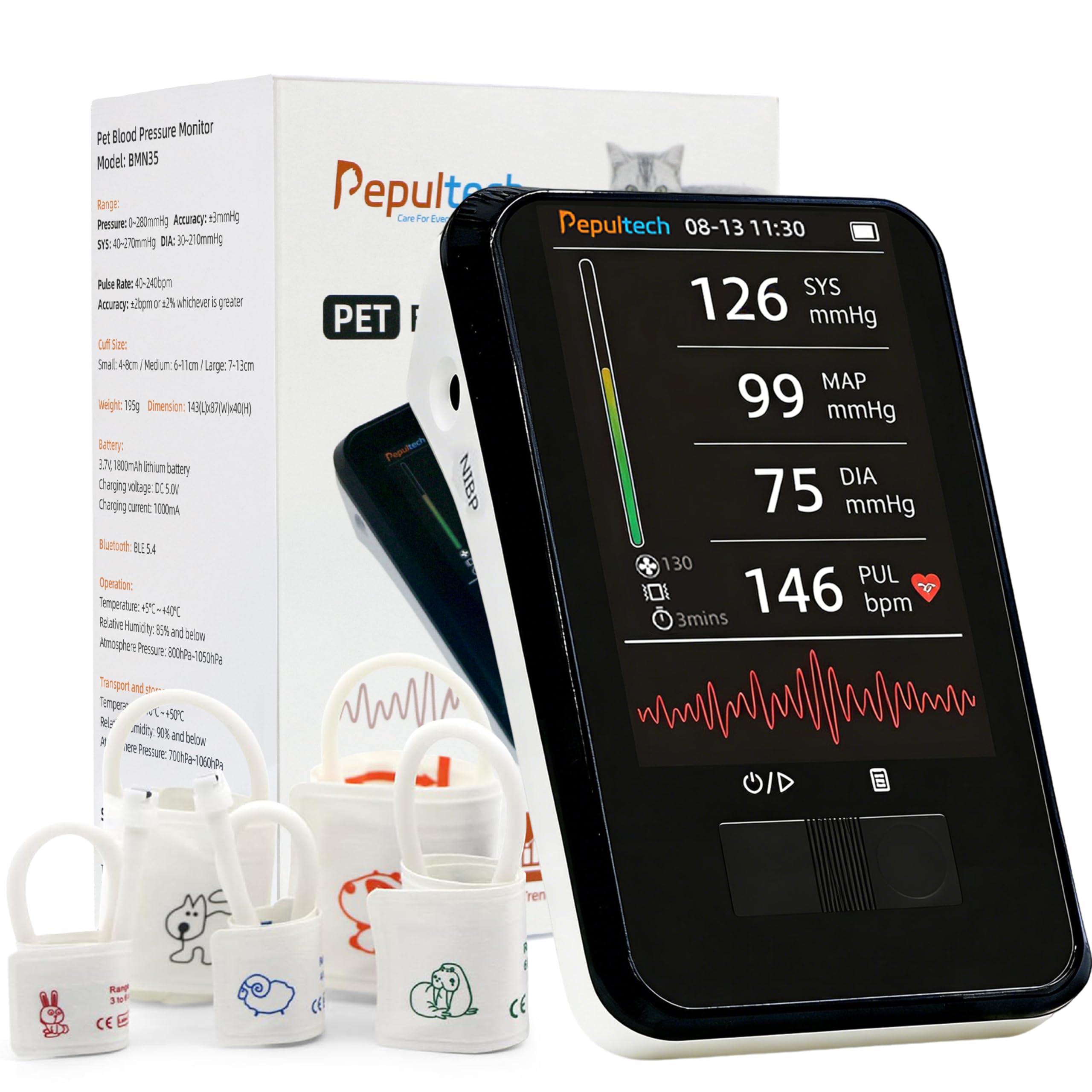
Diabetic cats often develop hypertension as a secondary condition, making blood pressure monitoring an important part of their care. The Pepultech monitor is designed specifically for veterinary use, with a silent measurement process that will not startle your cat. The 3.5-inch display shows systolic, diastolic, MAP, and pulse rate in bold, easy-to-read fonts. It stores up to 1,000 readings per user and automatically displays the average of your last ten readings.
The kit includes five cuff sizes, ensuring a proper fit for everything from a slender kitten to a larger feline. The rechargeable 1800mAh lithium battery provides over eight hours of runtime, and the lightweight 300-gram body is easy to carry during mobile vet visits. If your cat moves during measurement, the device automatically flags the error and prompts a retest, preventing inaccurate data from skewing your records.
For cat owners managing both glucose and blood pressure, this monitor complements a glucose meter perfectly. The ability to track both parameters gives your veterinarian a more complete picture. The only consideration is that it is a dedicated blood pressure device and does not measure glucose, so you will need a separate meter for sugar levels.
Why we love it
- Silent operation avoids startling your cat
- Five cuff sizes for accurate fit
- 1,000-reading memory with trend averages
Good to know
- Does not measure blood glucose
- Requires proper cuff sizing for accuracy
10. BERRY AM6100 Veterinary Monitor

The BERRY AM6100 is a clinical-grade monitor that tracks six vital parameters: SpO2, pulse rate, ECG, blood pressure, temperature, and respiration. The 2.4-inch digital display shows blood oxygen saturation and ECG waveforms in real time, giving you a comprehensive view of your cat’s cardiovascular status. The device is commonly used in veterinary clinics but is accessible for dedicated home caregivers managing complex diabetic cats.
Bluetooth 4.0 connectivity allows you to sync with PCs, Android phones, and iPhones. The built-in BLE support means you can export data for your veterinarian’s records. The single-button operation simplifies use during stressful moments, and the compact size makes it easy to transport. The device operates on one included lithium polymer battery, and the clip-on sensor works on the ear or tongue.
This is an advanced tool for owners whose cats have multiple health issues beyond diabetes. It is not a replacement for a glucose meter, but it provides the context your vet needs to adjust insulin doses safely. The price reflects its clinical capabilities, and the learning curve is steeper than a simple glucometer. For dedicated feline health advocates, it is a powerful addition to the home monitoring arsenal.
Why we love it
- Six-parameter monitoring for comprehensive care
- Real-time ECG waveform display
- Bluetooth data export for vet collaboration
Good to know
- Higher price point suitable for serious cases
- Not a standalone glucose meter
11. SmartRef Digital Refractometer by Anton Paar
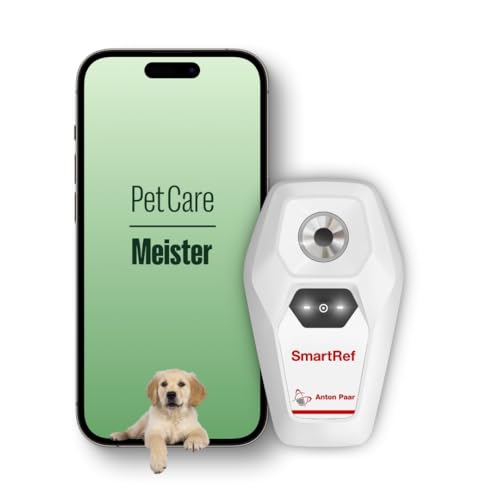
Anton Paar’s SmartRef brings laboratory-grade urine specific gravity testing to your home. While not a glucose monitor, USG is a critical metric for diabetic cats because it helps assess kidney function and hydration status — both of which直接影响 insulin sensitivity and dosing. The device measures USG with ±0.001 accuracy across a range of 1.000 to 1.120, covering the full feline clinical spectrum.
The digital refractometer requires only a few drops of urine and delivers results in seconds. The built-in automatic temperature compensation ensures consistent readings regardless of room conditions. The IP66 rating means it is dust-tight and protected against powerful water jets, so accidental splashes during sample collection will not damage the unit. The Pet Care Meister mobile app stores and visualizes measurement history, making trend analysis simple.
Cat owners who want the most complete picture of their diabetic cat’s health will appreciate the SmartRef’s precision. It is especially useful for cats with concurrent kidney disease, a common complication. The initial investment is substantial, but the durability and accuracy rival clinical refractometers costing much more. For serious feline health management, this is a professional-grade tool that delivers peace of mind.
Why we love it
- Lab-grade ±0.001 USG accuracy
- Waterproof IP66 rating for durability
- Bluetooth app for data storage and trends
Good to know
- Higher price reflects clinical precision
- Requires urine sample, not blood
Safety & Care Tips
Store Test Strips Properly
Test strips contain enzymes that degrade with humidity, heat, and direct sunlight. Always keep them in their original vial with the cap tightly closed. Do not remove the desiccant packet. Store at room temperature between 50 and 85 degrees Fahrenheit. Never refrigerate strips, as condensation can damage the enzyme layer and cause false readings.
Rotate Testing Sites
Repeatedly pricking the same spot on your cat’s ear can cause scarring, pain, and reduced blood flow. Alternate between the inner ear margin, the carpal pad on the front paw, and the elbow callus area. Using a device like Genteel that allows palm testing gives you more site options and reduces your cat’s aversion to the testing routine.
FAQ
Can I use a human glucose monitor on my cat?
How often should I test my cat’s blood glucose?
What size blood sample does a cat glucose meter need?
How do I collect a blood sample from a reluctant cat?
Final Thoughts: The Verdict
For most pet parents, the best glucose monitor for cats winner is the AlphaTrak 3 Test Strips because they deliver the veterinary-grade accuracy your cat deserves with the smallest possible blood sample. If you want a pain-free experience for a sensitive cat, grab the PetTest Classic Genteel Kit that bundles the Genteel vacuum lancing device with individually sealed strips. And for comprehensive health tracking beyond glucose, nothing beats the SmartRef Digital Refractometer from Anton Paar for precision urine analysis that catches kidney issues early.