
Selecting the right forage blend for your goats means looking past the bag art and digging into the actual species composition, protein potential, and cold-hardiness ratings. A mix built on annual brassicas performs differently than one anchored by perennial legumes, and the wrong choice can leave you supplementing hay through half the year.
I’m Mo Mahin — the founder and writer behind Furric. I analyze forage seed formulations, compare germination rates and nitrogen-fixation specs, and cross-reference soil adaptation data from hundreds of verified owner reports to separate effective pasture mixes from overhyped commodity blends.
After reviewing the leading options on composition, yield potential, and seasonal palatability, this guide identifies the strongest candidates for your goat pasture seed mix that actually delivers consistent nutrition across grazing cycles.
How To Choose The Best Goat Pasture Seed Mix
Goats are browsers, not pure grazers, which changes how you evaluate a seed mix. The ideal pasture blend balances high-protein legumes, palatable grasses, and some broadleaf forb diversity to match goat feeding behavior across seasons.
Legume percentage determines protein delivery
Clovers and alfalfa fix atmospheric nitrogen, reducing your fertilizer needs while pushing crude protein content above 18 percent in the forage. Blends with less than 30 percent legume seed by weight will require supplemental protein feeding to maintain herd condition.
Annual vs. perennial composition
Annual mixes like brassica-and-oat blends produce massive tonnage fast but demand replanting every season. Perennial mixes of white clover, perennial ryegrass, and alfalfa establish slower but provide consistent grazing for three to four years on a single seeding.
Seed coating technology matters
Nitrocoated and inoculated seeds absorb water faster and host beneficial rhizobia bacteria. This matters most for first-year stands where bare seed can fail to nodulate, leaving young plants nitrogen-starved through the critical establishment window.
Soil pH and drainage tolerance
Alfalfa demands soil pH between 6.5 and 7.5, while white clover tolerates pH down to 6.0. If your pasture soil tests below 6.0, look for mixes heavy on perennial ryegrass and red clover, which handle more acidic conditions without liming.
Quick Comparison
On smaller screens, swipe sideways to see the full table.
| Model | Category | Best For | Key Spec | Amazon |
|---|---|---|---|---|
| Outsidepride Ladino Clover | Perennial Legume | Continuous rotational grazing | 5 lbs Nitrocoated seed | Amazon |
| Outsidepride Perennial Alfalfa | Perennial Legume | Hay production and grazing | Nitrocoated, inoculated 5 lbs | Amazon |
| Hale Habitat Perennial Mix | Perennial Blend | Year-round deer and goat food plot | Clover, alfalfa, chicory blend | Amazon |
| GreenView Perennial Ryegrass | Perennial Grass | Fast green cover for mixed pastures | 7 lb bag covers 3,500 sq ft | Amazon |
| Hit List Brassica Mix | Annual Brassica | High-tonnage fall forage | 3 tons forage per acre | Amazon |
| Hit List No Till Blend | Annual Mix | Quick establishment with no plowing | Clover, turnip, brassica, oats, rye | Amazon |
| No-Till Solutions Poultry Mix | Poultry Blend | Diverse chicken pasture and fodder | 33% clovers, 33% supplements, 33% grains | Amazon |
In‑Depth Reviews
1. Outsidepride Perennial White Ladino Clover Seed
Ladino clover is the gold standard for goat pastures because it produces high-protein forage that regrows aggressively after grazing. This Outsidepride offering packs 5 pounds of Nitrocoated and inoculated seed, ensuring rhizobia bacteria are already present to kickstart nitrogen fixation. The drought tolerance rating is a practical advantage for dryland pastures where irrigation is limited.
Sow at 8 to 10 pounds per acre for a solid stand, and germination lands around 14 days under consistent moisture. The perennial habit means one planting delivers multiple years of grazing, with blooms that attract pollinators during the summer. The white clover stays short under grazing pressure, which reduces the need for mowing compared to tall alfalfa varieties.
The primary limitation is that straight clover lacks grass diversity, so goats browsing exclusively on this stand may still need a grass source or hay to round out their rumen function. Mixing this with a perennial ryegrass blend creates a more complete pasture.
Why we love it
- Nitrocoated and inoculated for strong first-year establishment
- Perennial growth saves replanting costs year after year
- Drought-tolerant once established — reduces watering requirements
Good to know
- Straight clover lacks grass diversity for complete rumen health
- Requires soil pH above 6.0 for optimal nitrogen fixation
2. Outsidepride Perennial Alfalfa Seeds for Planting

Alfalfa consistently delivers crude protein levels above 20 percent, making it one of the most nutrient-dense options for goat pastures. This Outsidepride Vernal variety features Nitrocoated and inoculated seed, which accelerates germination and improves nitrogen uptake in the root zone. The winter hardiness rating means it survives cold northern climates where tender legume varieties fail.
Expect up to four harvest cycles per season under proper management, whether you rotate graze or cut for hay. The seed weight of 5 pounds covers roughly half an acre when drilled, and the non-GMO heirloom genetics provide straight regrowth without hybrid degradation. The alfalfa’s deep taproot system improves drought tolerance once the stand is established.
Alfalfa requires soil pH between 6.5 and 7.5, so test your pasture before planting. Goats also tend to selectively graze alfalfa to the crown, so you must manage grazing height to avoid killing the stand within one season.
Why we love it
- Crude protein above 20 percent supports milk and weight gain
- Winter-hardy Vernal genetics survive cold climates
- Nitrocoated and inoculated for rapid establishment
Good to know
- Demands soil pH 6.5-7.5 — liming may be necessary
- Grazing must be managed to prevent crown damage
3. Hale Habitat & Seed Perennial Clover, Alfalfa & Chicory Mix
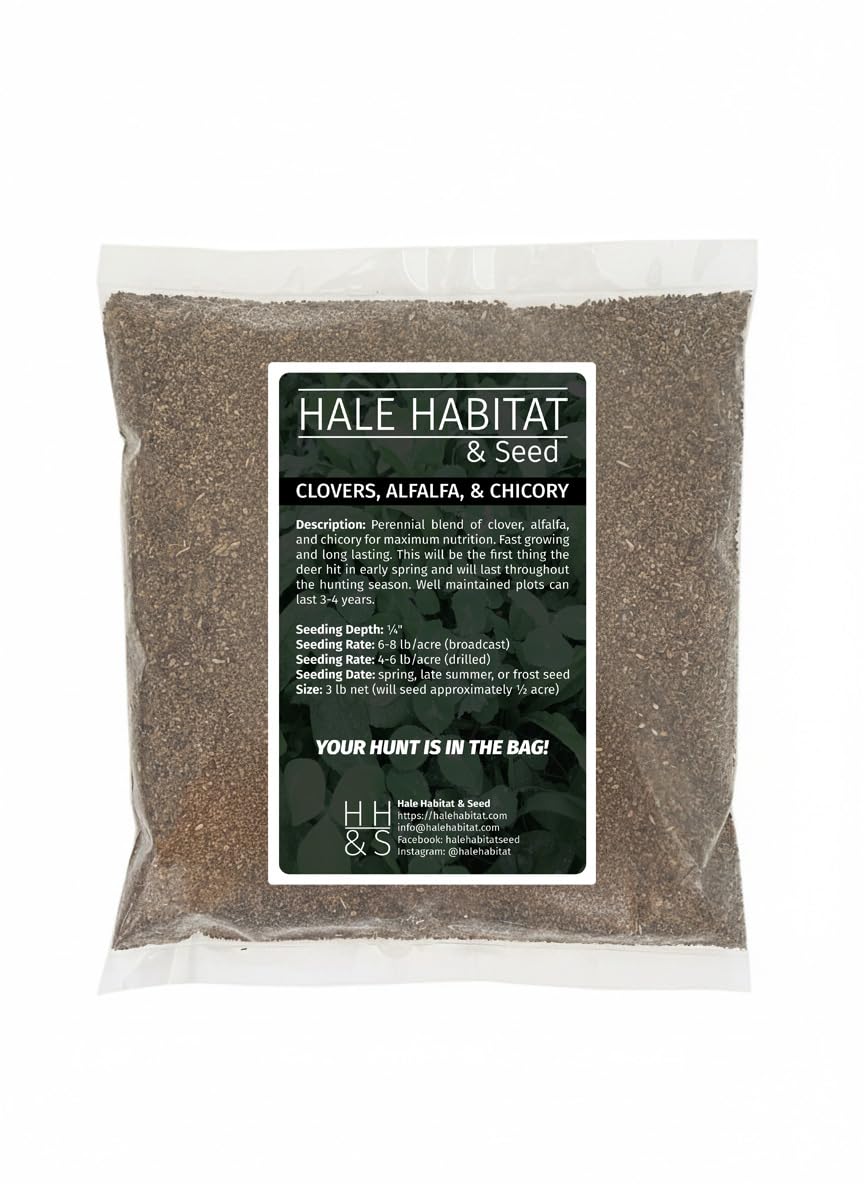
This three-species perennial blend from Hale Habitat combines clover, alfalfa, and chicory into a single bag, providing the species diversity that pure legume stands lack. Chicory is a deep-rooted forb that stays palatable through summer heat when alfalfa and clover slow down, extending the grazing window into dry months. The blend covers up to half an acre when broadcast on a prepared seedbed.
Chicory adds trace minerals like copper and selenium that goat owners often supplement separately, so this mix addresses both forage volume and micronutrient density. The 16-inch expected plant height stays accessible to goats without excessive trampling, and the recommended planting depth of a quarter-inch max prevents seeding too deep.
The bag weight is only 3 pounds, which is light relative to the half-acre coverage claim. Achieving full coverage may require a tighter seeding rate, especially on rough seedbeds or eroded areas. Soil preparation and pH correction dramatically affect the establishment success.
Why we love it
- Three-species diversity covers seasonal palatability gaps
- Chicory adds trace minerals often lacking in straight grass or clover
- Perennial growth removes need for annual replanting
Good to know
- 3-pound bag is light — verify coverage for larger pastures
- Requires proper seedbed preparation and pH management
4. GreenView Pure Grass Seed Perennial Ryegrass Blend

Perennial ryegrass germinates in 7 to 12 days, making this GreenView blend the fastest option for establishing a green cover that prevents erosion while your legumes catch up. The 7-pound bag covers 3,500 square feet for overseeding or 1,750 square feet for new lawns, and the 99.9 percent weed-free guarantee keeps unwanted species out of the pasture base.
For goat pastures, ryegrass functions primarily as a digestible fiber source that balances the high protein from clover or alfalfa. The medium-to-fine texture and dark green color indicate good leaf-to-stem ratio, and the heat and drought resistance after establishment keeps the stand productive through summer stress periods.
Perennial ryegrass is not a legume, so it does not fix nitrogen. It also requires consistent moisture for germination and early growth. Mixing this with a clover seed at a 70-to-30 grass-to-legume ratio creates a balanced pasture that meets both energy and protein needs.
Why we love it
- Fast germination in 7-12 days establishes ground cover quickly
- 99.9% weed-free — no unwanted species in your pasture
- Heat and drought resistant once established
Good to know
- Grass only — must be paired with legume seed for balanced nutrition
- Requires constant watering during germination phase
5. Hit List Seed Brassica Food Plot Mix

Brassica blends produce massive biomass quickly, and this Hit List mix of Daikon radish, purple top turnips, and forage brassica can yield up to 3 tons of forage per acre. Goats love the sweet leafy tops after a frost, and the bulbs provide high-energy carbohydrates through late fall and winter. The 3-pound bag covers half an acre, with a 6-pound option for full-acre plots.
The drought-tolerant genetics handle dry spells better than most leafy forages, and the quick germination means you can plant this as a late-summer supplement when perennial pastures slow down. The high protein content is especially valuable for young kids and lactating does during the fall transition.
Brassica mixes are annuals — dead with the first hard freeze. They also cause digestive upset if goats consume more than 30 percent of their diet as brassica without gradual introduction. Rotate access to prevent bloat and maintain rumen health.
Why we love it
- Up to 3 tons forage per acre — unmatched biomass production
- Frost-sweetened tops and bulbs extend grazing into winter
- Drought tolerant and quick to germinate
Good to know
- Annual mix — must replant each season
- Must be limited to 30% of diet to prevent digestive upset
6. Hit List Seed No Till Food Plot Mix

This five-species annual blend from Hit List combines crimson clover, purple top turnips, forage brassica, forage oats, and rye into a single no-till formulation. The diversity spans legumes, brassicas, and grains, providing a broad-spectrum forage that stays attractive from early fall through late hunting season. The 5-pound bag covers half an acre with minimal equipment — just broadcast and step away.
The inclusion of oats and rye adds quick-growing cereal biomass that stabilizes soil while the clover and brassica establish. For goat owners with rough or rocky ground, the no-till approach eliminates the need for plowing or disking. The drought-tolerant tolerance across the blend reduces the risk of complete stand failure during dry planting windows.
The annual nature means this mix requires replanting each season, and the oats and rye can go to seed quickly in warm weather, reducing palatability. Overseed earlier in the season to keep the cereal component vegetative and sweet.
Why we love it
- No-till formulation saves labor on rough or rocky ground
- Five-species diversity covers protein, energy, and mineral needs
- Quick germination and drought tolerance reduce failure risk
Good to know
- Annual blend — must be replanted each year
- Oats and rye can go to seed quickly in warm weather
7. No-Till Solutions Premium Chicken Poultry Pasture Mix
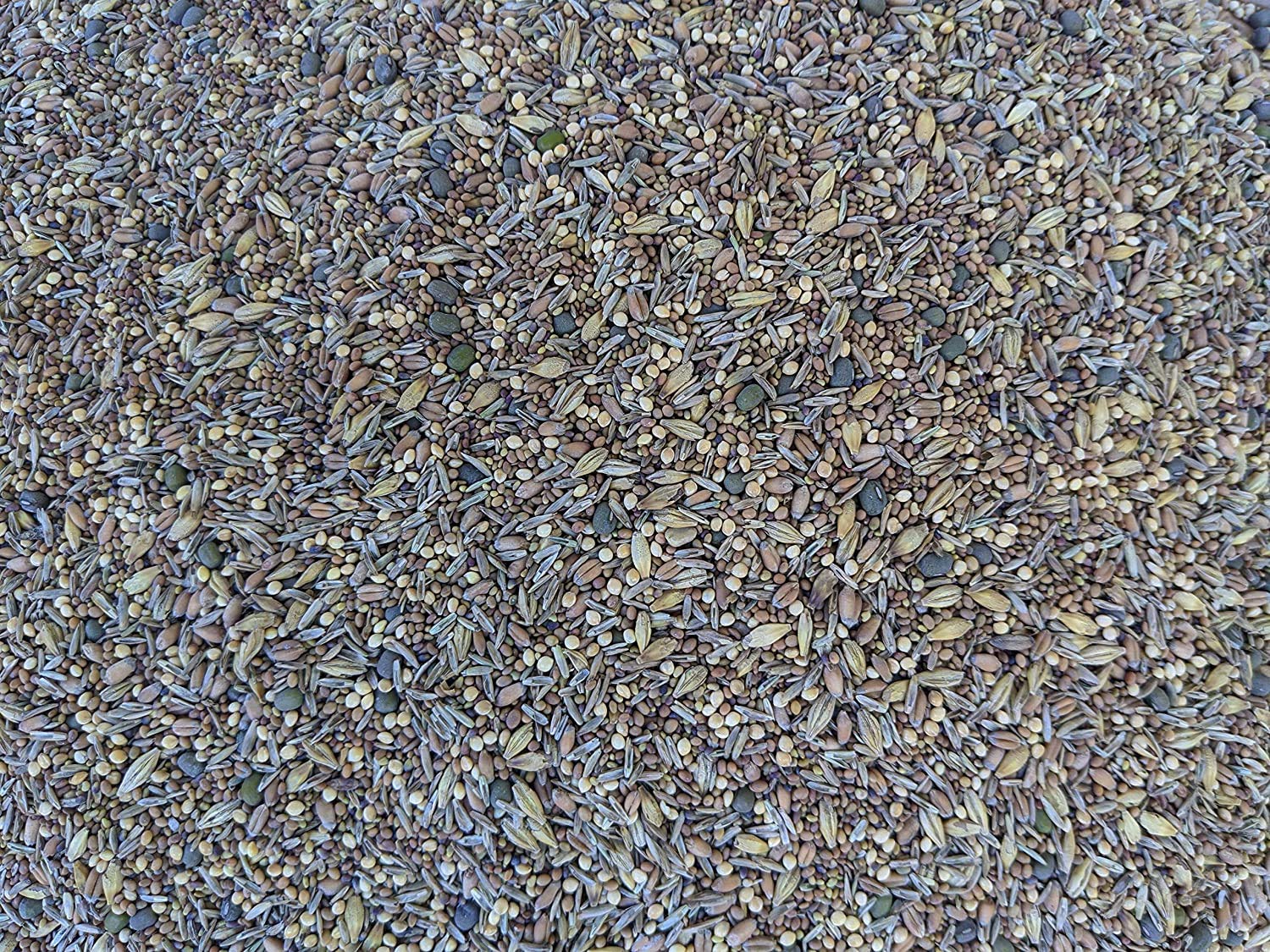
This 9-variety blend from No-Till Solutions targets poultry specifically, but its balanced composition of 33 percent clovers, 33 percent supplemental forbs, and 33 percent grain producers makes it adaptable as a goat pasture supplement in mixed-species grazing systems. The Omega-3-rich varieties support healthier egg production in hens and can contribute to dairy goat milk fat content when goats browse the same plot.
The all-natural, nitro-coated seed ensures high germination rates across varying soil conditions. The 5-pound bag suits small pasture plots or rotational paddocks where you rotate chickens and goats to break parasite cycles and fertilize the ground naturally.
The flavor profile lists “chicken,” so the greens and grains are selected for avian palatability, not necessarily for goat preference. Goats may selectively bypass certain grain components in favor of the clovers and forbs. Test a small patch before investing in large-scale planting.
Why we love it
- 9-variety diversity provides broad mineral and protein range
- Nitro-coated seed ensures reliable germination
- Suitable for mixed-species rotational paddocks with goats and poultry
Good to know
- Formulated for poultry — goat palatability may vary for grain components
- Best suited as supplement, not primary goat pasture source
FAQ
What is the ideal legume to grass ratio for a goat pasture seed mix?
Can I broadcast a goat pasture seed mix directly into existing sod?
How much protein does a typical goat pasture seed mix provide?
Final Thoughts: The Verdict
For most goat owners, the goat pasture seed mix winner is the Outsidepride Perennial White Ladino Clover because it combines high protein content, perennial persistence, and drought tolerance in a single 5-pound bag. If you need species diversity with trace mineral benefits, grab the Hale Habitat Perennial Clover, Alfalfa, and Chicory Mix. And for a fast-growing annual supplement that delivers 3 tons of forage per acre, nothing beats the Hit List Seed Brassica Mix.