
Your dog’s daily sprinting path, dig spot, and bathroom zone don’t have to mean a mud pit. The right grass seed blend turns a trampled yard back into a resilient green carpet even when a 70-pound pup tears across it four times a day.
I’m Mo Mahin — the founder and writer behind Furric. I’ve spent years cross-referencing turfgrass physiology data, analyzing soil compaction studies, and mapping owner-reported recovery rates from thousands of verified buyer accounts to separate hype from actual traffic tolerance.
After evaluating germination speed, root depth potential, and wear recovery across five leading blends, I’ve narrowed the market to the most proven options for the best grass seed for dog traffic.
How To Choose The Best Grass Seed For Dog Traffic
Not all grass seed handles the same abuse. Dog traffic demands three specific traits: deep roots for physical stability, fast germination to fill bare spots before they widen, and a blade texture that doesn’t shred under lateral paw force. Here’s what separates a durable lawn from a constant reseeding project.
Wear Tolerance vs. Recovery Speed
Wear tolerance is the grass’s ability to stay intact when trampled — think tall fescue’s tough, coarse blades. Recovery speed, however, is the grass’s ability to send out new shoots from the crown after damage. For dog traffic, recovery speed matters more: a dog can tear a blade in seconds, but a fast-recovering perennial ryegrass can regrow that same spot within a week. Prioritize blends with a high percentage of perennial ryegrass if your dog runs the same line every day.
Urine Resistance and Soil pH Balance
Dog urine burns grass via nitrogen overload and salts. The most dog-traffic-resistant grass varieties — fescues and perennial ryegrasses — have a higher pH tolerance range (5.5 to 7.5) than bluegrasses. Look for seed that explicitly mentions “urine resistance” or “dog-safe” in the label, but know that no seed survives repeated urination in the same spot without dilution. The mechanical recovery from tearing matters far more than resisting chemical burn from pee.
Quick Comparison
On smaller screens, swipe sideways to see the full table.
| Model | Category | Best For | Key Spec | Amazon |
|---|---|---|---|---|
| GreenView Perennial Ryegrass | Premium | Rapid recovery from heavy paw traffic | 99.9% weed-free, 7–12 days germ | Amazon |
| Scotts Turf Builder All-Purpose | Mid-Range | Large-area coverage with deep root potential | 20 lb bag, 8,000 sq ft coverage | Amazon |
| GreenView Tall Fescue Sun & Shade | Mid-Range | Mixed sun/shade dog zones with drought | 0.9% weed-free, 10–14 days germ | Amazon |
| Pennington Annual Ryegrass | Budget | Quick winter green and temporary traffic patch | 10 lb, 2,000 sq ft, 3–7 days germ | Amazon |
| Jonathan Green Dense Shade | Budget | Heavily shaded dog runs and corners | 3 lb, 1,800 sq ft, shade-resistant | Amazon |
In‑Depth Reviews
1. GreenView Pure Grass Seed Perennial Ryegrass Blend

Perennial ryegrass is the gold standard for dog traffic because its tillering ability — the way it sends out new shoots from the base after being trampled — far exceeds tall fescue. The GreenView blend hits a 7-to-12-day germination window, which means bare spots from digging or repeated running disappear within two weeks instead of lingering all season. Buyers in zone 8b reported visible fill-in at day 10 with consistent moisture, and the dark green blade color matches well with existing cool-season lawns.
The 99.9% weed-free guarantee is critical for dog owners: filler seeds like annual bluegrass or rough stalk bluegrass die under paw pressure and create weak spots that dogs widen. The GreenView bag covers up to 3,500 square feet for overseeding, which is enough to handle a medium fenced yard without needing a second bag. The medium-to-fine blade texture also means less mud tracking into the house compared to coarser tall fescue varieties.
Where this blend really flexes is in partial-shade dog zones. Many ryegrasses thin out under tree cover, but this curated blend of perennial ryegrass varieties maintains cover even with four hours of indirect sunlight. One buyer in the northeast reported using it for fall overseeding with spring results that required only minor touch-ups — a huge win for owners who don’t want to reseed every month.
Why we love it
- Fast recovery after paw traffic with tillering root system
- 99.9% weed-free, so no weak filler spots that dogs tear open
- Works in partial shade where dog runs under trees
Good to know
- Requires consistent watering 3–4 times daily during germination
- Not ideal for full dense shade — needs at least 4 hours of light
2. Scotts Turf Builder Grass Seed Quality All-Purpose Mix

When you have a large property and a high-energy dog that patrols every corner, coverage per bag becomes a major consideration. The Scotts Turf Builder All-Purpose Mix delivers a 20-pound bag that covers up to 8,000 square feet — enough to handle an acre-plus fenced area without ordering multiple bags. The seed is coated with a water-absorbing polymer that takes in twice as much moisture as uncoated seed, which helps germination survive the dry periods that often occur between dog traffic breaks.
The blended mix pairs bluegrass, perennial ryegrass, and fescue varieties, which gives it broad adaptability across sunny and shady zones. That diversity matters when a dog’s favorite sunbathing spot gets full blast and their running path passes under a tree canopy. The bluegrass component adds a soft feel under paw, but it takes longer to establish (up to 21 days). Buyers reported seeing sprouts within 14 days in northern climates, with the ryegrass and fescue components carrying the early visual results.
The biggest trade-off is the inclusion of bluegrass. While it makes for a beautiful, soft lawn, bluegrass has lower wear tolerance than pure perennial ryegrass, so the dog-path areas may need thicker initial seeding. However, one reviewer with a large southern lawn noted that the 20-pound bag’s pure seed content — no filler or fertilizer — made it the most cost-effective option for establishing a dog-safe base. The manufacturer’s “no quibble guarantee” also provides peace of mind for owners seeding an entire yard for the first time.
Why we love it
- Massive coverage per bag — handles large fenced yards
- Coated seeds absorb 2x water, helping germination through dry spells
- Blended mix adapts to both sunny and shady dog zones
Good to know
- Bluegrass component takes 3 weeks to fully establish
- Not a pure ryegrass — wear tolerance varies by zone
3. GreenView Pure Grass Seed Turf Type Tall Fescue Sun & Shade Blend

If your dog lives in a hot, dry climate and the yard gets full sun for 8+ hours, tall fescue’s deep root system (up to 3 feet) gives it a structural advantage over any ryegrass. The GreenView Tall Fescue blend is engineered for soil adaptability across all common types, and its drought and heat resistance means the lawn doesn’t go dormant and brittle under a summer sun — which is when paw traffic does the most damage to shallow-rooted grasses.
This blend is 99.9% weed-free and has a medium-to-coarse texture that holds up to lateral running forces better than fine-bladed grasses. Buyers in zone 8b reported 90% germination at day 10 with peat moss covering, and the dark green color matched established tall fescue lawns seamlessly. The blend’s “turf-type” designation means the blades are bred for density rather than pasture height, creating a tighter mat that resists digging and bare-spot formation.
The trade-off is slower germination (10–14 days compared to ryegrass’s 7 days), which means you’ll need to keep the dog off the seeded area for two full weeks. Some buyers in the northeast reported low germination rates (~5% at two weeks), but those cases coincided with late-season planting without consistent moisture. For fescue to work under dog traffic, the root system needs uninterrupted establishment. Once established, however, the GreenView blend’s insect and disease resistance reduces the need for chemical treatments that could interact with pets.
Why we love it
- Deep-rooted tall fescue resists tearing from lateral paw force
- Drought and heat tolerance keeps lawn strong in full sun
- Weed-free and disease-resistant — less chemical need near pets
Good to know
- Two-week germination window requires longer dog-free period
- Coarser texture than ryegrass, less soft under bare paw
4. Pennington Annual Ryegrass Grass Seed

For dog owners who need a visible green patch to stop mud tracking within days, Pennington’s Annual Ryegrass delivers the fastest visible results of any option in this list — germinating in as little as 3 days and producing a full green brush by day 4. One buyer described having grass visible in two days and a thick, green lawn by day 4 after prepping soil, spreading seed, and watering deeply. That’s critical when a high-traffic dog path turns into a mud pit after one rain.
The 10-pound bag covers up to 2,000 square feet, making it a budget-friendly choice for spot repairs in dog runs or potty zones. It works well for overseeding warm-season lawns (Bermuda, Zoysia) in winter to maintain green cover when those grasses go dormant. The annual lifecycle means it grows anywhere in the USA, but it dies after one season (typically 5 months). Buyers in southern climates noted it looked great from November to March but then died out — consistent with the annual label.
This is not a permanently solution for dog traffic. Because it dies every year, you’ll need to overseed annually. But for owners who want a quick “band-aid” for a bare spot that keeps getting dug up, the 3-day germination window means the dog can be back on the area (once it reaches 4 inches) far faster than waiting for perennial grasses. The annual ryegrass also holds up well under foot traffic and is disease-resistant within its short lifecycle, giving you 4–5 months of passable cover per reseeding.
Why we love it
- Fastest germination in the category — green in 3 days
- Excellent temporary winter cover for warm-season lawns
- Holds up well under foot traffic and resists disease
Good to know
- Annual grass — dies after one season, must be reseeded
- Not a permanent solution for high-traffic zones
5. Jonathan Green 40600 Dense Shade Grass Seed
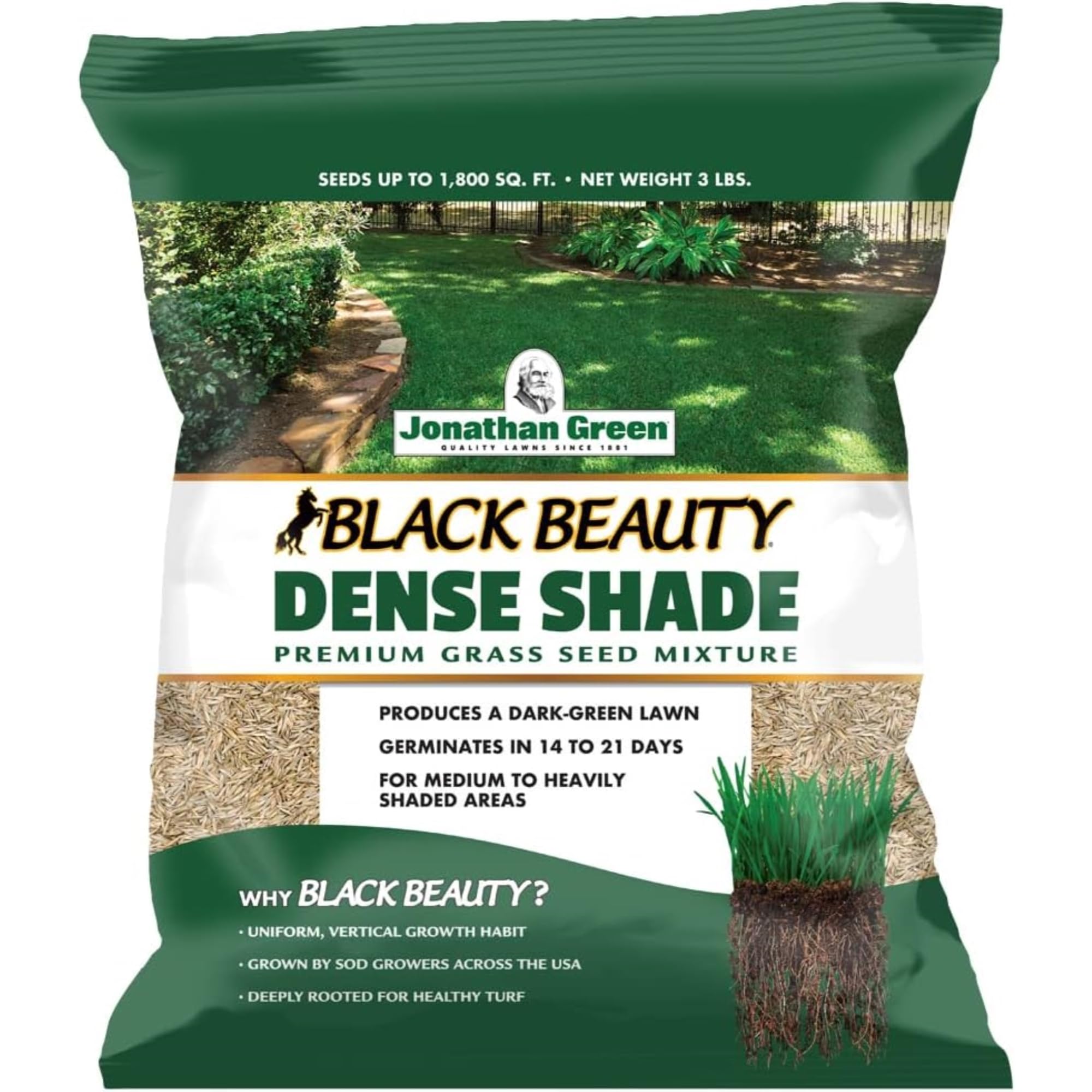
If your dog’s preferred bathroom spot is under a dense canopy or against a north-facing fence where sunlight barely reaches, standard sun-blend seeds will thin out and die within weeks. The Jonathan Green Dense Shade seed is bred specifically for heavy shade — the kind of spots where Bermuda and St. Augustine fail completely. One buyer in North Carolina tilled clay under a deck, added topsoil, and saw sprouts within days, with the grass reaching 2 inches high in a full-shade environment.
The 3-pound bag covers 1,800 square feet, which is a generous seeding rate for a dense shade zone. The grass grows tall, thin, and dark green — a blade structure that’s less robust than full-sun varieties, but it survives where nothing else does. Buyers reported germination within 3 days, with the grass growing 4 to 5 inches tall in shade conditions. The tall blades help the grass reach for any available light, but they also mean the grass is more susceptible to tearing from aggressive dog play than compact, sun-grown varieties.
The biggest caveat is inconsistent germination rates. While many buyers reported excellent results, several noted low germination rates (5-10%) even with proper soil prep and watering. One buyer who tilled clay, added topsoil, and used a hand spreader on 200 square feet under a deck reported few patches were missing, suggesting that proper soil preparation is non-negotiable for this blend. For dog owners, this means you’ll likely need to overseed the shade spots twice to achieve full coverage that can withstand regular paw traffic.
Why we love it
- One of the few seeds that thrives in full-shade dog zones
- Tall, dense growth pattern fills in canopy gaps
- Germinates quickly in 3 days when soil is properly prepped
Good to know
- Tail, thin blades are more prone to tearing from active dogs
- Germination can be inconsistent; may need double seeding
FAQ
Will grass seed for dog traffic survive if my dog keeps digging in the same spot?
How long should I water grass seed for dog traffic during germination?
Does grass seed for dog traffic work in partial shade under a deck or tree?
Final Thoughts: The Verdict
For most gardeners, the grass seed for dog traffic winner is the GreenView Perennial Ryegrass Blend because it combines the fastest recovery speed from paw traffic with a 99.9% weed-free guarantee and broad sun/shade adaptability. If you need massive coverage for a large property and don’t mind a longer establishment window, grab the Scotts Turf Builder All-Purpose Mix. And for hot, dry climates where deep roots matter more than recovery speed, nothing beats the GreenView Tall Fescue Sun & Shade Blend.