
Watching your horse graze on lush spring grass is satisfying—until you realize that same pasture is a metabolic minefield for an easy keeper. A grazing muzzle is the only piece of turnout gear that lets your horse socialize and move freely while strictly limiting sugar intake, but the wrong one creates a different set of problems: painful rubs, choked airflow, or a muzzle that pops off at the worst moment.
I’m Mo Mahin — the founder and writer behind Furric. I’ve spent years analyzing equine product specifications, cross-referencing owner feedback across hundreds of reviews, and studying the engineering details of pasture-management gear to understand exactly why some muzzles work reliably and others cause more headaches than they solve.
To help you find a safe, comfortable fit that your horse won’t hate, I’ve tested seven of the top-rated grazing muzzles for horses against real-world durability, anti-chafe design, and ease of cleaning.
How To Choose The Best Grazing Muzzle For Horses
Grazing muzzles work by covering the mouthpiece with a small hole that limits the amount of grass the horse can pull through in a single bite. But not all muzzles achieve that goal with the same level of comfort or ruggedness. Here are the three factors that separate a good muzzle from a pasture-disaster waiting to happen.
Lining Material and Anti-Chafe Strategy
The inside of the muzzle and the crown piece are the primary contact points. Synthetic fleece is plush out of the box but can trap moisture and mat down. Neoprene offers waterproof padding that remains protective even when wet. Open-basket designs (like the GG Equine GreenGuard) rely on spacing and smooth edges rather than soft liners, which reduces sweat buildup but may still need shearling wrap at contact spots on narrow faces. Check whether the manufacturer reinforces the chin and noseband areas, where hair loss occurs on sensitive horses.
Grazing Hole Reinforcement and Durability
The rubber ring or plastic opening at the bottom of the muzzle takes the most abuse from chewing and ground contact. Thin rubber wears through in 6–8 weeks of daily turnout. Look for a thick rubber lip, a reinforced plastic insert, or a replaceable grazing plate. A muzzle that loses its hole shape no longer restricts intake and acts as a full feed tray—defeating its entire purpose.
Closure System and Halter Attachment
Buckle crowns (leather or nylon) are the most mechanically reliable over months of UV and mud exposure. Hook-and-loop (Velcro) systems offer quick-release safety but require regular cleaning to maintain grip strength—dried grass and manure reduce Velcro hold by half. Snap-on attachments are convenient for multi-horse barns but introduce metal hardware that can rust. The best attachment method depends on whether your horse needs a breakaway safety feature or a rigid hold.
Quick Comparison
On smaller screens, swipe sideways to see the full table.
| Model | Category | Best For | Key Spec | Amazon |
|---|---|---|---|---|
| Shires Deluxe Fleece Lined | MID-RANGE | Sensitive noses, anti-chafe priority | Synthetic fleece lining | Amazon |
| Weaver Leather Grazing Muzzle | MID-RANGE | Leather crown durability | Vegetable-tanned leather buckle crown | Amazon |
| Tough 1 Easy Breathe Draft | MID-RANGE | 24/7 turnout on draft breeds | Large nasal ventilation holes | Amazon |
| Equivet Kerbl 321627 | MID-RANGE | Warmbloods, weatherproof outdoor | Ergonomic shape + reinforcement | Amazon |
| Best Friend Standard Muzzle | PREMIUM | Breakaway safety, padded noseband | 4-way adjustable hook-and-loop breakaway | Amazon |
| Equivet Muzzle (Pony) | PREMIUM | Small ponies, reinforced mouth area | Small opening + nylon-rubber base | Amazon |
| GG Equine GreenGuard | PREMIUM | All-day comfort, lightweight open basket | Patent-pending open basket design | Amazon |
In‑Depth Reviews
1. GG Equine GreenGuard Grazing Muzzle
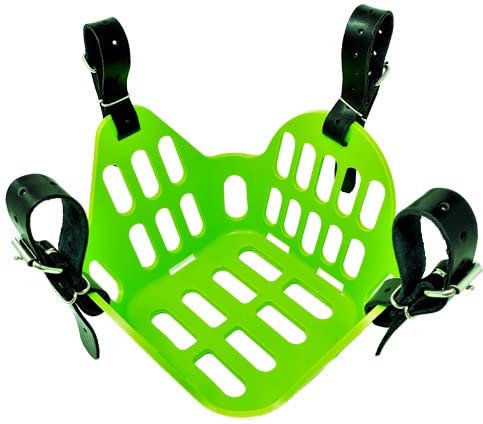
The GG Equine GreenGuard is the only muzzle on this list that abandons the standard nylon-bag shape in favor of an open plastic basket. This patent-pending design creates a rigid dome around the muzzle with two large nasal vents, which allows your horse to drink through an automatic waterer and breathe freely even during hot turnout. The basket is semi-flexible, so it won’t crack under impact, and the bright lime color makes it easy to spot from across the pasture—a nice bonus for multi-acre fields.
What sets the GreenGuard apart in the premium tier is how it manages the turning point between comfort and function. The open structure stays cooler and drier than fleece or neoprene-lined models, which nearly eliminates the sweaty-face problem. Owners report that the horse adapts within two days and that the muzzle maintains effective grass restriction without the constant rubbing that plagues heavier designs. The 30-day risk-free guarantee adds direct manufacturer support for sizing questions.
The main catch is that this muzzle relies entirely on a breakaway halter and separate straps. Two owners noted that the included nylon straps broke after one summer of daily use, and the buckles can leave a pressure mark on narrow cheekbones unless padded with vet wrap or sheepskin. Replacement straps are available, but the extra purchase pushes the total investment higher.
Why we love it
- Open basket keeps muzzle dry and cool—less chafing than lined models
- Horse can drink from automatic waterers without removal
- Durable plastic frame holds shape better than rubber-bottomed bags
Good to know
- Nylon attachment straps may break within one season; buy spares
- Buckles need padding for narrow-faced horses to prevent rubs
- Higher price point, especially with replacement straps included
2. Shires Deluxe Fleece Lined Grazing Muzzle

The Shires Deluxe is built around a full wrap of synthetic fleece that covers the muzzle bag and extends onto the chin strap. This is the go-to choice for horses with a history of hair loss from standard muzzles—the fleece provides a plush buffer between the nylon mouthpiece and the horse’s skin. The Velcro that secures the fleece wrap is surprisingly strong and holds shape even after field rolling and wet grass contact.
Fit is the critical variable here. The Cob size works best on refined heads and smaller-muzzled Arabians; owners of wider-faced horses report that the muzzle feels snug. The double-buckle crown allows fine adjustment, but the crown padding itself is minimal—several owners added sheepskin separately to prevent rubs behind the ears. When properly sized, the fleece stays dry and comfortable through turnout, though one owner noted the rubber grazing hole wore out within 6 weeks on a pony-sized unit.
The nylon body is sturdy enough for daily use, but the plastic clips on the attachment system are the weak link. Multiple verified reviews mention these clips cracking after a few months, causing the muzzle to detach during play. Regular inspection of the clip integrity is necessary, and a backup clip wouldn’t hurt for high-turnout situations.
Why we love it
- Fleece lining eliminates rubs on the muzzle and chin for sensitive horses
- Strong Velcro wrap holds position even during wet turnout
- Adjustable double-buckle crown for precise fit adjustments
Good to know
- Plastic clips can crack over time—inspect them regularly
- Crown padding is minimal; may need added sheepskin for bald spots
- Rubber grazing hole may wear through quickly on heavy chewers
3. Equivet Kerbl 321627 Grazing Muzzle (Warmblood)

The Equivet Kerbl 321627 is a solid mid-range pick built around an ergonomic nylon bag that contours to a warmblood’s face without excessive bulk. The shape improves airflow around the nose and chin compared to flat-bottomed bag designs, which helps reduce moisture buildup even on humid days. Owners consistently praise the weatherproof construction—the nylon and rubber combo shrugs off mud and repeated rain without absorbing odors or becoming stiff.
Velcro is the main closure mechanism, and it requires regular cleaning to stay effective. Several European owners reported the stitching on the Velcro flaps began to unravel after months of daily use, requiring resewing. That said, the grazing hole reinforcement on this model holds up well against normal wear. The rubber base maintains its shape longer than the thinner rubber used on budget alternatives, and the one-piece construction prevents the bag from collapsing inward during aggressive grazing.
The fit runs snug for true warmbloods—the size L is compact rather than generous, which may cause pinch points on broader muzzles. A handful of owners with 16+ hand horses found the L too small and switched to the larger Kerbl model. For average 15–16 hand horses with standard face width, this muzzle offers excellent value with no chafing complaints.
Why we love it
- Ergonomic shape provides good airflow around the nose area
- Weatherproof nylon-rubber construction resists mud and odor
- Grazing hole reinforcement lasts longer than thin rubber alternatives
Good to know
- Velcro closure may need resewing after extended daily use
- Size L runs small for larger warmblood heads
- Stitching around the attachment points is the primary long-term weakness
4. Tough 1 Easy Breathe Poly/Grazing Muzzle (Draft)
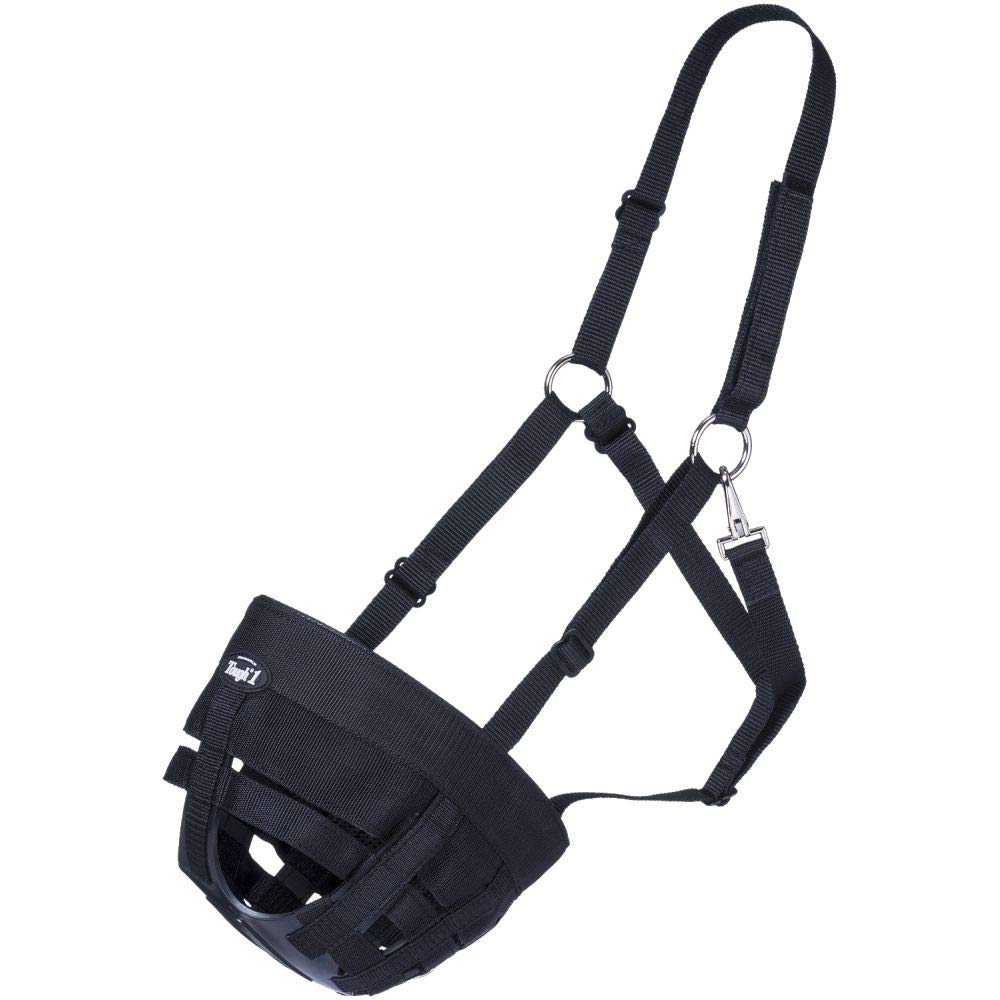
The Tough 1 Easy Breathe stands out for its oversized nasal ventilation holes—three large openings across the nose piece that allow unrestricted breathing even during sweaty summer turnout. The draft size is genuinely generous, accommodating the broad muzzle and heavy head of draft crosses and large warmbloods without needing to max out the adjustment straps. The design uses a nylon halter integrated with snap and “quick grip” closures, which makes application fast even with a fidgety horse.
Durability is the real story here. Multiple owners report this muzzle lasting 18–22 months on 24/7 turnout—the polypropylene body resists cracking, and the rubber grazing hole, while not replaceable, holds shape for far longer than the Shires or Weaver rubber components. The rectangular grazing opening does get slightly larger over time, but the rate of wear is slow enough that the muzzle remains functional for its entire lifespan. The draft model weighs just 1 pound, which helps prevent fatigue on heavy heads.
The main downside is the Velcro quick-release on the headstall. Several owners found that determined horses could pull the Velcro apart enough to remove the muzzle, requiring a stitched reinforcement to secure the closure. The fit also runs small—the horse size barely fits an average quarter horse with straps fully extended. For draft owners, the draft model works well, but the pony and horse sizes require careful measurement against the circumference chart.
Why we love it
- Large ventilation holes provide superior airflow during hot weather
- Exceptional longevity—reported 22 months on continuous turnout
- Lightweight nylon-poly construction reduces head-carrying fatigue
Good to know
- Velcro headstall may need stitching reinforcement to prevent removal
- Fit runs small; measure circumference carefully before ordering
- Rectangular grazing hole widens slowly over extended use
5. Weaver Leather Grazing Muzzle
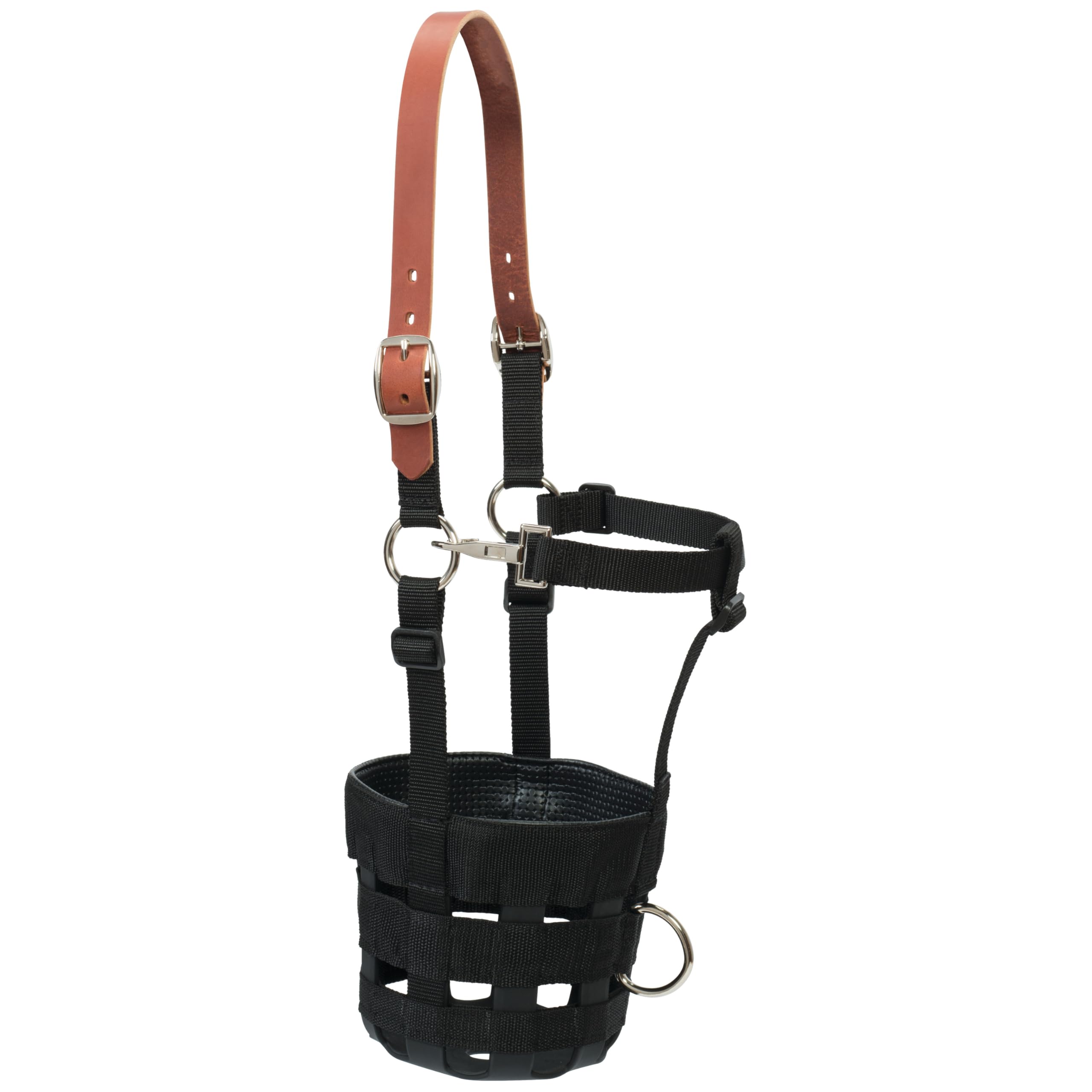
The Weaver Leather Grazing Muzzle differentiates itself with a vegetable-tanned leather double-buckle crown, a rare feature in a market dominated by all-nylon straps. Leather buckles hold their adjustment far more reliably than Velcro over months of rain, mud, and UV exposure, and they won’t lose grip strength as debris accumulates. The muzzle body uses a nylon bag with a neoprene liner, offering waterproof padding that doesn’t mat down like fleece can in wet conditions.
The reinforced rubber at the mouth opening is significantly thicker than the rubber on budget-tier models. Two owners with mini horses reported the muzzle held up for multiple grazing seasons with minimal rubber wear, while the leather crown remained supple and functional. The bright yellow color makes the muzzle visible from a distance—a practical safety feature for horses turned out in large fields or near road-adjacent pastures.
Quality control variation is the biggest concern here. Several reviews mention stitching failure at the webbing attachment points within two weeks of use, and one owner’s horse caught the muzzle on a branch, causing the stitching to unravel completely. The leather crown is excellent, but the nylon body’s stitching seems inconsistent. For owners who can reinforce the stress points with sinew or a sewing awl before first use, this muzzle offers premium components at a competitive price point.
Why we love it
- Leather buckle crown adjusts reliably and withstands weather exposure
- Neoprene lining provides waterproof anti-chafe protection
- Thick rubber reinforcement at the mouth opening extends durability
Good to know
- Stitching at body attachment points can fail early; inspect first
- Quality control varies between units—some have weak webbing
- Smaller sizes fit refined heads best; draft owners should size up
6. Best Friend Standard Grazing Muzzle (Horse)

The Best Friend muzzle earns its “best value” spot by combining a padded noseband, 4-way adjustable breakaway system, and a ventilated nylon bag at a price that undercuts the premium tier without cutting essential features. The breakaway attachment uses metal rings that slide over hook-and-loop straps—leave the rings down for a safety release if the muzzle catches on something, or slide them up to lock the system for temporary security. This dual-mode setup gives owners flexibility without requiring separate hardware.
The fit targets average quarter horses (800–1100 lbs, 15–16 hands), and multiple owners confirm it works well on that body type with minimal adjustment. The padded noseband does reduce rubs on the bridge of the nose, but the crown attachment points can still create pressure sores on sensitive horses that require monitoring and an occasional break day. One owner with a clever mini horse reported this muzzle lasted longer than any previous attempt—the design holds its shape against determined pawing and rubbing.
The weak stitching on the nylon straps is the most common durability complaint. One owner’s horse tore the straps loose within days, requiring replacement with buckled straps. For average use on a well-mannered horse, the stitching holds fine, but if your horse is aggressive about rubbing the muzzle against fence posts, the attachment system will be the first failure point.
Why we love it
- Breakaway system with optional locking mode for flexible safety
- Padded noseband reduces bridge-of-nose abrasion
- Good fit for standard quarter horse and thoroughbred builds
Good to know
- Nylon strap stitching can fail on determined rubbers
- Breakaway rings may need adjustment to prevent accidental release
- Regular checks required to prevent pressure sores on crown points
7. Equivet Muzzle for Horses (Pony)
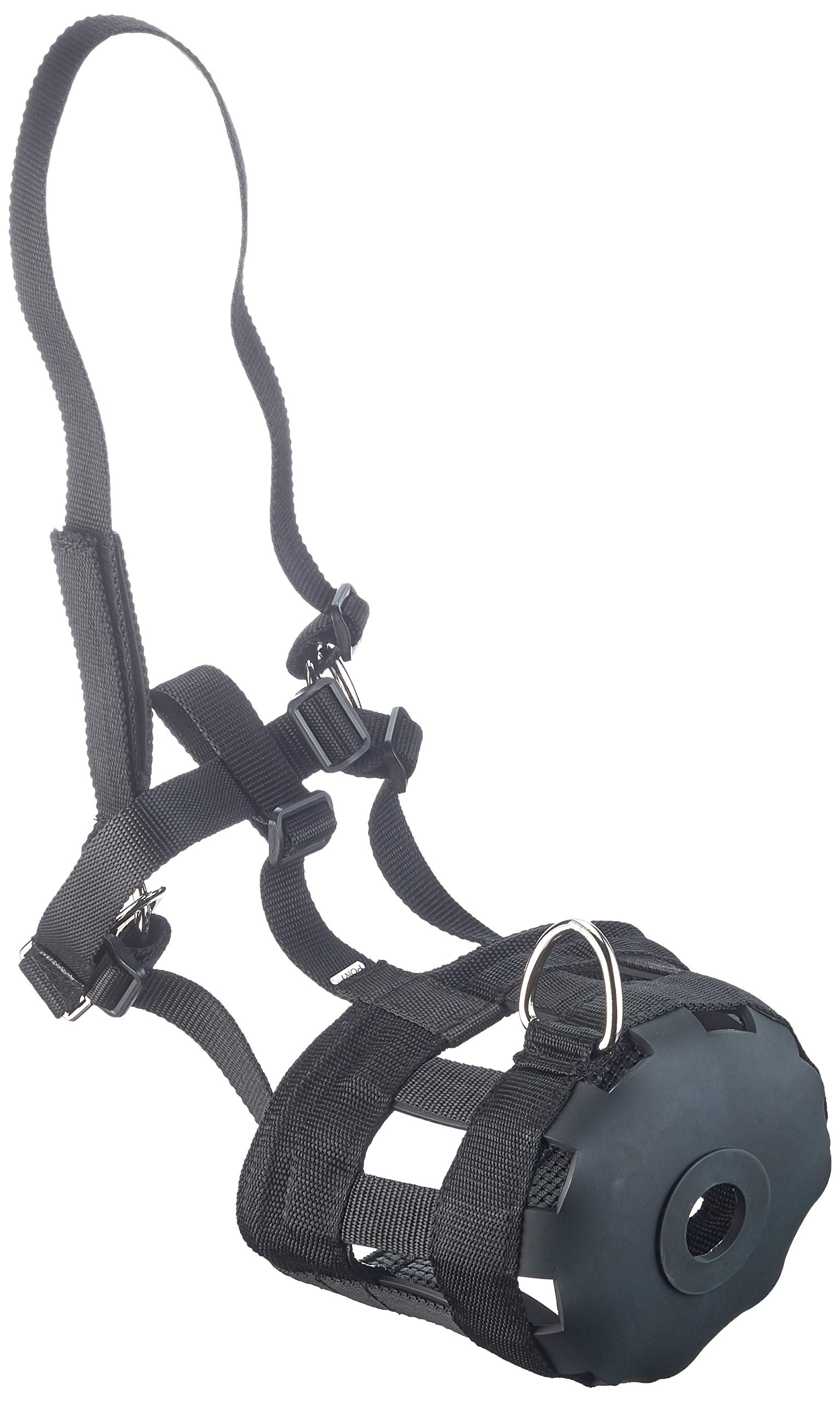
The Equivet pony muzzle is built specifically for smaller equine heads, with a compact nylon bag and a rubber bottom that includes a single drinking/feeding hole. The reinforcement in the mouth area is noticeably thicker than the pony-sized options from Shires or Weaver, which makes it a better pick for miniatures and Shetlands who will wear the muzzle daily for laminitis management. The buckle closure is a standard nylon strap without leather components, but it adjusts precisely and won’t loosen during turnout.
The fit is the tricky part. This muzzle runs large for the advertised “pony” size—multiple owners with Shetlands and Welsh ponies found it too big for their horses, creating a risk of chafing at the chin area. The circumference measurement comes in at roughly 16 cm diameter, which fits a plump pony muzzle but leaves slack on finer-boned ponies. European owners with access to the broader Equivet sizing recommend the “full” or “cob” size for average pony builds.
Maintenance is straightforward: the nylon body rinses clean with water, and the rubber base doesn’t absorb barn smells. The buckle hardware holds up to constant outdoor exposure without rusting. For owners who hit the right size, this muzzle provides excellent wear resistance against the specific chewing patterns of ponies, who tend to gnaw at the rubber base more aggressively than larger horses.
Why we love it
- Reinforced mouth area resists pony chewing behavior
- Buckle closure holds adjustment reliably in wet conditions
- Easy to clean—nylon body rinses free of debris quickly
Good to know
- Pony size runs large; measure carefully for fine-boned heads
- Too tight for some ponies, risking chin chafing
- Less brand availability in the US compared to Equivet’s EU base
FAQ
How long does a rubber grazing hole typically last before needing replacement?
Can a horse drink enough water while wearing a grazing muzzle?
Why does my horse keep removing the muzzle and how do I stop it?
Will a grazing muzzle cause sores on the nose or chin?
Final Thoughts: The Verdict
For most horse owners, the grazing muzzles for horses winner is the GG Equine GreenGuard because its open basket design solves the two biggest pain points—airflow and moisture—better than any lined bag muzzle. If you need a budget-conscious pick that prioritizes anti-chafe comfort for a sensitive horse, the Shires Deluxe Fleece Lined is the best entry point. And for draft owners or anyone requiring year-round 24/7 turnout durability, nothing beats the Tough 1 Easy Breathe for sheer longevity.