
That hacking, gagging sound of a cat trying to cough up a hairball is a familiar distress signal for every cat owner. While some shedding is normal, when it turns into daily occurrences of regurgitated fur, your cat is telling you that the food they are eating is not managing the hair in their system. The right food uses a precise blend of fiber and natural lubricants to help that fur pass through the digestive tract instead of pooling in the stomach, turning a messy problem into a seamless routine.
I’m Mo Mahin — the founder and writer behind Furric. I’ve spent years analyzing feline dietary formulations, comparing the role of specific fiber sources like psyllium and miscanthus grass, and cross-referencing clinical studies against thousands of verified owner reports to understand which recipes genuinely move hair through the gut rather than just masking the symptoms.
Whether you live with a long-haired breed that sheds like a machine or a short-hair that still manages to hack up wads of fur every week, the difference lies in the kibble’s fiber profile and protein quality. I’ve dug through the data to bring you the definitive guide to the best hairball food for cats that actually works.
How To Choose The Best Hairball Food For Cats
Not all “hairball control” bags are created equal. Some recipes manage the symptom by adding cheap fiber filler that makes cats drink more water, while others use a targeted mix of prebiotic fibers that regulate the gut’s motility. Here are the three factors that separate a food that works from one that just fills a bowl.
Fiber Source and Type
The type of fiber matters more than the total fiber percentage you see on the guaranteed analysis. Effective hairball formulas use a blend of soluble prebiotic fibers like chicory root inulin and insoluble fibers like psyllium husk or cellulose. The soluble fibers turn into a gel in the stomach that coats hair, while the insoluble fibers add physical bulk to move that coated hair through the intestines. A formula that relies solely on cellulose without a prebiotic is less effective at preventing hair from balling up in the first place.
Quality of Protein and Fat Profile
A cat that sheds more is a cat that swallows more hair. The primary driver of coat health is the quality of the protein in the food. Real whole meats (chicken, turkey, fish) as the first ingredient supply the amino acids necessary for strong, low-shedding fur. Foods with high levels of Omega-3 and Omega-6 fatty acids also support skin hydration, reducing dry skin that can lead to increased shedding. A low-protein, grain-heavy formula may actually worsen the shedding cycle.
Kibble Shape and Texture
The physical geometry of the kibble serves a mechanical function in hairball management. Larger, textured kibble encourages chewing, which mechanically breaks down hair strands before they hit the stomach. Softer or powdery kibble is swallowed whole, allowing longer hair strands to enter the digestive tract intact, increasing the odds of them balling up rather than passing through. A formula with a crunchy, tooth-scraping kibble shape is preferable for hairball control.
Quick Comparison
On smaller screens, swipe sideways to see the full table.
| Model | Category | Best For | Key Spec | Amazon |
|---|---|---|---|---|
| Purina ONE +PLUS Hairball Formula | Mid-Range | Best Overall Value | 16 lb bag; Real chicken #1 | Amazon |
| Nulo Freestyle Hairball Management | Mid-Range | Grain-Free & High Protein | 83% animal protein; BC30 probiotic | Amazon |
| Blue Buffalo True Solutions Hairball Control | Mid-Range | Natural Ingredients | LifeSource Bits; 3.5 lb bag | Amazon |
| Chicken Soup for the Soul Indoor Hairball Care | Premium | Premium Indoor Cats | Real chicken #1; 12 lb bag | Amazon |
| Hill’s Prescription Diet Gastrointestinal Biome | Premium | Veterinary-Treated Cases | ActivBiome+ fiber tech; 4 lb | Amazon |
In‑Depth Reviews
1. Purina ONE +PLUS Hairball Formula

Purina ONE +PLUS steps into the hairball arena with a fiber-rich SmartBlend that uses natural fiber sources to trap and move hair through the digestive tract without relying on heavy chemical additives. The formula lists real chicken as the first ingredient, giving cats a high-quality protein foundation that supports lean muscle and a healthier coat that naturally sheds less. This dual-action approach—reducing shedding at the source while managing what hair does get swallowed—makes it the most complete solution on this list.
Owner reviews consistently note a substantial drop in the frequency of hairballs within the first two weeks of feeding. The 16-pound bag provides over a month of food for a single adult cat, making the per-meal cost significantly lower than any other premium option here. The crunchy kibble texture also provides a mild dental scrubbing effect, which cat owners with older felines find helpful for gum health.
Some long-haired cat owners report that while the food drastically reduces hairballs, it does not eliminate them entirely during peak shedding seasons. A few cats with extremely sensitive stomachs needed a slow seven-day transition to avoid loose stool. Overall, the balance of effective fiber management, protein quality, and sheer volume makes this the most sensible starting point for any owner dealing with regular hairball issues.
Why we love it
- Real chicken is the first ingredient, supporting reduced shedding
- Large 16 lb bag provides exceptional per-meal value
- Crunchy kibble texture aids dental health during feeding
Good to know
- May not fully prevent hairballs during heavy shedding periods
- Requires slow transition for cats with very sensitive stomachs
2. Nulo Freestyle Hairball Management
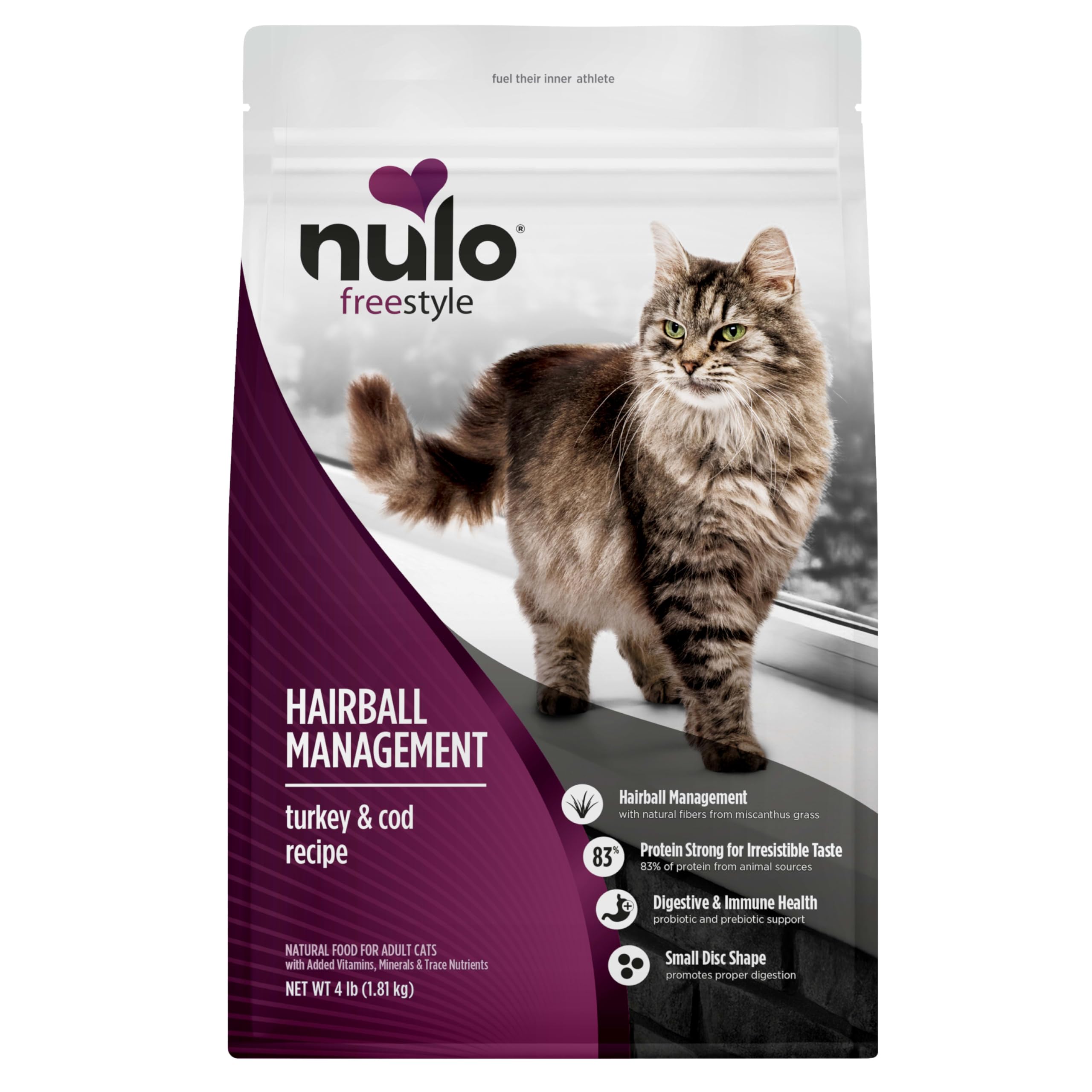
Nulo Freestyle takes a fundamentally different approach to hairball management by attacking the root cause: shedding driven by poor coat nutrition. The Turkey & Cod recipe delivers 83% animal-based protein, significantly higher than many competitors, which directly translates to stronger fur follicles and less loose hair. The inclusion of miscanthus grass as a natural fiber source provides a gentle, non-grain bulk that pushes swallowed hair through the gut rather than allowing it to accumulate.
The addition of BC30 probiotic (GanedenBC30) is a notable differentiator here. This specific strain survives the kibble baking process and reaches the gut alive, where it helps maintain a balanced microbiome. Owners of multiple cats report that the transition to this food was smooth across all eaters, with a noticeable reduction in the hacking sound that typically precedes a hairball event. The 4-pound bag size is smaller than some options, but the nutrient density means cats eat smaller portions to feel satisfied.
The primary trade-off is the bag size. At 4 pounds, it empties faster than a standard 12 lb or 16 lb bag, requiring more frequent repurchases for multi-cat households. The flavor profile is specific to the Turkey & Cod combination, and some picky cats who prefer chicken-only recipes may hesitate. The low-carb, high-meat profile is ideal for owners who prioritize a grain-free, high-protein diet while also needing hairball control.
Why we love it
- 83% animal protein reduces shedding at the follicular level
- BC30 probiotic actively supports gut microbiome balance
- Miscanthus grass fiber provides gentle digestive movement
Good to know
- Only available in a 4 lb bag, requiring more frequent purchases
- Turkey & Cod flavor may not appeal to chicken-preferring cats
3. Blue Buffalo True Solutions Hairball Control
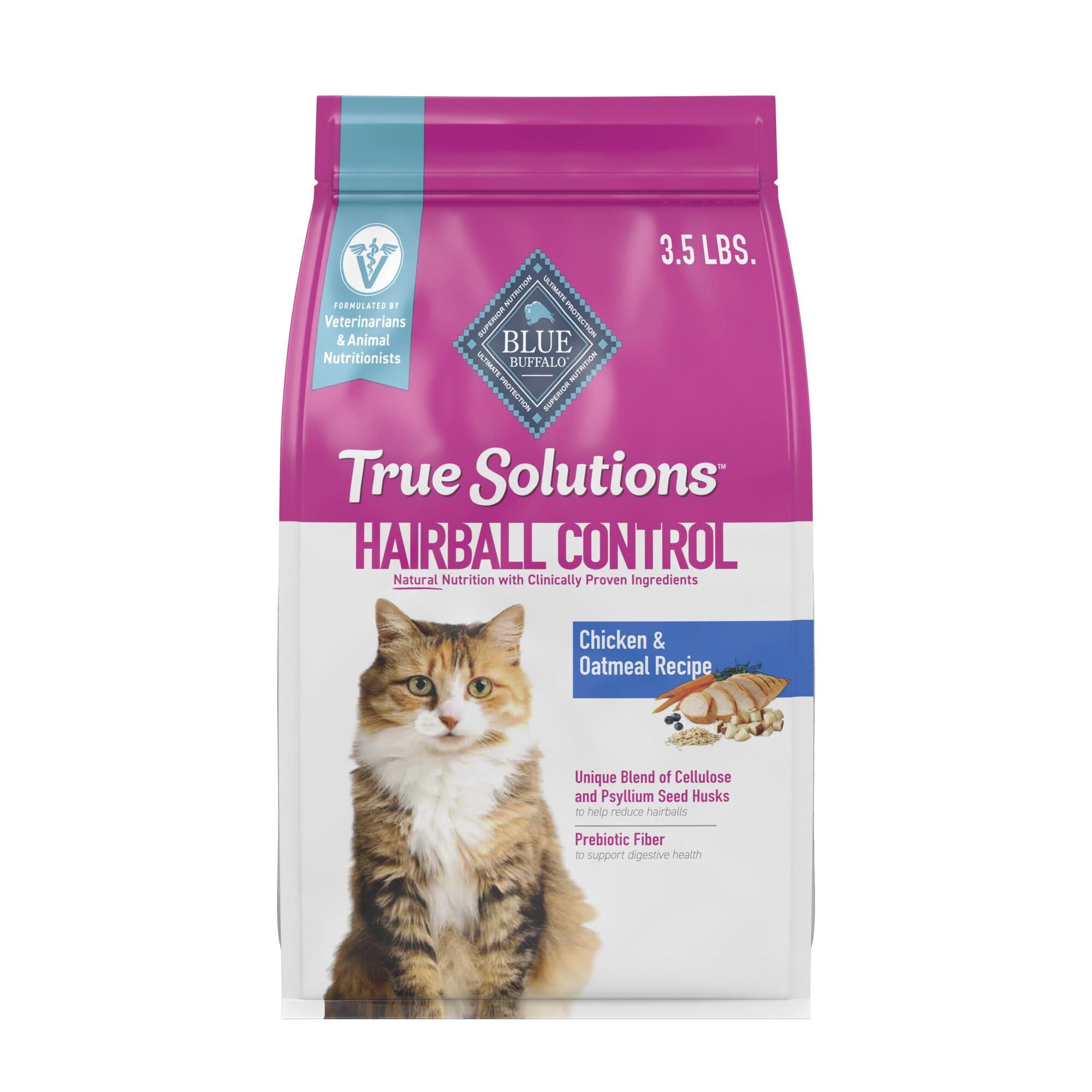
Blue Buffalo True Solutions bridges the gap between an everyday hairball food and a premium clean-ingredient option. The formula is built around real chicken as the primary protein and uses clinically proven prebiotic fiber to maintain digestive health. The exclusion of corn, wheat, and soy is a major advantage for cats with known grain sensitivities, as these fillers can contribute to poor digestion and increased shedding in susceptible animals.
The exclusive LifeSource Bits—cold-formed antioxidant-rich pellets—add a layer of immune system support that is unusual in the hairball category. Customer reviews indicate this food works particularly well on a maintenance basis. For cats with medium-length coats that produce hairballs on a weekly basis, the switch to this food often reduces incidents to a monthly occurrence. The smaller 3.5-pound bag makes it a risk-free trial option for owners who want to test the effect before committing to a larger volume.
Being a smaller bag, the cost per pound sits higher than the bulk options. Some owners of heavy shedders (Persians, Main Coons) report needing to supplement with a hairball paste during peak seasonal shedding, as the fiber load in this particular formula is not aggressive enough for extreme cases. It does not contain a high total fat content, though, which makes it a safe choice for indoor cats prone to weight gain.
Why we love it
- No corn, wheat, or soy — ideal for grain-sensitive cats
- LifeSource Bits provide antioxidant immune support
- Small bag format allows low-commitment trial feeding
Good to know
- Higher per-pound cost compared to larger bag options
- Fiber load may not be enough for heavy-shedding breeds
4. Chicken Soup for the Soul Indoor Hairball Care

Chicken Soup for the Soul packs premium credentials into a 12-pound bag without reaching prescription-level pricing. The recipe leads with real chicken as the first ingredient and backs it with brown rice and vegetables like spinach and cranberries, which provide antioxidants that support immune health while the prebiotic fiber from dried chicory root helps regulate digestion. The dual-protein base of chicken and fish (salmon meal) offers a more complex amino acid profile than single-meat formulas, which directly benefits coat density and skin health.
The inclusion of Omega 3 and Omega 6 fatty acids is a deliberate move to reduce dry skin—a major contributor to excessive shedding that leads to more swallowed hair. Owners of predominantly indoor cats report that this food helps keep the coat noticeably softer and less brittle, reducing the volume of hair that ends up on furniture and in the stomach. The dried chicory root acts as a prebiotic, feeding the good gut bacteria that help keep the entire digestive process moving efficiently.
Because it is formulated as an indoor-specific recipe, the calorie density is moderated to prevent weight gain in less active cats. Some owners of highly active outdoor-indoor cats found that their pets seemed hungrier between meals due to the lower caloric load. The 12-pound bag is a solid middle-ground in size, offering better value per pound than the Nulo or Blue Buffalo options without requiring the same upfront commitment as the 16-pound Purina bag.
Why we love it
- Real chicken #1 with salmon for a complex protein profile
- Dried chicory root prebiotic aids consistent gut motility
- Omega fatty acids improve skin health to reduce shedding
Good to know
- Calorie density is lower for weight management of indoor cats
- Active cats may need larger portions to feel satisfied
5. Hill’s Prescription Diet Gastrointestinal Biome Stress

Hill’s Prescription Diet Gastrointestinal Biome Stress is in a different league than the other entries on this list, operating as a therapeutic food designed for cats whose hairball issues are a symptom of a deeper gastrointestinal imbalance. The proprietary ActivBiome+ ingredient technology rapidly activates beneficial gut bacteria, which helps stabilize the entire digestive environment within 24 hours. This is the only entry that addresses both fiber management and stress reduction, using hydrolyzed casein and L-tryptophan to lower stress-related gut inflammation that can worsen hairball retention.
Owner feedback shows this food is almost irreplaceable for cats with chronic health issues—Persians with Tritrichomonas infections, Sphynx cats with constant diarrhea, and IBD-diagnosed felines that produce hairballs as a secondary consequence of gut inflammation. The prebiotic fiber blend is designed to promote regular bowel movements even in compromised systems, meaning the hair that does get swallowed has a clear, unobstructed path out of the body. The kibble shape is designed to be easy for flat-faced breeds to pick up, reducing the frustration that can lead to stress eating.
The catch is clear: this is a prescription diet that requires a vet’s approval and carries the highest cost per pound among all the reviews. It is not intended as a general maintenance food for a healthy cat that just sheds a bit too much. Hill’s recommends a veterinarian’s diagnosis before feeding, and the small 4-pound bag is priced at a point where it is a specialty tool, not a daily staple for a standard household. Use this when your cat’s hairball problem is accompanied by irregular stools, vomiting, or significant stress behaviors.
Why we love it
- ActivBiome+ technology can stabilize digestion in 24 hours
- Stress-reducing ingredients target root causes of GI inflammation
- Kibble shape designed for flat-faced and brachycephalic cats
Good to know
- Requires a veterinary prescription for purchase
- Highest cost per pound — not a budget maintenance food
FAQ
How long does hairball food take to work?
Is a grain-free hairball formula better than a grain-inclusive one?
Can hairball food help with chronic vomiting in cats?
Final Thoughts: The Verdict
For the vast majority of cat owners, the best hairball food for cats winner is the Purina ONE +PLUS Hairball Formula because it delivers a consistent reduction in hairball events using real chicken as the primary protein, all at a cost per serving that makes daily feeding sustainable. If you need a high-protein, grain-free solution that reduces shedding from the inside out, grab the Nulo Freestyle Hairball Management. And if your cat’s hairball troubles are part of a larger digestive or stress-related issue, nothing beats the Hill’s Prescription Diet Gastrointestinal Biome under veterinary guidance.