
Worn, scratched, and hazy hardwood floors don’t require a full sand-and-refinish project — the right cleaner-and-polish combo restores clarity, fills micro-scratches, and builds a protective urethane layer in a single pass. The challenge is choosing one that bonds to your existing finish without turning sticky or yellowing over time.
I’m Mo Mahin — the founder and writer behind Furric. I spend my days dissecting chemical formulations, comparing polymer tech, and cross-referencing thousands of verified buyer reports on wood floor maintenance products to find what actually works across different finish types.
The trick is matching the cleaner’s pH and solvent profile to your floor’s finish layer. That’s where this guide to the best hardwood floor cleaner and polish comes in — I’ve broken down the key factors and vetted top options so you can make a confident choice.
How To Choose The Best Hardwood Floor Cleaner And Polish
Hardwood floor cleaners and polishes are not all interchangeable. A product built for pre-1970s waxed floors will ruin a modern urethane-sealed surface. Focus on these key parameters to avoid wasting money — or damaging your finish.
Finish Compatibility: Urethane vs. Wax vs. Acrylic
Most contemporary hardwood floors have a polyurethane or aluminum oxide finish. These need a polish that uses synthetic polymers (often acrylic-urethane hybrids) that bond to the existing seal without softening it. Wax-based polishes, by contrast, sit on top and create a hazy buildup that is difficult to remove. Always check the label for “urethane shine” or “acrylic polymer” language and avoid anything that says “contains carnauba wax” unless you know your floor has an unwaxed, oil-based finish.
Polymer Technology for Scratch Concealment
Premium polishes contain micronized polymers that flow into tiny scratches and level out when the film dries. This is what restores the illusion of a “new” floor. Cheaper options use lower-molecular-weight resins that leave a thin, uneven coat — they look good for a week then wear off in traffic paths. Look for specific claims like “fills fine scratches” or “long-lasting urethane blend” in the product description.
pH Balance and Residue Control
A safe hardwood cleaner sits in the neutral pH range (around 7 to 8). Products that are too alkaline (pH 10+) will degrade your finish over repeated use, leaving a cloudy appearance. Likewise, formulas that leave sticky residue attract dirt and force you to clean more often. The winning combination is a neutral cleaner that evaporates streak-free, followed by a polish that cures to a hard, non-tacky film.
Quick Comparison
On smaller screens, swipe sideways to see the full table.
| Model | Category | Best For | Key Spec | Amazon |
|---|---|---|---|---|
| Weiman Hardwood Floor Cleaner (2 Pack) | Cleaner | Daily streak-free cleaning | pH-neutral, 32 oz (2 pk) | Amazon |
| Bona Hardwood Floor Polish | Polish | Deep gloss restoration | 32 oz urethane formula | Amazon |
| Quick Shine Multi Surface Combo | Combo | All-in-one cleaning & finish | 27 oz + 27 oz, 2 bottles | Amazon |
| Parker & Bailey Wood Floor Cleaner | Cleaner | Gentle heavy-duty cleaning | 64 oz, odorless, wax-free | Amazon |
| Scott’s Liquid Gold Wood Floor Restore | Polish | Quick scratch camouflage | 64 oz, synthetic polymers | Amazon |
In‑Depth Reviews
1. Weiman Hardwood Floor Cleaner for Finished Hardwood (2 Pack)
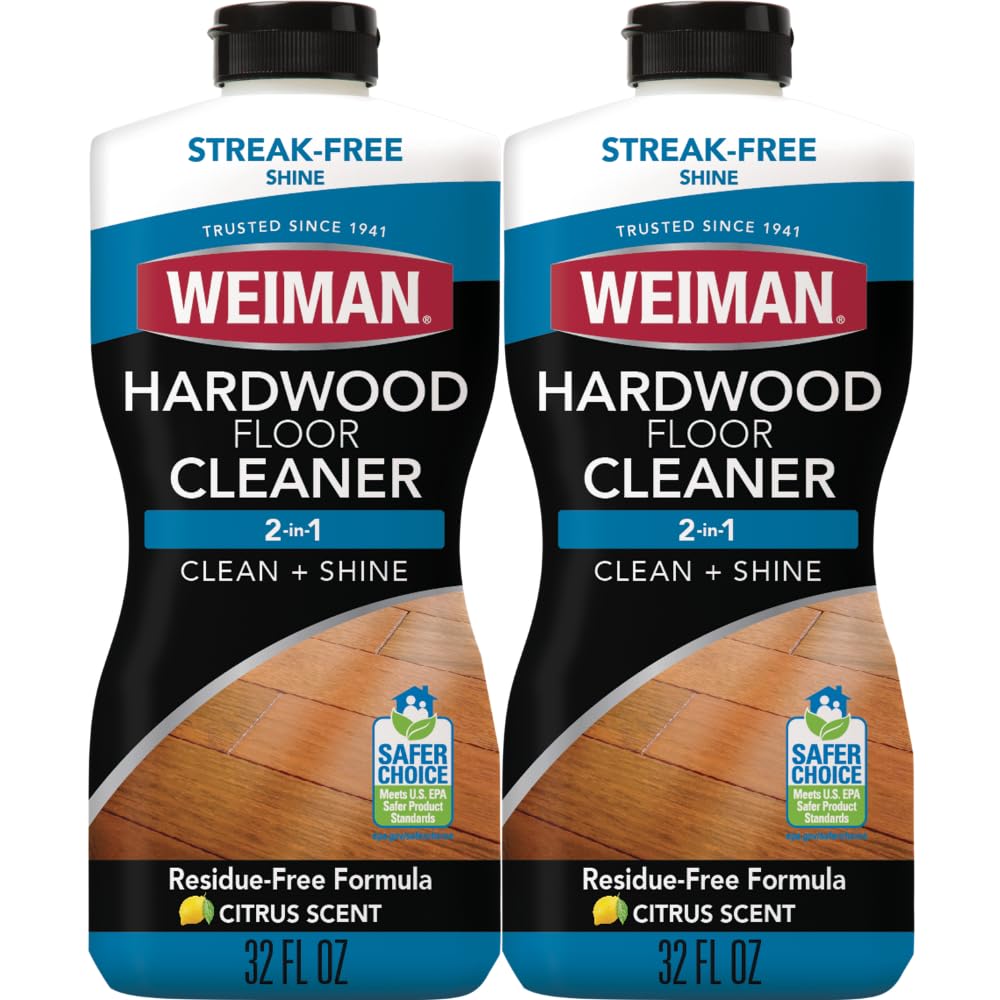
The Weiman 2-pack earns the top spot because it delivers exactly what a daily-use cleaner should: a pH-neutral, plant-based formula that leaves zero sticky residue. The 32-ounce bottles are ready-to-use — no dilution guesswork — and the fresh citrus scent is light enough not to linger. It’s EPA Safer Choice certified, meaning the surfactants break down dirt without the harsh alkalis that attack urethane topcoats over time.
On engineered hardwood, laminate, and vinyl plank, the streak-free claim holds up even in direct sunlight. Users with dark-stained oak report no hazy film, a common complaint with lower-tier cleaners. The twin-pack configuration is the real value driver — you get roughly two months of weekly cleaning per set without needing a separate polish bottle.
Pair this with Weiman’s High Traffic Hardwood Floor Polish for a two-step system that extends the life of your floor’s finish. Just be sure to wait until the cleaner has completely dried before applying the polish, or the polymers won’t bond correctly.
Why we love it
- pH-neutral chemistry preserves polyurethane sealers
- No streaking or haze on dark or glossy floors
- Plant-based and certified safe for kids/pets
Good to know
- Not a polish — you’ll need a separate product for scratch coverage
- Citrus scent may be too fragrant for sensitive noses
2. Bona Hardwood Floor Polish – High Gloss
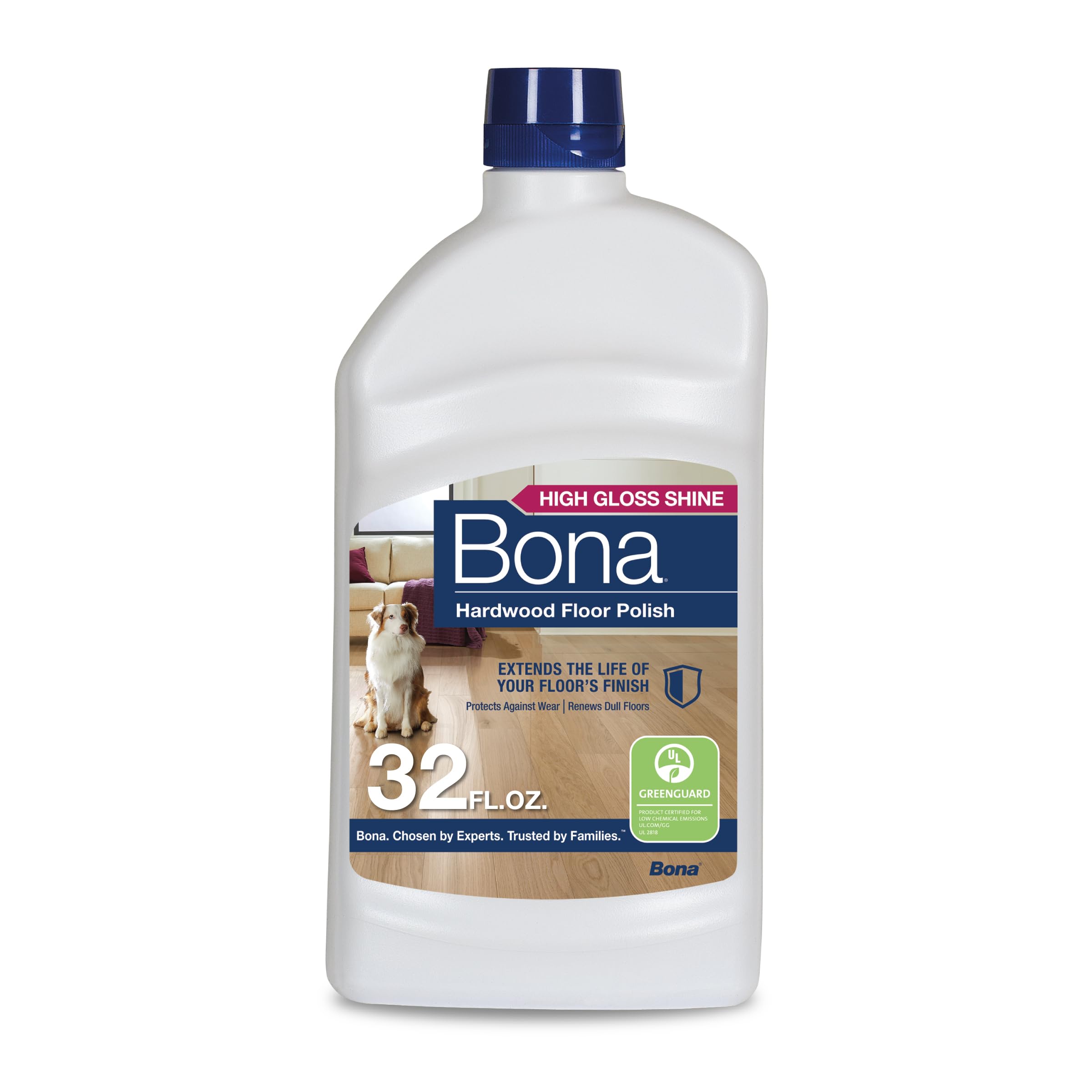
Bona is the reference standard in professional floor care, and this 32-ounce High Gloss Polish is the go-to for homeowners who want a showroom-grade reflection. The urethane-acrylic blend cures to a hard, scuff-resistant film that fills light surface scratches and restores the wet-look depth that fades after years of foot traffic. It’s designed for sealed hardwood floors — not waxed or oiled surfaces.
Application is straightforward: clean the floor with Bona’s pH-neutral cleaner (or any compatible product that leaves no residue), apply the polish with a microfiber mop in thin, even coats, and let it cure for 30 to 45 minutes between layers. Two coats typically last 3 to 6 months in moderate-traffic zones. The odor is minimal compared to solvent-based floor finishes.
The main trade-off is that this is a polish-only product. It won’t remove embedded grime or grease. You need a separate cleaning step beforehand. Some users also note that on heavily worn floors where the finish is already peeling, this polish will peel with it — it’s a restorative layer, not a adhesive repair.
Why we love it
- Professional-grade urethane formula builds a durable, glossy film
- Fills fine scratches and evens out patchy wear
- Low odor and quick dry time between coats
Good to know
- Polish only — requires a separate cleaner for prep
- Not compatible with waxed or unsealed floors
3. Quick Shine Multi Surface Floor Cleaner & Floor Polish Combo
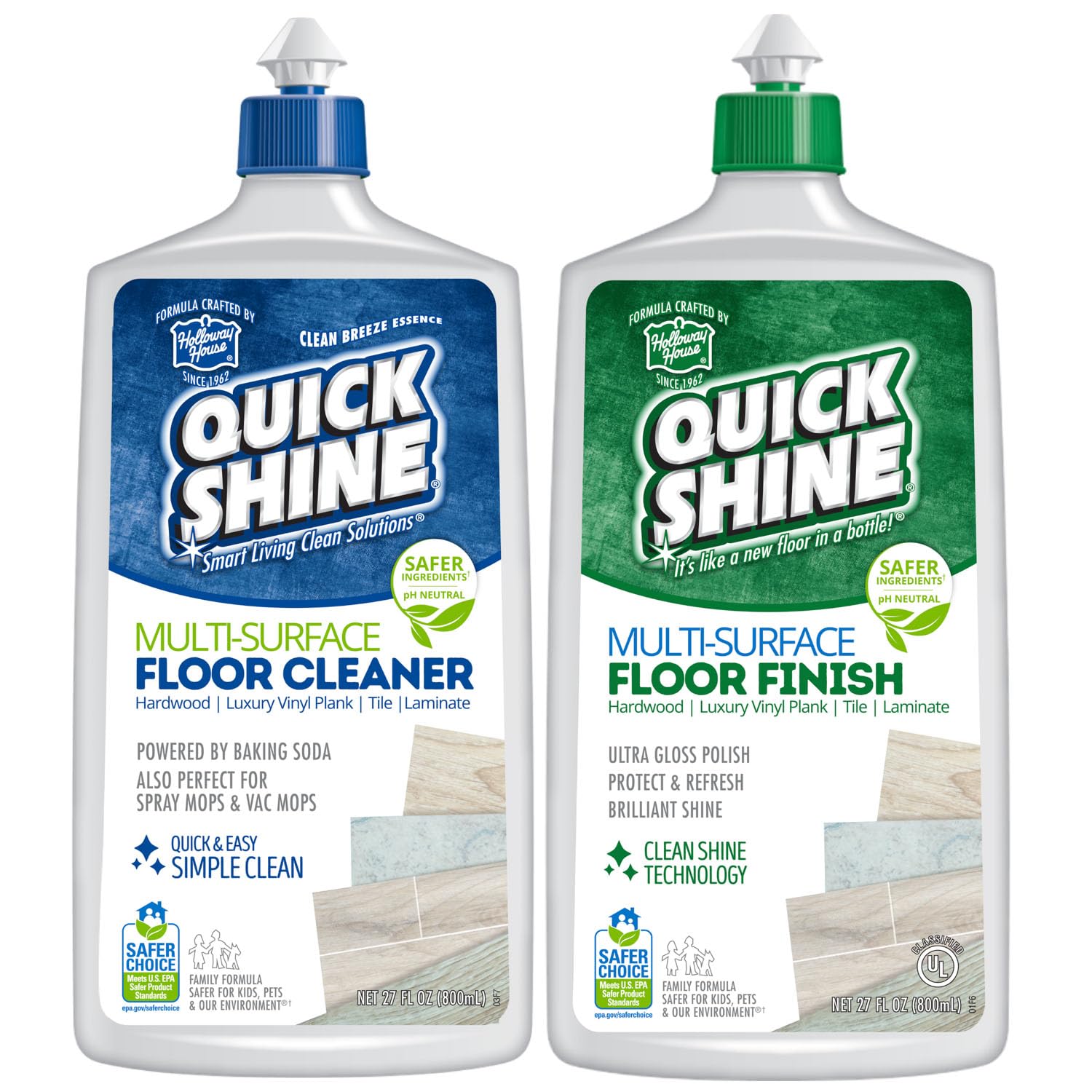
This Quick Shine combo pack is the most convenient entry point for people who want both cleaning and polishing in one purchase. You get a 27-ounce plant-based cleaner with baking soda for dissolving grease and a 27-ounce acrylic-urethane finish that renews the shine on sealed hardwood, laminate, luxury vinyl plank, tile, and stone. The finish is free from aluminum, ammonia, and phthalates — significant if you have sensitivities or allergies.
For the price, the packaging is smartly engineered. The cleaner uses “Clean Shine Technology” that removes scuff marks without harsh alkalis, while the finish level-dries into a protective coat that lasts 4 to 5 weeks in kitchens. Users with LVP floors particularly appreciate that the finish doesn’t peel or flake on vinyl, a common issue with polishes formulated only for wood.
The limitation is that this system works best on floors that are in decent condition to begin with. Deep scratches or worn-through finish won’t be resolved by the polish layer — it’s a surface-level gloss, not a filler. Additionally, the fresh scent in the cleaner dissipates quickly, which some users find underwhelming.
Why we love it
- All-in-one system saves guesswork — cleaner and polish included
- Works on LVP, tile, and stone, not just hardwood
- Plant-based, EPA Safer Choice, and free from harsh additives
Good to know
- Polish layer is thinner than Bona’s — needs more frequent reapplication
- Not for unsealed or waxed wood floors
4. Parker & Bailey Wood Floor Cleaner Refill

Parker & Bailey has been manufacturing floor cleaners for over 100 years, and this 64-ounce refill reflects that legacy of simplicity. The formula is a pH-neutral, wax-free, silicone-free concentrate that relies on mild surfactants to cut grease and lift embedded dirt without degrading the finish. It’s odorless — a huge advantage if you’re cleaning a large area or have a tenant with fragrance sensitivity.
The 64-ounce size is intended for refilling spray bottles or mop cartridges, making it economical for households with significant square footage. One bottle lasts roughly 32 full mop sessions. Users report that it restores the “natural look” rather than adding a glossy topcoat, which is ideal for matte or hand-scraped hardwood where a reflective polish would look artificial.
Keep in mind that this is a cleaner only — not a polish. It will not fill scratches or add shine. If your floor needs gloss restoration, you’ll need to follow with a separate polish or finish. Some users also note that the refill bottle lacks a measuring guide, so you have to track dilution ratios yourself if transferring to a sprayer.
Why we love it
- Odorless and gentle — safe for sensitive households
- Large 64-ounce refill offers excellent value per use
- Wax-free formula won’t leave haze on sealed floors
Good to know
- Not a polish — won’t add gloss or conceal scratches
- Refill bottle has no built-in sprayer or measuring marks
5. Scott’s Liquid Gold Wood Floor Restore

Scott’s Liquid Gold is a classic name in wood care, and this Floor Restore product is designed for a specific scenario: when you need to quickly mask light scratches and revive a dull, worn look without a multi-step process. The synthetic polymer formula flows into surface imperfections and leaves a semi-gloss film that protects high-traffic areas for several months per application.
The application is as simple as mopping — no dilution, no second coat required for small areas. Many users report visible difference after one pass, especially on natural oak and maple that have lost their color richness. The 64-ounce bottle covers roughly 300 to 400 square feet per coat. It works on finished hardwood, not on laminate or vinyl, and should not be used on unsealed wood.
The catch is that this is a restorative polish, not a deep cleaner. If there is sticky soil or wax buildup, it must be cleaned off first, or the polish will seal the grime under the polymer layer. Some users also find the gloss level slightly lower than Bona’s — it’s more of a satin-to-semi-gloss finish.
Why we love it
- Effectively minimizes the appearance of fine scratches
- Single-application process with no mixing required
- Long-lasting protection in high-traffic zones
Good to know
- Requires a clean, residue-free surface before application
- Gloss level is satin/semi-gloss, not high-shine
FAQ
Can I use a hardwood floor polish on engineered hardwood planks?
How often should I polish my hardwood floors?
Will a floor polish remove scratches from my hardwood floor?
What happens if I apply polish over a waxed floor?
Is “no-residue” cleaner necessary before polishing?
Final Thoughts: The Verdict
For most homes with standard sealed hardwood, the absolute winner in the best hardwood floor cleaner and polish category is the Weiman Hardwood Floor Cleaner 2-Pack because it delivers streak-free, pH-neutral cleaning without residue — the essential foundation for any polish system. If you want deep, showroom-grade gloss restoration, grab the Bona High Gloss Polish for its durable urethane film. And for a quick scratch camouflage that avoids a multi-step routine, nothing beats the Scott’s Liquid Gold Floor Restore.