
Choosing the wrong hay feeder for your cattle can silently drain your feed budget by over 30% as livestock trample, soil, and waste what you’ve already paid for. A properly designed feeder does more than hold hay — it controls consumption, keeps feed off the mud, and stands up to years of head-butting, weather, and daily use without falling apart.
I’m Mo Mahin — the founder and writer behind Furric. I’ve spent years analyzing livestock feeding equipment, comparing material gauges, weld quality, capacity specs, and real-world owner feedback to separate the feeders that last from those that fail within a season.
Whether you’re raising beef on open pasture or feeding a small herd during winter months, choosing the right structure matters. This guide breaks down the top hay feeders for cattle to help you match the right build, capacity, and design to your herd size and budget.
How To Choose The Best Hay Feeders For Cattle
The difference between a feeder that lasts a decade and one that rusts through in two winters comes down to a handful of measurable specifications. Here’s what to look for before you buy.
Steel Gauge and Coating
Feeder walls take constant abuse from horns, heads, and weather. Look for 14-gauge to 16-gauge galvanized steel — lighter sheet metal bends under pressure. Hot-dip galvanized or powder-coated finishes resist rust far longer than painted surfaces, especially in humid or muddy turnout areas.
Waste Reduction Design
Open bale rings lose hay on the ground with every bite. Slow-feed mesh nets or catch pans underneath the feeder can cut waste by 30 to 50 percent. For cattle, look for a design that prevents them from pulling out large mouthfuls and dropping the excess underfoot.
Capacity and Accessibility
Match the feeder volume to your herd size and feeding frequency. A 4-foot feeder works for a small group; longer units support larger herds. The opening bar spacing must be wide enough for cattle to reach hay comfortably but narrow enough to prevent them from stepping inside or getting stuck.
Quick Comparison
On smaller screens, swipe sideways to see the full table.
| Model | Category | Best For | Key Spec | Amazon |
|---|---|---|---|---|
| Texas Haynet Round Bale Net | Slow Feed Net | Reducing round bale waste | 1.75-inch holes, UV-resistant nylon | Amazon |
| Country Manufacturing Combo Feeder | Wall-Mount | Stall or barn feeding | Alloy steel, 35 lbs | Amazon |
| VEVOR 2-in-1 Feeder | Multi-Animal | Goats/sheep with 10-12 head | 80-gallon capacity, Q235 steel | Amazon |
| Kojem 4Ft Livestock Feeder | 2-in-1 Steel | Mini cattle and ponies | 73.8 lbs, powder-coated steel | Amazon |
| Rugged Ranch Mini Pasture Feeder | Galvanized Steel | Sheep, goats, miniature horses | 15-gauge 5/8-inch galvanized steel | Amazon |
| Porta-Grazer XL Slow Hay Feeder | Slow Feed Barrel | Horses — slowing intake speed | Food-grade polyethylene, 15yr UV | Amazon |
| Brower 4-Door Hog Feeder | Hog Feeder | Hogs up to 20 head | 7 bushels, 16-gauge steel | Amazon |
In‑Depth Reviews
1. Texas Haynet Round Bale Hay Net

The Texas Haynet uses a 1.75-inch hole pattern and UV-resistant nylon mesh that forces cattle to eat more deliberately, reducing round bale waste by up to 60% compared to uncovered feeding. It fits round bales from 4×6 to 6×6 feet and square bales up to 4x4x8, making it versatile across common bale sizes. Owners consistently report that a single net survives a full winter with multiple head and still remains intact with no holes.
At roughly 10 pounds, the net is easy to slip over a bale and cinch down without heavy lifting. The American-made construction uses reinforced stitching at the stress points, which is the primary failure area on cheaper imported nets. The slow-feed action also reduces the risk of colic and digestive upset by preventing gorging.
The main trade-off is that smaller cattle or calves may struggle slightly with the 1.75-inch opening size, though most adapt within a few feedings. For the waste reduction achieved over a single winter, the net often pays for itself in hay savings within one season.
Why we love it
- Significant reduction in wasted hay compared to open bales
- Durable enough to survive mud, weather, and repeated use
- Lightweight and easy to install without tools
Good to know
- Smaller animals may need time to learn the slow-feed method
- Not ideal if you need a permanent, stationary structure
2. Country Manufacturing Heavy Duty Metal Combo Feeder

This all-steel wall-mount feeder from Country Manufacturing is built for barns and stalls where space is tight and durability is non-negotiable. At 35 pounds with welded alloy steel construction and a powder-coated black finish, it resists bending and corrosion far better than lighter wire alternatives. The integrated grain tray at the bottom catches loose hay and also serves as a grain feeding station — a genuine 2-in-1 design.
Mounting hardware is included, and the 24x24x12-inch dimensions fit neatly into standard stall corners without protruding into walkways. The bars are spaced wide enough for horses, goats, and sheep to access hay comfortably while keeping the main hay mass off the stall floor. Several owners report buying additional units as their herd grows, indicating strong long-term satisfaction.
The primary limitation is that this is a stationary feeder — it won’t work for pasture rotation unless you install multiple units. The 90-day warranty is shorter than some competitors, but the construction quality suggests it will outlast that period by years if maintained properly.
Why we love it
- Welded steel frame with no weak spot welds
- Dual purpose — hay rack and grain feeder in one unit
- Compact size ideal for stall mounting
Good to know
- Requires mounting hardware installation
- Not suited for open-pasture portable use
3. VEVOR 2-in-1 Livestock Hay Feeder

The VEVOR 80-gallon feeder splits capacity between 56 gallons of hay storage and 24 gallons of grain in its integrated pan, making it a smart choice for mixed rations or small herds. The Q235 carbon steel frame with galvanized plate resists rust, and the full welding process adds structural rigidity that prevents the rack from twisting under livestock pressure. It’s designed to handle 10-12 goats, but the 59-inch length and rounded edges make it equally practical for smaller cattle or calves.
The assembly process requires two people and a degree of patience — the metal trays do not bend easily and the instructions are minimal. However, once assembled, the feeder is genuinely sturdy and stable. Owners report that their sheep and goats actively abuse it with head rubbing and climbing, yet the frame holds up with no deformation.
For the capacity-to-price ratio, this feeder sits at a sweet spot for mid-sized operations. The rounded edge design is a meaningful safety upgrade over sharp-cornered alternatives, especially if you have animals that crowd the feeder aggressively.
Why we love it
- Large combined hay and grain capacity in one unit
- Rust-resistant Q235 steel with full weld construction
- Rounded edges prevent injury during feeding
Good to know
- Assembly instructions are poor and require extra effort
- Bending tray walls during setup can be physically demanding
4. Kojem 4 Ft Long Livestock Feeder

The Kojem 4-foot feeder brings a 47 x 22.50 x 38-inch footprint with a powder-coated finish designed for all-weather outdoor use. Owners consistently compare its build quality to premium brands like Tarter at roughly 60% of the cost, noting that the steel gauge and welding feel substantial. The 2-in1 design combines an upper hay rack with a lower feed pan that catches leaf material as animals eat, reducing waste from dropped stems and leaves.
Assembly typically takes around 10 minutes thanks to pre-drilled holes, though some units arrive with minor damage to the feed pan or legs from shipping. A few owners needed to use a pipe wrench to clear weld slag from threaded holes, but the overall consensus is that the steel quality is excellent for this price tier. The feeder supports two height settings, accommodating both smaller goats and larger isheep or ponies.
At 73.8 pounds, this feeder is heavy enough to resist tipping in high winds but still manageable to drag across a pasture when re-positioning. The flat tray design with no sharp edges is particularly effective at saving leaf material that would otherwise be trampled.
Why we love it
- Heavy-duty build that rivals premium brands at a lower price
- Flat catch pan significantly reduces leaf waste
- Quick assembly with pre-drilled holes
Good to know
- Some units arrive with threaded holes requiring cleanup
- Feed pan is spot-welded rather than continuously welded
5. Rugged Ranch Mini Galvanized Steel Pasture Hay Feeder

Rugged Ranch uses 15-gauge 5/8-inch galvanized steel — a noticeably thicker material than many pasture feeders in this segment. The 4-foot length with a 6-inch-deep extra-wide feed pan catches dropped hay effectively, and the elevated eating position keeps feed off the ground even in wet pasture conditions. Assembly takes about 10 minutes with only four bolts, making this one of the quickest setups among permanent steel feeders.
The galvanized finish resists rust far better than painted alternatives, and several owners report surviving multiple winters with zero signs of corrosion. The 47 x 22.50 x 38-inch dimensions are ideal for goats, sheep, miniature horses, and smaller cattle breeds. One owner noted that an 83-year-old could assemble it independently, which speaks to the straightforward design.
Shipping occasionally arrives with bent legs or missing bolts, but the manufacturer is responsive with replacements. The feeder is heavy enough at 68.3 pounds to stay put in windy conditions without needing stakes or anchoring.
Why we love it
- Thick 15-gauge galvanized steel that resists rust for years
- Wide, deep catch pan minimizes wasted hay on the ground
- Extremely quick and simple assembly process
Good to know
- Shipping damage or missing parts reported occasionally
- Limited to smaller livestock due to bar spacing height
6. Porta-Grazer XL Slow Hay Horse Feeder
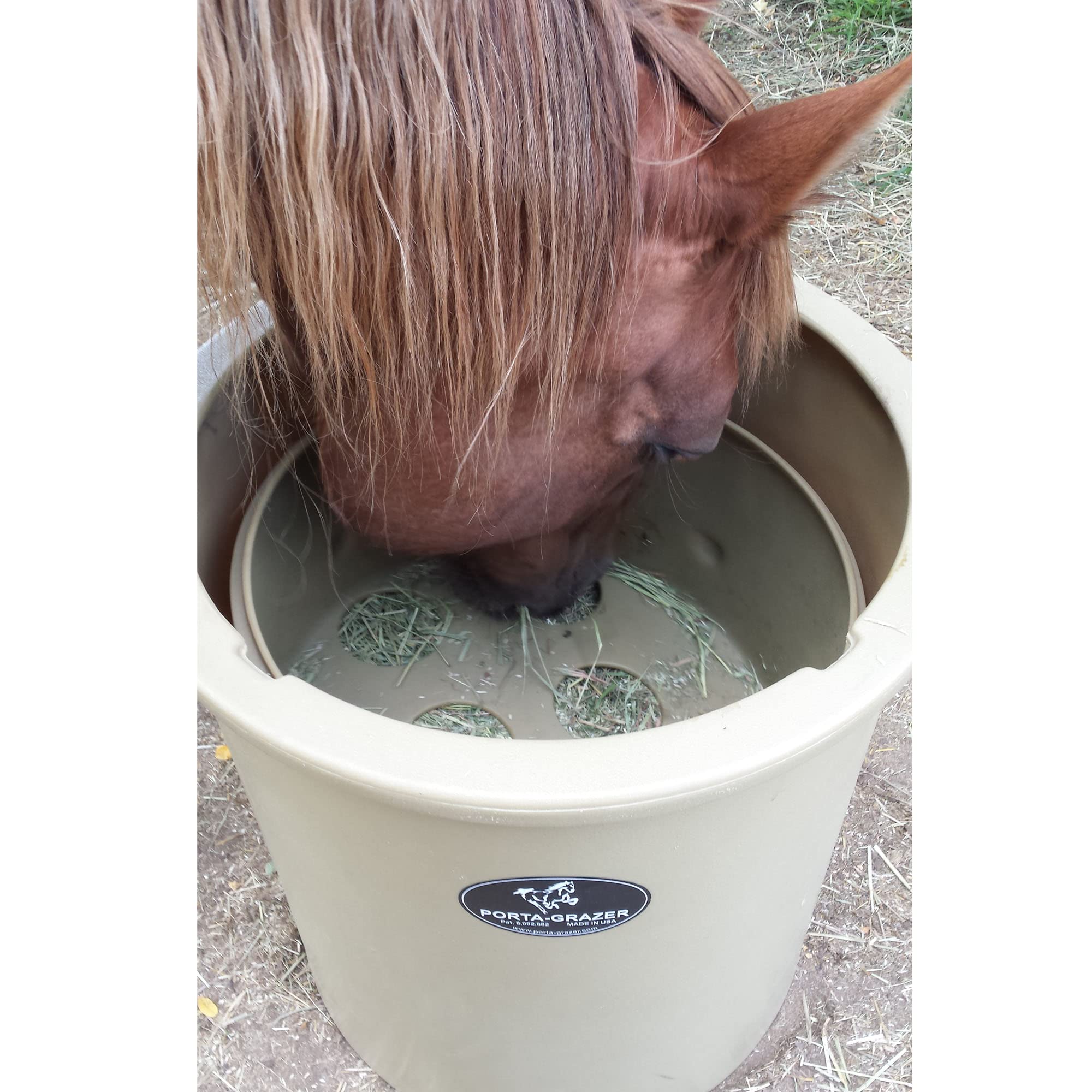
The Porta-Grazer XL is a unique concept in the hay feeder space — a food-grade polyethylene barrel with a rotating 6-hole pan that locks into place. It holds up to three average flakes of hay and forces the animal to eat slowly through the holes, which drastically extends feeding time and reduces hay waste. The material includes 15-year UV inhibitors and is rated down to negative 30 degrees, making it viable in harsh winter climates without cracking.
There is no exposed hardware to catch on blankets or halters, which is a meaningful safety advantage for stalled horses. The barrel must be secured to a wall or pen to prevent tipping, but once mounted, it withstands the force of a 1,200-pound horse without damage. Owners with fast eaters report that the slow-feed action keeps their animals occupied for hours and reduces stress-related behaviors.
The main downside is price — this is a premium niche product compared to traditional steel feeders. It is also not designed for large round bales; it works best with standard square bale flakes. For horses that gulp feed and waste hay, the Porta-Grazer solves a specific problem that steel feeders cannot address.
Why we love it
- Effective slow-feed design extends feeding time and reduces waste
- Safe with no protruding hardware for stalled animals
- Durable UV-protected plastic rated for extreme cold
Good to know
- Must be anchored to prevent tipping by larger horses
- Limited to flake-size feeding, not whole round bales
7. Brower 4-Door Galvanized Steel Hog Feeder

The Brower 4-door hog feeder is built around a 7-bushel capacity with 16-gauge galvanized steel that withstands the aggressive feeding behavior of hogs. The four feeding doors allow up to 20 full-grown hogs to access feed simultaneously, reducing competition and stress at mealtime. The top-loading design lets you refill by the gallon without entering the pen, which is a practical time-saver for daily chores.
The free-acting doors are designed to prevent feed from spilling while hogs push against them, and the raised feed trough keeps grain off the ground where it can attract pests or rot. The steel frame is lighter than older models, which aids in repositioning, but the reduced weight also means the feeder can be tipped by larger hogs if not secured to a base. Several owners recommend lag-bolting it to a 2×8 platform in muddy conditions.
Assembly is the weakest point — multiple owners report misaligned bolt holes that require drilling or hammering to line up. The lid hinges are also described as short, preventing full closure without bending. For the capacity and steel quality, the feeder offers good value if you are comfortable with some assembly struggles.
Why we love it
- Large 7-bushel capacity feeds up to 20 hogs efficiently
- Galvanized steel construction resists outdoor corrosion
- Top-fill design saves time without entering the pen
Good to know
- Bolt holes frequently misaligned during assembly
- Not heavy enough to resist tipping without anchoring
FAQ
What gauge steel is best for a cattle hay feeder?
How do slow-feed nets compare to steel hay racks for waste reduction?
Can I leave a steel hay feeder outside year round?
Final Thoughts: The Verdict
For most cattle operations looking to cut hay waste without replacing their entire feeding setup, the hay feeders for cattle winner is the Texas Haynet Round Bale Net because it reduces waste by over 50% with minimal cost per bale. If you need a permanent, all-steel wall-mount feeder for barn use, grab the Country Manufacturing Combo Feeder. And for mid-sized operations that want a 2-in-1 hay and grain solution at a fair price, nothing beats the VEVOR 80-Gallon Feeder.