
Feeding adult rabbits isn’t about volume — it’s about how much long-strand fiber actually makes it from the bag into their digestive system. Too many hay products break down into dust, get rejected by picky eaters, or contain stems so thick that they become cage bedding rather than dinner. Finding a consistent source of leafy, aromatic hay that supports dental wear and gut motility without triggering selective eating is the core challenge of rabbit husbandry.
I’m Mo Mahin — the founder and writer behind Furric. I’ve spent years analyzing hay specifications, comparing cutting cycles, and studying how fiber content, leaf-to-stem ratio, and moisture levels affect both consumption rates and long-term health in adult rabbits.
After evaluating dozens of batches against these real-world feeding data points, I’ve identified the five most reliable options on the market today. This guide breaks down exactly which bag deserves a spot in your storage bin when you search for hay for adult rabbits.
How To Choose The Best Hay For Adult Rabbits
Adult rabbits need a diet built on unlimited grass hay, where fiber content and texture determine whether they actually eat enough to maintain dental and digestive health. A bag that smells musty, contains excessive stems, or arrives dusty will get ignored — leading to selective eating that undermines everything that hay is supposed to deliver.
Understand the Cutting Cycle
First-cutting timothy hay is stemmy, coarse, and contains seed heads — better suited for fiber-addicted juvenile rabbits or as roughage for guinea pigs. Second-cutting hay offers the ideal balance for adult rabbits: softer leaves, finer stems, and a higher leaf-to-stem ratio that encourages consistent daily consumption without waste. Third-cutting hay is even softer but often too rich and low in stem fiber to support proper dental wear.
Check the Leaf-to-Stem Ratio Visually
Hold the bag up to natural light or inspect a handful. A good adult rabbit hay should have at least 60–70 percent leafy material mixed with thin, flexible stems. If the bag looks like a pile of drinking straws with leaf dust at the bottom, your rabbit will eat around the stems, creating waste and under-consuming fiber. The green color should be consistent throughout — browning indicates old stock or sun damage.
Smell the Hay Before Committing
Open the bag and take a deep sniff. Fresh timothy hay smells sweet and grassy, like a clean barn on a summer morning. Musty, sour, or dusty odors indicate poor storage conditions or mold. Rabbits have sensitive noses and will refuse feed that smells wrong, even if the nutritional label looks fine. A pleasant aroma correlates directly with voluntary intake.
Match the Pellet to the Hay Program
If you feed pellets alongside hay, choose a grain-free, soy-free formula that is hay-based rather than filler-based. Pellets with molasses, colorful treats, or grain fillers encourage selective eating where the rabbit skips the hay in favor of sweets. A short ingredient list with timothy hay as the first ingredient and no added sugar ensures the rabbit prioritizes long-strand fiber over processed bites.
Quick Comparison
On smaller screens, swipe sideways to see the full table.
| Model | Category | Best For | Key Spec | Amazon |
|---|---|---|---|---|
| High Desert 2nd Cutting Timothy Hay | Premium Loose Hay | Picky eaters who demand soft, leafy texture | Second-cutting, 4 lb box | Amazon |
| Sherwood Pet Health Adult Rabbit Food | Premium Pellet | Grain-free, soy-free nutrition | 4.5 lbs timothy pellet | Amazon |
| Kaytee Timothy Hearty Hay | Mid-Range Hay | Budget-conscious bulk feeding | 3 lb first-cutting, crunchy | Amazon |
| Vitakraft Vita Smart Rabbit Food | Mid-Range Pellet | Enrichment with fruit & veggie mix | 4 lb with probiotics & foraging mix | Amazon |
| Oxbow Timothy Hay Bungalow | Enrichment Hideout | Dental wear & habitat enrichment | Hand-woven edible hay hideout | Amazon |
In‑Depth Reviews
1. High Desert 2nd Cutting Timothy Hay
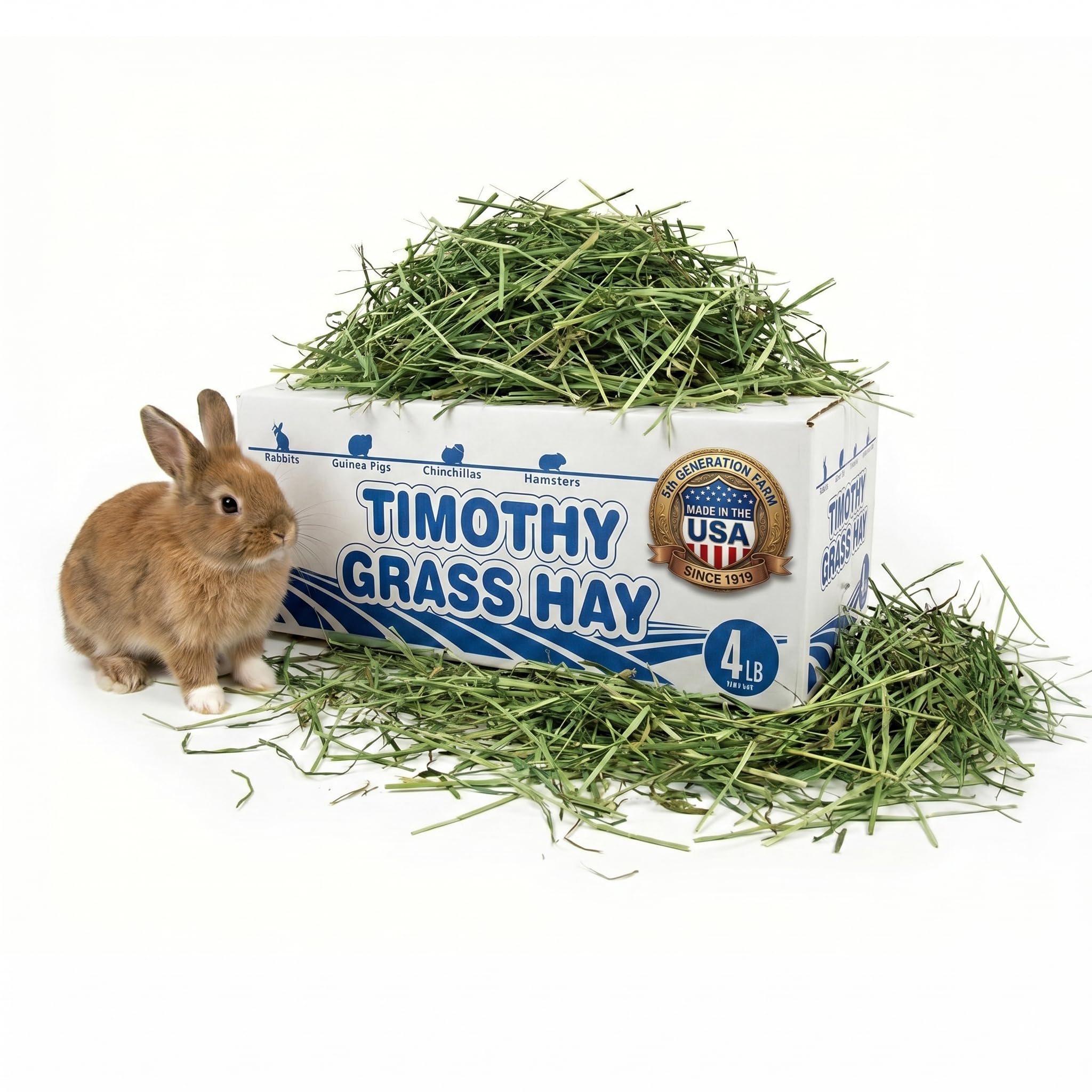
This bag delivers the kind of texture that makes adult rabbits forget selective eating exists. The second-cutting profile means tender, green leaves balanced with pliable stems that encourage chewing without frustrating picky eaters. Customer reviews consistently highlight how even previously difficult rabbits clean their bowls, with one owner calling their bunny the “world’s pickiest” and reporting zero waste — a sign that the leaf-to-stem ratio hits the sweet spot for daily consumption.
Packaged in a breathable cardboard box rather than plastic, this hay retains its sweet grassy aroma significantly longer than bagged alternatives. The natural fiber content supports steady gut motility without needing to coax the rabbit into eating. Owners of guinea pigs and chinchillas also report success, confirming the broad appeal of this cutting across small herbivores that demand consistent fiber intake.
The primary concern is packaging mess — hay directly inside the box can shed small amounts of leaf material during transport. A few recent batches have drawn complaints about dryness, suggesting that quality control can vary by shipment. Despite this, the vast majority of feedback confirms fresh, green, fragrant hay that rabbits actively seek, making it the strongest daily feeder option in this review.
Why we love it
- Consistently green, tender leaves with minimal stems
- Sweet aroma that drives voluntary feeding
- Breathable box packaging preserves freshness
Good to know
- Packaging can shed small amounts of leaf debris
- Recent batch quality reports show occasional inconsistency
2. Sherwood Pet Health Adult Rabbit Food Timothy Hay Pellet

This pellet formula takes a hay-first approach that directly addresses the selective-eating problem caused by sugary, colorful pellet mixes. Timothy hay is the base ingredient, and the formula contains no soy, no grain, no molasses, and no artificial colors — meaning the rabbit gets fiber and protein without filler ingredients that train them to skip real hay. The 4.5-pound bag is dense enough that a two-rabbit household using the recommended daily portion size gets roughly one month of feed.
The nutritional profile includes short and long-strand fibers that support both gut motility and dental health, plus prebiotics that stabilize digestion during transitions. Customers report rabbits that were lethargic or suffering from loose stools seeing measurable improvement within days of switching. The pellets are uniform in size, which prevents the “pick out the treats, leave the pellets” behavior common in mixes with visible fruit pieces.
Vets frequently recommend this brand for rabbits with megacolon or chronic digestive sensitivities, and the feedback backs that up — one adopter of a rescue bunny with megacolon reported a full recovery in energy and stool quality. The main downside is the price point, which sits notably higher than grocery-store pellet brands. For owners wanting a clean, filler-free pellet that reinforces a hay-first diet, this is the gold standard.
Why we love it
- Grain-free, soy-free formula with no added sugar
- Short and long-strand fiber supports gut health
- Vet-recommended for digestive conditions
Good to know
- Higher cost per pound compared to mainstream brands
- Not a complete diet — must be paired with unlimited loose hay
3. Kaytee Timothy Hearty Hay

Kaytee positions this as “hearty and crunchy” — and that descriptor is accurate. The first-cutting nature means thicker stems and a coarser mouthfeel that rabbits who enjoy a satisfying crunch will tear through quickly. The 48-ounce bag is a practical size for single-rabbit households or as a supplement to softer second-cutting hay. Multiple verified reviews confirm that wild rabbits in backyards also find it appealing, which speaks to its natural aroma and lack of artificial processing.
Grown specifically for small animals without pesticides, this hay offers a clean feeding profile that aligns with the high-fiber, additive-free diet adult rabbits need. The customer feedback highlights freshness as a key strength — bags arrive with minimal dust and a greenish color that indicates proper harvest timing. One reviewer noted using it as a primary hay source for months with consistent quality, which is valuable given the variability in many hay brands.
The crunchy stem content can lead to selective eating in rabbits who prefer leafier material. Some reviewers observed brownish patches in their batch, raising questions about batch consistency. This hay works best for rabbits that enjoy working through tougher stems or for owners who want to mix textures to prevent boredom. For a rabbit that demands exclusively soft leaves, a second-cutting option will deliver better consumption rates.
Why we love it
- Crunchy texture satisfies rabbits that enjoy stem work
- Grown without pesticides for clean feeding
- Consistent freshness across multiple purchase cycles
Good to know
- Stem-heavy first-cutting may cause selective eating
- Occasional browning indicates batch variability
4. Vitakraft Vita Smart Rabbit Food
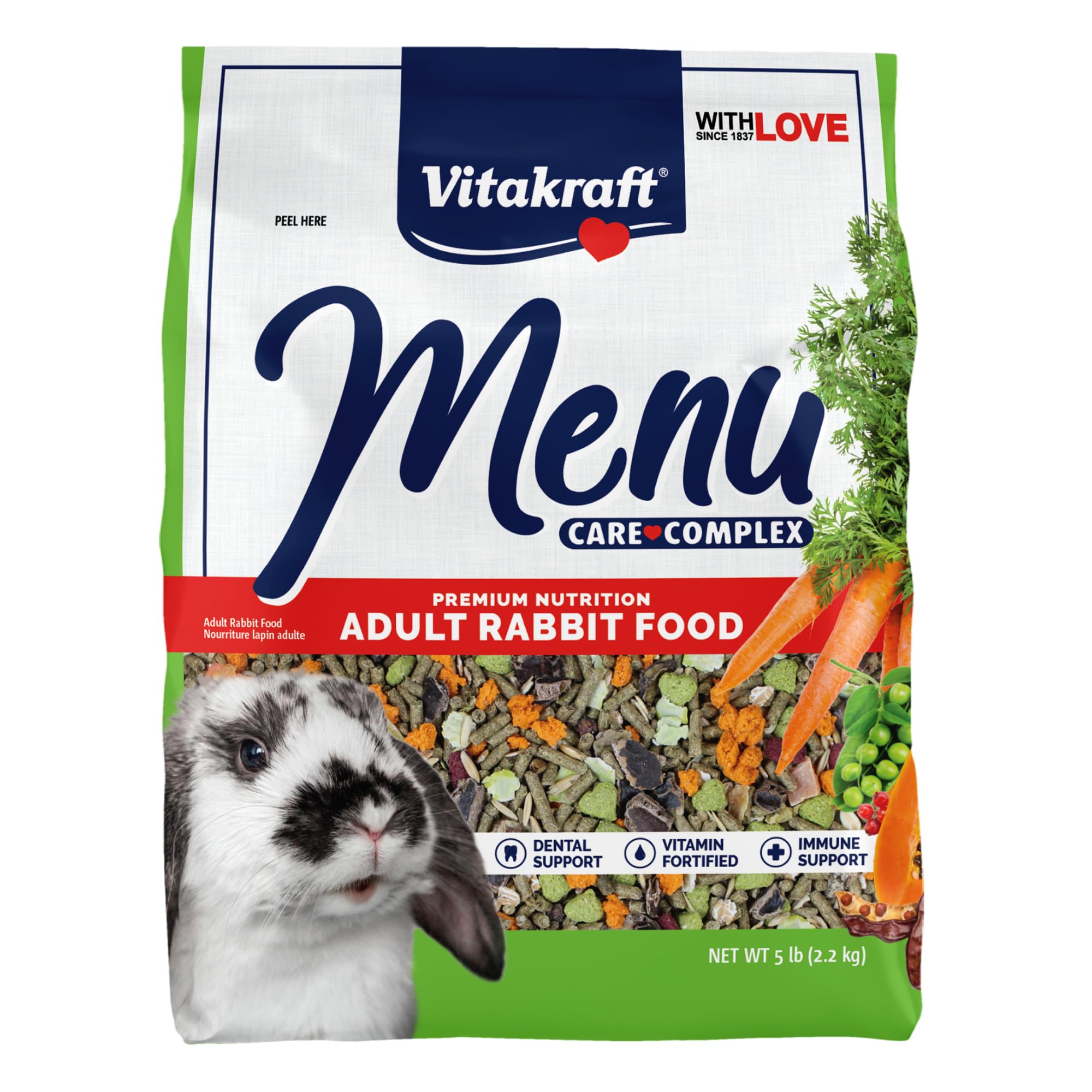
Vitakraft takes a different approach by combining timothy hay pellets with dried fruits and vegetables and a probiotic supplement. The foraging mix concept is genuinely engaging — multiple owners report their rabbits sorting through the bowl to find preferred pieces before eating the pellets. The high-fiber timothy hay as the first ingredient provides the roughage foundation, while added vitamins A, D3, E, and B12 support overall health in a single feed.
The 4-pound bag offers good value for owners wanting a complete meal that doesn’t require separate pellet-and-treat assembly. The probiotics support gut flora stability, which is particularly useful for rabbits transitioning from a different food brand. The resealable package is a practical touch for maintaining freshness over the feeding period, and the company’s 180-year history in pet nutrition provides baseline confidence in the formulation.
The biggest risk is selective eating: the dried fruit pieces are more appealing than plain pellets, and some rabbits will eat only the sweet bits and leave the fiber-rich pellets untouched. One reviewer explicitly called it “rabbit crack” and admitted using it as a sugary daily breakfast for a senior rabbit rather than as a nutritionally balanced staple. This product is better suited as an enrichment topper or occasional treat mix rather than a primary hay replacement for adult rabbits needing strict fiber control.
Why we love it
- Enriching foraging mix with fruits and veggies
- Probiotics support digestive transition
- Resealable bag maintains freshness
Good to know
- Dried fruit pieces encourage selective eating
- Not suitable as a sole nutrition source for fiber-sensitive rabbits
5. Oxbow Timothy Hay Bungalow

This isn’t hay you put in a feeder — it’s hay you put in the cage as a structure. The Oxbow Timothy Hay Bungalow is hand-woven from 100 percent timothy hay with no wires, threads, or adhesives, making it entirely edible while serving as a hideout. Adult rabbits benefit from the dual function: the bungalow satisfies their instinct to hide and burrow while the fiber-rich walls encourage natural chewing that wears down continuously growing incisors. The medium size comfortably fits two chinchillas or one larger rabbit.
Vets recommend Oxbow’s Enriched Life collection for habitat enrichment because it addresses stress reduction and dental health simultaneously. Chewing the bungalow provides the same long-strand fiber benefit as loose hay but in an interactive format that prevents boredom. Owners of gerbils and degus also report their pets using the structure as a tunnel connector or nesting space, indicating the design works across multiple small herbivore species.
The main limitation is longevity: two gerbils can reduce a bungalow to dust in roughly two weeks, and rabbits with strong chewing drives will dismantle it faster. The cost per day of enrichment is higher than a bag of loose hay, making it a supplementary item rather than a primary fiber source. For owners wanting to add foraging complexity and dental enrichment to an existing hay diet, this bungalow delivers a unique value that loose hay alone cannot provide.
Why we love it
- 100% edible timothy hay with no hardware
- Dual purpose: hideout and chew toy
- Supports dental wear through natural chewing
Good to know
- Consumed relatively quickly by determined chewers
- Higher cost per day than loose hay alternatives
FAQ
Can adult rabbits eat first-cutting timothy hay exclusively?
How do I know if a hay batch is too dusty for my rabbit?
Should I feed pellets alongside unlimited hay for adult rabbits?
Final Thoughts: The Verdict
For most rabbit owners, the hay for adult rabbits winner is the High Desert 2nd Cutting Timothy Hay because its tender leaf structure and consistent freshness solve the selective-eating problem better than any competitor. If you want a grain-free pellet formula that reinforces a hay-first diet, grab the Sherwood Pet Health Adult Rabbit Food. And for rabbits that need enrichment and dental stimulation beyond what loose hay provides, nothing beats the Oxbow Timothy Hay Bungalow as a chewable hideout that doubles as fiber intake.