
Every winter, the quiet battle for survival among community cats becomes painfully real. I have watched too many frozen mornings where a warm, dry refuge meant the difference between a curled-up sleepy cat and one that simply disappeared. A heated feral cat house is not a luxury — it is a lifeline, and choosing the right one demands serious attention to insulation, safety, and the wary nature of cats who have learned to distrust the world.
I’m Mo Mahin — the founder and writer behind Furric. I have spent years analyzing veterinary safety standards, evaluating real pet owner feedback, and studying how outdoor feral cat shelters perform under extreme weather conditions so you never waste money on a product that fails when it matters most.
This guide breaks down what truly matters in a best heated feral cat house, from heating pad safety to weatherproofing, so you can make a confident, compassionate choice that lasts through the harshest seasons.
How To Choose The Best Heated Feral Cat House
Not every shelter marketed for outdoor cats actually works for feral ones. These cats are skittish, sensory-driven, and deeply suspicious of anything unfamiliar. The best shelters respect that caution while delivering reliable warmth and protection. Here is what to look for.
Heating Pad Safety and Certification
A heating pad left running outdoors must be UL or MET tested for safety. Look for chew-resistant cords, automatic thermostats that prevent overheating, and waterproof construction. A pad that reaches 95–113°F is ideal — warm enough to provide comfort, cool enough to prevent burns if a cat rests directly on it for hours.
Weatherproofing and Insulation Quality
Snow, rain, and wind will find every weak seam. A good feral cat house uses multiple insulation layers — think aluminum foil lining, pearl cotton, or thick sponge — combined with a waterproof outer shell. Elevated bases prevent ground moisture from seeping in, while slanted roofs and extended eaves push rain away from entrances.
Escape Doors and Entrance Design
Feral cats need an escape route. A secondary exit door lets them flee if a predator enters through the main opening. The entrance itself should be small enough to block wind and discourage larger animals, but large enough for a cat to enter comfortably. Transparent flaps help cats monitor their surroundings before stepping out.
Quick Comparison
On smaller screens, swipe sideways to see the full table.
| Model | Type | Best For | Key Feature | Amazon |
|---|---|---|---|---|
| Wagstro Heated Cat House | Fabric / Frame | Quick setup, single cat | UL 9-layer safety, 5-min heating | Amazon |
| Pawtners XL Heated Shelter | Fabric / Frame | Large cats, windy areas | All-metal frame, windproof stakes | Amazon |
| Generic HDPE Cat Shelter | Plastic / HDPE | Year-round, multi-cat | Heavy-duty HDPE, stackable design | Amazon |
| JLSAME Heated Cat House | Fabric / Frame | Budget-friendly, small cat | Aluminum foil insulation, escape door | Amazon |
| Texsens Multi-Use Shelter | Fabric / Frame | Colonies, all-season use | Roof window, dual flaps, cooling pad | Amazon |
| Esnendir Large Heated Shelter | Fabric / Frame | Two cats, heavy snow | 5-layer insulation, 180-lb impact rating | Amazon |
| NAMOTEK Elevated Heated House | Fabric / Frame | Auto temp control, 2 cats | MET certified, bi-metal thermostats | Amazon |
| GUTINNEEN Wooden Cat House | Wood / Insulated | Feral colonies, cold climates | 6-sided insulated liner, asphalt roof | Amazon |
| yeatruojeet 2-Story Heated House | Fabric / Frame | Multiple cats, two levels | Two heated pads, dual escape doors | Amazon |
| rolimate Indestructible Shelter | Fabric / Frame | Single cat, extreme weather | 5-layer insulation, UL-tested wire | Amazon |
| Kitty Tube Feral Shelter | HDPE Plastic | Premium, lifetime durability | Lifetime warranty, included oat straw | Amazon |
In-Depth Reviews
1. Wagstro Heated Cat House
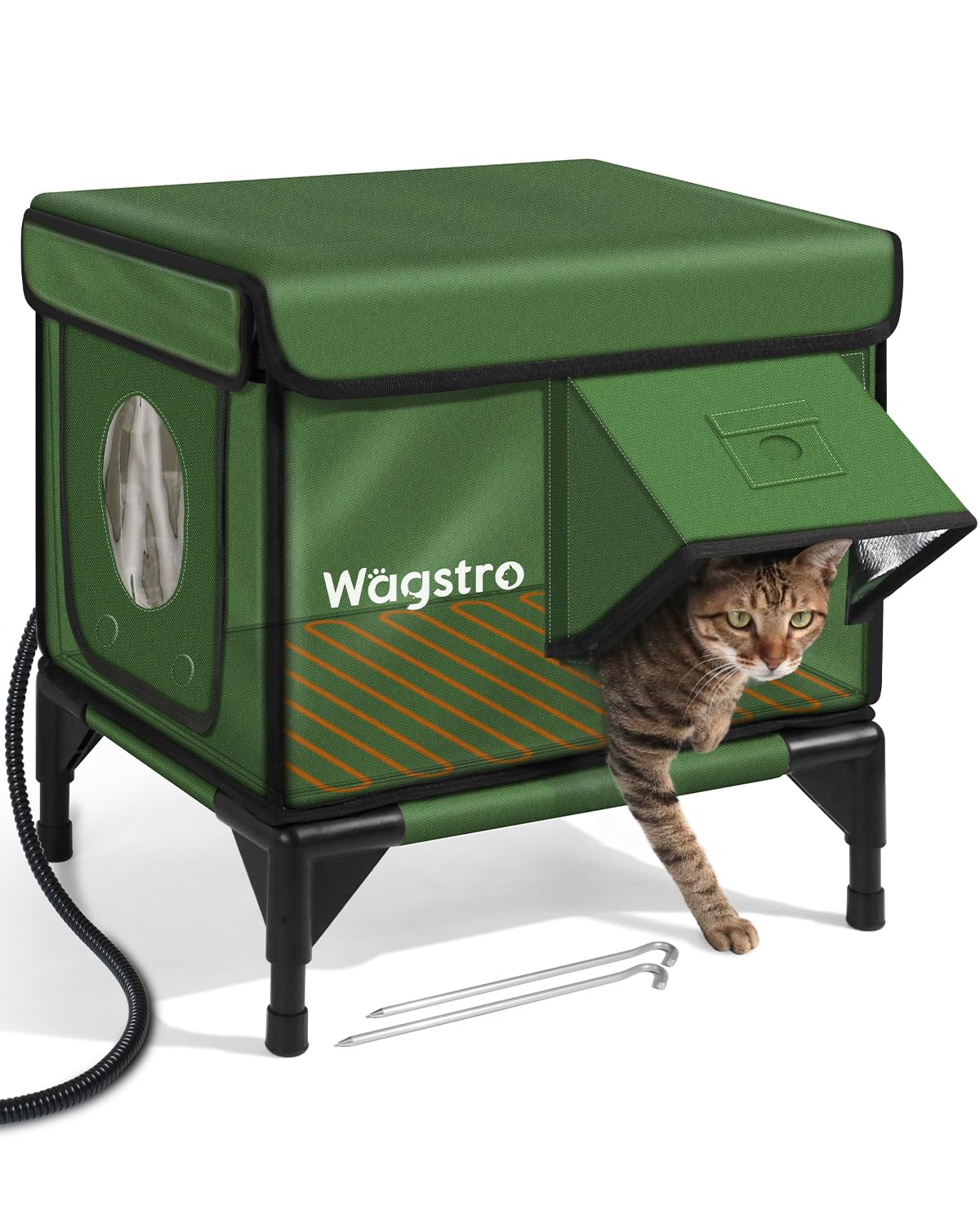
This shelter hits the sweet spot between affordability and real winter protection. The heating pad warms to 86–131°F within five minutes and includes a UL-compliant 9-layer safety system that gives you genuine peace of mind when plugging it in outdoors. The Oxford fabric with PVC coating and insulating foil lining keeps rain, wind, and snow at bay, while the elevated base prevents ground moisture from creeping in.
An escape door adds critical safety for feral cats who may feel trapped, and the design supports optional cameras for monitoring — a thoughtful touch for caregivers who want to keep an eye on shy visitors. Assembly requires no tools, and the whole unit folds flat for off-season storage. Customer feedback consistently praises the warmth, easy setup, and sturdy build, though some noted the plastic support rods can be finicky and the legs occasionally slip out of position.
For a mid-range option that delivers premium warmth and thoughtful safety features, the Wagstro is a standout. It is comfortable for a single large cat, runs reliably through cold snaps, and the heating pad cover is removable for cleaning. If you need one dependable shelter that checks all the boxes without breaking your budget, this is it.
Why we love it
- Fast heating with UL safety certification
- Escape door for predator protection
- Tool-free assembly, folds flat for storage
Good to know
- Plastic rods can be tricky during assembly
- Best suited for one large cat, not multiples
2. Pawtners XL Heated Outdoor Cat House
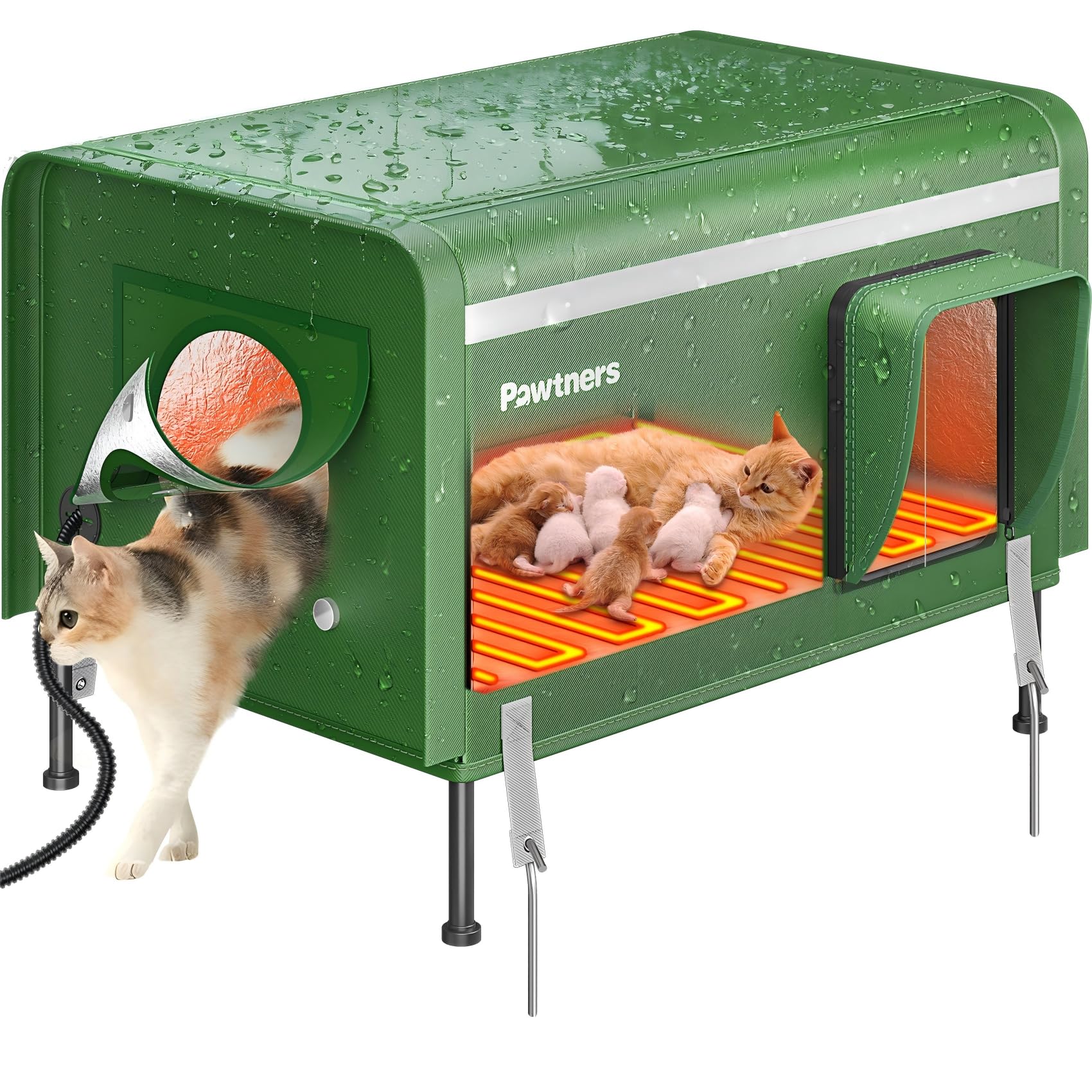
The Pawtners XL is built for exposed locations where wind and snow hit hardest. The all-metal frame with windproof ground spikes keeps this shelter planted firmly, even during storms that would send lighter houses tumbling. The fully waterproof PVC cover with extended eaves and a transparent door curtain blocks rain while letting cats see out — a small detail that helps nervous ferals feel more secure.
Inside, the UL-listed 30W heating pad with an anti-bite cord provides steady warmth, and the elevated adjustable feet adapt to uneven ground so moisture never pools underneath. The escape door with a clear window adds both ventilation and a quick exit route. Assembly is straightforward, and the entire shelter measures 26 inches long — generous enough for two cats or a large Tom who refuses to share.
This is a premium mid-range option that prioritizes durability and weather resistance over frills. It is designed for caregivers who need a shelter that stays put, stays dry, and keeps multiple cats warm through the worst winter months. The metal frame makes it heavier than fabric-only models, but that weight translates into stability you can count on.
Why we love it
- Metal frame with ground stakes stays put in high wind
- Generous XL size fits multiple cats
- Anti-bite cord and UL-listed heating pad
Good to know
- Heavier build makes relocation more effort
- Clear door flap may frost over in extreme cold
3. Generic HDPE Outdoor Cat Shelter
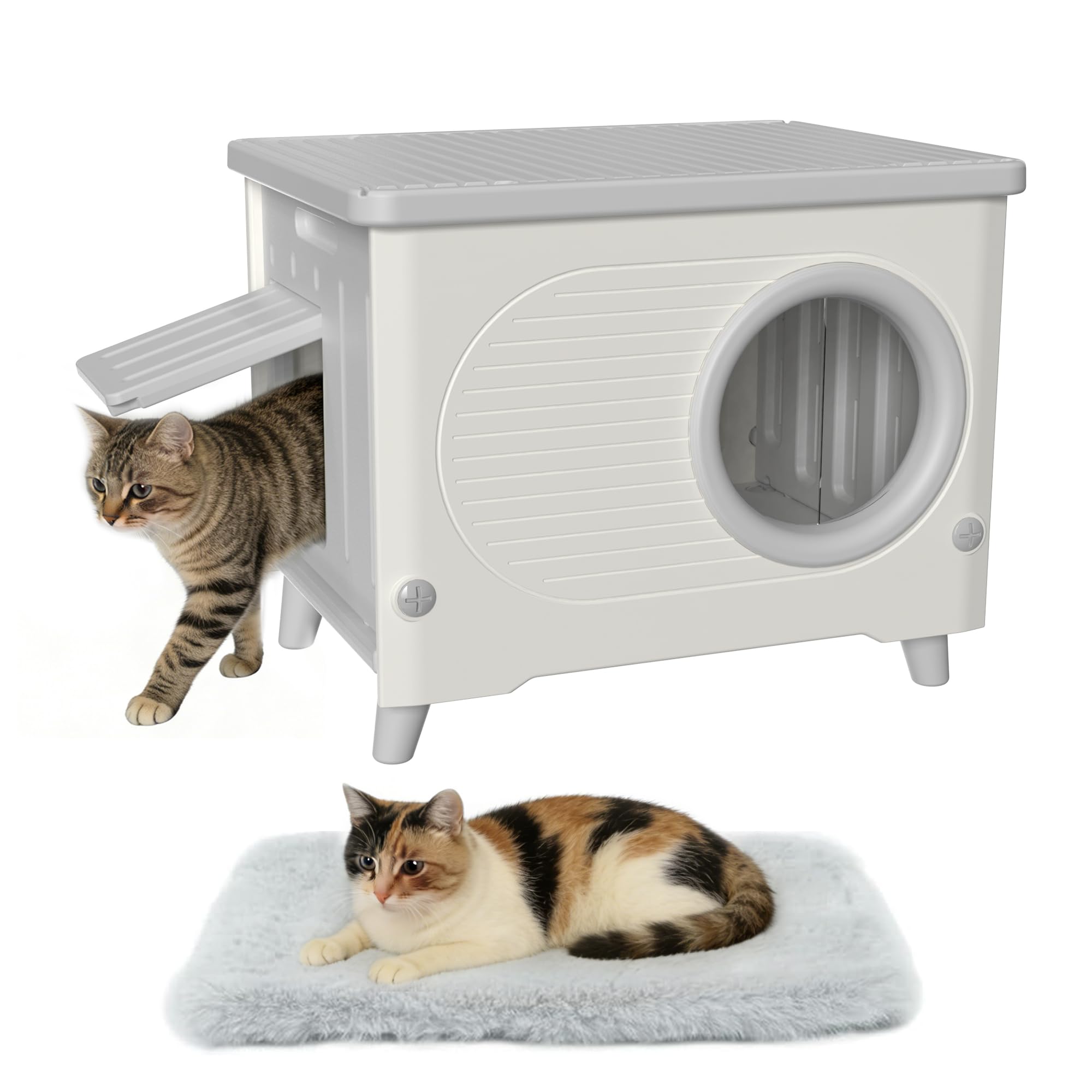
This is a different approach entirely — no fabric, no frame, just thick rotomolded HDPE plastic that shrugs off scratches, impacts, and UV exposure. The dual-layer hollow shell provides natural insulation, keeping interiors cooler in summer and warmer in winter without any electronics. The round burrow entrance mimics a natural den, which instinctively draws in skittish ferals who would normally avoid boxy shelters.
It arrives with a soft cushion, assembles without tools, and the smooth plastic surface wipes clean in seconds. The elevated base lifts it off damp ground, and the stackable design lets you create a multi-cat colony setup without taking up extra floor space. Several customers reported cats napping inside within days, drawn by the cave-like security that fabric shelters sometimes lack.
This shelter is not heated out of the box, so you will want to add a separate heating pad for winter use. But for year-round shelter that doubles as a safe birthing space and resists anything a cat or the weather can throw at it, the HDPE construction is nearly indestructible. It is a smart choice for colony managers who need something that will still be standing five years from now.
Why we love it
- Nearly indestructible HDPE plastic shell
- Round den entrance appeals to feral instincts
- Tool-free assembly, easy to clean
Good to know
- Not heated — requires separate heating pad
- Clear flap not included for rain protection
4. JLSAME Heated Cat House
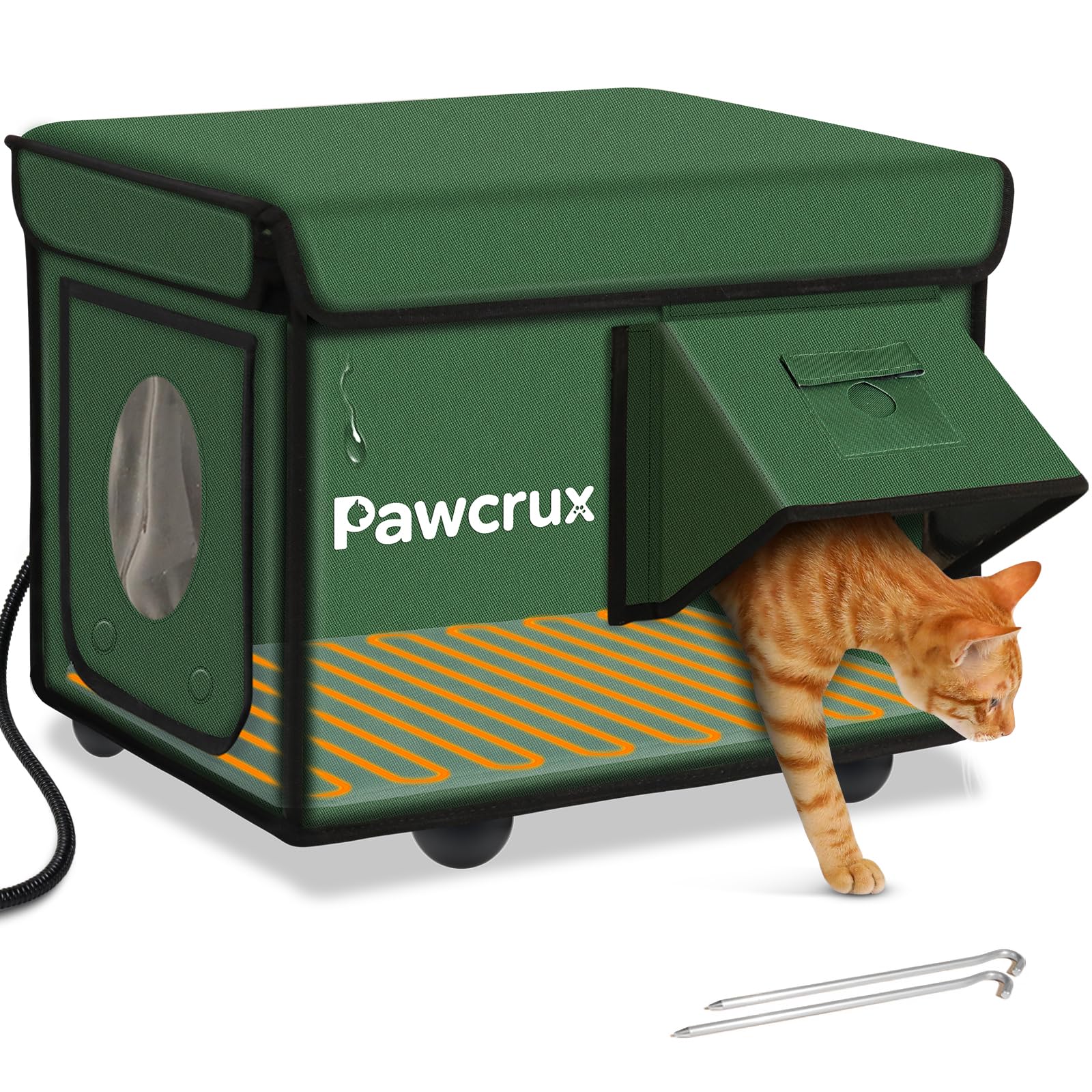
The JLSAME is a compact, no-fuss heated shelter that works best for a single feral cat or small kitten. The aluminum foil interior insulation reflects body heat back toward the cat, and the included heating pad adds a steady source of warmth. The escape door is a welcome safety feature, and the elevated base with waterproof eaves keeps the interior dry through rain and snow.
Assembly takes minutes with no tools required, and the roof opens easily for cleaning — a practical touch when you are maintaining multiple shelters. Customers have noted that it fits a medium cat up to about 14 pounds comfortably, and the heating pad stays warm without getting dangerously hot. One buyer mentioned that a shy feral preferred a different shelter, possibly due to the compact size, while their indoor cat happily adopted this one.
The trade-off is the smaller footprint — this is not a house for multiple cats or large breeds. But for its price point, the combination of insulation, heating, and escape safety is hard to beat. It is an excellent backup shelter or a primary option for a single feral who needs a warm, secure space without overwhelming them with too much open room.
Why we love it
- Aluminum foil insulation retains heat effectively
- Escape door for predator safety
- Tool-free assembly and easy roof access for cleaning
Good to know
- Compact size fits only one cat comfortably
- Instructions caution about heater monitoring
5. Texsens Multi-Use Outdoor Cat Shelter

The Texsens shelter is designed with colony caregivers in mind. It comes packed with extras — a UL-tested heating pad, a soft cotton mat, a cooling pad for summer use, and four door flaps (two transparent and two mesh) so you can adjust ventilation based on the season. The roof observation window lets you check on shy cats without disturbing them, and reflective strips make the shelter visible in low light.
At 25 inches wide, it accommodates two to four cats comfortably, and the 2.75-inch elevated base keeps everything dry. Customers managing feral colonies report attracting multiple strays, and the shelter has held up through winter storms without issue. The assembly is tool-free with velcro attachments, and the included windproof stakes add stability.
This shelter is a complete system rather than just a box with a heating pad. The attention to seasonal adaptability — cooling mat for summer, insulation and heating for winter — makes it a year-round solution. If you care for a colony and want one shelter that can handle everything from blazing heat to freezing snow, the Texsens delivers serious value for the money.
Why we love it
- Includes heating pad, cooling mat, and dual flaps
- Observation window for discreet monitoring
- Spacious enough for 2–4 cats
Good to know
- Mesh flaps are not fully weatherproof
- Heating pad requires continuous power
6. Esnendir Large Heated Cat Shelter

The Esnendir is built like a small fortress. With five layers of premium insulation, a frame that withstands up to 180 pounds of impact, and a thermostatic heating pad that holds steady between 95–113°F, this shelter is meant for the harshest environments. The slanted roof and fully upgraded waterproof canopy handle heavy snow and rain without leaking, and the elevated legs keep the floor bone dry.
One unique feature is the 3-in-1 modular design — the base, house, and heating pad can be separated and used independently, giving you flexibility across seasons. The transparent escape door lets cats see out while blocking cold air, and the quick-open velcro system makes cleaning simple. Customers in Oregon and other wet climates report that their feral cats live in these shelters all winter long.
Assembly requires a bit more effort — a mallet helps seat the support bars properly — but once built, the structure is rock solid. The spacious interior fits two adult cats without crowding, and the constant heat output gives shy ferals a reliable warm spot to return to every night. This is a premium mid-range option that punches well above its weight class.
Why we love it
- Five insulation layers for extreme cold
- 3-in-1 modular design for year-round use
- High impact resistance and waterproof build
Good to know
- Assembly requires a mallet for proper fit
- Plastic door covering may arrive wrinkled
7. NAMOTEK Elevated Heated Cat House

The NAMOTEK stands out for its intelligent temperature management. The heating pad is MET certified with two bi-metal thermostats that automatically maintain 95–108°F — the ideal range recommended by veterinarians — and only activate when the cat is present. This means energy efficiency and zero risk of overheating, even if the shelter runs unattended for days.
The nylon exterior is waterproof and the elevated design keeps moisture away. Assembly is a simple four-step process, and the shelter comfortably fits two cats. Customers have used these in outdoor catios and garages, reporting that cats curl up for hours even when temperatures drop into the 30s. The warm grey color blends into most outdoor settings without looking obtrusive.
This is the smartest heating system in the mid-range category. The auto-constant temperature feature removes the guesswork, and the MET certification provides genuine safety assurance. If you want a heated shelter that is both energy-conscious and veterinarian-approved, the NAMOTEK is a thoughtful, reliable choice that puts cat comfort first.
Why we love it
- MET certified with dual bi-metal thermostats
- Auto temp control only heats when cat is inside
- Easy 4-step assembly, fits 2 cats
Good to know
- Nylon exterior less durable than HDPE or metal
- No escape door for predator situations
8. GUTINNEEN Wooden Outdoor Cat House

This wooden shelter takes a classic approach to feral cat care. The solid wood construction with a 0.78-inch thick sponge liner on all six sides provides natural insulation that feels more substantial than fabric alternatives. The asphalt shingle roof sheds rain effectively and helps retain heat, while the waterproof elevated base prevents ground moisture from seeping into the interior.
At 23.6 inches long and 20.9 inches deep, the interior accommodates multiple kittens or a cat up to 25 pounds. Customers have reported feral cats moving in within 30 minutes of assembly, drawn by the solid, den-like feel. The plastic strip door flap blocks wind, though some ferals were initially spooked by the flapping — a few days of adjustment usually solves this.
This is not a heated shelter out of the box, so you will need to add a separate heating pad for winter. But the wood construction and thick liner do an excellent job of retaining body heat. Assembly takes about two hours with two people, and the result is a sturdy, attractive shelter that blends into gardens and barns. For caregivers who prefer natural materials and long-term durability, the GUTINNEEN is a lovely choice.
Why we love it
- Solid wood with thick sponge insulation on all sides
- Asphalt roof sheds rain and retains heat
- Spacious interior for multiple cats or medium dogs
Good to know
- Requires separate heating pad
- Assembly takes 2 hours and may need two people
9. yeatruojeet 2-Story Heated Cat House
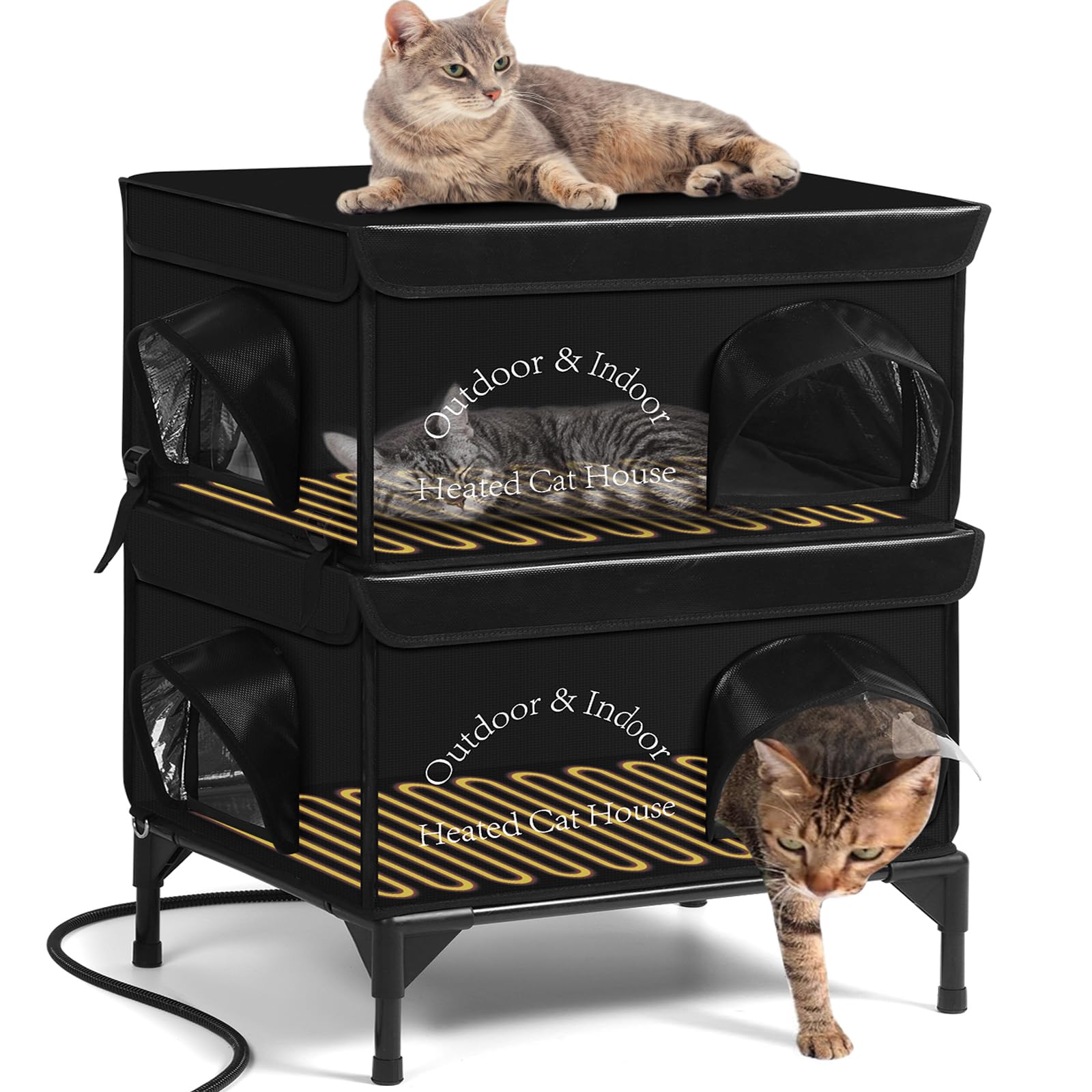
The two-story design from yeatruojeet is a creative solution for colony caregivers with limited ground space. Each level has its own heated pad and escape door, effectively giving two cats separate warm zones within one footprint. The 500D waterproof tarpaulin exterior with pearl cotton and aluminum foil insulation creates a heat-trapping environment that stays warm even in sub-zero temperatures.
The elevated legs raise the structure 5.9 inches off the ground — higher than most — which prevents snow from blocking the doors and keeps the interior dry during heavy melt. Assembly is tool-free, and the dual escape doors give cats multiple exit routes if they feel threatened. Customers praise the sturdy frame and the gentle warmth that does not get uncomfortably hot.
Be aware that the internal frame uses fiberglass rods — wearing gloves during assembly is strongly recommended to avoid skin irritation. Once set up, the shelter is spacious, stable, and surprisingly cozy. This is a smart pick for situations where you need to accommodate multiple cats but cannot spread shelters across a large area. The vertical design makes efficient use of space without compromising on warmth or safety.
Why we love it
- Two heated levels for multiple cats in one footprint
- Dual escape doors for predator safety
- High 5.9-inch elevation prevents snow blockage
Good to know
- Fiberglass rods require gloves during assembly
- Best suited for smaller to medium cats
10. rolimate Indestructible Heated Cat House

The rolimate lives up to its name. With five layers of high-quality insulation, a fully waterproof awning, and a rugged fabric exterior that resists tearing, this shelter is built to survive extreme weather and clumsy raccoons alike. The UL-tested heating wire and waterproof construction mean the pad stays safe even when snow melts and seeps into unexpected places.
The escape door design is exit-only, which keeps cold air from rushing in while giving cats a quick way out if a predator approaches. The quick-open velcro system makes cleaning the interior a breeze, and the windproof awning ensures heat stays inside even on blustery nights. Customers have used this shelter in temperatures below freezing with reports of cats staying warm and dry throughout.
One customer noted this shelter is better suited for garage or covered porch use in extreme climates like Minnesota, while others reported it held up perfectly in exposed locations. The low entrance and side escape door design work well for cautious ferals. For a premium fabric shelter that emphasizes safety certification and insulation density, the rolimate delivers real performance where it matters most.
Why we love it
- Five-layer insulation with UL-tested heating wire
- Exit-only escape door prevents draft and predator entry
- Quick-open velcro system for easy cleaning
Good to know
- More expensive than similar fabric models
- May need supplemental protection in extreme northern winters
11. Kitty Tube Feral Cat Shelter with Straw

The Kitty Tube is the gold standard for feral cat shelters. Made in the USA from durable HDPE plastic with a lifetime warranty against fading or cracking, this shelter is built to outlast every other option on this list. The scratch guard insulation on the floor, ceiling, and walls provides maximum warmth, while the reticulated foam layer drains condensation away from the sleeping area — a brilliant design detail that keeps bedding dry.
It comes with enough bulk oat straw for two fresh layers of bedding, and the one-door design features an awning and clear flap that keeps predators out while retaining heat. Built-in lifting handles double as adjustable vents — open for summer airflow, closed for winter warmth. The removable lid makes cleaning simple, and the round tube shape blends naturally into landscapes. Alley Cat Allies and Feral Fixers approve this shelter.
The price reflects the quality — this is the most expensive shelter here, and assembly requires some patience. The durable construction means it will survive years of harsh weather without cracking or fading. For colony managers who need a permanent, low-maintenance solution that cats actually trust, the Kitty Tube is worth every penny. It is not heated out of the box, but an optional low-voltage heating pad can be added for those who want it.
Why we love it
- Lifetime warranty on HDPE shell
- Reticulated foam floor drains condensation
- Adjustable ventilation for summer and winter
Good to know
- Premium price point reflects lifetime quality
- Heating pad sold separately
Safety & Care Tips
Heating Pad Placement and Checks
Always place the heating pad inside the shelter so the cord exits away from the entrance, reducing tripping risk for the cat and protecting the cord from chewing. Inspect the cord weekly for cracks or bite marks, especially if raccoons or other wildlife investigate the shelter. Unplug the pad during warmer months and store it flat to extend its lifespan.
Bedding That Breathes
Use straw, not hay, for feral cat shelters — straw resists moisture and does not mold like hay or blankets. Replace the bedding every few weeks during heavy use, or whenever it feels damp. If you use a heating pad, place a thin towel layer over it to distribute warmth evenly, but avoid thick fabric that can trap moisture against the cat’s fur.
FAQ
Can I leave a heated cat house plugged in 24/7 during winter?
How do I get a shy feral cat to use a new heated shelter?
What is the ideal temperature range for an outdoor cat heating pad?
Can heated cat houses be used in summer or should they be stored?
Final Thoughts: The Verdict
For most pet parents, the best heated feral cat house winner is the Wagstro Heated Cat House because it combines fast UL-safe heating, an escape door, and tool-free assembly at a price that respects your budget. If you want certified smart temperature control with energy-saving auto-activation, grab the NAMOTEK Elevated Heated House. And for a lifetime investment that will serve feral colonies for decades, nothing beats the Kitty Tube Feral Shelter.