
If the air in your home consistently triggers coughing fits, chest tightness, or a sudden reliance on your rescue inhaler, you are not dealing with generic dust. You are dealing with a hyper-responsive airway environment that demands a higher standard of particle removal. The gap between a standard fan and a medical-grade filtration system can feel like the difference between surviving the night and actually waking up rested.
I’m Mo Mahin — the founder and writer behind Furric. I’ve spent years dissecting the technical specifications of air quality equipment, cross-referencing independent lab reports, and analyzing thousands of verified owner experiences to separate the machines that genuinely reduce asthma triggers from those that only promise fresh air.
Whether you need to tame pet dander, suppress seasonal pollen, or strip wildfire smoke from your living space, selecting the right best hepa air purifier for asthma begins with understanding CADR ratings, filter particle retention, and sensor responsiveness — not marketing claims.
How To Choose The Best HEPA Air Purifier For Asthma
Choosing a purifier for asthma control requires you to look past general air cleaning claims. You need a machine that specifically targets the particle sizes and airborne pollutants known to trigger bronchial inflammation. The following criteria will help you evaluate any model against your specific respiratory needs.
Understand True HEPA vs. HEPA-Type vs. H13/H14 Laminar Flow
True HEPA filters must capture at least 99.97% of particles at 0.3 microns in size. This is the standard required to trap pollen, dust mite debris, mold spores, and pet dander — all common asthma triggers. HEPA-type filters only meet a lower efficiency threshold and are not reliable for asthma management. H13 and H14 rated filters go further, capturing 99.95% and 99.995% of particles as small as 0.1 microns, which is ideal for households with multiple respiratory sensitivities.
Match CADR to Your Room Volume, Not Just Square Footage
Clean Air Delivery Rate (CADR) measures how many cubic feet of air the unit cleans per minute for smoke, dust, and pollen. For asthma control, aim for a CADR of at least 200 CFM for smoke in your largest room. Calculate your room volume by multiplying square footage by ceiling height in feet, then divide by 60 to estimate the CFM needed for four air changes per hour. A unit that is undersized will fail to reduce trigger particle concentration, regardless of filter quality.
Prioritize Washable Pre-Filters and Carbon Layers
Asthma triggers are not limited to particulates. Volatile organic compounds from cleaning products, cooking fumes, and new furniture off-gassing can aggravate airways. A machine with an activated carbon filter (preferably pelletized, not foam) will adsorb these gases. A washable pre-filter captures larger hair and dust, extending True HEPA filter life by three to six months, which reduces annual running costs significantly.
Verify Real-Time Air Quality Monitoring and Auto Mode
Manual fan speed guessing is inefficient for asthma. A purifier with a built-in particle sensor (laser-based sensors are more accurate than infrared) and auto mode will ramp up filtration when cooking, vacuuming, or a pet enters the room — precisely when trigger levels spike. Look for a display that shows PM2.5 and PM10 readings so you can confirm the room is returning to a safe particle concentration within minutes.
Quick Comparison
On smaller screens, swipe sideways to see the full table.
| Model | Category | Best For | Key Spec | Amazon |
|---|---|---|---|---|
| Coway Airmega AP-1512HH | Mid-Range | Automated particle detection with silent performance | CADR: 246/240/233 CFM (Dust/Pollen/Smoke) | Amazon |
| WINIX 5520 | Mid-Range | Smart sensor coverage for large open floor plans | AHAM Verified at 392 sq ft; CADR not published | Amazon |
| CleanForce CP-Rainbow | Mid-Range | Space-filling units with app+voice control | CADR: 550 CFM for smoke | Amazon |
| AIRDOCTOR AD2000 | Premium | VOC, gas, and sub-micron particle reduction | UltraHEPA captures 99.99% at 0.003 microns | Amazon |
| Coway Airmega 250 | Premium | Large room coverage with rapid mode | Coverage: 1,860 sq ft in 1 hour | Amazon |
| BLUEAIR Blue Signature | Premium | Whisper-quiet operation in large open spaces | Coverage: 3,385 sq ft in 1 hour | Amazon |
| Levoit EverestAir-P | Premium | Granular air quality data with smart home features | CADR: 354 CFM for smoke | Amazon |
| LEVOIT Core300-P | Entry-Level | Budget-friendly bedroom or office purification | CADR: 143/153/167 CFM (Smoke/Dust/Pollen) | Amazon |
| GermGuardian AC4825W | Entry-Level | Compact tower format with added UV-C light | Coverage: 743 sq ft per hour; CADR not published | Amazon |
In‑Depth Reviews
1. Coway Airmega AP-1512HH
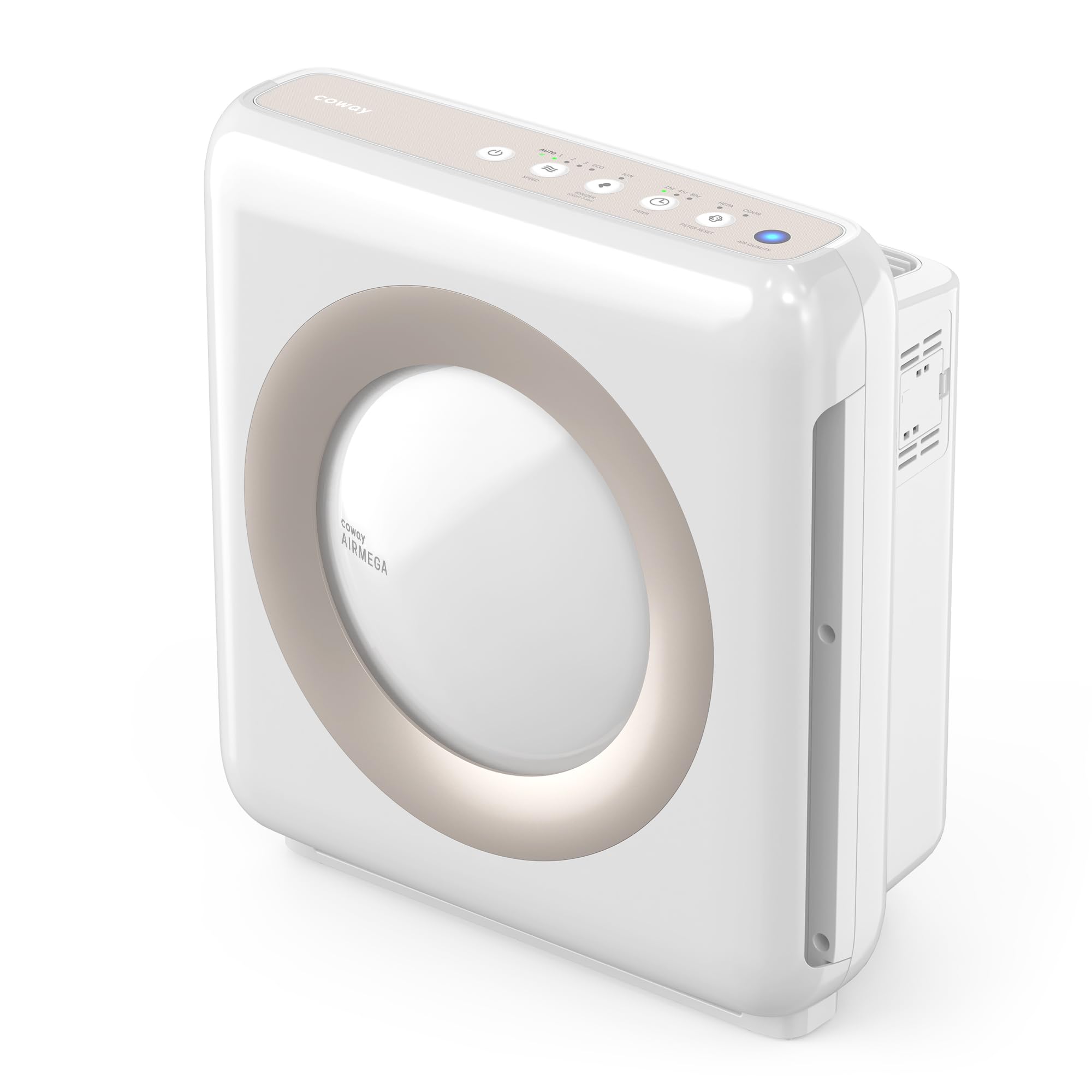
The Coway Airmega AP-1512HH has earned its staying power in the air purifier space because it delivers a dense combination of four-stage filtration and intelligent sensor control that directly addresses asthma trigger peaks. Its CADR ratings — 246 CFM for dust, 240 for pollen, and 233 for smoke — mean it can recirculate a 361-square-foot room through multiple clean cycles per hour without overheating the room or spiking your electric bill.
The pollution sensor drives a color-coded auto mode that responds within seconds to cooking smoke, vacuuming dust clouds, or a pet shake. The washable pre-filter catches large debris, extending the True HEPA and activated carbon filter life to roughly 12 months. Owners consistently report that the unit clears wildfire smoke haze within five minutes and reduces nighttime allergy symptoms noticeably after week one.
Noise levels range from near-silent (24.4 dB) to a manageable 53.8 dB on maximum fan speed, making it suitable for open-plan living areas without disrupting conversation. The lack of app connectivity is actually a plus for those who prefer a dedicated appliance that just works without firmware updates or connectivity drops.
Why we love it
- Highly responsive auto mode adapts to real-time air quality changes
- Low noise floor on lower speeds supports undisturbed sleep
- Washable pre-filter reduces annual filter replacement costs substantially
Good to know
- Auto mode cannot be set to a minimum medium fan speed, only low
- Activated carbon layer is lightweight and may need supplementing for persistent odors
2. WINIX 5520
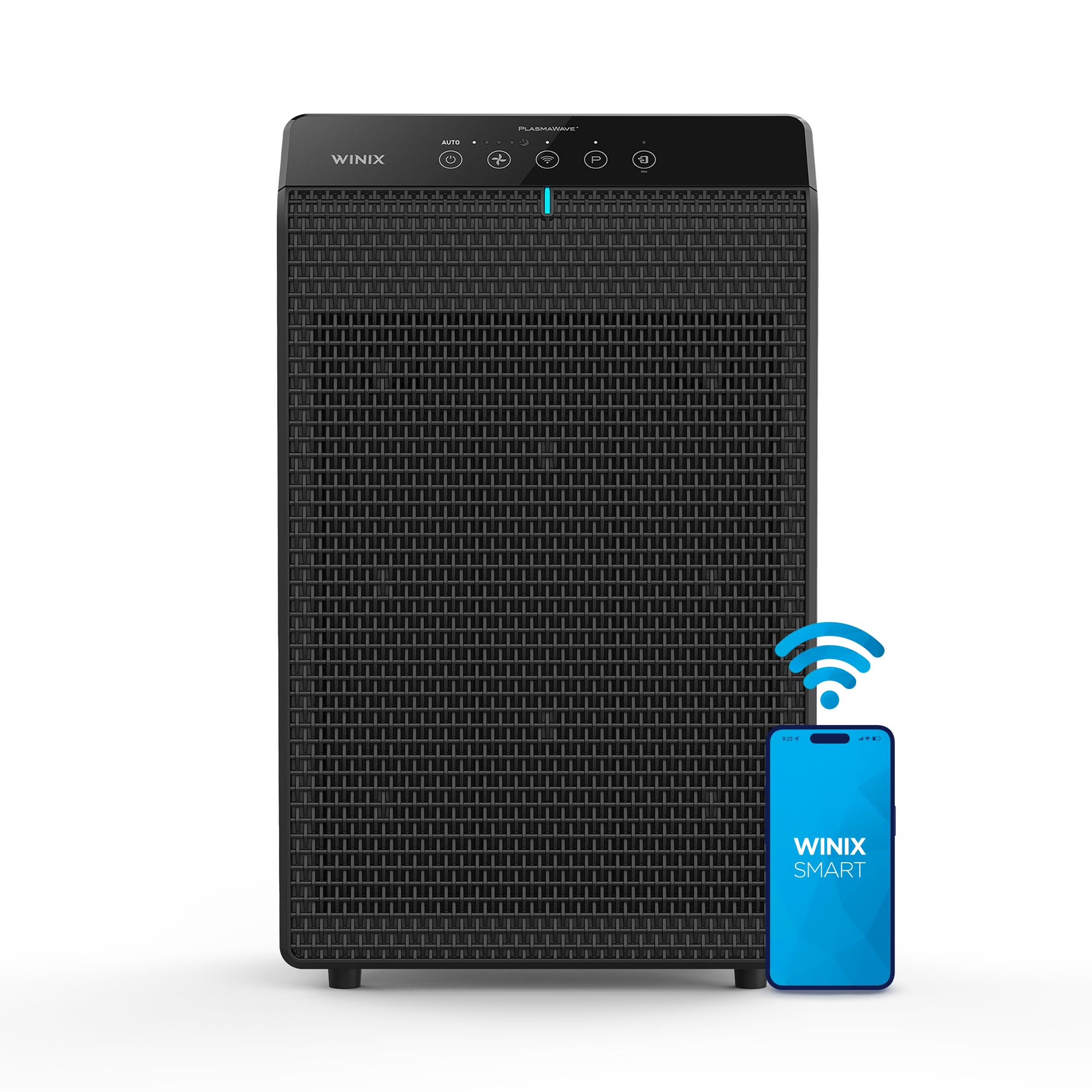
The WINIX 5520 brings a four-stage purification strategy (washable pre-filter, AOC carbon filter, True HEPA, and optional PlasmaWave) into a single chassis that intelligently monitors and adjusts its output. Its clean air delivery is AHAM Verified at 392 square feet, but the unit can process up to 1,882 square feet over the course of an hour, covering larger living spaces with fewer blind spots.
The smart sensor detects fine particles and volatile compounds from sources like a gas stove or freshly applied paint, lighting up the air quality indicator and ramping fan speed automatically. The sleep mode dims all lights and drops the noise floor to near-silent levels, which is essential for asthma sufferers who are light or noise sensitive during nighttime exacerbations. The pre-filter and AOC carbon filter are washable, so the only consumable is the HEPA filter.
Winix includes remote and app compatibility (Wi-Fi and Alexa) for convenience, though the auto mode is already reliable enough that most owners never touch manual controls. The vertical side intake design does require careful placement away from walls to avoid airflow restriction, but the unit’s performance in open-concept homes makes that a minor trade-off.
Why we love it
- Intelligent sensor detects VOCs and smoke from across the house
- Washable pre-filter and carbon filter significantly lower consumable costs
- Sleep mode is genuinely quiet and completely dark for bedroom use
Good to know
- Maximum fan speed is noticeably loud and intended only for brief turbo cycles
- Side grille design can be partially blocked by pet hair if not vacuumed regularly
3. CleanForce CP-Rainbow
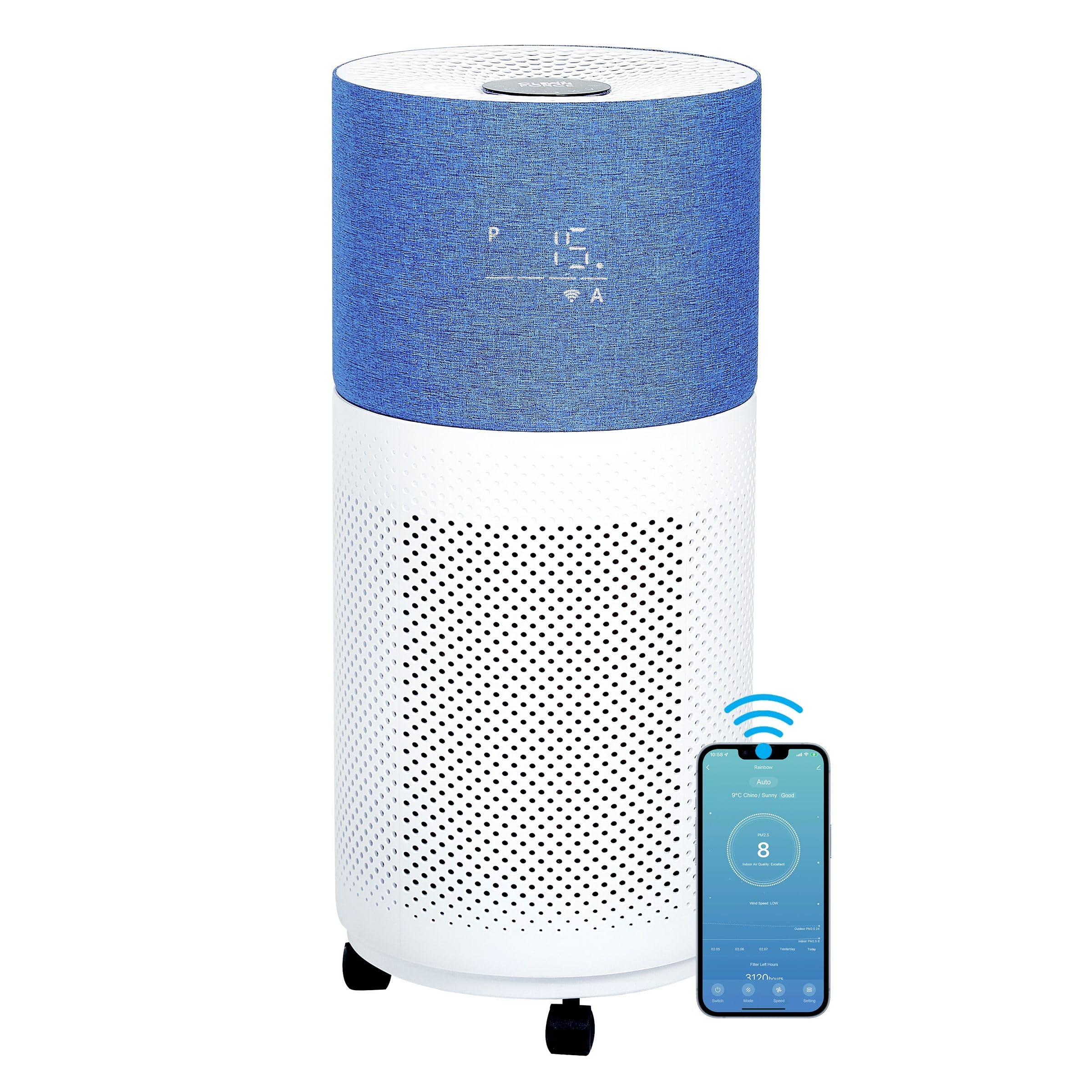
The CleanForce CP-Rainbow targets large-volume air turnover with a 550 CADR rating, placing it in a different league of throughput capacity. It can sweep through 2,550 square feet in one hour, making it the highest raw output option among the mid-range priced units here. The triple-layer filtration train starts with a pre-filter for hair and large particles, followed by an H13 True HEPA layer that captures 99.97% of particles down to 0.3 microns, and finishes with an activated carbon iMACT filter for smoke, odor, and VOC adsorption.
The unit ships with pre-installed wheels and a 12-hour timer, and the top-facing control panel includes a real-time HD LED display that shows particulate levels. Voice control through Alexa plus a dedicated app means you can schedule filtration to start 30 minutes before you arrive home — a useful feature for asthma management if you live in a high-pollen or wildfire-prone region. Owners report it cleared cooking odors from a resin printing workspace effectively and noticeably reduced eye itching and nasal congestion within the first week.
At the lowest setting, noise measures 29 dB, which is comparable to a quiet library. At maximum speed, the fan is loud enough to require conversation raising, but the high CADR means you typically only need the turbo setting for a short burst after cooking or vacuuming.
Why we love it
- 550 CADR provides room-filling turnover capability unmatched in this tier
- H13 True HEPA filtration exceeds standard HEPA requirements
- Built-in wheels and top controls make it easy to reposition between rooms
Good to know
- Particle sensor in auto mode can be inconsistent with kitchen cooking odors
- Replacement filter intervals are shorter than average if run continuously
4. AIRDOCTOR AD2000
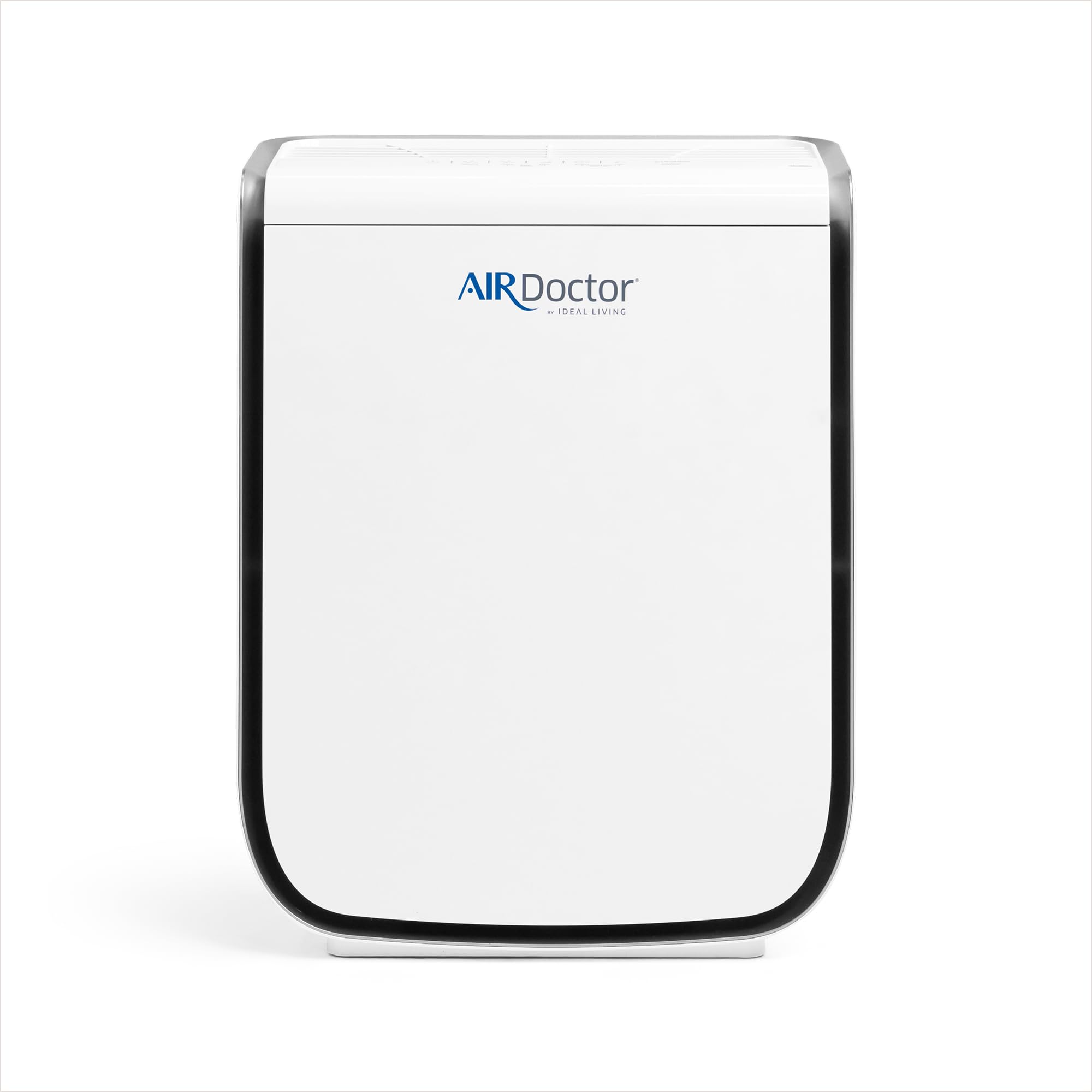
The AirDoctor AD2000 distinguishes itself through its UltraHEPA filtration stage, which captures 99.99% of particles at 0.003 microns — one hundred times smaller than the standard HEPA 0.3-micron cutoff. This extreme particle retention matters for asthma sufferers who react to sub-micron combustion particles from gas stoves, vehicle exhaust infiltration, or fine smoke particulates. The premium activated carbon filter is infused with potassium permanganate, enabling it to chemically break down volatile organic compounds like formaldehyde and MMA, not just adsorb them.
The unit covers 1,220 square feet in one hour and cleans a 305-square-foot bedroom in 15 minutes. The AirDoctor Halo display uses a PM2.5 laser sensor to feed real-time color-coded air quality data, and the auto mode adjusts fan speed up to Boost when pollution spikes. The combination of scientific validation (independent third-party testing) and FSA/HSA eligibility makes it a strong consideration for households managing documented medical conditions.
Owners report that it noticeably reduced dust accumulation on surfaces and eliminated the new-furniture VOC smell within 24 hours. The whisper-quiet night mode dims all lights and operates at roughly 30 dB, making it suitable for a nursery or adult bedroom where sleep quality is already compromised by breathing issues.
Why we love it
- UltraHEPA captures particles 100x smaller than standard HEPA requires
- Potassium permanganate carbon filter targets specific VOCs and gases
- FSA- and HSA-eligible for tax-advantaged medical expense accounts
Good to know
- Carbon and UltraHEPA filters are separate replacements with different schedules
- Maximum fan speed is loud enough to compete with television dialogue
5. Coway Airmega 250

The Coway Airmega 250 expands on the AP-1512HH formula by scaling coverage up to 1,860 square feet, making it a serious contender for whole-apartment or single-floor asthma management. The HyperCaptive filtration system pairs a washable pre-filter with an activated carbon layer and a True HEPA filter, achieving 99.97% capture of standard 0.3-micron particles while simultaneously reducing VOCs and household odors.
Its Rapid Mode is a dedicated setting that runs the fan at maximum speed until the particle sensor detects clean air, then automatically drops back to Smart Mode. This means you can walk away after burning toast or vacuuming and trust the unit to self-regulate. The built-in air quality indicator shows real-time PM levels, and the filter replacement indicator tracks both pre-filter and HEPA wear separately — no guesswork about when to swap media.
Owners with dog allergies and open floor plan kitchens report that the Airmega 250 handles cooking fumes efficiently and helped maintain clear air during Canadian wildfire events. The unit operates near-silently on low speed, making it a candidate for a shared sleeping space. Annual filter costs are low due to the washable pre-filter, and the three-year warranty on motor and electronic parts provides long-term reliability assurance.
Why we love it
- Rapid Mode aggressively clears air then returns to quiet efficiency automatically
- Low annual filter cost thanks to a durable washable pre-filter
- Three-year warranty on motor and electronics covers long-term use
Good to know
- No Wi-Fi or app connectivity; manual controls only
- Unit is relatively heavy at 20.5 pounds; less portable for multi-room rotation
6. BLUEAIR Blue Signature
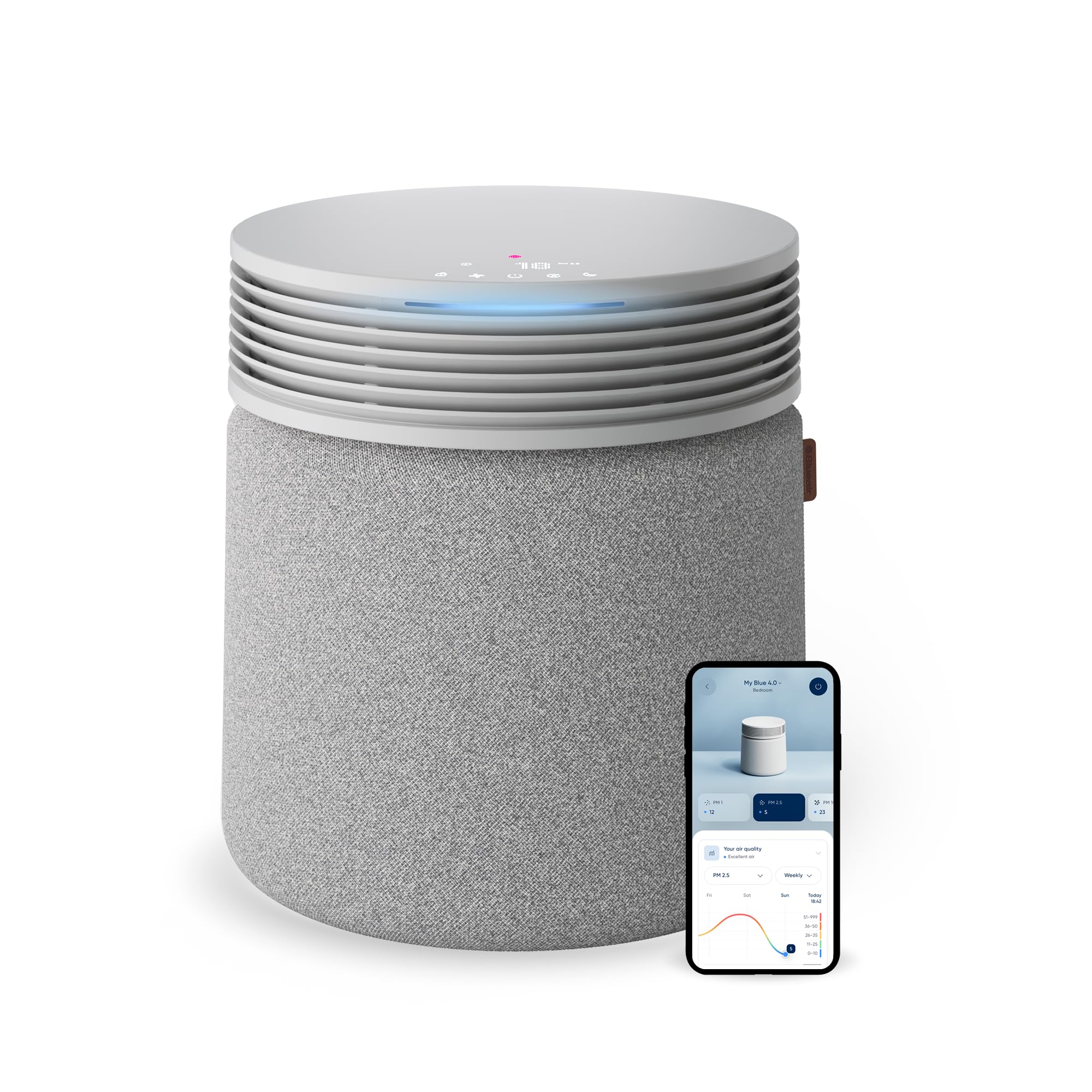
The Blueair Blue Signature solves the aesthetic problem of air purifiers without sacrificing asthma-grade performance. Its HEPASilent technology uses a negatively charged filter media to attract and trap particles at lower airflow resistance, which translates to quieter operation and reduced energy consumption compared to conventional HEPA designs. It can purify up to 3,385 square feet in one hour, which covers an entire level of a modern home or a large open-plan workspace.
The unit doubles as a side table with its minimalist cylindrical shape and neutral grey fabric wrap, integrating into a living room without looking like medical equipment. The built-in smart sensors track PM2.5, PM10, and overall air quality, adjusting the fan speed automatically. Wi-Fi connectivity through the Blueair app allows remote monitoring, scheduling, and filter life checks — all accessible from your phone when an asthma flare-up limits physical interaction with controls.
Owners consistently highlight the near-silent low-speed operation and the way it removed stuffiness from a closed bedroom within 30 minutes. Replacement filters are proprietary and more expensive than generic options, but the filter change interval of 6 to 12 months evens out the annual cost. This model is particularly suited for households where a purifier must not dominate the visual space.
Why we love it
- HEPASilent technology captures particles quietly and efficiently
- Stylish furniture-form design blends with contemporary home decor
- Smart sensor and app control enable remote air quality management
Good to know
- Proprietary replacement filters carry a higher per-unit cost
- Washable pre-filter is not present; regular HEPA surface vacuuming is recommended
7. Levoit EverestAir-P

The Levoit EverestAir-P anchors the top of the premium category with a 354 CFM CADR and a 3-channel laser sensor that reports PM1.0, PM2.5, and PM10 concentrations independently. This granular data visibility allows asthma sufferers to identify the specific timing and source of particle spikes, rather than relying on a single averaged number. The unit covers 2,655 square feet in one hour, so it can serve as a central air management hub for a multi-room home.
A unique design element is the adjustable air outlet that moves between 45 and 90 degrees, allowing you to direct the outgoing clean air toward your primary breathing zone — your pillow, your desk, or your reading chair. The carbon filter is packed with pelletized charcoal (60% more carbon mass than Levoit’s Vital 200S), which improves odor and VOC adsorption durability. The washable pre-filter and bottom-mounted wheels reduce maintenance friction, and the VeSync app enables remote schedules, auto mode, and voice control through Alexa or Google Assistant.
Owner reports over a three-year period highlight consistent performance, accurate laser sensor readings, and effective reduction of pet odors and dust. The replacement filter cost is higher — roughly per year — and third-party alternatives reportedly do not fit well. If you value real-time particulate differentiation and app-driven automation, the EverestAir-P offers the deepest integration of any unit here.
Why we love it
- 3-channel laser sensor reports PM1.0, PM2.5, and PM10 separately
- Adjustable air outlet directs clean airflow to specific room zones
- Pelletized charcoal filter provides robust VOC and odor reduction
Good to know
- Replacement filters cost approximately and third-party options are unreliable
- The unit is large (23.2 inches tall) and requires dedicated floor space
8. LEVOIT Core300-P

The LEVOIT Core300-P proves that effective asthma-friendly filtration does not require a triple-digit investment. Its 56-watt high-torque motor drives a 143 CFM CADR (smoke) that cleans a 1,073-square-foot room once per hour or a 222-square-foot room 4.8 times per hour — ideal for a master bedroom or a child’s room where you want multiple air exchanges during the night. The 3-stage filtration includes a pre-filter, a True HEPA layer, and an activated carbon filter that handles pet odors, smoke, and light VOCs.
AHAM Verifide certification provides independent validation that the unit performs as advertised, which is a critical trust signal for a budget-tier purchase. QuietKEAP technology drops fan noise to 24 dB in Sleep Mode, making it one of the quietest purifiers at any price point. The touch controls offer a timer (2, 4, 6, or 8 hours), a check-filter indicator, and a display-off button for complete darkness at night.
Owner feedback consistently mentions that two units in a small apartment controlled spring allergies and litter box odor effectively. The replacement filter cost is noticeable against the low entry price, but pre-filter vacuuming extends HEPA life by several months. This model is a sensible choice for a secondary room or for someone entering the asthma management space without committing to a high initial spend.
Why we love it
- Entry-level price without sacrificing AHAM-Verifide certification
- 24 dB Sleep Mode is genuinely quiet for sensitive sleepers
- Vacuum-accessible pre-filter extends HEPA filter replacement intervals
Good to know
- Smaller filter size requires more frequent replacement than larger units
- Carbon layer is relatively thin; heavy cooking smells may linger longer
9. GermGuardian AC4825W

The GermGuardian AC4825W integrates a True HEPA filter with an optional UV-C light to address a broader spectrum of airborne triggers — not just particulates but also bacteria, mold spores, and germs that can exacerbate asthma through secondary respiratory infection. The 22-inch tower design fits into tighter spaces like a hallway corner or beside a nightstand, and the three-stage filtration (charcoal pre-filter, HEPA, UV-C) can process up to 743 square feet per hour.
The UV-C light is independently verified as Zero Ozone, so it will not introduce lung irritants while operating. Owners with asthmatic family members reported reduced symptoms, decreased stuffiness, and less dust accumulation on furniture after consistent use. The three-speed dial and separate UV-C button are simple enough for any household member to operate, and the washable pre-filter catches hair and lint before they reach the HEPA layer.
High-speed operation produces a noticeable white noise effect that some find helpful for sleep masking, though the low-speed setting is nearly inaudible. The filter replacement indicator light reminds you when the HEPA needs swapping (typically every 6 to 8 months depending on usage), and replacement filters are widely available from multiple supplier brands. This unit is a solid entry point for asthma-conscious buyers who also want the antimicrobial benefit of UV-C treatment.
Why we love it
- Optional UV-C light targets airborne germs and mold spores alongside HEPA
- Zero Ozone certification ensures the UV-C does not introduce lung irritants
- Washable pre-filter and widely available filter replacements reduce long-term costs
Good to know
- High-speed fan is noticeably loud and best reserved for rapid cleaning bursts
- CADR ratings are not published; calculated coverage may be optimistic for asthma
FAQ
How often should I replace the True HEPA filter for asthma control?
What size air purifier do I need for a bedroom with asthma?
Do UV-C lights in air purifiers help with asthma?
What does the CADR rating mean for my asthma?
Should I run my HEPA air purifier 24 hours a day for asthma?
Final Thoughts: The Verdict
For most asthma sufferers, the best hepa air purifier for asthma winner is the Coway Airmega AP-1512HH because it combines intelligent auto-mode responsiveness, proven four-stage filtration, and low noise without demanding a premium price or app dependency. If you need a unit that tracks PM1.0, PM2.5, and PM10 separately and adjusts its airflow angle to hit your breathing zone, grab the Levoit EverestAir-P. And for VOC-sensitive households or those who want medical-grade UltraHEPA particle capture at 0.003 microns, nothing beats the AIRDOCTOR AD2000.