
Watching your cat struggle with digestive upset, loose stools, or frequent vomiting is heartbreaking. You’ve cleaned enough carpets, worried enough, and spent enough time at the vet. The right nutrition—specifically a diet rich in quality fiber—can transform your cat’s health and your peace of mind.
I’m Mo Mahin — the founder and writer behind Furric. I’ve spent countless hours analyzing ingredient panels, veterinary studies, and thousands of real owner reviews to separate marketing fluff from genuinely effective formulas.
After comparing fiber sources, prebiotic blends, and life-stage needs, I’ve narrowed the market to five standout formulas. Here is my carefully curated guide to finding the best high fiber cat food for your feline friend’s unique digestive needs.
How To Choose The Best High Fiber Cat Food
Choosing a high fiber cat food isn’t as simple as grabbing any bag labeled “digestive care.” You need to consider the type of fiber, your cat’s specific health issues (constipation, diarrhea, hairballs, or obesity), and whether a prescription diet is warranted. Here are the critical factors I evaluate every time.
Understand Fiber Types: Soluble vs. Insoluble
Soluble fiber (like psyllium, beet pulp, and inulin) forms a gel in the gut, slowing digestion and helping regulate both diarrhea and constipation. Insoluble fiber (cellulose, wheat bran) adds bulk and speeds up transit time. Most effective high-fiber cat foods use a balanced blend of both. For example, Hill’s Prescription Diet Gastrointestinal Biome includes prebiotic fibers that feed beneficial gut bacteria while also providing bulk for normal stool formation.
Check for Real Animal Protein as the First Ingredient
Fiber is important, but protein remains the cornerstone of feline nutrition. The best high-fiber formulas still list a named animal protein (chicken, turkey, fish) as the first ingredient. Avoid foods that rely on plant proteins to boost fiber content—cats are obligate carnivores and need that amino acid profile.
Prescription vs. Over-the-Counter: When to Go to the Vet
If your cat has chronic digestive issues, IBD, pancreatitis, or has undergone surgery, a veterinary diet like Royal Canin Digestive Care or Hill’s Prescription Diet is often necessary. These diets are backed by clinical research and have guaranteed nutrient levels. Over-the-counter options like Blue Buffalo True Solutions can work for mild weight management but may not be potent enough for serious conditions.
Quick Comparison
On smaller screens, swipe sideways to see the full table.
| Model | Type | Best For | Key Feature | Amazon |
|---|---|---|---|---|
| Royal Canin Digestive Care | Veterinary Diet | Sensitive Stomachs & Vomiting | Ring-shaped kibble + prebiotics | Amazon |
| Hill’s Gastrointestinal Biome | Veterinary Diet | Stress-related Gut Issues | ActivBiome+ & hydrolyzed casein | Amazon |
| Blue Buffalo True Solutions Weight Control | Over-the-Counter | Weight Management (Mild) | Enriched fiber + L-Carnitine | Amazon |
| Purina Pro Plan Shredded Blend | Over-the-Counter | Picky Cats & High Protein | Crunchy + shredded pieces + probiotics | Amazon |
| Hill’s Prescription Metabolic Weight Management | Veterinary Diet | Serious Weight Loss | Unique fiber blend for metabolism boost | Amazon |
In-Depth Reviews
1. Royal Canin Feline Care Nutrition Digestive Care Adult Dry Cat Food

If you’re exhausted from cleaning up vomit and dealing with expensive vet visits, this Royal Canin formula is a game-changer. The unique donut-shaped kibble forces cats to chew slowly, preventing regurgitation—a common issue in fast eaters. Combined with a precise blend of prebiotics and dietary fiber, it’s designed to produce over 95% healthy stool quality within 10 days, per Royal Canin’s internal study. Many rescue parents have shared that it was the only food their senior or sick cat would eat after weeks of refusing anything else.
The moderate fiber content (around 5% crude fiber) is balanced with highly digestible proteins, making it gentle on inflamed guts. The 3-pound bag is compact, but don’t let the size fool you—a little goes a long way. Owners report noticeably less vomiting within the first week. The kibble shape also helps reduce dental issues by scrubbing teeth during chewing. While it’s a veterinary diet, you don’t necessarily need a prescription to buy it online, though consulting your vet is always wise.
This is the most consistently praised high-fiber cat food I’ve come across. For a cat that suffers from chronic vomiting or loose stools, this is the first formula I’d try. It’s a mid-range investment that saves you money on cleanup and vet bills.
Why we love it
- Reduces vomiting dramatically for fast eaters
- Clinically proven to improve stool quality
- Highly palatable even for picky or sick cats
Good to know
- Small bag size; may not suit large multi-cat households
- Some cats find the hole in the kibble annoying
- Higher price per pound than standard foods
2. Hill’s Prescription Diet Gastrointestinal Biome Stress Digestive/Fiber Care

Veterinarians recommend this for a reason: it addresses digestive issues from two angles—fiber and stress. The proprietary ActivBiome+ ingredient technology rapidly feeds good gut bacteria, while hydrolyzed casein and L-tryptophan work to calm an anxious cat. This is especially valuable for rescue cats or multi-pet households where stress triggers loose stools. One Sphynx owner described it as a “life or death staple” after it stopped persistent diarrhea and improved their cat’s overall demeanor.
The fiber blend includes prebiotics like inulin and beet pulp, which provide both soluble and insoluble benefits. Many owners report firmer stools within 24 hours of switching. The chicken formula is highly digestible, and the kibble size is small enough for flat-faced breeds. However, it is a prescription diet—you’ll need your vet’s approval. The 4-pound bag is a premium option, but for cats with chronic IBD or stress colitis, it’s often the only thing that works.
If your cat has been diagnosed with stress-related GI issues or needs a powerful fiber boost without excessive calories, this Hill’s formula is the top choice. It’s the most expensive per pound on this list, but when it prevents vet visits for dehydration from diarrhea, the value becomes clear.
Why we love it
- Works fast—improvement often within 24 hours
- Includes stress-reducing ingredients
- High levels of omega-3 fatty acids for skin/coat
Good to know
- Requires veterinary prescription
- Very expensive; budget accordingly
- Not ideal for weight loss (moderate fat)
3. Blue Buffalo True Solutions Weight Control Natural Dry Cat Food
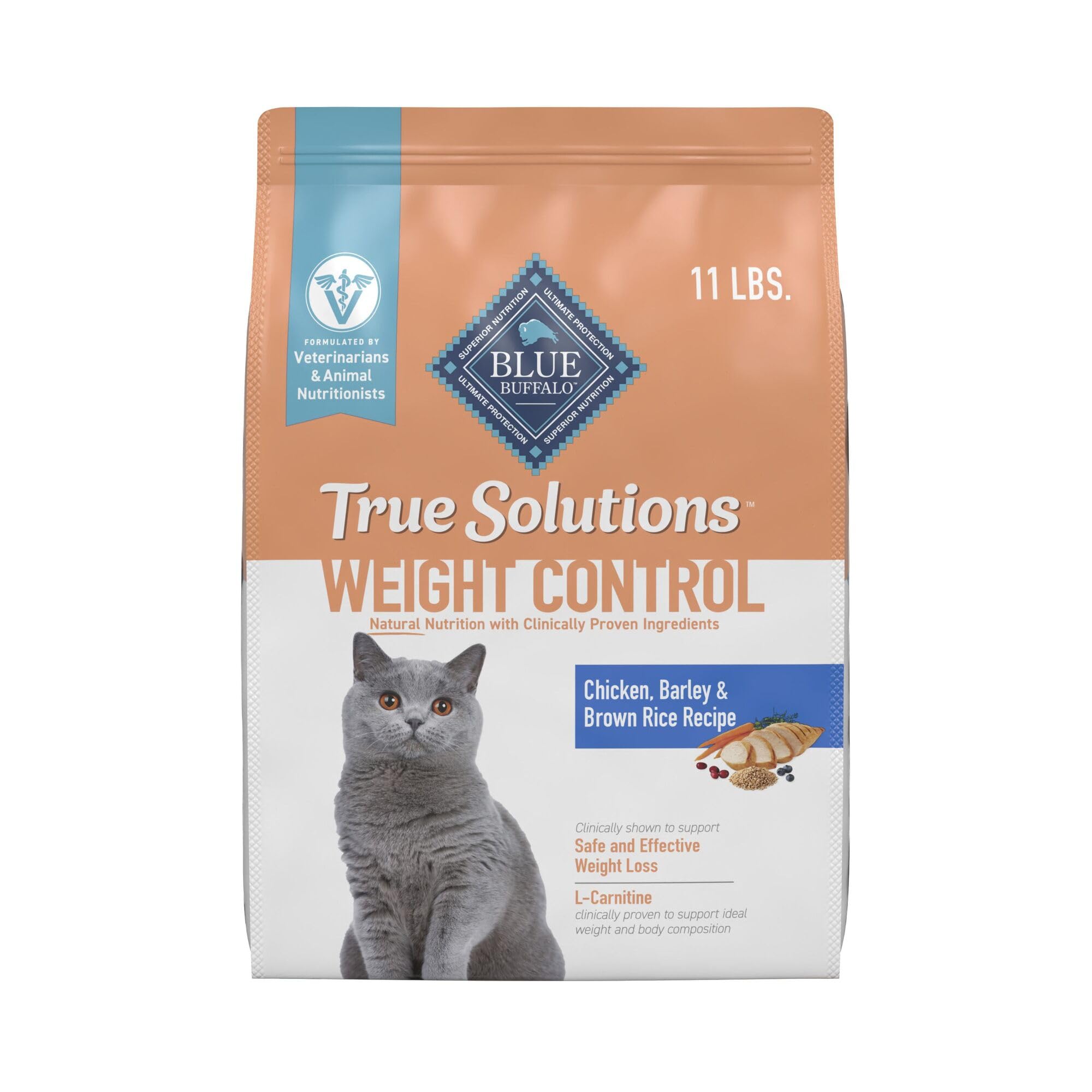
Blue Buffalo’s True Solutions line bridges the gap between prescription diets and grocery store brands. This weight control formula uses an ideal caloric balance plus L-Carnitine to help cats shed pounds, while the enriched fiber keeps them feeling full between meals. Real chicken is the first ingredient, and there are no by-product meals or artificial preservatives. Multiple owners of big, active cats (40+ pounds combined) report that their pets love the taste and maintain a healthy weight.
The crude fiber content is around 8%, which is higher than typical maintenance diets but not as intense as some veterinary formulas. It’s an over-the-counter product, so no vet visit is required. The 11-pound bag provides good value, and the kibble is a standard shape that most cats accept. However, some owners noted their cat didn’t lose weight on this alone—portion control and exercise are still key. For mild overweight or as a high-fiber maintenance diet, this is an excellent affordable option.
For pet parents on a budget who want a clean, fiber-rich formula without the prescription price tag, Blue Buffalo True Solutions is the pick. It’s not designed for severe digestive disease, but for everyday weight management and fiber supplementation, it delivers.
Why we love it
- Natural ingredients with no corn, wheat, or soy
- Large bag offers good value
- Contains L-Carnitine to support metabolism
Good to know
- May not be effective for serious digestive disorders
- Some cats don’t lose weight without portion control
- Kibble shape doesn’t slow eating
4. Purina Pro Plan Complete Essentials Shredded Blend Chicken and Rice
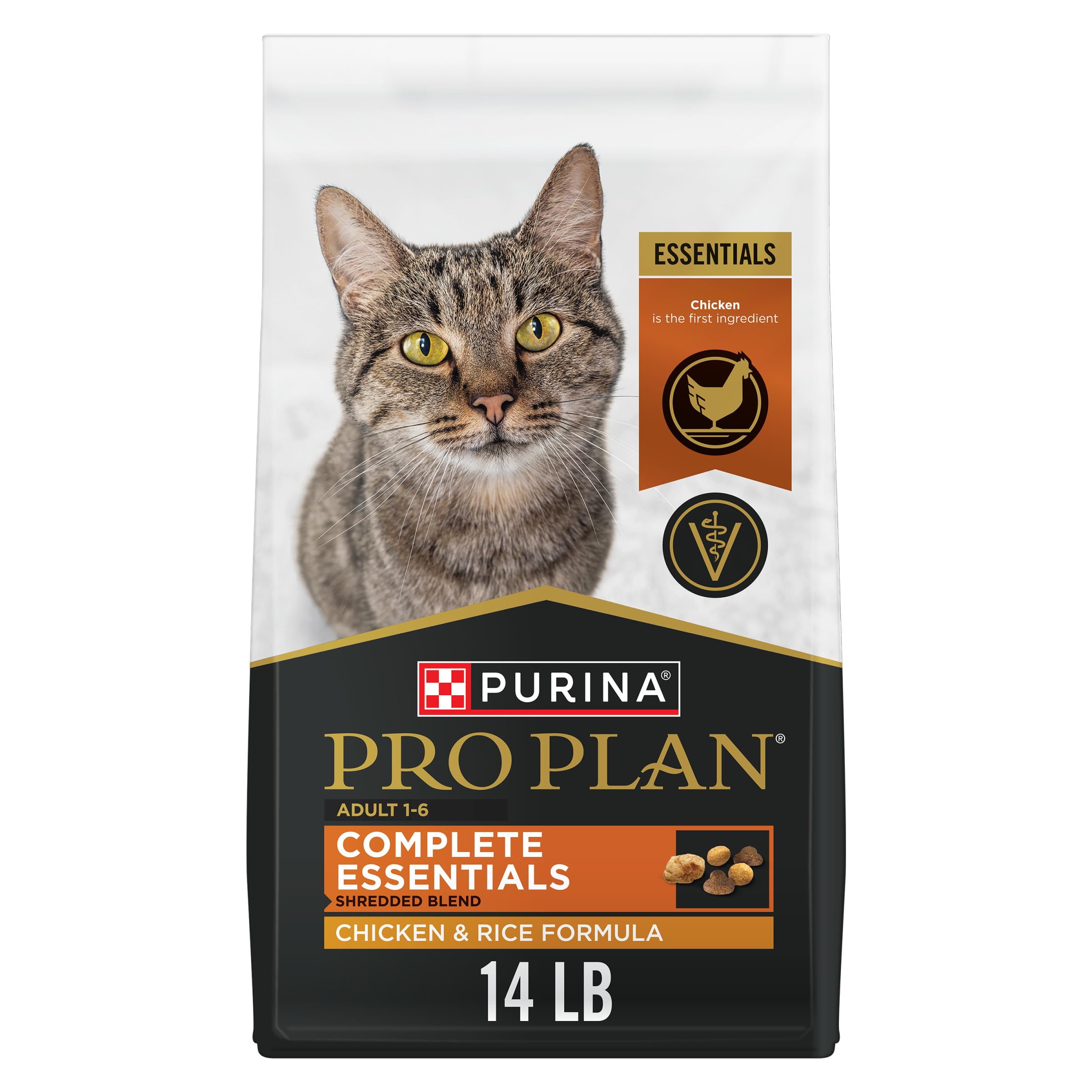
Some cats simply refuse to eat fibrous, boring kibble. This Purina Pro Plan formula solves that with a combination of crunchy kibble and tender, shredded chicken pieces. The texture variety entices even the most finicky felines—one owner transitioned a feral kitten to indoor life exclusively with this food. It’s also packed with guaranteed live probiotics to support digestion, plus natural prebiotic fiber from chicory root. The high protein content (real chicken first) satisfies a cat’s carnivorous instincts.
The 14-pound bag is a solid value for a premium brand, and the kibble is small enough for senior cats with dental issues. Owners of Maine Coons and other large breeds praise it. However, the fiber content is moderate (around 3% crude fiber), so it’s not a dedicated high-fiber diet. It works best as a daily maintenance food that still supports digestive health. If your cat needs serious fiber therapy for constipation or chronic diarrhea, you might need a more specialized formula.
If you’re struggling to get your cat to eat any high-quality food, this Purina Pro Plan Shredded Blend is a fantastic gateway. The probiotics and prebiotics offer gentle digestive support, and the taste is nearly irresistible.
Why we love it
- Irresistible texture combination that picky cats love
- Contains live probiotics for gut health
- High-quality protein and no artificial flavors
Good to know
- Fiber content is lower than dedicated veterinary diets
- Not ideal for weight loss (higher calories)
- Some cats eat only the shredded pieces and leave kibble
5. Hill’s Prescription Diet Metabolic Weight Management Dry Cat Food

For overweight cats who need to shed pounds without feeling starved, this Hill’s Prescription Diet formula uses a proprietary fiber blend to activate metabolism and promote satiety. Clinical data shows 88% of pets lost weight at home in two months while eating this diet. The 17.6-pound bag is the largest on this list, making it more economical per serving for multi-cat households. Owners report that cats lose weight slowly and steadily—exactly what vets recommend.
The fiber content is significantly higher than standard foods, with a unique mix that encourages the body to burn fat rather than muscle. It also helps keep the weight off long-term. One cat with high triglycerides saw both weight loss and improved bloodwork. However, the kibble shape (resembling small cocoa puffs) might not be appealing to all cats—some fussy eaters reject it. A veterinary prescription is required, and it’s a premium investment. But if your cat is struggling with obesity, this is the most effective tool available.
If your vet has told you your cat needs to lose weight and you’ve tried everything else, the Hill’s Metabolic formula is the proven solution. It’s the top-tier choice for serious weight management backed by science.
Why we love it
- Clinically proven weight loss at home
- Burns fat while preserving muscle mass
- Large bag size offers better value per pound
Good to know
- Requires veterinary prescription
- Some cats find the kibble shape unappealing
- Expensive upfront cost
Safety & Care Tips for Feeding High Fiber Cat Food
Transition Slowly Over 7-10 Days
Sudden changes in fiber can cause gas, bloating, or diarrhea. Start by mixing 25% new food with 75% old food, gradually increasing the ratio. Monitor your cat’s stool consistency daily. If loose stools persist, slow down the transition. Some cats, especially seniors, need up to two weeks to adjust to a high-fiber diet.
Ensure Fresh Water Is Always Available
Fiber absorbs water in the digestive tract. Without adequate hydration, high fiber diets can actually worsen constipation. Provide multiple water bowls, consider a cat fountain to encourage drinking, and mix in wet food or water toppers. If your cat is prone to dehydration, talk to your vet about adding extra moisture.
FAQ
What percentage of fiber is considered high in cat food?
Can high fiber cat food help with hairballs?
Final Thoughts: The Verdict
For most pet parents, the best high fiber cat food winner is the Royal Canin Digestive Care because it tackles both vomiting and stool quality with a clever kibble shape and prebiotic fiber. If your cat suffers from stress-related gut issues, grab the Hill’s Gastrointestinal Biome. And for budget-friendly weight management, nothing beats the Blue Buffalo True Solutions Weight Control.