
Kittens double their birth weight in the first week, and by six months they’ve built nearly every structure they’ll use for life. The fuel you provide during these critical months determines the density of their bones, the sharpness of their vision, and the lean muscle mass they’ll carry into adulthood. A diet rich in animal-based protein isn’t optional — it’s the single most important variable you control as a responsible owner.
I’m Mo Mahin — the founder and writer behind Furric. I’ve analyzed hundreds of hours of owner feedback, cross-referenced nutritional data sheets, and tracked ingredient sourcing and recall histories to separate the formulas that deliver on their metabolic promises from those that merely market them.
Whether your kitten is a growing Maine Coon or a petite domestic shorthair, this guide breaks down the protein percentages, ingredient sourcing, and life-stage fortification that matter most. My goal is to help you confidently choose the absolute best high protein kitten food for your specific feline’s unique developmental needs.
How To Choose The Best High Protein Kitten Food
Every bag or can on a pet store shelf makes a protein claim, but the real benchmark is whether that protein comes from named animal sources — chicken, turkey, salmon, duck — or from vague meals and fillers. Kittens need at least 35% protein on a dry matter basis from whole-prey ingredients, and the calcium-to-phosphorus ratio must stay in the 1.1:1 to 1.3:1 range for skeletal development. Below are the three filters that separate premium growth formulas from generic kibble.
Ingredient Sourcing and Protein Density
Look for a formula where the first three ingredients are all animal-based. Avoid foods where grains, legumes, or starches appear before two whole-protein sources. High-meat inclusion provides essential amino acids like arginine and methionine that kittens cannot synthesize on their own. Named meat meals (chicken meal, salmon meal) concentrate protein more than whole meats do, making them a sign of a dense, efficient recipe rather than a negative.
Essential Nutrient Fortification for Development
Beyond protein, a high-performance kitten food must include DHA from fish oil for retinal and neural growth, taurine for cardiac function and vision, and balanced calcium and phosphorus for a rapidly mineralizing skeleton. Probiotics such as live Bacillus coagulans help the immature digestive system handle the high-protein load without loose stools or gas.
Texture and Moisture Considerations
Wet food contributes to hydration, which supports kidney health and helps a kitten process the high mineral content in growth diets. Dry kibble provides abrasive cleaning for emerging teeth but must be accompanied by fresh water at all times. The best plan often involves a rotation of smooth pate, shredded chunks, and small kibble to prevent pickiness and ensure moisture intake.
Quick Comparison
On smaller screens, swipe sideways to see the full table.
| Model | Category | Best For | Key Spec | Amazon |
|---|---|---|---|---|
| Wellness CORE Kitten Dry Food | Dry Kibble | High protein growth | 55% animal protein | Amazon |
| Purina Pro Plan Complete Essentials | Dry Shredded Blend | Digestive health support | Live probiotics added | Amazon |
| Blue Buffalo Baby Blue Wet Cat Food | Wet Pate | Daily hydration and picky eaters | 3 oz cans, 24 count | Amazon |
| Blue Buffalo Freedom Indoor Kitten | Dry Kibble | Indoor weight management | 5-lb bag, LifeSource Bits | Amazon |
| Tiki Cat Baby Wet Cat Food | Wet Shred Variety | Variety rotation for picky kittens | 2.4 oz cans, 12 pack | Amazon |
In‑Depth Reviews
1. Wellness CORE Kitten Dry Cat Food

The Wellness CORE Kitten formula leads this list for a simple reason: 55% animal protein from turkey meal, chicken meal, and salmon oil without relying on pea protein concentrates to hit that number. The first three ingredients are all named meat sources, and the 5-pound bag delivers a concentrated caloric density appropriate for rapidly growing kittens who need frequent small meals. DHA from salmon oil directly supports retinal and brain development, while added probiotics help the immature gut break down the high-protein load without digestive upset.
Owner reports consistently highlight shiny coats, firm stools, and sustained energy levels without the hyperactivity spikes seen with carb-heavy diets. A small percentage of picky kittens may show initial hesitation toward the turkey flavor profile, but most adjust within a few days. The kibble size is appropriate for weaning kittens around eight weeks old, though larger breeds like Maine Coons may eventually need a larger-bite adult formulation after six months.
This grain-free recipe avoids corn, wheat, soy, and artificial preservatives, making it a clean option for sensitive stomachs. The bag includes a clear feeding guide based on weight and age, though owners should transition over 7 to 10 days to avoid diarrhea. For the combination of ingredient transparency, protein density, and developmental fortification, this is the benchmark entry in the mid-range tier.
Why we love it
- 55% animal protein from named meat meals without pea protein fillers
- DHA from salmon oil for vision and brain development
- Probiotics support digestive comfort during the high-protein transition
Good to know
- Turkey flavor may not appeal to every picky kitten right away
- Some large-breed kittens may outgrow the kibble size quickly
2. Purina Pro Plan Kitten Complete Essentials Shredded Blend
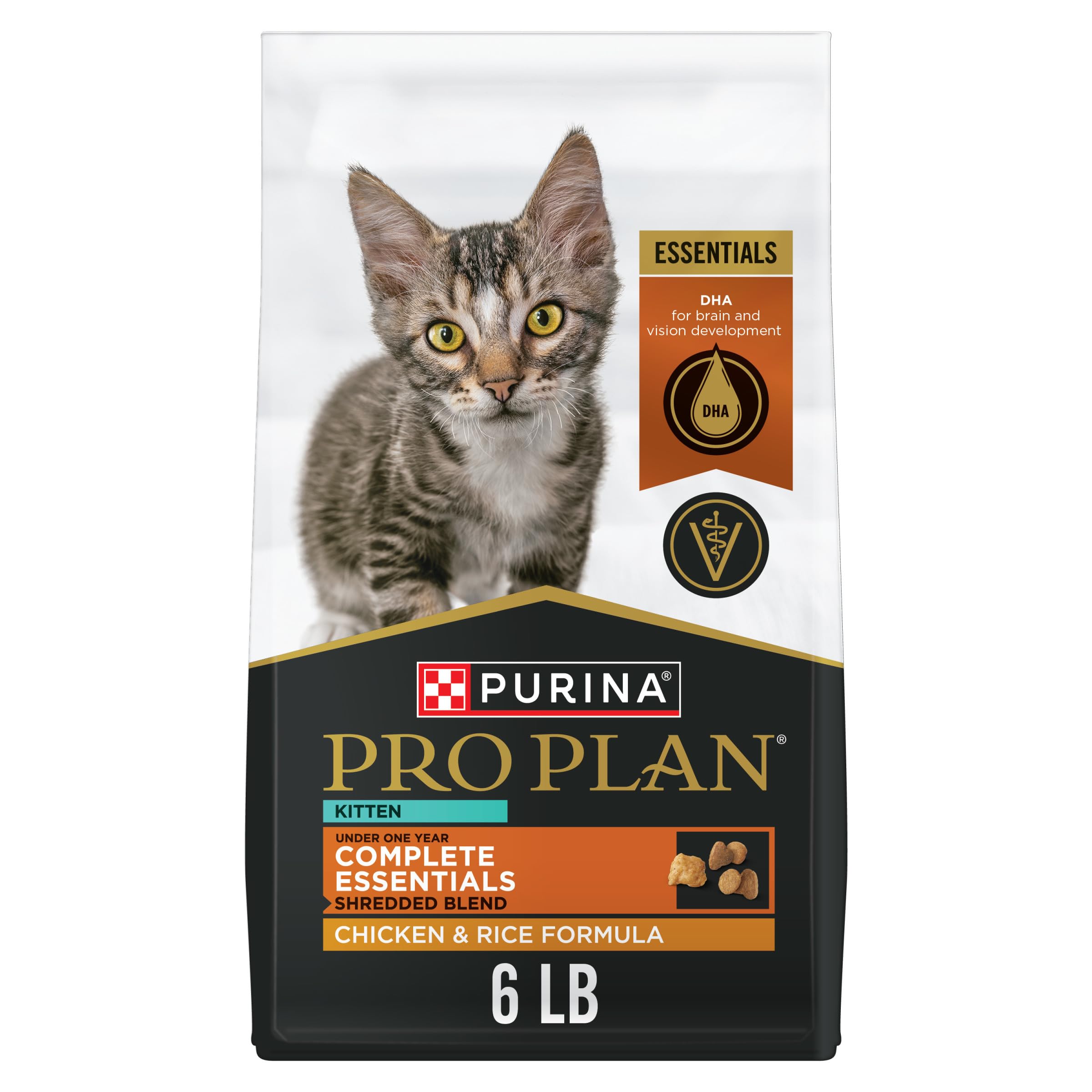
Purina Pro Plan’s Shredded Blend offers a dual-texture experience — crunchy kibble pieces intermingled with tender, shredded meat pieces — that appeals to kittens who prefer variety in each bite. Real chicken stands as the first ingredient, providing the high-quality animal protein necessary for lean muscle development, while DHA from fish oil nourishes brain and vision growth. The 6-pound bag represents a strong volume-to-price ratio, making this a sustainable option for multi-kitten households or owners who want premium nutrition without the boutique-brand markup.
The inclusion of guaranteed live probiotics sets this formula apart from many competitors at a similar price point. Owners of Maine Coon kittens and other large breeds report that this formula supports steady growth without excessive weight gain, and the litter box odor reduction is a frequently mentioned bonus. Some reviewers note that their cats developed slightly gassier digestion during the first week, which typically resolves as the gut microbiome adapts to the probiotic strain.
This recipe is free from artificial colors and flavors, and the chicken and rice formula provides digestible carbohydrates without triggering sensitivities. The shredded pieces add palatability that helps transition weaning kittens away from wet food exclusively. For owners seeking a reliable, veterinarian-recommended brand that balances protein density with whole-gut health support, this is the strongest mid-range contender.
Why we love it
- Live probiotics aid digestive and immune development during high-protein feeding
- Dual-texture kibble and shredded pieces increase palatability for picky eaters
- Strong volume-to-price ratio for the quality level
Good to know
- Some kittens experience temporary gas during the initial transition
- The bag size is generous but no resealable closure is provided
3. Blue Buffalo Baby Blue Natural Kitten Wet Cat Food
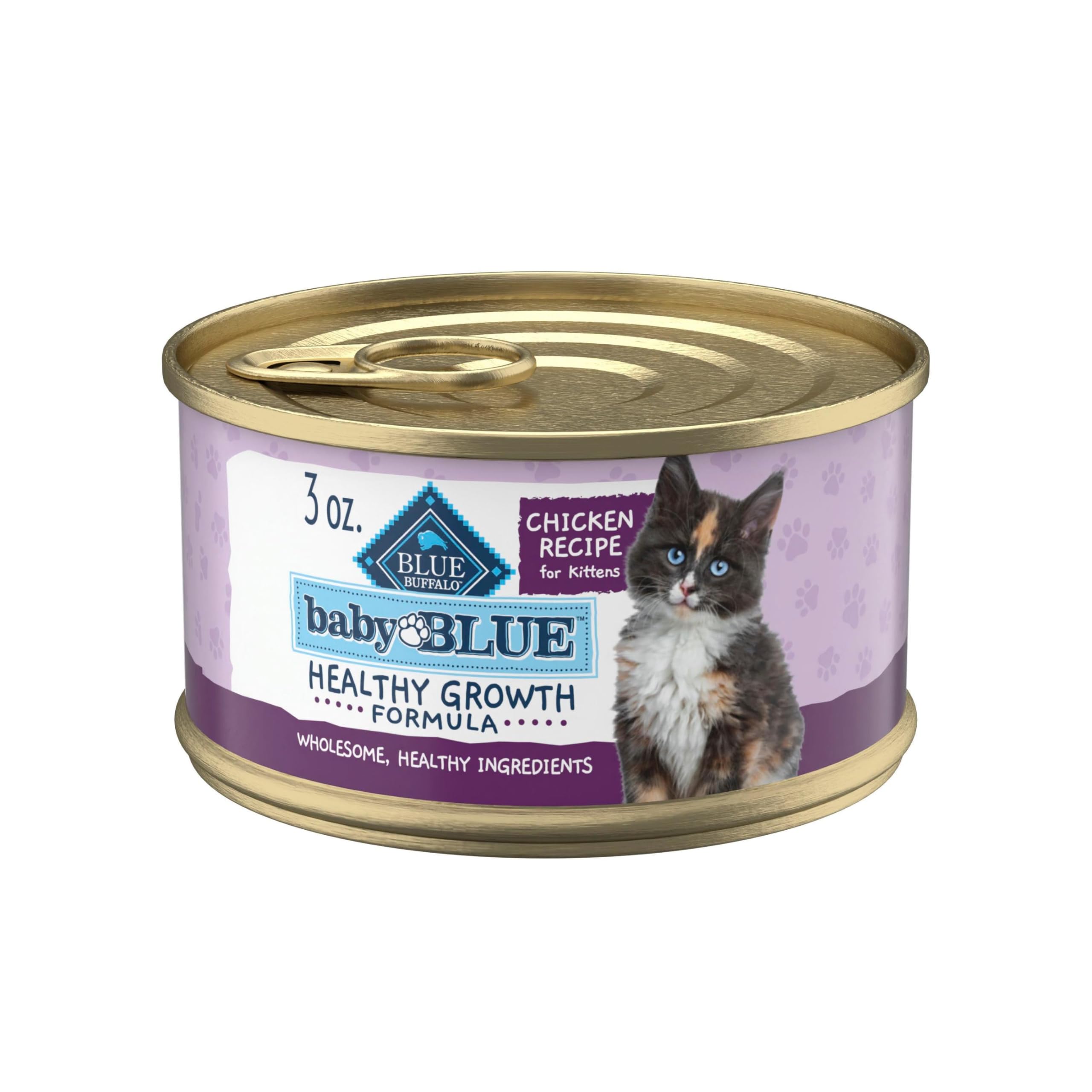
Blue Buffalo’s Baby Blue wet kitten food delivers a smooth pate formula that is especially valuable for young kittens transitioning away from their mother’s milk or for those with dental sensitivity. The 24-count case of 3-ounce cans provides a substantial supply for a single kitten, making it a convenient bulk option that reduces the frequency of reordering. Real chicken appears as the number one ingredient, and the high moisture content — typical of good quality pate — supports urinary tract hydration in growing cats who may not drink enough standing water.
The recipe includes DHA and ARA for cognitive and retinal development, while the exclusion of corn, wheat, soy, and artificial preservatives appeals to owners who prioritize whole-food ingredient lists. This food feeds three ways: as a complete meal, an appetite-stimulating topper over dry kibble, or a high-value training reward. Owners of kittens with a history of vomiting dry food report that the pate texture stays down reliably and produces consistently formed stools.
One practical consideration is the can size — 3 ounces is a single serving for a young kitten, meaning you will open one can every feeding. For owners who prefer to portion out larger cans, this adds a step. Still, for households that prioritize moisture-rich, high-protein nutrition in a clean pate format, this case delivers premium ingredient sourcing at a per-can rate that undercuts many single-can competitors.
Why we love it
- High moisture pate supports hydration in kittens who don’t drink enough water
- 24-can case provides bulk convenience without per-can markup
- Smooth texture is ideal for weaning kittens and those with dental discomfort
Good to know
- Single-serving cans require one opening per feeding, increasing daily prep time
- Some kittens may tire of the single chicken flavor without rotation options
4. Blue Buffalo Freedom Grain-Free Indoor Dry Kitten Food

Blue Buffalo’s Freedom line targets indoor kittens specifically, addressing the lower activity levels and higher obesity risk that come with an exclusively indoor lifestyle. The recipe uses real chicken as the first ingredient and remains completely free of corn, wheat, soy, and poultry by-product meals. The 5-pound bag includes Blue Buffalo’s proprietary LifeSource Bits — cold-formed kibble pieces containing antioxidants, vitamins, and minerals that survive the cooking process intact, providing a nutrient boost with every serving.
DHA and ARA fortification supports brain and eye development, while the controlled calorie density helps prevent the rapid weight gain that can strain developing joints. Owners of kittens prone to food allergies or skin irritation report that the limited ingredient approach reduces itching and ear inflammation. The grain-free formulation makes it suitable for kittens with confirmed grain sensitivities, though owners should note that grain-free does not mean carbohydrate-free — pea starch and tapioca are present as binding agents.
This formula works well as a complement to a wet food rotation, providing the dental abrasion of dry kibble during the day with the hydration of wet food at night. The small kibble size is appropriate for tiny mouths around the 8-week mark. For owners specifically managing an indoor kitten’s weight trajectory without sacrificing protein density, this is a well-calibrated dry option from a trusted brand.
Why we love it
- LifeSource Bits retain heat-sensitive antioxidants for immune support
- Calorie-controlled formula prevents rapid weight gain in sedentary indoor kittens
- Grain-free with no poultry by-product meals for sensitive stomachs
Good to know
- Pea starch and tapioca provide structure but add plant-based carbohydrates
- Indoor-targeted protein level is slightly lower than active-breed formulas
5. Tiki Cat Baby Wet Cat Food Shreds Variety Pack

Tiki Cat’s Baby variety pack contains four distinct shred recipes — Chicken and Salmon, Chicken Tuna and Chicken Liver, Chicken Duck and Duck Liver, and Chicken and Egg — offering the rotational diversity that many young kittens need to sustain interest across meals. The 12-count case of 2.4 ounce cans features a soft shredded texture that mimics whole-prey eating patterns, and the ingredient list is entirely free of grains, fruit, vegetables, and carrageenan. Each can is packed with 100% non-GMO ingredients and includes DHA for brain and vision development alongside balanced calcium and phosphorus for bone growth.
The addition of prebiotics aids gentle digestion, which is critical when a kitten switches between protein sources multiple times a week. Owner reports are consistent: even famously picky eaters who rejected pates and dry kibble will finish an entire can of these shreds in one sitting. The smaller can size (2.4 ounces) is portioned for a single feeding for a young kitten, reducing waste from uneaten food that dries out in the bowl.
The absence of thickeners like carrageenan and xanthan gum distinguishes this wet food from many mass-market pates, making it a cleaner option for kittens with sensitive stomachs. The variety pack format allows owners to identify which protein sources their kitten prefers before committing to a case of a single flavor. For households dealing with a kitten that turns its nose up at standard formulas, this entry-level option provides the protein density and texture variety that can break the picky-eating cycle.
Why we love it
- Four-meat rotation prevents flavor fatigue and identifies preferences
- 100% non-GMO with no carrageenan, grains, or synthetic thickeners
- Shredded texture appeals to kittens who reject pate or kibble
Good to know
- Small 2.4 oz cans require one-per-feeding for most kittens
- Higher price per ounce compared to bulk pate options in the same tier
FAQ
How much protein does a growing kitten actually need in its food?
Can feeding high protein kitten food cause kidney damage later in life?
What is the role of taurine in high protein kitten formulas?
Final Thoughts: The Verdict
For most owners, the best high protein kitten food winner is the Wellness CORE Kitten Dry Food because it delivers 55% animal protein from named meat meals with DHA and probiotics — all at a price point that competes with mid-range bags. If you want a dual-texture kibble with proven digestive support, grab the Purina Pro Plan Complete Essentials. And for picky kittens who need moisture-rich variety, nothing beats the Blue Buffalo Baby Blue Wet Food 24-pack.