
A dry, dust-free stall isn’t a luxury—it’s the foundation of your horse’s respiratory health. The wrong bedding traps ammonia, harbors mold spores, and turns routine mucking into a battle against dampness and odor. Choosing the right absorbent base material is the single most impactful decision you make for stable air quality, joint comfort, and manure management efficiency.
I’m Mo Mahin — the founder and writer behind Furric. I spend my weeks dissecting agricultural product datasheets, cross-referencing ASTM and USDA organic certification standards, analyzing hundreds of verified owner reports across equine forums, and comparing real-world expansion ratios so you don’t have to guess what works in an actual 12×12 stall.
The challenge is separating marketing fluff from genuine performance metrics. Whether you prioritize organic certification, maximum absorbency per pound, or dust-free particle composition, finding the right horse bedding comes down to understanding three core specs: moisture retention rate, particle size distribution, and ammonia-locking capacity.
How To Choose The Best Horse Bedding
Not all bedding materials perform the same under a 1,200-pound horse. Three variables define real-world utility: particle structure for urine absorption, dust content for air quality, and organic purity for sensitive skin and respiratory tracts.
Particle Size & Shape
Smaller, chopped particles (1-4 inches) interlock to form a denser mat that wicks moisture away from the surface. Long straw stems create air pockets that let urine pool at the bottom, accelerating ammonia formation. Look for consistently chopped fiber, ideally between 1 and 3 inches, for maximum capillary action.
Dust & Respiratory Safety
Horses are obligate nasal breathers with sensitive lower airways. Bedding that produces visible dust clouds during mucking or when the horse lies down increases the risk of recurrent airway obstruction (RAO). Heat-treated or steam-processed straw and hemp offer lower dust profiles compared to raw pine shavings or non-processed straw.
Organic & Chemical-Free Certification
Horses that eat off the ground ingest bedding particles daily. USDA Organic certification or a noxious-weed-free guarantee eliminates concern over pesticide residues, herbicide drift, or hidden weed seeds that germinate in warm, moist stalls. For horses with skin allergies or respiratory sensitivities, certified organic bedding is the safest baseline.
Quick Comparison
On smaller screens, swipe sideways to see the full table.
| Model | Category | Best For | Key Spec | Amazon |
|---|---|---|---|---|
| Blue Mountain Hay Organic Bedding Straw | Organic Straw | Respiratory sensitive horses | USDA Certified Organic | Amazon |
| Hurdz Hemp Bedding | Hemp Fiber | Ammonia control & high absorbency | 5:1 Absorbency Ratio | Amazon |
| Standlee Chopped Straw | Chopped Straw | Multi-animal & value stalls | 4-inch chopped pieces | Amazon |
| Garden Elements Straw Bale | Whole Straw Bale | Deep litter & large coverage | 22-inch bale length | Amazon |
| Acostop Natural Wheat Straw | Compact Straw | Small shelters & spot bedding | 2-pound vacuum pack | Amazon |
In‑Depth Reviews
1. Blue Mountain Hay Organic Bedding Straw (10 lb)
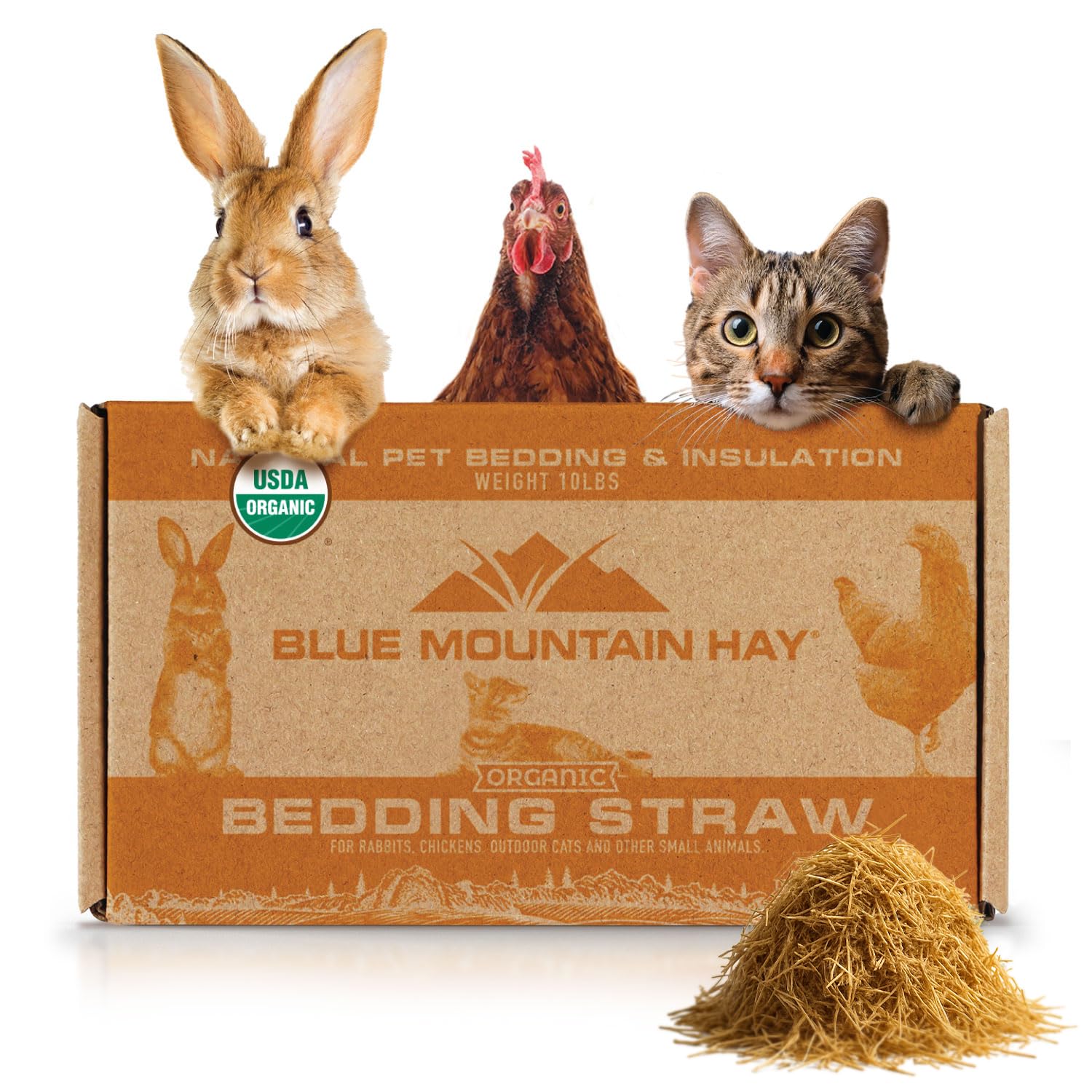
Blue Mountain Hay delivers 10 pounds of USDA Certified Organic wheat straw in a compact box that expands dramatically upon opening. Multiple verified owners report the compressed material fills four 28-inch outdoor cat houses with generous nesting volume, suggesting the expansion ratio exceeds 4:1. The straw is gently processed to preserve its natural fiber structure, avoiding the brittle breakage common in machine-threshed alternatives.
The organic certification eliminates concern over herbicide drift or pesticide residues—critical for horses that graze bedding or for owners managing allergic airway disease. Reviews consistently note the sweet, fresh scent and absence of mold or musty odors, even after the box has been sealed during shipping. The 10-pound weight makes it manageable for single-stall top-ups without requiring heavy lifting equipment.
While the per-pound cost reflects the premium organic certification, the high expansion ratio means one box goes further than the raw weight suggests. Some users noted approximately 25% of the material breaks into finer dust-like particles during expansion, but the bulk remains usable, soft fiber. For organic-first buyers, this is the cleanest straw option currently available.
Why we love it
- USDA Organic certification with no GMOs, pesticides, or herbicides
- High compression-to-expansion ratio maximizes stall coverage per box
- Sweet, fresh smell free of mold or chemical notes
Good to know
- Around 25% of material may break into finer dust during handling
- Premium pricing puts it above conventional straw per pound
2. Hurdz Hemp Bedding for Chickens (33 lb)

Hurdz Hemp offers a 33-pound bag of North American-grown hemp fiber engineered for superior moisture management. The product’s 5:1 absorbency ratio means each pound of hemp retains five times its weight in liquid—drastically outperforming straw’s typical 2:1 ratio. The loose-fill format creates a springy, cushioning layer that reduces joint pressure for horses spending long hours in stalls.
The dust-free composition is the standout feature for equine respiratory health. Multiple chicken and small-animal owners confirm zero visible dust during handling, and the natural hemp scent remains fresh without masking odors. Hemp’s natural wicking properties pull moisture downward, keeping the surface layer dry enough to spot-muck for extended periods. One owner reported a three-bag setup in an 8×8 coop remained odorless for two months with 14 birds at 90°F.
The 33-pound bag equates to roughly 300 liters of expanded volume, providing deep litter coverage for a standard 10×10 stall at 4-6 inch depth. The fiber is less acidic than pine shavings, making it ideal for horses with contact dermatitis or sensitive skin. While the upfront cost is higher per bag, the extended use cycle and reduced bedding frequency often offset the initial expense.
Why we love it
- 5:1 moisture absorbency ratio reduces stall dampness and ammonia
- Dust-free processing protects equine respiratory health
- Long-lasting: one bag covers deep bedding for extended periods
Good to know
- Higher per-bag cost compared to traditional straw bales
- Loose-fill format can be displaced more easily by active horses
3. Standlee Hay Company Chopped Straw (23.8 lb)

Standlee’s chopped wheat or barley straw delivers 23.8 pounds of clean, compressed material that owners consistently describe as the best value in the category. The 4-inch chop length is specifically engineered to minimize waste—you only discard soiled bedding rather than tossing entire long stalks. The certified noxious-weed-free guarantee prevents invasive species from establishing in paddocks or composting piles.
Heat treatment during processing kills latent weed seeds and reduces microbial load, which translates to fewer respiratory irritants during daily mucking. Owner reports consistently highlight the material’s low dust profile and lack of dirt or excess moisture upon opening. The resealable bag design allows portioned use without the entire bale being exposed to barn humidity, a common pain point with traditional twine-tied bales.
One rescue operator reported the 23.8-pound compressed block expanded enough to fill multiple cat shelters, suggesting excellent volume-to-weight efficiency. The straw does not retain moisture like hay, so urine pools less and stalls dry faster between mucking cycles. For owners running multi-stall barns on a tight bedding budget, this product offers the best balance of quality and coverage volume.
Why we love it
- 4-inch chop minimizes waste and simplifies spot-mucking
- Heat-treated and certified noxious weed free
- Resealable bag protects unused bedding from barn humidity
Good to know
- Wheat or barley seeds may germinate if used in outdoor gardens
- Slightly more expensive than raw bales from garden centers
4. Garden Elements Straw Bale by Shady Creek Farm (22-inch bale)

Garden Elements offers a 22-inch whole-wheat straw bale that retains the traditional bale format experienced stable managers prefer for deep litter systems. The bale measures approximately 22 x 16 x 18 inches and weighs 20 pounds, providing enough material to establish a 6-inch base layer in a standard horse stall. The stems and leaves are harvested post-grain milling, ensuring minimal grain content that could attract rodents or mold.
The Non-GMO and biodegradable material composition addresses organic-minded owners who compost stall waste. Multiple reviews confirm the bale holds its shape even after two months of outdoor exposure, indicating dense compression that resists premature decomposition. The natural tan color and uniform stem length also make it suitable for decorative use between stall cycles.
Be aware that the long-stem format requires more manual effort to fluff and distribute compared to pre-chopped products. Some owners noted the light straw pieces can blow away in windy conditions if used in open shelters. The bale’s strings are embedded deep within the material, making initial break-down slightly harder than machine-chopped alternatives.
Why we love it
- Full-size bale format ideal for deep litter management
- Non-GMO and biodegradable for organic composting cycles
- Dense compression keeps bale intact during storage
Good to know
- Long stems require manual fluffing before use
- Lightweight pieces may scatter in open shelters or wind
5. Acostop Natural Wheat Straw (2 lb vacuum pack)

Acostop’s 2-pound vacuum-packed wheat straw is designed for targeted applications rather than full-stall coverage. The sun-dried, chemical-free processing ensures no hidden pesticides or weed seeds contaminate sensitive environments. The compact packaging makes it ideal for trailering, quarantine stalls, or situations where carrying a full bale is impractical.
Owner reports confirm the straw stays clean, dry, and odor-free due to the vacuum seal. One user successfully used it to create a 3-inch insulating layer in a cat shelter during a cold snap, while another found it sufficient to stabilize a 36-inch diameter grass patch. The material is soft and easily fluffed, though the total volume is modest—approximately one-quarter the volume of standard expanded bedding.
For horse owners, this product works best as a travel supplement or for lining foaling stalls where maximum cleanliness outweighs volume needs. Multiple reviews note that the per-cubic-foot cost is higher than bulk alternatives, making it unsuitable as a primary bedding source for multi-stall barns. It fills a niche role for spot treatments, temporary housing, or owners with single small shelters.
Why we love it
- Vacuum-sealed packaging keeps straw perfectly dry and clean
- Chemical-free and safe for sensitive animals
- Portable size ideal for travel, quarantine, or small shelters
Good to know
- Low volume—not economical for full-size horse stalls
- Per-pound cost is higher than bulk or bale formats
FAQ
Is straw or hemp better for horses with respiratory issues?
How often should I completely replace horse bedding?
Can I compost used horse bedding in my garden?
Final Thoughts: The Verdict
For most horse owners, the horse bedding winner is the Standlee Chopped Straw because it delivers the best balance of pre-chopped convenience, heat-treated cleanliness, and noxious-weed-free certification at a practical price point for regular stall use. If you need maximum absorbency and dust-free respiratory protection, grab the Hurdz Hemp Bedding. And for a premium organic option that prioritizes chemical-free purity above all else, nothing beats the Blue Mountain Hay Organic Bedding Straw.