
Few things make an equestrian’s heart sink faster than watching a horse struggle with loose manure, a dull coat, or the dreaded signs of sand colic. The hindgut is the engine room of the entire horse—when it is out of balance, everything from nutrient absorption to coat quality and temperament takes a hit.
I’m Mo Mahin — the founder and writer behind Furric. I’ve spent years comparing equine supplement specifications, studying hindgut fermentation science, and cross-referencing hundreds of owner experiences to identify which products deliver measurable results like stool consistency, appetite improvement, and reduced colic episodes.
Whether you are dealing with fecal water syndrome or just want proactive digestive support, the right horse gut supplement can restore balance without turning feeding time into a wrestling match.
How To Choose The Best Horse Gut Supplement
The equine digestive tract is uniquely sensitive—horses are hindgut fermenters, which means a disruption in microbial balance can cascade into colic, weight loss, and behavior changes. Picking the wrong supplement wastes money and can delay real care. Here is what to look for.
Understand the Mechanism: Probiotics vs. Prebiotics vs. Enzymes vs. Fiber
Probiotics introduce live microbials like Lactobacillus acidophilus to bolster the gut flora. Prebiotics (MOS, FOS) feed the existing microbes so they can proliferate. Digestive enzymes help break down roughage in horses that struggle with hay digestion. Soluble fiber sources like psyllium husk mechanically bind to sand and dirt in the ventral colon, aiding physical removal. A product that combines two or three of these mechanisms typically outperforms a single-ingredient approach for horses with multiple gut stressors.
Form Matters: Chews vs. Granules vs. Pellets
Soft chews offer the highest palatability for picky horses and ensure consistent dosing since the horse accepts them like a treat. Granules and pellets are economical for multi-horse barns and can be top-dressed onto feed, but they rely on the horse eating the entire ration. If your horse is a “crumbler” who leaves bits behind, you lose part of the dose. Powders can be messy and require accurate scooping. Match the format to your horse’s eating personality.
Target the Right Problem: Sand, Stress, or Chronic Upset
If your horse lives on sandy soil or shows signs of sand colic (intermittent diarrhea, weight loss, tucked-up belly), a psyllium-based product used in a week-long pulse protocol is essential. For horses experiencing stress from travel, competition, or medication, a multi-strain probiotic plus prebiotic helps stabilize the hindgut pH. Chronic loose manure or fecal water syndrome often responds best to a probiotic that includes Saccharomyces cerevisiae (yeast) and prebiotic MOS to firm up stool consistency.
Quick Comparison
On smaller screens, swipe sideways to see the full table.
| Model | Category | Best For | Key Spec | Amazon |
|---|---|---|---|---|
| Probios Soft Chews | Soft Chew | Picky horses, daily consistency | Apple-flavored, multi-strain live microbials | Amazon |
| Formula 707 Digestive Health | Pellet | Fecal water syndrome, loose manure | Prebiotics + probiotics + enzymes | Amazon |
| Farnam Equi Aid Psyllium | Pellet | Sand colic prevention, colon cleansing | 20 lb psyllium husk fiber, apple/molasses | Amazon |
| Vets Plus Probios Granule | Granule | Multi-horse barns, budget top-dressing | 5 lb bulk granule, 5g per dose per day | Amazon |
| Forco Digestive Fortifier | Granule | Weight gain, nutrient absorption in seniors | 5 lb prebiotic granule, 25 years of research | Amazon |
In‑Depth Reviews
1. Probios for Horses Soft Chews
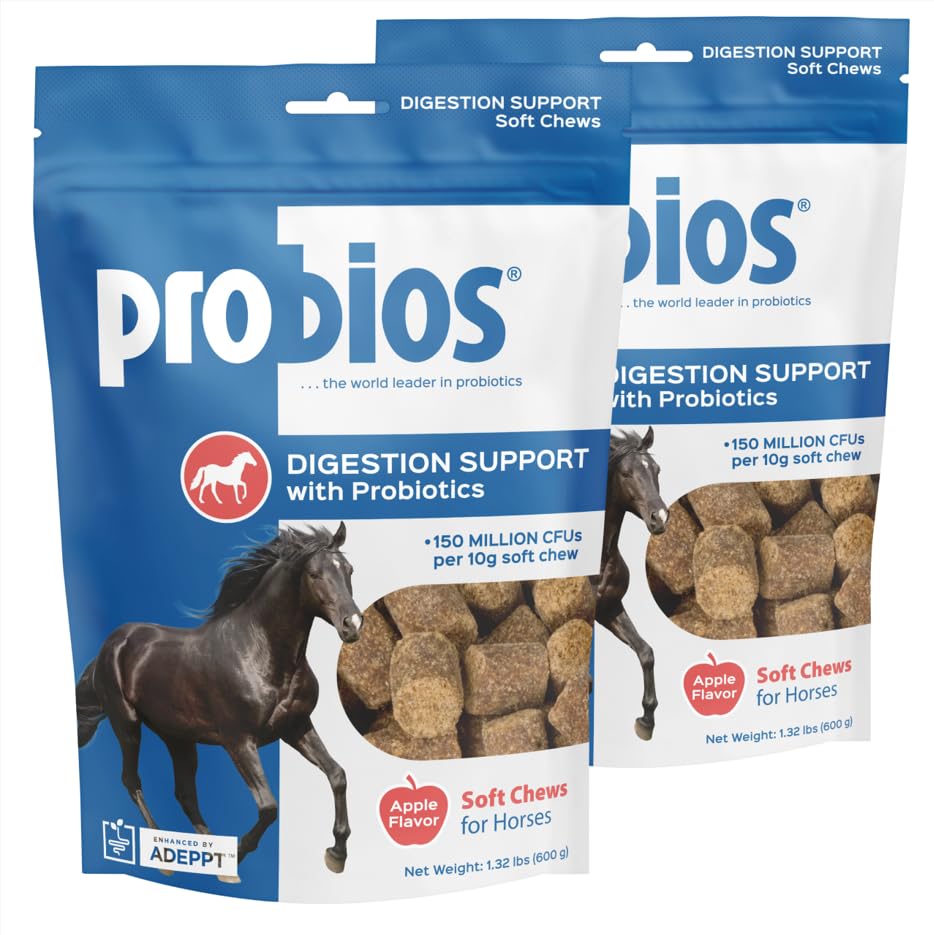
The Probios Soft Chews solve the number one compliance issue in equine gut health: getting the horse to actually eat the supplement. The apple flavor and soft, pliable texture are so palatable that owners report even notoriously picky equines gobble them like treats. Each chew delivers live multi-strain microbials including Lactobacillus acidophilus to support hindgut balance, and the resealable bag keeps the chews fresh for consistent daily dosing.
Customer reports are remarkably consistent—owners see measurable improvement in fecal water syndrome within days, and one senior gelding with chronic loose manure normalized after just five days. The twice-per-bag format is a practical bonus for barns with multiple horses. The soft chew format eliminates the guessing game of powders that get sifted out of feed pans.
On the downsides, the 1.32 lb bag runs through quickly if you are supplementing multiple horses. For a single horse, a two-pack lasts roughly two months at the recommended daily dose. The chew format costs more per serving than bulk granules, but the compliance advantage for fussy eaters justifies the premium.
Why we love it
- Horses accept it willingly—no struggle, no waste
- Rapid improvement in fecal water syndrome and loose manure
- Live microbial support works under stress from travel and weather changes
Good to know
- Price per serving is higher than granule-based alternatives
- Larger barns will need to reorder frequently
2. Formula 707 Digestive Health

Formula 707 has been a trusted name in equine nutrition since 1946, and this Digestive Health formula brings a triple-action approach: prebiotics to feed native microflora, microencapsulated probiotics for targeted delivery, and digestive enzymes to break down roughage. The pellet form is simple to scoop and top-dress, and the 4 lb bag provides good value per serving for daily maintenance.
The most vocal customer successes come from horses with loose manure issues. One owner reported that an OTTB mare’s gastric ulcers resolved within days of starting the pellets, while another saw a 32-year-old gelding regain appetite and consistent stool after a week. The continuous-use requirement is a double-edged sword—results are clear, but symptoms return within days if you stop, which suggests it is a maintenance product rather than a cure.
Some users note the pellets have a mild smell that not every horse accepts enthusiastically mixed into grain. If your horse is highly sensitive to feed additives, you may need to introduce the pellets gradually. At this price point, the cost per serving is a fraction of the chewable options, making it a solid choice for budget-conscious barns.
Why we love it
- Triple mechanism (prebiotic, probiotic, enzyme) covers multiple gut issues
- Affordable per-serving cost for long-term maintenance
- Proven colic reduction in horses that colic frequently
Good to know
- Requires continuous use—symptoms return without it
- Some horses need a transition period to accept the pellet flavor
3. Farnam Equi Aid Psyllium Pellets

If your horse grazes on sandy soil or lives in a dry lot where wind-blown sand is a daily reality, psyllium is non-negotiable. Farnam’s Equi Aid delivers 20 lb of soluble psyllium husk in a convenient pellet form that horses actually eat—the apple and molasses flavor masks the otherwise bland fiber profile. Unlike psyllium powder that turns into a sticky mess, these pellets can be scooped directly onto feed with no soaking step.
Owner feedback focuses on two use patterns: a two-week pulse protocol to purge existing sand from the ventral colon, and a daily low-dose regimen for horses in high-risk environments. Multiple reviews mention success with fecal water syndrome and consistent improvement in manure consistency. The veterinarian-recommended NASC certification adds a layer of quality assurance that matters for a product used in colic prevention.
The 20 lb bag is heavy and takes up storage space, but it lasts months even with daily feeding. One caveat: horses with no sand exposure do not need psyllium, and overuse can theoretically bind to nutrients. This product is best reserved for sand-prone environments or horses with confirmed sand accumulation via fecal sedimentation testing.
Why we love it
- Targets sand removal specifically—mechanical action in the ventral colon
- Horses accept the apple/molasses pellet flavor readily
- Large 20 lb bag provides excellent value per serving for daily use
Good to know
- Large bag requires dedicated storage space
- Not needed for horses with no sand exposure; pulse protocol recommended
4. Vets Plus Probios Feed Granule

For multi-horse barns where daily compliance is less of a concern than cost efficiency, the Probios Feed Granule in bulk is the workhorse choice. The 5 lb tub lasts months at the recommended dose of 5 grams per horse per day. The granules are essentially flavorless and blend seamlessly into grain—owners report that even picky mares eat their feed without hesitation.
The live, naturally occurring microorganisms target normal digestive function across all life stages, from foals to seniors. One customer has used this as a daily supplement for a horse with a sensitive gut for years, noting that switching from chews to granules saved significant money over time. The included scoop simplifies dosing, but you need to ensure the grain is fully consumed to get the full dose.
The granule format requires consistent mixing—horses that sort their feed may leave some behind. The packaging has changed over the years, so the tub design may vary between shipments. For barn owners who want a straightforward, no-fuss probiotic maintenance option without breaking the bank, this is the pick.
Why we love it
- Lowest cost per serving of any product on this list
- Bulk 5 lb tub lasts months for a single horse
- No flavor issues—horses accept it mixed into feed
Good to know
- Granules must be fully consumed; sorting horses miss part of the dose
- Packaging design can vary between shipments
5. Forco Digestive Fortifier

Forco takes a different approach—it is a prebiotic-only formula designed to promote normal microorganism population in the digestive tract rather than introducing bacteria from the outside. The granule format is fine enough to mix thoroughly into feed, and the 5 lb bag provides a generous supply. The brand stakes its reputation on 25 years of equine research, which lends credibility for owners of compromised seniors.
The most compelling testimonials come from owners of horses with cancer diagnoses or extreme age. One owner’s 32-year-old gelding regained appetite, weight, and quality of life on a loading dose of two scoops twice daily for a month before tapering to a maintenance amount. Another owner reports three years of consistent use with zero colic episodes after the mare was prone to them. The horse weight gain results are consistent across reviews.
Because Forco lacks direct probiotic strains, horses with a severely depleted microbiome may get faster results from a product that includes live microbes. The loading phase requirement means you will use more product in the first month. If your horse is an easy keeper who just needs digestive support, this is a great choice—but for acute colic or diarrhea, a probiotic blend may act faster.
Why we love it
- Proven weight gain results with senior and compromised horses
- Prebiotic formulation encourages native microflora without introducing foreign strains
- High palatability—horses eat it readily as a top dressing
Good to know
- Requires a higher loading dose for the first month
- No direct probiotic content—slower action for acute digestive upset
FAQ
How do I know if my horse needs a gut supplement rather than a diet change?
Can I feed a probiotic and a psyllium product at the same time?
How long does it take for a horse gut supplement to show results?
Final Thoughts: The Verdict
For most gardeners, the horse gut supplement winner is the Probios Soft Chews because the apple-flavored soft chew format guarantees daily compliance even with picky horses, and the multi-strain probiotics produce rapid, reliable results for fecal water syndrome, loose manure, and stress-related digestive upset. If you want targeted sand removal for horses on sandy ground, grab the Farnam Equi Aid Psyllium Pellets. And for senior horses needing weight gain and nutrient absorption support, nothing beats the Forco Digestive Fortifier.