
A halter that shifts during a walk or rubs raw after a day in the paddock turns a simple tool into a daily frustration for you and your horse. Finding one that balances durability with gentle contact is the difference between a tool you grab every day and one that sits on a hook gathering dust.
I’m Mo Mahin — the founder and writer behind Furric. I’ve spent years analyzing equine product specs, studying owner-reported failure points on thousands of nylon and rope halters, and cross-referencing material data to understand what actually holds up under real stable conditions.
This guide breaks down the top-rated options on the market so you can confidently pick the best horse halters for your specific horse’s build, your handling style, and your budget.
How To Choose The Best Horse Halters
Picking the wrong halter can lead to rubbing, poor control, or a horse backing out of it in the aisle. Three specifications define whether a halter works for your unique situation: the material construction, the hardware grade, and the sizing system.
Material: Nylon Webbing vs. Braided Rope
Nylon webbing halters are the standard for daily turnout and barn use. The key spec is the ply count — single-ply webbing can stretch and fray under a 1,000-pound horse pulling back, while double-ply webbing (like the Weaver Equine model) resists distortion at stress points. Rope halters use braided polyester cord (typically 1/4-inch diameter) and provide finer pressure cues for ground training. Rope halters are not recommended for unsupervised turnout because the thin cord can concentrate pressure dangerously if the halter snags.
Hardware: The Weakest Link in the Chain
The throat snap and buckle rings are the most common failure points. A brass-plated or brushed-nickel snap with a solid spring mechanism can withstand repeated lateral stress. Coated steel hardware that feels thin or rattles when shaken is a red flag — this was the specific failure reported by owners of the Tough1 halter (product #1). Examine the gauge: hardware that looks thin at the connection point between the lead rope buckle and the halter ring is likely to bend under a sudden pull.
Sizing: Noseband, Crown, and Chin Adjustment
Most halters offer adjustment points at the crown (behind the ears) and the noseband. The critical measurement is the noseband circumference: it should sit 1–2 finger widths below the prominent cheekbone. A halter that runs large (a very common pattern across mid-range halters) may fit a cob-sized horse perfectly when labeled “horse,” but leave the noseband drooping into the soft cartilage area. Always measure your horse’s head circumference at the widest point of the cheek and compare it to the manufacturer’s sizing chart — do not rely on the size label alone.
Quick Comparison
On smaller screens, swipe sideways to see the full table.
| Model | Category | Best For | Key Spec | Amazon |
|---|---|---|---|---|
| Weaver Equine Nylon | Premium Nylon | All-day wear and strong pull resistance | Double-ply webbing, brass hardware | Amazon |
| Hunters Saddlery Rope | Training Rope | Natural horsemanship and ground work | 1/4″ braided yachting polyester cord | Amazon |
| HORZE Howard Fleece | Padded Nylon | Sensitive horses prone to rubs | Soft fleece padding on nose and crown | Amazon |
| T TEKE Waffle Neoprene | Padded Nylon | Customizable padding placement | Detachable waffle neoprene crown pad | Amazon |
| Tough1 Padded | Budget Nylon | Budget-friendly starter or spare halter | Neoprene padding with antique hardware | Amazon |
In‑Depth Reviews
1. Weaver Equine Nylon Horse Halter
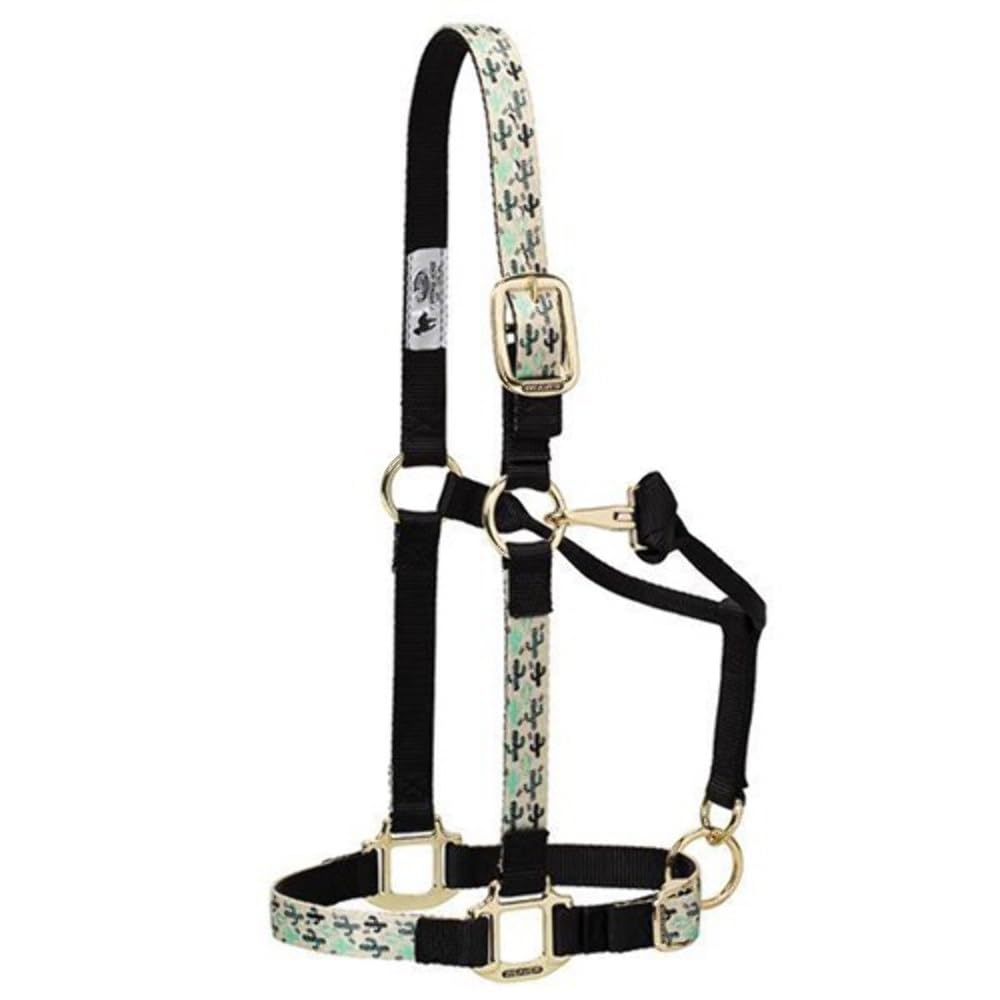
The Weaver Equine halter stands apart because of its double-ply nylon webbing construction. Where single-ply halters can bow and fray when a horse sets back, this design disperses the load across two bonded layers of webbing. Owners of draft crosses and large Appaloosas confirm that the large size fits horses in the 16-hand range without needing to drill extra holes — the box-stitching at the stress points (crown attachment and throat snap loop) directly prevents the unraveling seen on cheaper alternatives.
The rolled throat design is a thoughtful detail for comfort. Instead of a flat edge that can dig into the jaw hinge, the webbing is folded and stitched to create a rounded profile. The brass-plated hardware resists corrosion better than the antique copper finish on entry-level halters, and owners consistently note that the throat snap requires firm finger pressure to release — it will not pop open from a horse rubbing against a fence post.
Sizing runs large, which is a consistent benefit for horses with heavier bone structure. The small size fits a 2-year-old colt well, while the average size works for most Quarter Horses and Thoroughbreds. The geometric pattern options add visual interest without affecting function.
Why we love it
- Double-ply webbing resists stretching and fraying under heavy load
- Rolled throat design prevents rubbing on the jaw hinge
- Brass hardware stays corrosion-free longer than coated steel
Good to know
- Non-adjustable noseband — fit must be correct at purchase
- Some owners needed to burn extra holes for a custom fit on narrow faces
2. Hunters Saddlery Rope Halter

If your ground training philosophy centers on natural horsemanship and pressure-release cues, this rope halter from Hunters Saddlery is purpose-built for that work. The 1/4-inch double-braid yachting polyester cord offers a specific feel that nylon webbing cannot replicate: it is soft enough to be responsive when the rein is used, yet dense enough to hold its knot shape without collapsing into a flat strap. The self-tie closure (a knot system rather than a buckle) is the hallmark of a true training halter — it provides the instantaneous release needed during liberty or trailer-loading practice.
The 11-size range is the most inclusive in this lineup. It covers everything from a miniature foal (size 1) through a draft horse (size 10). Owners of draft crosses with extremely broad heads reported that the cob/Arab size (size 7) was too small but the warmblood size (size 8) provided room to spare. The key takeaway: measure the widest part of your horse’s head and the noseband circumference, then go one size up if you are between measurements — the knots can be tightened but cannot be loosened if the rope is too short.
Do not use this halter for unsupervised turnout or pasture wear. The thin cord profile can concentrate force dangerously if the halter catches on a fence or branch. It is a handling tool, not a turnout tool.
Why we love it
- Double-braid polyester cord resists fading and stretching in wet weather
- Self-tie closure enables quick release during ground training
- 11 size options accommodate mini foals to draft horses
Good to know
- Not suitable for turnout — risk of snagging on obstacles
- Some owners found the cob and horse sizes too small for standard cob heads
3. HORZE Howard Soft Fleece Padded Halter
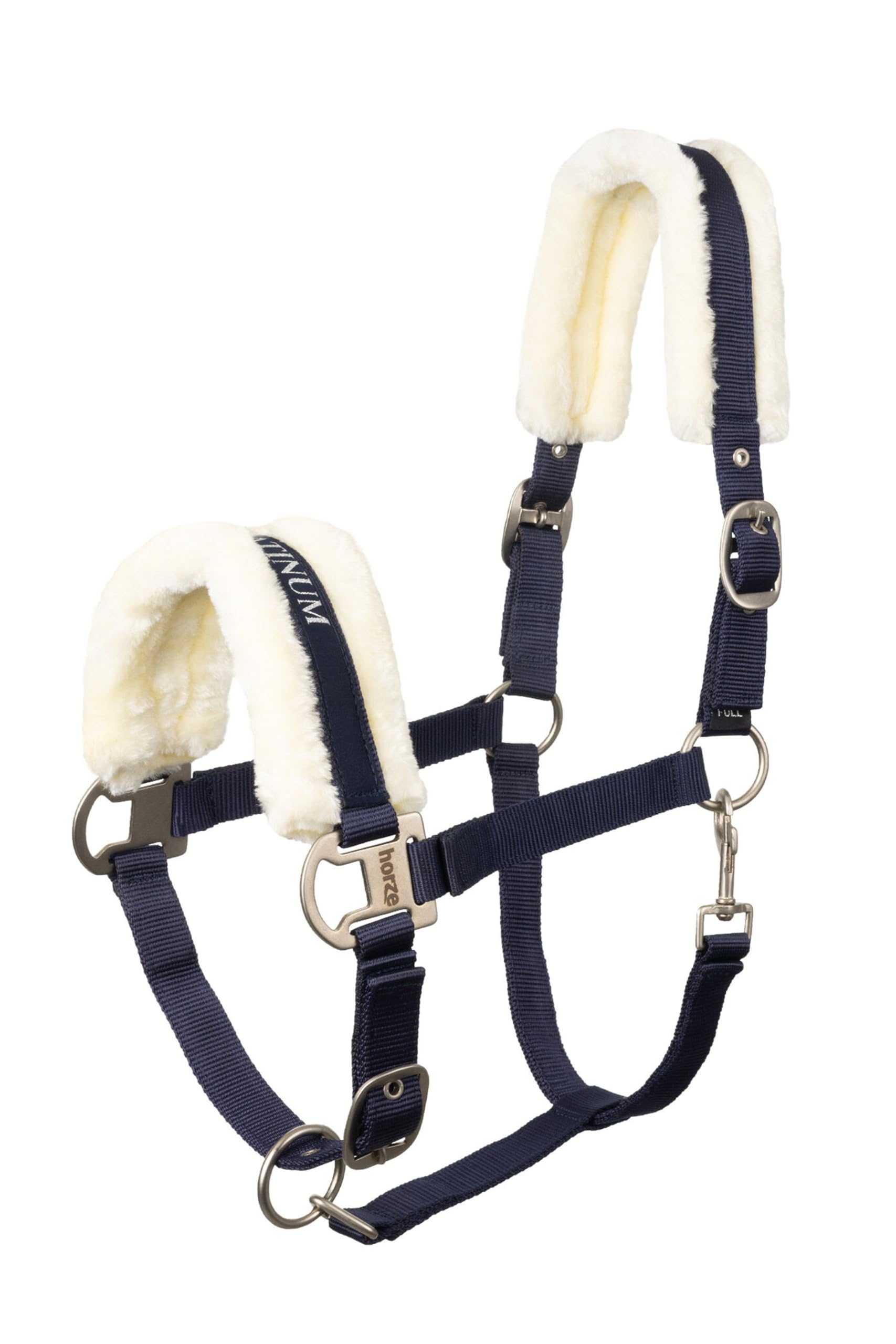
For horses with sensitive facial conformation or thin coat that rubs easily, the HORZE Howard halter solves the primary complaint of webbing friction. The soft fleece padding wraps the entire noseband and crown strap, creating a cushion that prevents the halter from digging in during a day-long wear. The brushed nickel hardware provides a solid mid-point between the budget antique-copper finish and premium brass — it resists tarnishing without the higher cost of solid brass.
Multiple adjustment points at the noseband and crown make this halter adaptable to different head shapes, which is critical because this halter runs large. Owners consistently report needing to size down: a horse that typically wears a cob size may fit the pony size, and a warmblood may need the horse size rather than the warmblood size. This is not a flaw but a known sizing quirk — measure your horse’s head and cross-reference with the Horze sizing chart, not with your old halter.
The 100% polyester webbing holds its color well in sunlight, and the fleece can be spot-cleaned without pulling apart. It is not a heavy-duty work halter — the fleece will compress over time — but for a daily-use stable halter that prioritizes comfort, it delivers genuine value.
Why we love it
- Fleece padding eliminates rub points on sensitive noses and polls
- Brushed nickel hardware resists tarnishing better than coated steel
- Easy snap closure at the throat for quick on/off
Good to know
- Runs large — order one size smaller than typical
- Fleece will compress with heavy daily use over several months
4. T TEKE Adjustable Horse Halter with Waffle Neoprene

The T TEKE halter introduces an unusual feature: a detachable waffle neoprene pad on the crown strap that can slide along the webbing to your preferred position and be removed for cleaning. This is genuinely useful if you own multiple halters and want to move the crown pad to whichever one your horse currently wears. The crown pad addresses the most common rub point — the area behind the ears — where a flat nylon strap can chafe on horses with short or upright manes.
The polypropylene webbing is offered in 2–3 ply construction, giving it a stiffness that resists folding or curling the way some nylon halters do when they get wet. The brass-coated hardware is a step above the antique copper finish but does not match the durability of solid brass or brushed nickel — owners of larger horses (900+ lbs) should keep an eye on the throat snap connection over time. The color retention on the webbing is excellent, with owners reporting no fading after months of sun exposure.
Sizing runs large across all sizes. The cob (medium) size fit a 300-pound miniature horse only after being tightened to the smallest adjustment holes, and the large size fits most warmbloods with room to spare. If you are buying for a horse with a refined head, size down.
Why we love it
- Detachable crown pad allows flexible placement and easy washing
- Bright color webbing resists fading better than standard nylon
- Adjustable chin and crown for a customized fit
Good to know
- Runs large — size down for a secure noseband fit
- Hardware is coated brass, not solid — suspect on very strong pullers
5. Tough1 Padded Horse Halter with Lead Rope
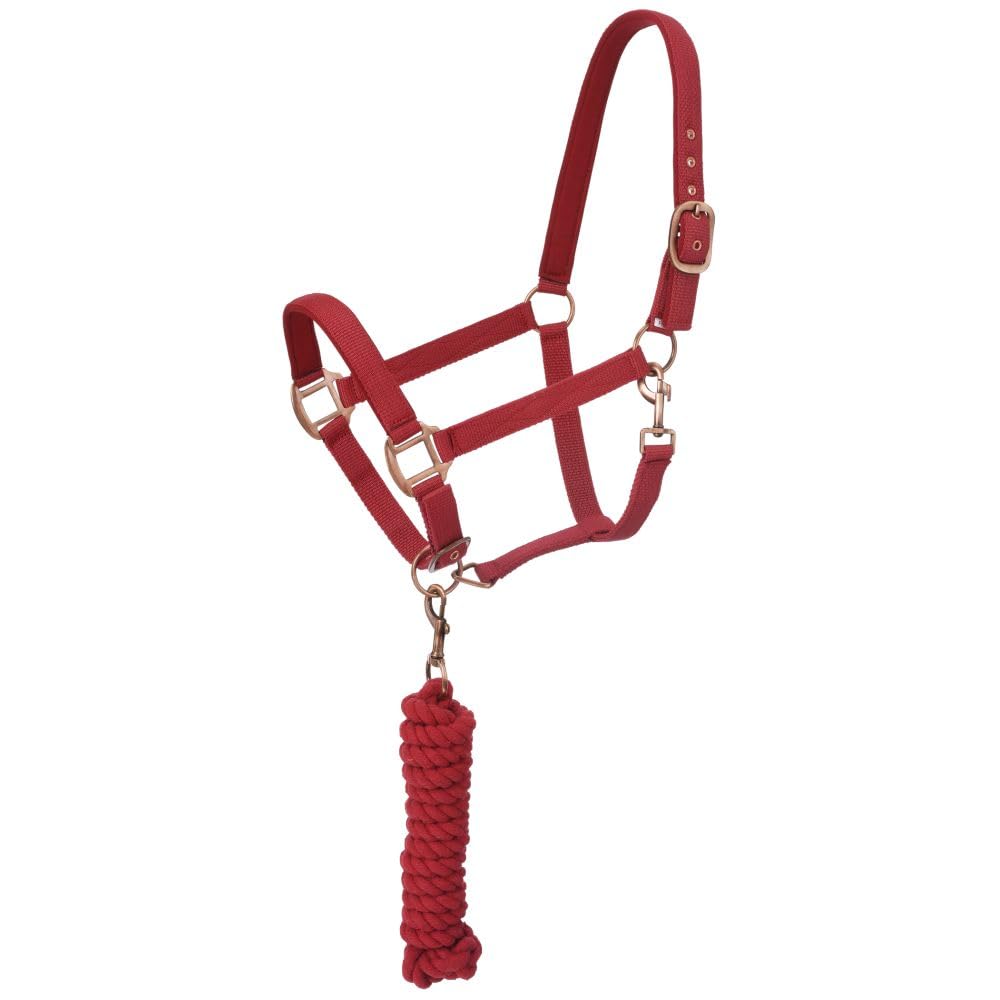
The Tough1 padded halter is the most affordable full-kit option in this guide, bundling a halter with a matching lead rope for a single purchase. The neoprene padding on the crown and noseband is a genuine comfort feature at this entry-level price point — it prevents the nylon webbing from digging into the poll bridge. The antique copper hardware is visually appealing and matches traditional Western tack well.
However, the hardware is the limiting factor here. Multiple verified owner reports note that the metal rings on the halter bent or broke after a few uses with a horse that pulled back even mildly. The lead rope buckle attachment also appears thin at the connection point. This halter is best suited for a calm horse that stands quietly for grooming, trailering, or light in-hand work. For a horse that sets back or leans on the lead, the hardware is not robust enough to handle that lateral load.
At the horse average size (800–1100 lbs), the halter may run slightly large for some horses and require extra holes to be punched in the crown strap. The lead rope is on the thinner side (roughly 5/8-inch diameter) with a slight give, which feels soft in the hand but reduces durability during heavy pulling. Consider this a budget-friendly starter halter or a backup spare for quiet horses.
Why we love it
- Includes both halter and lead rope for a complete starting set
- Neoprene padding reduces rubbing on crown and nose
- Antique copper hardware looks great with traditional Western tack
Good to know
- Metal rings reported bending or breaking on horses that pull back
- Lead rope is thin — less durable under heavy pulling
FAQ
How tight should a horse halter fit on the noseband?
Why do rope halters run smaller than nylon halters?
Final Thoughts: The Verdict
For most everyday stable work and the best combination of strength and comfort, the best horse halters winner is the Weaver Equine Nylon Halter because its double-ply webbing and brass hardware handle daily pulling without hardware failure. If your horse has thin skin that rubs easily, grab the HORZE Howard Fleece Halter. And for ground training that requires pressure-release cues, nothing in this group beats the Hunters Saddlery Rope Halter.