
A pair of birding binoculars that costs under a few hundred dollars can still deliver crisp feather detail, true-to-life color, and reliable weather sealing — if you know which specs actually matter. The challenge is separating the few genuinely sharp, durable models from the many that cut corners on prism quality, lens coatings, or build integrity.
I’m Mo Mahin — the founder and writer behind Furric. I’ve spent years analyzing market data, comparing optical specifications like exit pupil diameter and field of view, and studying aggregated owner feedback to determine which budget-conscious binoculars actually hold up in the field.
This guide breaks down optical coatings, prism types, and weather sealing to help you find the top best inexpensive birding binoculars that deliver real performance without stretching your wallet.
How To Choose The Best Inexpensive Birding Binoculars
Picking the right pair of budget birding binoculars comes down to understanding four specific specs: optical coating quality, prism type, objective lens size, and how the body handles weather. Ignore generic marketing language and focus on these measurable factors.
Lens Coatings: Fully Multi-Coated Is the Minimum
A “fully multi-coated” designation means every air-to-glass surface has multiple anti-reflective layers. This directly increases light transmission, producing brighter images in dawn or dusk birding conditions. If a spec sheet says “coated” or “multi-coated” without “fully,” the dimmer view will frustrate you in low light.
Prism Glass and Type: BaK-4 Roof vs Porro
BaK-4 glass produces rounder, brighter exit pupils than the cheaper BK-7 alternative. Roof prism binoculars are more compact and durable for hiking, while porro prism designs often deliver a wider field of view for the same price. Phase-correction coatings on roof prisms eliminate internal light scatter that can soften image detail.
ED Glass for Color Fringing Control
Extra-low dispersion (ED) glass directly reduces chromatic aberration — the purple or green fringing you see along high-contrast edges like a bird’s wing against the sky. Models with ED glass typically cost more, but the improvement in color fidelity is dramatic for serious birders.
Waterproofing and Fogproofing Standards
Look for nitrogen-purged, O-ring sealed bodies rated IPX7 or equivalent. This prevents internal fogging when moving between humid air and air-conditioned spaces, and protects against rain or accidental immersion. Rubber armor adds grip and impact resistance essential for field durability.
Quick Comparison
On smaller screens, swipe sideways to see the full table.
| Model | Category | Best For | Key Spec | Amazon |
|---|---|---|---|---|
| Vortex Raptor 8.5×32 | Mid-Range | Warranty & porro clarity | Fully multi-coated, 390ft FOV | Amazon |
| Bushnell H2O Xtreme 10×42 | Mid-Range | Wet conditions & travel | IPX7 waterproof, BaK-4 prisms | Amazon |
| Timorn HD 8×42 | Mid-Range | Phone adapter kit included | 5.2mm exit pupil, 430ft FOV | Amazon |
| Vortex Crossfire HD 8×42 | Premium | HD optics & lifetime warranty | HD optical system, roof prism | Amazon |
| SVBONY SV202 ED 8×42 | Premium | ED glass on a budget | Extra-low dispersion glass | Amazon |
| Nocs Field Issue 8×32 | Premium | Ultra-compact & travel | 16.7oz, IPX7, Bak4p prism | Amazon |
| Wingspan SkyView ED 8×42 | Premium | Close focus & low-light | ED glass, 17.8mm eye relief | Amazon |
| Celestron Nature DX ED 8×42 | Premium | Razor-sharp color fidelity | ED glass, phase-coated BaK-4 | Amazon |
| Nikon PROSTAFF P7 10×42 | Premium | High magnification & clarity | Locking diopter, 10x mag | Amazon |
In‑Depth Reviews
1. Vortex Raptor 8.5×32

The Vortex Raptor uses a porro prism design with 8.5x magnification and 32mm objective lenses, offering a 390-foot field of view at 1000 yards. The fully multi-coated optics deliver bright, crisp images that multiple owners report rivaling more expensive models from Nikon and Bushnell in clear daytime conditions. The 14mm eye relief accommodates eyeglass wearers reasonably well, though it’s not the longest in this tier.
The rubber armor and nitrogen purging provide genuine waterproof and fogproof performance, and the 3.8mm exit pupil is adequate for midday birding, though it dims noticeably at dawn or dusk compared to larger 42mm alternatives. The twist-up eyecups include multiple stops for customizable eye relief — a feature often missing at this price point.
The unlimited, unconditional, lifetime VIP Warranty is the standout here; Vortex will repair or replace these for any reason, making this essentially a single-purchase binocular. A few users noted the diopter adjustment can be accidentally bumped, so check focus periodically in the field.
Why we love it
- Unconditional lifetime warranty is unmatched for budget models
- Porro prism design gives excellent depth perception and brightness for the price
Good to know
- 32mm objective limits low-light performance versus 42mm options
- Diopter ring can shift accidentally during adjustment
2. Bushnell H2O Xtreme 10×42

The Bushnell H2O Xtreme offers 10x magnification with 42mm objective lenses, providing a 4.2mm exit pupil that performs well in moderate-to-bright conditions. The fully multi-coated optics and BaK-4 prisms deliver decent clarity, though owners note a slight warmth to the color rendition compared to ED glass models. The 17mm eye relief is generous for eyeglass users.
The O-ring sealed body with nitrogen purging is rated IPX7, meaning it can be submerged in up to three feet of water for 30 minutes without damage — a real advantage for kayakers or birders in rainy environments. The rubber coating includes textured soft-grip zones that remain secure even when wet. However, this model lacks a tripod adapter socket, which disappointed some users who wanted stable long-duration viewing.
At just over a pound, the roof prism body is compact enough for day packs, and the included carrying case and strap are functional. The focus knob is smooth with no play, though it requires about 1.5 turns from close to infinity, which feels slightly slow for tracking fast-moving targets.
Why we love it
- IPX7 waterproofing is genuinely submersible, not just splash-proof
- 17mm eye relief works well for extended wear with glasses
Good to know
- No tripod mount socket limits steady long-range viewing
- Image sharpness degrades slightly at the outer edges
3. Timorn HD 8×42

The Timorn HD 8×42 features a 430-foot field of view at 1000 yards — wider than most competitors in this category — which helps follow fast-moving birds through dense foliage. The 5.2mm exit pupil provides bright images in lower light, and the BAK4 roof prism with fully multi-coated green film delivers reasonable contrast and color accuracy for the price.
The standout feature is the complete accessory kit: a sturdy smartphone adapter and a 360-degree swivel tripod mount. This allows stable digiscoping right out of the box, something most budget options omit. The body is nitrogen-purged for fogproof performance and rated waterproof to one meter for 30 minutes. The 18mm eyepiece makes the view feel immersive, though owners report the diopter adjustment ring is too easy to rotate accidentally while focusing.
Weighing 1.45 pounds, this is slightly heavier than some roof prism competitors, but the ergonomic bridge design places the focus wheel and diopter in the center for one-finger operation. The included cleaning cloth and padded case add practical value for daily carry.
Why we love it
- Wide 430ft FOV makes it easy to track moving subjects
- Phone adapter and tripod included — ready for digiscoping immediately
Good to know
- Diopter adjustment can be accidentally bumped during normal focusing
- Weight is slightly above average for a roof prism model
4. Vortex Crossfire HD 8×42

The Vortex Crossfire HD upgrades the standard Raptor line with HD optical elements that reduce chromatic aberration and improve edge-to-edge sharpness. The 8×42 configuration produces a 3.8mm exit pupil and 390-foot field of view — the same specs as the Raptor, but the HD glass makes a visible difference in color fidelity, especially on white feathers against a bright sky. The fully multi-coated lenses and roof prism design keep the body compact and durable.
The aluminum housing is rubber-armored for shock resistance, and the nitrogen-purged O-ring seals deliver reliable fogproof and waterproof performance in all weather. The included GlassPak case is a thoughtful addition that protects the optics during storage. Multiple owners compare the image quality favorably to binoculars costing four to five times more, noting sharpness approaching enthusiast-grade levels.
The unlimited, unconditional VIP warranty is identical to the Raptor — repair or replacement for any damage. The 14mm eye relief is shorter than ideal for eyeglass wearers, so try before committing if you wear thick frames. The focus wheel has moderate tension that prevents accidental drift.
Why we love it
- HD glass significantly cuts color fringing compared to standard optics
- VIP warranty sets a lifetime ownership standard
Good to know
- 14mm eye relief may feel tight for some eyeglass users
- Exit pupil is smaller than many 42mm competitors at 3.8mm
5. SVBONY SV202 ED 8×42
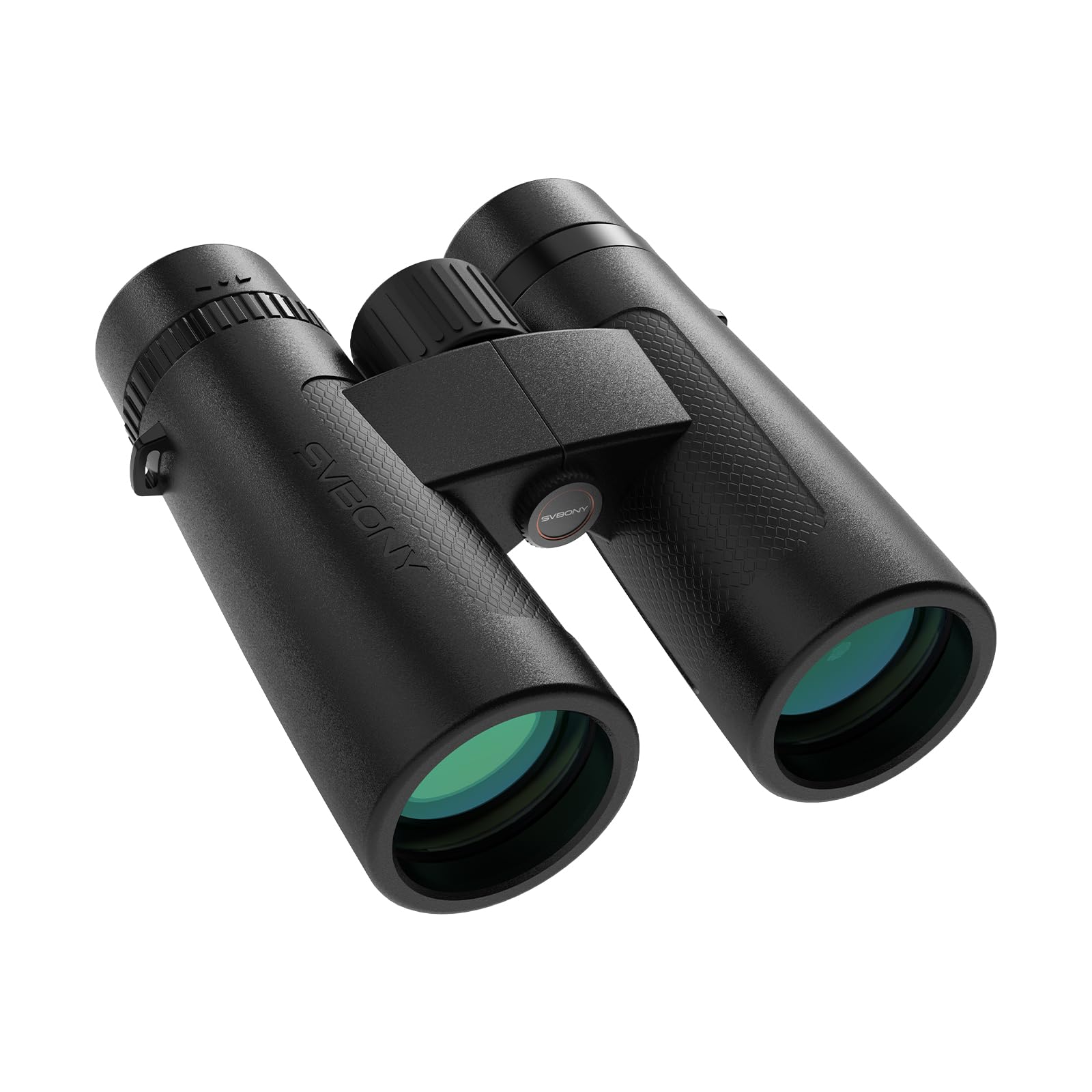
The SVBONY SV202 ED 8×42 is one of the most affordable binoculars to feature genuine extra-low dispersion (ED) glass. This drastically reduces chromatic aberration, giving you sharp, color-accurate views from the center of the image all the way to the edges. The 8.12-degree apparent angle of view (roughly 425 feet at 1000 yards) is noticeably wider than many competitors in the same price bracket.
The body is sealed to IPX7 standards — submersible up to one meter — and the non-slip rubber armor provides good grip in wet conditions. The 5.2mm exit pupil and 17.2mm eye relief are excellent for low-light dawn or dusk birding sessions and for eyeglass wearers. The internal light-masking design suppresses stray light, preserving contrast in bright conditions where cheaper binoculars often flare or wash out.
Reviewers consistently highlight the “startlingly good” optical clarity for the price, with several comparing the view to mid-tier European glass from a decade ago. The tripod mount adapter is built-in, and the lens caps are tethered to prevent loss in the field. The focus knob requires about 1.3 full turns from close to infinity, allowing quick target acquisition.
Why we love it
- True ED glass eliminates purple fringing at a breakthrough price
- Wide 8.12° FOV and generous 17.2mm eye relief
Good to know
- Eye cup tension is stiff initially; requires break-in period
- Brand is less established than Vortex or Nikon for warranty support
6. Nocs Field Issue 8×32

The Nocs Provisions Field Issue 8×32 weighs just 16.7 ounces, making it one of the lightest fully waterproof binoculars in this roundup. The Swiss-designed Bak4p prism and fully multi-coated optics deliver a 387-foot field of view at 1000 yards with rich, punchy color representation. The 4mm exit pupil is adequate for midday birding, though it does lose brightness in deep shade or twilight conditions.
The body is IPX7 rated and nitrogen-sealed to prevent fogging, and the patented Rugged Wave Grip design provides a secure hold even with wet hands. The multi-stop twist-up eyecups offer three distinct positions, which is genuinely useful for eyeglass wearers who need precise eye relief adjustment. The oversized focus wheel is smooth and responsive, with about 1.2 turns from minimum focus at 9.3 feet to infinity.
The “No-Matter-What” Lifetime Warranty backs the binoculars against defects, and the brand donates 1% of sales to environmental causes. Owners praise the compact form factor for day hikes and travel, noting the included lens protectors are well-designed. The 32mm objective lens is physically smaller, so overall light gathering is lower than 42mm alternatives — a trade-off for the ultra-portable package.
Why we love it
- Exceptionally lightweight at 16.7 oz for all-day carry
- Three-position eyecups accommodate glasses perfectly
Good to know
- 32mm objective limits low-light performance versus 42mm alternatives
- Slightly narrower FOV than some 8×42 competitors
7. Wingspan SkyView ED 8×42

The Wingspan SkyView ED combines extra-low dispersion glass with phase-correction coated BaK-4 prisms to deliver bright, color-accurate images with minimal chromatic aberration. The 7.1-degree apparent angle of view (393-foot FOV) is slightly narrower than some 8×42 competitors, but the trade-off is exceptional edge-to-edge sharpness with very little barrel distortion. The 17.8mm eye relief is among the longest in this category, providing a full field of view for glasses wearers.
The DuraTech Technology body is lightweight at 25.6 ounces while remaining rugged enough for field use. Nitrogen purging keeps the internals fog-free in humid conditions, and the rubber-armored housing provides a secure grip. Owners consistently rate the color fidelity highly, noting that the ED glass makes subtle feather patterns and color gradients visible that were lost on cheaper optics. The close focus distance is under 6 feet, making this excellent for butterfly or dragonfly observation in addition to birding.
The included lifetime warranty from Wingspan is a solid backup, and the company provides digital birding resources with purchase. The focus wheel is damped with moderate resistance, preventing accidental overshoot, but some users report it requires slightly more torque than ideal for quick adjustments.
Why we love it
- 17.8mm eye relief makes it the best choice for eyeglass wearers
- ED glass with phase-correction prisms delivers vivid, fringing-free views
Good to know
- FOV is narrower than some 8×42 alternatives at 7.1 degrees
- Focus wheel requires more turning resistance than some prefer
8. Celestron Nature DX ED 8×42

The Celestron Nature DX ED 8×42 utilizes extra-low dispersion glass paired with phase-coated BaK-4 prisms to virtually eliminate chromatic aberration. The result is razor-sharp images with true-to-life color rendition that owners consistently describe as “crisp, bright, and vibrant.” The 7.5-degree field of view (393 feet) is generous for an ED-equipped model at this price tier, and the 17.8mm eye relief accommodates eyeglass wearers without vignetting.
The rubber-armored polycarbonate body is lightweight yet rugged, and the nitrogen-purged O-ring seals provide reliable waterproof and fogproof protection in rain or humidity. Built-in tripod adapter threads allow stable mounting for extended viewing sessions — a slight advantage over some competitors that require a separate adapter. Multiple users on African safaris reported these performed well in harsh sunlight and dusty conditions, with only minor dust ingress after extended use.
The Celestron Limited Lifetime US Warranty and US-based tech support add confidence, though a few users wish the included carry case had stiffer padding. The focus wheel is smooth with approximately 1.4 turns from minimum focus (6.5 feet) to infinity, allowing precise fine-tuning. The eyecups have two click-stop positions, which is functional but not as refined as the three-position design on the Nocs Field Issue.
Why we love it
- ED glass with phase-coated BaK-4 prisms delivers exceptional sharpness
- Integrated tripod mount lets you stabilize for long sessions
Good to know
- Carrying case padding is minimal for a premium model
- Eyecups have only two positions instead of three
9. Nikon PROSTAFF P7 10×42

The Nikon PROSTAFF P7 10×42 brings 10x magnification with a 42mm objective lens, producing a 4.2mm exit pupil that works well in moderate light. The phase-correction coated roof prisms and dielectric high-reflective multilayer coatings maximize light transmission, delivering vivid, edge-to-edge clarity with lifelike color. The 62.9-degree apparent angle of view creates an immersive viewing experience despite the higher magnification that typically reduces FOV.
The locking diopter ring is a standout design choice — it prevents accidental adjustment, a common complaint on many binoculars where the diopter ring drifts during normal use. The turn-and-slide eyecups provide 15.7mm of eye relief, adequate for glasses wearers, and the oil- and water-repellent lens coatings make cleaning quick and reduce smudging in the field. The fiberglass-reinforced polycarbonate body with shock-resistant rubber armor keeps weight manageable while offering real durability.
Owners universally praise the bright, sharp image quality, with many noting these handle low-light conditions better than most 10×42 options at this tier. The focus knob is large and smooth, requiring just under one full turn from close to infinity, enabling rapid target acquisition. However, the 10x magnification makes steady handheld viewing more challenging, and a tripod adapter is recommended for best results at long distances.
Why we love it
- Locking diopter ring prevents accidental focus drift
- Dielectric and phase coatings produce exceptional image brightness
Good to know
- 10x magnification amplifies hand shake; tripod recommended for long views
- 15.7mm eye relief is sufficient but not class-leading for glasses
FAQ
What does fully multi-coated mean for birding binoculars?
Is 8x or 10x magnification better for bird watching?
What is ED glass and do I need it in a budget binocular?
Final Thoughts: The Verdict
For most birders, the best inexpensive birding binoculars winner is the Vortex Crossfire HD 8×42 because it combines HD optics, a lifetime VIP warranty, and proven weather sealing at a price that undercuts most serious competition. If you want the lightest possible carry for travel, grab the Nocs Field Issue 8×32. And for the best low-light color fidelity on a budget, nothing beats the SVBONY SV202 ED 8×42.