
When winter hits hard, an outdoor cat’s survival depends on finding a shelter that traps body heat, blocks the wind, and stays dry through snow and sleet. A flimsy box or a drafty dog house won’t cut it — what these animals need is a structure engineered specifically to retain warmth without trapping moisture, with escape routes that keep them safe from predators. That’s the precise engineering challenge behind a proper insulated cat house.
I’m Mo Mahin — the founder and writer behind Furric. Over the past five years, I’ve analyzed hundreds of outdoor pet shelters, cross-referencing build materials, insulation R-values, weatherproofing claims, and thousands of verified owner reports to separate the designs that actually work from those that fail in the first freeze.
Whether you’re protecting a feral colony, a barn cat, or your own indoor-outdoor companion, choosing the right best insulated cat house means evaluating foam thickness, wood quality, waterproof roofing, and interior floor elevation — factors that define whether that shelter delivers a warm, dry refuge or becomes a cold, damp trap.
How To Choose The Best Insulated Cat House
An outdoor cat shelter is only as good as its ability to keep a cat warm and dry in freezing, wet weather. Here are the key factors to evaluate before buying.
Insulation Type and Thickness
Look for houses with foam insulation sandwiched between wood layers or a double-walled plastic construction that traps an insulating air gap. The foam should be at least 0.5 inches thick to provide meaningful thermal resistance. Avoid shelters that only claim to be “insulated” using a thin reflective liner — those offer minimal warmth in sub-freezing temperatures.
Weatherproofing and Roof Design
A slanted asphalt or waterproof roof prevents rain and snow from pooling and seeping into the interior. Check that the roof extends beyond the walls with eaves to keep water away from entry points. An elevated base — preferably 2 inches or higher off the ground — stops cold moisture from wicking up through the floor and keeps the interior dry.
Escape Doors and Entry Design
Cats need a quick exit if a raccoon, coyote, or other predator blocks the main entrance. A secondary escape door on the side or rear of the house is essential for feral or stray cats. Transparent PVC curtains or acrylic windows at the entries block wind while letting cats see outside before leaving.
Interior Space and Flooring
Measure your cat. A house that’s too small won’t trap enough body heat and feels cramped; one that’s too large loses warmth. The ideal size allows a cat to stand, turn around, and lie down comfortably. An interior that’s 18-24 inches in any dimension works for most single cats. Removable or slide-out floors make cleaning much easier.
Heated vs. Passive Insulation
Passive insulated houses rely entirely on the cat’s body heat to warm the interior, which works well in mild winters. For temperatures consistently below freezing, a heated model with a UL-listed warming pad is safer and more effective. Make sure any electrical cord is anti-bite protected and that the pad is removable for cleaning.
Quick Comparison
On smaller screens, swipe sideways to see the full table.
| Model | Category | Best For | Key Spec | Amazon |
|---|---|---|---|---|
| Pawtners Heated Cat House | Heated / Fabric | Heated winter refuge | UL-listed 30W heated pad | Amazon |
| HiCaptain 2 Storey | Plastic / Multi-cat | Multi-cat households | Double-wall HDPE, 34″ D | Amazon |
| PetsCosset 2-in-1 | Wood / 2-Story | Feeding + sleeping combo | 37.8″ H, removable floors | Amazon |
| Gowoodhut 2-Story | Wood / Balcony | Active, multiple cats | 31.5″ H, 2 jump platforms | Amazon |
| FunXplore Insulated | Wood / Foam | All-round foam value | 0.6″ foam, 2 escape doors | Amazon |
| GUTINNEEN Insulated | Wood / Liner | Budget-friendly warmth | 0.78″ sponge liner | Amazon |
| Rolimate Heated | Fabric / Compact | Single-cat warmth | 5-layer insulation, 13″x17″ | Amazon |
In‑Depth Reviews
1. Pawtners Heated Outdoor Cat House
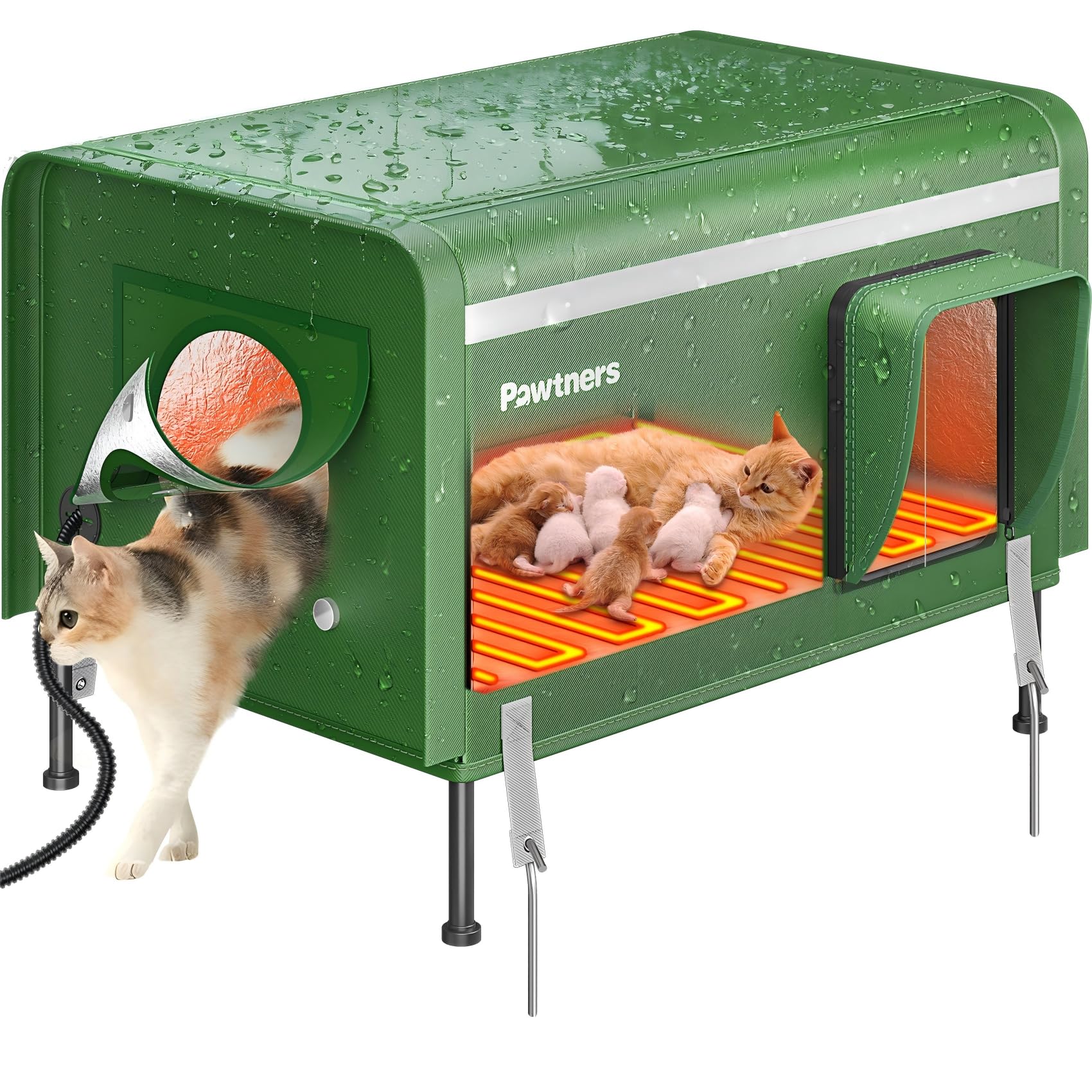
The Pawtners Heated Cat House stands out as the top heated option because it combines a genuine UL-listed 30-watt warming pad with a fully waterproof PVC fabric exterior and a rugged all-metal frame. The 26-inch width gives a large cat or two smaller cats room to stretch out, and the included windproof ground stakes hold the structure steady even during gusts.
What makes this design especially smart is the removable heated pad with a machine-washable cover. You don’t have to replace the entire house when the pad needs cleaning — just unzip and toss the cover in the wash. The transparent door curtain blocks drafts while letting the cat see out, and the escape door on the rear provides a second exit route that predators can’t block.
The elevated adjustable feet let you level the house on uneven ground, keeping the interior off damp soil. Owners consistently report interior temperatures staying well above freezing even when outside temps drop into the teens. The only real trade-off is the fabric construction — it won’t stand up to a direct claw assault the way a wooden house will, but the sturdy metal frame handles snow loads without complaint.
Why we love it
- UL-listed heated pad provides safe, consistent warmth
- All-metal frame with ground stakes resists wind
- Removable, washable heated pad cover
- Escape door and transparent wind curtain
Good to know
- Fabric exterior less durable than wood against claws
- Requires access to an outdoor power outlet
2. HiCaptain 2 Storey Plastic Cat House
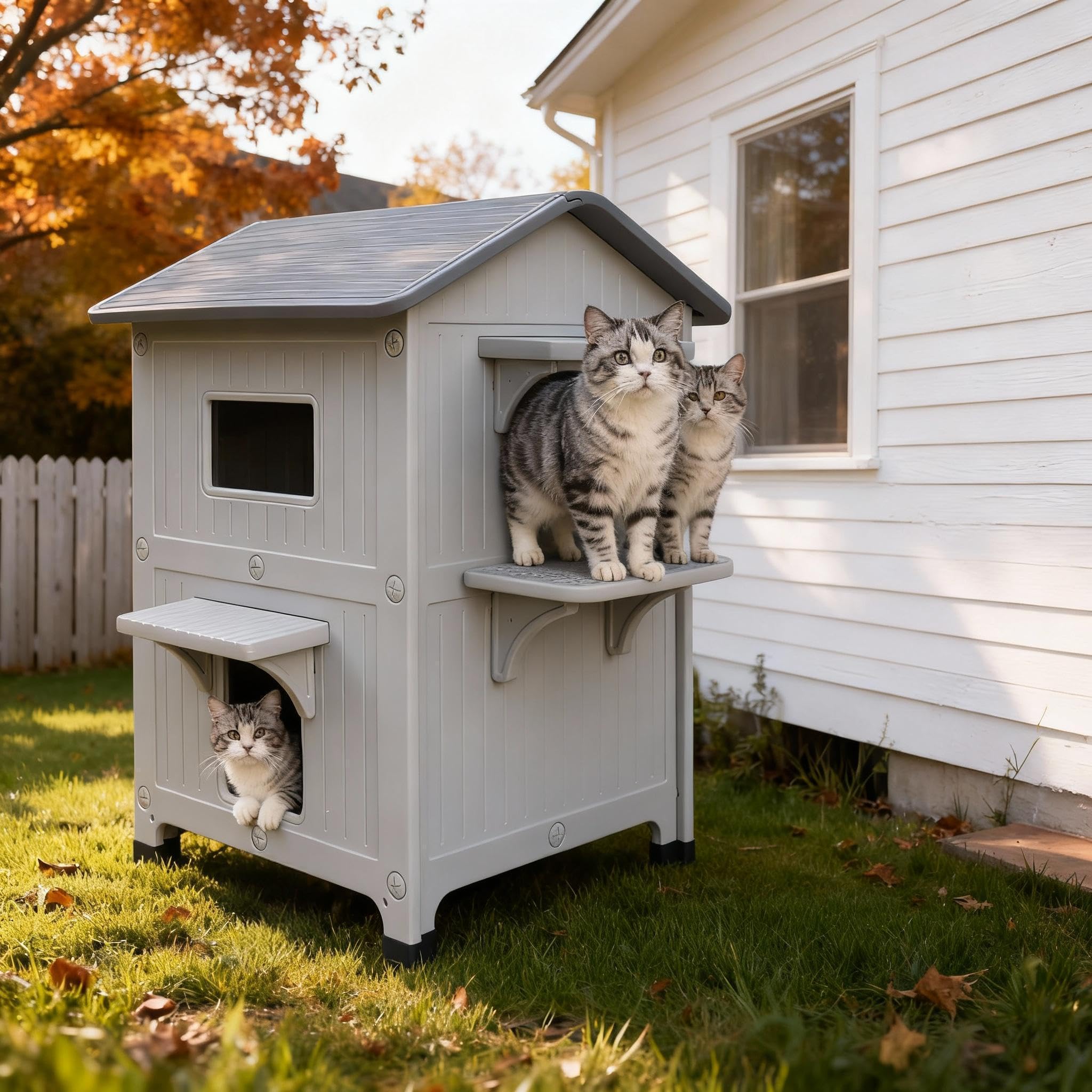
The HiCaptain 2 Storey is a unique entry because it uses a double-layer High-Density Polyethylene (HDPE) wall system instead of foam insulation. The trapped air between the two plastic sheets creates a thermal break — in winter it holds warmth inside, and in summer it reflects external heat. This makes it a year-round shelter rather than a purely cold-weather solution.
The two-story design with a balcony gives multiple cats vertical space to spread out, reducing territorial fights. The internal floor area measures 33.8 by 21.5 inches, which is generous enough for three or four average-sized cats. Assembly requires no tools — the panels snap together, pre-drilled holes align perfectly, and the whole process takes about 20 minutes. That’s a huge advantage over wooden houses that demand drills and screwdrivers.
The PVC curtain and acrylic window at the main entry keep wind and rain out, and the elevated base lifts the floor above ground moisture. Some owners note that the interior insulation panels can separate from the walls over time and have used Velcro strips to re-secure them. But the overall build quality and weather resistance are excellent, and the easy-clean snap-together design makes weekly maintenance fast.
Why we love it
- Double-wall air-gap insulation works year-round
- Tool-free snap assembly saves time
- Spacious two-story layout for multiple cats
- Lightweight but heavy enough to stay grounded
Good to know
- Interior insulation panels may need re-securing
- Plastic can feel colder than wood on initial contact
3. PetsCosset Outdoor Cat Shelter

The PetsCosset shelter solves a common problem for caretakers of feral colonies: how to keep food and water separate from sleeping quarters. This two-level wooden house has a removable internal divider, so you can set the upper level as a feeding station and the lower level as a bed, or remove the divider entirely to create one larger single-story space.
At 37.8 inches tall, it’s one of the tallest models in this lineup. The asphalt sloped roof sheds rain effectively, and the 2.8-inch elevated base keeps the floor well above pooled water. The main entry has a clear PVC curtain that reduces wind infiltration, and the rear escape door gives cats a quick exit if they feel trapped. Both floors slide out completely, making cleaning far easier than houses where you have to reach into a dark interior with a rag.
Assembly takes roughly an hour, and the pre-drilled holes align well. A couple of owners noted that the roof support arms didn’t fit perfectly and required a minor adjustment. The fir wood construction is solid but benefits from an additional coat of exterior paint or sealant if you live in a region with heavy rain. Overall, this is the best pick for someone who needs a dual-purpose shelter that keeps feeding areas and sleeping areas distinct.
Why we love it
- Two-level design with removable divider for flexibility
- Slide-out floors make cleaning fast and easy
- Tall 37.8-inch height accommodates larger cats
- Sloped asphalt roof for proper water drainage
Good to know
- Roof support arms may need slight adjustment
- Extra paint or sealant recommended for wet climates
4. Gowoodhut 2-Story Cat House
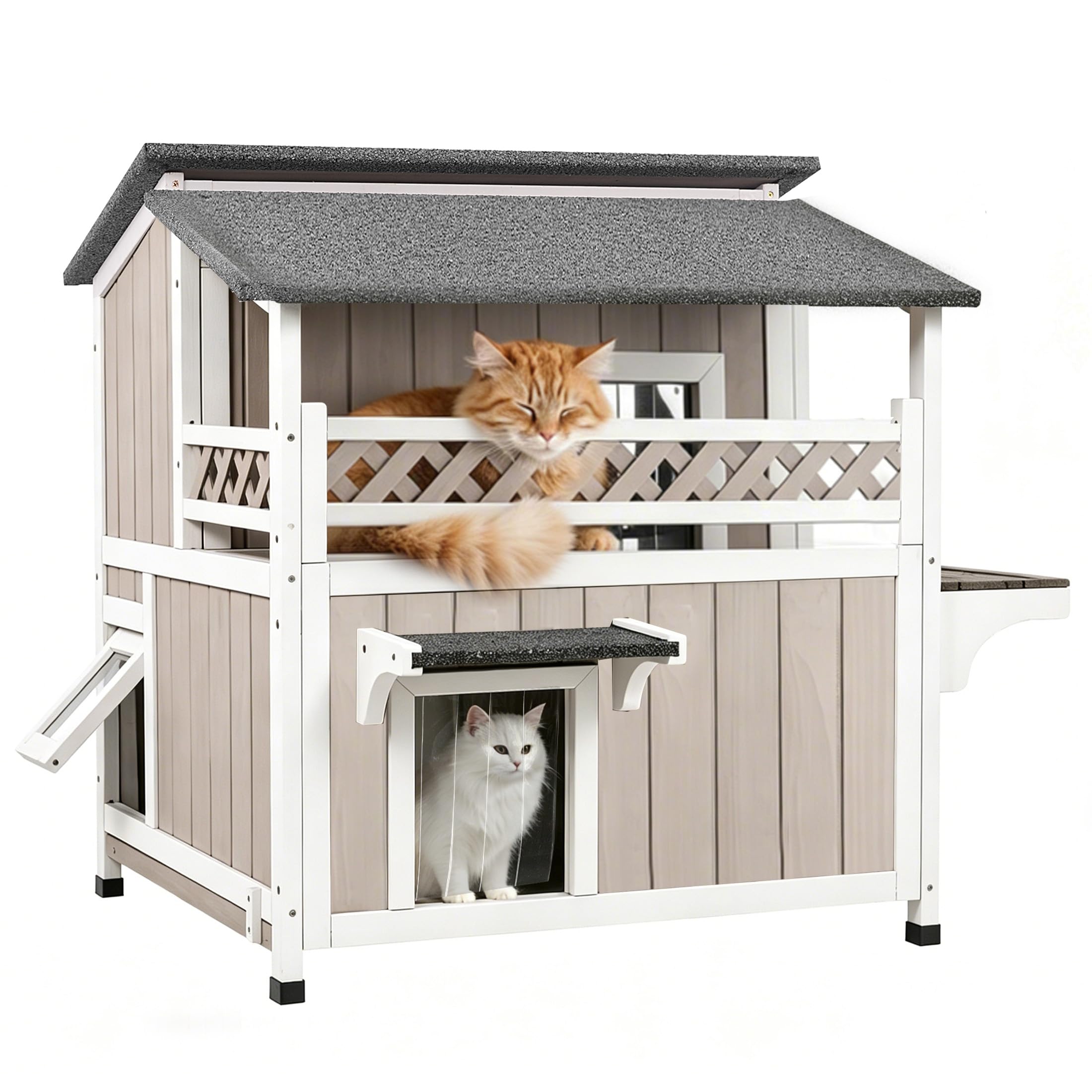
This two-story wooden house includes a large balcony on the upper level, two interior jump platforms, and a main entry plus a side escape door. The design gives cats space to climb, perch, and survey their territory — which is especially valuable for colonies with hierarchy dynamics.
The roof is split into three asphalt sections, and half of the upper roof opens on a metal folding support, giving you direct access to the interior for feeding and cleaning. That’s a much better system than having to remove the entire roof or reach through small doors. The interior measures 29 by 30 by 31.5 inches, providing ample room for multiple cats to sleep on different levels without crowding each other.
The fir wood construction is sturdy, and the PVC door curtain at the main entry blocks wind. Several owners reported a strong chemical smell out of the box that dissipated after a few days outside. A few units had cracked roof brackets, though this doesn’t appear to be a widespread issue. If you have active cats that enjoy climbing and need vertical enrichment, this is the most engaging shelter on the list.
Why we love it
- Balcony and jump platforms for climbing enrichment
- Opening roof section simplifies feeding and cleaning
- Large interior suits multiple cats comfortably
- Sloped asphalt roof sheds rain effectively
Good to know
- Strong smell initially requires outdoor airing
- Some units report cracked roof brackets
5. FunXplore Outdoor Cat House Insulated
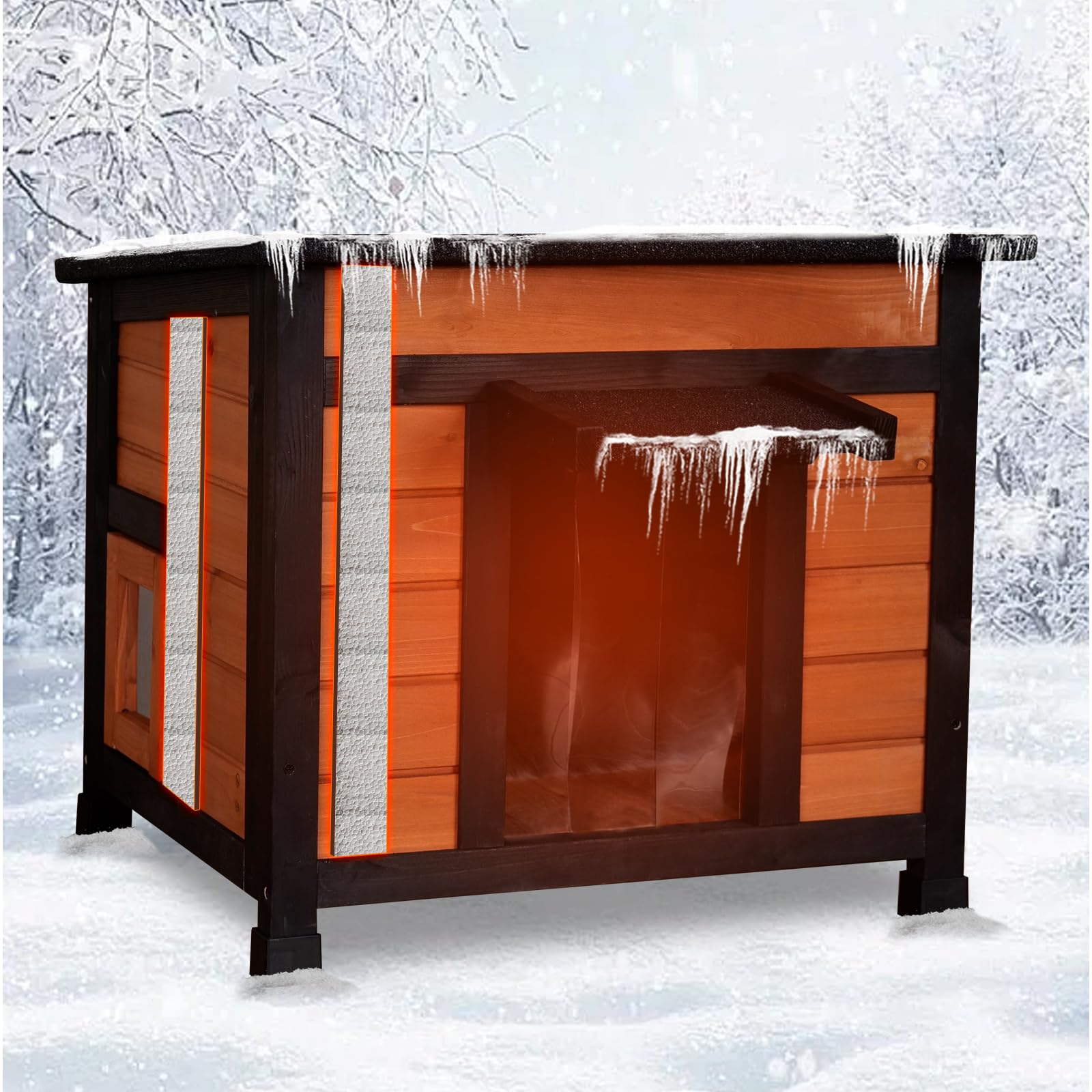
The FunXplore offers genuine six-sided foam insulation — all walls, the roof, and the floor — with 0.6-inch thick foam sandwiched between fir wood and plywood layers. That’s a thicker insulation layer than many comparably priced wooden houses provide. The size is also slightly taller than average at 20.9 inches, which helps larger or heavier cats move around without feeling cramped.
Two escape doors are included — one on the side and one on the rear — giving cats multiple exit routes if a predator approaches. The waterproof asphalt roof is slanted so water runs off rather than pooling, and the 4 plastic feet pads elevate the house away from ground moisture. Assembly takes around 15 minutes because all parts come pre-drilled and the panels fit together cleanly.
Owners consistently mention that their cats entered within minutes of assembly, which is a strong sign that the interior feels safe and cozy. The main caveat is that the house is lightweight enough that a strong wind (around 22 mph) can flip it if it isn’t weighed down. A few owners recommend anchoring it with a brick or tying it to a deck post. For the price, the insulation-to-cost ratio is excellent.
Why we love it
- Six-sided foam insulation across all panels
- Two escape doors for predator safety
- Tall interior fits larger cats comfortably
- Quick 15-minute assembly with pre-drilled parts
Good to know
- Lightweight design needs anchoring in windy areas
- Tapered interior can be snug for extra-large cats
6. GUTINNEEN Insulated Cat House

The GUTINNEEN takes a straightforward approach to insulation: a 0.78-inch thick sponge liner attached to all six interior sides of a wooden shell. That liner is thicker than the foam found in many budget competitors, and it sits between the solid wood exterior and the interior cavity, trapping body heat effectively. The wooden outer layer provides a sturdy wind block that flexible fabric shelters can’t match.
The house measures 23.6 by 20.9 by 18.3 inches, which fits cats up to about 25 pounds. The roof is slanted to prevent water accumulation, and the elevated base keeps the floor off damp ground. The PVC curtain at the front door helps reduce draft. Assembly takes 30 to 60 minutes, though some owners note that the pilot holes aren’t pre-drilled and you’ll need a drill and screwdriver to complete the build.
A common owner observation is that the wood boards feel thinner than expected, and some users added their own foam or straw for extra insulation in very cold regions. The plastic strips used for the door curtain can flap in the wind and startle some cats. For mild winters and as a first-time feral shelter, it delivers solid protection at a reasonable cost.
Why we love it
- Thick 0.78-inch sponge liner for warmth
- Solid wood exterior blocks wind effectively
- Slanted roof and elevated base for weather protection
- Fits cats up to 25 pounds
Good to know
- May need added insulation for extreme cold
- No pre-drilled holes — requires drill for assembly
7. Rolimate Heated Cat House
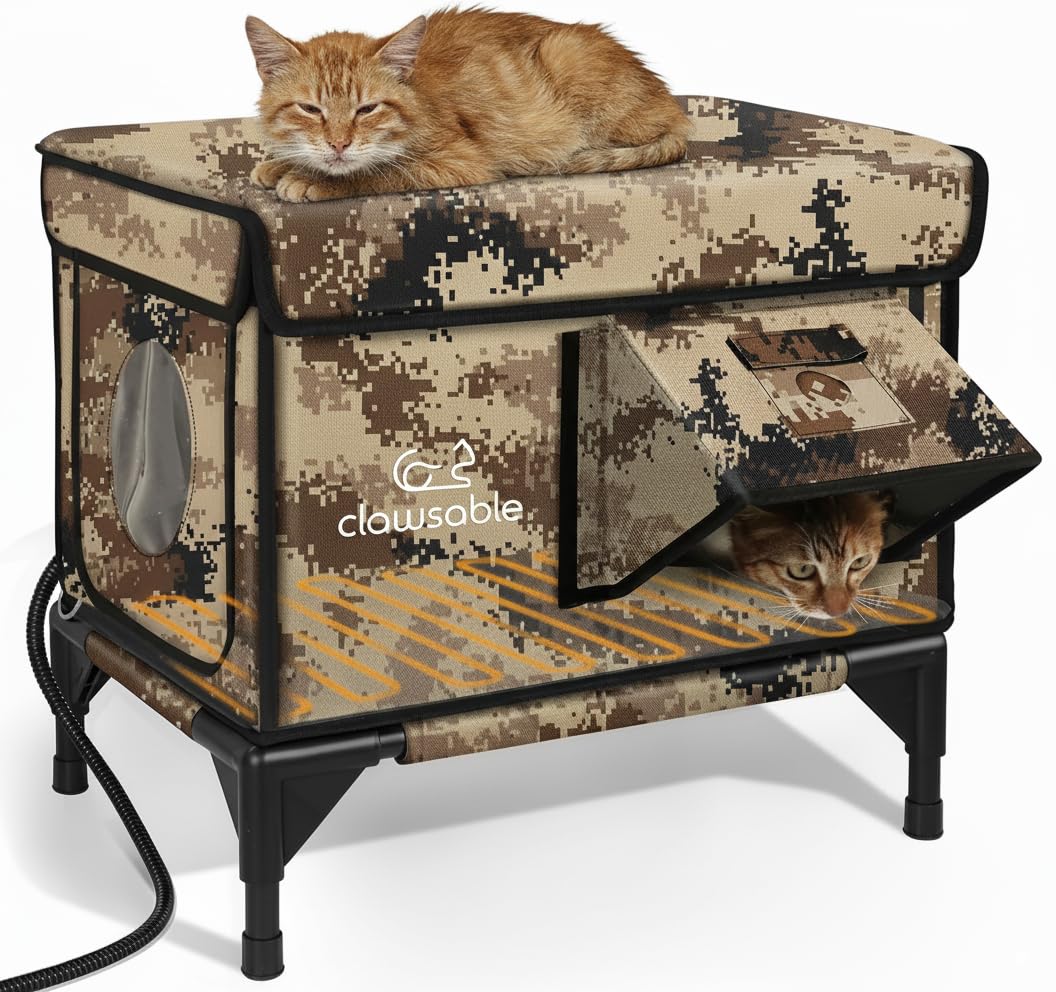
The Rolimate is the most compact heated option here — 13 by 17 by 18.5 inches — and it’s engineered specifically for a single feral or barn cat. The five-layer insulation construction includes a weather-resistant fabric shell, foam layer, reflective barrier, and a UL-tested heating wire embedded in the floor pad. Owners report interior temperatures of 58°F when outside temps are 35°F, a 23-degree lift that makes a life-or-death difference in a freeze.
The design prioritizes predator safety with an exit-only escape door on the rear: cats can push out but larger animals can’t push in. The fully waterproof awning extends over the main entry, and the elevated structure keeps the house off wet ground. Cleaning is simple thanks to a Velcro-buckled quick-open top that flips back for full interior access.
The desert camouflage color blends into outdoor environments, but the compact dimensions mean an average adult cat fits snugly — there’s no room for a second cat. The heating pad is removable and washable, and the anti-bite cord is a genuine safety feature for outdoor electrical use. If you only need to protect one specific cat and want the most efficient heated shelter for its size, this is the strongest choice.
Why we love it
- 5-layer insulation with UL-tested heating wire
- Exit-only escape door prevents predator entry
- Velcro top opens fully for easy cleaning
- Interior stays 20+ degrees above outside temp
Good to know
- Compact size fits only one average cat
- Fabric shell less claw-resistant than wood
FAQ
Is foam insulation or a sponge liner better for a cat house?
Can an insulated cat house be used in the summer too?
How do I clean the interior without scaring the cat away?
Do I need to add straw inside the house for extra warmth?
Why does my cat ignore the new insulated house?
Final Thoughts: The Verdict
For most caretakers looking for the best insulated cat house, the winner is the Pawtners Heated Cat House because it combines a genuine UL-listed warming pad, a waterproof PVC shell, an all-metal frame, and an escape door — everything a single cat needs to survive freezing nights. If you manage a colony and need space for multiple cats, grab the HiCaptain 2 Storey for its snap-together plastic construction and air-gap insulation. And for a compact, ultra-efficient heated shelter for one specific barn or feral cat, nothing beats the Rolimate Heated Cat House.