
An insulated outdoor cat house is the difference between a stray shivering through a sleet storm and a cat curling up for a deep, warm nap. The best options combine sealed-edge construction, dual escape doors for predator safety, and a raised base that lifts bedding off frozen ground. When you get the insulation and waterproofing right, you stop worrying about the forecast and start watching the same cat return every night.
I’m Mo Mahin — the founder and writer behind Furric. Over the years I’ve compared dozens of cat shelters by pulling spec sheets, studying thermal efficiency data, and cross-referencing owner feedback from feral colony managers and barn cat caretakers to see which houses actually hold up through a hard freeze.
This guide breaks down the top models on the market so you can confidently choose the right insulated outdoor cat house for your community or backyard cat without wasting money on a shelter that leaks, collapses, or gets ignored.
How To Choose The Best Insulated Outdoor Cat House
Selecting a shelter for outdoor cats means weighing insulation, weatherproofing, and escape safety against each other. A house that traps heat but has no secondary exit can trap a cat. A house with excellent waterproofing but no insulation leaves your cat cold. Here is what to prioritize.
Insulation Material & Layering
The most effective shelters use a multi-layer wall structure — think solid wood or HDPE outer shell, a middle layer of high-density foam or reflective aluminum foil, and an interior lining. The 3-layer wall houses (like the FunXplore) lock in warmth roughly twice as effectively as single-panel plastic shells. For extreme cold (below 20°F), the foil-lined models (Pawtners, JLSAME) add radiant heat reflection that keeps interior temperatures measurably higher without extra energy.
Escape Door vs. Single Entrance
A cat trapped by a predator at the only entrance has no way out. Every house on this list includes at least one escape door, but the design matters. The best escape doors are at the rear or side, fitted with a clear PVC flap that blocks wind yet lets the cat see outside before committing to exit. Models with a zippered escape door (Pawtners) let you seal it shut during extreme cold, but you must remember to unzip it in warmer weather to restore the safety route.
Elevated Floor & Water Runoff
Ground moisture wicks heat out of bedding faster than air temperature alone. Premium shelters use either adjustable plastic legs (Texsens, FunXplore) or a permanently raised base (Generic HDPE house) to create an air gap of at least 2 inches between the floor and the ground. The best designs also extend the roof eaves beyond the walls so rain doesn’t run down the sides and pool at the base legs.
Heating Pad Compatibility & Safety
For winter use below freezing, a UL-tested heating pad with a chew-proof cord and flame-retardant cover is worth the upgrade. Several models (Texsens, Lamlingo, Pawtners) include the pad in the box. If you add your own pad, verify the house has a cord access hole and that the interior floor is flat enough to hold the pad securely without bunching.
Quick Comparison
On smaller screens, swipe sideways to see the full table.
| Model | Category | Best For | Key Spec | Amazon |
|---|---|---|---|---|
| FunXplore | Wood / Insulated | Feral colonies in climates below 20°F | 3-layer fir wood+foam+plywood | Amazon |
| Pawtners | Fabric / Foil-lined | Multi-cat households with wind exposure | All-metal frame + 26″ interior width | Amazon |
| Lamlingo | Fabric / Heated | Single feral cats needing camera monitoring | 5-layer insulation + camera mounts | Amazon |
| Texsens | Fabric / Heated | First-time buyers on a tighter budget | 25″ wide roof window + heated pad | Amazon |
| JLSAME | Fabric / Heated | Covered porch or garage placement | Tool-free assembly in under 10 minutes | Amazon |
| Generic HDPE | Plastic / HDPE | Year-round all-weather station | Dual-layer hollow HDPE, 21″ depth | Amazon |
| Rolimate | Fabric / Compact | Single cat in tight spaces | 13″×17″ footprint, escape door | Amazon |
In‑Depth Reviews
1. FunXplore Insulated Outdoor Cat House
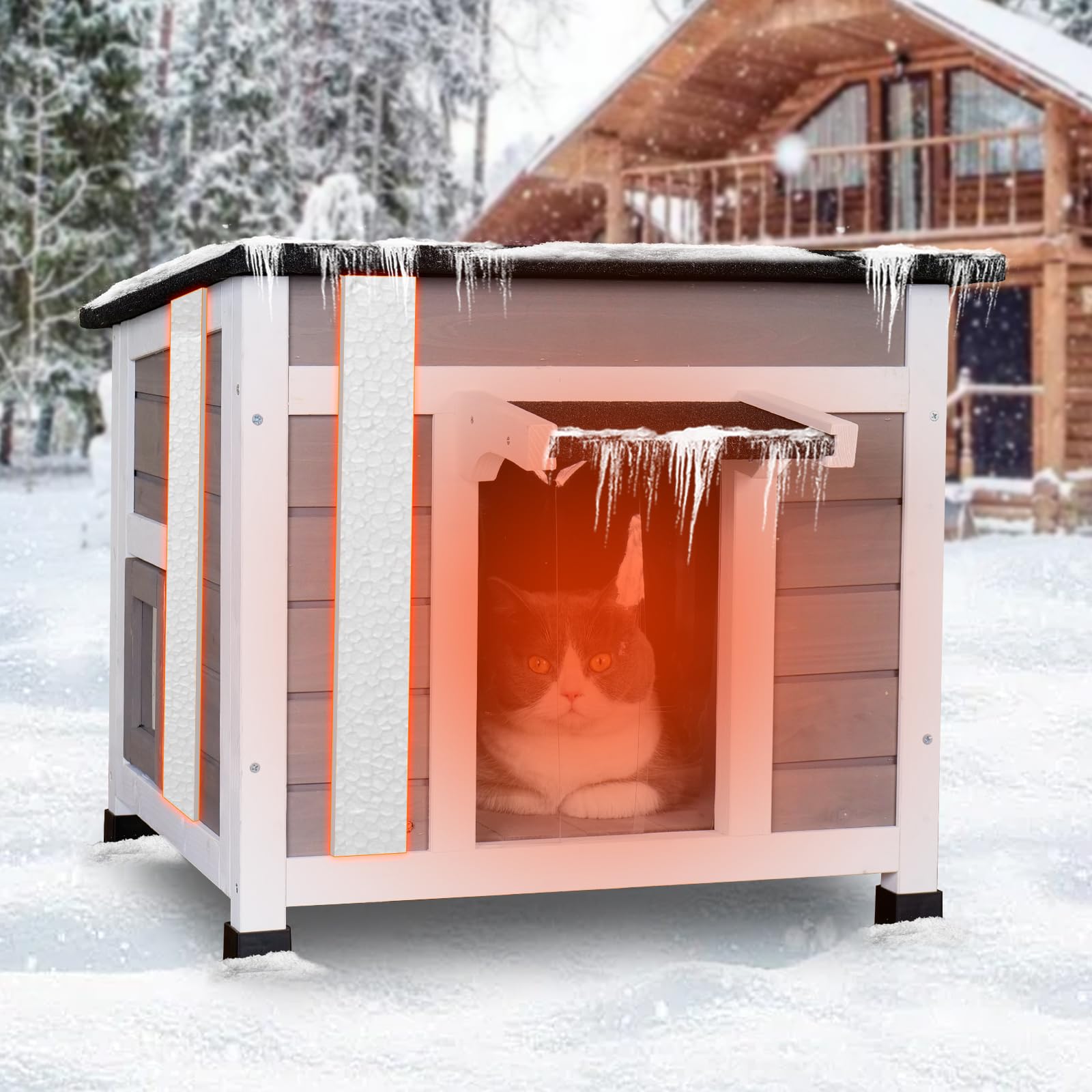
The FunXplore stands apart because it uses a real 3-layer wall structure — solid fir wood exterior, high-density foam core, and plywood interior. That physical barrier traps heat twice as efficiently as single-panel plastic or fabric shelters, making it the strongest choice for harsh winter conditions. The outside dimensions (23.6″ wide × 20.9″ tall) give a single adult cat room to stretch without wasting thermal mass on empty space.
Two separate escape doors with clear PVC curtains address the most common feral safety concern: a predator blocking the main entrance. The hinged roof swings open for cleaning, and the removable floor panel lets you swap bedding without moving the whole house. Owners noted the fir wood scent fades within three days, and adding foam insulation to the floor panel closes any light gaps that might spook timid cats.
The wooden construction does require two people to align the roof hinge during assembly, and some users reported the paint finish is thinner than expected. Spraying the exterior with a wood sealant before winter arrival adds years of moisture protection. For the best warmth-to-durability ratio in this category, the FunXplore edge is clear.
Why we love it
- Genuine 3-layer wood+foam walls lock in warmth effectively
- Roof opens fully for deep cleaning without tools
- Slatted floor base allows air circulation under bedding
Good to know
- Roof hinges require two people to align during setup
- Floor panel needs additional foam to seal light gaps
2. Pawtners Heated Outdoor Cat House
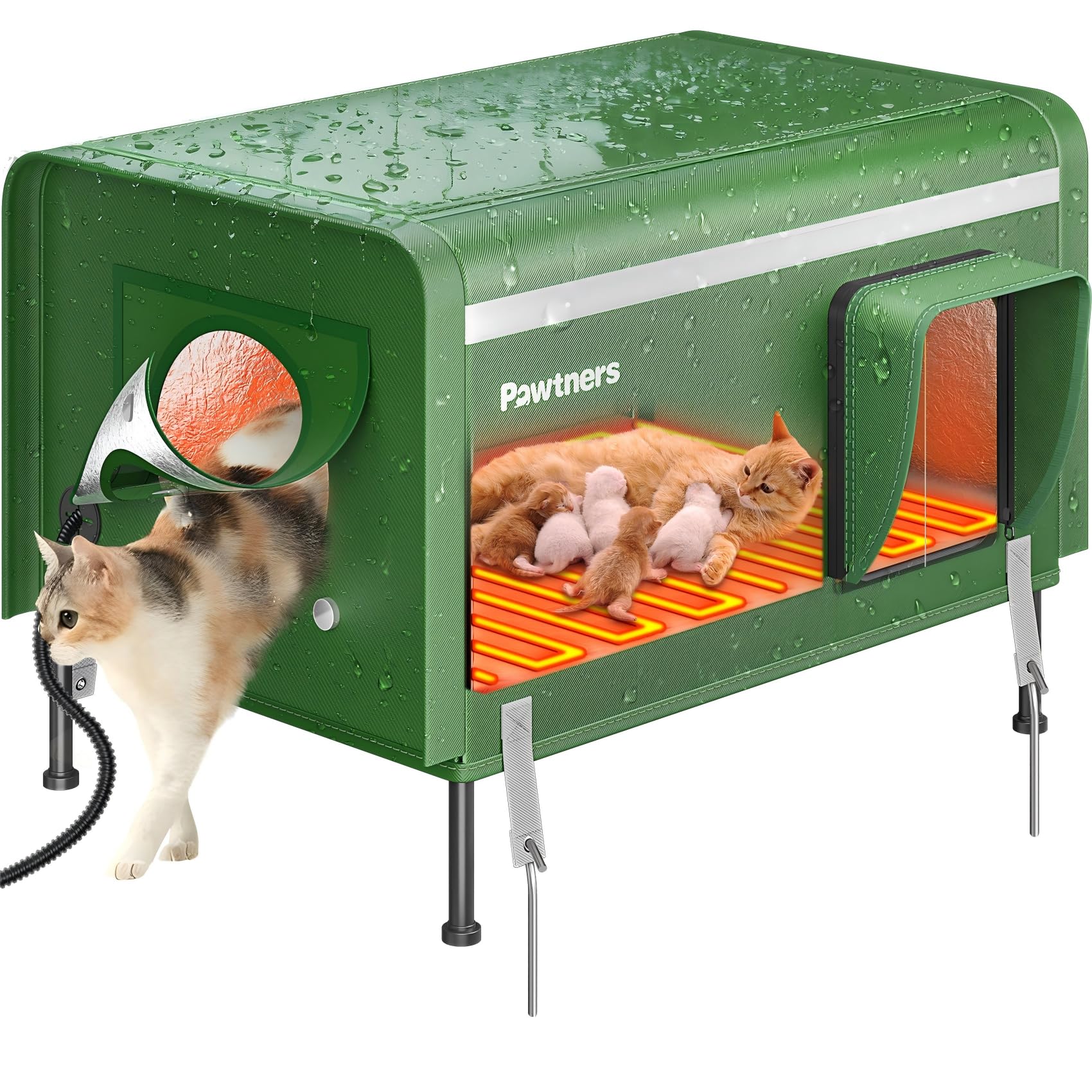
The Pawtners house is the largest fabric option at 26 inches wide, offering enough room for two cats to sleep side by side. The secret is the all-metal frame and aluminum foil inner layer — the frame prevents collapse under snow load, while the foil reflects cat body heat back into the interior. Owners reported the interior stayed bone-dry during sleet storms thanks to the PVC cover with widened edges and extended eaves.
The included UL-listed heating pad (30W) covers the entire floor area and uses a chew-proof cord routed through a dedicated port. The removable pad cover is machine-washable, a massive convenience for colony caretakers. Four windproof metal stakes anchor the house solidly, and the adjustable feet level the structure on uneven ground without wobbling.
One detail worth noting: the side escape door uses a zipper closure that seals tight against wind, but you must keep it unzipped when the house is occupied. A few owners mentioned the plastic door flaps over the main entrance tore off under heavy traffic from multiple cats. Replacing those with a stiffer material is a quick fix.
Why we love it
- Aluminum foil lining reflects body heat effectively
- Extra-wide interior fits two adult cats
- Heated pad cover zips off for machine washing
Good to know
- Zippered escape door must stay unzipped during use
- Front plastic flaps may tear with heavy cat traffic
3. Lamlingo Heated Cat House
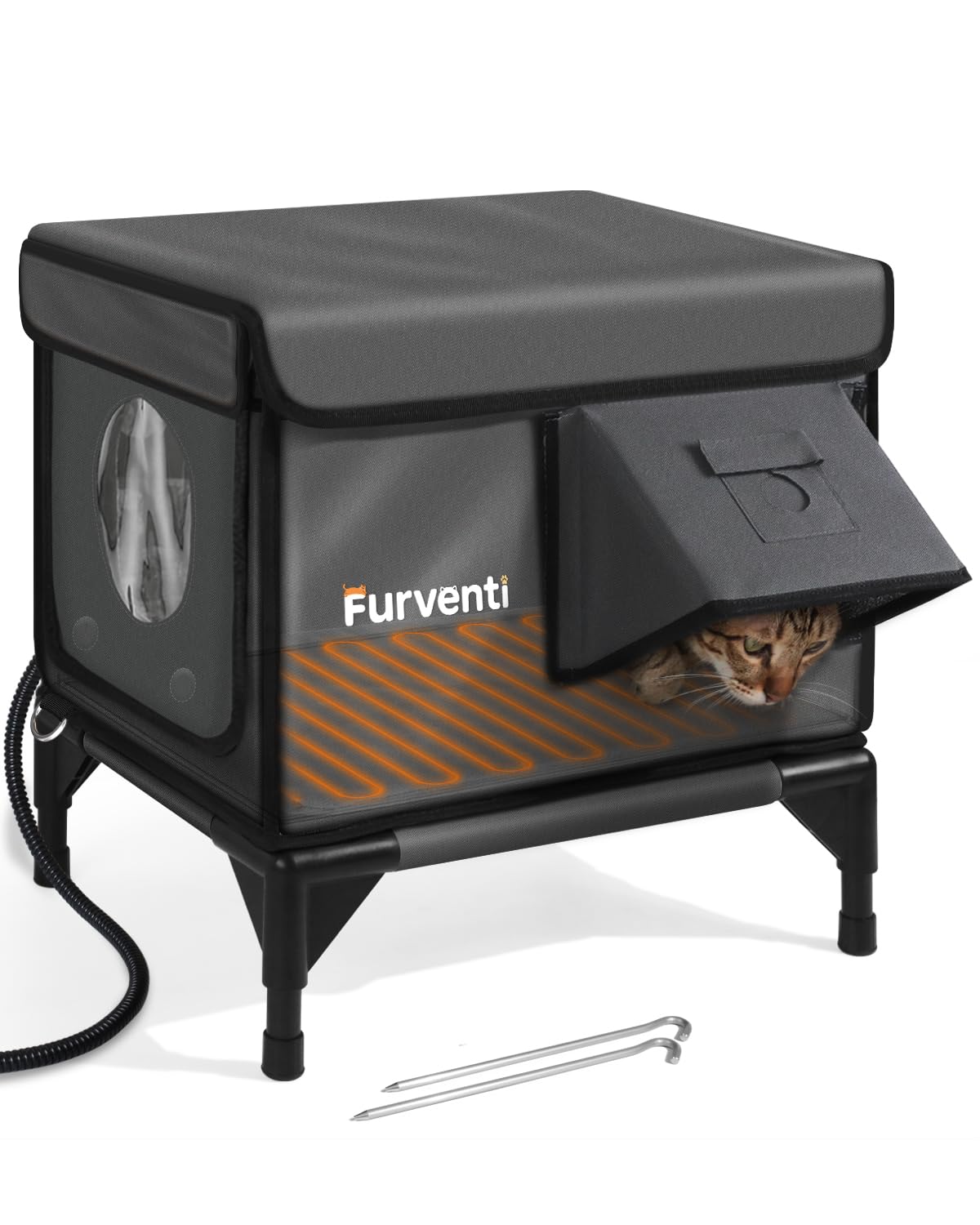
The Lamlingo distinguishes itself with built-in mount points for a pet camera — one inside and one outside — letting you check on a shy feral without opening the shelter. The 5-layer wall construction (fabric, foam, foil, waterproof lining, and outer cover) provides thermal performance on par with wood houses while keeping the weight under 4 pounds. The front entrance includes a rain hood that shields the opening from horizontal rain.
A UL-tested waterproof heating pad comes in the box with a chew-proof cord routed through a sealed port. The pad’s removable zippered cover is washable, and the low energy draw (< /day) makes continuous use affordable. Two windproof stakes and an extra tarp cover are included, and the entire house assembles without tools in about five minutes.
Size is the main trade-off: the interior is snug for cats over 12 pounds. Multiple reviewers noted their larger feral cat sat on top of the house before ever entering through the flap. The door flap material also deterred some skittish strays. Training with treats near the entrance helps, but cats that dislike flap resistance may never go inside.
Why we love it
- Integrated camera mounts for remote monitoring
- 5-layer insulation keeps interior warm down to freezing
- Tool-free assembly takes under 10 minutes
Good to know
- Compact size may be too snug for cats over 12 pounds
- Door flaps can deter shy cats initially
4. Texsens Heated Cat House

The Texsens offers the widest interior of any house at this price point — 25 inches — alongside a UL-tested heating pad, a cotton mat, and a cooling pad for summer. The all-season kit approach means you don’t need to buy seasonal accessories separately. The elevated base lifts the floor 2.75 inches off the ground, and the roof features a clear observation window so you can peek in without startling the occupant.
Dual 5.7″ × 7.3″ exits with removable clear door flaps give cats two routes out, and reflective strips on the exterior increase visibility in low-light conditions. Assembly uses velcro panels and takes roughly 10 minutes. The velcro top also makes internal cleaning easy — just peel it open and wipe down the polyester interior.
The lightweight polyester construction means the house needs windproof stakes in exposed locations; without them, it can shift in strong gusts. Some owners observed that the mesh door covers (used for ventilation) are not weatherproof, so they must stay closed when rain or snow is expected. The included heating pad is adequate for temperatures down to about 25°F but may struggle in prolonged sub-zero conditions.
Why we love it
- Generous 25″ width fits multiple cats comfortably
- All-season kit includes heated pad, cotton mat, and cooling pad
- Roof window allows quick welfare checks without disturbing cats
Good to know
- Polyester shell requires staking down in windy areas
- Mesh ventilation panels must stay closed in wet weather
5. JLSAME Heated Cat House

The JLSAME house uses aluminum foil interior lining to reflect body heat, supported by an Oxford cloth exterior that resists tearing. The roof opens on a hinge for cleaning access, and the overall design is straightforward with no complex parts. The heated pad fits the entire floor area and provides gentle warmth that several reviewers confirmed worked well during cold snaps.
Assembly requires no tools — the frame slots together, and the fabric cover stretches over the frame. Assembly time is under 10 minutes. The elevated base and waterproof eaves keep the interior dry, and the escape door provides a secondary exit for predator safety. The green lodge-style finish blends well with garden or porch settings.
The small interior (16.5″ deep × 25.3″ wide) is better suited for single cats; larger cats may find it cramped. A few owners flagged that the heating pad can overheat if left running continuously without a temperature regulator, so pairing it with an external thermostat switch is a wise safety step. The fabric construction also provides less wind resistance than a wood or heavy-duty plastic shell in exposed locations.
Why we love it
- Truly tool-free assembly in under 10 minutes
- Aluminum foil lining adds thermal reflection
- Roof hinge makes interior cleaning simple
Good to know
- Interior is snug for cats over 14 pounds
- Heating pad benefits from an external thermostat regulator
6. Generic Heavy-Duty HDPE Cat House
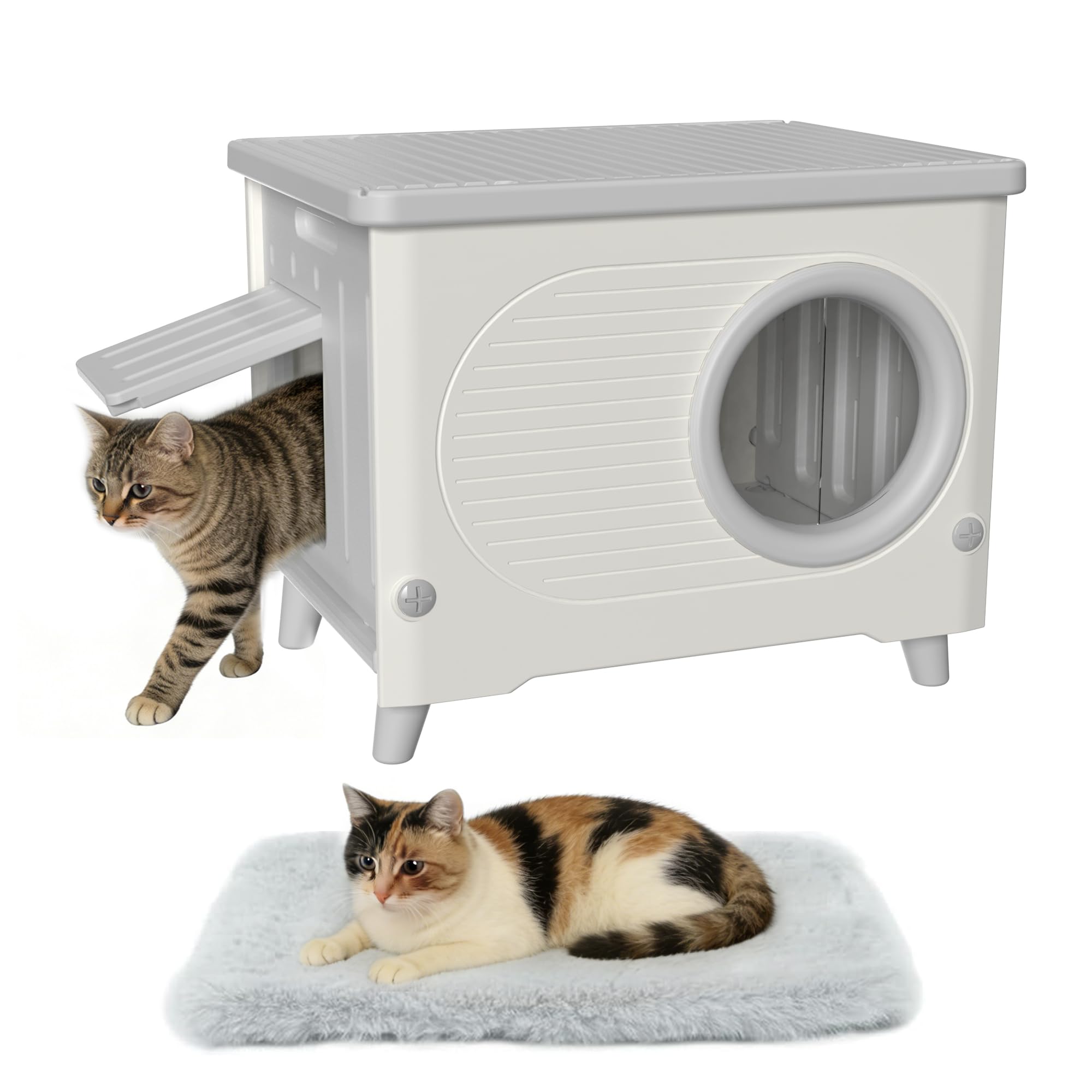
This plastic house uses thick HDPE with a dual-layer hollow shell that traps air between the walls — the same thermal principle as a double-pane window. The result is a shelter that stays moderate in summer and retains warmth in winter with zero maintenance. The material is scratch-resistant and impact-resistant, making it the best choice for areas with raccoons or larger wildlife that might try to break into a fabric shelter.
The round burrow-style entrance aligns with feline instinct: cats feel safer entering a circular opening than a square one. The elevated base keeps the floor off damp ground, and the stackable design lets you create multi-level shelters for a colony in a compact footprint. Assembly requires no tools — the panels interlock like puzzle pieces.
The interior fits one adult cat or up to three kittens, but the 21-inch depth means larger cats have limited turning room. Several owners added a foam pad under the included cushion for extra insulation. The absence of a secondary escape door means you rely on the single round entrance as the only exit, which is worth considering if predators are common in your area.
Why we love it
- Dual-layer HDPE shell provides consistent insulation year-round
- Tool-free puzzle-style assembly in minutes
- Scratch-resistant and impact-resistant construction
Good to know
- No secondary escape door for predator safety
- Single adult cat only; limited turning room for large breeds
7. Rolimate Heated Cat House
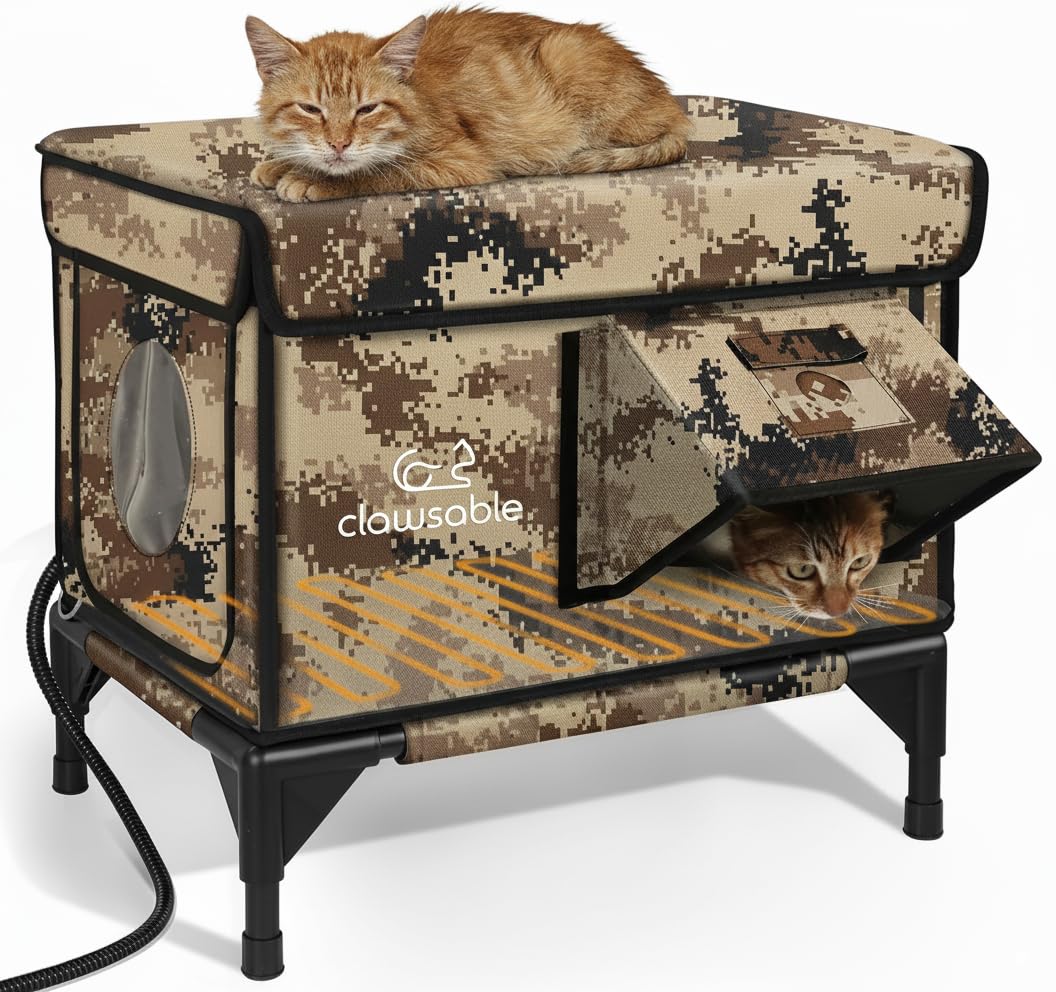
The Rolimate is the most compact offering, with a 13″×17″ footprint that fits on tight porches, balconies, or inside a garage. The 5-layer fabric wall construction (weather-resistant fabric, foam, foil, waterproof membrane, and inner liner) kept the interior at 58°F when the outside temperature was 35°F in one owner’s test. The desert camouflage color option helps the shelter blend into wooded or rural settings.
The included UL-tested heating pad uses waterproof wiring and a chew-proof cord, and the escape door with a clear window lets cats check for threats before exiting. The front awning extends far enough to block wind from the entrance, creating a mini foyer effect. Assembly takes 5 to 10 minutes with velcro and snap connections.
The small size is the biggest limitation: full-size adult cats fit snugly, and multiple reviewers noted the dimensions are clearly stated but still feel cramped in practice. One colony caretaker reported their cat took three weeks to start using it consistently. The fabric construction is lighter than wood or HDPE, so staking it down is essential in any location with gusty wind.
Why we love it
- Compact footprint fits tight spaces on porches or balconies
- Measured 23°F temperature rise above ambient in real use
- Escape door with clear window for predator detection
Good to know
- Very snug for adult cats over 10 pounds
- Must be staked down in windy locations
FAQ
How does a dual-layer HDPE cat house compare to a wood shelter for insulation?
Should I use a heating pad in a fabric cat house or stick to reflective pads?
How long does it take a feral cat to start using a new insulated house?
Do I need both an escape door and a clear flap on the main entrance?
Final Thoughts: The Verdict
For most gardeners and colony caretakers, the insulated outdoor cat house winner is the FunXplore because its 3-layer wood-and-foam walls deliver the best thermal performance without relying on electricity. If you want a wider interior that fits multiple cats and includes a heating pad, grab the Pawtners. And for a compact, budget-friendly option that sets up in minutes and works well on a covered porch, nothing beats the Texsens.