
Few things cause more worry than spotting rice-like segments in your kitten’s bedding or noticing a dull coat despite a healthy appetite. Kittens are naturally curious explorers, and that curiosity often leads them straight into contact with parasites. The good news? Effective, vet-quality treatments are more accessible than you think — you just need to know which active ingredients truly work and which formulas are safe for a still-developing digestive system.
I’m Mo Mahin — the founder and writer behind Furric. I’ve spent countless hours analyzing veterinary parasitology guidelines, comparing active ingredient safety profiles, and evaluating real-world feedback from cat rescue communities to help you make an informed choice.
After vetting real owner feedback and consulting veterinary experts, this guide shares the safest and most effective best kitten dewormer for your kitten.
How To Choose The Best Kitten Dewormer
Selecting the right dewormer for a young cat isn’t as simple as grabbing the first bottle on the shelf. Kittens have unique metabolic sensitivities, and many adult-formula products contain concentrations that can overwhelm their system. Focus on three core factors: the specific parasite type you are targeting, the age and weight minimums listed on the label, and the active ingredient profile.
Match the Dewormer to the Parasite
Not all dewormers treat every worm. Tapeworms require praziquantel, while roundworms and hookworms typically respond to pyrantel pamoate or fenbendazole. Some broad-spectrum options combine both. If you see visible tapeworm segments (they look like grains of rice), you need a product with praziquantel. For a kitten with a potbelly and poor growth, roundworm coverage is the priority.
Respect the Weight and Age Cutoffs
Every dewormer includes a minimum age and weight requirement — ignore these at your kitten’s peril. Many tablet formulas require kittens to be at least 6 to 12 weeks old, and dosing is almost always weight-dependent. Under-dosing leads to treatment failure; overdosing can trigger vomiting, diarrhea, or worse. Always weigh your kitten on a kitchen scale before administering any medication.
Check the Delivery Format
Kittens can be notoriously difficult to pill. Chewable tablets, liquid suspensions, and crumble-topped options each have trade-offs. Liquids are easier to mix into wet food but have a shorter shelf life once opened. Chewables are convenient but require your kitten to actually eat them. If you have a picky eater, a liquid that can be syringe-fed or stirred into a savory meal often yields better compliance.
Quick Comparison
On smaller screens, swipe sideways to see the full table.
| Model | Type | Best For | Key Feature | Amazon |
|---|---|---|---|---|
| Elanco Tapeworm Dewormer | Tablet | Kittens 6 weeks and older | Praziquantel for tapeworms | Amazon |
| Tapeworm for Cat and Kitten Plus | Tablet | Multi-cat households | Weight-based dosing flexibility | Amazon |
| Nemex 2 Liquid Wormer | Liquid | Puppies and small dogs | Pyrantel pamoate formula | Amazon |
| PetArmor 7 Way De-Wormer | Chewable | Small dogs 6–25 lbs | Covers 7 worm species | Amazon |
| Durvet 2X Liquid Wormer | Liquid | All breed sizes | Palatable flavor for easy dosing | Amazon |
In-Depth Reviews
1. Elanco Tapeworm Dewormer for Cats and Kittens

This is the dewormer I recommend most often to foster caregivers and first-time kitten parents. Elanco’s formula relies on praziquantel, the gold-standard active ingredient for eliminating Dipylidium caninum and Taenia taeniaeformis — the two most common tapeworms found in domestic cats. The tablets are compact and can be crumbled directly into a meal, which saves you from the nightmare of wrestling a sick kitten into submission. At 3 tablets per bottle, it gives you a full treatment course plus a reserve dose if reinfestation occurs.
What sets Elanco apart is the safety window. Labeled for kittens as young as 6 weeks, it respects the developmental fragility of a young GI tract while still delivering fast tapeworm clearance. Each tablet contains 23 mg of praziquantel, and the dosing guidelines are straightforward: one tablet per 4 to 8 pounds of body weight. Rescue groups frequently stock this because it reliably ends the tapeworm cycle without requiring a veterinary prescription in most states.
For any kitten showing visible tapeworm segments near the anus or in fresh stool, this is the product I trust first. It solves the specific problem without unnecessary additives, and the crumble-to-food trick makes administration nearly stress-free. If your kitten has tapeworms, start here.
Why we love it
- Clinically proven praziquantel targets tapeworms specifically
- Safe for kittens 6 weeks and older
- Tablets crumble easily into wet food
Good to know
- Does not cover roundworms or hookworms — single parasite focus
- Requires accurate weight measurement for proper dosing
2. Tapeworm for Cat and Kitten Plus
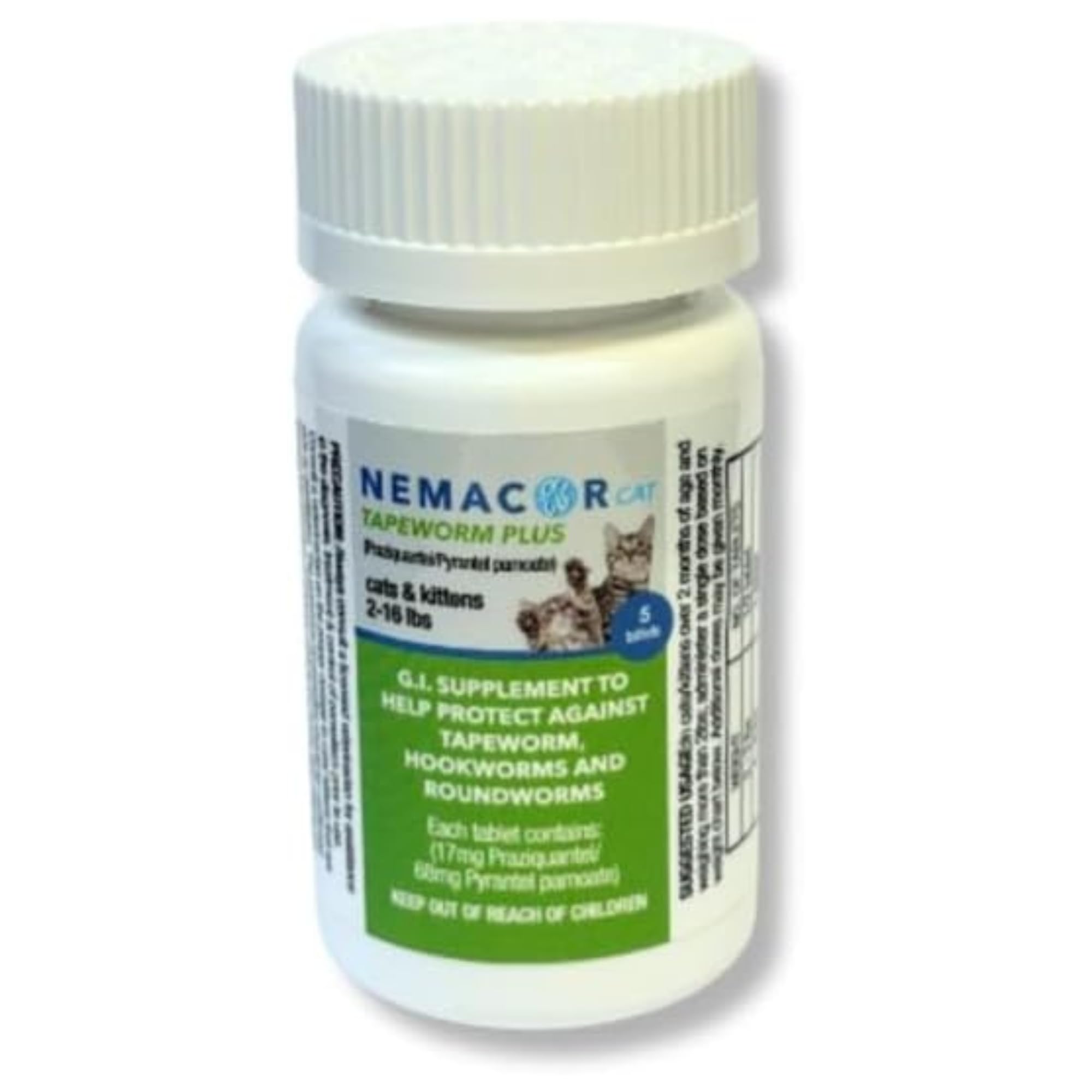
This generic-brand option brings thoughtful dosing flexibility that many name-brand competitors overlook. The bottle contains 5 tablets with a sliding scale based on your kitten’s exact weight: half a tablet for 2 to 3 pounds, one tablet for 4 to 8 pounds, one and a half for 9 to 12 pounds, and two tablets for 13 to 16 pounds. That range means a single bottle can serve multiple kittens of different sizes, making it a smart pick for fosters or litter situations.
The active ingredient profile mirrors the Elanco approach — praziquantel for tapeworm elimination — at a more approachable entry point for multi-cat homes. The tablets are unflavored and best administered by crushing them into a small amount of wet food. Some caregivers report that the tablets dissolve faster than expected when exposed to moisture, so prepare them immediately before serving rather than pre-making a batch.
If you are managing several kittens or want the flexibility to dose precisely across different weight classes, this is the option that offers the most control per bottle. It treats the same tapeworm species as premium brands but with a dosing guide tailored to the varied sizes found in rescue settings.
Why we love it
- Flexible dosing for kittens of different weights
- 5-tablet count covers multiple treatment rounds
- Straightforward praziquantel formula
Good to know
- Unflavored — may need food masking for picky kittens
- Generic brand with less customer service support
3. Nemex 2 Liquid Wormer
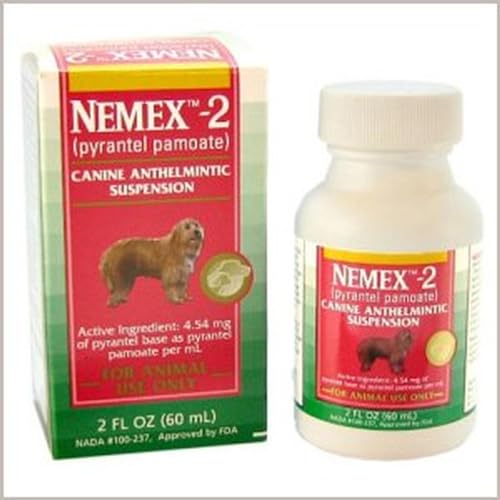
Nemex 2 brings a familiar name from the veterinary world — Pfizer’s formulation contains 4.54 mg of pyrantel pamoate per ml, an ingredient widely trusted for controlling large roundworms and hookworms in puppies and dogs. While the product is labeled for canines, the active ingredient is the same class used in some feline dewormers. Many multi-pet households keep this on hand as part of a broader parasite management protocol.
The liquid format offers an advantage for animals that resist tablets. You can measure the dose with the included dropper and mix it into a small portion of food. Owners frequently note that the palatability is high enough that most dogs accept it willingly. For a kitten, you would need to confirm the appropriate micro-dose with your veterinarian since the label is calibrated for canine weight ranges.
This product earns its place here for households that already use it for their dogs and want a single pyrantel option for convenience. It is not a first-line kitten dewormer, but as a secondary tool against roundworms and hookworms in a multi-species home, it fills a specific logistical need.
Why we love it
- Trusted Pfizer formulation with proven efficacy
- Liquid format simplifies dosing and mixing
- Good palatability for reluctant eaters
Good to know
- Labeled for dogs — vet guidance needed for kitten use
- Only covers roundworms and hookworms, not tapeworms
4. PetArmor 7 Way De-Wormer for Small Dogs

PetArmor’s 7 Way De-Wormer stands out for its impressive spectrum — it targets two types of tapeworms, two types of roundworms, and three types of hookworms, all in a single flavored chewable. That’s seven species covered with one product. However, it is explicitly formulated for small dogs and puppies weighing 6 to 25 pounds, with a minimum age of 12 weeks. The active ingredients are praziquantel and pyrantel pamoate, the same combination used in many feline products, but the concentration is calibrated for canine metabolism.
The chewable format is a genuine convenience for owners who struggle with liquids or crushing tablets. Each tablet has a palatable coating that most dogs accept as a treat. For best results, monitor your pet after dosing to ensure the entire chewable is consumed. The manufacturer recommends consulting a veterinarian before using this in any species other than dogs, which is a sensible precaution given the different metabolic rates between puppies and kittens.
This is a cost-effective broad-spectrum option for dog owners who also have cats and want a single multi-species dewormer solution — but only with explicit veterinary approval for feline use. On its own, it is an excellent choice for small breed puppies that need comprehensive coverage.
Why we love it
- Broad coverage — 7 worm species in one chewable
- Flavored tablet improves compliance
- Convenient for multi-dog households
Good to know
- Not labeled for cats — requires vet approval for feline use
- Only 2 tablets per package — verify dosage before buying
5. Durvet 2X Liquid Wormer
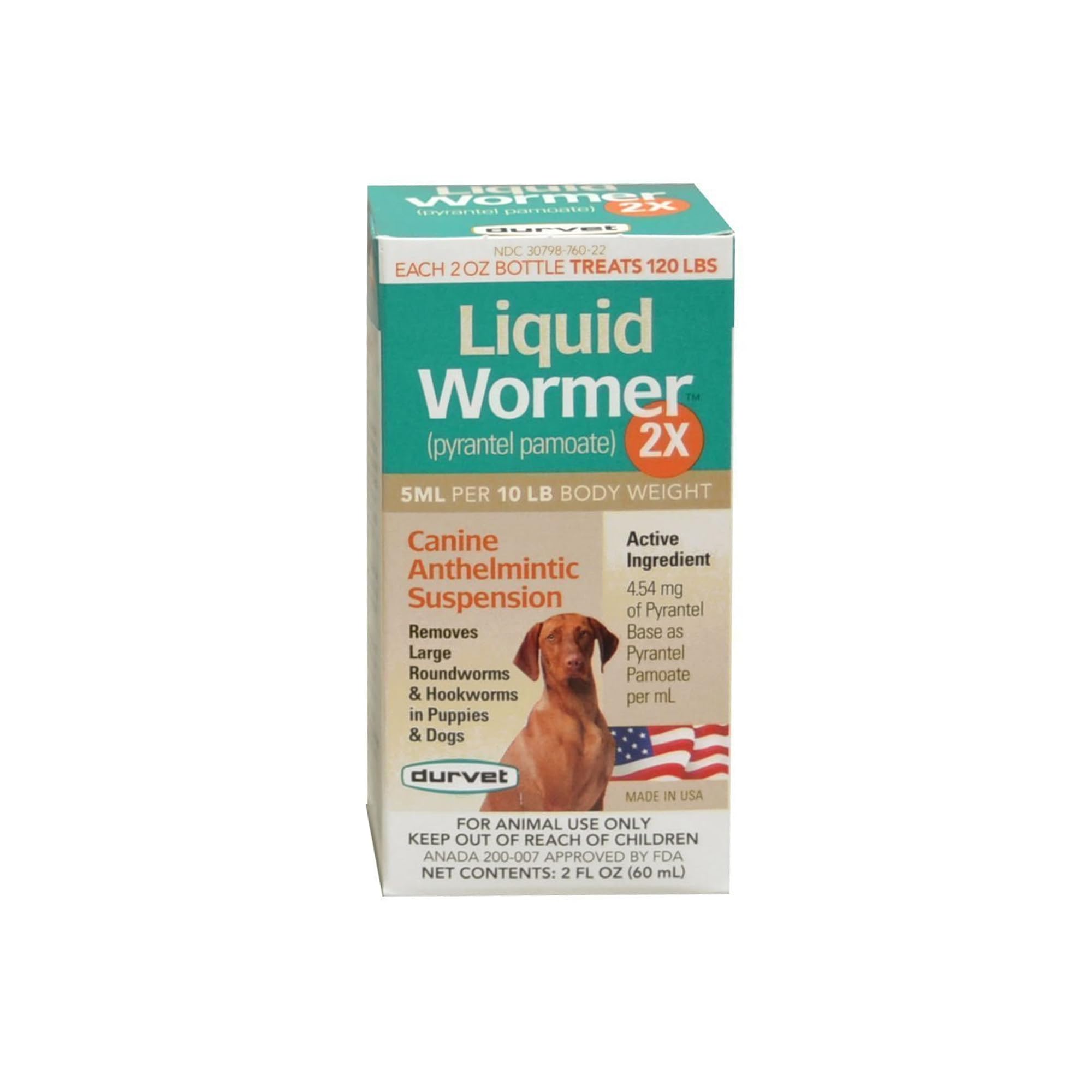
Durvet’s 2X Liquid Wormer has been a staple in rural and multi-pet households for years, primarily because of its easy-to-administer liquid format and palatable flavor that animals actually accept. It controls both hookworms and large roundworms in dogs, and the manufacturer promotes a 14-day protocol for optimal results. The 2-ounce bottle provides enough volume for multiple doses, making it a practical option for kennels or homes with several dogs.
The active ingredient is pyrantel pamoate, dosed at a concentration that is effective against the most common intestinal roundworms and hookworms. One of the most frequently mentioned benefits is that you do not need to withhold food before administration — a small mercy when deworming a reluctant animal. Simply measure the dose based on weight and either pour it over food or administer directly into the mouth using the calibrated dropper.
This product is best viewed as a maintenance tool for dogs rather than a primary kitten dewormer. It performs well for its intended canine audience and offers a long shelf life for households that deworm on a regular schedule. For kitten-specific needs, stick with the feline-labeled options earlier in this list.
Why we love it
- Easy liquid administration with no food withholding needed
- Palatable formula improves acceptance
- Cost-effective for multi-dog households
Good to know
- Labeled for dogs — not recommended for kittens without vet guidance
- Only covers hookworms and roundworms — no tapeworm coverage
Safety & Care Tips
Weigh Your Kitten First, Every Time
Kittens grow fast — a weight change of just a few ounces can shift them into a different dosing bracket. Use a digital kitchen scale to get an accurate reading before every treatment. Guessing by sight or relying on last month’s weight is the most common cause of under-dosing, which leaves worms alive and able to reproduce.
Isolate and Sanitize During Treatment
Worm eggs and segments shed into the environment for 48 to 72 hours after dosing. Keep your kitten away from shared litter boxes during this window and scoop waste daily while wearing gloves. Wash bedding, toys, and food bowls in hot water to break the reinfestation cycle.
Stick to One Active Ingredient Class at a Time
Never combine two dewormers unless directed by your veterinarian. Overlapping praziquantel with additional praziquantel sources can cause neurological side effects in sensitive kittens. Give the prescribed treatment, wait the recommended interval (usually 2 to 3 weeks), then retest before repeating.
Watch for Adverse Reactions After Dosing
Mild drooling or a single episode of loose stool is common as dead worms pass through the system. But vomiting, lethargy, or refusal to eat for more than 12 hours warrants an immediate call to your vet. Keep the product packaging handy so you can reference the active ingredients and lot number.
FAQ
How often should I deworm my kitten?
What active ingredients are safe for kittens?
Can I use a dog dewormer on my kitten?
How do I know if the dewormer is working?
Final Thoughts: The Verdict
For most pet parents, the best kitten dewormer winner is the Elanco Tapeworm Dewormer for Cats and Kittens because it combines a clinically proven active ingredient with a kitten-safe age window and easy crumble-to-food administration. If you want flexible dosing across multiple weight classes, grab the Tapeworm for Cat and Kitten Plus. And for households that already manage canine deworming and want a single pyrantel option, nothing beats the trusted Nemex 2 Liquid Wormer with veterinary guidance.