
Choosing a dry food for a growing kitten goes far beyond grabbing the bag with the cutest packaging. The first year of a cat’s life demands a precise balance of protein, DHA for brain development, calcium-to-phosphorus ratios for bone density, and small kibble geometry that tiny teeth can actually fracture. A formulation that works for an adult cat can set back a kitten’s immune system and digestive maturation. This guide cuts through the marketing noise to compare the formulations that veterinarians and breeders actually reach for.
I’m Mo Mahin — the founder and writer behind Furric. I’ve spent the last decade analyzing pet food specification sheets, parsing AAFCO nutrient profiles, and cross-referencing ingredient panels with aggregated owner-reported health outcomes to separate genuinely superior kitten formulas from overpriced filler.
After reviewing the leading options against phase-appropriate nutrient density, kibble size, live probiotic stability, and allergen reduction data, the following breakdown reveals which best kitten dry food vet recommended formulations earn their shelf space and which ones deliver measurable health outcomes for your new companion.
How To Choose The Best Kitten Dry Food Vet Recommended
Selecting a dry kitten food that veterinarians actually recommend requires looking past brand loyalty and scrutinizing three core metrics: nutrient density alignment with AAFCO growth profiles, kibble physical properties that match a kitten’s developing jaw, and the bio-availability of added supplements like DHA and prebiotics.
DHA, EPA, and ARA — The Brain Development Triad
Veterinary consensus emphasizes that a kitten’s brain nearly doubles in weight during the first 12 weeks. DHA (docosahexaenoic acid), typically sourced from fish oil or algal oil, is the structural omega-3 fatty acid in retinal and neural tissue. ARA (arachidonic acid) is a conditionally essential omega-6 abundant in animal-based ingredients like chicken fat or egg yolks. A formula that lists a specific DHA percentage on the guarantee is preferable to generic “omega-3 fatty acids” wording because the latter often under-delivers the actual long-chain form kittens can metabolize.
Kibble Geometry and Rehydration Potential
A kitten under four months has deciduous premolars that measure roughly 2 mm in width. Kibble pieces that exceed 8 mm in diameter force the kitten to swallow whole, bypassing the mechanical digestion that starts in the mouth. The best dry foods use a kibble diameter between 5 mm and 7 mm, often with a concave or tri-angular shape that encourages crunching. Some premium formulations explicitly state their kibble can be rehydrated with warm water to create a semi-moist texture for weaning kittens that refuse hard pieces.
Live Probiotics vs. Postbiotic Fermentation Fiber
Many kitten dry foods claim “probiotics” on the front of the bag, but the extrusion process — which involves steam, pressure, and temperatures above 95°C — destroys most living bacterial strains before they reach the bag. Formulas that use Bacillus coagulans or B. subtilis spore-forming strains have a higher survival rate because the bacteria produce endospores that withstand the heat. Postbiotic ingredients like dried fermentation products or yeast cell wall fractions (MOS, beta-glucans) offer immune modulation without needing live strains to survive the shelf life.
Quick Comparison
On smaller screens, swipe sideways to see the full table.
| Model | Category | Best For | Key Spec | Amazon |
|---|---|---|---|---|
| Purina Pro Plan Complete Essentials Shredded Blend | Shredded Blend | Kittens needing digestive and immune support | DHA, Live Probiotics | Amazon |
| Blue Buffalo Wilderness Natural Kitten Chicken | Grain-Free | High-protein grain-free growth | DHA & ARA, LifeSource Bits | Amazon |
| Royal Canin Mother & Babycat 3 lb | Weaning Formula | Newborn to 4 months weaning | Rehydratable 5mm Kibble | Amazon |
| Purina ONE LiveClear Allergen-Reducing | Allergen Reducing | Multi-cat homes with allergy sufferers | Egg protein IgY antibodies | Amazon |
| ACANA First Feast Chicken and Fish | High-Protein | Muscle and coat development | 70% Animal Ingredients | Amazon |
| James Wellbeloved Turkey and Rice | Hypoallergenic | Sensitive digestion and limited ingredient | Single protein, No additives | Amazon |
| Royal Canin Mother & Babycat 6 lb | Weaning Formula | Larger households or multi-kitten litters | Prebiotic & Antioxidant Blend | Amazon |
In‑Depth Reviews
1. Purina Pro Plan Kitten Dry Food Complete Essentials Shredded Blend Chicken and Rice
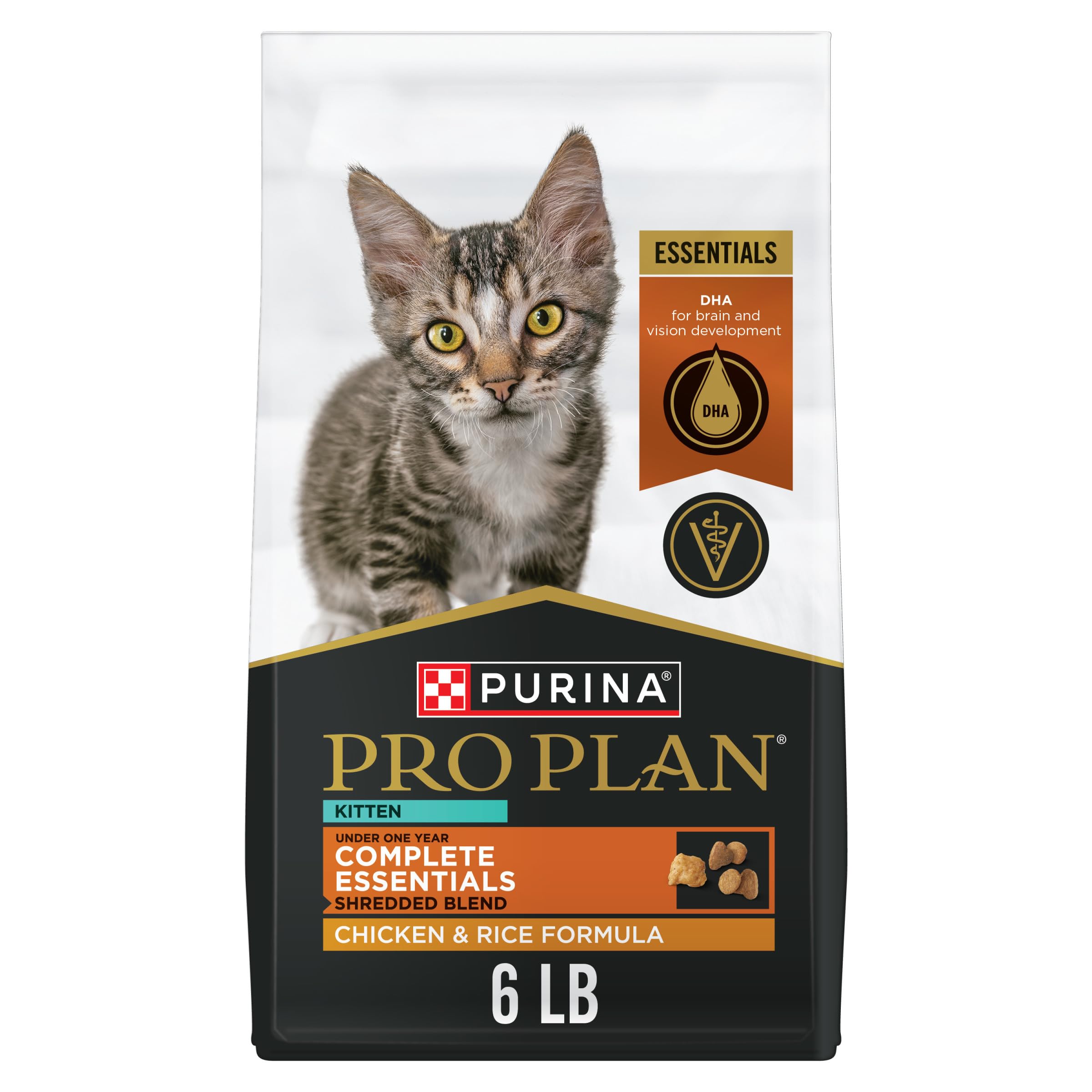
Purina Pro Plan’s Shredded Blend combines crunchy kibble pieces with tender, shredded morsels, creating a texture contrast that encourages even finicky weanlings to eat. Real chicken leads the ingredient panel, and the guaranteed analysis shows DHA at a level capable of supporting retinal and cortical development during the critical first six months. The 6-pound bag size is practical for a single-kitten household transitioning through the growth phase without the food oxidizing before it is finished.
The inclusion of guaranteed live probiotics — specifically spore-forming Bacillus coagulans — is a meaningful differentiator. Most kitten dry foods lose their bacterial viability during extrusion, but spore-based strains survive the heat and rehydrate in the gastrointestinal tract. Owner reports consistently note reduced litter box odor and firmer stools, which aligns with the probiotic’s ability to shift the colonic microbiome toward lactic acid–producing species.
Maine Coon owners specifically praise this formula for sustaining growth in large-breed kittens without causing excessive weight gain. The shredded pieces are roughly 6–8 mm, which is large enough to require chewing but small enough for a kitten’s jaw to manage. The only nutritional gap is the absence of added ARA, though the chicken fat and egg content provide sufficient arachidonic acid precursors for most kittens.
Why we love it
- Spore-forming probiotics survive kibble processing and reach the gut alive.
- Shredded texture variety helps transition nursing kittens to solid food.
- DHA inclusion is verified on the guaranteed analysis, not hidden in generic omega-3 wording.
Good to know
- Kibble pieces are slightly large for kittens under 8 weeks; consider softening with warm water.
- Some owners report flatulence during the first week of transition as the microbiome adjusts.
2. Blue Buffalo Wilderness Natural Kitten Dry Cat Food, Chicken

Blue Buffalo Wilderness positions itself as a high-protein, grain-free option that uses deboned chicken as the primary ingredient. The guaranteed analysis typically shows crude protein above 40 percent on a dry-matter basis, which aligns with the elevated amino acid requirements kittens have for lean tissue accretion. The formula also contains DHA and ARA — both listed by name on the nutrient profile — which is uncommon in the mid-range price tier and directly supports neural and visual development.
The LifeSource Bits — small, dark kibble pieces containing a concentrated blend of antioxidants — are a proprietary addition that delivers vitamin E, vitamin C, and selenium in a form that is not degraded during the main kibble cooking process. Because these bits are cold-formed, the antioxidant activity remains higher than in uniformly extruded kibble. Owners report that the small, round kibble diameter (approximately 6 mm) is easy for kittens to pick up and crunch, reducing the risk of gulping and regurgitation.
Veterinarians frequently note the absence of corn, wheat, and soy as beneficial for kittens with unknown food sensitivities. The chicken-based protein is highly digestible, and the inclusion of menhaden fish meal provides a natural source of long-chain omega-3s without relying on flaxseed. Some owners with Maine Coon kittens have reported transitioning from this formula without digestive upset, which speaks to its gentle fiber profile derived from peas and potatoes rather than grain hulls.
Why we love it
- Cold-formed LifeSource Bits retain antioxidant potency that extruded kibble cannot match.
- DHA and ARA both declared on the guaranteed analysis — rare at this price point.
- Grain-free formulation reduces risk of undiagnosed grain sensitivity causing loose stools.
Good to know
- Some kittens sensitive to high legume content may experience gas; monitor stool during week one.
- The 5-pound bag size is smaller than some competitors, requiring more frequent repurchase for multi-kitten homes.
3. Royal Canin Feline Health Nutrition Mother & Babycat Queen Dry Cat Food, 3 lb
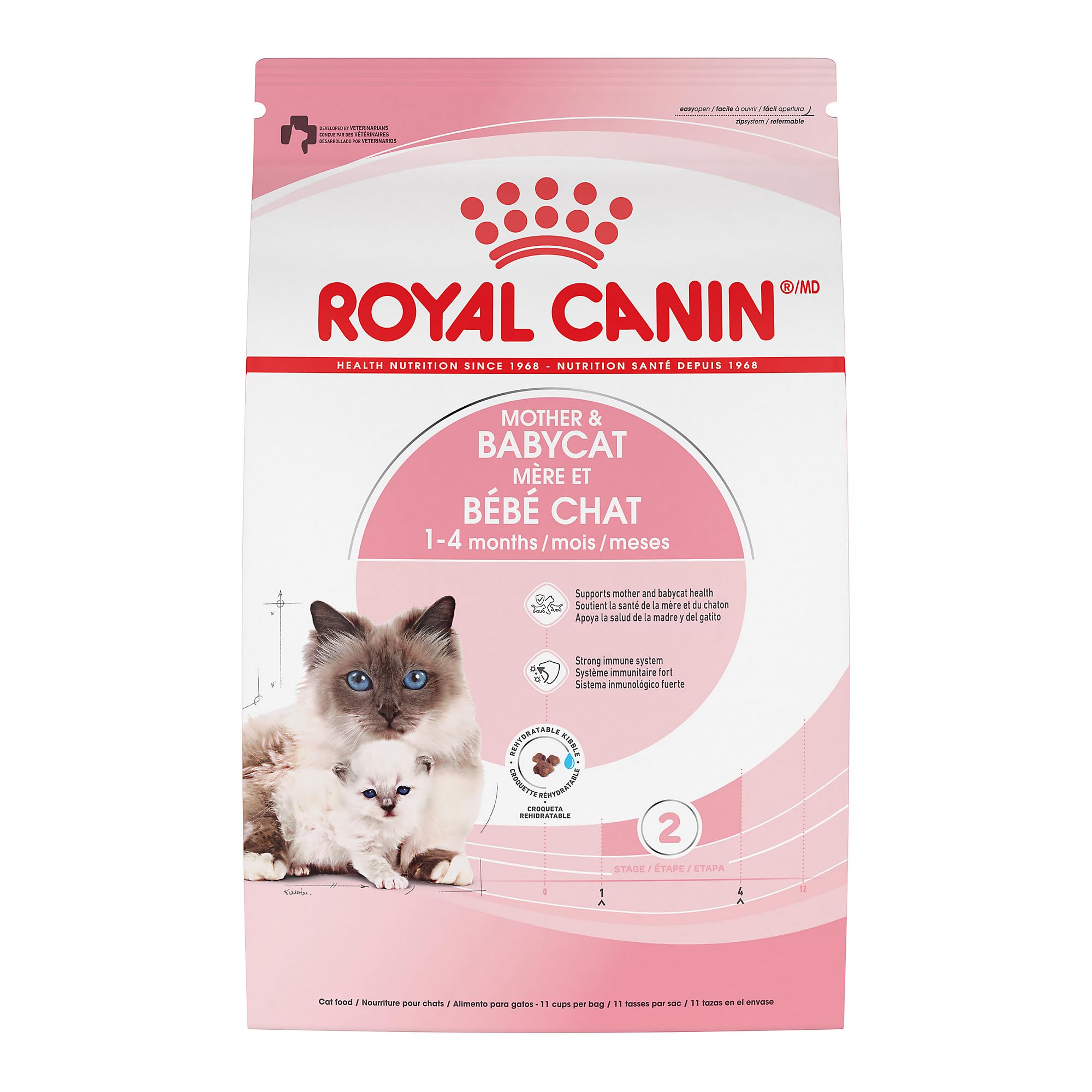
Royal Canin’s Mother & Babycat formula is specifically engineered for the weaning window — from birth through four months — and is frequently the first dry food breeders introduce to litters. The kibble measures roughly 5 mm in diameter, which matches the gap width of a kitten’s emerging incisors. More importantly, the kibble is designed to be rehydrated: adding warm water creates a porridge-like texture that mimics the moisture content of milk while teaching the kitten to associate solid food with feeding time.
The nutrient profile prioritizes highly digestible proteins (chicken by-product meal and chicken fat) over novel proteins, which reduces the antigenic load on an immature gut-associated lymphoid tissue. Prebiotic fibers — specifically beet pulp and fructooligosaccharides — serve as fermentation substrates for beneficial Bifidobacterium species without requiring live bacteria to survive the can. The vitamin E and C antioxidant blend is clinically proven in Royal Canin’s internal trials to support immunoglobulin G production in kittens during the first 12 weeks.
Breeders of Siberian and Maine Coon kittens consistently rank this formula as their top choice for the first month of dry food introduction. The small bag (3 pounds) is intentional — it ensures the food is consumed before the fats oxidize, which is critical for a formula high in omega-3s derived from fish oil. The only downside is the price per pound, which is noticeably higher than standard kitten maintenance formulas, but the phase-specific design justifies the cost for the first 16 weeks of life.
Why we love it
- Kibble can be rehydrated into a porridge — bridges the gap between milk and dry food seamlessly.
- Prebiotic fiber supports Bifidobacterium colonization without relying on heat-unstable live probiotics.
- Antioxidant blend at clinically validated levels supports passive immunity transfer in nursing kittens.
Good to know
- Formulated only for the 0–4 month window; you must transition to a growth formula after week 16.
- Chicken by-product meal is an ingredient some owners prefer to avoid in favor of named muscle meat.
4. Purina ONE LiveClear Allergen-Reducing Dry Kitten Food
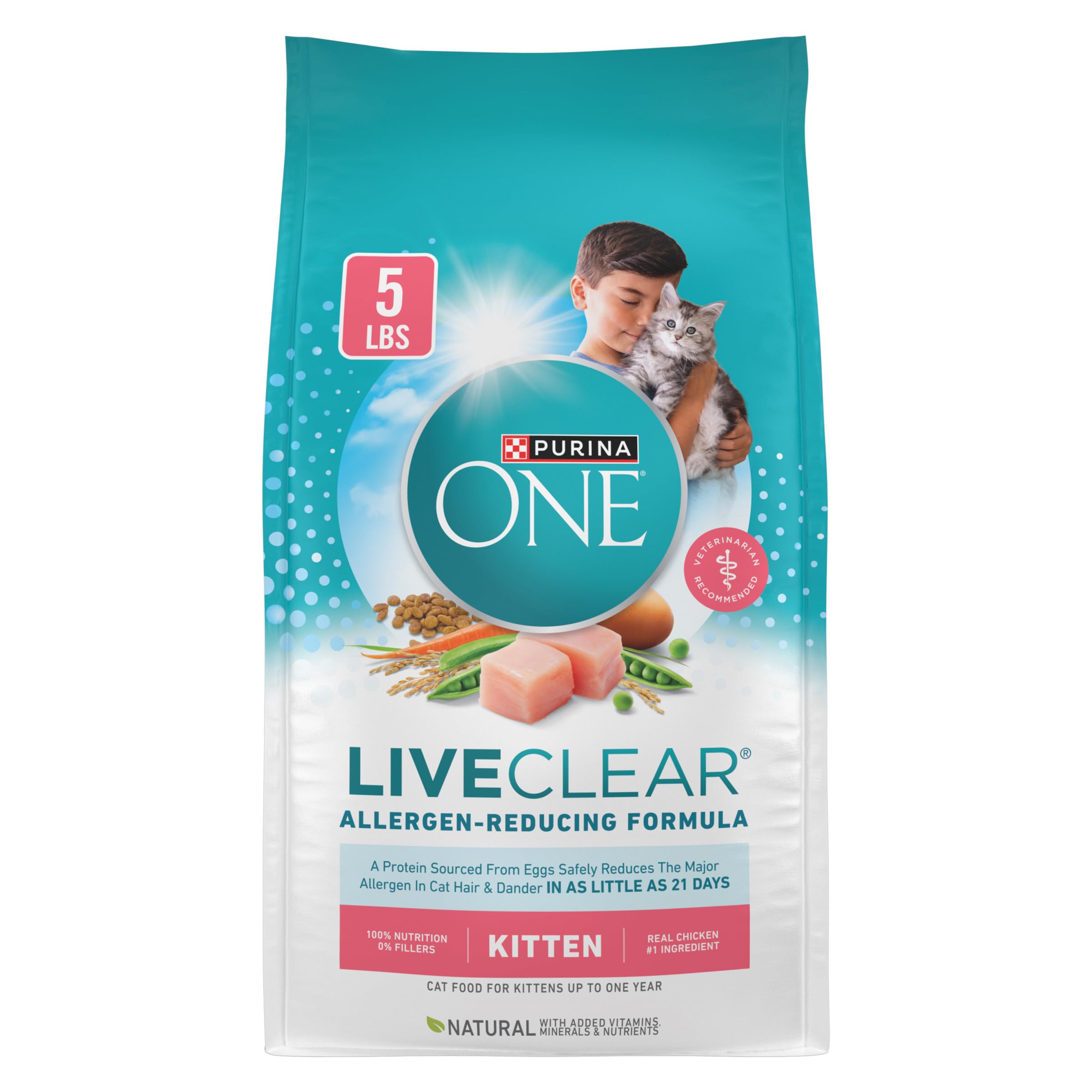
Purina ONE LiveClear is the only kitten dry food on the market that uses a patented egg product containing anti-Fel d 1 immunoglobulin Y (IgY) antibodies. When a kitten eats this kibble, the IgY binds to the major allergen Fel d 1 in the saliva. As the cat grooms, the bound allergen becomes non-reactive, and according to Purina’s published data, the active allergen in dander decreases by an average of 47 percent after three weeks of continuous feeding.
Beyond the allergen mechanism, the formula delivers a complete growth nutrient profile: DHA is included for brain development, and the protein comes from real chicken as the first ingredient, supplemented by chicken meal for concentrated amino acid density. The kibble is a standard round shape approximately 7 mm in diameter, suitable for kittens from 8 weeks onward. The carbohydrate sources include brewers rice and corn gluten meal, which provide digestible energy but are not grain-free — a trade-off for the specialized protein processing required to incorporate the egg-derived IgY.
Owner reviews consistently note that allergen reduction becomes noticeable between weeks two and four, with symptoms like sneezing, hives, and itchy eyes improving significantly. The transition period is critical: owners who mix the new food gradually over 7–10 days report far fewer digestive issues than those who switch abruptly. The 5-pound bag is adequate for a single kitten over roughly five weeks, making the price per feeding comparable to standard premium kitten foods when factoring in the medical savings on antihistamines.
Why we love it
- Clinically validated 47 percent reduction in active Fel d 1 allergen — science-backed, not anecdotal.
- IgY antibodies are heat-stable and survive the kibble extrusion process, unlike live probiotics.
- Complete AAFCO growth profile means no need to supplement with additional nutrients for allergen reduction.
Good to know
- Not grain-free — contains brewers rice and corn gluten meal that some owners avoid.
- Egg IgY requires consistent daily feeding; skipping days may delay or reduce allergen suppression.
5. ACANA Dry Cat Food for Kittens First Feast Chicken and Fish
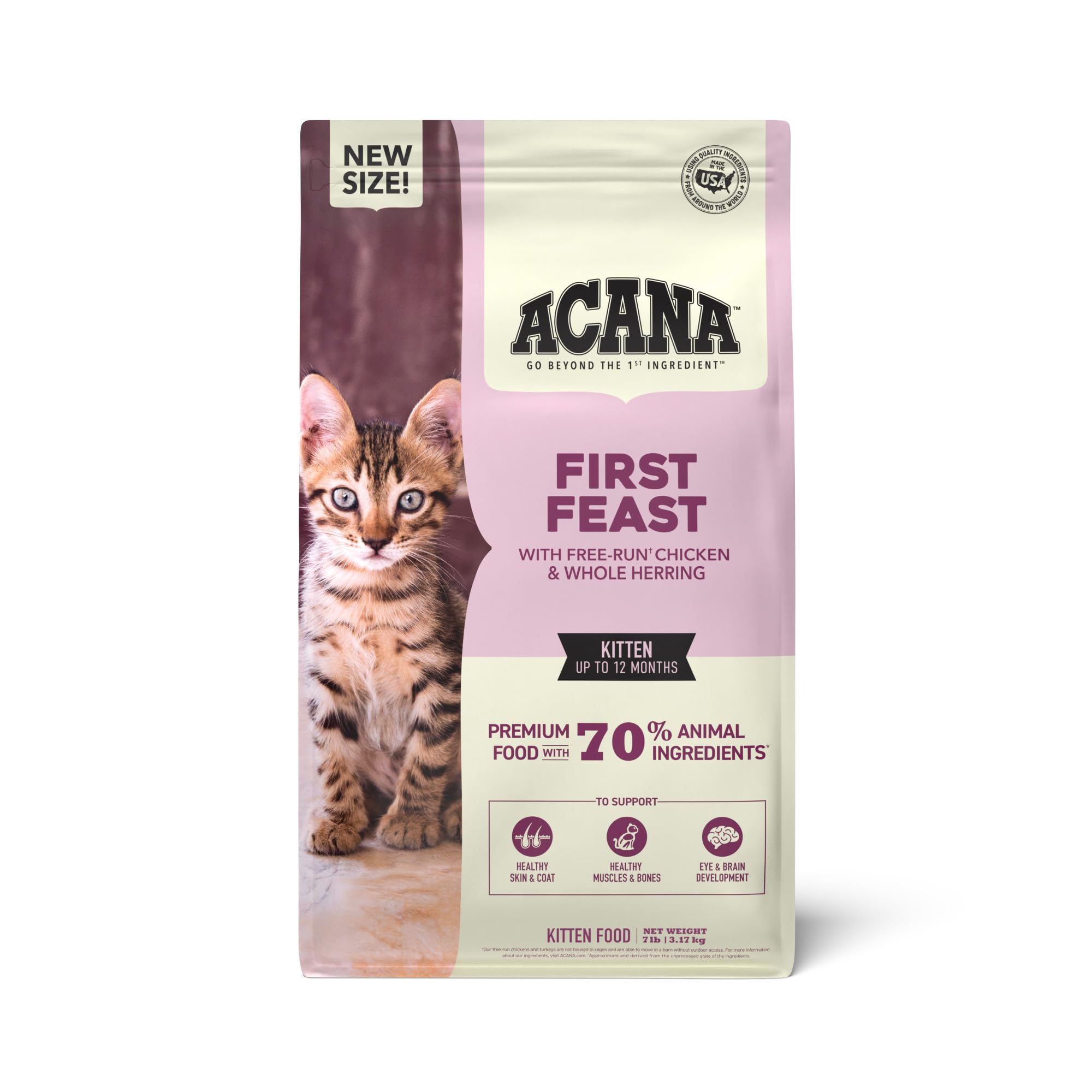
ACANA First Feast takes a whole-prey philosophy, incorporating free-run chicken, whole herring, chicken liver, chicken heart, and chicken cartilage to deliver a nutrient matrix closer to what a kitten would consume in nature. The 70 percent animal ingredient inclusion rate (on a dry-matter basis) means crude protein typically exceeds 37 percent, with animal fat providing the primary energy source rather than starch. The formula is grain-free and avoids tapioca, which is used as a binder in many competing high-protein recipes.
The kibble shape is triangular with dimensions of roughly 7.5 mm by 3.5 mm, which encourages the kitten to bite through the points rather than swallow whole. The texture is crunchy but not brittle, fracturing cleanly without producing sharp shards that could irritate the gums. Balanced omega-3 and omega-6 fatty acids from herring oil and chicken fat deliver an omega-6-to-omega-3 ratio of approximately 3:1, which is within the ideal range for reducing systemic inflammation while supporting coat gloss.
Owner feedback is consistent: coats become visibly glossier within two to three weeks, and kittens maintain high energy levels without excessive weight gain. The 7-pound bag size is generous for a single kitten, reducing the risk of running out mid-transition. Some owners note that the 70 percent animal ingredient level makes the food richer; kittens with extremely sensitive stomachs may need a longer transition period of 10–14 days with incremental increases of 15 percent ACANA per meal.
Why we love it
- 70 percent animal ingredients deliver naturally occurring taurine and arachidonic acid without synthetic supplementation.
- Triangular kibble shape encourages mechanical breakdown during chewing, aiding digestion.
- No tapioca, corn, wheat, or soy — the carbohydrate content is exceptionally low for a dry kibble.
Good to know
- Very rich formulation may cause loose stools in kittens not given a gradual 14-day transition.
- Higher calorie density requires careful portion measurement to prevent rapid weight gain in less active breeds.
6. James Wellbeloved Turkey and Rice Kitten Dry Food

James Wellbeloved uses turkey as a single novel protein source, making this formula a strong candidate for kittens with suspected chicken or beef sensitivities. Turkey is naturally leaner than chicken, with a slightly higher tryptophan content that may aid serotonin regulation in stressed weanlings. The carbohydrate base is rice — specifically white rice and rice protein concentrate — which provides highly digestible starch with a low glycemic response compared to corn or wheat.
The formula positions itself as hypoallergenic, meaning it excludes beef, dairy, eggs, wheat, and soy. The limited ingredient philosophy is backed by a simple additive-free claim: no artificial colors, flavors, or preservatives. The kibble is small — approximately 5–6 mm round pellets — and has a mild, non-fishy aroma that appeals to kittens who refuse stronger-smelling foods. The inclusion of chicory extract (inulin) provides prebiotic fiber to support Lactobacillus and Bifidobacterium populations without adding live probiotic strains.
Veterinarians in the UK frequently recommend this brand for multi-cat households where one kitten has a diagnosed food allergy and the others share the same bowl. The 1.5 kg bag is on the smaller side, which helps ensure freshness if you are feeding a single kitten. Some owners report that kittens eventually tire of the bland flavor profile, so rotating with a second protein source (such as a fish-based wet food) may be necessary to maintain enthusiasm at mealtime.
Why we love it
- Single turkey protein and rice base minimize antigenic load for kittens with undiagnosed food allergies.
- Chicory prebiotic supports beneficial gut bacteria without relying on heat-sensitive live cultures.
- Additive-free profile means no artificial preservatives that could trigger oxidative stress in young kittens.
Good to know
- Turkey is leaner than chicken; kittens with high caloric demands may need larger portions to maintain weight.
- Flavor profile is mild; some kittens lose interest over time and may require flavor rotation.
7. Royal Canin Feline Health Nutrition Mother & Babycat Queen Dry Cat Food, 6 lb
This 6-pound bag is the larger companion to the 3-pound Mother & Babycat formula, designed for multi-kitten litters, breeders, or households with a pregnant or nursing queen. The nutritional profile remains identical: rehydratable small kibble (5 mm), prebiotic fiber from beet pulp and FOS, and a clinically proven antioxidant blend focused on immune support. The key advantage of the larger bag is the reduced per-ounce cost, which makes phase-specific weaning nutrition more affordable across the full 16-week window.
The formulation philosophy centers on microbiome support through highly digestible proteins and prebiotic fibers rather than live probiotics. This is a deliberate choice: Royal Canin’s research indicates that prebiotic fermentation in the kitten colon yields short-chain fatty acids (butyrate, propionate, acetate) that directly nourish colonocytes and strengthen the gut barrier, whereas live probiotics often fail to colonize in immature gastrointestinal tracts. The inclusion of fish oil provides the EPA and DHA that support the developing nervous system.
Breeders consistently describe this as the single most reliable dry food for the transition from milk to solid food. The 6-pound bag typically lasts a litter of four kittens through the full weaning period, assuming the queen also eats it. The kibble’s ability to soften quickly in warm water (within 3–4 minutes) makes bottle-fed orphans easier to transition as well. The only logistical consideration is storage: the bag should be transferred to an airtight container after opening to prevent the fish oil from oxidizing and turning rancid during the 6–8 week feeding period.
Why we love it
- Same clinically validated prebiotic and antioxidant formula as the smaller bag at a better per-pound value.
- Rehydratable kibble supports weaning for orphan bottle-fed kittens and large litters alike.
- Prebiotic fiber produces butyrate in the colon — proven to strengthen gut barrier function in neonates.
Good to know
- Fish oil can oxidize quickly; always transfer to an airtight container after opening to preserve omega-3 potency.
- Only appropriate for the 0–4 month age window; you must transition to a kitten growth formula after 16 weeks.
FAQ
At what age can kittens start eating dry food?
How much dry food should I feed a kitten per day?
Should I mix wet food with dry kitten food?
What is the ideal crude protein percentage for kitten dry food?
How long should I feed kitten-specific dry food?
Final Thoughts: The Verdict
For most kitten owners, the best kitten dry food vet recommended winner is the Purina Pro Plan Complete Essentials Shredded Blend because it combines DHA for neural development, spore-forming live probiotics that actually survive the bag, and a shredded texture that encourages weaning acceptance. If you need allergen reduction in a multi-cat household, grab the Purina ONE LiveClear for its clinically validated 47 percent Fel d 1 reduction. And for the critical first 16 weeks of life, nothing beats the Royal Canin Mother & Babycat 3 lb — its rehydratable 5 mm kibble is the closest you can get to a veterinary-grade weaning tool in a bag.