
A kitten’s digestive system is still developing, making it highly susceptible to loose stools, vomiting, and flatulence from the wrong ingredients. The challenge is finding a formula that delivers the high protein and DHA required for explosive growth without triggering gastric upset.
I’m Mo Mahin — the founder and writer behind Furric. I’ve spent the last decade analyzing pet nutrition data, cross-referencing AAFCO nutrient profiles with real-world owner feedback, and evaluating ingredient sourcing to separate genuinely gut-friendly formulas from marketing hype.
After systematically comparing ingredient quality, protein density, and owner-reported outcomes across the market, these are my top picks for the absolute best kitten food for sensitive stomachs that your cat will actually thrive on.
How To Choose The Best Kitten Food For Sensitive Stomachs
Not all “sensitive stomach” labels are equal. A kitten’s gut requires a formula that is both nutrient-dense for rapid development and gentle enough to avoid inflammation. Prioritize these three factors before looking at anything else.
Limited, Named Protein Sources
Digestive upset often begins when the kitten cannot properly break down a specific protein. Look for a single, named animal protein (salmon, chicken, or herring) listed as the first ingredient. Avoid vague terms like “meat meal” or “poultry by-product” which can include multiple species and increase the chance of a reaction.
Prebiotic Fiber and Live Probiotic Content
Firming up loose stool requires more than just removing irritants. A formula fortified with prebiotic fiber (such as beet pulp or inulin) feeds the good gut bacteria, while guaranteed live probiotics actively help repopulate the microbiome. This combination is the difference between a food that simply avoids triggering diarrhea and one that actively heals the digestive tract.
Balanced Omega-3 and Omega-6 Fatty Acids
Inflammation in the gut lining is a primary cause of nutrient malabsorption. Omega-3 fatty acids, particularly EPA and DHA from fish sources, possess natural anti-inflammatory properties that soothe the intestinal lining. They also directly support DHA-dependent brain and vision development in kittens, making this a dual-benefit spec to prioritize.
Quick Comparison
On smaller screens, swipe sideways to see the full table.
| Model | Category | Best For | Key Spec | Amazon |
|---|---|---|---|---|
| Hill’s Science Diet Kitten Sensitive Stomach & Skin Dry | Dry Food | Digestive + Skin Support | Prebiotic fiber + Omega-3 & Omega-6 | Amazon |
| Purina Pro Plan Kitten Complete Essentials Shredded Blend | Dry Food | Probiotic Gut Health | Guaranteed live probiotics | Amazon |
| ACANA First Feast Chicken and Fish | Dry Food | High-Protein Growth | 70% animal ingredients, grain-free | Amazon |
| Hill’s Science Diet Kitten Sensitive Stomach & Skin Wet | Wet Food | Hydration + Gentle Digestion | Gravy-like texture, highly digestible | Amazon |
In‑Depth Reviews
1. Hill’s Science Diet Kitten Sensitive Stomach & Skin Dry Cat Food
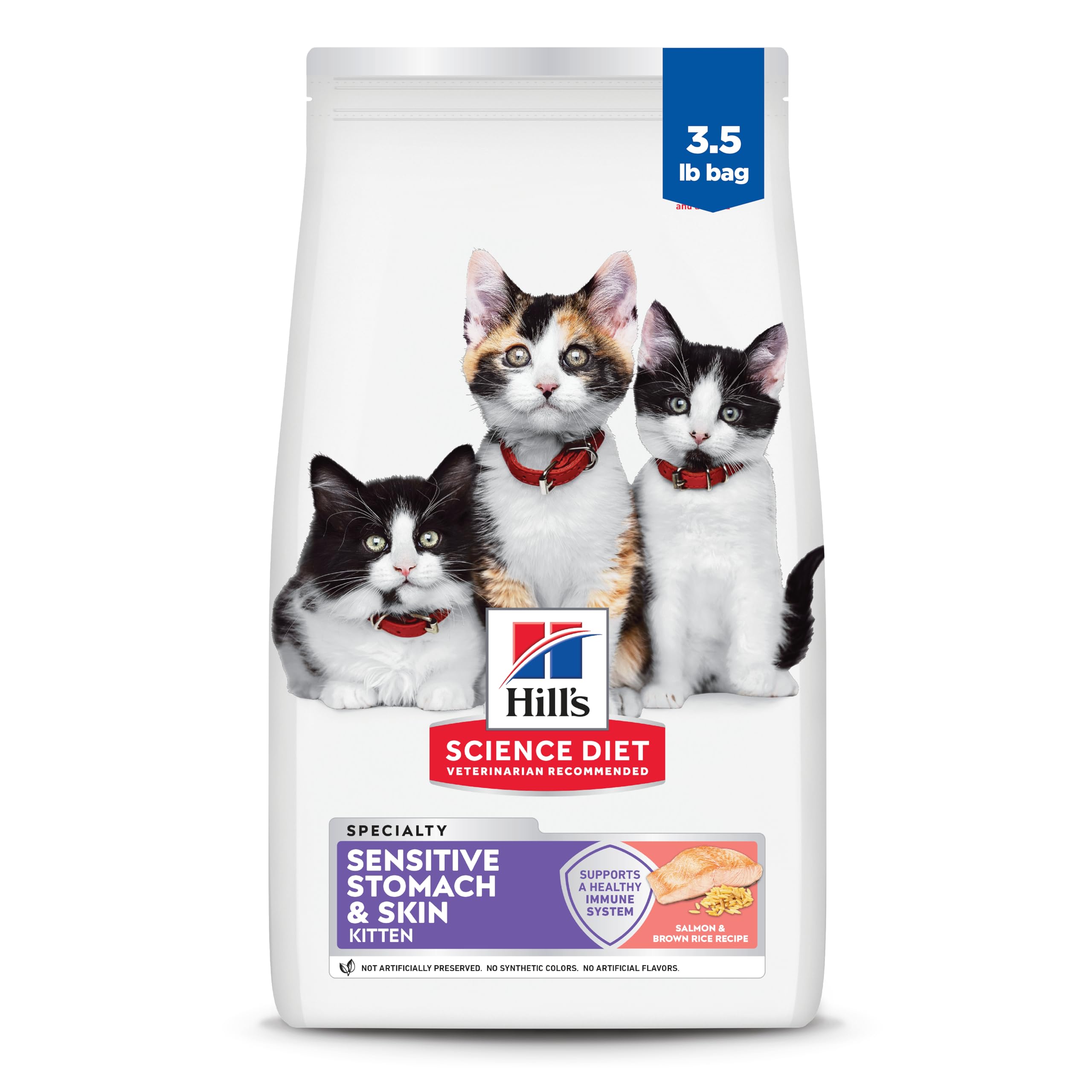
This formula is the US veterinarians’ #1 recommended sensitive stomach option for a reason — it addresses the digestive tract, skin barrier, and immune system simultaneously with a single highly digestible recipe. The #1 ingredient is high-quality salmon, a novel protein that reduces the risk of intolerance compared to chicken-heavy formulas.
Owner reports confirm that this food resolved severe constipation in a tailless bobtail kitten within days, and multiple reviews note well-formed stools by day 6 or 7 with a simultaneous improvement in coat shininess and a reduction in scratching. The kibble is notably small, making it ideal for newly weaned kittens with tiny teeth.
The prebiotic fiber content ensures optimal nutrient absorption, while the DHA supports brain development and high-quality protein fuels growing muscles — making this a complete gut-to-coat solution for the sensitive kitten.
Why we love it
- Salmon as the #1 single protein source minimizes digestive upset
- Visible improvement in stool firmness and coat luster reported by owners by day 7
- Clinically proven antioxidants (Vitamins C+E) strengthen the developing immune system
Good to know
- Kibble size is very small; some growing kittens may transition to larger kibble later
- It is a veterinary diet formula, which may not suit owners seeking a non-prescription option
2. Purina Pro Plan Kitten Complete Essentials Shredded Blend
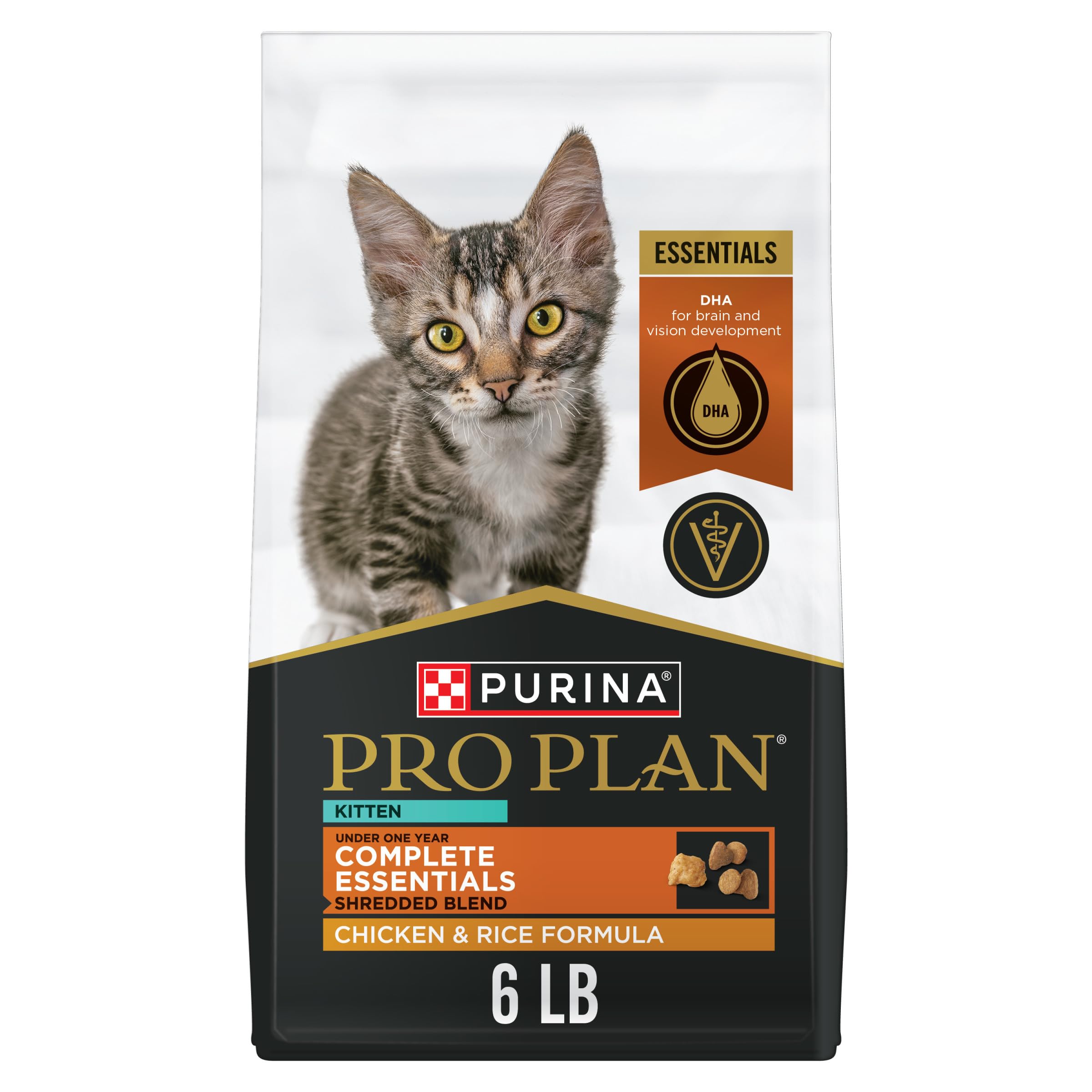
Purina Pro Plan differentiates this formula by guaranteeing live probiotics in every batch — a crucial differentiator for kittens whose gut microbiome has been disrupted by stress or dietary changes. The Shredded Blend texture combines crunchy kibble with tender, meaty pieces, which can entice picky eaters while the high protein content from real chicken supports muscle development.
Customer feedback highlights that this formula reduces litter box odor noticeably, a practical benefit of improved bacterial balance. Owners of large-breed kittens like Maine Coons report sustained weight gain and healthy growth over two years, suggesting the nutrient profile is robust enough for even heavy-bodied kitten breeds.
One caveat is that a small percentage of owners report “stanky poos and farts” — indicating that for some kittens, the high protein density or chicken protein itself may still be too rich. Transition this food gradually over 7 days to allow the digestive flora to adapt.
Why we love it
- Guaranteed live probiotics actively support digestive and immune health
- DHA from omega-3 nourishes brain and vision development
- Shredded Blend texture appeals to finicky eaters and provides chewing variety
Good to know
- Chicken is the primary protein; some kittens with poultry sensitivity may react
- High protein density can cause flatulence in a minority of sensitive individuals
3. ACANA First Feast Free-Run Chicken and Whole Herring
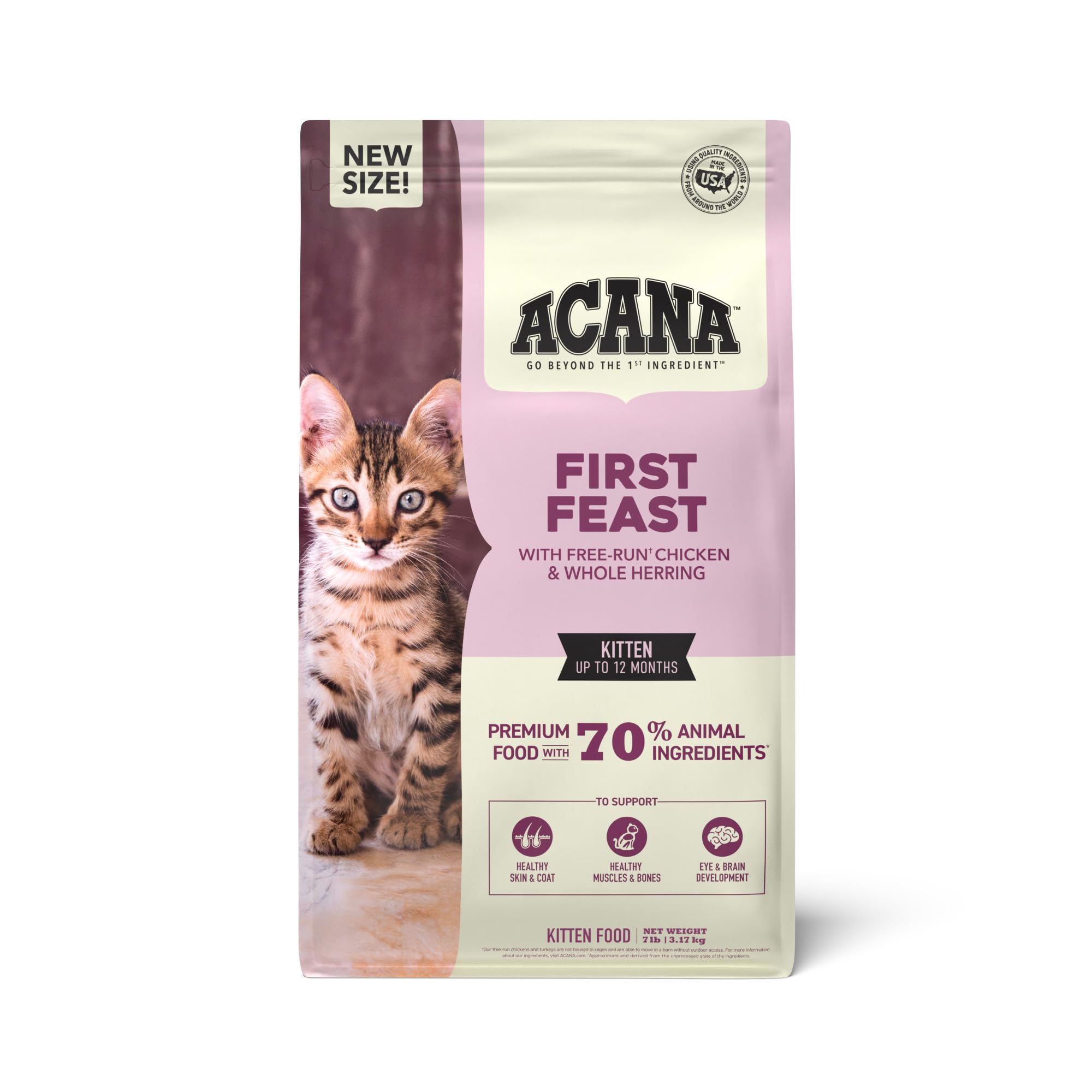
ACANA takes a biologically appropriate approach with 70% animal ingredients — free-run chicken and whole herring — and zero grains, corn, soy, tapioca, or wheat. This makes it a top choice for owners who suspect their kitten has a grain sensitivity rather than a protein intolerance. The 7.5×3.5mm triangular kibble shape is specifically designed for kitten-sized mouths.
Reviews consistently note exceptional coat softness and shininess within days, likely driven by the balanced omega-3 and omega-6 fatty acids from the whole herring. One owner reported that their cat transitioned from ACANA First Feast to the Meadowlands line and immediately developed soft stools and vomiting — suggesting that sticking with this single formula is critical for gut stability.
The protein density here is higher than many competitors. While this supports rapid muscle and bone growth, kittens with extreme sensitivities may need the formula hydrated with warm water to ease the initial transition.
Why we love it
- Grain-free with zero corn, soy, or wheat — ideal for suspected grain sensitivities
- Whole herring provides natural EPA, DHA, and omega fatty acids for coat and heart health
- Kibble size and shape tailored for kitten dentition
Good to know
- Switching away from this specific formula to other ACANA lines may cause digestive upset
- High animal protein content may be too rich for extremely sensitive stomachs without a slow transition
4. Hill’s Science Diet Kitten Sensitive Stomach & Skin Wet Cat Food

When a kitten is actively vomiting or has diarrhea, a wet food formula is often easier to digest than dry kibble. This 24-pack of 2.8 oz cans from Hill’s Science Diet delivers the same triple-support formula as its dry counterpart — prebiotic fiber, omega-3 and omega-6 fatty acids, and clinically proven antioxidants — but in a soft, gravy-like texture that significantly reduces digestive workload.
Owners of kittens transitioning from Friskies to this wet food report immediate cessation of diarrhea, with one reviewer noting the gravy consistency means zero scraping required from the can. The single-serve cans are small enough to carry in a purse for feeding stray kittens, and the formula is considered the second-best option to the veterinary-exclusive Royal Canin prescription diet.
The moisture content also helps maintain hydration, which is critical when a kitten has fluid loss from soft stools. Use this as a standalone meal or a topper over the dry version for kittens that need extra encouragement to eat.
Why we love it
- Gravy-like texture is extremely gentle on an inflamed digestive tract
- High moisture content supports hydration during diarrhea recovery
- Same clinically proven formula as the #1 vet-recommended dry food, in wet form
Good to know
- Wet food is more expensive per feeding compared to the dry version
- Some kittens may prefer to lick the gravy and leave the solid chunks behind
FAQ
How do I know if my kitten has a food sensitivity or an illness?
Can I mix wet and dry sensitive stomach formulas?
What is the ideal protein percentage for a kitten with a sensitive stomach?
Final Thoughts: The Verdict
For most kittens with a sensitive stomach, the best kitten food for sensitive stomachs overall is the Hill’s Science Diet Kitten Sensitive Stomach & Skin Dry Food because it combines a single novel salmon protein with prebiotic fiber and immune-supporting antioxidants in a formula that vets overwhelmingly recommend. If you want guaranteed live probiotics to actively rebuild your kitten’s gut flora, grab the Purina Pro Plan Complete Essentials Shredded Blend. And for a high-protein, grain-free option that delivers outstanding coat results, nothing beats the ACANA First Feast.