
Selecting the right nutrition for a growing kitten goes beyond simply filling a bowl — the first year of life sets the foundation for their bone density, cognitive function, and immune system for years to come. With dozens of formulations on shelves, each claiming to be “complete and balanced,” the real question is which recipes actually deliver the precise calcium-to-phosphorus ratio, DHA levels, and moisture content that veterinary nutritionists prioritize for feline development.
I’m Mo Mahin — the founder and writer behind Furric. I’ve spent months cross-referencing ingredient panels against AAFCO growth standards, analyzing guaranteed analysis values, and synthesizing owner-reported digestion outcomes from hundreds of verified purchasers to separate genuinely superior kitten formulas from cleverly marketed alternatives.
After systematically comparing protein sources, texture acceptance rates, and nutrient density across the most frequently vet-endorsed options, I’ve curated a tight list of formulations that earn their place in any thoughtful feeding routine — this is the definitive guide to finding the right kitten wet food vet recommended for your specific cat’s needs.
How To Choose The Best Kitten Wet Food Vet Recommended
Kittens experience rapid growth spurts between 8 weeks and 12 months, making nutrient density and ingredient quality non-negotiable. The right wet food provides the hydration that dry kibble lacks while delivering precisely calibrated levels of essential fatty acids, amino acids, and minerals that support bone formation and organ development.
DHA and Taurine — The Brain and Heart Connection
Docosahexaenoic acid (DHA) is an omega-3 fatty acid critical for retinal and neural development in kittens, while taurine is an essential amino acid that cats cannot synthesize on their own. A vet-recommended kitten wet food will explicitly list added DHA and supplemental taurine on the guaranteed analysis panel — without these, the formula cannot properly support cognitive function or prevent dilated cardiomyopathy in growing cats.
Calcium-to-Phosphorus Ratio — Skeletal Integrity
Kittens require a tightly controlled calcium-to-phosphorus ratio of approximately 1.2:1 to 1.4:1. An imbalance, particularly excess calcium, can lead to developmental orthopedic diseases like osteochondrosis. The best kitten wet foods meet AAFCO growth profiles and disclose these mineral levels, avoiding generic “bone meal” ingredients that skew the ratio unpredictably.
Texture and Palatability — Will They Actually Eat It?
Kittens develop food preferences early, and texture plays a massive role in acceptance. Some kittens prefer smooth pate that mimics the consistency of milk formula, while others gravitate toward shredded or minced textures. A high-quality formula that a kitten refuses to eat provides zero nutritional benefit, so choosing a texture aligned with your kitten’s demonstrated preference is as important as the ingredient panel.
Quick Comparison
On smaller screens, swipe sideways to see the full table.
| Model | Category | Best For | Key Spec | Amazon |
|---|---|---|---|---|
| Hill’s Science Diet Kitten Chicken | Premium | Vet-recommended assurance | 24-pack, 2.8 oz pouches | Amazon |
| Blue Buffalo Baby Blue Chicken | Premium | High moisture hydration | 24-pack, 3 oz cans, pate | Amazon |
| Tiki Cat Baby Mousse Chicken & Liver | Mid-Range | Weaning transition 4+ weeks | 12-pack, 2.4 oz pouches, mousse | Amazon |
| Weruva Kitten Fur Baby Favorites | Mid-Range | Picky eaters, gravy texture | 12-pack, 3 oz cans, gravy | Amazon |
| Tiki Cat Baby Shreds Variety Pack | Mid-Range | High protein shred texture | 12-pack, 2.4 oz cans, shreds | Amazon |
In‑Depth Reviews
1. Hill’s Science Diet Kitten Wet Cat Food, Chicken, 2.8 oz. Pouches, 24-Pack
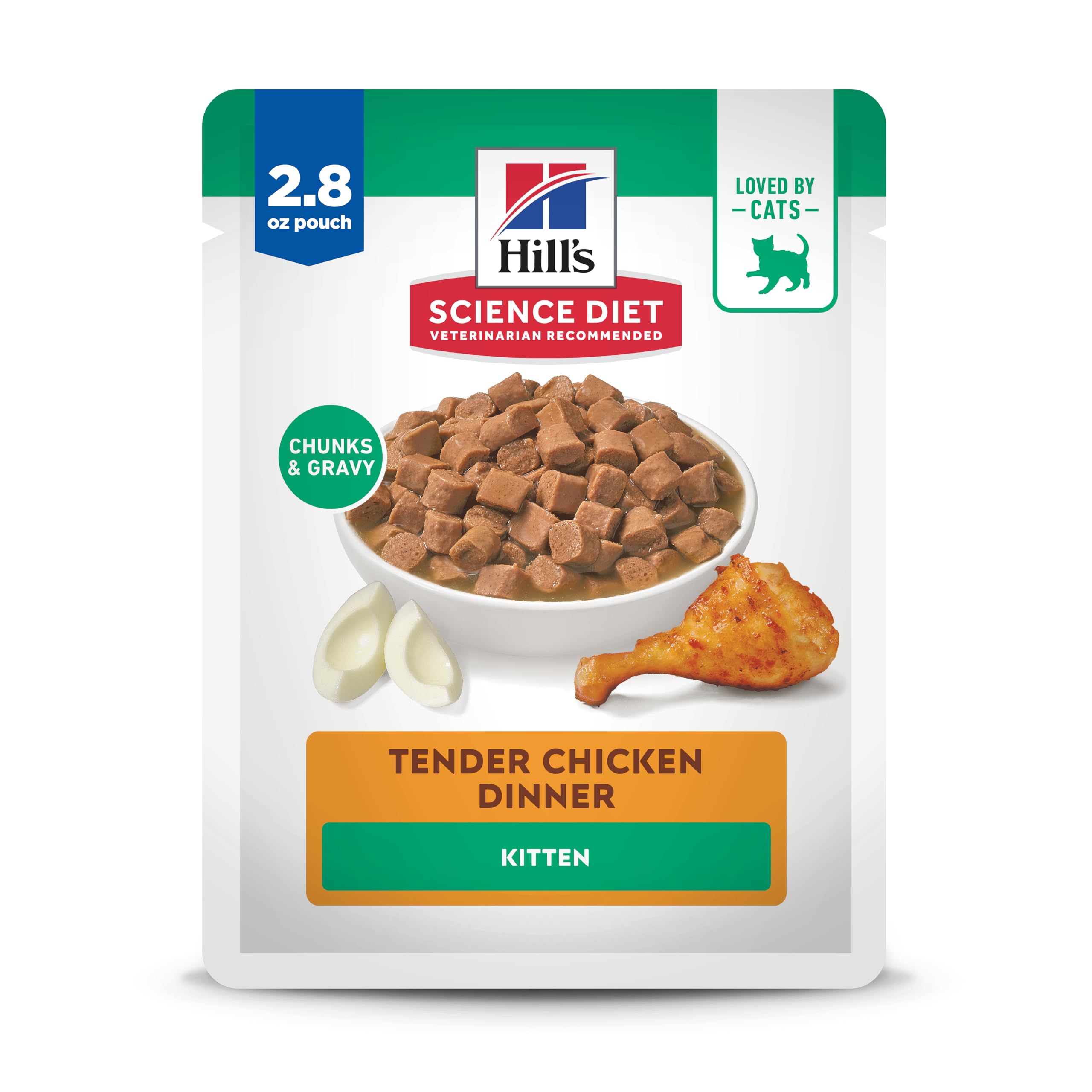
Hill’s Science Diet holds the distinction of being the number-one veterinarian-recommended pet food brand in the United States, and their kitten wet food formulation justifies that reputation through rigorous nutritional research. The Chicken Stew recipe uses natural ingredients fortified with added vitamins, minerals, and amino acids — including precisely measured taurine levels — to meet the elevated metabolic demands of growing kittens without relying on artificial preservatives or by-product meals.
The 2.8-ounce single-serve pouches are designed for convenience, eliminating the need to refrigerate half-used cans or deal with sharp metal edges. Reviewers consistently note that even notoriously picky kittens accept the stew texture readily, and the balanced moisture content supports daily hydration without causing loose stools. The formula is made in the USA with globally sourced ingredients that undergo quality testing at every production stage.
While the per-serving cost places this firmly in the premium tier, the combination of veterinary backing, transparent sourcing, and consistently positive digestion outcomes justifies the investment for owners who prioritize proven nutritional science over marketing claims. The only common complaint involves kittens accustomed to stronger-smelling fish-based foods needing a brief transition period to accept the chicken base.
Why we love it
- Backed by the #1 US veterinarian-recommended brand
- Single-serve pouches eliminate waste and refrigeration hassle
- Natural ingredients with no artificial flavors or preservatives
Good to know
- Higher per-serving cost than mid-range options
- Some kittens may require a transition period from fish-based foods
2. Blue Buffalo Baby Blue Natural Kitten Wet Cat Food, Healthy Growth Formula with DHA, Chicken Recipe Multi-Pack, 3-oz Cans (24 Count)
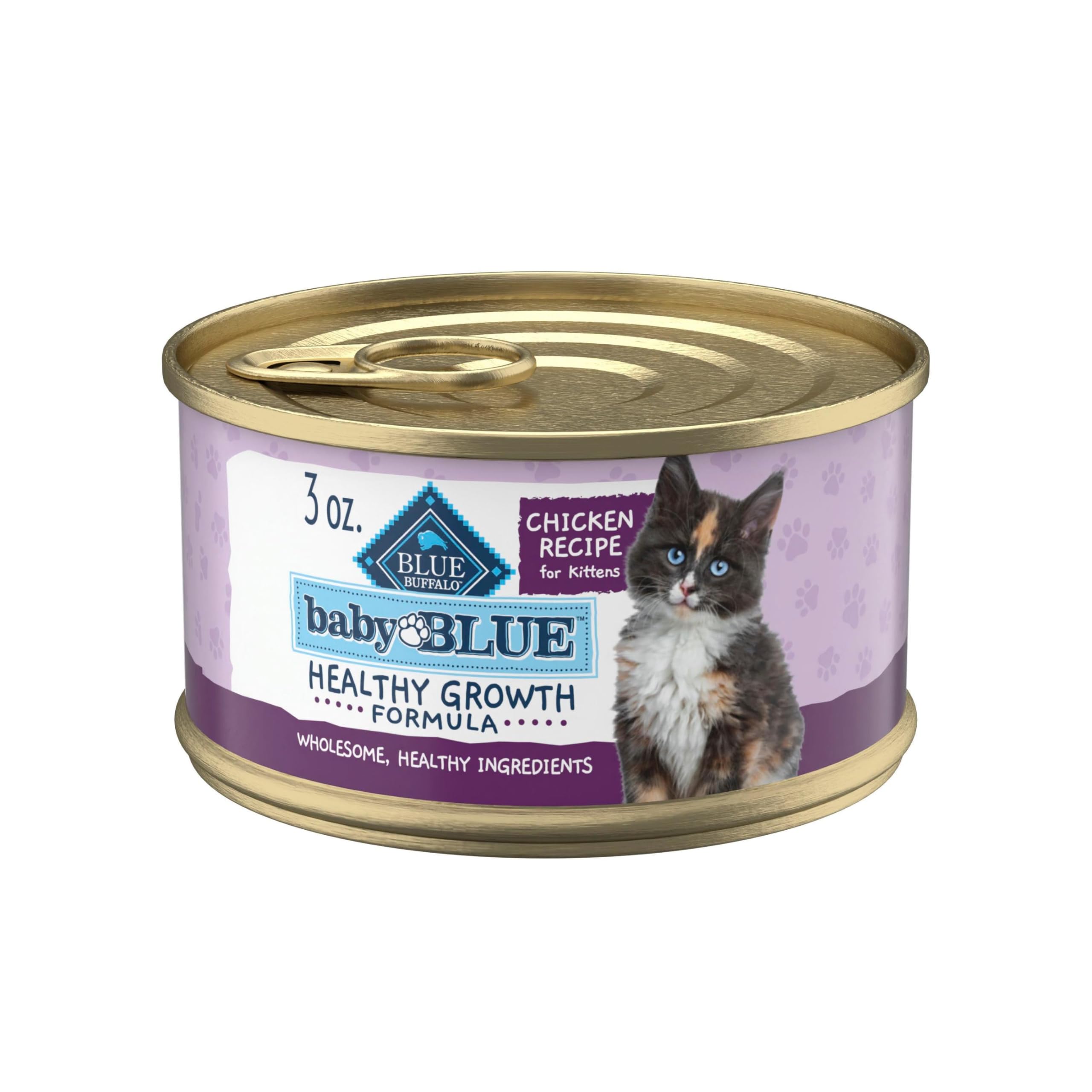
Blue Buffalo’s Baby Blue line positions chicken as the number-one ingredient, delivering a high-protein pate that packs DHA for cognitive development and taurine for cardiac health. The 3-ounce can size is slightly larger than many competitors, providing a more substantial single serving for growing kittens and contributing significantly to daily fluid intake — a critical factor for cats, who are evolutionarily predisposed to low thirst drive.
The pate texture is smooth and uniform, which appeals to kittens transitioning from milk formula or those who reject chunkier preparations. Owners report that their kittens maintain consistent energy levels and healthy coat condition when fed this formula, and the absence of corn, wheat, soy, and chicken by-product meals aligns with the preferences of those seeking a cleaner ingredient profile. The multi-pack of 24 cans offers strong value for daily feeding without compromising on nutrient density.
A minority of kittens accustomed to shredded or gravy textures may initially show hesitation toward the pate consistency, though many owners resolve this by mashing the food with a fork or adding a splash of warm water. The formula also tends to be denser than some alternatives, meaning a single can can satisfy a kitten for two smaller meals, extending the effective value of the 24-count pack.
Why we love it
- Real chicken is the first ingredient with no poultry by-product meals
- High moisture pate supports kidney and urinary tract health
- 24-count pack provides excellent long-term feeding value
Good to know
- Pate texture may not suit kittens that prefer shreds or gravy
- Some kittens find the density less palatable without added water
3. Tiki Cat Baby Mousse Wet Cat Food for Kittens, Chicken & Chicken Liver, 2.4 oz. Pouch (12 Count)

Tiki Cat Baby Mousse is formulated for kittens as young as 4 weeks, making it one of the few wet foods explicitly designed to bridge the gap between mother’s milk and solid food. The mousse texture is ultra-smooth and almost paste-like, requiring minimal effort for tiny mouths to consume — a critical advantage when dealing with weaning-age kittens that are just learning to lap from a bowl. Chicken liver is included as a nutrient-dense organ meat, providing naturally occurring vitamins A, B12, and iron that support red blood cell production and immune function.
The 2.4-ounce pouch format is ideal for small portions, and the lack of fish-based ingredients means the aroma is mild compared to other wet foods — a benefit for both sensitive kitten noses and owners who object to strong-smelling cat food. Owners of sick or convalescent adult cats have also discovered that this mousse works as an appetite stimulant and easy-to-digest recovery food, though it is primarily marketed and nutritionally balanced for kittens. The high-calorie density helps underweight kittens gain weight steadily.
The limited ingredient formula contains no potatoes, grains, or GMOs, which reduces the risk of food sensitivities in kittens with developing digestive systems. However, because it is a single-protein recipe with a very specific texture, some kittens that prefer variety or chunkier formats may lose interest over time. The 12-count quantity also means more frequent repurchasing for multi-kitten households compared to larger multi-packs.
Why we love it
- Suitable for kittens as young as 4 weeks during weaning
- Ultra-smooth mousse texture requires no chewing effort
- Nutrient-dense chicken liver provides natural vitamins and iron
Good to know
- Single-protein recipe may lead to flavor fatigue over time
- 12-count pack requires more frequent repurchasing for multiple kittens
4. Weruva Kitten, Fur Baby Favorites Variety Pack, 3oz Can (Pack of 12)

Weruva’s Fur Baby Favorites variety pack stands out for its commitment to ingredient transparency — the company produces its recipes in human food facilities under strict B.R.C. Global Standards, a certification level rarely applied to pet food manufacturing. The gravy-based texture appeals strongly to kittens that derive hydration from lapping up liquid along with the solid components, effectively increasing water intake without requiring owners to add water manually. The variety pack includes multiple flavor profiles, which helps prevent preference fatigue in young cats that are still developing their taste palates.
Owners consistently praise the low odor of Weruva’s formulations, noting that the food smells genuinely appetizing rather than emitting the strong fishy or chemical scent associated with some mass-market kitten foods. The absence of grains, gluten, carrageenan, artificial flavors, and preservatives reduces gastrointestinal sensitivity, and many reviewers report that their kittens produce less smelly stool compared to previous foods. The 3-ounce can size hits a sweet spot — large enough for a full meal for most kittens under 6 months, but not so large that leftovers go to waste.
The gravy texture does mean the moisture content is higher than pate-based alternatives, which dilutes caloric density slightly. Very active or rapidly growing kittens may require an additional meal or a complementary dry food to meet their full energy requirements. Additionally, some kittens accustomed to shredded or pate textures may initially find the gravy consistency unfamiliar and require a brief adjustment period.
Why we love it
- Produced in human food facilities under strict B.R.C. Global Standards
- Low odor formula appeals to sensitive kittens and owners
- Variety pack prevents flavor fatigue and encourages consistent eating
Good to know
- Higher moisture content means lower caloric density per can
- Gravy texture may require a transition period for some kittens
5. Tiki Cat Baby Wet Cat Food for Kittens, Shreds Variety Pack 2.4 oz. Cans (12 Count)

Tiki Cat Baby brings a shredded texture to the kitten wet food category, offering a distinct alternative to the pate and gravy formats that dominate the market. The shreds are soft and easily mashable between fingers, making them accessible to kittens as young as 8 weeks while still providing a satisfying chew for older kittens transitioning to more solid textures. The variety pack features four different recipes — Chicken & Salmon, Chicken & Tuna & Chicken Liver, Chicken & Duck & Duck Liver, and Chicken & Egg — each built around named protein sources rather than ambiguous meal ingredients.
The inclusion of DHA for brain development, taurine for cardiac function, and prebiotics for digestive health covers the three major nutritional pillars that veterinary professionals prioritize during kitten growth. The formula is 100% non-GMO with no fillers, artificial ingredients, grains, fruits, or vegetables — a reflection of the brand’s philosophy that kittens are obligate carnivores who thrive on meat-forward nutrition. Owners of picky kittens frequently report that the shredded texture triggers a stronger feeding response than pate, with kittens actively running to the bowl at mealtime.
The 2.4-ounce can size is appropriate for single meals for most kittens, though larger or hungrier individuals may need multiple cans per feeding. The variety pack includes multiple combinations of protein sources, which is excellent for preventing boredom, but some kittens may show strong preferences for specific flavors within the pack, potentially leading to waste if they refuse a particular recipe. The absence of vegetables also means the fiber content is lower than some blended formulas, so kittens transitioning from a diet with higher fiber may experience temporary stool adjustment.
Why we love it
- Shredded texture triggers strong feeding response in picky kittens
- 100% non-GMO with no fillers, grains, or artificial ingredients
- Variety pack with four distinct named-protein recipes
Good to know
- Some kittens may reject specific flavors within the variety pack
- Lower fiber content may require a transition period for some kittens
FAQ
Is wet food better than dry food for kittens during growth?
What specific DHA level should I look for in a kitten wet food?
Should I avoid fish-based kitten wet foods entirely?
How many cans of wet food should I feed my growing kitten per day?
What does “complete and balanced” mean on a kitten wet food label?
Final Thoughts: The Verdict
For most kitten owners, the kitten wet food vet recommended winner is the Hill’s Science Diet Kitten Chicken because its direct veterinary endorsement, natural ingredient profile, and proven digestion outcomes eliminate the guesswork from early-life nutrition. If you prioritize high moisture intake and a clean pate texture your kitten can eat without coaxing, grab the Blue Buffalo Baby Blue Chicken. And for kittens transitioning from mother’s milk or those recovering from illness where easy swallowing is critical, nothing beats the Tiki Cat Baby Mousse Chicken & Liver.