
You bought a new cat harness, and ten minutes later your feline vanished from it on the first walk—it’s a frustratingly common story. An escape-proof harness isn’t just a nicety; it’s the baseline for any owner who wants safe, low-stress outdoor time with their cat. The market is flooded with flimsy nylon straps and single-clip vests, but the difference between a secure outing and a panic search often comes down to the buckle system, material stiffness, and adjustment range.
I’m Mo Mahin — the founder and writer behind Furric. I’ve spent years analyzing pet product specifications, studying manufacturing materials and seam construction, and cross-referencing thousands of owner feedback threads to determine which harnesses actually deliver on their escape-proof claims versus which ones rely on marketing language.
After weighing construction details like step-in versus overhead donning, buckle durability, and reflective stripe placement, I’ve narrowed the market down to five solid contenders to help you find the perfect kitty harness for your specific cat’s body shape and personality type.
How To Choose The Best Kit
Not every harness labeled “escape-proof” actually earns that badge. The physical differences between a harness that stays put and one that fails come down to geometry, not marketing. These three criteria will help you spot the real keepers from the fashion accessories.
Escape-Proof Geometry
The most secure harnesses use at least three retention points: a primary buckle, a secondary hook-and-loop (Velcro) strap, and a D-ring positioned along the spine. Single-buckle vest designs rely entirely on your cat not pulling backward. Harnesses with a secondary chest strap or wrap-around Velcro panel physically prevent that backward slink cats use to reverse out. Look for models that explicitly list this triple-security architecture in their specs.
Adjustment Range and Sizing
A harness that lists “Small” but only offers 2 inches of neck adjustment is a one-fit gamble. The best kitty harnesses provide separate, independent adjustment for the neck loop and the chest girth—ideally four or five sliders. This independent adjustment allows you to cinch the neck just enough to prevent head-slipping while keeping the chest loose enough for natural breathing and movement. If the size chart shows a neck-to-chest ratio range, study it carefully: cats with large necks but slim chests (common in breeds like Sphynx and Siamese) need extra neck-tightening room.
Material and Seam Construction
Mesh quality determines both comfort and durability. Stiff nylon webbing causes chafing under the front legs and encourages cats to thrash against the harness. Soft air-mesh with a double-stitched edge strikes the right balance—breathable enough for summer walks yet tough enough to resist clawing during the initial training phase. If a harness lists machine-washable care instructions, the material is likely sewn with sealed edges that won’t fray quickly.
Quick Comparison
On smaller screens, swipe sideways to see the full table.
| Model | Category | Best For | Key Spec | Amazon |
|---|---|---|---|---|
| RC Pets Adventure Kitty | Premium | Long-term daily wear for trained cats | Adjustable neck: 8-11″ | Amazon |
| Fida Cat Harness Set | Mid-Range | Extra-small kittens and toy breeds | XXXS neck: 10.2-11.4″ | Amazon |
| rabbitgoo Cat Harness | Mid-Range | Average-sized cats with sensitive necks | Dual quick-release buckles | Amazon |
| BEAUTYZOO Cat Harness | Budget-Friendly | Owners wanting five-point adjustability | 5 adjustable sliders | Amazon |
| NCMAMA Cat Harness | Budget-Friendly | Owners wanting a cute aesthetic for growing kittens | 360° wrap with tie detail | Amazon |
In‑Depth Reviews
1. RC Pets Adventure Kitty Harness
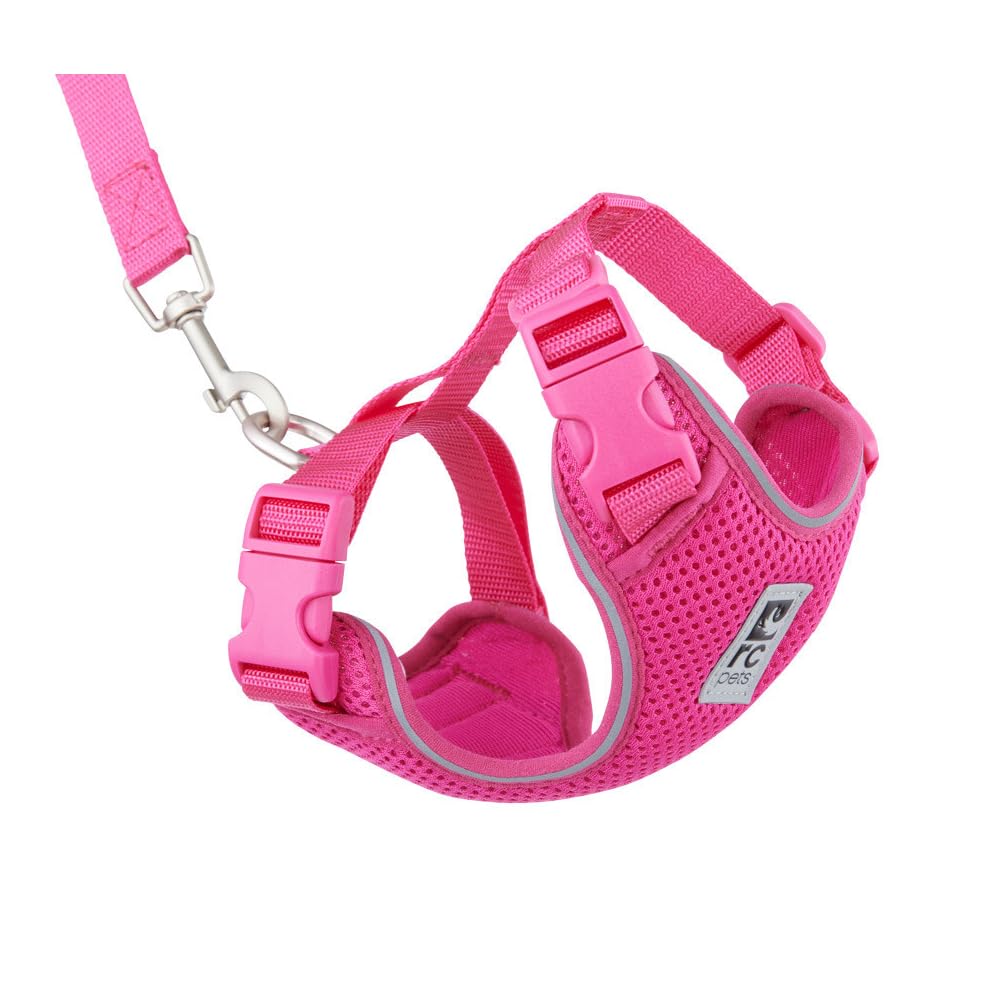
The RC Pets Adventure Kitty Harness sits at a different tier than the rest—not because of a flashy tag, but because of sustained real-world performance. Multiple owner reports confirm this harness has survived daily use for over two years on the same cat without fraying, stitching breaking, or the cat escaping. The air-mesh fabric is noticeably thicker and more structured than the budget poly-mesh vests, which prevents the harness from bunching and creating a gap behind the neck where Houdini moves start.
The fully adjustable neck (8-11 inches) and girth (10-14 inches) operate on independent webbing slides, so you can dial in a precise fit even on cats with non-standard proportions. Owners note that once adjusted, the webbing doesn’t slip through the plastic buckles easily—a common failure point in cheaper harnesses. The included 6-foot leash is longer than the standard 4-footer, giving you extra slack for training sessions while still maintaining control through the rear D-ring.
The raspberry color option is bright without being garish, and the reflective RC Pets label and binding along the edges provide clear low-light visibility. The trade-off is the initial setup: sizing a wiggly cat during the first fitting takes patience because the webbing slides are tight by design. Once you lock it in, though, owners report their cats willingly step into it—a strong signal of genuine comfort rather than enforced tolerance.
Why we love it
- Two-year+ daily durability reported in reviews
- Independent neck and girth adjustments prevent escape
- Thick air-mesh won’t bunch under cat’s legs
- Included 6-ft leash gives longer training range
Good to know
- Plastic buckles webbing grips tightly — adjustment can be tough
- Premium price point versus entry-level options
2. Fida Cat Harness and Leash Set

The Fida harness earns top marks because it nails the most critical escape-proof principle: it uses a triple-security closure system. Many budget harnesses stop at one buckle. The Fida adds a hook-and-loop wrap and double D-rings behind the Velcro, creating a belt-and-suspenders redundancy that physically blocks backward slipping. Owner reviews consistently confirm that even determined escape attempts fail—one reviewer noted their cat “tried, but not succeeded yet.” That’s real-world validation.
The step-in design is a major advantage for cats that hate having anything pulled over their head. You simply lay the vest flat, guide each front leg into the openings, pull the Velcro strap around the body, and secure the buckle. This eliminates the overhead stress that triggers defensive body language in sensitive cats. The XXXS size is genuinely small, fitting a 5-pound kitten precisely with a 10.2-inch neck and 11.4-inch girth—unlike many “small” labels that still hang loose on cats under 7 pounds.
The air-mesh construction is three-layer thick, which provides structure without weight. The 4-foot reflective leash is basic but functional for neighborhood walks. Some open-box units have been reported, but the return policy covers that. For owners with kittens or small-frame adults (up to roughly 8 pounds), this is the most reliable escape-proof option at its tier.
Why we love it
- Triple security (Velcro + buckle + D-rings) stops escapes
- Step-in style avoids overhead stress
- XXXS size fits 2.5-5 lb kittens
- Machine-washable for easy cleaning
Good to know
- No independent neck adjustment—single Velcro wrap
- Some units arrive in open-box condition
3. rabbitgoo Cat Harness and Leash
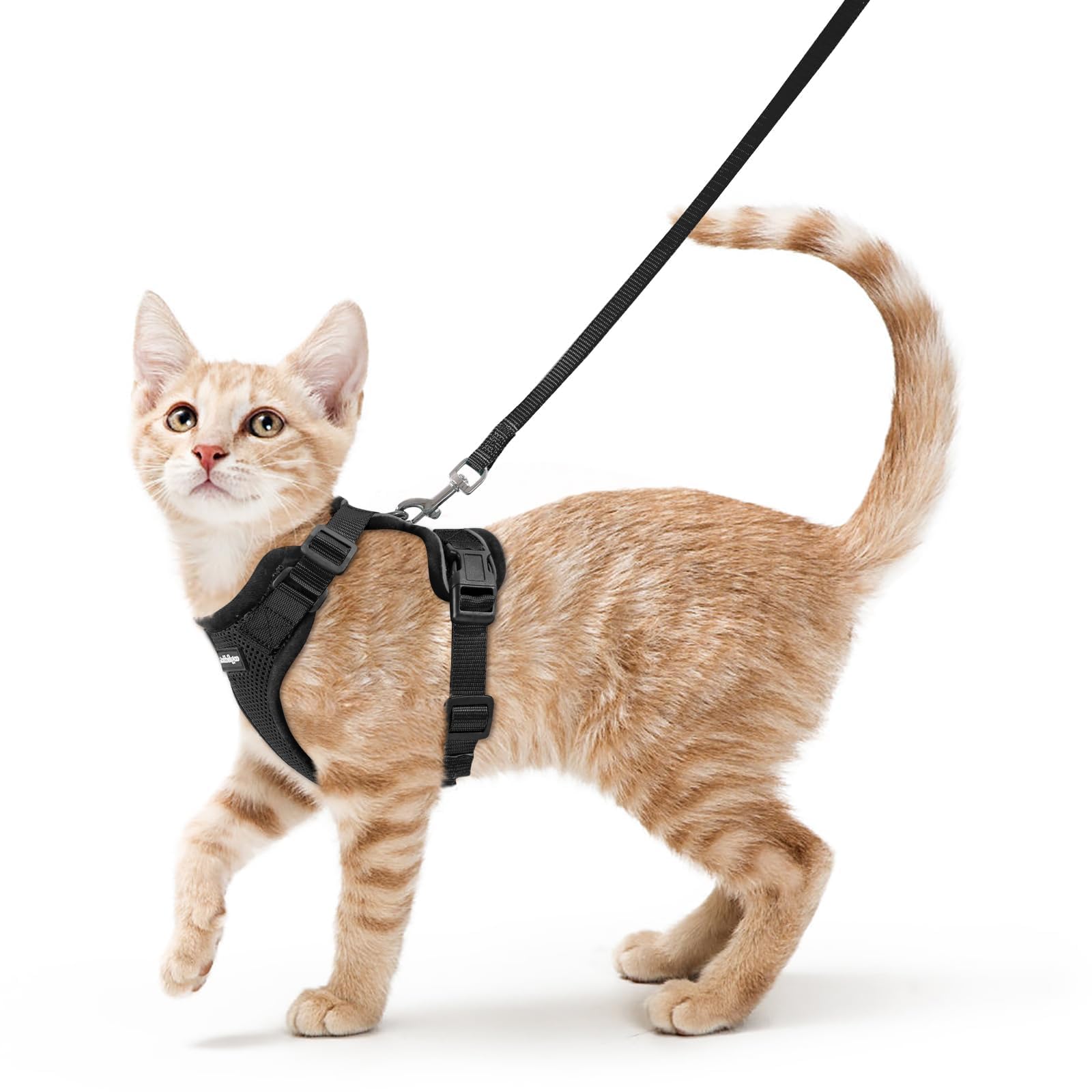
The rabbitgoo harness focuses on a different dimension: wear-comfort without compromising security. The ultra-soft air-mesh is noticeably lighter than the Fida’s three-layer construction, making it the better choice for warm-weather walks or cats that overheat easily in vest-style harnesses. The vest design wraps the torso fully, distributing leash pressure across the chest and shoulders rather than concentrating it on the neck—important for reducing gagging responses when a cat suddenly lunges after a squirrel.
Four independent adjustment straps let you fine-tune both the neck opening and the chest band separately. The minimum neck circumference (8.5 inches) is relatively wide compared to the Fida, so this harness works best for average to slightly larger adult cats rather than tiny kittens. The slip-over-head design is less ideal for cats with whisker sensitivity or those who freeze when anything passes over their face—it’s a faster donning method for cooperative cats, but a potential friction point for nervous ones.
The reflective strips run along the sides and back of the vest, offering 360-degree visibility during evening walks. Some owners report the neck fit can loosen over time, allowing half-trained cats to back out, so you’ll want to re-tighten the neck strap weekly. The included leash is only 4.9 feet—shorter than the RC Pets 6-footer but adequate for controlled sidewalk walks.
Why we love it
- Ultra-soft mesh prevents overheating and chafing
- Four independent straps for customized fit
- Leash pressure distributes away from throat
- Reflective strips on sides and back of vest
Good to know
- Overhead donning stresses some cats
- Neck strap may loosen and require weekly re-tightening
- Not secure for escape-prone cats without neck re-check
4. BEAUTYZOO Cat Harness and Leash Set
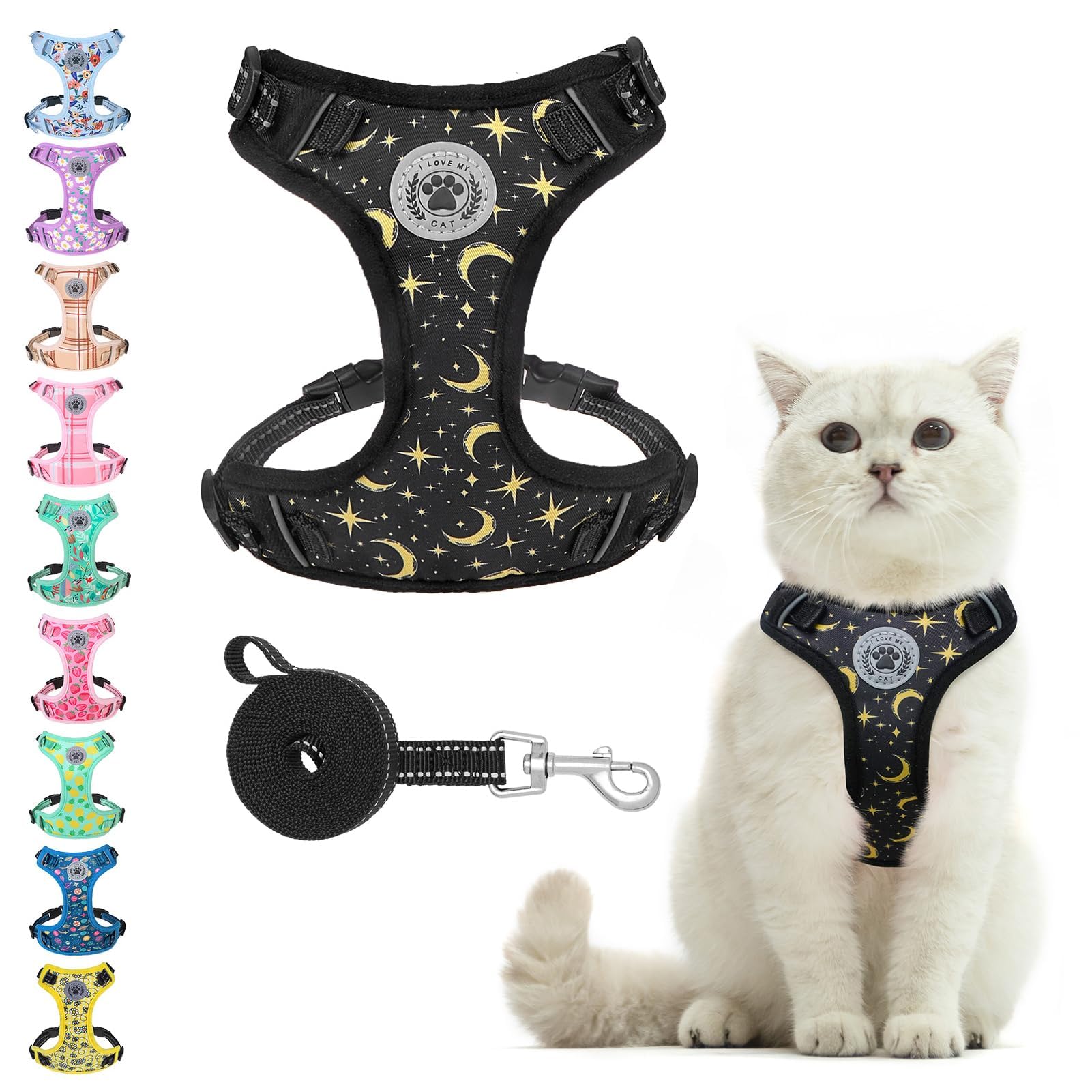
The BEAUTYZOO harness tackles the overhead stress problem differently from the step-in Fida. Instead of passing the entire vest over the cat’s head, this design uses an innovative overhead-style vest with both buckles located on the chest, allowing you to fasten the harness without lifting it over your cat’s face. The difference is subtle but meaningful: sensitive cats that back away from overhead harnesses tend to accept this configuration more readily, as reported by owners managing rescue cats with handling trauma.
Where this harness truly stands out is adjustment range—five independent sliders (two on the shoulders, two on the chest, one on the back) provide the most customizable fitting grid among the budget-friendly options. This allows simultaneous tightening of the neck loop while keeping the chest loose, which is exactly what cats with larger necks need. The S size covers a neck range of 8.5 to 14 inches and chest of 11 to 16 inches, accommodating a wider size spectrum than most single-size competitors.
One recurring caveat: several owners report that the front legs can occasionally slip through the leg holes if the chest adjustment is too loose or the cat performs a specific twisting motion. It’s not a systematic failure, but it means you must dial in the fit precisely during the first session rather than relying on the default adjustment. The reflective strips are generous on both the harness and leash, though the leash is the standard 5 feet.
Why we love it
- Five sliders offer the widest adjustability in its price tier
- Chest-buckle design avoids overhead donning stress
- Wide neck range (8.5-14 inches) fits non-standard cat builds
- Reflective strips on both harness and leash
Good to know
- Front leg slippage possible if chest not cinched properly
- Requires careful initial fitting to avoid escapes
5. NCMAMA Cat Harness (w/ Tie)
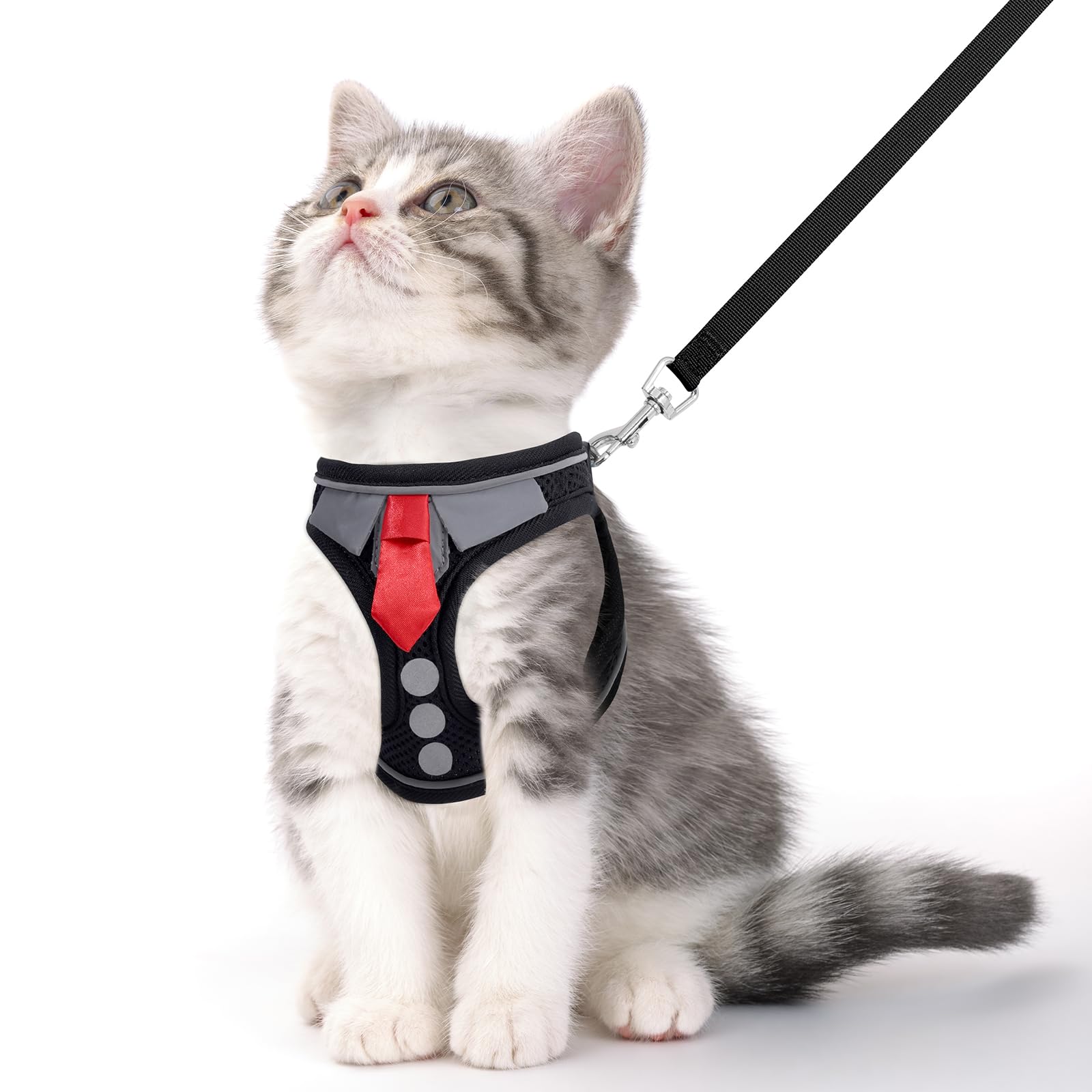
The NCMAMA harness enters the list on a different axis—aesthetics that encourage compliance. The detachable tie adds a whimsical “handsome gentleman” look that makes the harness feel less like gear and more like a costume, which some cats tolerate better than functional-looking vests. Underneath the cute exterior, the 360-degree wrap construction uses a buckle plus step-in motion similar to the Fida, wrapping the body fully to prevent the cat from twisting out.
The material is soft polyester mesh that runs a bit large compared to size chart claims. Owners of kittens around 4-5 pounds report that the Small size has noticeable slack, which can feel comfortable for growth but creates immediate escape risk if the cat isn’t fully grown. This makes the NCMAMA better suited as a transitional training harness for kittens still growing into their adult frame, rather than a precise security fit for a fully grown escape artist.
The reflective strip along the vest edges provides basic low-light visibility, though the coverage is less extensive than the rabbitgoo or BEAUTYZOO models. The included leash is a simple 4-foot standard. The hand-wash-only care instruction is a minor downside compared to the machine-washable Fida and RC Pets options. This harness works best as a second harness for casual backyard supervised time rather than as the primary outdoor walking harness for determined exits.
Why we love it
- Detachable tie design makes the harness approachable for cats
- 360-degree wrap prevents twisting escapes
- Step-in style avoids overhead stress
- Lightweight mesh for warm-weather wear
Good to know
- Runs large—size down for secure fit
- Hand wash only, not machine-washable
- Better as training/comfy harness than security barrier
FAQ
Can any cat learn to escape a harness?
Is a step-in harness better than an overhead harness for cats?
How tight should a cat harness neck loop be?
Why does my cat flop over and refuse to move in a harness?
Final Thoughts: The Verdict
For most owners, the practical kitty harness winner is the Fida Cat Harness and Leash Set because its triple-security closure (Velcro, buckle, double D-rings) provides the highest reliability-to-cost ratio for typical small and medium cats. If you want premium air-mesh comfort and long-term daily durability for a fully trained cat that doesn’t test boundaries, grab the RC Pets Adventure Kitty. And for the widest adjustment flexibility without the premium price, nothing beats the BEAUTYZOO Cat Harness.