
A koi pond’s true health isn’t measured by its liner or pump alone — it’s the living matrix of submerged oxygenators, floating root systems, and marginal bog plants that determine whether your fish thrive or merely survive. The right aquatic plants do more than beautify; they outcompete algae for nutrients, provide essential shade that keeps water temperatures stable, and create a biological filter that reduces the load on any mechanical system.
I’m Mo Mahin — the founder and writer behind Furric. I’ve spent years analyzing market data, cross-referencing USDA hardiness zones with owner-reported outcomes, and studying the chemical interactions between specific plant species and koi waste profiles to understand which combinations deliver real water quality results.
Whether you are establishing a new pond or retrofitting an existing one, selecting the right best koi pond plants means choosing species that balance rapid nutrient uptake with safe, non-toxic growth in the presence of large, digging fish.
How To Choose The Best Koi Pond Plants
Koi are powerful, curious fish that uproot, nibble, and dig. The best plants for a koi pond are those that can withstand some fish interaction while still performing their filtering and oxygenation roles. You need to consider growth rate, root structure, and temperature tolerance before anything else.
Floating Plants: The Nutrient Sponges
Water hyacinth and water lettuce are the workhorses of pond filtration. Their long, dangling roots act as submerged biofilters, pulling dissolved nitrates and phosphates directly from the water column. They also create broad surface shade that koi seek out during hot afternoons. The trade-off is that they are frost-tender and must be overwintered indoors in zones 8 and below.
Submerged Oxygenators: The Water Cleaners
Plants like Anacharis (Egeria densa) live entirely underwater and are unmatched at increasing dissolved oxygen levels. They also compete directly with algae for the same nutrients, making them an essential tool for algae suppression. These are best anchored in gravel or left to float freely — koi may uproot them, so a weighted pot or rocky substrate is advisable.
Marginal Plants: The Shoreline Stabilizers
Irises, papyrus, and other bog-edge plants grow in shallow water along the pond perimeter. Their dense root mats stabilize banks, trap sediment, and provide shaded nooks for fry and smaller fish. They also add vertical structure that contrasts with the flat surface of floating plants, creating a more natural ecosystem.
Quick Comparison
On smaller screens, swipe sideways to see the full table.
| Model | Category | Best For | Key Spec | Amazon |
|---|---|---|---|---|
| Water Lettuce + Water Hyacinth Bundle | Floating | Balanced nutrient removal and shade | 2 Water Lettuce + 2 Water Hyacinth | Amazon |
| Chalily Anacharis | Submerged | Oxygenation and algae suppression | 1 bunch; USDA Zones 5-13 | Amazon |
| Iris ‘Black Gamecock’ | Marginal | Shallow water beauty and edge habitat | Full sun; blooms in spring | Amazon |
| Chalily Dwarf Giant Papyrus | Marginal | Vertical focal point and biofiltration | Full sun to partial shade | Amazon |
| Water Lettuce + Hyacinth + Water Lily Bundle | Floating | Combo with a blooming water lily | Includes 1 Water Lily tuber | Amazon |
In‑Depth Reviews
1. Water Lettuce + Water Hyacinth Bundle (4-Pack)

This bundle from AquaLeaf Aquatics provides two water hyacinth (Eichhornia crassipes) and two water lettuce (Pistia stratiotes) specimens, each measuring 3-5 inches in diameter. These are mature, reproducing plants, not starter plugs — they begin pulling nitrates from the water column on day one. The long, feathery roots create dense underwater cover that koi use for shade and protection from predators.
The plants act as a chemical-free biofilter; their roots host beneficial bacteria while simultaneously absorbing excess phosphates that would otherwise fuel algae blooms. Multiple owners report visible water clarity improvement within 7-10 days of introduction. The bundle ships with trimmed roots to survive transit, and the seller provides clear instructions for re-establishment if roots drop during shipping.
These species are frost-tender and cannot ship to several states including AL, FL, CT, MI, MN, OH, IN, TX, and WI due to USDA regulations. In colder zones, you must overwinter them indoors in a bright container. The 4-pack gives you redundancy — if one plant struggles, you still have three others maintaining filtration.
Why we love it
- Mature 3-5 inch plants with established root systems
- Natural nitrate and phosphate absorption reduces algae
- 4-plant bundle provides immediate coverage and redundancy
- 100% chemical-free natural filtration
Good to know
- Frost-tender — requires overwintering indoors in zones below 8
- Cannot ship to several states due to invasive species regulations
- Extreme heat (above 90F) during shipping can cause damage
- Roots may fall off in transit; needs a couple of weeks to re-establish
2. Chalily Anacharis Submerged Oxygenator

Anacharis (Egeria densa) is the gold standard for submerged oxygenation in koi ponds. This Chalily offering provides multiple stems of this adaptable plant that can be either anchored in sediment or left to float freely in the water column. It is classified as a beginner-friendly species because it requires only moderate light and water — no special CO2 injection or fertilizers needed.
The plant’s primary function is absorbing dissolved pollutants including ammonia breakdown products and suppressing bacterial growth through direct competition. Koi owners report that a well-established bed of Anacharis noticeably reduces the frequency of partial water changes during the growing season. The USDA hardiness range of zones 5-13 means it survives winter in most climates, dying back to roots and re-sprouting in spring.
One important consideration: koi are known to uproot loosely placed Anacharis stems. Planting them in weighted pots or weighing them down with aquarium gravel significantly improves longevity. The pack arrives damp and well-packaged, with individual descriptors for each stem — a mark of careful handling by the Chalily team.
Why we love it
- Excellent at increasing dissolved oxygen levels
- Suppresses algae by competing for the same nutrients
- Extremely forgiving — tolerates a wide range of conditions
- Can be planted or floated, adapting to pond layout
Good to know
- Koi may uproot unanchored stems; best planted in gravel pots
- Some stems may arrive less vibrant after shipping
- Requires moderate direct light for optimal growth
3. Iris ‘Black Gamecock’
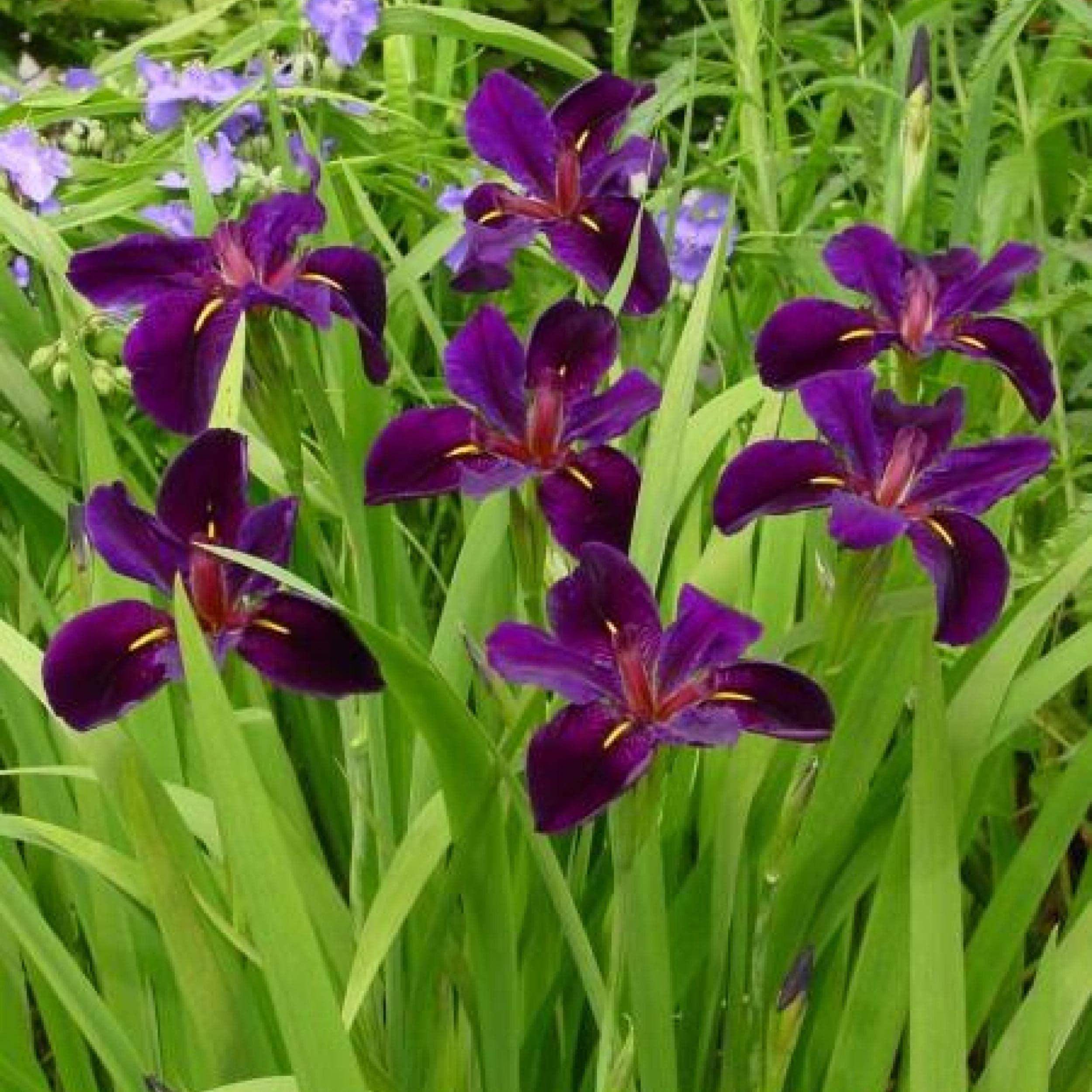
The Iris ‘Black Gamecock’ delivers deep, velvety purple blooms that stand out against the bright greens of a pond’s edge. This is a marginal plant meant for shallow water, bogs, or plant shelves — its crown should be just above the waterline while its roots sit submerged. The sword-like foliage adds vertical texture that contrasts nicely with the broad leaves of floating species.
Beyond aesthetics, this iris serves a practical role. Its dense root mat stabilizes pond edges and prevents soil erosion, while also providing hiding spots for smaller pond inhabitants. As a natural filter, it uptakes nutrients that would otherwise feed string algae. It is USDA hardiness zone 5 rated, making it winter-hardy across a large swath of the United States.
Owners consistently praise the packaging quality and the health of the plants upon arrival. The instruction card included with the shipment is specific to irises, covering depth requirements and wintering protocols. This plant will spread slowly via rhizomes over the years, so give it room to expand along the pond margin.
Why we love it
- Striking dark purple flowers add unique visual drama
- Winter hardy to zone 5, tolerates cold winters
- Dense root system stabilizes pond edges and filters water
- Compact size works for ponds of any scale
Good to know
- Needs shallow water — crown must stay above waterline
- Blooms only in spring; foliage is its year-round contribution
- Slow-spreading rhizomes require patience for full coverage
4. Chalily Dwarf Giant Papyrus
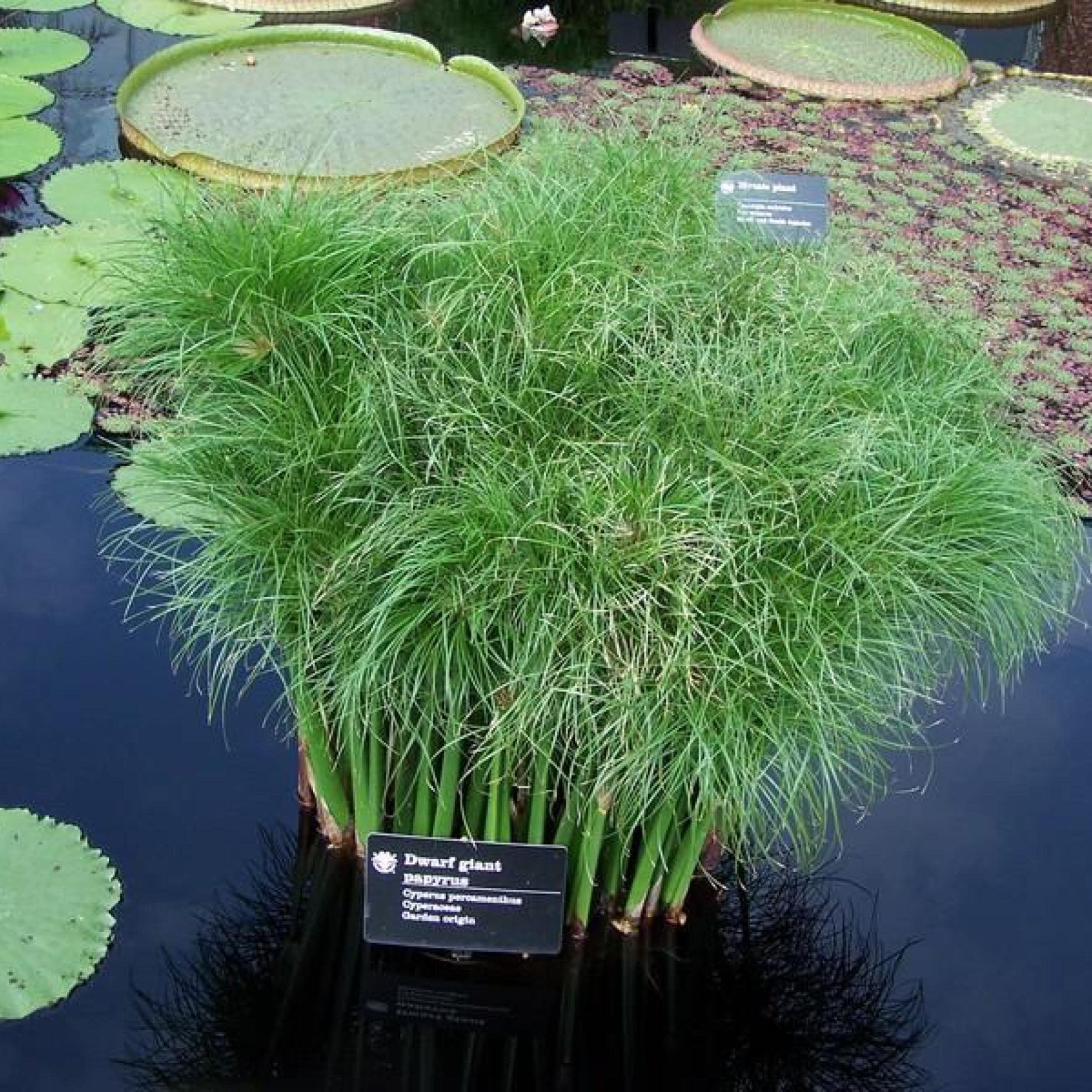
The Dwarf Giant Papyrus is a hybrid that combines the compact height of dwarf papyrus with the full, mop-like flower heads of its giant cousin. This plant reaches a manageable size for most ponds, creating a dramatic vertical accent without overwhelming a smaller water feature. It is a marginal plant, meaning it should sit in shallow water with its root zone submerged.
Its dense cluster of stems provides excellent cover for fish, and its roots act as a biofilter, pulling nutrients from the water. It tolerates both full sun and partial shade, giving flexibility in pond placement. The plant arrives damp and carefully packaged, with individual descriptors from the Chalily team.
Owners note that the papyrus grows quickly once established, adding noticeable height within the first month. It is not winter-hardy in freezing climates — treat it as an annual or bring it indoors during frost. The unique silhouette of the flower heads creates a natural focal point that contrasts with low-growing floaters and submerged oxygenators.
Why we love it
- Unique architectural form with mop-like flower heads
- Compact size fits ponds of all dimensions
- Tolerates full sun and partial shade
- Grows quickly, providing fast visual impact
Good to know
- Not winter-hardy — must be overwintered indoors in cold zones
- Needs shallow water; deep submersion can rot the crown
- Stems can be top-heavy in windy areas
5. Water Lettuce + Hyacinth + Water Lily Tuber Bundle

This bundle from AquaLeaf Aquatics combines one water lettuce, one water hyacinth, and one water lily tuber — giving you the three main types of pond plants in one order. The water lily tuber is the highlight, capable of producing striking blooms when planted in a pot of heavy loam or peat soil and placed on the pond floor. The two floaters provide immediate shade and nitrate absorption while the lily establishes.
The water lettuce and hyacinth serve as natural biofilters, oxygenating the water and clearing suspended particles through their extensive root systems. The lily adds a different dimension: broad leaves that rest on the water surface and flowers that rise above it. The tuber needs several weeks to anchor and begin growth, so patience is required.
This bundle ships with trimmed roots and clear instructions. It cannot ship to AL, FL, SC, TX, WI, or LA due to state regulations on invasive species. The plants are frost-tender — in a review from Ohio, a grower successfully overwintered the water lettuce indoors and the lily tuber directly in the pond (it re-sprouted in spring). A solid entry-level combo that lets you experiment with multiple plant forms at once.
Why we love it
- Includes floaters plus a water lily tuber for blooms
- Natural biofiltration from all three plant types
- Good starter set for experimenting with different forms
- Fast-growing floaters provide quick coverage
Good to know
- Water hyacinth may struggle in cooler ponds (below 60F)
- Lily tuber takes weeks to establish and bloom
- Cannot ship to several southern and northern states
- Frost-tender — overwintering required in cold climates
FAQ
Will koi eat or destroy my pond plants?
How many plants do I need for a 500-gallon koi pond?
Why are some pond plants illegal to ship to certain states?
Can I use fertilizer on pond plants with koi present?
Final Thoughts: The Verdict
For most pond owners, the best koi pond plants winner is the Water Lettuce + Water Hyacinth Bundle from AquaLeaf Aquatics because it gives you four mature floaters that immediately start filtering the water and providing shade, all at a competitive price point. If you want a dedicated oxygenator that works year after year in cold climates, grab the Chalily Anacharis. And for a dramatic vertical accent that doubles as a biofilter, nothing beats the Chalily Dwarf Giant Papyrus.