
Labrador puppies are built to eat—and fast. That rapid growth, combined with their genetic predisposition for joint issues and obesity, means the first year of feeding sets the stage for a lifetime of mobility and health. Picking a kibble designed for a Labrador’s unique skeletal structure and metabolism isn’t just a preference; it’s a critical decision that affects growth rate, stool quality, and coat condition.
I’m Mo Mahin — the founder and writer behind Furric. I spent months analyzing the nutritional profiles, kibble geometries, and AAFCO statements of dozens of puppy formulas, cross-referencing them with the specific calcium-to-phosphorus ratios and calorie densities that controlled-growth large-breed diets require.
Whether you’re raising a show-line English Lab or a high-drive field-bred companion, your choice of labrador puppy food will directly influence their bone development, trainability, and digestive comfort during those critical growing months.
How To Choose The Best Labrador Puppy Food
Not all large-breed puppy foods are created equal. Labradors have a specific growth curve—they gain weight rapidly but mature slowly. A diet that pushes aggressive growth increases the risk of hip dysplasia and elbow dysplasia. Focus on these critical factors.
Calcium & Phosphorus: The Skeleton Rule
For a large-breed puppy like a Labrador, the Association of American Feed Control Officials (AAFCO) recommends a maximum of 1.8% calcium on a dry matter basis for large-breed growth. Too much calcium accelerates bone development faster than the joints can support, leading to skeletal deformities. Look for a calcium level between 1.0% and 1.5%. The calcium-to-phosphorus ratio should sit close to 1.3:1. The Hill’s Science Diet and Royal Canin formulas in this guide are calibrated for this exact ratio.
Kibble Geometry: The Gulp Factor
Labrador puppies are notorious gulpers—they inhale food without chewing. A standard round kibble encourages scarfing, which can cause bloat and poor digestion. Breed-specific kibbles, like the donut-shaped Royal Canin Labrador Retriever formula, force the puppy to slow down and chew. For non-breed-specific foods, look for a large, irregular kibble shape that encourages chewing and slows eating speed naturally.
Energy Density & Protein Quality
Lab puppies need protein to build lean muscle, but too much fat (above 16%) can lead to excessive calorie intake and rapid weight gain. Target a protein range of 26% to 30% and a fat content of 12% to 15%. First-ingredient protein should be a named animal source—chicken, lamb, or fish meal—not a by-product meal. The Purina Pro Plan Sport 30/18 formula is designed for athletic-type Labs, while the Bully Max 25/11 offers a lower-fat option for pups prone to putting on weight.
Quick Comparison
On smaller screens, swipe sideways to see the full table.
| Model | Category | Best For | Key Spec | Amazon |
|---|---|---|---|---|
| Royal Canin Labrador Retriever Puppy | Breed-Specific | Purebred Labs 8 weeks to 15 months | Donut-shaped kibble; 1.2% calcium | Amazon |
| Hill’s Science Diet Large Breed Puppy | Veterinarian Recommended | Growing bones and immunity | Balanced minerals; DHA + fish oil | Amazon |
| Purina Pro Plan Sport 30/18 Large Breed Puppy | High Protein | Athletic/field-bred Lab puppies | 30% protein; glucosamine for joints | Amazon |
| Nutro Max Large Breed Puppy | Non-GMO | Owners avoiding corn, wheat, soy | 1.2% calcium; 25 lb bag | Amazon |
| Bully Max 25/11 High Protein Low Fat | Chicken-Free | Weight-sensitive Labs with poultry sensitivities | 11% fat; lamb-based; probiotics | Amazon |
In‑Depth Reviews
1. Royal Canin Breed Health Nutrition Labrador Retriever Puppy

Royal Canin designed this formula specifically for the Labrador Retriever breed—not just “large breed” in general. The donut-shaped kibble is the standout feature: it physically forces a fast-eating Lab puppy to slow down and chew, which reduces air swallowing and the risk of bloat. The calcium level sits at a controlled 1.2%, and the phosphorus level is calibrated to match the 1.3:1 ratio recommended by veterinary orthopedic specialists for large-breed skeletal health.
Real-owner feedback confirms that picky Lab pups consistently finish their bowls, and several breeders report shinier coats and firmer stools after switching. The protein content is moderate at 26%, which supports steady muscle growth without accelerating the growth plates—a critical factor for preventing hip dysplasia in a breed already predisposed to it.
One practical consideration: because this is a breed-specific formula, it may not be ideal if you have multiple puppies of different breeds. The 30-pound bag lasts roughly 30 days for a 40-pound growing Lab pup fed the recommended amount. Owners note that the subscription price on Amazon makes it more accessible than the in-store retail price.
Why we love it
- Donut-shaped kibble slows gulping—reduces bloat risk
- Calcium and phosphorus levels dialed for Labrador skeletal development
- Overwhelmingly positive reviews from breeders and vets
Good to know
- Only suitable for purebred Labs—not ideal for mixed-breed households
- Premium-tier price point compared to generic large-breed formulas
2. Hill’s Science Diet Large Breed Puppy Chicken & Brown Rice
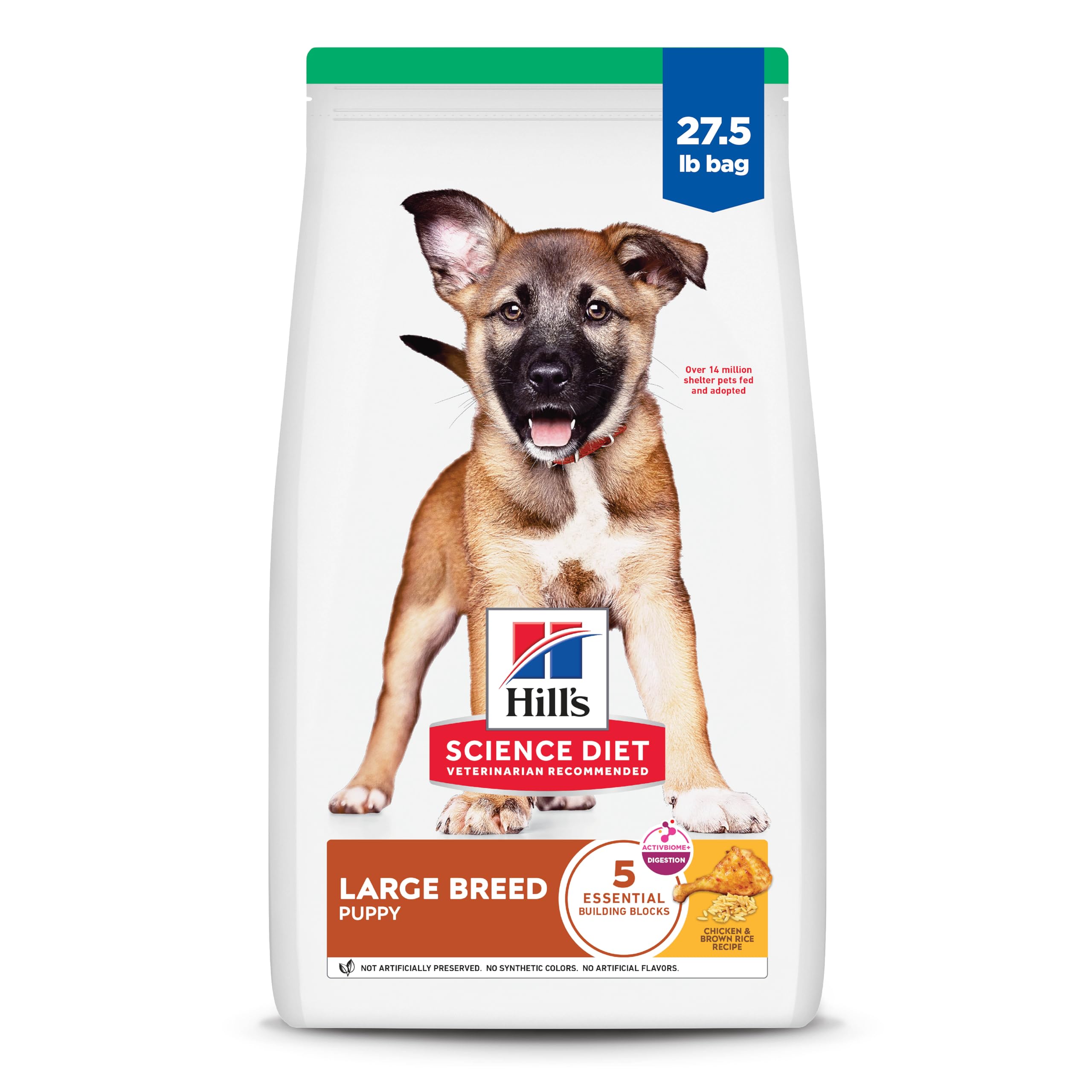
Hill’s Science Diet is the #1 veterinarian-recommended brand in the US, and this Large Breed Puppy formula justifies that reputation with precise nutrient ratios. The inclusion of DHA from fish oil directly supports brain and eye development during the 8-to-18-week critical socialization window, while the antioxidant blend (vitamins E and C) bolsters the developing immune system—a major concern for puppies transitioning from maternal antibodies.
The 1.0% calcium level is at the conservative end of the safe range, making it a strong choice for owners who want to err on the side of slower growth to protect joint health. The 22.5% protein content is slightly lower than some competing formulas, but the protein quality is high (real chicken is the first ingredient), and the 27.5-pound bag provides excellent mid-range value per pound.
Customer reviews consistently mention that even the pickiest Lab pups devour this food—several owners reported that their dogs had soft stool on other brands but firmed up on Hill’s. The large kibble size encourages chewing, though it’s not as specialized as Royal Canin’s donut shape. One common note: follow your vet’s portion recommendations rather than the bag’s instructions to avoid overfeeding during the rapid-growth phase between 4 and 8 months.
Why we love it
- Veterinarian-recommended with decades of clinical research backing
- DHA from fish oil supports brain and eye development
- Conservative calcium level (1.0%) for controlled growth
Good to know
- Protein (22.5%) is lower than some high-energy Lab puppies need
- Standard kibble shape doesn’t address gulping behavior
3. Purina Pro Plan Sport Development Large Breed 30/18 Puppy
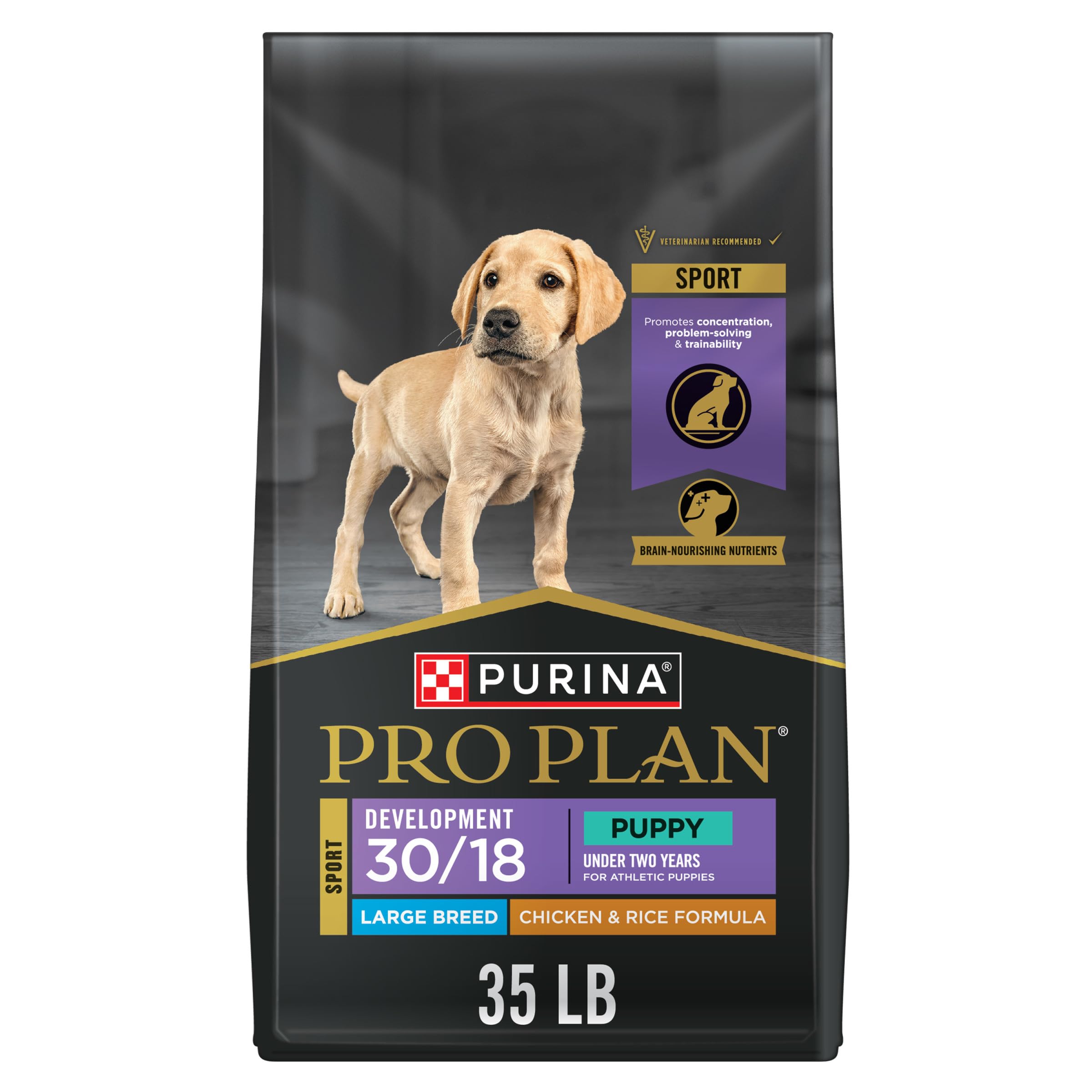
This formula is built for field-bred Labrador puppies—the ones that will go on to hunt, compete in dock diving, or work as service dogs. The 30/18 ratio (30% protein, 18% fat) provides the sustained energy these high-drive pups need without relying on fillers. Real chicken is the first ingredient, and the inclusion of glucosamine supports the joint integrity that working Labs depend on.
The 35-pound bag is the largest in this comparison, offering the best cost-per-pound for owners who feed a high-volume diet. The kibble is a medium-sized, rounded shape that doesn’t specifically slow gulping, but the density of the nugget is harder than standard puppy kibble, which encourages some chewing. The formula includes bone-supporting calcium and phosphorus at levels appropriate for large-breed growth, though the 1.2% calcium is at the middle of the acceptable range.
Owners of active Labs report that this food maintains muscle condition without excessive fat gain—critical for a breed that loves to eat but needs to stay lean. The probiotic support is a welcome addition for sensitive stomachs during the transition from milk to solid food. Keep in mind that the 18% fat content is higher than the low-fat alternatives; if your Lab puppy is already carrying extra weight, this may push calorie intake too high.
Why we love it
- 30% protein supports active, athletic Labrador puppies
- Glucosamine and chondroitin for joint support
- 35-pound bag offers excellent value for high-volume feeders
Good to know
- 18% fat may be too calorie-dense for couch-potato Labs
- Medium kibble shape doesn’t slow gulping behavior
4. Nutro Max Large Breed Puppy Farm-Raised Chicken
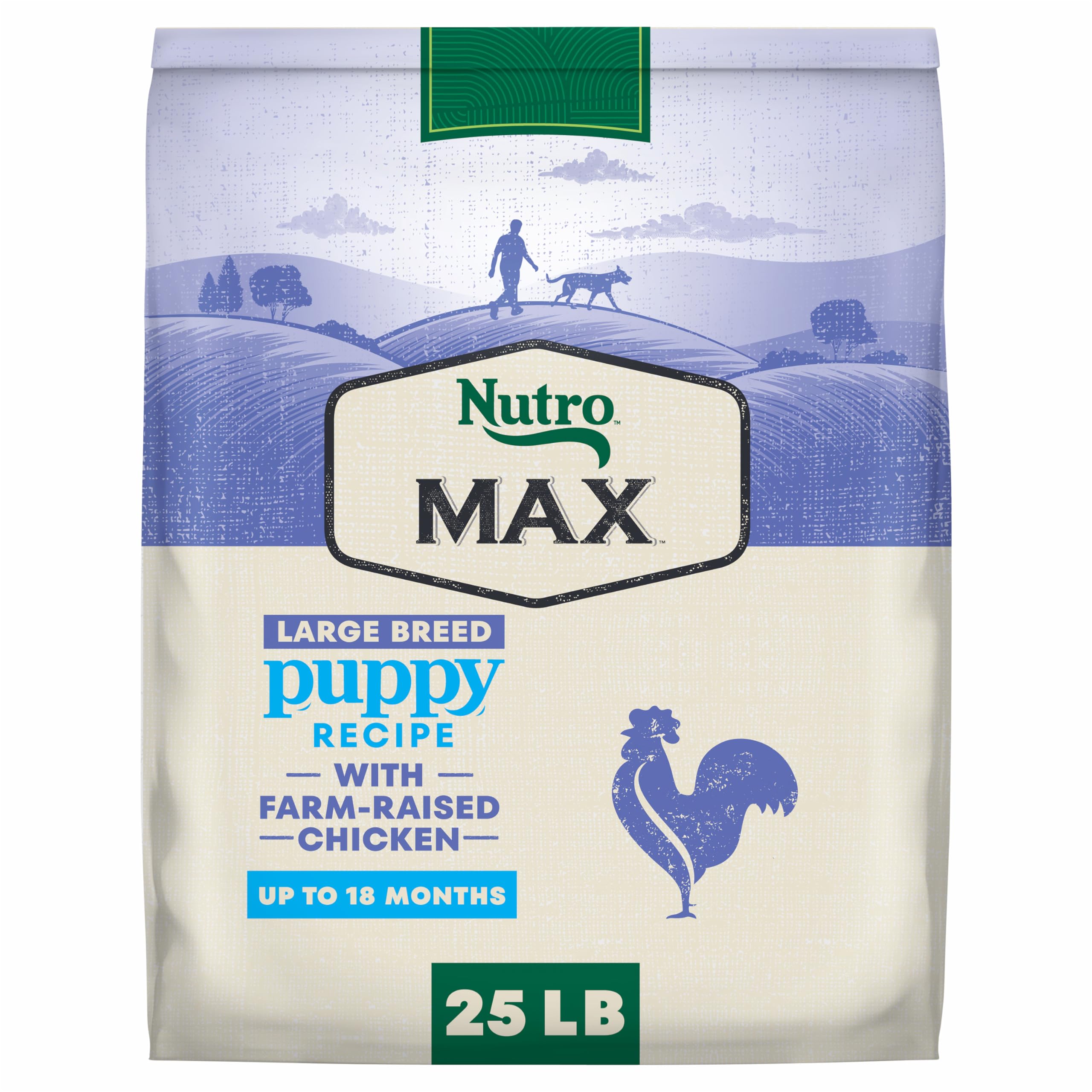
Nutro Max delivers strong nutritional fundamentals at a mid-range price point. The formula lists farm-raised chicken as the first ingredient and avoids chicken by-product meal, corn, wheat, and soy—a clean ingredient panel that appeals to owners who want a simpler recipe without paying premium-tier prices. The 1.2% calcium level is right in the sweet spot for large-breed puppies, and the inclusion of natural glucosamine and chondroitin provides foundational joint support.
The 25-pound bag is convenient for owners with limited storage, though the per-pound cost is slightly higher than the 35-pound Purina bag. The kibble is a standard round shape, which doesn’t address gulping as effectively as the Royal Canin donut shape. However, the DHA inclusion—an omega-3 fatty acid derived from fish oil—supports brain development during the critical 8-to-16-week imprint period.
Customer feedback highlights that the food is well-tolerated by sensitive stomachs, with fewer instances of loose stool compared to some grain-inclusive competitors. The non-GMO claim is reassuring for owners who prioritize ingredient sourcing, though the formula lacks the breed-specific research of Royal Canin or the veterinary clinical trials of Hill’s. It’s a solid all-rounder for owners who want quality without the breed-specific premium.
Why we love it
- Non-GMO ingredients without corn, wheat, or soy
- DHA supports healthy brain and eye development
- Glucosamine and chondroitin included for joint health
Good to know
- Standard round kibble doesn’t slow fast eaters
- No breed-specific formulation for Labrador growth patterns
5. Bully Max 25/11 High Protein Low Fat Lamb Puppy
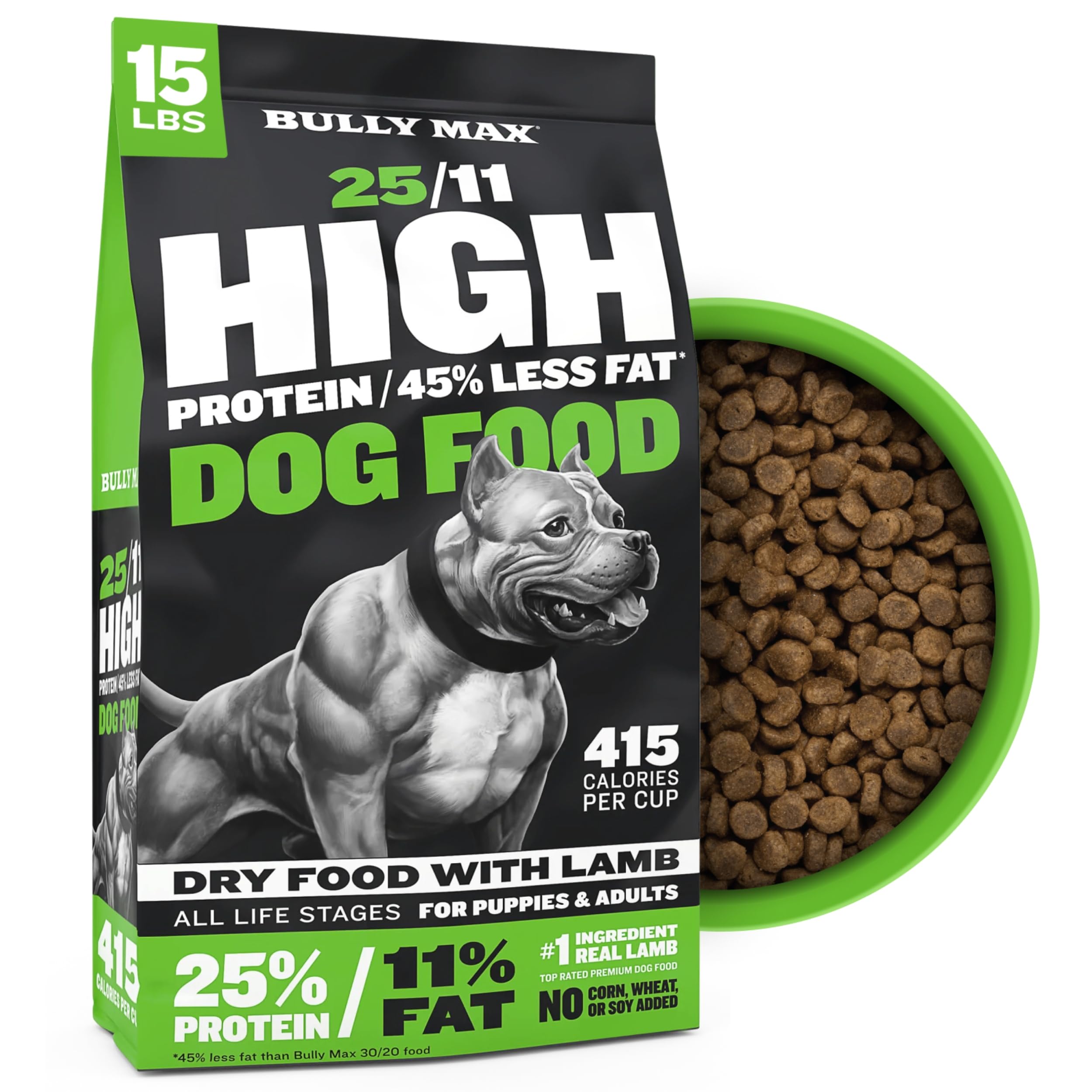
Bully Max takes a different approach: 25% protein with only 11% fat—45% leaner than their standard 30/20 formula. This makes it a targeted option for Labrador puppies who are genetically predisposed to obesity or who have poultry allergies. The lamb-based recipe avoids chicken entirely, which is helpful because poultry sensitivities are increasingly common in Labradors. The inclusion of live probiotics and postbiotics supports digestive health during the transition period.
The 15-pound bag is the smallest in this comparison, making it ideal for owners who want to trial a formula before committing to a large bag. The kibble size is large and dense, which promotes chewing and slows eating speed naturally—an advantage over the smaller, rounder kibbles. The formula meets AAFCO requirements for all life stages, but the 11% fat content may leave some high-energy field-bred Lab puppies feeling under-fueled during intense training sessions.
Owners of Labs with poultry sensitivities report that the lamb flavor is well-accepted, and the added omega-rich salmon oil contributes to coat health. The lower calorie density (approximately 350 kcal per cup) allows for slightly larger portion sizes without exceeding daily caloric needs—a psychological win for owners who feel their puppy looks hungry. Note that the 15-pound bag requires more frequent repurchasing than larger options.
Why we love it
- Chicken-free formula suitable for Labs with poultry allergies
- 11% fat helps manage weight in predisposed Labs
- Large, dense kibble encourages chewing and slows eating
Good to know
- 15-pound bag requires frequent repurchasing for large puppies
- Lower fat content may not satisfy high-energy working Labs
FAQ
What calcium level should Labrador puppy food contain?
Why do Labradors need a different kibble shape?
Can I feed my Labrador puppy an “all life stages” formula?
Final Thoughts: The Verdict
For most Labrador puppy owners, the labrador puppy food winner is the Royal Canin Labrador Retriever Puppy because the donut-shaped kibble addresses the breed’s gulping habit directly, and the calcium levels are precisely calibrated for controlled large-breed skeletal growth. If you want a veterinarian-backed formula with proven clinical nutrition, grab the Hill’s Science Diet Large Breed Puppy. And for an active, field-bred Lab that needs higher protein to fuel performance, nothing beats the Purina Pro Plan Sport 30/18.