
Nothing kills an evening on the grass faster than the frantic scratching of your dog or the sudden discovery of tiny dark insects leaping around your ankles. The right chemical or natural intervention targets fleas at every life stage (egg, larva, pupa, adult) and keeps them off your turf for weeks.
I’m Mo Mahin — the founder and writer behind Furric. I spend my time cross-referencing EPA registration data, studying active-ingredient concentrations, reading through hundreds of verified owner reports, and comparing residual kill durations to identify which lawn flea killers actually deliver on their label claims without unnecessary hassle.
This guide cuts through the noise to help you pick the most effective product for your specific lawn situation, whether you need a quick-contact spray, a granular broadcast treatment, or a pet-safe natural option. My goal is to help you find the best lawn flea killer that matches your property size, pet situation, and application preference.
How To Choose The Best Lawn Flea Killer
Picking the right flea killer for your yard depends on three main factors: the active chemistry, the application format, and how you need to balance kill speed with household safety. Here is what matters most.
Active Ingredient: Synthetic vs Natural
Synthetic pyrethroids (bifenthrin, permethrin, lambda-cyhalothrin) provide the longest residual control—often two to four months per application—and kill on contact across dozens of insect species. Natural options (cedar oil, lemongrass oil) repel and kill on contact with shorter residual windows (days to a week) but are safe to apply directly around pets and children with zero reentry delay. Choose synthetic for heavy infestations and large lawns; choose natural for daily pet-heavy yards where you prefer minimal chemical footprint.
Application Format: Liquid Spray vs Granules
Liquid sprays (ready-to-use jugs or concentrate mixers) give you pinpoint control over coverage and penetrate thatch and grass blades where fleas hide. Granules require a broadcast spreader and work best when you need uniform treatment across a large lawn without spraying drift. Granules also offer the longest residual because the active ingredient releases slowly from the particle carrier. For fleas, granules are especially effective because they drop into the soil layer where flea larvae develop.
Pet and Family Safety Window
Check the label for “reentry interval”—the time children and pets must stay off the grass after application. Most synthetic liquids require the spray to dry completely (one to four hours). Granules often require watering-in, then a similar drying period. Natural oils need no drying wait time but require more frequent reapplication. Also verify the product is labeled for the specific animal species (dogs, cats, horses) you own.
Quick Comparison
On smaller screens, swipe sideways to see the full table.
| Model | Category | Best For | Key Spec | Amazon |
|---|---|---|---|---|
| Talstar PL Granules | Granules | Longest residual protection on large lawns | 2–4 month residual, sand-core granule | Amazon |
| Sevin Lawn Insect Granules | Granules | Broad pest control (30+ listed pests) | 20 lb bag, 320 oz coverage | Amazon |
| Cedarcide YardSafe | Natural Spray | Pet-friendly, no-downtime application | Treats 5,000 sq ft, cedar + lemongrass oil | Amazon |
| Durvet Permethrin EC 10% | Concentrate | Versatile on-animal and premise use | 10% permethrin, 16 oz concentrate | Amazon |
| Harris Flea and Tick Killer | Liquid Spray | Odorless indoor and outdoor spot treatment | 1 gallon ready-to-use, non-staining | Amazon |
In‑Depth Reviews
1. Talstar PL Granules Insecticide
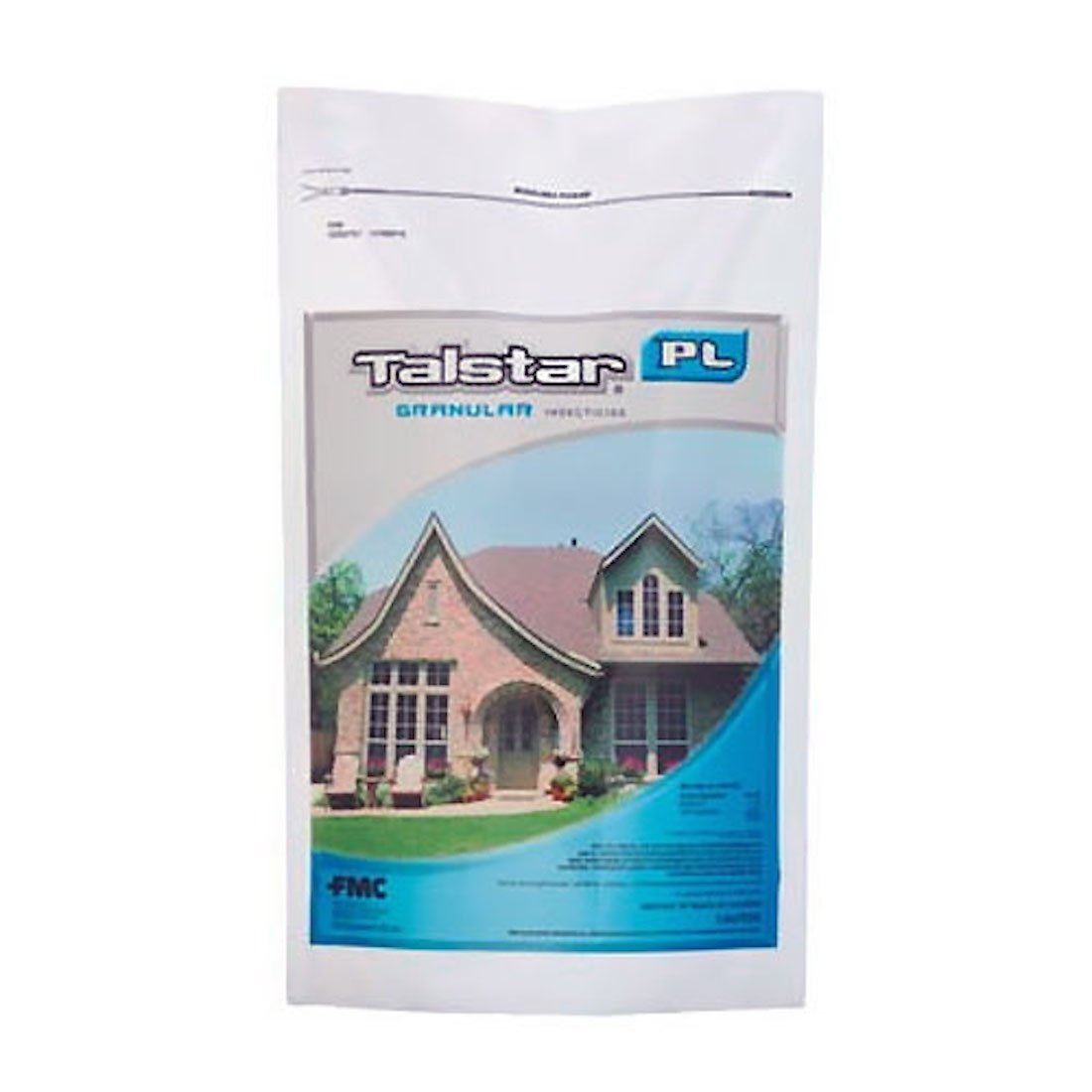
Talstar PL Granules deliver the longest residual control of any granular lawn insecticide available—a full two to four months per broadcast treatment. The sand-core granule structure penetrates mulch and grass thatch without requiring watering-in, which means you can apply and walk away. For large lawns plagued by fleas that seem to return every two weeks, this product shifts the timeline from constant reapplication to seasonal maintenance.
The active ingredient, bifenthrin, is a potent pyrethroid that kills fleas on contact and continues to work through the soil layer where flea larvae develop. A 25-pound bag covers up to 20,000 square feet at the standard label rate, making it economical for properties over a quarter acre. Users consistently report seeing dead fleas within hours and no new activity for months.
One honest caveat: bifenthrin is broad-spectrum and will also eliminate beneficial ground beetles and spiders. If you maintain a pollinator-friendly lawn or keep chickens, consider spot-treating infested zones rather than blanket broadcasting. Otherwise, for pure flea eradication with minimal labor, this is the premium standard.
Why we love it
- Longest residual of any granule on the market (2–4 months)
- No watering-in required; works through thatch and mulch
- Huge coverage area per bag (up to 20,000 sq ft)
Good to know
- Broad-spectrum insecticide may affect beneficial insects
- Requires a broadcast spreader for even application
2. Sevin Lawn Insect Granules, 20 Pounds

Sevin Lawn Insect Granules have been a household name for decades, and this 20-pound bag continues that legacy with a label covering over 30 listed pests including fleas, ticks, ants, and grub worms. The active ingredient is lambda-cyhalothrin, a synthetic pyrethroid that binds to soil organic matter and provides several weeks of residual control after watering-in. It is one of the most thoroughly tested formulas available for residential turf.
Application is straightforward: broadcast with a spreader, water in lightly, and keep pets off until the granules dissolve and the treated area dries. The 20-pound bag covers roughly 10,000 square feet at the standard flea rate. City dwellers and suburban homeowners appreciate that the granules have virtually no odor during or after application—unlike liquid concentrates that sometimes carry a chemical smell during mixing.
Because lambda-cyhalothrin is also used in vegetable garden products, you can use Sevin around ornamentals and non-edible landscaping beds without worry. The key tradeoff is the watering-in step: if your area faces a drought or water restrictions, granules that require activation may be less convenient than a ready-to-use liquid spray that works on contact.
Why we love it
- Proven brand with decades of effective lawn pest control
- Kills over 30 pests including fleas, ticks, and ants
- Low odor formula; comfortable for residential use
Good to know
- Requires watering-in to activate residual protection
- Heavy 20 lb bag may be bulky to carry
3. Cedarcide YardSafe | Natural Spray
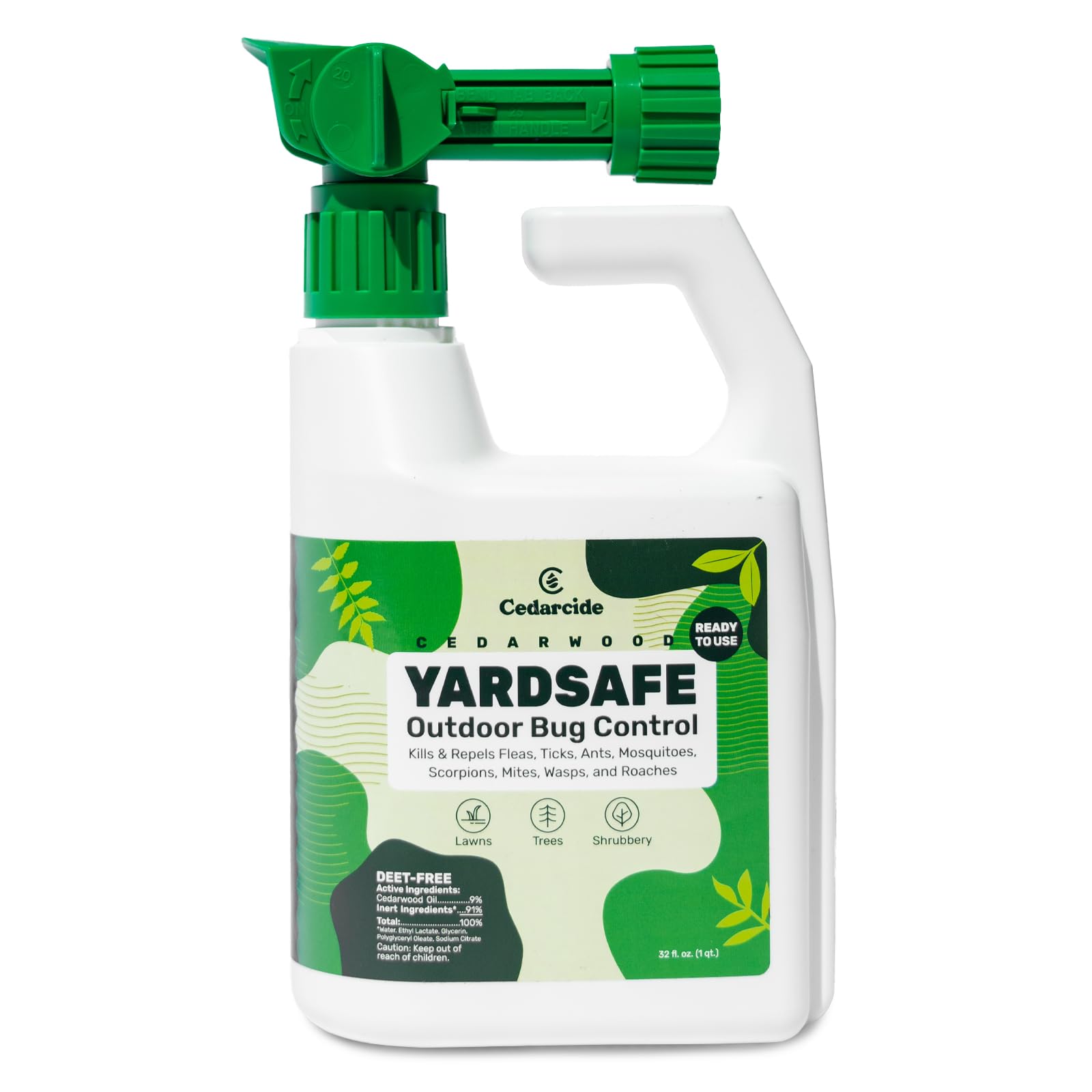
Cedarcide YardSafe breaks the mold by using cedar oil and lemongrass oil as the active ingredients—no synthetic pyrethroids, no EPA signal words like “caution” or “warning.” The 32-ounce quart attaches directly to a standard garden hose and treats up to 5,000 square feet in minutes. Because the formula is plant-based, there is zero reentry interval: your family and pets can walk on the grass immediately after spraying.
The natural oils kill fleas, ticks, mosquitoes, and chiggers on contact by dissolving the waxy cuticle on their exoskeletons. This mode of action is effective but short-lived—expect about three to seven days of protection depending on rain and sun exposure. For a yard where dogs roll in the grass all day and kids play barefoot, the tradeoff of more frequent application is often worth zero chemical exposure concerns.
Cedarcide has been manufacturing cedar-based products for over two decades, and the brand backs YardSafe with a 100% satisfaction guarantee. The one caution: the cedar scent is strong for the first hour after spraying. Some users find it pleasant and nontoxic-smelling, but others with scent sensitivities may want to spray when the family is away for a short while.
Why we love it
- Natural essential oil formula safe for all pets and children
- No reentry delay — immediate access to treated lawn
- Hose-end sprayer covers up to 5,000 sq ft per quart
Good to know
- Residual protection lasts only 3–7 days; requires frequent reapplication
- Strong cedar scent during first hour of application
4. Durvet Permethrin EC 10-Percent

Durvet Permethrin EC 10% is a concentrated emulsifiable concentrate that packs a punch: each 16-ounce bottle mixes with water to produce up to 32 gallons of finished spray. Permethrin is a synthetic pyrethroid that provides rapid knockdown and weeks of residual control on lawns, kennels, and even directly on dogs (check the label for species-specific dilution rates). The versatility here is unmatched—one bottle serves as a premise spray, a kennel treatment, and a livestock/pet spray for dairy cattle, horses, sheep, goats, and dogs.
For lawn flea control specifically, mixing 1 ounce per gallon of water and applying with a pump sprayer saturates grass and thatch effectively. Users report seeing fleas start dying within 15 to 30 minutes of application. The 10% concentration is professional-grade, so careful measurement is required—over-mixing can increase plant stress in hot weather.
The main distinction is that this is a concentrate requiring mixing and protective gear (gloves, long sleeves) during handling. It is not a grab-and-go solution like the Harris ready-to-use spray. However, for horse owners, multi-pet households, or anyone needing to treat both the lawn and the dog run, the cost-per-gallon of finished spray is significantly lower than any ready-to-use product.
Why we love it
- Highly concentrated; makes up to 32 gallons of spray
- Approved for use on dogs, horses, cattle, and premise areas
- Rapid knockdown within 30 minutes of contact
Good to know
- Requires mixing, measuring, and protective gear
- Not for use on cats; permethrin is toxic to felines
5. Harris Flea and Tick Killer, Liquid Spray (Gallon)

Harris Flea and Tick Killer comes ready-to-use in a one-gallon jug with an extended trigger sprayer, making it the most accessible entry point for spot-treating porches, dog runs, or small lawns. The formula is odorless, non-staining, and EPA-registered for use in homes with people and pets (EPA No. 3-11). It kills fleas and ticks as soon as the spray dries and continues providing residual control for weeks after application.
The gallon bottle covers about 2,000 square feet of lawn or perimeter area, which is ideal for townhome yards, side strips, and kennel runs rather than full acreage. Because it is ready-to-use with no mixing, you can grab it and start spraying in seconds—a major convenience for impulse pest emergencies. Users consistently mention that the extended trigger sprayer reaches under bushes and along fence lines where fleas like to hide.
The limitation is coverage volume. At roughly 2,000 square feet per gallon, a half-acre lawn would need over ten bottles, making the cost-per-square-foot higher than granules or concentrates. Stick with this for small areas, spot treatments around pet sleeping areas, or as a quick knockdown tool between granular applications.
Why we love it
- Ready-to-use with extended trigger sprayer—no mixing needed
- Odorless and non-staining; safe for indoor use as well
- EPA registered for homes with people and pets
Good to know
- Coverage limited to roughly 2,000 sq ft per gallon
- Not for sale in Connecticut
FAQ
How long does a lawn flea killer take to work after application?
Can I apply lawn flea killer when my dog is outside?
Do granular flea killers need to be watered in?
Is permethrin safe for my lawn and grass?
How often should I treat my lawn for fleas?
Final Thoughts: The Verdict
For most gardeners, the best lawn flea killer winner is the Talstar PL Granules because it provides the longest residual control—up to four months per application—with zero watering-in required, making it the lowest-maintenance solution for medium to large lawns. If you want a natural formula safe for immediate pet access, grab the Cedarcide YardSafe. And for versatile on-animal and premise control with professional-grade concentration, nothing beats the Durvet Permethrin EC 10%.