
If your dog’s walk feels more like an arm-wrestling match than a relaxed stroll, you know the specific frustration of a dedicated puller. The constant tension on the leash, the choked coughs, and the inability to enjoy a simple sidewalk loop are real barriers to bonding. Fortunately, the right equipment doesn’t just mask the pulling—it fundamentally redirects your dog’s momentum for a safer, more controlled experience.
I’m Mo Mahin — the founder and writer behind Furric. I’ve spent thousands of hours cross-referencing canine biomechanics with real-world owner feedback to identify which designs genuinely reduce leash pressure without causing discomfort to the dog’s trachea or spine.
After analyzing dozens of martingale collars, head halters, and front-clip harnesses, these five options represent the most effective engineering for managing a strong puller. This guide breaks down the mechanics behind each design so you can confidently choose your next leash and collar for dogs that pull.
How To Choose The Best Leash And Collar For Dogs That Pull
Not all no-pull gear works the same way. Some designs leverage pressure points on the snout, while others redistribute force across the chest or use a gentle tightening action around the neck. Understanding how each system interacts with your dog’s natural resistance is the first step toward a solution that actually sticks.
Head Halters vs. Front-Clip Harnesses vs. Martingale Collars
Head halters (like the Coastal Walk ‘n Train or Sporn Halter) work by steering the dog’s head, which naturally leads the body. They offer maximum control for heavy pullers but may require a short adjustment period. Front-clip harnesses (like the Coastal Walk Right) attach the leash at the chest, turning the dog sideways when it pulls—a gentler method ideal for smaller or more sensitive breeds. Martingale collars (like the Anglevate) tighten slightly to prevent slipping out but distribute pressure evenly around the neck, making them a solid middle ground for training sessions.
Neck and Chest Measurement Accuracy
A common mistake is relying on weight alone for sizing. Neck circumference (measured just behind the ears) and chest girth (measured behind the front legs) must be taken with a soft tape measure. A head halter that’s too loose will slip off; a harness that’s too tight will chafe under the armpits. Always consult the specific product’s size chart, especially for breeds with barrel chests like Bulldogs or deep chests like German Shepherds.
Material Durability and Weather Resistance
Nylon webbing (found on the ADVENTUREMORE harness and Sporn halter) balances strength with a lightweight feel, but martingale collars with stainless steel chain links offer better durability for dogs that test their gear. Reflective stitching is a non-negotiable safety feature for early morning or evening walks, while padded contact points reduce friction on sensitive skin—particularly important for dogs with short coats or skin allergies.
Ease of Adjustment and Quick-Release Mechanisms
Dogs that resist new gear can make fitting a battle. Look for overhead-step-in designs (like the ADVENTUREMORE harness) or pull-on head collars (like the Sporn) that minimize handling time. Quick-release buckles must lock securely but release easily when needed—a critical safety feature if the collar gets caught on a fence or branch. Check that the leash attachment ring is welded or reinforced, as cheap cast rings can snap under sudden tension.
Quick Comparison
On smaller screens, swipe sideways to see the full table.
| Model | Category | Best For | Key Spec | Amazon |
|---|---|---|---|---|
| Sporn Head Halter | Head Halter | Heavy & extreme pullers (60–130 lbs) | Padded muzzle loop, converts to collar | Amazon |
| Coastal Walk ‘n Train Head Halter | Head Halter | Strong pullers needing quick correction | Safety loop attaches to collar | Amazon |
| Coastal Walk Right Front-Connect Harness | Front-Clip Harness | Small to medium dogs (16–24 in. girth) | Dual connection: front & back rings | Amazon |
| Anglevate Martingale Collar | Martingale | Training & anti-slip for all breed sizes | Stainless steel chain core, neoprene padding | Amazon |
| ADVENTUREMORE Sport Dog Harness | Step-In Harness | Large/XL breeds needing breathable fit | Reflective threading, top handle & front clip | Amazon |
In‑Depth Reviews
1. Sporn Head Halter for Dogs
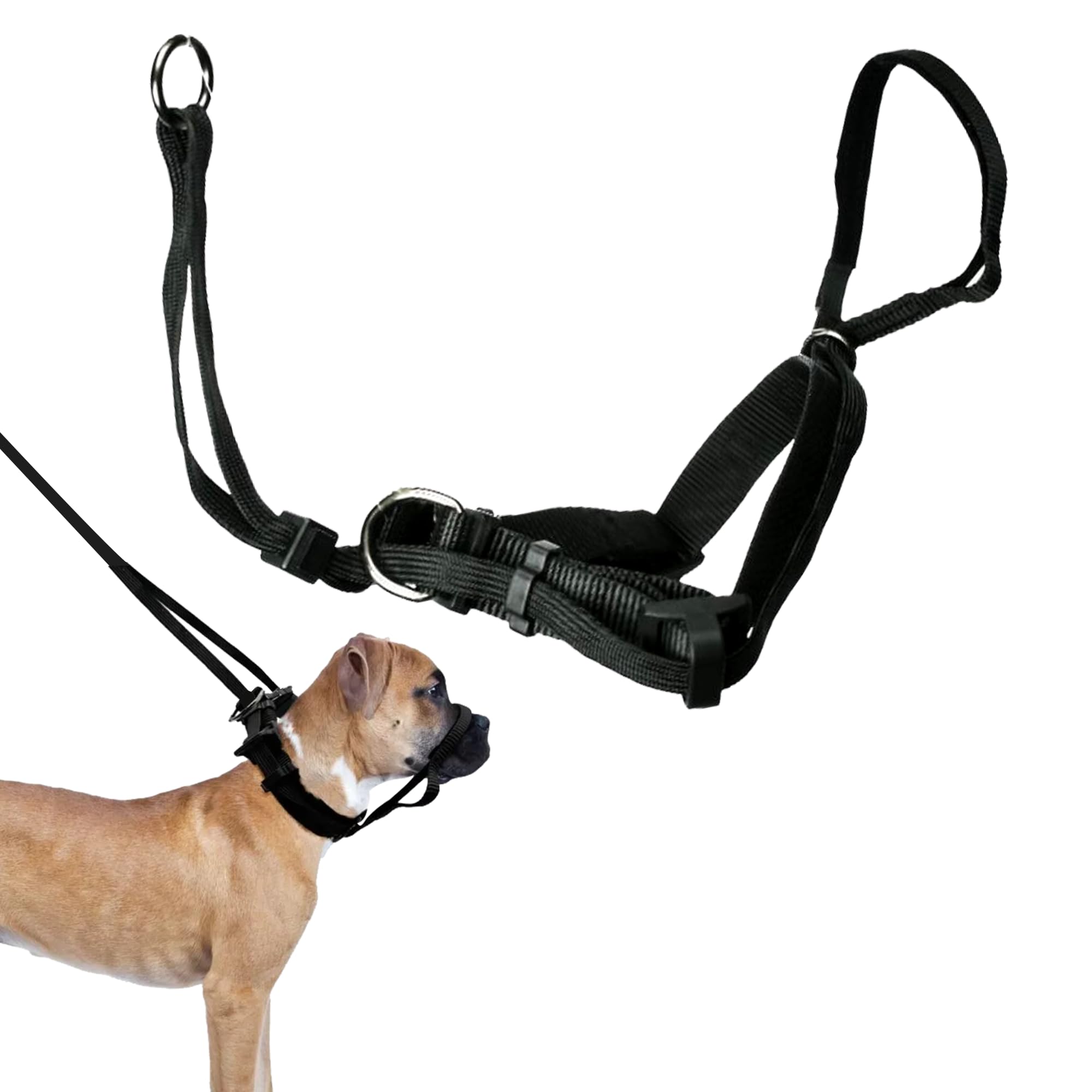
The Sporn Head Halter stands out for its dual-action design: it functions as both a head halter for steering and a standard collar when not leashed. The padded restraints on the open-face muzzle apply gentle pressure across the bridge of the nose without covering the snout entirely, which reduces slobber buildup—a common complaint with full-loop halters. The pull-on design allows you to put it over the head and adjust the muzzle loop in seconds, making it practical for dogs that resist complex buckles.
Owner reports confirm it is highly effective for extreme pullers and leash-reactive dogs in the 60–130 lb range, including breeds like the American Bulldog, Husky, and Saint Pyrenees. A certified trainer noted the immediate sit response when gentle pressure is applied, though the same reviewer found the sizing chart inaccurate for smaller breeds and the adjustment process finicky. The collar-conversion feature adds real versatility, allowing you to use it as a standard collar during downtime without removing it entirely.
For owners dealing with dogs that lunge, bark, and pull hard enough to slip other gear, the Sporn offers a structural advantage: the padding at contact points reduces the chafing risk that bare nylon halters often cause. The 16–24 inch neck range covers the large-breed spectrum well, but accuracy in measuring is critical—a loose fit here will defeat the steering mechanism entirely.
Why we love it
- Padded muzzle loop reduces friction on sensitive snouts
- Converts into a standard collar for multi-purpose wear
- Exceptional control for dogs that lunge and pull simultaneously
Good to know
- Sizing chart may be unreliable for very small or narrow-headed dogs
- Some dogs resist the nose loop initially and require desensitization training
2. Coastal Pet Walk ‘n Train Dog Head Halter
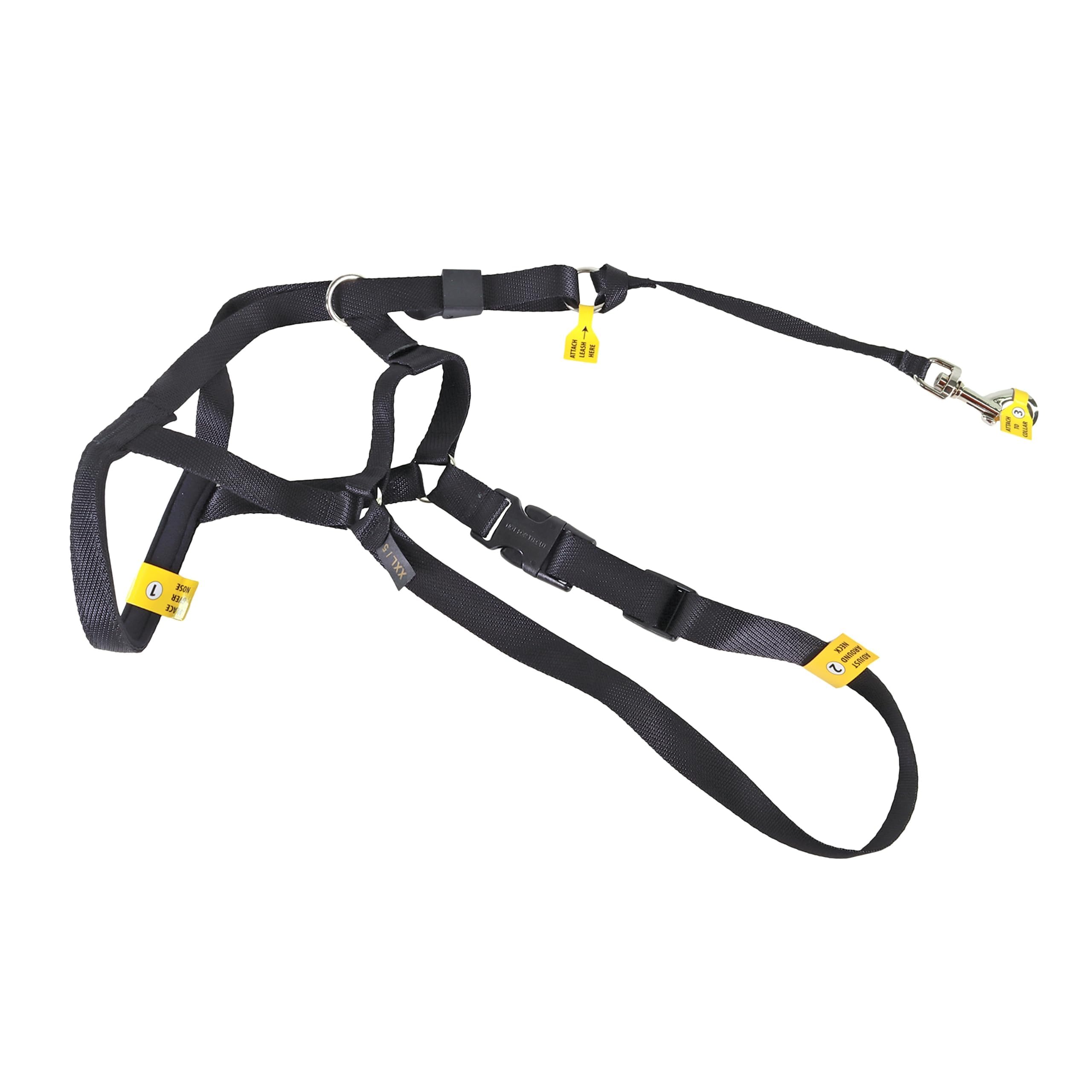
This head halter from Coastal Pet targets the sweet spot between control and simplicity. It fits like a standard collar around the neck but includes a loop that gently encircles the snout, applying pressure to the top of the nose when the dog pulls forward. The quick-release snap and safety loop allow you to attach it to a separate collar as a backup, preventing escape if the halter shifts during use—a critical safety feature for determined escape artists like Boxers and Mastiffs.
Customer feedback highlights its near-instant effect on strong pullers; several owners of Boxer mixes and Olde English Bulldogs reported a transformation within the first five minutes. The Nylon construction is lightweight at just 2.72 ounces, making it suitable for breeds that dislike heavy hardware. The side straps allow normal panting and drinking, which is a meaningful advantage over full-muzzle designs for long walks in warm weather. The Medium size fits 15–25 inch necks, but the Large struggled with a 15-lb Schnauzer, confirming that small-breed owners should size down to XS for a secure fit.
Unlike harnesses that require clipping multiple buckles, this halter goes on in seconds once adjusted. The trade-off is that some dogs paw at it initially, though the 5-minute adjustment window reported by multiple buyers suggests the learning curve is brief. For anyone transitioning from a pinch collar or choke chain, this halter provides a humane but firm alternative.
Why we love it
- Safety loop provides backup attachment to a standard collar
- Allows full panting and drinking during walks
- Extremely lightweight at under 3 ounces
Good to know
- Size selection is critical; small breeds may need XS
- Not recommended for flat-faced (brachycephalic) breeds like Pugs or Bulldogs
3. Coastal Pet Walk Right Front-Connect Padded Dog Harness
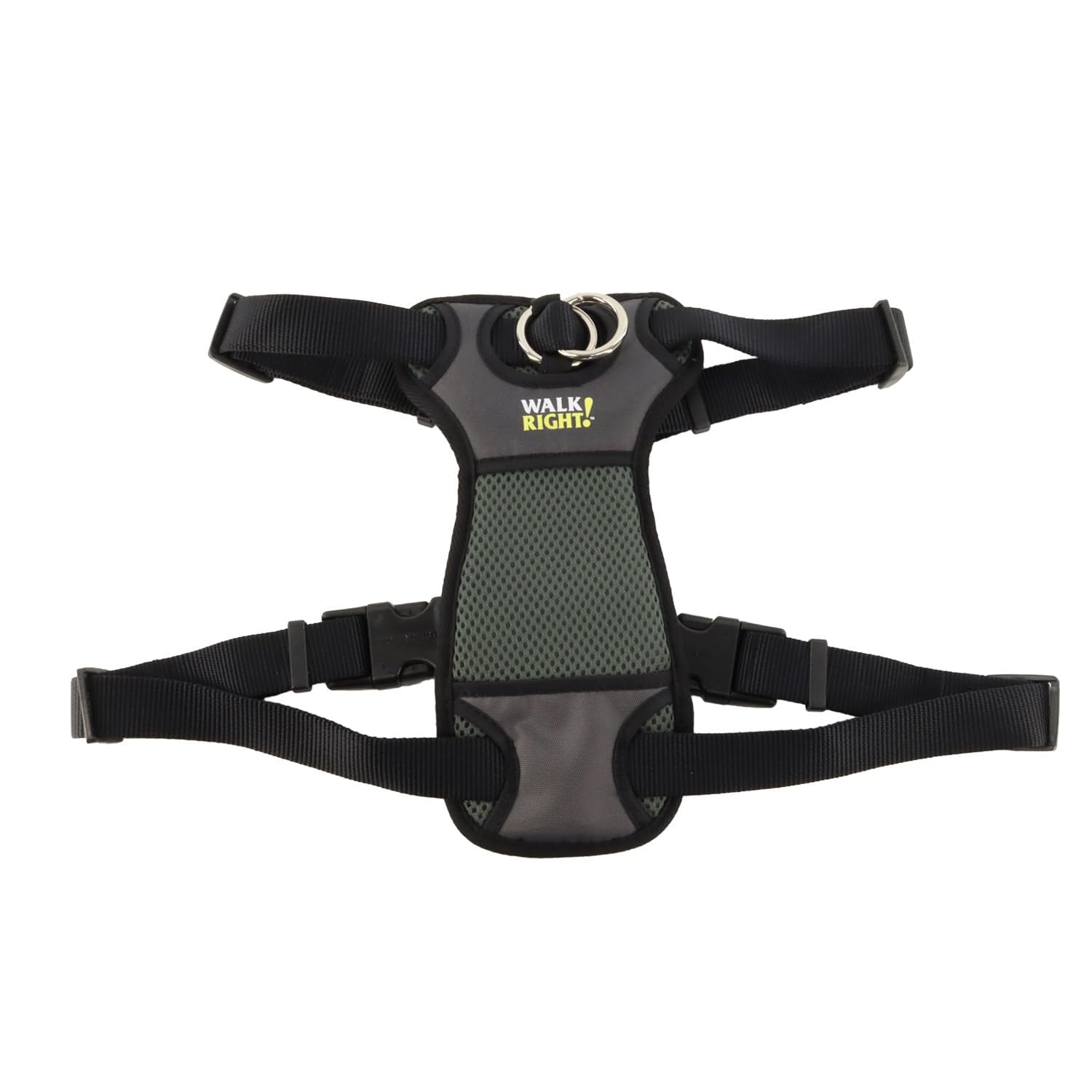
The Walk Right harness uses a front-connect D-ring on the chest strap to redirect the dog’s forward momentum sideways. When the dog pulls, the harness rotates the front shoulders, making it physically difficult to maintain full-force pulling. The over-the-head design eliminates the need to lift legs into openings, which is appreciated by dogs that are nervous about being handled around the paws. The chest pad distributes pressure across the sternum rather than the neck, a meaningful design choice for small breeds like Havanese and French Bulldogs prone to collapsing tracheas.
Owners consistently report that the front-clip setup stopped pulling within days for dogs ranging from 18 to 40 pounds. The dual-connection capability means you can switch to the back clip once the behavior is corrected, transitioning from training to casual walking without buying separate gear. The plastic hardware holds up well for normal walking but is not chew-proof—multiple reviewers noted that dogs left unattended with the harness chewed through the straps, so removal during downtime is recommended.
The Small size fits 16–24 inch chest girths perfectly for breeds like Yorkies, Dachshunds, and Bichons, but the plastic buckles can feel flimsy compared to metal alternatives. For its price tier, the padding and adjustability are excellent, and the absence of pressure points around the armpits makes it comfortable for dogs that cover several miles daily.
Why we love it
- Front-clip design redirects pull without neck pressure
- Over-the-head style is easy for nervous dogs
- Dual leash attachment points for training transition
Good to know
- Plastic hardware may not withstand chewing if left on
- Best suited for small to medium breed chest shapes
4. Anglevate Martingale No Pull Dog Collar
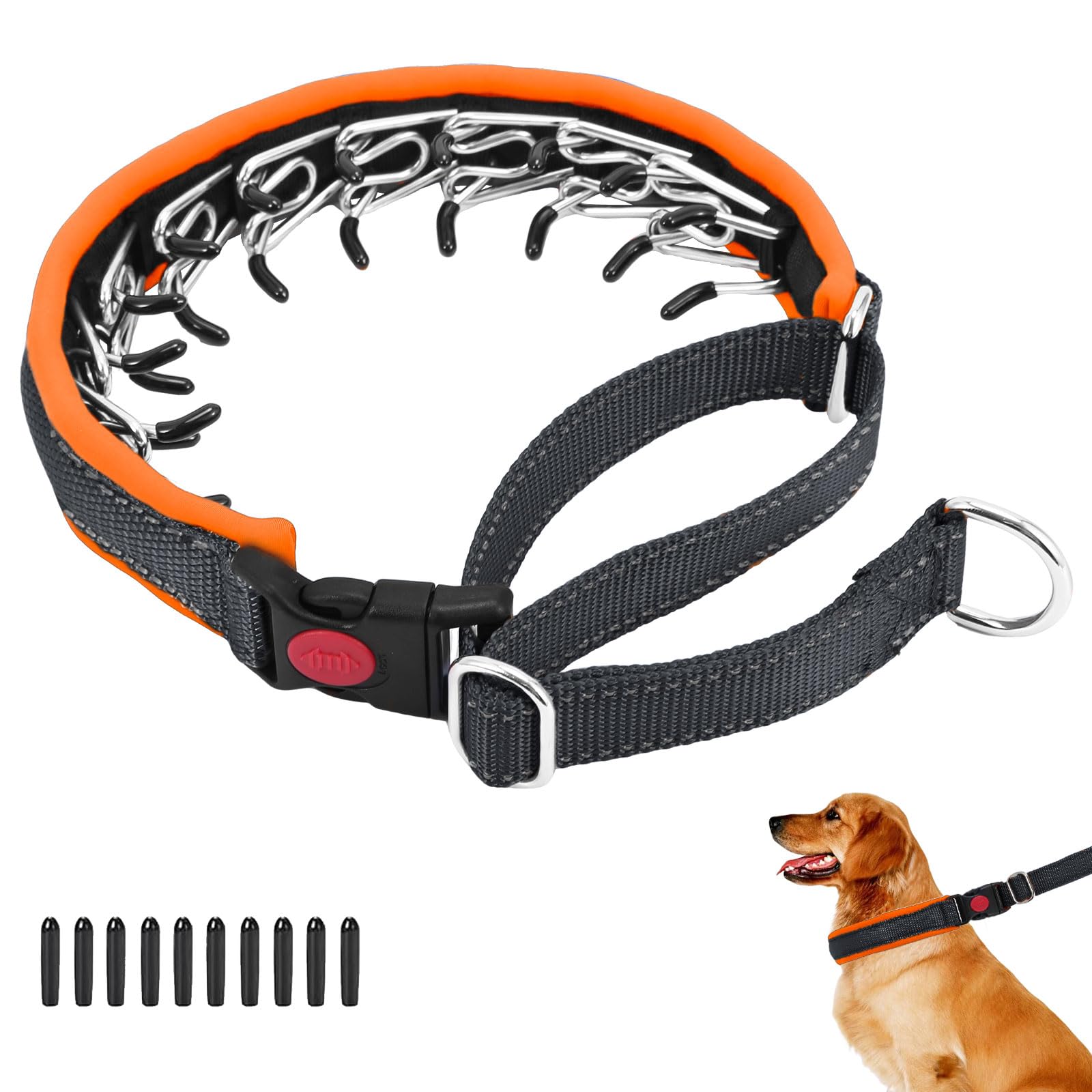
Martingale collars work by tightening evenly around the neck when tension is applied, preventing a dog from backing out of the collar—a common problem with wide-headed breeds like Greyhounds, Huskies, and German Shepherds. This Anglevate model adds a stainless steel inner chain link core and a neoprene-padded nylon outer cover, distributing the tightening pressure more evenly than a bare chain. The rubber-capped prongs provide tactile feedback without digging into the trachea, bridging the gap between a flat collar and a prong collar for training.
Owner reviews consistently praise its effectiveness for strong pullers, with one reviewer stating it was the only thing that worked after trying every other collar type. The dual-layer construction means the collar can withstand significant force without breaking—critical for breeds that lunge suddenly. The quick-release buckle is a practical addition for safety, though one reviewer reported rusting in coastal salt air, so rinsing after beach walks is advisable. The Size S (11–15 inch neck) is suitable for small breeds, while larger sizes accommodate GSDs and Pitbulls comfortably.
The rubber prong caps are pre-installed but some owners found they detach during walks. Removing the caps converts the collar to a smoother martingale, but the elastic straps holding the prongs can make that conversion tedious. For owners seeking a humane training tool that provides clear but gentle feedback, this collar offers more structural durability than a standard fabric martingale without the intimidation factor of an exposed prong collar.
Why we love it
- Stainless steel inner core resists breakage under extreme tension
- Neoprene padding prevents rubbing on the neck
- Quick-release buckle allows fast removal in emergencies
Good to know
- Rubber prong caps may fall off; removal can be fiddly
- Metal chain can rust in high-humidity or coastal environments
5. ADVENTUREMORE No Pull Large Dog Harness
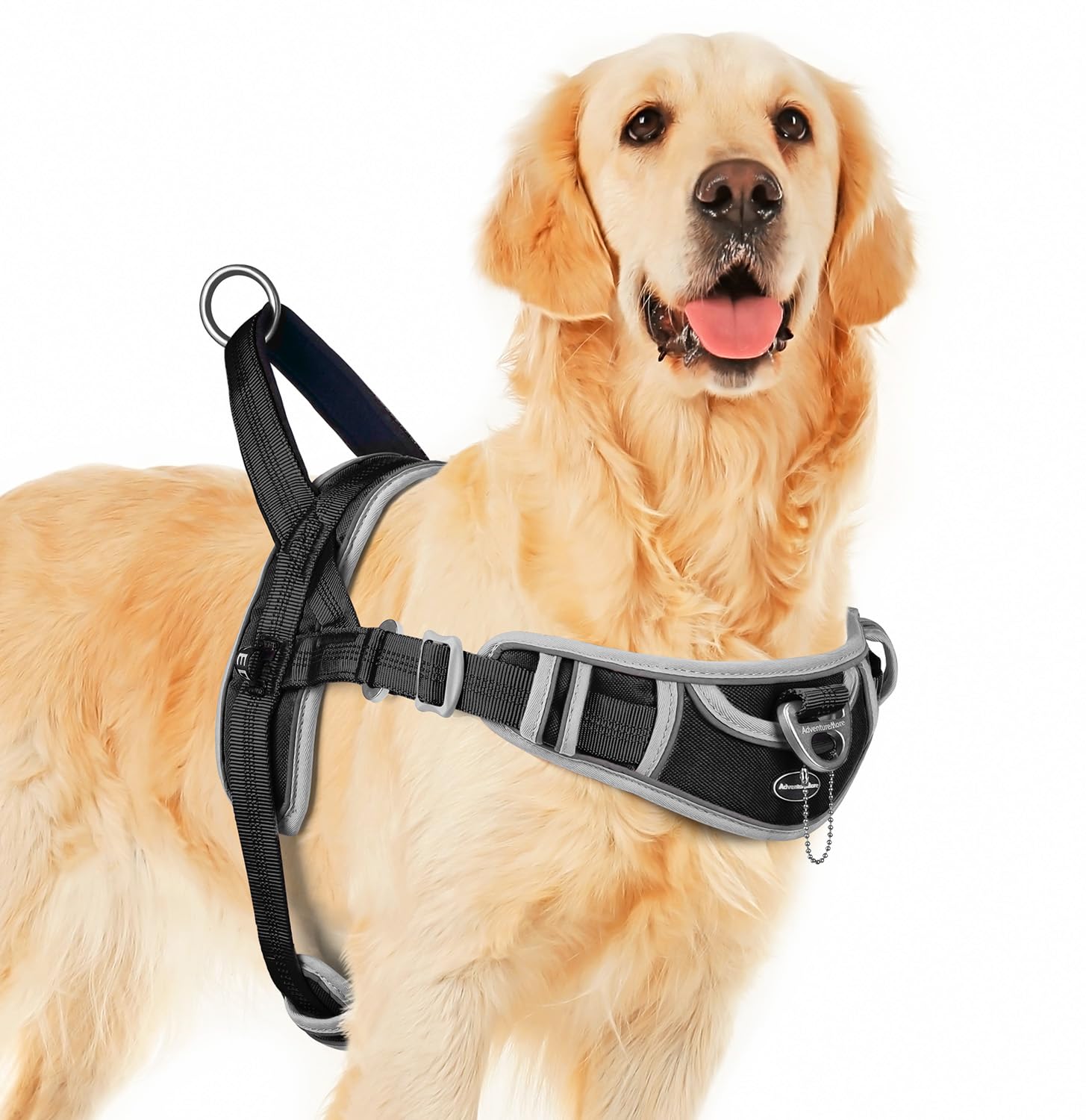
This step-in harness from ADVENTUREMORE is designed for large and extra-large breeds, using a widened neck area to distribute pull force away from the trachea. The front clip on the chest offers a steering effect similar to the Walk Right, while the back ring provides a standard attachment for relaxed walks. The mesh padding makes it one of the more breathable options in this list, which matters for thick-coated breeds like Golden Retrievers and German Shepherds exercising in warm weather.
Owners of Pitbulls, Saint Bernards, and Corgi mixes found the harness easy to put on and take off, with the fast-release buckles eliminating the struggle of lifting heavy dogs into straps. The reflective threading is bright enough for early morning visibility, and the top control handle provides extra leverage for managing sudden lunges. Some owners noted that the front-clip area can feel loose on barrel-chested dogs like American Pitbulls, causing the harness to shift slightly during pulls—tighter adjustment resolves this for most builds.
At its price tier, the ADVENTUREMORE offers a complete package: breathable mesh, reflective safety, dual attachment points, and a handle. The sizing requires careful measurement—the XL fits chest girths 30–36 inches, but a size Small (for 21-inch chests) still allowed one Corgi to back out, suggesting that deep-chested small dogs may need a more secure design. For owners of large breeds who want a no-fuss, well-ventilated harness that supports training, this is the best entry-level option.
Why we love it
- Breathable mesh padding reduces overheating during active walks
- Bright reflective threading enhances safety in low light
- Top handle provides extra control for sudden lunges
Good to know
- Front clip area can feel loose on barrel-chested dogs
- Some smaller dogs may still back out despite tight adjustment
FAQ
Will a head halter hurt my dog’s neck if they pull hard?
Is a martingale collar or a front-clip harness better for a dog that pulls?
How do I measure my dog’s neck for a martingale collar?
Can I use a head halter on a brachycephalic breed like a Pug or French Bulldog?
How long does it take for a dog to adjust to a no-pull collar or halter?
Final Thoughts: The Verdict
For most owners dealing with a strong puller, the best leash and collar for dogs that pull is the Coastal Pet Walk ‘n Train Head Halter because it combines a lightweight, low-profile design with a safety backup loop that prevents escapes, and it works within minutes for breeds like Boxers and Bulldogs. If you prefer the padded feel and collar-conversion versatility of a premium halter, grab the Sporn Head Halter. And for small-breed owners who want to avoid head pressure altogether, the Coastal Pet Walk Right Harness delivers reliable front-clip steering in a comfortable, easy-to-put-on package.