
Finding the right flooring for a leopard gecko enclosure involves more than picking a bag of dirt. The wrong substrate can cause impaction, harbor bacteria, or fail to hold the burrows your gecko needs to feel secure. Selecting a material that balances humidity, digestibility, and cleanliness is the single most important decision for a healthy vivarium.
I’m Mo Mahin — the founder and writer behind Furric. I’ve spent years analyzing reptile husbandry data, comparing substrate compositions, and studying owner feedback across thousands of reviews to identify which bedding options actually deliver on their claims for arid-species enclosures.
This guide breaks down the top choices for your gecko’s home, from loose coconut fiber to washable mats, so you can confidently choose the right leopard gecko bedding for your setup.
How To Choose The Best Leopard Gecko Bedding
Leopard geckos are terrestrial and spend most of their time on the ground, so the bedding you choose directly impacts their digestion, shedding, and stress levels. Here are the key factors to weigh before buying.
Particle Size and Impaction Risk
The biggest danger with loose substrates is that small particles can be ingested during feeding and cause gut impaction. Look for materials with particles larger than 1/8 inch, or opt for solid liners if your gecko is a messy eater. Coconut fiber blocks are generally safe because the fibers are long and pass through the digestive tract if accidentally swallowed.
Humidity Management
Leopard geckos need a dry enclosure overall but require a humid hide for shedding. Some beddings, like coconut fiber, retain moisture well and can help maintain localized humidity of 60-80% in specific areas. Other materials, like reptile carpet, drain quickly and keep the tank dry, which means you must supplement with a separate moist hide.
Cleaning and Reusability
Consider how often you want to replace the bedding. Loose substrates like coconut fiber are disposable and should be fully replaced every few months. Reptile carpet and liners are reusable and can be wiped down or washed, making them more economical over time but requiring regular rinsing to prevent bacterial buildup.
Natural Behavior Support
A good bedding allows for natural burrowing. Geckos dig to thermoregulate and feel secure. A deep layer of loose substrate (2-3 inches) lets them exhibit this behavior. Solid mats prevent burrowing, so you may need to provide additional hides if using a liner.
Quick Comparison
On smaller screens, swipe sideways to see the full table.
| Model | Category | Best For | Key Spec | Amazon |
|---|---|---|---|---|
| Legigo 4 Pack Coconut Fiber | Loose Substrate | Burrowing & humidity control | 4 bricks, 1.4 lb each, 100% organic coir | Amazon |
| Halatool Coconut Fiber 2 Pack | Loose Substrate | Budget-friendly bulk value | 2 bricks, 1.4 lb each, expands 3x | Amazon |
| ZeeDix 10 Pcs Coconut Fiber Mats | Mat/Liner | Easy spot cleaning & multi-use | 10 mats, 12″x12″ each, 100% natural coir | Amazon |
| SISIPAI LIFE Reptile Carpet | Solid Liner | Low-maintenance dry enclosures | 18″x72″, non-adhesive, tear-resistant | Amazon |
| MCLANZOO Reptile Carpet | Solid Liner | Reusable mat for small tanks | 30″x12″, vinyl material, includes tongs | Amazon |
In‑Depth Reviews
1. Legigo 4 Pack Compressed Coconut Fiber Substrate
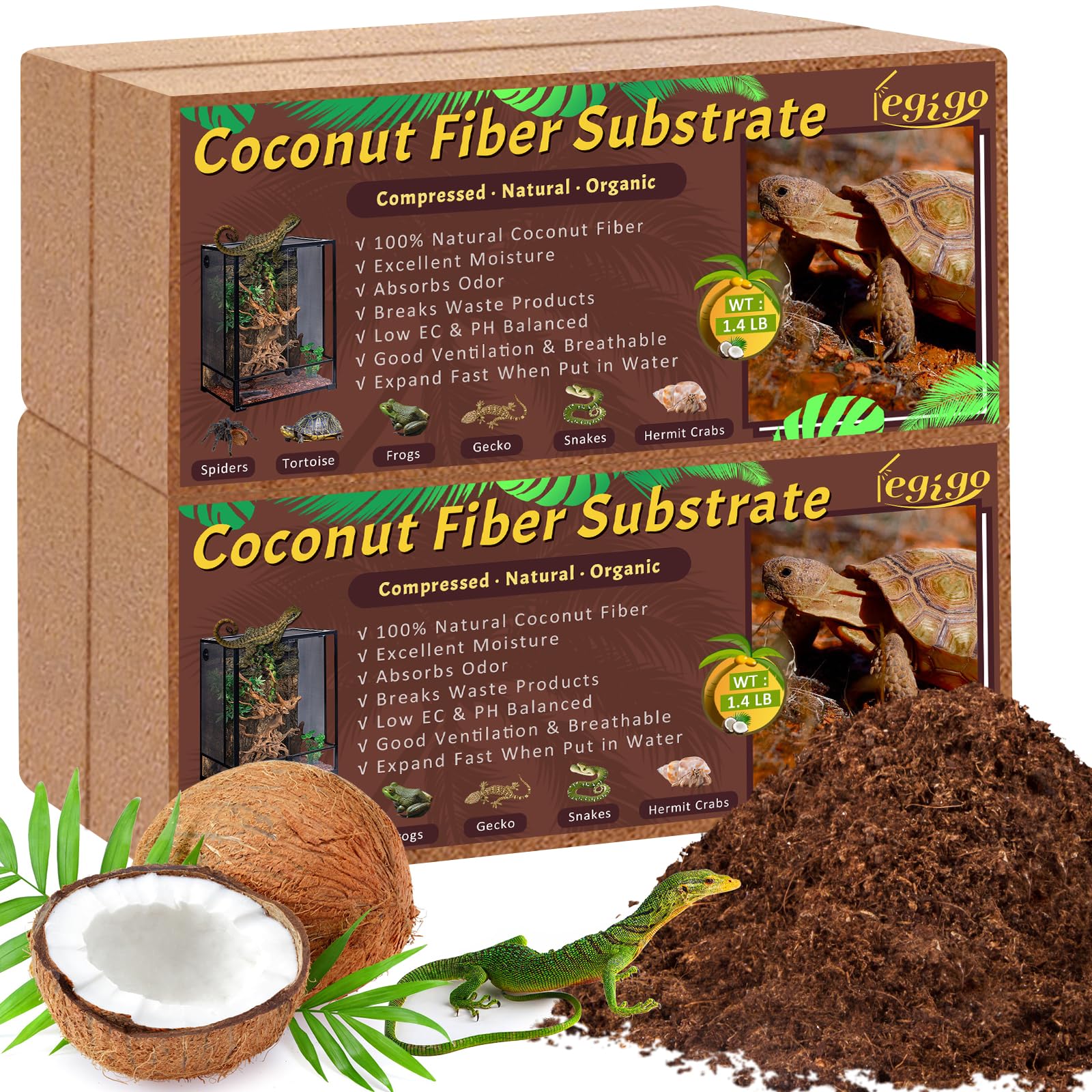
This four-brick set offers the best balance of volume and price for keepers who want deep, naturalistic bedding. Each 1.4-pound brick expands to roughly three times its compressed size when hydrated, easily covering a 20-gallon tank with a 2-inch layer. The fibers are long and coarse enough to significantly reduce impaction risk compared to sand or fine dust-based substrates.
The material excels at holding humidity within the 60-80% range for shedding aids without becoming waterlogged or developing a sour smell. Owners report that the substrate decomposes waste naturally, cutting down on odor between full cleanouts. It also allows geckos to exhibit full burrowing behavior, which is critical for thermoregulation and stress relief.
The expanded volume makes this kit a mid-range investment that outperforms smaller packs when considering cost per usable square inch of coverage. Just be prepared to let the bricks dry for 1-2 days after hydrating to dial in the correct moisture level for an arid setup.
Why we love it
- Excellent value per brick for deep burrowing layers
- Chemical-free and digestible if accidentally ingested
- Decomposes waste to reduce odor between cleanings
Good to know
- Requires soaking and drying time before use
- Not ideal for keepers who want a dry, no-prep liner
2. Halatool Coconut Fiber Substrate 2 Pack
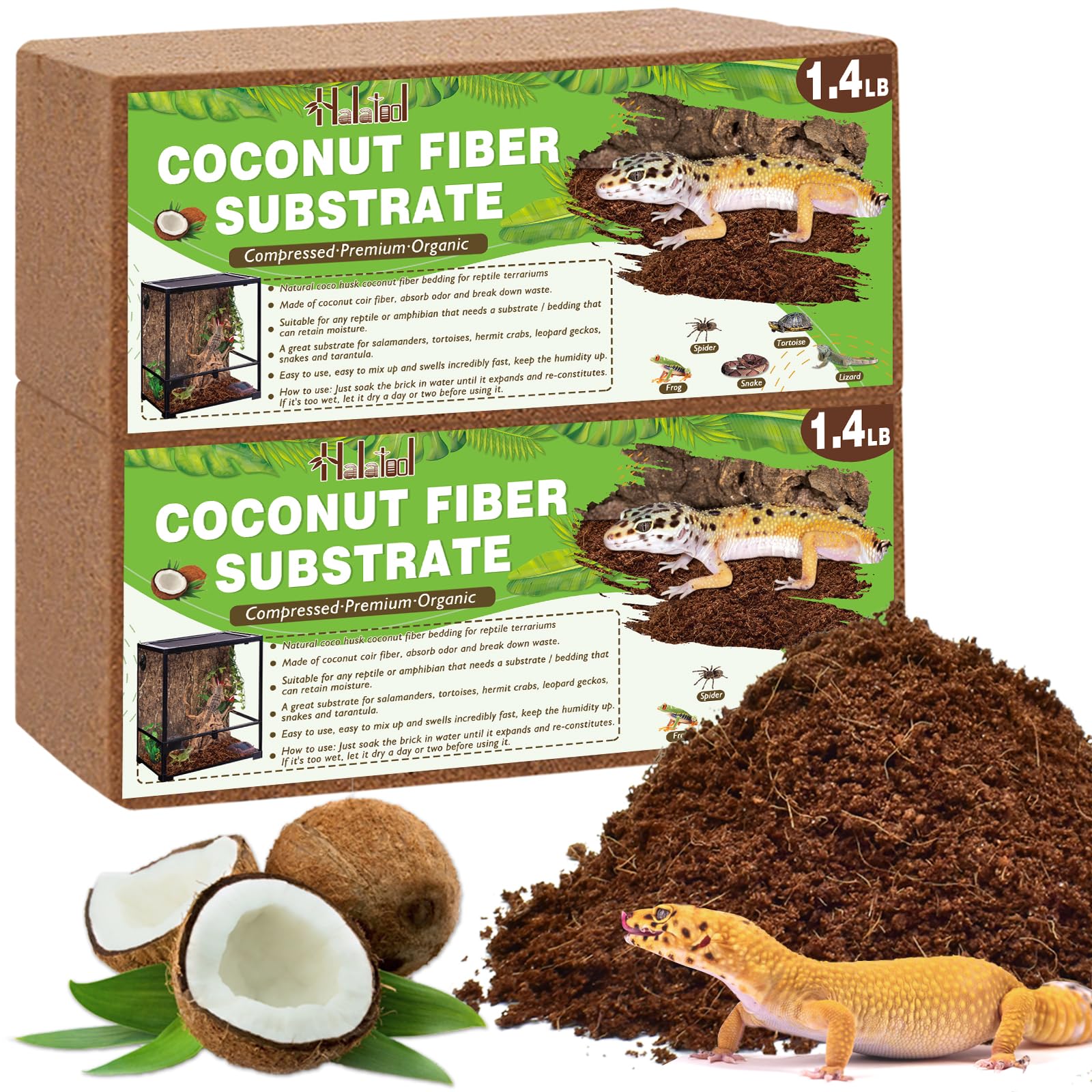
For keepers on a tighter budget who still want loose coconut coir, this two-brick pack delivers the same organic fiber quality as pricier options. Each brick weighs 1.4 pounds and fills a 4.2-gallon terrarium when expanded. The texture is soft yet structured, mimicking the loose soil of an arid environment while being gentle on gecko bellies.
The manufacturer claims the substrate reduces misting needs by up to 30% due to its moisture retention, which is a real advantage in low-humidity homes. The fibrous structure promotes aeration, preventing belly scale abrasions that can occur on rougher surfaces. It is also completely digestible if a gecko takes a mouthful during feeding.
The two-brick quantity is modest — enough for a single standard tank — but the low price point makes it a low-risk trial for first-time owners. Be aware that too much moisture during the expansion phase can create a muddy texture; letting it dry for 24 hours after soaking achieves the best consistency.
Why we love it
- Low entry cost for a natural loose substrate
- Reduces misting frequency compared to soil blends
- Soft texture prevents scale injuries during digging
Good to know
- Only two bricks — needs restocking sooner than larger packs
- Can hold too much water if not dried properly after expansion
3. ZeeDix 10 Pcs Natural Coconut Fiber Liner Mat

This ten-piece set of 12×12 inch coconut fiber mats offers a middle ground between loose substrate and synthetic carpet. Each mat is made from chemical-free coir that retains shape after washing, making it a reusable alternative to bagged bedding. The mats can be easily trimmed with scissors to fit non-standard tank dimensions.
The fiber weave allows for good airflow and moisture retention in localized areas, making it suitable for creating a humid corner without wetting the whole enclosure. Owners report that the mats hold up well through multiple rinse cycles without fraying, and debris shakes off easily. The set includes enough pieces to fully line a 40-gallon breeder tank or to replace mats on a rotation schedule.
Because these are flat mats, they do not support deep burrowing. For geckos that strongly dig, you may want to stack a few mats or pair them with a hide filled with loose substrate. The mats are also biodegradable at the end of their life, appealing to eco-conscious keepers.
Why we love it
- Reusable and easy to rinse clean with cold water
- Cut-to-fit design works for any tank shape
- Chemical-free and biodegradable material
Good to know
- Does not allow for full burrowing behavior
- May need replacement after repeated wash cycles over months
4. SISIPAI LIFE Reptile Carpet Bedding 18×72

This roll of reptile carpet measures 18 by 72 inches, giving you enough material to line multiple tanks or a large custom enclosure. The non-adhesive backing sits flat without sliding, and the high-density weave resists tearing even when cut with scissors. It is designed for dry setups where you want zero loose particles.
Cleaning is straightforward — shake off solid waste, rinse with water, and hang to dry. Because the material does not absorb moisture, it helps keep the tank dry, which is ideal for geckos prone to skin infections or for owners who want to maintain a strictly arid environment. The textured surface provides good traction for gecko feet and prevents slipping during movement.
The carpet can be cut to fit 20, 30, 40, 50, or 60-gallon tanks, making it a versatile option for keepers who upgrade enclosures over time. The main trade-off is that it does not support burrowing, so additional hides are essential. The mat is also certified food-grade material, adding a layer of safety confidence.
Why we love it
- Large roll covers many tank sizes without waste
- Non-absorbent surface keeps tank dry
- Tear-resistant and survives repeated cutting
Good to know
- Must be paired with a humid hide for shedding
- Requires regular rinsing to prevent odor from waste buildup
5. MCLANZOO Reptile Carpet with Tweezers Feeding Tongs

This green vinyl carpet comes in a 30×12 inch sheet, designed for smaller tanks like 10 or 20-gallon long enclosures. The non-abrasive surface is smooth enough that claws and teeth do not catch, yet provides enough texture for secure footing. A pair of feeding tongs is included in the package, adding immediate utility for new setups.
The vinyl material is the easiest to clean of all options — waste sits on top and wipes away with a damp cloth. It dries in minutes after rinsing, allowing you to return the gecko to a clean environment within the same day. The mat does not retain humidity, so it is best suited for keepers who monitor hydration separately through a dedicated moist hide.
The 12-inch width may be restrictive for deeper tanks, but the mat can be cut to custom lengths. The hand-wash care instruction is important — machine washing could damage the vinyl backing. This product is best for owners who prioritize cleanliness over naturalistic aesthetics and do not need burrowing capability.
Why we love it
- Fastest cleanup — waste wipes off without scrubbing
- Vinyl surface prevents claw snagging
- Includes feeding tongs for added value
Good to know
- Narrow width may not suit deeper tanks without patching
- Hand wash only — not machine washable
FAQ
Can leopard geckos eat coconut fiber bedding?
How often should I replace loose coconut fiber bedding?
Is reptile carpet or coconut fiber better for a baby leopard gecko?
Final Thoughts: The Verdict
For most gardeners, the leopard gecko bedding winner is the Legigo 4 Pack Coconut Fiber Substrate because it provides deep burrowing capability at a mid-range price with four bricks for extended coverage. If you want a reusable, low-maintenance option, grab the ZeeDix 10 Pcs Coconut Fiber Mats for easy spot cleaning and cut-to-fit flexibility. And for a completely dry, particle-free enclosure, nothing beats the SISIPAI LIFE Reptile Carpet for its large roll size and tear-resistant material.