
A planted tank is the difference between a simple fish bowl and a living underwater ecosystem. The right live plants consume nitrates, outcompete algae, and give your fish the cover they need to display natural behavior — but the wrong pick melts into brown slime within a week. This guide breaks down the species that actually survive shipping, adapt to tap water, and grow under standard LED lighting.
I’m Mo Mahin — the founder and writer behind Furric. I’ve spent years cross-referencing growth rates, light requirements, and nutrient demands across dozens of aquatic plant species, analyzing thousands of owner reports to identify which live plants deliver consistent results in home aquariums.
Whether you are working with a nano tank or a 55-gallon community setup, this curated list of the best live plants for fish tank covers low-tech winners, rhizome-based epiphytes, and nutrient-hungry stem plants that transform water quality.
How To Choose The Best Live Plants For Fish Tank
Not all aquatic plants behave the same under the waterline. Your light intensity, substrate depth, and fish load determine which species thrive and which rot. Focus on these three factors before adding any greenery.
Light Requirements and the Low‑Tech Threshold
Most beginner-friendly live plants for fish tanks need only low to medium light — think 0.5 to 1.5 watts per gallon from a standard LED strip. High-light species like Dwarf Baby Tears demand CO2 injection and intense PAR values that most stock hood lights cannot provide. Stick with Anubias, Java Fern, and Vallisneria if you want growth without a pressurized gas system.
Rhizome vs. Rooted — Planting Depth Matters
Epiphytic plants such as Anubias and Java Fern grow from a thick horizontal rhizome that must stay above the substrate. Burying the rhizome causes rot and plant death. Rooted species like Amazon Sword and Cryptocoryne, on the other hand, require a nutrient-rich substrate or root tabs to anchor and feed. Mixing both types gives your tank structural variety without killing either plant.
Growth Rate and Nutrient Competition
Fast-growing stem plants like Hornwort and Moneywort absorb excess nitrates and phosphates quickly, starving algae. Slow growers like Anubias provide long-term structure but do little for water chemistry. A balanced layout uses fast growers as nutrient sinks and slow growers as hardscape accents.
Quick Comparison
On smaller screens, swipe sideways to see the full table.
| Model | Category | Best For | Key Spec | Amazon |
|---|---|---|---|---|
| Anubias Nana Petite | Epiphyte | Foreground / Hardscape accents | Rhizome must stay above soil | Amazon |
| Jungle Vallisneria | Background Stem | Tall background cover | Reaches 36+ inches | Amazon |
| Java Fern & Anubias Bundle | Epiphyte Combo | Low-tech mixed layouts | 5-inch height at maturity | Amazon |
| 6-Species Plant Package | Mixed Bundle | 10+ gallon community tanks | 25 stems per bundle | Amazon |
| Rooted 6-Species Bundle (Snail Free) | Mixed Rooted | Snail-free planted setups | 6 to 8 inch height shipped | Amazon |
In‑Depth Reviews
1. Java Fern and Anubias Aquarium Plant Bundle

This two-species bundle pairs Java Fern and Anubias — the two most forgiving epiphytes in the freshwater hobby. Both plants grow from a rhizome that you attach to driftwood or rocks using thread or gel superglue, never buried in substrate. The Java Fern develops long, textured leaves that taper to a point, while the Anubias contributes broader, thicker leaves that withstand nibbling from goldfish and cichlids.
Multiple verified buyers report that the plants arrived damp, sealed, and alive even after several days in transit. The bundle is particularly well-suited for tanks in the 5-to-20-gallon range where taller stem plants would overgrow the space. The low light requirement — full shade tolerance according to the spec sheet — means a standard aquarium hood LED provides enough energy for steady growth.
A small but notable number of shipments arrived with the Anubias showing leaf drop or the rhizome looking darkened. Trimming any rotten tissue and placing the plant in moderate flow typically triggers recovery within two weeks. For the price of two individual pots at a local store, you get both species shipped to your door.
Why we love it
- Two hardy epiphyte species in one order
- Thrives under low light without CO2 injection
- Attaches to hardscape — no substrate needed
Good to know
- Anubias may lose leaves during shipping stress
- Reported size can be smaller than product photos
2. Marcus Fish Tanks 6 Jungle Val – Jungle Vallisneria

Jungle Vallisneria is the undisputed workhorse of the background plant world. Supplied as six individual bare-root plants, this species sends out runners across the substrate and fills in empty space rapidly — several owners noted it required trimming within three months in a 20-gallon tank. The thin, ribbon-like leaves can surpass 36 inches, which makes it a natural choice for tall aquariums where you want a green backdrop.
Buyers consistently praise the root health and the speed of new shoot production. The seller explicitly warns about initial meltback — the leaves often dissolve and regrow submersed leaves after transplant. Keeping the tops trimmed and planting the crowns in sandy soil reduces the shock period. Most reviewers saw full recovery and active growth by the two-week mark.
Quality control has been variable for some customers. A small subset received thin, wilting specimens that struggled to recover. The plants are shipped during winter only when local temperatures stay above 30°F, and the seller offers a live-arrival guarantee with photo verification. If you want a lush, fast-growing background that handles hard water, this is your best bet.
Why we love it
- Extremely fast runner growth fills background quickly
- Handles hard water and variable pH
- Six plants provide immediate density
Good to know
- Expect initial meltback before submersed growth starts
- Shipment quality can vary between batches
3. 6 Plant Species Live Aquatic Plants Package
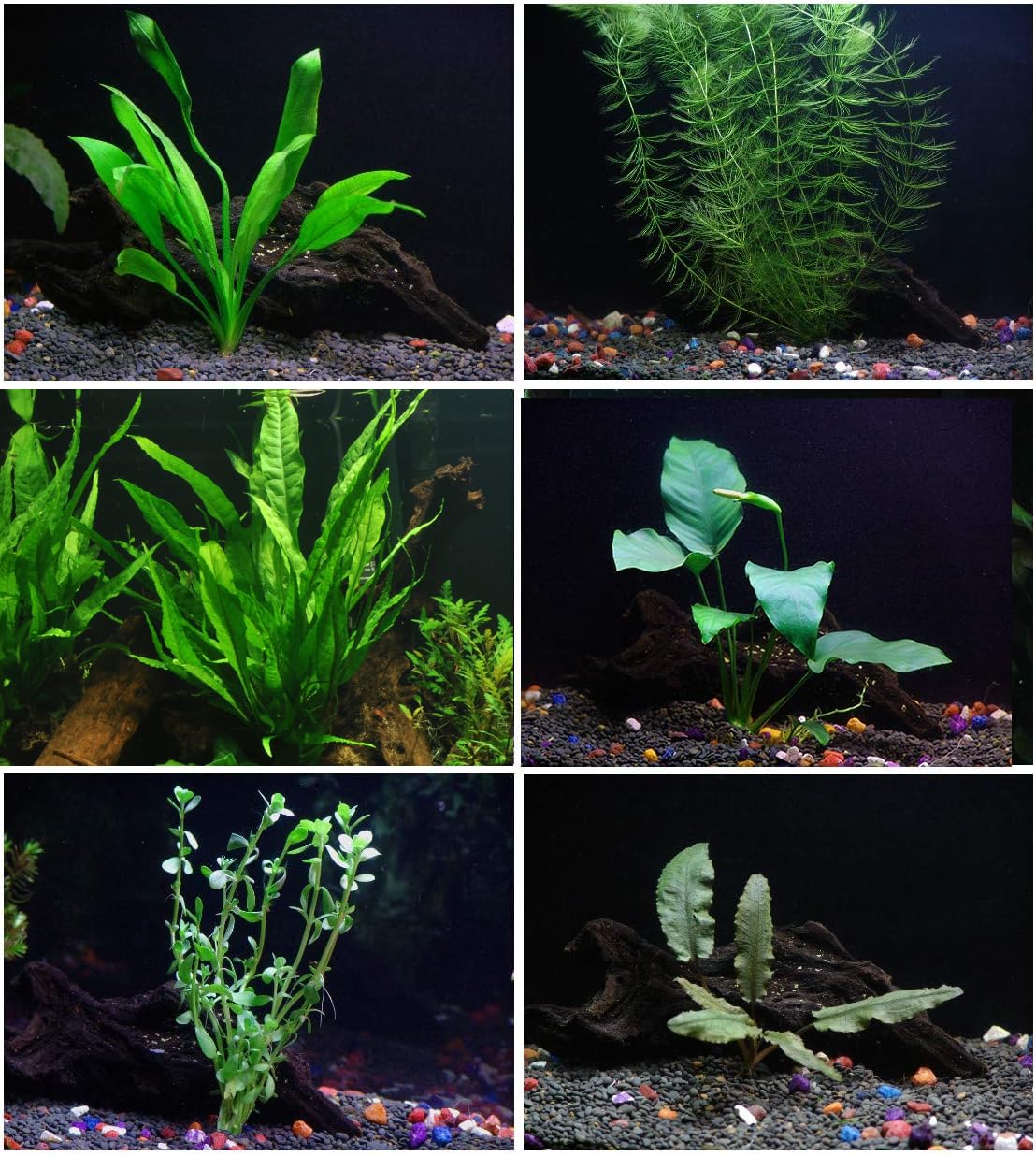
This bundle from AquaLeaf Aquatics gives you six different species in one box — typically including Microsorum Java Fern, Amazon Sword, Moneywort, and others — each with several stems. Designed for tanks of 10 gallons and up, the variety lets you experiment with foreground, midground, and background placements in a single purchase. Several stems per bunch means you can spread them across the aquascape immediately.
The most consistent feedback centers on customer service. Multiple reports describe first shipments arriving in poor condition — brown leaves, holes, broken stems — followed by a free replacement that arrived healthy and thriving. The plants are grown emersed and will shed their initial leaves before adapting to submersed life, so patience during the first two weeks is critical. After eight months, one classroom tank owner reported all species except Anacharis had multiplied and regrown even after a Pleco uprooted them.
Snail introduction is a known risk with this bundle. Many buyers found tiny pond snails and eggs attached to the leaves within days of planting. A dilute bleach dip or alum soak before introducing the plants to your display tank eliminates this issue. If you want maximum genetic diversity for the money and are willing to quarantine, this package delivers serious value.
Why we love it
- Six distinct species for a varied aquascape
- Seller replaces damaged shipments reliably
- Stems multiply and spread over time
Good to know
- High probability of hitchhiker snails
- Initial meltback is normal for emersed-grown plants
4. Rooted Live Aquarium Plant Bundle – 6 Easy Species

This bundle mirrors the previous six-species package with one critical difference: it explicitly markets a snail-free guarantee. Each species arrives as a rooted plant ranging from 6 to 8 inches tall, already established in a small plug of fiber or rock wool. The species mix typically includes Cryptocoryne wendtii, Amazon Sword, and other rooted rosette plants that thrive with root tabs buried in the substrate.
Customer experiences split sharply on the snail promise. Several buyers confirmed zero snails even after months of growth, while others found hydra and pond snails in their first batch. The second batch for those customers arrived pest-free. A common workaround mentioned across reviews is a five-minute bleach dip (one part bleach to nineteen parts water) followed by a dechlorinator rinse before planting — this kills eggs without damaging the roots.
The plants handle warm shipping temperatures well — one shipment survived a 90°F weekend in transit and grew actively for two months afterward. The Cryptocoryne species arrived yellow in several reports, which is typical stress coloration that reverses within a week under moderate light. For aquarists who want rooted species rather than epiphytes and are willing to do a pre-plant dip, this is the most practical all-in-one option.
Why we love it
- Marketed as snail-free for pest-conscious keepers
- Rooted plants establish faster in sandy substrates
- Good size range for 5+ gallon tanks
Good to know
- Some batches still introduce snails despite guarantee
- Cryptocoryne may arrive yellow from shipping stress
5. Marcus Fish Tanks Anubias Nana Petite Live Aquarium Plant

Anubias nana petite is the smallest commercially available Anubias cultivar, producing leaves that stay under an inch across. It comes potted in a small basket filled with inert wool — you can remove the plant, attach it to a small stone or piece of wood, and place it in the foreground without any substrate. The compact size makes it perfect for nano tanks, shrimp breeding setups, or as a detail accent between larger hardscape pieces.
Buyers consistently mention the vibrant green color and healthy root systems upon arrival. Several reported that the single pot split naturally into two separate plants during unpacking, effectively doubling the coverage. The seller ships with a moisture-retaining gel that keeps the roots hydrated during transit, though the listing warns against ordering when temperatures drop below 30°F to prevent freezing damage.
The main limitation is the quantity — you receive one pot, which covers a small area. For a 10-gallon tank you will likely want two or three pots to achieve noticeable foreground density. Growth is slow even under optimal conditions, which is actually an advantage for low-maintenance keepers who do not want to trim every week. If you value precise, controlled placement over fast spread, this is the cleanest option available.
Why we love it
- True dwarf size ideal for nano aquariums
- Thrives attached to hardscape with zero substrate
- Arrives healthy with strong root structure
Good to know
- Single pot covers a very small area
- Extremely slow growth rate
FAQ
Why are my new aquarium plants melting after one week?
Can I keep live plants with goldfish or cichlids?
How do I clean hitchhiker snails off new plants without killing them?
Final Thoughts: The Verdict
For most gardeners, the best live plants for fish tank winner is the Java Fern and Anubias Bundle because it gives you two bulletproof epiphyte species that need nothing more than low light and a piece of wood. If you want fast background growth that softens the back glass, grab the Jungle Vallisneria 6-pack. And for a complete mixed layout in one box, nothing beats the AquaLeaf 6-Species Package.