
Managing a horse with Equine Metabolic Syndrome, Cushing’s, or laminitis means scrutinizing every gram of starch and sugar that enters its feed bucket. The wrong bag can spike insulin, trigger a founder episode, or undo weeks of careful dry-lot management. The search for a complete feed or supplement that keeps Non-Structural Carbohydrates (NSC) under 12%—ideally far lower—while still providing palatable calories and essential vitamins is a daily battle for metabolic horse owners.
I’m Mo Mahin — the founder and writer behind Furric. My analysis of the low-starch horse feed market involves cross-referencing laboratory nutritional profiles, reviewing university studies on insulin resistance and laminitis, and aggregating feedback from hundreds of owner-verified feeding trials to separate genuinely effective formulas from overpriced hay replacers.
This guide breaks down seven specific products that dominate the low-starch horse feed category, explaining the science behind the ingredient lists so you can choose the right ration balancer, complete feed, or supplement for your horse’s exact metabolic needs. Whether you need a grain-free pellet or a concentrated mineral support, this is your practical roadmap to the best low starch horse feed for metabolic health.
How To Choose The Best Low Starch Horse Feed
Horses are not small humans, and their digestive tracts are designed to process forage—not grain. When you are searching for a low-starch feed, the primary goal is to mimic a high-forage, low-glycemic diet while still providing the necessary calories, protein, and minerals that hay alone may lack.
Understanding NSC and Starch Percentage
Non-Structural Carbohydrates include starch and water-soluble sugars like fructan. For horses prone to insulin dysregulation, total NSC should stay below 10–12% on a dry-matter basis. Some products advertise “starch less than 1.5%” directly on the bag, which is an ideal target. Always look for the guaranteed analysis, not just the marketing claim. If the bag does not print the NSC, contact the manufacturer or walk away.
Fat vs. Fiber as a Calorie Source
Because you are restricting starch, you must replace calories with either digestible fiber (beet pulp, soy hulls, alfalfa meal) or stabilized fat (vegetable oil, flaxseed). High-fat feeds pack more calories per pound, which helps hard keepers gain weight without adding starch. However, fat must be balanced with vitamin E and selenium to prevent deficiencies. Fiber-based feeds are safer for horses with very sensitive guts, though they require a larger volume of feed per day to deliver the same energy.
Palatability and the Sugar Withdrawal
Horses accustomed to molasses-coated sweet feed may reject low-starch pellets initially. This is a behavioral hurdle, not a digestive one. The transition period can last three to seven days. Products like Flix flaxseed treats can serve as a low-sugar bridge to help a fussy horse accept a new ration. Patience during the switch is one of the most overlooked factors in successful metabolic feeding.
Quick Comparison
On smaller screens, swipe sideways to see the full table.
| Model | Category | Best For | Key Spec | Amazon |
|---|---|---|---|---|
| Hygain Zero | Complete Feed | Lowest NSC / Laminitis | <1.5% Starch / 35% Fiber | Amazon |
| Formula 707 MetaStable | Metabolic Supplement | EMS / Cushing’s Support | Leucine + Resveratrol | Amazon |
| AniMed Remission | Laminitis Support | Founder Prevention | /day dose | Amazon |
| Triple Crown Senior | Complete Feed | Senior / Underweight | Beet Pulp-Based / 50 lbs | Amazon |
| Flix 9 lb Flaxseed | Treat / Supplement | IR / Laminitis-Prone Ponies | No Sugar / No Grains | Amazon |
| Formula 707 Weight Gain | Calorie Supplement | Hard Keeper Weight Gain | Vegetable Fat / Protein | Amazon |
| CountryMax Whole Flax | Omega-3 Supplement | Joint / Coat / Thyroid | 10 lb Bag / Whole Seed | Amazon |
In‑Depth Reviews
1. Hygain Zero – Ultra-Low Starch Horse Feed (44 lb)
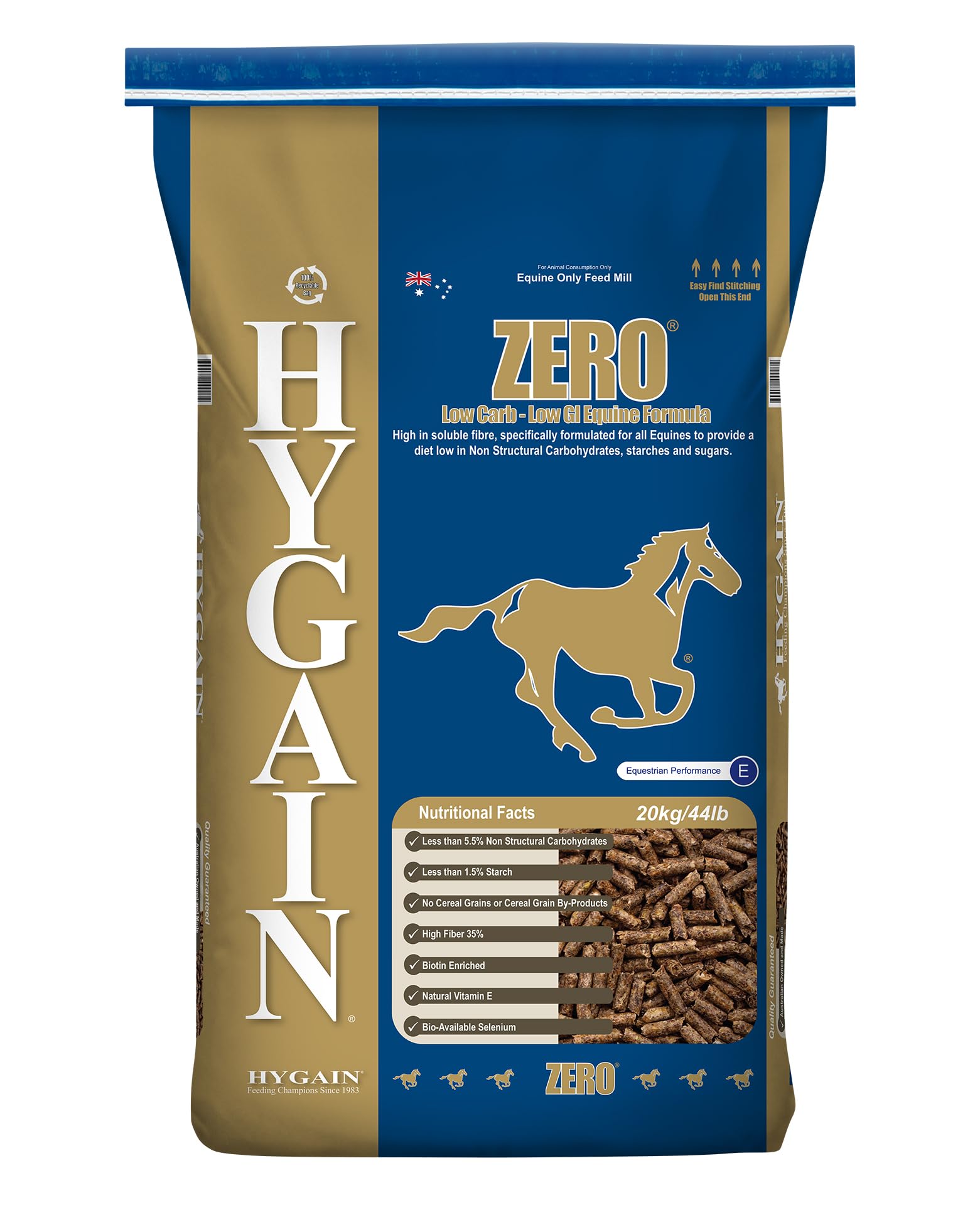
Hygain Zero sets the benchmark for commercial low-starch feeds with a declared starch content of less than 1.5% and total NSC under 6.5%, figures that are nearly impossible to find in bagged feed. The cereal-grain-free formula relies on high-soluble fiber (35%) as the energy base, making it safe for horses with laminitis, Equine Metabolic Syndrome, Cushing’s, and tying up disorders. It is fully fortified with biotin, natural Vitamin E, and chelated minerals, so it can be fed as a complete ration without additional balancer.
Veterinarians often recommend this specific feed because the fiber profile supports hindgut fermentation without the glycemic spike that triggers insulin release. The pellet texture is consistent and dust-free, and the 44-pound bag lasts a typical metabolic horse roughly a month when fed at maintenance rates. Owners of horses with severe insulin resistance report measurable improvement in cresty neck scores and hoof heat within 60 days.
The most significant drawback is availability outside Australia—importation can be inconsistent, and you may need to pre-order through specialty suppliers or Amazon. The price point positions it firmly in the premium tier compared to domestic beet-pulp blends. If your veterinarian has prescribed “the lowest NSC possible,” this is the bag to buy.
Why we love it
- Starch is under 1.5% — the lowest in its class
- 35% fiber supports healthy hindgut fermentation
- Fortified enough to serve as a complete ration
Good to know
- Availability can be spotty—may require advance ordering
- Premium pricing compared to domestic brands
2. Formula 707 MetaStable Pellets (5 lb)
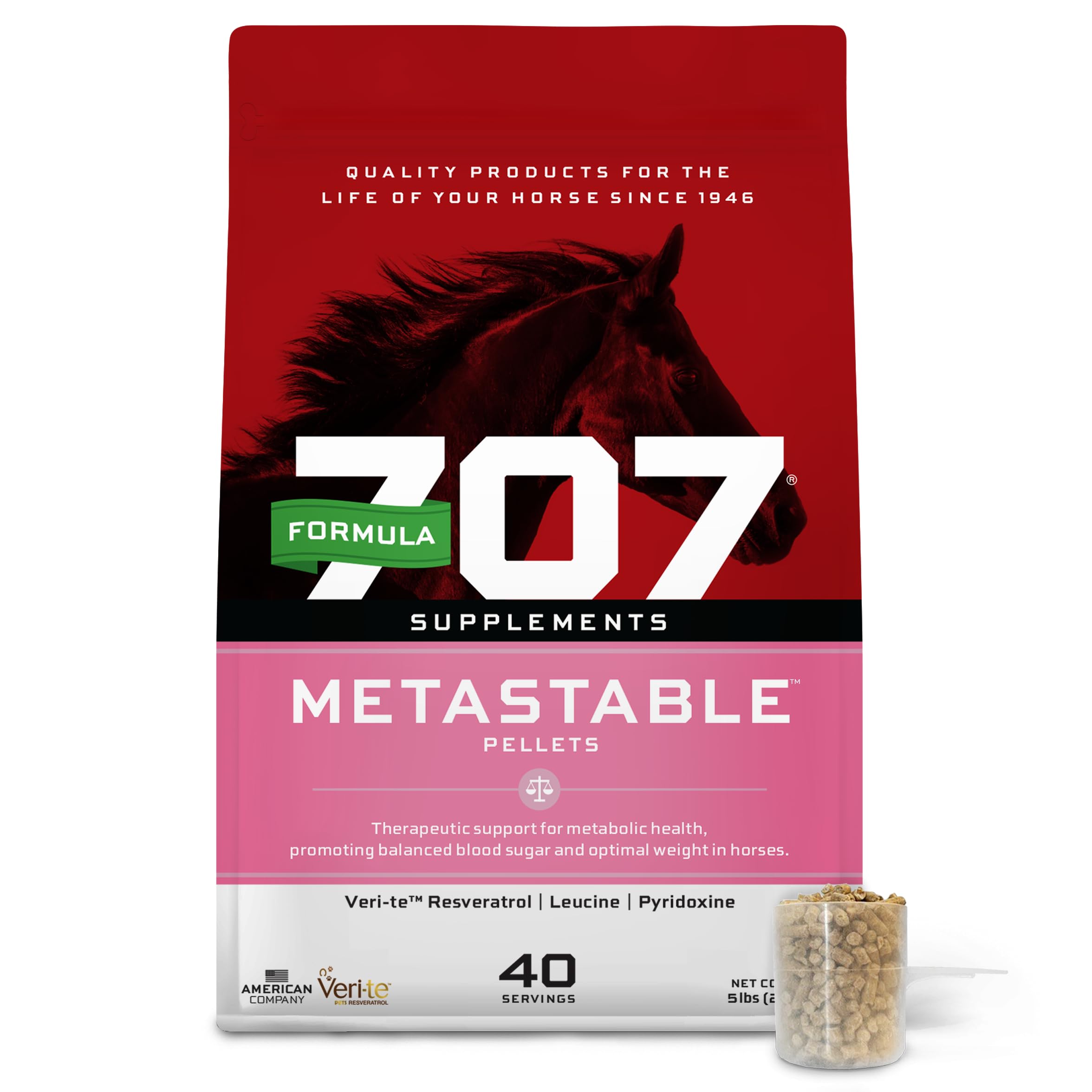
MetaStable Pellets represent a research-backed approach to Equine Metabolic Syndrome, containing leucine to preserve muscle mass during calorie restriction, pyridoxine (Vitamin B6) to support insulin sensitivity, and Veri-Te resveratrol as a highly bioavailable antioxidant. The formula was evaluated in a university study that showed stabilization of insulin levels and measurable progress toward a healthy weight in 60 days. It is designed specifically for horses with EMS, PPID (Cushing’s), and laminitis.
This is not a complete feed—it is a targeted 40-serving supplement designed to be top-dressed on a low-NSC carrier such as soaked hay pellets or beet pulp. The palatable pellet form mixes easily and avoids the mess of powders. Owners of fat miniature donkeys and Shetlands that cannot lose belly fat even on restricted hay report that MetaStable finally triggers the shift. The dosage is straightforward: one scoop per day.
The 5-pound bag is expensive per pound when compared to bulk supplements, but the cost is offset by the fact that you only feed a small daily amount and you are avoiding expensive veterinary interventions. Some horses with nervous temperaments also show a calmer demeanor, likely due to the stabilization of glucose metabolism.
Why we love it
- University-tested formula with proven 60-day insulin stabilization data
- Leucine preserves muscle during weight loss
- Easy one-scoop daily top-dress dosage
Good to know
- Must be paired with a low-starch carrier (not a complete feed)
- Premium price point for a 5 lb bag
3. AniMed Remission (10 lb)

AniMed Remission has built a decades-long reputation as the go-to support supplement for horses with a history of founder (laminitis). While the exact active mechanism is not flamboyantly marketed, the formula relies heavily on zinc and other trace minerals that are critical for hoof wall integrity and connective tissue health. Owner reports indicate that a foundering horse placed on Remission often shows reduced digital pulse and heat within days, and full clearance of acute episodes within three months.
The 10-pound bucket is highly economical, with users calculating a daily cost of approximately 22 cents for a full dose. The bucket lasts a 25-pony herd more than three weeks, making it one of the cheapest long-term tools for managing insulin-dysregulated and laminitis-prone animals. The tablets themselves are unflavored and can be crushed or fed whole; most horses eat them without hesitation.
It is crucial to understand that Remission is a supportive supplement, not a replacement for dietary starch restriction. If you continue feeding high-NSC grain while using Remission, you will not see results. For the owner who already has a strict low-starch base feed and needs an extra layer of hoof and metabolic protection, this is a proven, budget-friendly addition.
Why we love it
- Proven track record for laminitis remission over many years
- Extremely low daily cost—about 22 cents per dose
- Works well for ponies and miniatures in herd settings
Good to know
- Not a complete feed—must be used alongside a low-starch diet
- Unflavored tablets may not appeal to all horses
4. Triple Crown Senior Horse Feed (50 lb)

Triple Crown Senior Feed is a beet pulp-based complete feed designed specifically for older horses that struggle to maintain weight or have compromised dental health. The formula is naturally low in starch and sugar relative to traditional grain-based senior feeds, relying instead on high fat and high fiber to deliver calories. The pellet can be soaked into a mash, making it edible for horses with missing or worn teeth—a key feature for the geriatric metabolic horse that cannot chew hay effectively.
Many owners use this feed as a sole ration for horses that can no longer graze or eat hay, because the beet pulp base provides a digestible fiber source that supports gut microbiome stability. The 50-pound bag is a practical size for multi-horse barns, and the product is widely available in feed stores and on Amazon with consistent fresh rotation. Horses transitioning from sweet feed generally accept Triple Crown Senior quickly.
The primary concern for a metabolic horse is that while this feed is reduced in starch, it is not ultra-low. If your horse requires sub-6.5% NSC, Triple Crown Senior may still be too high. Additionally, some owners of very old horses reported that the pellets were too hard for their toothless seniors to chew without extensive soaking. If you are in that situation, you must commit to soaking the feed to a porridge consistency.
Why we love it
- Beet pulp formula supports digestive health in seniors
- Soaks easily into mash for horses with dental issues
- Large 50 lb bag offers solid value per feeding
Good to know
- NSC levels are moderate, not ultra-low—not suitable for severe EMS cases
- Pellets may be too hard for toothless horses without soaking
5. Horse Guard Flix Flaxseed Treats (9 lb)
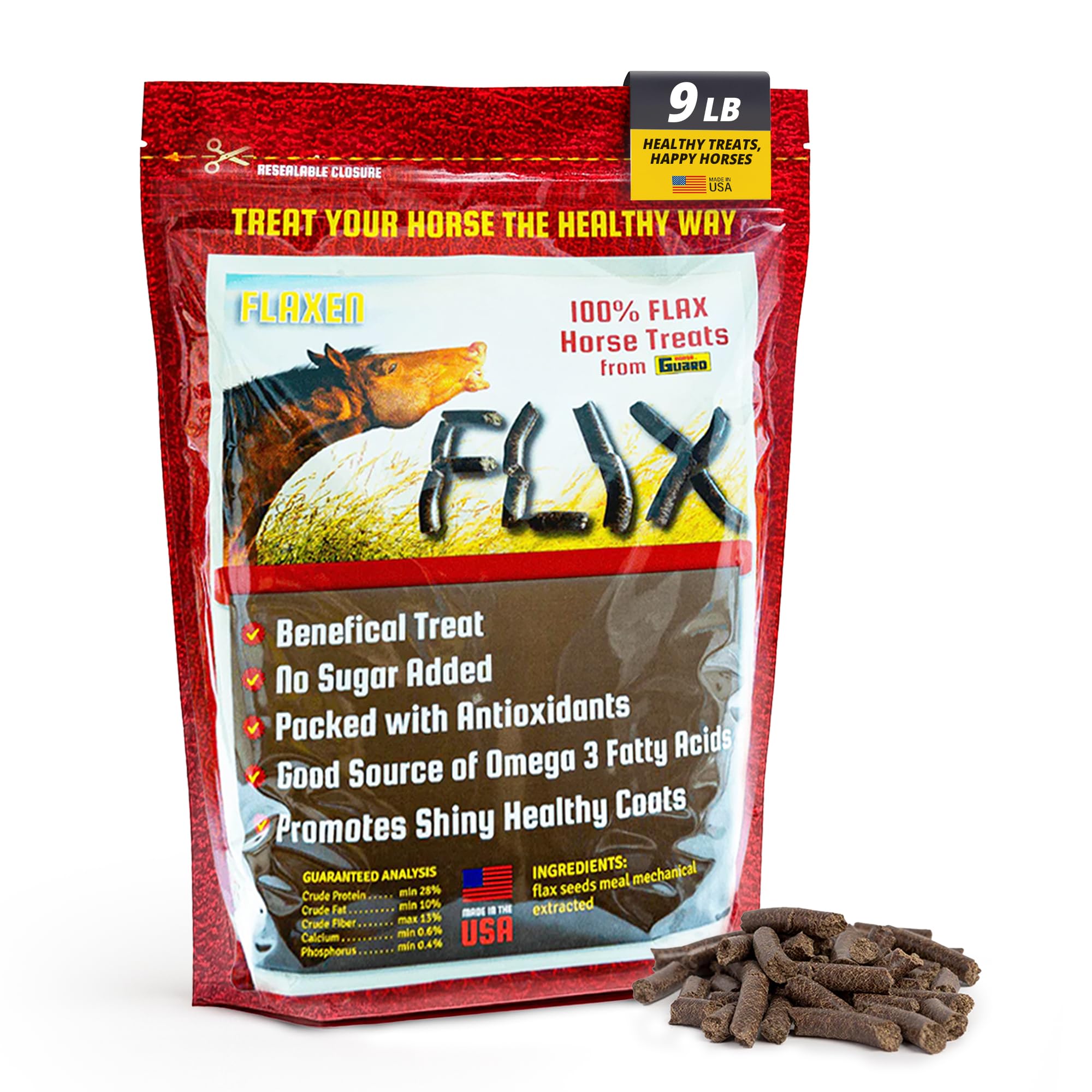
Flix treats fill a specific and valuable niche: a reward that does not sabotage a low-starch diet. These large cylinder-shaped pellets are made from 100% flaxseed with no added sugar, molasses, grains, or molasses by-products. The omega-3 fatty acids from flaxseed provide anti-inflammatory benefits for joint stiffness and coat health, while the lack of soluble carbohydrates makes them safe for insulin-resistant and laminitis-prone horses.
The practical utility of Flix is highest during the transition period when a horse is switching from sweet feed to a low-starch base. Many horses initially refuse the new pellets because they lack the sugar kick they are accustomed to. Flix treats act as a low-starch bridge, delivering a flavor profile that is more neutral than sweet but still palatable once sugary treats are removed from the barn entirely. Owners of metabolic ponies that cannot have any grain-based treats report that Flix becomes the go-to training reward.
The 9-pound bag is generous and the pellets are large enough to break into pieces for multiple rewards. The only caveat is that flaxseed is high in fat, so you must account for the calories if you are managing an obese horse. Otherwise, for the insulin-resistant horse that needs to feel included during treat time, this is the only safe option.
Why we love it
- Absolutely no sugar or grains—safe for IR and PPID horses
- High omega-3 content supports coat and joint health
- Large bag with big pellets, easy to break for multiple uses
Good to know
- Horses accustomed to sugary treats may initially refuse them
- High fat content means calories must be tracked for overweight horses
6. Formula 707 Weight Gain Crumble (7 lb)

Formula 707 Weight Gain Crumble is a palatable, calorie-rich crumble designed primarily for hard keepers and senior horses that cannot maintain body condition on hay and a basic ration alone. The formula uses vegetable fat (not starch) as the primary caloric engine, delivering easily digestible energy without the insulin spike of grain. It is also enriched with high-quality protein for amino acids necessary for muscle building—a critical detail for horses that lose topline despite adequate hay intake.
This is a supplement rather than a complete feed, so you top-dress the crumble on the horse’s existing low-starch base. The texture is crumbly, not pelleted, which makes it easy for seniors with chewing issues to eat. Owners of horses that have been chronically underweight for years with no other solution report that Formula 707 is the only product that finally produced visible weight gain. The reviews from mustang owners and mini-owners alike emphasize the palatability—horses eat it eagerly.
The primary caution is that the crumble is not marketed as starch-free. While the base is vegetable fat, you need to check the proprietary mix for any grain fillers if you are feeding a horse with severe insulin dysregulation. For the average hard keeper that simply burns too many calories, this product is effective and affordable, but it should not be your first choice for a horse that has active laminitis.
Why we love it
- High-quality vegetable fat provides starch-free calories
- Protein content supports muscle and topline restoration
- Crumbles easily for senior horses with dental issues
Good to know
- Not marketed as ultra-low-starch—verify with manufacturer for severe EMS cases
- Designed as a topper, not a standalone complete feed
7. CountryMax Whole Flax Seed (10 lb)
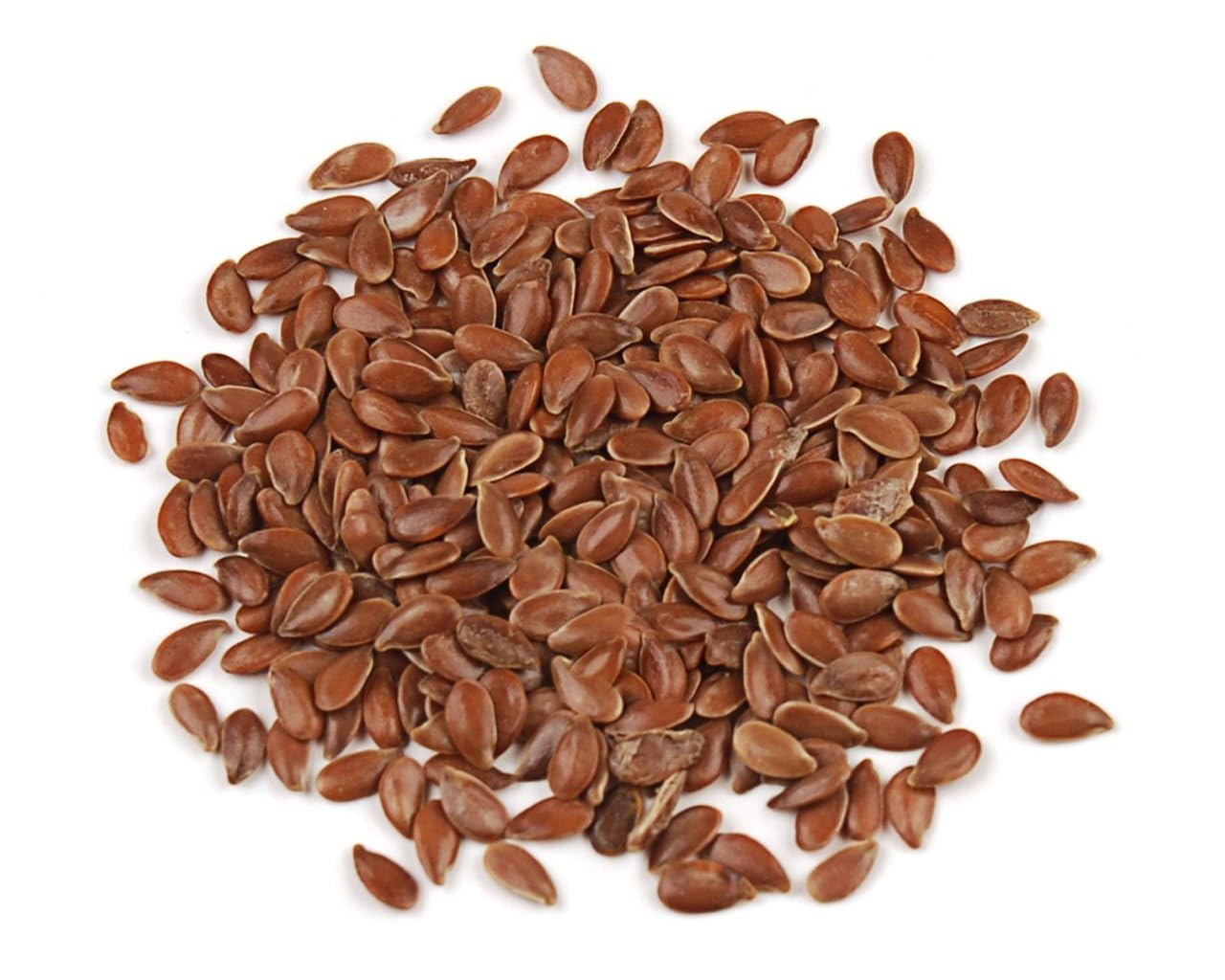
CountryMax Whole Flax Seed is the most straightforward and cost-effective way to add omega-3 fatty acids to a low-starch diet without introducing any starch, sugar, or grain. The whole seed provides anti-inflammatory benefits that can relieve symptoms of arthritis, joint stiffness, sweet itch, and other skin conditions associated with metabolic horses. Many owners find that consistent flax supplementation reduces or eliminates the need for commercial joint supplements and even bute over time.
The 10-pound bag offers incredible value: one owner calculated that a single bag lasts over two months for two horses when fed twice daily. The seeds must be ground before feeding—whole flax passes through the digestive tract undigested—so you need a coffee grinder or a dedicated seed mill. This is a minor inconvenience for the massive cost savings compared to pre-ground flax products. Owners also report improvements in thyroid regulation for metabolic horses and shinier coats within a few weeks.
The only genuine limitation is that it is not a complete feed or a balanced supplement. It is a single-ingredient source of fat and fiber. You must combine it with a proper vitamin/mineral balancer or a low-starch base feed to avoid nutritional gaps. For the owner building a custom low-starch diet from the ground up, this is the essential fat component at the best price.
Why we love it
- Extremely cost-effective compared to pre-ground flax or commercial supplements
- High omega-3 helps with arthritis, sweet itch, and coat health
- Zero starch and sugar—safe for the most sensitive metabolic horses
Good to know
- Must be ground before feeding for proper digestion
- Not a complete supplement—needs a balancer for mineral fortification
FAQ
What is the maximum safe NSC percentage for an insulin-resistant horse?
Can I feed beet pulp to a metabolic horse every day?
How do I convince a picky metabolic horse to eat low-starch pellets?
Does flaxseed need to be ground for horses to absorb the omega-3s?
Are low-starch feeds suitable for a horse that is not metabolic?
Final Thoughts: The Verdict
For most owners managing a metabolic horse, the best low starch horse feed winner is the Hygain Zero because its starch content below 1.5% and 35% fiber give you absolute confidence that every scoop supports insulin regulation, not undermines it. If you need a targeted supplement for a horse already on a low-starch carrier, grab the Formula 707 MetaStable for its university-backed insulin stabilization data. And for a long-term laminitis prevention strategy that costs pennies a day, nothing beats the track record of AniMed Remission.