
A dog that tears through furniture, barks at shadows, or circles the kitchen floor isn’t acting out—it’s under-stimulated. Physical exercise tires the body, but mental stimulation toys for dogs tire the brain, targeting the root of problem behaviors by engaging a dog’s natural foraging and problem-solving instincts. Without this outlet, even a well-walked dog can develop destructive habits rooted in boredom.
I’m Mo Mahin — the founder and writer behind Furric. I’ve spent years analyzing dog enrichment markets, comparing material durability against safety certifications, and studying owner-reported engagement times to separate products that genuinely challenge a dog from those that are solved in seconds.
Whether your pup swallows kibble whole, needs a calm-down ritual, or could run a puzzle-solving championship, the right choice among the best mental stimulation toys for dogs depends on matching difficulty level, material toughness, and cleaning convenience to your dog’s unique personality and size.
How To Choose The Best Mental Stimulation Toys For Dogs
Not every brain game is built for every dog. Selecting the right toy means matching your dog’s size, feeding style, and chewing strength to the toy’s material, difficulty, and cleaning requirements. The wrong choice leads to either instant boredom or a destroyed toy within minutes.
Match Difficulty Level to Your Dog’s Experience
Beginner toys—lick mats and simple snuffle mats—reward persistence with a clear food payout. Intermediate toys, like multi-layer puzzle feeders, require the dog to rotate, slide, or lift components to access kibble. Advanced treat-dispenser toys that can be frozen add a time-and-temperature variable. A dog that solves a toy in under two minutes has outgrown its difficulty; look for toys that extend engagement past 10 minutes for meaningful mental fatigue.
Prioritize Material Safety and Durability
Food-grade silicone and natural rubber (BPA-free, phthalate-free, Proposition 65 compliant) are safe for direct food contact and gentle on gums and teeth. Hard plastic puzzle bowls are easy to clean but can crack under aggressive chewing. For power chewers, synthetic rubber blends offer comparable durability to natural rubber while being lightweight and floatable for water play. Always verify dishwasher-safe claims before assuming a material can withstand high-heat cleaning cycles.
Consider Size and Capacity Relative to Your Dog’s Breed
A slow-feeder bowl that holds 1.5 cups works for a Beagle but frustrates a Labrador looking for a full meal. Large-breed dogs need bowls with a 4-cup capacity and a 10-inch or wider diameter. Small puzzle toys under 4 inches wide pose a choking hazard for large dogs. Conversely, oversized lick mats intimidate toy breeds. The toy’s internal volume must match your dog’s typical meal portion to avoid underfeeding or overflow.
Quick Comparison
On smaller screens, swipe sideways to see the full table.
| Model | Category | Best For | Key Spec | Amazon |
|---|---|---|---|---|
| SodaPup Honey Pot | Treat Dispenser | Power chewers needing durable enrichment | 3.25″ diam., PUP-X rubber, freezable | Amazon |
| Forfon 9-Pack Set | Variety Set | Small/medium dogs wanting 3 activity types | Includes lick mats, puzzle, treat balls | Amazon |
| Femont Snuffle Mat | Snuffle Mat | Dry food foraging & slow eating | 14.6″L, food-grade silicone, 134 suction cups | Amazon |
| Outward Hound Fun Feeder | Slow Feeder Bowl | Very fast eaters needing extreme slow-down | 4-cup capacity, 2.25″ depth, 3-level maze | Amazon |
| ATDOALL 3-Level Maze | Puzzle Feeder | Medium dogs needing IQ training & slow feed | 10.35″ wide, rotary 3-layer, 1.5-cup capacity | Amazon |
In‑Depth Reviews
1. SodaPup Honey Pot – Durable Treat Dispenser
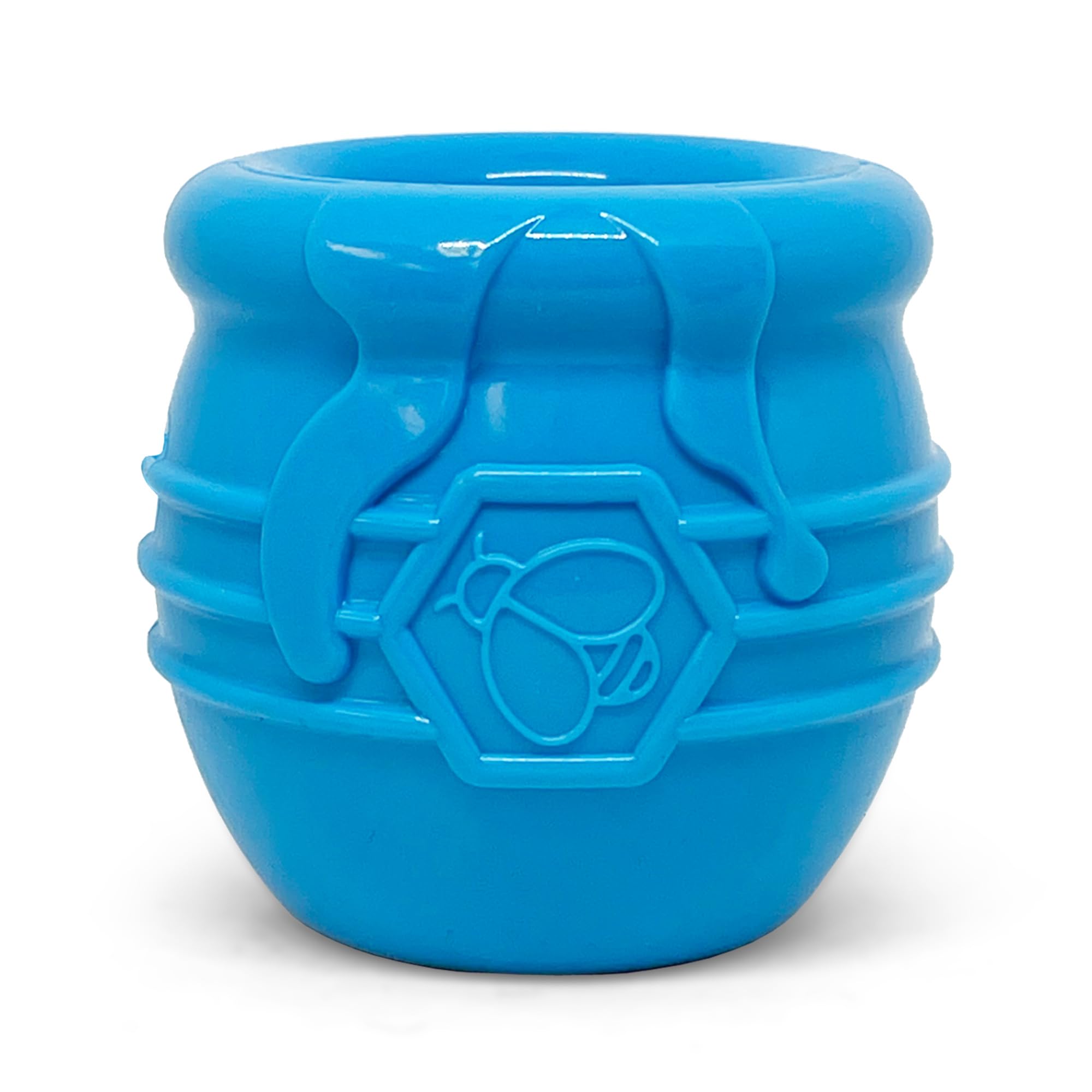
The SodaPup Honey Pot bridges the gap between a treat-dispenser and a durable chew in a 3.25-inch diameter package. Its proprietary PUP-X synthetic rubber passes Proposition 65 safety standards and floats, making it equally suited for backyard fetch or bathtub licking sessions. Owners report that freezing the honey pot extends a single session from roughly 5 minutes to between 20 and 30 minutes—ample time to exhaust a high-energy dog mentally.
Customer reviews consistently highlight the material’s resistance to punctures and cracks, even when used with power chewers like English Bulldogs and Labradors. The rubber’s flexibility safely soothes teething puppy gums while remaining tough enough that foster dogs with heavy jaws fail to breach it. The honey pot shape holds peanut butter, yogurt, soaked kibble, or wet food without leaking, and the top-rack dishwasher-safe feature simplifies sanitation after sticky fillings.
At 6.4 ounces, the toy is lightweight enough for a dog to carry around but dense enough to stay put during a focused licking session. The medium difficulty level (enhanced by freezing) suits dogs 30 to 65 pounds, though smaller breeds can still engage under supervision. For pet parents seeking one high-quality toy that serves as both a calming enrichment tool and a rugged chew object, this honey pot delivers on both fronts.
Why we love it
- Exceptional durability against aggressive chewing
- Freezing increases engagement time by 5x
- Floats, enabling water-based enrichment
- Veteran-owned US production ensures ethical sourcing
Good to know
- Rated for dogs 30-65 lbs; smaller dogs may struggle with the size
- Synthetic rubber has slight odor when new
2. Forfon 9-Pack All-Around Dog Puzzle Toy Set
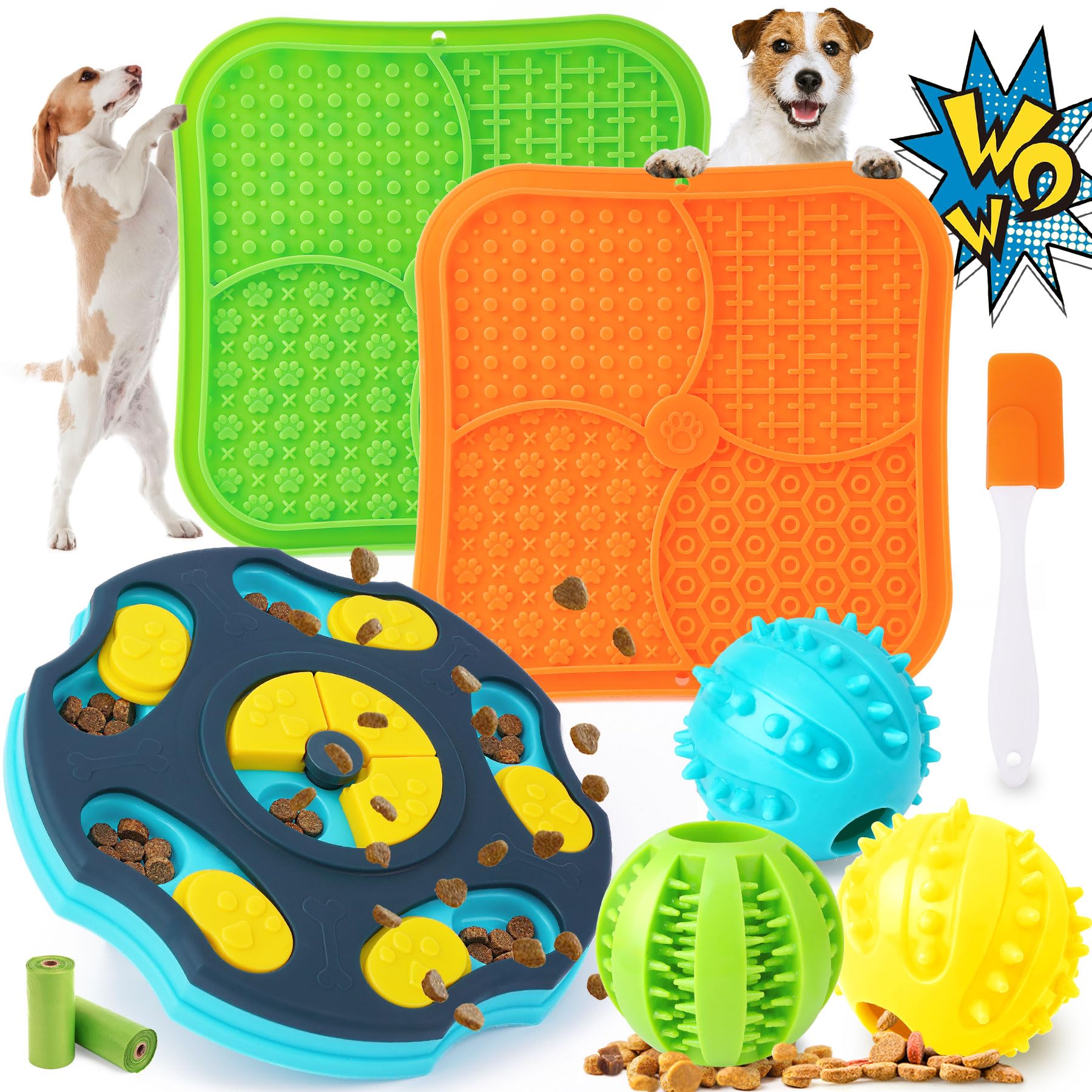
The Forfon 9-Pack delivers five unique enrichment formats in a single purchase: two lick mats with suction cups, one puzzle toy, three treat-dispensing balls, a silicone spatula, and two cleanup bags. This breadth covers three difficulty tiers—lick mats (beginner), treat balls (intermediate), and the puzzle toy (advanced)—which allows a single set to grow with a puppy or challenge a small-to-medium dog across changing moods.
Owner feedback emphasizes the suction-cup lick mats as a standout feature for bath-time distraction: the mats stick to tile walls, keeping a nervous dog occupied during grooming. The treat balls, while best suited for medium dogs under 25 pounds, entertain even without treats because the internal rattle mimics prey movement. The included silicone spatula feels minor but practically saves fingernails when spreading sticky peanut butter into the mat grooves.
Material composition blends natural rubber, silicone, and food-safe plastic. The puzzle toy’s sliding compartments are simple enough that most dogs solve them within a few sessions, but rotating the toy between the set’s other elements prevents permanent boredom. A few owners of Golden Retrievers reported that the treat balls eventually cracked under heavy chewing as puppies matured, making this set ideal for small-to-medium breeds or gentle chewers rather than dedicated destroyers.
Why we love it
- Nine items offer cognitive variety without buying separate toys
- Suction-cup lick mats attach to walls for bath-time calm
- Spatula and cleanup bags add real utility
- Ranges from easy to challenging within one box
Good to know
- Treat balls not indestructible for determined power chewers
- Best suited for dogs under 25 lbs for optimal ball size
3. Femont Snuffle Mat – Silicone Slow Feeder Lick Mat
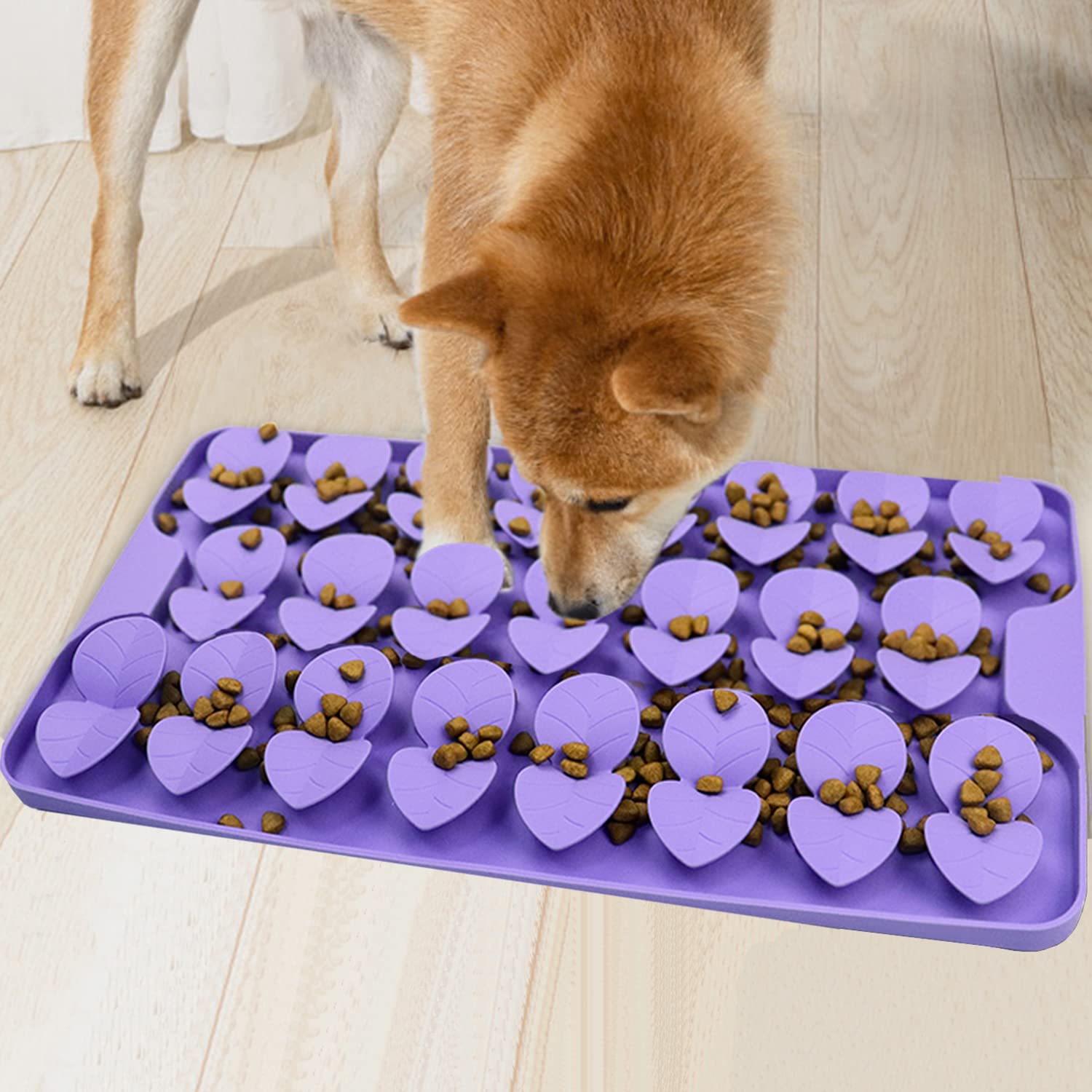
The Femont Snuffle Mat takes the foraging concept of fabric-based sniffle mats and re-engineers it in food-grade silicone. Its leaf-shaped ridges hide dry kibble within the 14.6-by-7.32-inch surface, while a leak-proof edge contains wet food mess. The mat’s defining engineering detail is its 134 suction cups on the underside, which anchor it to smooth floors, training crates, or even tile walls–a 2-year update from one owner confirms the mat remains intact and fully functional after consistent use.
Owners of fast-eating Labs and Golden Retrievers report that the mat extends a standard meal from under 10 seconds to roughly 1 to 2 minutes of engaged sniffing and licking. While that’s shorter than a frozen treat dispenser, the suction stability means the dog works the mat without flipping or pushing it across the kitchen. The silicone is soft enough to protect gums but durable enough that owners with three dogs across different ages each own their own mat without signs of cracking.
Cleanup is a significant advantage over fabric snuffle mats: a quick rinse under water or a top-rack dishwasher cycle removes kibble dust and peanut butter residue without trapping debris in synthetic fleece strands. The 0.77-pound weight and flat profile make it portable for travel or use in a crate. For pet parents who want a durable, scent-focused foraging activity that works for both wet and dry food without the mold risk of fabric mats, this silicone snuffle mat is the strongest option available.
Why we love it
- 134 suction cups prevent sliding on any smooth surface
- Food-grade silicone is non-toxic, soft, and crack-resistant
- Dishwasher-safe design avoids mold issues of fabric mats
- Works equally well with kibble, wet food, or treats
Good to know
- Determined dogs may peel the mat edge if not supervised
- 1–2 minute engagement is shorter than frozen toy sessions
4. Outward Hound Fun Feeder Slo Bowl – Large 4-Cup
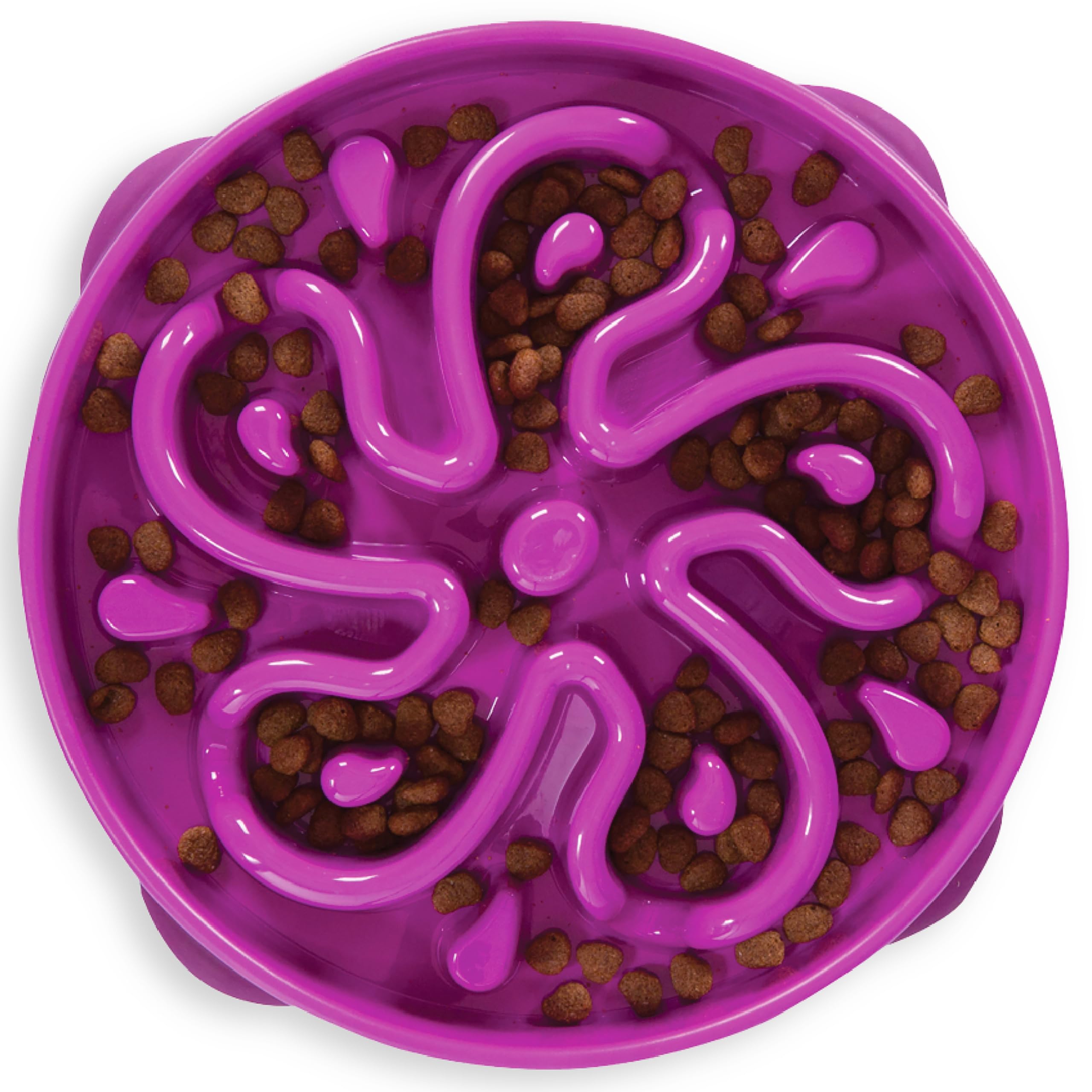
The Outward Hound Fun Feeder is not a toy in the play sense—it is a functional slow-feeder bowl engineered with the brand’s most challenging maze pattern. The 11.75-inch-wide, 2-inch-deep basin holds 4 full cups of kibble, accommodating a full meal for large breeds like German Shepherds and Labradors. The towering plastic maze ridges force the dog to navigate around each barrier to reach food, effectively slowing eating speed by a reported factor of 10 when compared to an open bowl.
What separates this bowl from simple puzzle feeders is its three-tier difficulty system: this specific purple flower pattern sits at the “Slowest” level, making it the right choice for dogs that inhale dinner in under 15 seconds. The non-slip rubber ring along the base prevents the bowl from skidding across tile or hardwood during aggressive eating. Owners rotating between the shallower “Slow” and this “Slowest” pattern can gradually reintroduce challenge if a dog memorizes a single maze layout.
The polypropylene plastic construction is BPA-free, PVC-free, and phthalate-free. Top-rack dishwasher-safe certification makes daily cleaning simple, though the deep labyrinth grooves require thorough rinsing to prevent kibble dust buildup. At a 2.25-inch depth, the bowl is shallow enough that dogs with flat faces (brachycephalic breeds) can still access the base without excessive tongue strain. For owners whose primary goal is gastrointestinal health through eating-speed reduction, this is the most practical and proven slow-feeder bowl on the market.
Why we love it
- 4-cup capacity fits large-breed full meals
- “Slowest” level maze prolongs eating by up to 10x
- Non-slip ring prevents floor movement
- Dishwasher-safe and free of BPA & phthalates
Good to know
- Plastic material can crack if thrown or misused as a chew toy
- Deep maze grooves need thorough manual scrubbing
5. ATDOALL 3-Level Slow Feeder Dog Bowl
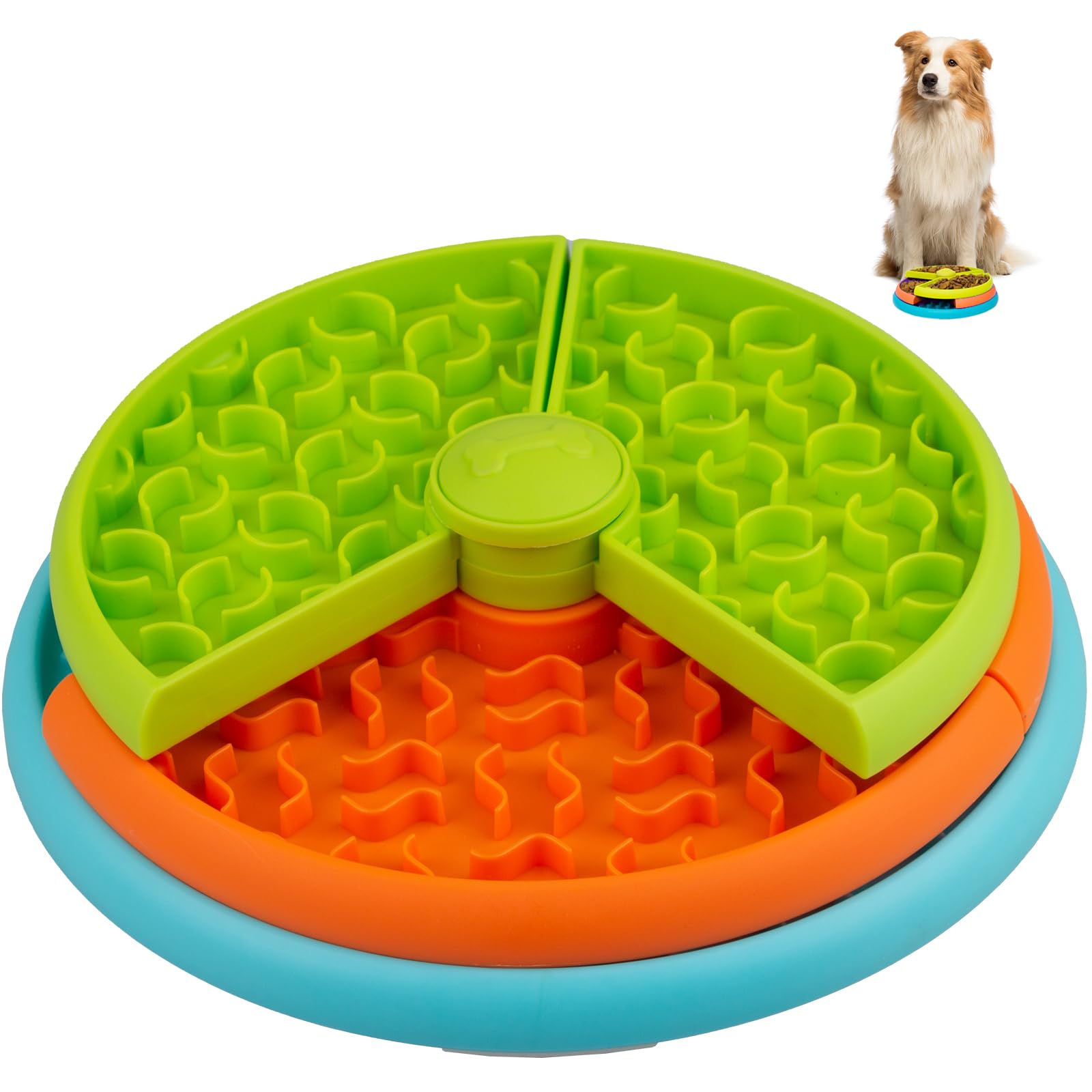
The ATDOALL bowl introduces a rotating three-layer mechanism that turns mealtime into a physical puzzle. Each level rotates independently, and the dog must nudge or paw the rings to align openings and release kibble into the next chamber. This dynamic movement adds a cognitive dimension absent from static maze bowls—the dog learns that rotating the walls triggers a food reward, which builds cause-and-effect understanding over successive meals.
With a 10.35-inch straight width and a 1.5-cup capacity, this feeder fits medium dogs like Cocker Spaniels or Beagles rather than giant breeds. The polypropylene plastic is pet-safe with rounded edges to avoid paw and tongue injuries during frantic rotation attempts. The rubberized non-slip pad underneath keeps the base planted while the top layers spin freely, preventing the entire unit from sliding across the floor as the dog manipulates the rings.
While the three-layer design effectively slows eating and exercises the dog’s reaction ability, the 1.5-cup limit means large-breed owners must either portion food across multiple sessions or forgo a full meal in one load. Some medium dogs master the rotation trick within a few days, reducing cognitive challenge over time. Rotating in wet food or freezing the assembled layers can reset the difficulty. For owners wanting a mealtime IQ trainer that doubles as a slow-feeder for a medium dog, this unique rotating design fills a niche that static bowls cannot.
Why we love it
- Rotating layers teach cause-and-effect problem solving
- Rounded edges and non-slip pad enhance safety
- Anti-vomiting design reduces bloat risk
- Unique mechanical movement distinguishes it from static bowls
Good to know
- 1.5-cup capacity insufficient for large-breed full meals
- Motivated dogs may master the rotation in a few sessions
FAQ
How long should a mental stimulation toy keep my dog occupied?
Can mental stimulation toys replace daily walks?
Are silicone snuffle mats safer than fabric snuffle mats?
How does freezing a treat dispenser change the difficulty?
What is the difference between a slow-feeder bowl and a puzzle feeder?
Final Thoughts: The Verdict
For most dogs, the mental stimulation toys for dogs winner is the SodaPup Honey Pot because it combines exceptional material durability, a freezable design for extended sessions, and versatile treat-dispenser functionality in one thoughtfully engineered package. If you want maximum variety across difficulty levels, grab the Forfon 9-Pack Set. And for a straightforward slow-feeding solution that protects digestive health, nothing beats the Outward Hound Fun Feeder Slo Bowl.