
Choosing a robot vacuum in the mid-range means you’re past the entry-level toys, but you aren’t ready to drop flagship money.
I’m Mo Mahin — the founder and writer behind Furric. I’ve spent years comparing specifications, studying owner feedback logs, and breaking down navigation algorithms to understand exactly which mid-range models deliver real daily value and which ones just look good on paper.
This guide lays out the strongest contenders in the space, helping you find the best mid range robot vacuum that balances suction power, navigation smarts, and self-maintenance features for your home.
How To Choose The Best Mid Range Robot Vacuum
A decent mid-range robot vacuum starts with three non-negotiable pillars: reliable navigation that doesn’t bump into furniture, suction strong enough for both hard floors and low-pile carpets, and a self-emptying base that actually extends your cleaning cycle. Everything else — mopping, app gimmicks, voice commands — is secondary to getting the fundamentals right.
Navigation Technology: LiDAR is the Standard
The most significant quality gap between budget robots and mid-range models is navigation. At this price tier, you should expect LiDAR (Light Detection and Ranging) mapping. LiDAR creates a precise floor plan by spinning a laser 360 degrees, allowing the robot to know exactly where it is at all times. This enables methodical row-by-row cleaning, multi-floor mapping, no-go zones, and room-specific scheduling. Cameras and gyroscopes simply cannot match LiDAR’s accuracy, especially in low-light conditions.
Suction Power and Brush Design
Raw suction power is measured in Pascals (Pa), and mid-range models typically deliver between 5,000 Pa and 10,000 Pa. This is plenty for daily maintenance on hard floors and moderately soiled carpets. However, suction numbers can be misleading — a well-designed brush roller matters more for deep carpet cleaning than peak Pa ratings. Look for rubber or V-shaped brushes that resist hair tangling, especially if you have shedding pets or long-haired occupants. Anti-tangle brushes reduce the frequency of manual brush cleaning, which is a common pain point.
Self-Emptying Base Capacity and Type
A self-emptying base is a defining feature of the mid-range category. The robot returns to its dock and automatically transfers debris into a larger bin, sometimes holding up to 60 or 90 days’ worth of dirt. Some bases use disposable dust bags (convenient but a recurring expense), while others are bagless (lower long-term cost but may require more frequent filter cleaning). Evaluate your tolerance for maintenance — bagged systems are cleaner to service, while bagless systems save money over time. Pay attention to the bin capacity: a larger capacity means longer intervals between emptying.
Quick Comparison
On smaller screens, swipe sideways to see the full table.
| Model | Category | Best For | Key Spec | Amazon |
|---|---|---|---|---|
| DREAME D20 Plus | Premium Mid-Range | Maximum suction & extended autonomy | 13,000 Pa suction / 150-day dust bag | Amazon |
| roborock Q10 S5+ | Premium Mid-Range | Sonic mopping & carpet lift | 10,000 Pa / 70-day dust bag / 8mm mop lift | Amazon |
| iRobot Roomba Plus 505 | High-End Mid-Range | AutoWash dock & obstacle avoidance | Extending spinning mop / 75-day auto-empty | Amazon |
| Eureka E20 | Mid-Range | Bagless savings & multi-cyclonic separation | 8,000 Pa / 45-day bagless / 13-cone cyclonic | Amazon |
| roborock Q7 M5+ | Mid-Range | Strong suction & dual anti-tangle | 10,000 Pa / 7-week dust bag / JawScrapers brush | Amazon |
| DREAME D10 Plus Gen 2 | Mid-Range | Long runtime & 90-day self-empty | 6,000 Pa / 4L dust bag / 285-min battery | Amazon |
| Shark PowerDetect AV2820S | Mid-Range | NeverStuck technology & HEPA filtration | EdgeDetect air blasts / 30-day bagless base | Amazon |
| Airzeen Q10 Pro | Value Mid-Range | Affordable 6,000 Pa with 60-day self-empty | 6,000 Pa / 3.3L dust bag / 150-min runtime | Amazon |
| Shark Navigator AV2110S | Entry-Level Mid-Range | SmartPath LiDAR & pet hair focus | 120-min runtime / 30-day bagless base | Amazon |
In‑Depth Reviews
1. DREAME D20 Plus
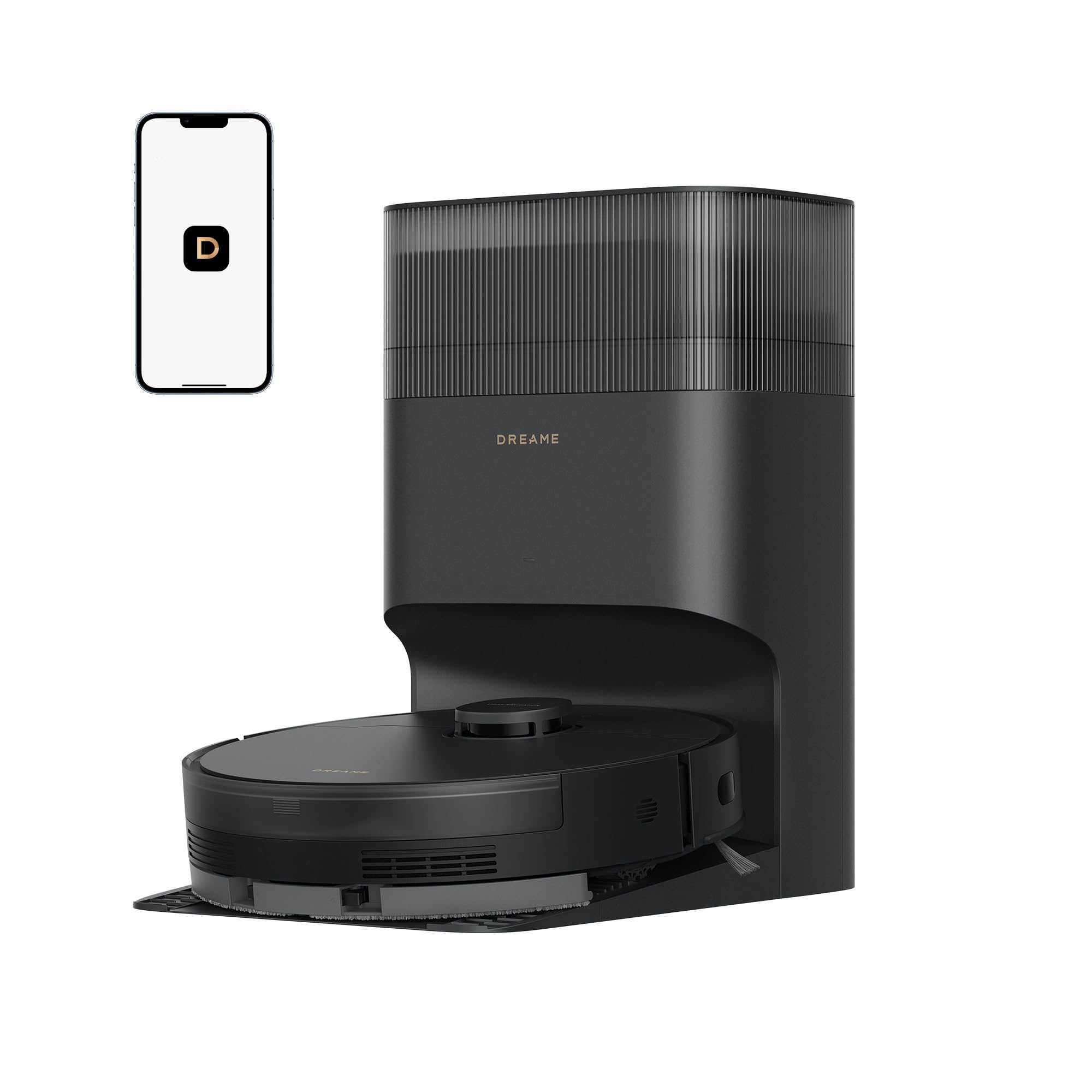
The DREAME D20 Plus sits at the top of the mid-range spectrum with a commanding 13,000 Pa suction rating — more than double what many competitors in this tier offer. That raw power translates directly to deep carpet cleaning, pulling embedded pet hair and fine dust from medium-pile rugs that lower-suction models tend to skim over. The DuoBrush anti-tangle system uses two contra-rotating brushes to actively peel away long hair, reducing the dreaded brush-cleaning task to near-zero frequency.
Its self-emptying base accepts a 5-liter dust bag, which Dreame claims extends to 150 days of use before needing a swap. That’s the highest capacity claim in this group. The vacuum-and-mop combo offers 32 adjustable water levels, though the 350 ml water tank means you’ll refill it on larger cleaning runs. The 180-minute battery on quiet mode handles homes up to 2,000 square feet comfortably. App support covers Alexa, Siri, and Google Home, and the Pathfinder mapping technology creates precise multi-floor maps with editable no-go zones.
Navigation reliability is strong thanks to LiDAR, but obstacle avoidance is not as advanced as robots with dedicated 3D cameras — it may bump into smaller objects like charging cables. The 500 ml dustbin is generous for a robot, but the hybrid approach means you still manage both a dust bag and a water tank. For buyers who prioritize raw cleaning power and maximum autonomy from dust disposal, the D20 Plus delivers unmatched suction per dollar in this bracket.
Why we love it
- Highest suction in class at 13,000 Pa
- 150-day dust bag reduces maintenance drastically
- DuoBrush design effectively eliminates hair wrap
Good to know
- Water tank capacity is modest for large homes
- Obstacle avoidance is LiDAR-only, no camera
- Requires 2.4 GHz Wi-Fi for app connection
2. roborock Q10 S5+
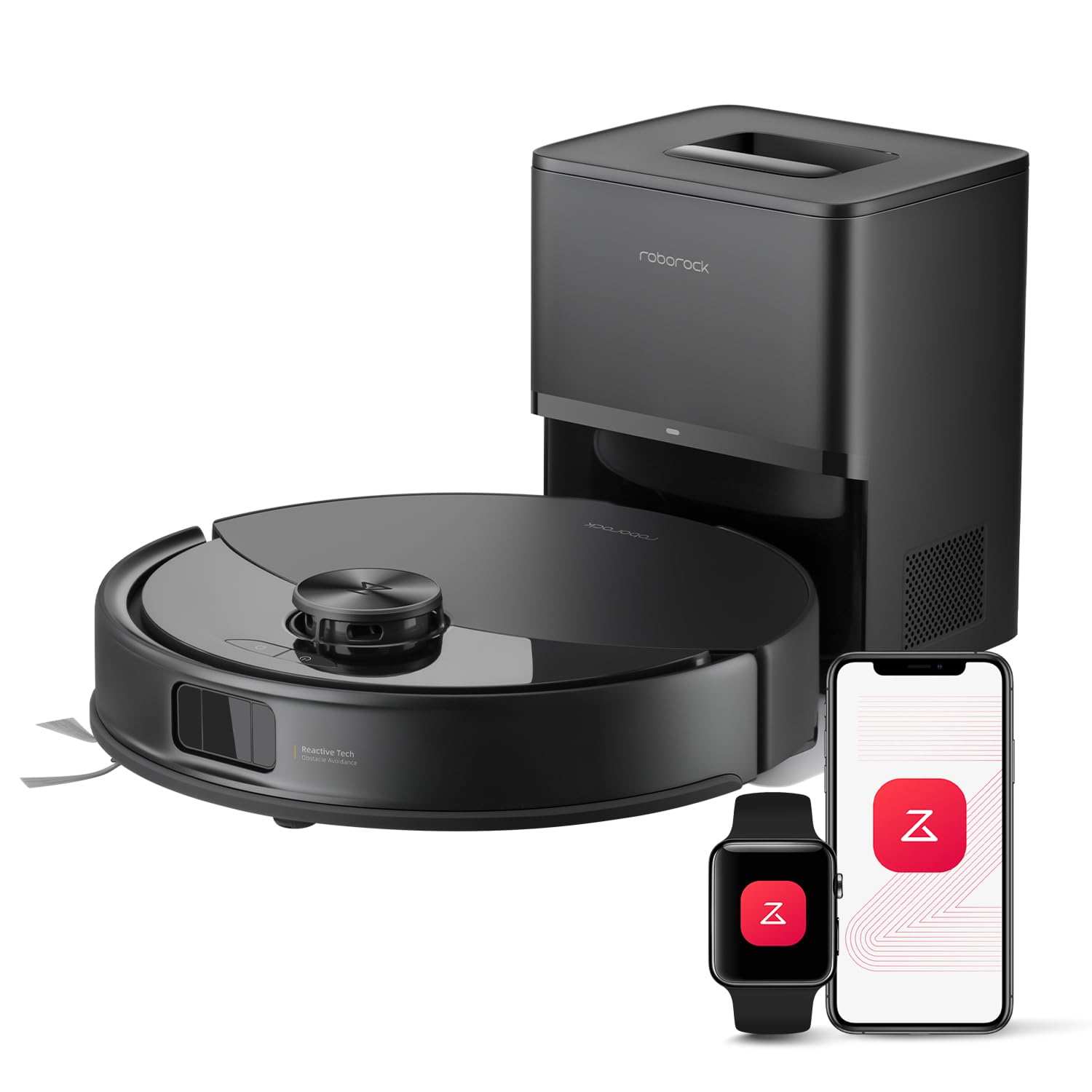
The roborock Q10 S5+ upgrades the Q8 Max+ formula with a VibraRise 2.0 mopping system that scrubs at 3,000 times per minute and lifts 8 mm off the robot’s base when it detects carpet. That mop-lift feature is critical for homes with mixed flooring — it prevents wet pads from dragging over rugs while automatically boosting suction for deeper carpet cleaning. The 10,000 Pa HyperForce suction is competitive at this tier and handles daily debris with authority.
The self-emptying station holds a 2.7-liter sealed dust bag, delivering up to 70 days of hands-free operation. Roborock’s PreciSense LiDAR navigation is a proven system, generating accurate multi-floor maps and enabling room-specific cleaning commands. The dual anti-tangle design, featuring a JawScrapers Comb main brush and a dedicated anti-tangle side brush, keeps hair wrap to a minimum — a genuine relief for households with long-haired members or shedding pets. Battery life is rated at 150 minutes, enough for most single-level homes.
ReactiveTech obstacle avoidance uses structured light to detect and navigate around objects, which adds a layer of protection against small items on the floor. The app is one of the most polished in the category, offering granular suction and mopping adjustments. The main trade-off is the sealed dust bag — it’s convenient for disposal but creates an ongoing consumable cost. For those who value a refined mopping system and carpet-sensing intelligence, this roborock is a balanced contender.
Why we love it
- VibraRise 2.0 mop lifts 8 mm on carpet
- Structured light obstacle avoidance
- Refined, intuitive app with granular controls
Good to know
- Dust bag is sealed, ongoing replacement cost
- Suction trails the D20 Plus by 3,000 Pa
- Requires 2.4 GHz Wi-Fi for app connection
3. iRobot Roomba Plus 505
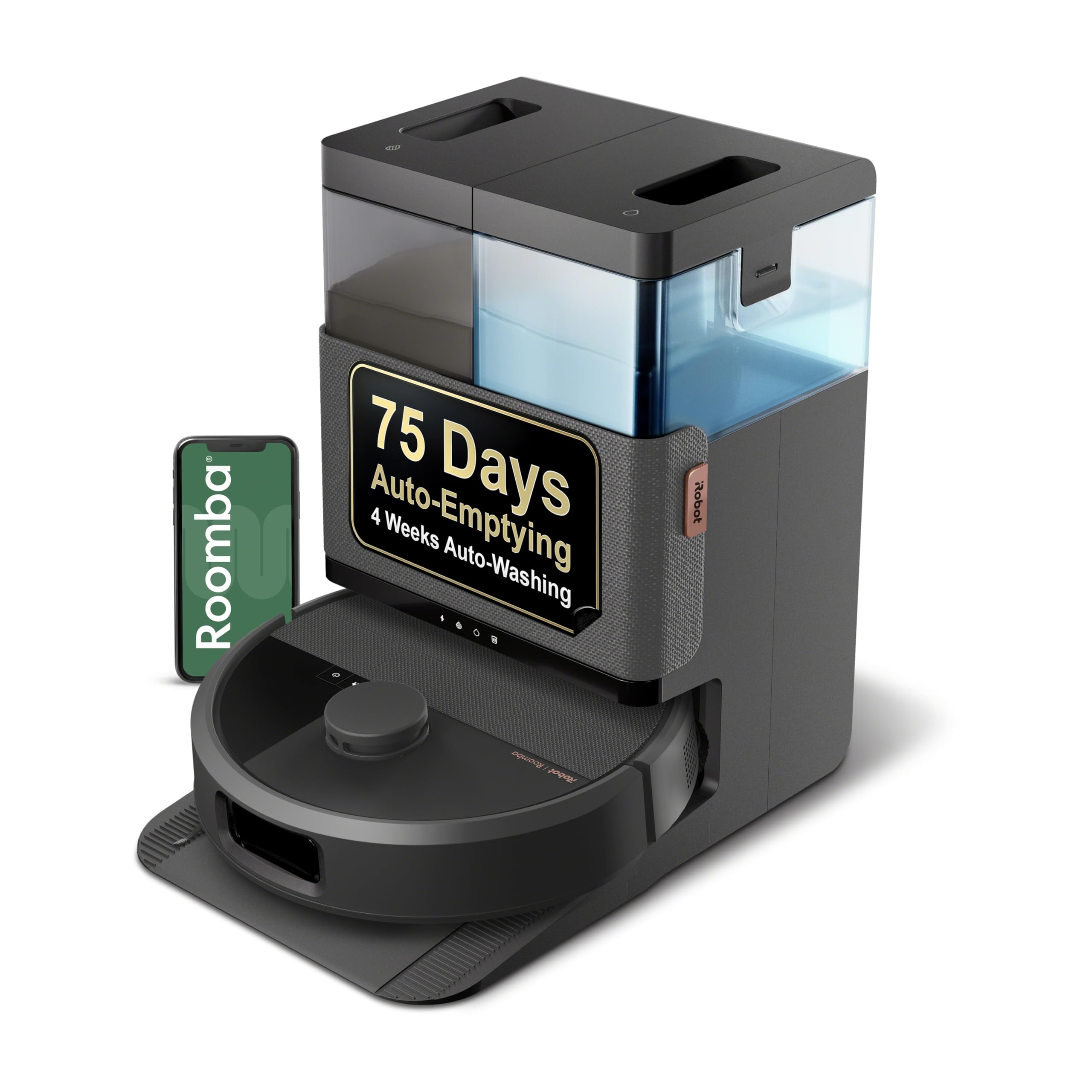
The iRobot Roomba Plus 505 represents the most complete dock-based cleaning system in this mid-range roundup. Its AutoWash Dock auto-empties for up to 75 days, washes and dries the mop pads with heated air, and refreshes the pads mid-cleaning. The extending spinning mop pads increase floor mopping coverage by 18% and scrub twice as hard in SmartScrub mode, which is a genuine advantage for sticky kitchen messes and dried-on grime.
Navigation relies on ClearView Pro LiDAR, which creates accurate maps even in darkness, supported by PrecisionVision AI that recognizes cords, socks, and pet waste. The AI detection is a step above standard LiDAR obstacle avoidance because it can identify specific objects and decide how to handle them — a useful safeguard in homes with scattered pet toys or electronics cables. The 120-minute battery is average for the group, but the AutoWash Dock compensates by having the robot self-maintain.
The multi-surface rubber brush and edge-sweeping brush cover hard floors and low-pile carpets effectively, though suction power is not explicitly rated in Pascals, making direct comparison with the DREAME and roborock models less transparent. The Roomba Home App offers detailed cleaning data, room-specific targeting, and four suction levels. The dock is significantly larger than simpler self-emptying bases, so you’ll need dedicated floor space. For buyers who want dock automation that rivals flagship systems without the flagship price, the 505 delivers.
Why we love it
- AutoWash Dock washes and dries mop pads
- PrecisionVision AI recognizes specific obstacles
- Extending spinning mop pads improve edge coverage
Good to know
- Suction power not disclosed in Pascals
- Large dock footprint requires dedicated space
- Highest price point in this comparison
4. Eureka E20

The Eureka E20 stands out for its genuinely bagless self-emptying station. While most competitors rely on disposable dust bags, Eureka uses a 13-cone multi-cyclonic separation system that spins debris away from the filter, maintaining consistent suction over the 45-day emptying cycle. This design eliminates the recurring cost of replacement bags and makes the long-term operating cost significantly lower than bagged alternatives.
Its 8,000 Pa suction is respectable for hard floors and low-pile carpets, though it trails the 10,000 and 13,000 Pa models in this group for deep carpet extraction. The V-shaped rubber roller brush reduces hair tangling by an advertised 14%, which helps in pet households. The AI 3D obstacle avoidance uses dual LiDAR sensors on the front of the robot, giving it a wider field of detection and night vision capabilities that improve performance in dimly lit rooms.
Battery life reaches 180 minutes in quiet mode, which is among the longest runs here — suitable for larger single-level homes. The app provides standard scheduling, no-go zones, and multi-floor mapping, but the interface is less refined than Roborock’s or iRobot’s. The mop function is basic: a passive pad that drags behind rather than actively scrubbing. For budget-conscious buyers who dislike consumable dust bags and want strong navigation at a sensible long-term cost, the E20 is an intelligent play.
Why we love it
- Bagless self-empty saves money long-term
- 13-cone cyclonic separation maintains suction
- 180-minute battery for large floor plans
Good to know
- Mopping is basic passive drag only
- Suction power is mid-pack at 8,000 Pa
- App interface is less polished than competitors
5. roborock Q7 M5+

The roborock Q7 M5+ upgrades the popular Q5 Max+ formula with 10,000 Pa HyperForce suction and a dual anti-tangle system designed for pet-heavy households. The JawScrapers main brush uses comb-like scrapers to peel hair off the roller before it can wrap, and the side brush is engineered for zero hair tangling. If your home is a daily shedding zone, this is one of the most maintenance-reducing designs in the category.
The RockDock Plus auto-empties into a 2.7-liter sealed dust bag that claims up to 7 weeks of capacity. The vacuum-and-mop combo includes a water tank with three adjustable flow settings, though the mopping is a standard drag pad without active scrubbing. LiDAR navigation is PreciSense-grade, with multi-floor mapping and real-time path optimization that minimizes missed spots and repeated passes. Battery life is rated at 150 minutes, covering most mid-sized homes on a single charge.
Control is handled through the Roborock app, which offers a clean interface with scheduling, no-go zones, and cleaning history. This model lacks the obstacle avoidance of the higher-end Q10 S5+, so it relies on bump sensors for object detection — smaller items like charging cables or pet toys may get pushed around. The sealed dust bag is convenient but adds a consumable cost. For pet owners who want high suction and a brush system that genuinely resists hair wrap, the Q7 M5+ is well-positioned.
Why we love it
- JawScrapers brush and anti-tangle side brush
- 10,000 Pa suction handles pet hair well
- Proven Roborock app and LiDAR mapping
Good to know
- No advanced obstacle avoidance
- Mopping is passive drag, not active scrubbing
- Sealed dust bag requires replacement purchases
6. DREAME D10 Plus Gen 2

The DREAME D10 Plus Gen 2 prioritizes runtime and dust capacity over raw suction. Its 285-minute battery life (in quiet mode) is the longest in this group by a wide margin, making it suitable for large homes over 2,000 square feet where a single charge can cover the entire floor plan without needing to recharge and resume. The 4-liter dust bag in the auto-empty base supports up to 90 days of debris storage between changes.
Suction is rated at 6,000 Pa, which is adequate for hard floors and low-pile carpets but falls short of the 10,000+ Pa models when dealing with deeply embedded dirt in medium-pile carpets. The floating rubber brush is designed to reduce tangling and maintain contact with carpet fibers. The 2-in-1 vacuum and mop function offers a 150 ml water tank with three flow settings, suitable for light mopping on sealed hard floors.
Smart Pathfinder LiDAR navigation creates editable maps with no-go zones and multi-floor support. The Dreamehome app is functional but lacks the polish of the Roborock app. Obstacle avoidance is based on LiDAR detection rather than cameras, so small floor obstacles may not always be detected. This is a solid choice for buyers with large, mostly hard-floor homes who value extended battery life and minimal interaction with the dust bin over maximum carpet cleaning aggression.
Why we love it
- 285-minute battery leads the category
- 90-day dust bag reduces emptying frequency
- Floating rubber brush resists hair tangling
Good to know
- 6,000 Pa suction is lower than premium peers
- Obstacle avoidance is LiDAR-only, less precise
- App interface is less refined than top contenders
7. Shark PowerDetect AV2820S

The Shark PowerDetect AV2820S differentiates itself with NeverStuck technology, which actively lifts and lowers the robot’s body to navigate over obstacles like floor vents, transitions, and thick rug edges. For homes with area rugs or uneven flooring, this reduces the frustration of rescuing a beached robot from under furniture. The DirtDetect system senses hidden debris and automatically boosts suction, while EdgeDetect uses air blasts to pull dirt from corners into the cleaning path.
Its true HEPA filtration and Anti Allergen Seal capture 99.97% of particles down to 0.3 microns, keeping allergens trapped in the bagless base. The base holds up to 30 days of debris and requires no disposal bags — a recurring cost saving that matches the Eureka E20’s approach. The 110-minute battery is shorter than most competitors, though the recharge-and-resume function mitigates this for larger homes. The 3D Object Detection system helps avoid both tall and short objects, preventing collisions with pet bowls and shoe racks.
FloorDetect technology optimizes brushroll engagement across hard floors and carpets. The self-cleaning brushroll with anti-hair wrap reduces tangling, though it’s not as aggressive as the roborock JawScrapers system. The SharkClean app provides scheduling, map editing, and no-go zones, but the interface is less intuitive than the Roborock app. For allergy-conscious buyers or homes with obstacle-prone layouts, the PowerDetect’s adaptive lifting and HEPA filtration are standout features.
Why we love it
- NeverStuck technology lifts over obstacles
- True HEPA filtration captures allergens
- Bagless base eliminates consumable bag costs
Good to know
- 110-minute battery is shorter than average
- Brushroll anti-wrap is decent but not class-leading
- SharkClean app is less polished than alternatives
8. Airzeen Q10 Pro

The Airzeen Q10 Pro delivers a self-emptying robot vacuum with 6,000 Pa suction and 360-degree LiDAR navigation at an entry-friendly price point. Its 3.3-liter self-emptying station holds up to 60 days of debris, giving it comparable maintenance intervals to more expensive models. The suction is sufficient for hard floors and low-pile carpets, and the smart carpet detection automatically boosts suction by 15% when it senses a soft surface.
The 4-in-1 system combines vacuuming, sweeping, mopping, and self-emptying. Mopping uses a passive pad with three water flow settings, and Dreame recommends either removing the mop holder or setting a no-go zone to avoid wetting carpets — a manual step that competing models with auto-lift mops handle automatically. The battery provides 150 minutes of runtime, covering most mid-sized homes on a single charge. The HomeAloT app supports scheduling, no-go zones, and real-time cleaning monitoring.
Obstacle avoidance is limited to LiDAR detection, so the Q10 Pro will navigate around furniture and walls effectively but may not identify smaller items like phone cables. The included accessory pack is generous: three washable mop pads, two side brushes, two filters, one roller brush, and two dust bags. For budget-focused buyers who want a self-emptying LiDAR robot without stretching to premium pricing, the Q10 Pro offers a functional base feature set with honest limitations.
Why we love it
- Self-emptying station with 60-day capacity
- LiDAR navigation at a compelling price
- Generous included accessory pack
Good to know
- No auto mop lift when crossing carpets
- Obstacle avoidance is basic LiDAR-only
- Less established brand than Roborock or Shark
9. Shark Navigator AV2110S
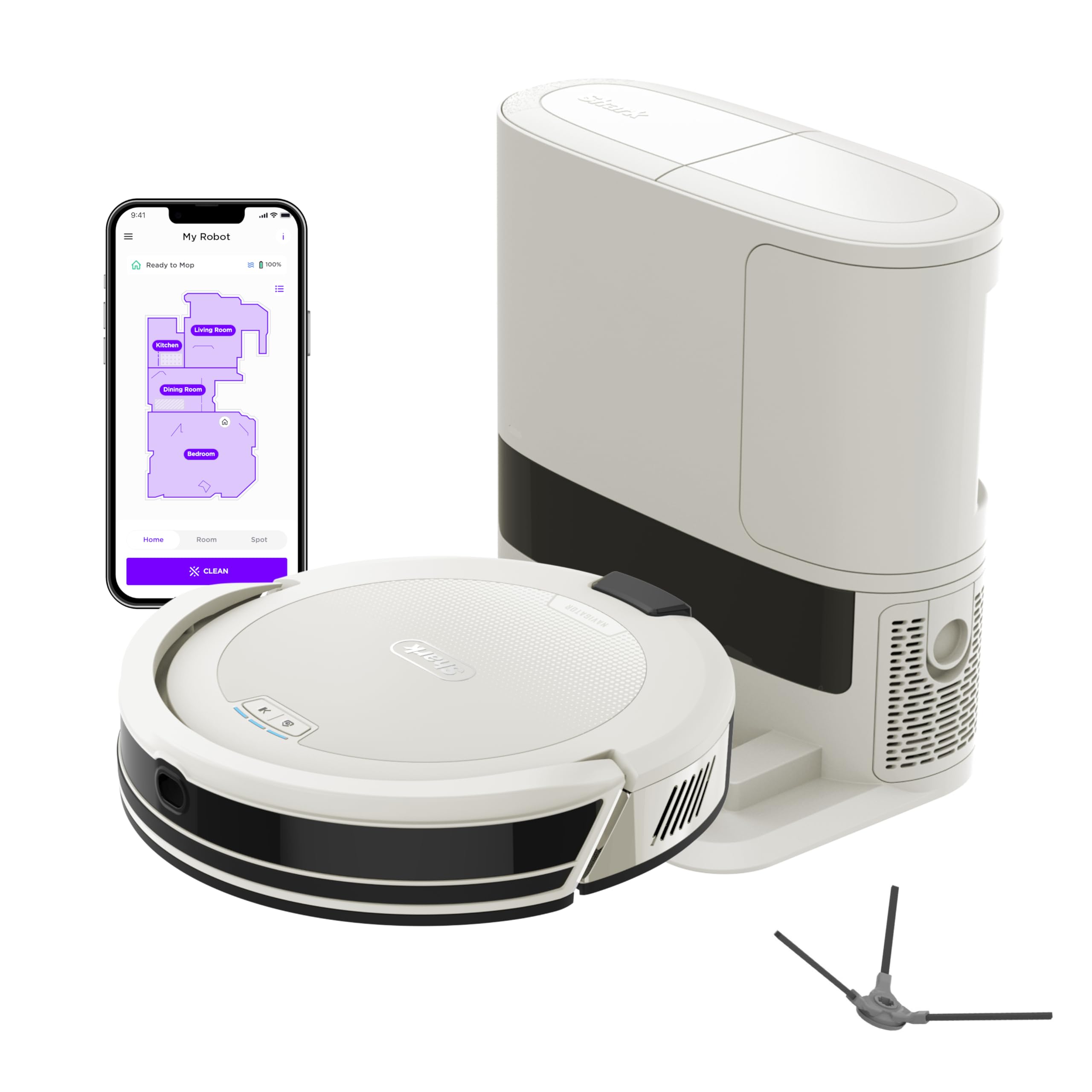
The Shark Navigator AV2110S brings SmartPath LiDAR navigation to a lower price point than many competitors, offering row-by-row cleaning patterns that maximize coverage. Its bagless self-emptying base holds up to 30 days of debris, saving on consumable bag purchases. The suction power is rated for pet hair pickup on both carpet and hard floors, and the self-cleaning brushroll with anti-hair wrap reduces tangling from long hair and pet fur.
Object detection sensors help the robot navigate around obstacles without requiring extensive pre-cleaning, though the detection is not as sophisticated as the 3D camera systems on higher-end models. The 120-minute battery covers most standard homes, and the recharge-and-resume function ensures that larger floor plans can be completed over multiple sessions. The SharkClean app supports scheduling, targeting specific spots, creating no-go zones, and home mapping, with voice control compatibility via Amazon Alexa and Google Assistant.
The anti-hair wrap brushroll is effective at reducing maintenance, but the overall suction feels less aggressive than the 10,000+ Pa models in this list — fine for daily maintenance but may struggle with deeply embedded dirt. The bagless base is easy to maintain but requires periodic filter cleaning to maintain performance. For first-time mid-range buyers who want LiDAR navigation and a bagless self-empty station at the most accessible price, the Navigator is a practical entry point.
Why we love it
- SmartPath LiDAR for methodical cleaning
- Bagless self-empty base reduces ongoing costs
- Anti-hair wrap brushroll helps with pet hair
Good to know
- Suction power feels lower than competitors
- Obstacle detection is basic, not advanced
- Bagless base needs periodic filter cleaning
FAQ
Is LiDAR navigation worth paying extra for in a mid-range robot vacuum?
How often should I replace the dust bag in a self-emptying robot vacuum base?
Can a mid-range robot vacuum handle high-pile carpeting?
How important is mopping ability in a mid-range robot vacuum?
Final Thoughts: The Verdict
For most buyers, the best mid range robot vacuum winner is the DREAME D20 Plus because it delivers class-leading 13,000 Pa suction, a massive 150-day dust bag, and genuine anti-tangle brush technology — everything that matters most for daily floor maintenance. If you want a refined mopping system with carpet-sensing auto-lift and premium app integration, grab the roborock Q10 S5+. And for the most complete dock automation including mop washing and drying, nothing in this bracket beats the iRobot Roomba Plus 505.