
Finding a proper milk replacement for kittens isn’t as simple as grabbing any powdered formula off the shelf. Kittens have specific protein, fat, and taurine needs that generic mammal formulas often miss, leading to poor weight gain, digestive upset, or worse developmental issues. The right choice means the difference between a thriving kitten and a constant battle with diarrhea or refusal to eat.
I’m Mo Mahin — the founder and writer behind Furric. Over the last several years, I’ve studied feline nutritional data, analyzed milk replacement formulations across dozens of brands, and cross-referenced owner feedback to identify which products actually deliver on their claims for orphaned and supplemental kittens.
The goal of this guide is to help you pinpoint the best milk replacement for kittens by breaking down what to look for in a formula and reviewing the top contenders based on real-world results and ingredient quality.
How To Choose The Best Milk Replacement For Kittens
Selecting a milk replacer requires more than just checking the label for the word “kitten.” A formula designed for a broad range of small mammals often lacks the feline-specific amino acid profile essential for proper neural and cardiovascular development. Here are the most important factors to evaluate.
Taurine and Arginine: The Non-Negotiables
Kittens cannot synthesize enough taurine on their own. A quality kitten milk replacement must contain added taurine and arginine to support developing eyes, a strong heart, and healthy growth. Formulas without these are effectively incomplete, regardless of other ingredients.
Calcium to Phosphorus Ratio
For proper bone formation, a ratio around 1.2:1 calcium to phosphorus is ideal. Skim the guaranteed analysis on the bag or tub — an imbalanced ratio can lead to skeletal deformities in fast-growing kittens, especially during the first eight weeks of life.
Digestibility and Stool Consistency
Loose stool is the most common problem with poorly matched formulas. Look for ingredients like dried whey protein concentrate and animal fat that are easy on a kitten’s digestive system. Some premium formulas add probiotics and prebiotics to support a healthy gut microbiome from day one.
Form: Powder vs. Ready-to-Feed Liquid
Powdered formulas offer better value per serving and longer shelf life once opened, but require careful mixing to avoid clumps that can clog bottle nipples. Ready-to-feed liquid options eliminate mixing error, making them ideal for neonatal emergencies, though they tend to be pricier and must be used within 72 hours of opening.
Quick Comparison
On smaller screens, swipe sideways to see the full table.
| Model | Category | Best For | Key Spec | Amazon |
|---|---|---|---|---|
| Fox Valley Day-One | Premium | Neonatal kittens from birth | Maximum digestibility, vanilla scent | Amazon |
| PetAg KMR Liquid | Premium | Emergency no-mix feeding | Ready-to-feed, prebiotics + probiotics | Amazon |
| Revival Animal Health Shelter’s Choice | Mid-Range | Bottle-fed orphans and nursing support | GI health support, easy mix powder | Amazon |
| Exotic Nutrition Milk Replacer | Budget | Multi-species small animal use | Versatile formula, 8.8 oz bag | Amazon |
| HYE Pets Goat Milk Powder | Budget | Supplemental hydration for picky eaters | Probiotic-rich, 14.1 oz container | Amazon |
In‑Depth Reviews
1. Fox Valley Day-One Kitten Formula

The Fox Valley Day-One formula stands apart from generic milk replacers by being engineered specifically for kittens from birth onward. It contains extra taurine and arginine — a must for proper eye and heart development — and a balanced calcium-to-phosphorus ratio that supports strong teeth and bones. The mix ratio is 1 part powder to 2 parts warm water, and owners report it dissolves without clumps, unlike many powdered competitors.
What rescues and foster caregivers consistently note is the dramatic reduction in digestive issues after switching to this formula. Kittens that previously struggled with diarrhea on other brands transition smoothly when fed Fox Valley. The scent is described as vanilla milkshake rather than the unpleasant odor some replacers have, which helps with acceptance from even the most reluctant kittens.
It’s also fortified with zinc and biotin for healthy skin and coat development. The bag can be stored in the freezer for up to six months without degradation, making it practical for rescues that don’t go through formula quickly. The main feedback point is that some kittens may produce firmer-than-normal stools, easily corrected by adjusting the water ratio to slightly more dilution.
Why we love it
- Exceptional digestibility with minimal diarrhea
- Pleasant vanilla scent improves kitten acceptance
- Mixes smoothly without clumps or sedimentation
Good to know
- May cause slightly hard stools at standard mix ratio
- Higher price per ounce than generic brands
2. PetAg KMR Kitten Milk Replacer Liquid

The PetAg KMR liquid formula is a household name in feline rescue for good reason — it’s the closest commercial product to mother’s milk in terms of protein, fat, and carbohydrate ratios. This ready-to-feed version eliminates any mixing error, which is critical for newborn kittens that need immediate feeding. It also contains prebiotics and probiotics to support immune function and digestive health from the very first feeding.
Each 11-ounce can serves kittens from newborn up to about six weeks of age, and the pack of four provides a solid supply for a litter. Caregivers note that it’s highly palatable — kittens that refuse powdered formulas often accept KMR without hesitation. Opened cans must be refrigerated and discarded after 72 hours, so portion planning is necessary to avoid waste.
Rescuers have also used it successfully for adult cats recovering from illness or surgery since it provides dense nutrition in a form that requires minimal effort to consume. The main trade-off is cost per ounce compared to powder, and the fact that it’s a single-species formula — unlike some multi-animal replacers, it’s only labeled for kittens and cats.
Why we love it
- No mixing required — shake, warm, and serve
- Includes prebiotics and probiotics for gut health
- Proven track record of weight gain and development
Good to know
- Higher per-feeding cost than powdered options
- Opened cans must be used within 72 hours
3. Revival Animal Health Shelter’s Choice Kitten Milk Replacer
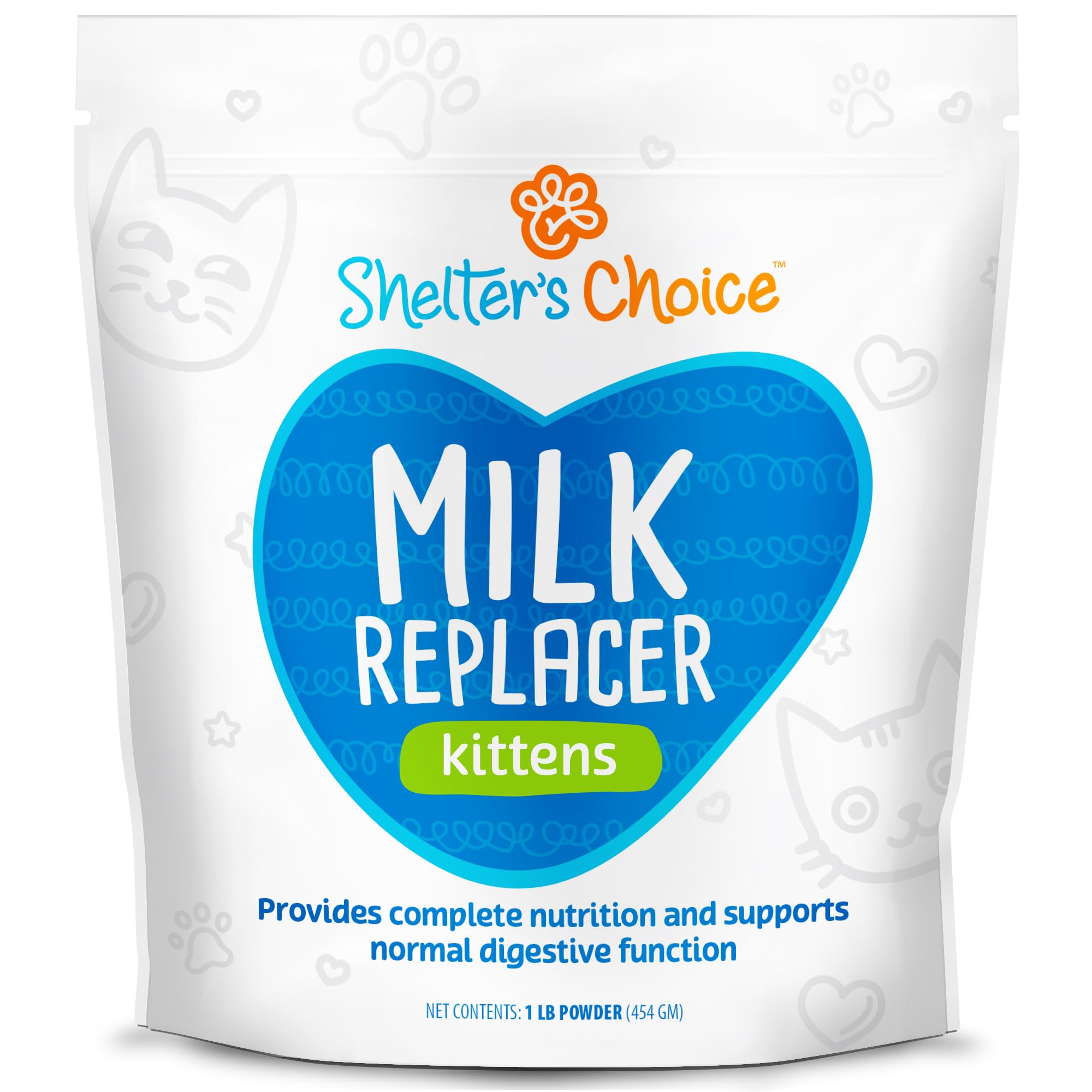
Revival Animal Health designed Shelter’s Choice specifically with orphaned and shelter-born kittens in mind. The formula focuses heavily on GI tract health, using dried whey protein concentrate along with animal and vegetable fats to mimic a mother cat’s nutritional profile while minimizing the risk of diarrhea — a common killer in neonatal kittens. The powder mixes at a ratio of 1 part to 3 parts water and blends smoothly without excessive clumping.
What sets this product apart is its dual purpose: it works not only as a complete milk replacement for orphans, but also as a nutritional supplement for pregnant, lactating, or convalescing adult cats. Rescue operators report that nursing feral mothers regain weight and increase milk production within a week of adding this to their diet. The tub packaging keeps powder fresh and doesn’t require refrigeration after opening, which is convenient for frequent use.
Reviews from foster caregivers emphasize the absence of digestive upset — kittens stay consistent with normal stool patterns even during the transition from formula to wet food. The formula supports immune system development during the vulnerable first weeks. The only downside is the slightly higher price per serving compared to general mammal replacers, but the targeted kitten nutrition justifies the difference.
Why we love it
- Specifically formulated to minimize kitten diarrhea
- Works as supplement for nursing and recovering adult cats
- Clear mixing instructions with consistent results
Good to know
- Not as palatable to some kittens as premium competitors
- Requires refrigeration of mixed formula between feedings
4. Exotic Nutrition Milk Replacer Powder

Exotic Nutrition’s milk replacement is a versatile powder marketed for a range of small mammals including squirrels, rabbits, opossums, and raccoons — not solely kittens. The formulation closely matches mother’s milk in protein, fat, and carbohydrates, and it is enriched with vitamins, minerals, and essential amino acids. The 8.8-ounce bag is a compact size suitable for occasional use or small litters.
Where this formula works well for kittens is in low-budget rescue situations where buying multiple specialized formulas isn’t feasible. It produces better weight gain and fewer digestive problems than plain cow or goat milk, which many owners default to. The powder dissolves readily and has minimal odor, which helps with acceptance. Instructions are straightforward, making it accessible for first-time bottle feeders.
The caution with this product is that it is not kitten-specific. Some wildlife rehabilitators have flagged potential issues with squirrel kits related to fat content being too low and carbohydrate levels too high. For kittens, it works as a short-term or supplemental option, but dedicated caretakers may prefer a feline-specific formula for exclusive feeding over several weeks. The versatility is a strength provided the buyer understands the product’s generalist nature.
Why we love it
- Affordable entry point for emergency feeding situations
- Minimal smell and mixes with little effort
- Suitable for multiple small animal species in mixed rescues
Good to know
- Not optimized for the specific amino acid needs of kittens
- Some concerns about fat content for exclusive long-term feeding
5. HYE Pets Goat Milk Powder

HYE Pets Goat Milk Powder is not a complete kitten milk replacement — it is a supplemental product designed to provide hydration, probiotics, and omega fatty acids to dogs and cats with sensitive stomachs. The 400-gram tub offers 80 servings, making it a very budget-friendly option for adding moisture and nutrients to a kitten’s diet rather than serving as their sole source of nutrition.
Where this product fits into a kitten care routine is during weaning or as an additive to wet food for picky eaters. The goat milk base is naturally lower in lactose than cow’s milk, and the added probiotics support digestive health. Owners of puppies and adult cats report improved stool consistency and coat quality with regular use. It mixes well and has a mild natural flavor that most animals accept readily.
The major limitation is that it lacks the taurine, arginine, and balanced calcium-phosphorus ratio that a growing kitten requires exclusively. Several user reviews note incomplete dissolution and a watery consistency compared to specialized kitten formulas. Some reported dark specks at the bottom of prepared bottles, raising concerns about manufacturing quality control. This product is best viewed as a supplementary option for hydration and gut health, not as a primary milk replacement for orphaned kittens.
Why we love it
- Excellent supplemental hydration for picky eaters
- Low lactose content reduces digestive upset
- Probiotics support healthy gut flora
Good to know
- Not a complete nutritional replacement for kittens
- Some users report incomplete mixing and residue
FAQ
Is goat milk safe as a primary milk replacement for kittens?
How often should I feed a newborn kitten milk replacement?
What should I do if my kitten gets diarrhea from the formula?
Can I mix kitten milk replacement with wet food to start weaning?
Final Thoughts: The Verdict
For most foster caregivers and kitten owners, the milk replacement for kittens winner is the Fox Valley Day-One Kitten Formula because it combines maximum digestibility with a balanced nutritional profile that minimizes digestive upset while supporting rapid growth. If you need a ready-to-feed emergency option, grab the PetAg KMR Liquid. And for budget-conscious multi-species rescues, the Revival Animal Health Shelter’s Choice offers reliable kitten nutrition at a mid-range price point.