
A mineral block that dissolves into mush after one rain or gets ignored by your horse isn’t just a waste of money — it’s a missed opportunity to deliver essential trace elements every day. Horses self-regulate their mineral intake by licking, and the right block turns a chore into a constant, low-maintenance nutrient source.
I’m Mo Mahin — the founder and writer behind Furric. I’ve spent years analyzing livestock supplement specs, studying mineral absorption data, and cross-referencing thousands of owner reports to find the blocks that horses actually use and that hold up in real pasture conditions.
After comparing density, mineral profiles, weather resistance, and palatability, these five options stand out as the most reliable mineral block for horses that balance natural ingredients with lasting durability.
How To Choose The Best Mineral Block For Horses
Not all salt licks are created equal for horses. The block you choose needs to deliver the right mix of minerals, hold up to weather, and actually appeal to your horse’s palate. Here are the key factors that separate a useful block from a wasted one.
Trace Mineral Profile vs Plain Salt
A plain white salt block provides sodium and chloride, but horses grazing on decent forage often need more. Look for blocks that list zinc, copper, manganese, cobalt, iodine, and iron — these six core micro-minerals support hoof health, coat condition, immune function, and bone development. A block labelled “trace mineral” should include at least most of these.
Hardness and Weather Resistance
A soft block melts into a puddle in the rain or crumbles under a few licks. The density of the rock determines how long it lasts. Himalayan salt rocks are naturally hard and shed water, while some processed mineral bricks can soften quickly if left exposed. If you keep the block in a turnout shelter or covered feeder, durability matters less — but for open pasture, choose a rock that doesn’t “sweat” in humidity.
Palatability and Horse Preference
Horses have preferences. Some love the strong salty taste of a natural rock, while others prefer a more balanced mineral mix. If your horse leaves a block alone, it’s not doing any good. A higher salt-to-mineral ratio often drives intake because the horse craves the salt and gets the minerals alongside it. Redmond rocks are famous for being loved by horses — many owners report their horses finish the block completely.
Quick Comparison
On smaller screens, swipe sideways to see the full table.
| Model | Category | Best For | Key Spec | Amazon |
|---|---|---|---|---|
| REDMOND Rock on a Rope (Horse) | Natural Rock | Weather-resistant pasture use | 3-5 lb rock, 4-6 week lifespan | Amazon |
| REDMOND Goat Mineral Rock on a Rope | Natural Rock | Animals that dislike processed blocks | Over 60 trace minerals, high salt ratio | Amazon |
| Himalayan Nature Salt Block 10 lb (2-Pack) | Natural Rock | Extended supply for multiple horses | 84 minerals, rain-resistant density | Amazon |
| North American Salt Trace Mineral Brick 4 lb | Processed Brick | Value-priced with core trace minerals | 6 micro-minerals, 4 lb weight | Amazon |
| Himalayan Nature Animal Licking Salt Rock | Natural Rock | Budget single-rock replacement | 100% natural rock, 84 minerals | Amazon |
In‑Depth Reviews
1. REDMOND Rock on a Rope Unrefined Salt Rock for Horses (3-5 lb)
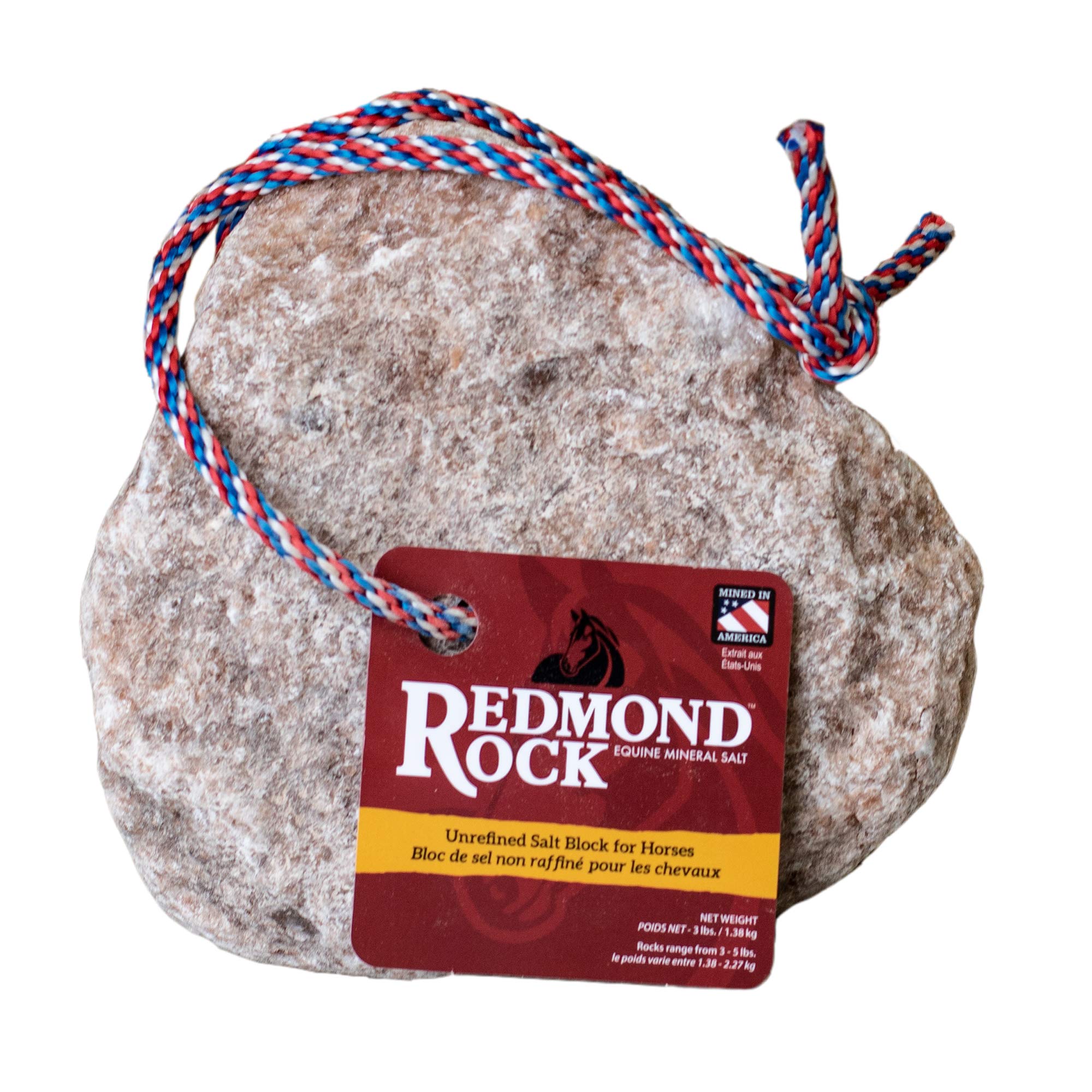
The REDMOND Rock on a Rope is the benchmark for natural mineral blocks in the horse world. This 3-5 pound rock is mined from an ancient seabed in Utah and contains over 60 naturally occurring trace minerals that horses crave. Unlike compressed bricks that may contain fillers, this is a single, dense rock with no artificial processing — just raw sea minerals that have been naturally concentrated over millennia.
What makes this block stand out in humid climates is its resistance to “sweating” or melting. Owners in Houston report that these rocks don’t dissolve in summer humidity and don’t fall off the rope before they’re consumed. The rope design allows you to hang it in a stall or under a shelter, keeping it off the ground and away from mud. The rock typically lasts 4 to 6 weeks for a single horse, though mineral-deficient horses may consume it faster initially as they self-correct.
Out of 20 horses in one stable, 18 actively used this block — a strong indicator of its palatability. The only common critique is that the rope is not a breakaway design, so some owners replace it with a breakable string for safety in group turnout situations.
Why we love it
- Doesn’t melt or sweat in high humidity
- Horses self-regulate intake effectively
- Rope keeps it off the ground in stalls
Good to know
- Rope is not breakaway; may need replacement for safety
- Some horses take time to adjust to natural rock texture
2. REDMOND Goat Mineral Rock on a Rope (3-5 lb)
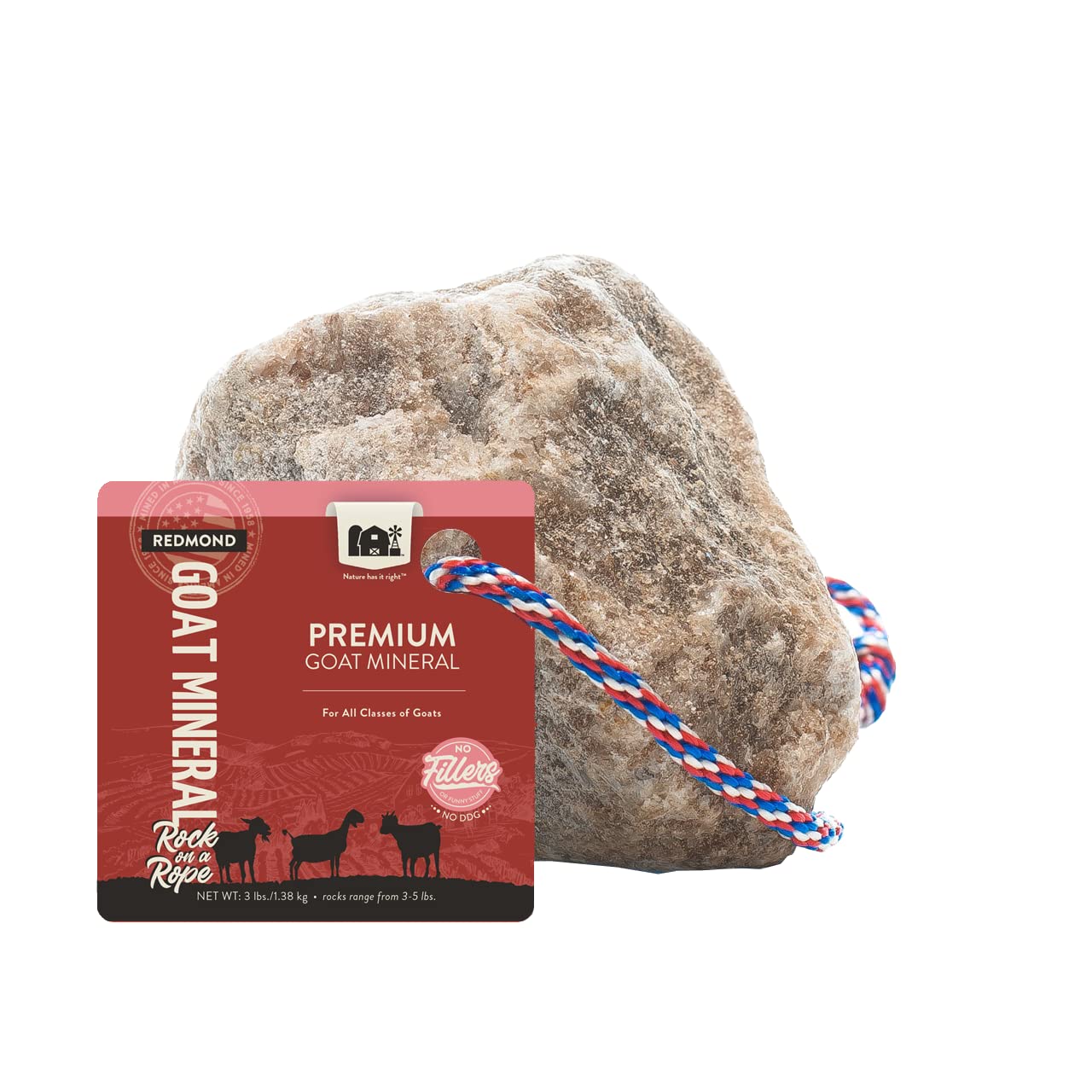
Though marketed for goats, this same Redmond rock is widely used by horse owners who want the high salt-to-mineral ratio that drives consistent licking. The key difference between this and the horse-specific version is the mineral profile — this rock has a slightly different balance optimized for smaller ruminants, but horses still benefit from the same sea mineral foundation.
Animals instinctively regulate their mineral intake when given a rock with a strong salt presence. This Redmond rock naturally contains over 60 trace minerals without any artificial flavoring or chemical processing. The higher salt content compared to some heavy-mineral mixes is actually an advantage — it encourages horses to lick it regularly, which means they get consistent electrolyte replenishment and trace mineral supplementation.
One owner noted that when given a choice, livestock consistently preferred Redmond rocks over other natural alternatives. This is a good option if your horse has turned up its nose at other mineral blocks. The rock-on-a-rope design works the same as the horse version, though the package dimensions are slightly smaller.
Why we love it
- High palatability; most horses lick consistently
- No fillers, dyes, or artificial processing
- Good for horses that are picky about mineral blocks
Good to know
- Labeled for goats; verify mineral profile if you need specific horse formulation
- Rope not breakaway
3. Himalayan Nature Salt Block, 10 Pound (2 Count)
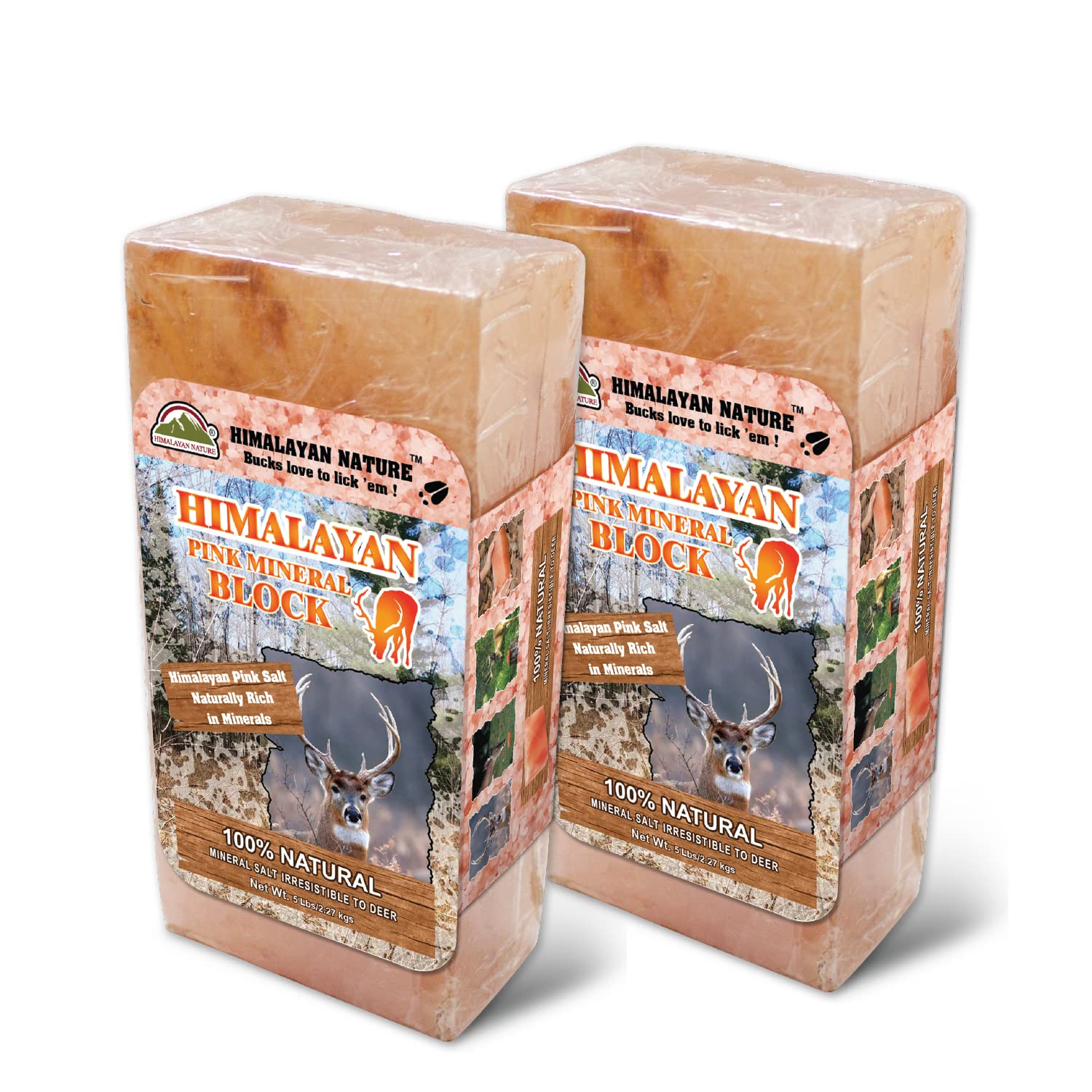
This two-pack from Himalayan Nature delivers 10 pounds of natural salt rock mined from Himalayan deposits. The block boasts 84 essential trace minerals, which is one of the highest counts available in a natural rock option. For multi-horse operations or owners who want to keep a block in both the stall and the pasture, this pack provides extended coverage without separate purchases.
The density of these Himalayan blocks is a defining feature — they are naturally hard and resistant to rain, which means they hold up well in open pasture conditions. The salt is also effective at encouraging water intake; when horses consume the block, they drink more, which supports hydration and kidney function.
The 30-day money-back guarantee adds confidence for first-time buyers. One consideration is that the 10-pound total weight (two 5-pound blocks) means each rock is larger than the Redmond rocks, which some horses may find less approachable at first. The blocks are suitable for all livestock, including horses, goats, sheep, and cattle.
Why we love it
- Two blocks for long-lasting supply
- 84 trace minerals from natural Himalayan source
- Hard density resists rain well
Good to know
- No rope or hanger included
- Some horses may need time to start using a new block
4. North American Salt 90013 Trace Mineral Brick (4 lb)

The North American Salt Trace Mineral Brick is a processed block that delivers six essential micro-minerals: zinc, manganese, cobalt, copper, iodine, and iron. These are the exact minerals that support equine hoof quality, coat health, and immune function. The 4-pound brick size is ideal for single-horse households or for owners who want to test a block without committing to a larger rock.
Owner feedback highlights its durability — one customer noted that the brick doesn’t break down easily and lasts a long time, even when left in a stall. Another owner with a pony reported that the animal licks it more after a hot day, which indicates the electrolyte replacement mechanism is working correctly. The block is also formulated for cattle and pigs, so it’s a versatile option for multi-species farms.
One trade-off is that this is a compressed brick rather than a natural rock, meaning it may soften faster in heavy rain than a Himalayan or Redmond rock. Keeping it in a sheltered feeder is recommended. The price point has increased over time, but owners still describe it as “very economical” given its lifespan.
Why we love it
- Contains six essential trace minerals in one block
- Durable construction that resists crumbling
- Good size for single horses or testing
Good to know
- Processed brick; may soften in wet conditions
- Price has increased from earlier years
5. Himalayan Nature Animal Licking Salt Rock (Single Rock)
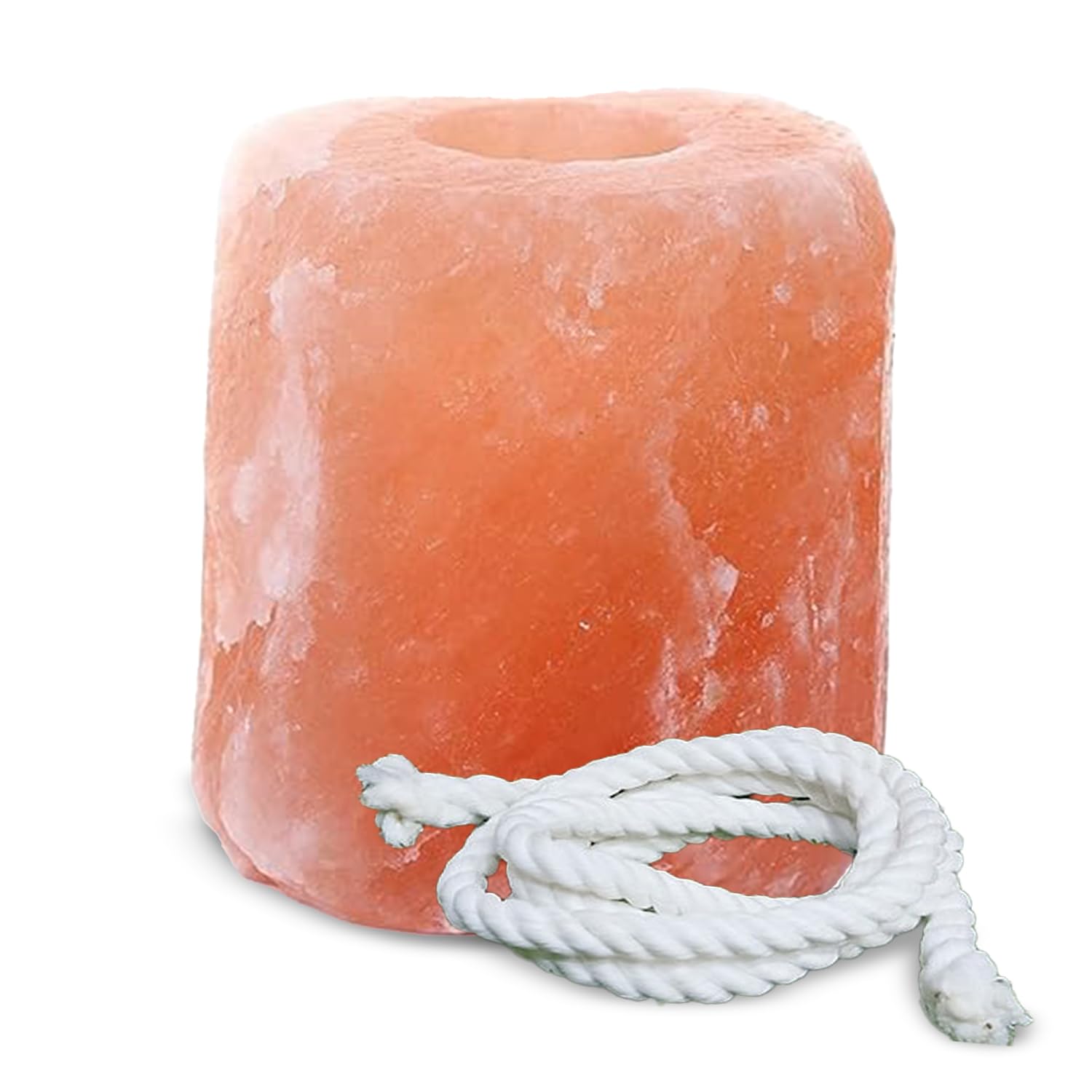
This single rock from Himalayan Nature offers 100% natural solid mineral salt with 84 trace minerals. It’s the most budget-friendly entry point into natural salt licks for horses, providing the same Himalayan origin as the two-pack but in a single rock. The block is marketed for deer and wildlife observation, but it is equally effective for horses, cattle, sheep, and dairy farms.
The rock’s natural hardness means it resists rain and holds up well in outdoor setups. It is a raw chunk — not a compressed brick — so there are no binders or artificial additives. This makes it a clean option for owners who prioritize additive-free supplementation. The 84 mineral count includes many trace elements that are scarce in modern forage, such as magnesium, selenium, and potassium.
One caveat is that because it is sold as a natural chunk, size and shape vary. Some rocks arrive smaller than expected. The block does not come with a rope or holder, so you will need a salt block holder or a feeder to keep it off the ground. It’s a straightforward, no-frills mineral source for owners on a tighter budget.
Why we love it
- 100% natural with 84 trace minerals
- Hard rock resists moisture well
- Additive-free and unprocessed
Good to know
- No rope or holder included
- Size can vary significantly between rocks
FAQ
How long does a mineral block for horses typically last?
Why does my horse ignore the mineral block I bought?
Can I leave a mineral block out in the rain?
What’s the difference between a plain salt block and a trace mineral block?
Final Thoughts: The Verdict
For most horse owners, the best mineral block for horses is the Redmond Rock on a Rope because it combines natural trace minerals, exceptional weather resistance, and proven palatability across the vast majority of horses. If you want a more budget-friendly two-pack with 84 minerals, grab the Himalayan Nature Salt Block 10 Pound. And for a simple, no-fuss single rock to try before committing to a larger format, nothing beats the Himalayan Nature Animal Licking Salt Rock.