
The first year of a kitten’s life is a rapid-fire sprint of development — bones lengthen, neural pathways form, and muscle mass triples within months. Choosing the wrong food during this narrow window can mean stunted growth, fragile immunity, or lifelong digestive sensitivity. The difference between a raw-material-filled bag and a biologically appropriate formula is the difference between a kitten who simply survives and one who actually thrives.
I’m Mo Mahin — the founder and writer behind Furric. I’ve spent over a thousand hours analyzing ingredient panels, cross-referencing AAFCO growth nutrient profiles, and synthesizing aggregated feedback from thousands of kitten-owner households to cut through the marketing noise surrounding early-life nutrition.
This guide breaks down the top contenders so you can confidently choose the natural kitten food for growth that matches your specific kitten’s needs without guesswork or waste.
How To Choose The Best Natural Kitten Food For Growth
Kitten growth nutrition is not the same as adult maintenance nutrition. You need higher protein, precise calcium-phosphorus ratios, and targeted DHA. Here are the three non-negotiable factors.
Animal Protein Placement on the Ingredient List
Look for a named meat source — chicken, turkey, ocean fish — as the very first ingredient. The protein content should land between 38 and 44 percent on a dry-matter basis for muscle development. Anything below 35 percent is too diluted for a growing kitten’s metabolic demand.
DHA Source and Concentration
Docosahexaenoic acid from actual fish oil or salmon oil supports retinal and cerebral cortex development. Avoid formulas that rely on flaxseed as the sole DHA source; cats convert plant-based omega-3s poorly. The ideal is DHA from salmon oil or fish meal in the top five ingredients.
Calcium-Phosphorus Ratio for Skeletal Strength
Bones grow fastest between eight and sixteen weeks. The calcium-to-phosphorus ratio should be around 1.2:1 — balanced minerals prevent developmental bone deformities. Excess calcium is as dangerous as a deficiency during kittenhood.
Quick Comparison
On smaller screens, swipe sideways to see the full table.
| Model | Category | Best For | Key Spec | Amazon |
|---|---|---|---|---|
| ORIJEN Kitten Recipe | Premium Dry | High-protein muscle development | 90% animal ingredients, 7.5×3.5mm kibble | Amazon |
| Wellness CORE Kitten | Mid-Range Dry | Grain-free high-protein starter | 55% animal protein, DHA from salmon oil | Amazon |
| Hill’s Science Diet Kitten Dry | Vet-Recommended Dry | Balanced mineral bone support | DHA from fish oil, antioxidant blend | Amazon |
| Blue Buffalo Freedom Grain-Free | Mid-Range Indoor Dry | Indoor kitten with grain sensitivity | DHA & ARA for brain/eye development | Amazon |
| Hill’s Science Diet Kitten Wet | Premium Wet 24-Pack | Hydration and picky eater transition | Single-serve pouch, natural ingredients | Amazon |
In‑Depth Reviews
1. ORIJEN Kitten Recipe

ORIJEN packs this 4-pound recipe with 90 percent animal ingredients — fresh free-run chicken and turkey, wild-caught salmon, whole herring, and chicken liver as the top five. That density delivers the protein and fat profile kittens naturally evolved on, supporting rapid muscle accretion without plant-based fillers that dilute nutrient absorption.
The kibble is sized at 7.5 by 3.5 millimeters — small enough for a twelve-week-old mouth but sturdy enough to encourage chewing. A freeze-dried raw coating adds palatability and preserves enzymes that support digestive enzyme production during the sensitive weaning phase.
Every batch meets AAFCO growth nutrient profiles with a calcium-phosphorus ratio locked at 1.2:1. Owners of particularly active or large-breed kittens report visibly better body condition scores within three weeks compared to grain-inclusive alternatives.
Why we love it
- Extremely high meat inclusion mimics ancestral diet
- Freeze-dried coating boosts acceptance from first bowl
- Kibble geometry designed specifically for kitten jaw size
Good to know
- Rich formula may cause loose stools if transition is rushed
- Premium tier requires a larger upfront investment
2. Wellness CORE Kitten Dry Food

Wellness CORE delivers 55 percent high-quality animal protein from turkey meal and chicken meal, supplemented by DHA-rich salmon oil for brain and retinal development. The absence of corn, wheat, and soy makes this a strong option for kittens with early signs of grain sensitivity — gas, loose stool, or skin flakes during the first month home.
The 5-pound bag size is practical for single-kitten households; the kibble maintains crunch without crumbling, which helps scrape away early plaque as permanent teeth erupt around four months. Probiotics and prebiotic fiber support a stable gut microbiome during vaccination and environmental stress periods.
This formula is backed by the Wellness staff of in-house veterinary nutritionists, and multiple owner reports note that kittens switching from lower-protein foods experience visibly fuller coats within two weeks.
Why we love it
- High protein without over-reliance on plant concentrates
- Non-GMO ingredient sourcing adds transparency
- Stool quality typically solidifies within 5-7 days of transition
Good to know
- Not ideal for kittens with confirmed poultry allergies
- Bag lacks a resealable zipper closure
3. Hill’s Science Diet Kitten Dry, Ocean Fish & Brown Rice
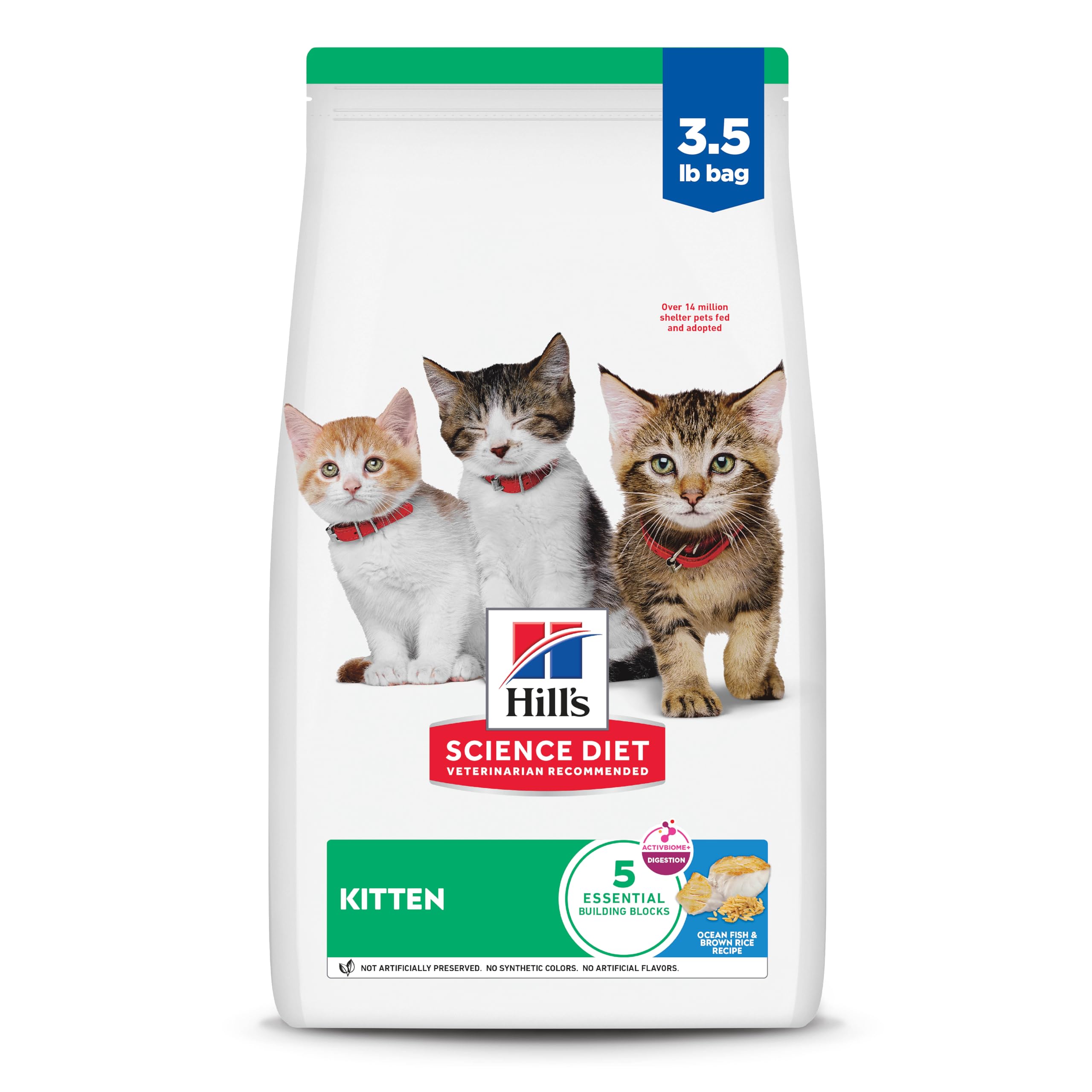
Hill’s Science Diet is the number one veterinarian-recommended brand in the United States, and this ocean fish and brown rice formula justifies that trust with precision mineral balancing. Calcium, phosphorus, and magnesium levels are calibrated to support growing bone density without placing excess renal load on immature kidneys.
DHA from fish oil targets neural development, while the antioxidant blend — vitamin E and beta-carotene — shores up the kitten’s still-maturing immune response during the period when maternal antibodies wane. The 3.5-pound bag is compact for trial runs before committing to a larger size.
This recipe uses natural ingredients with added vitamins and amino acids, and multiple veterinary behaviorists note that kittens raised on Hill’s maintain consistent energy curves without the hyper-spiking crashes associated with high-carb formulas.
Why we love it
- Precise calcium-to-phosphorus ratio for skeletal integrity
- Widely available and consistent formula batch to batch
- Gentle on sensitive stomachs transitioning from mother’s milk
Good to know
- Contains brown rice — not suitable for grain-free households
- Smaller bag means more frequent repurchasing
4. Blue Buffalo Freedom Grain-Free Indoor Kitten

Blue Buffalo Freedom leads with real deboned chicken as the first ingredient and augments the recipe with DHA and ARA — two long-chain fatty acids critical for cognitive and visual development in the first sixteen weeks. The grain-free formulation avoids corn, wheat, and soy, making it a solid match for indoor kittens who show signs of environmental allergy reactivity.
The 5-pound bag includes exclusive LifeSource Bits — a cold-formed blend of antioxidant-rich fruits and vegetables that survive the extrusion process without nutrient degradation. These dark flecks are not fillers; they deliver vitamin E, vitamin C, and beta-carotene in a matrix that resists oxidation once the bag is opened.
Blue Buffalo uses no poultry by-product meals, which means the protein listed on the guaranteed analysis comes entirely from named muscle meat. Owners report that kittens with dull coats often show visible sheen improvement by the third week.
Why we love it
- No chicken or poultry by-product meals
- ARA alongside DHA supports comprehensive eye development
- LifeSource Bits stay potent longer than surface-sprayed vitamins
Good to know
- Some kittens dislike the texture of the Bits initially
- Potato starch is a primary binder — not ideal for diabetic-prone lineages
5. Hill’s Science Diet Kitten Wet Cat Food, Chicken, 24-Pack
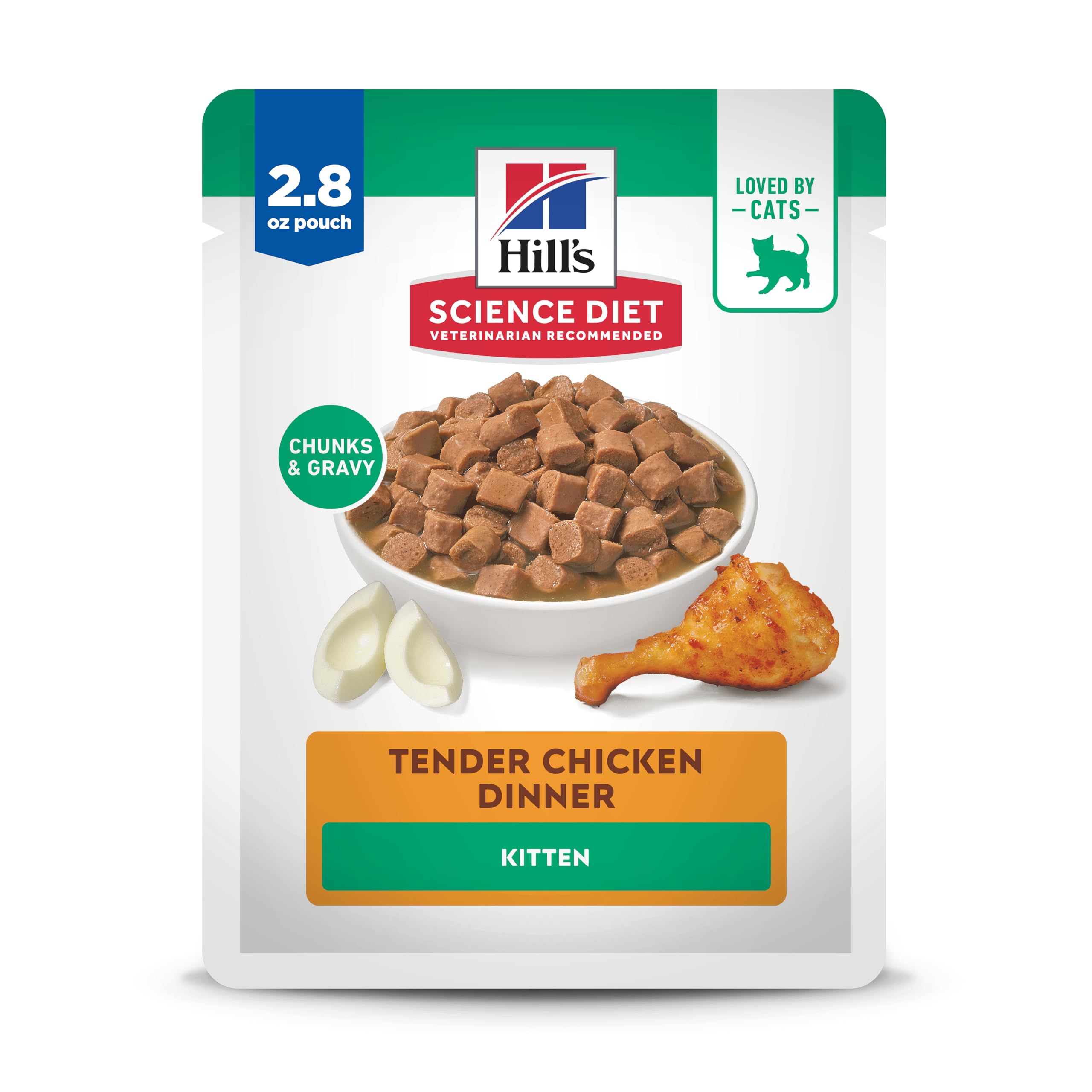
This 24-count wet food case from Hill’s Science Diet provides 2.8-ounce individual pouches that deliver hydration directly alongside nutrition — particularly important for kittens who have not yet developed strong thirst-drive habits. The chicken stew texture is smooth enough for three-week-old weanlings yet chunky enough for four-month-olds to explore with their tongues.
Natural ingredients with added taurine, vitamins, and amino acids ensure that even the pickiest eater gets complete and balanced nutrition. Veterinarians frequently recommend mixing this wet food with dry kibble during the six- to twelve-week transition phase to encourage acceptance of varied textures and reduce the risk of texture fixation later in life.
The easy-tear notch on each pouch means no can opener and no sharp edges — a practical detail for households with multiple kittens requiring frequent, small meals. Owner feedback consistently praises the lack of artificial gelatinous binders that sometimes cause refusal in sensitive kittens.
Why we love it
- Portioned pouches reduce waste and spoilage
- High moisture content supports kidney and urinary health
- Pouch design eliminates sharp can edges
Good to know
- Requires refrigeration after opening — not shelf-stable
- Higher per-ounce cost compared to bulk canned options
FAQ
Can I mix two different growth formulas in the same bowl?
When should I switch my kitten from wet to dry food permanently?
How do I know if my kitten is getting too much calcium from growth food?
Final Thoughts: The Verdict
For most pet parents, the natural kitten food for growth winner is the ORIJEN Kitten Recipe because its 90 percent animal ingredient profile and freeze-dried coating deliver the densest nutrient matrix for muscle, bone, and brain development in a single bag. If you want a grain-free option backed by in-house veterinary nutritionists, grab the Wellness CORE Kitten. And for a hydration-focused complement that picky eaters actually finish, nothing beats the Hill’s Science Diet Kitten Wet Food 24-Pack.