
Every walk turns into a battle of strength when your dog locks onto a scent, lunges at a squirrel, or simply muscles forward with a relentless pull. The constant yanking not only strains your shoulder but can also damage your dog’s trachea and neck over time. Breaking that instinctive drive to pull isn’t about brute force — it’s about redirecting leverage and applying gentle control in the right place.
I’m Mo Mahin — the founder and writer behind Furric. I’ve spent years analyzing the mechanics behind different no-pull designs, from head halters that guide the snout to martingale collars that tighten evenly, cross-referencing owner reports with veterinary behavioral data to find what actually works.
After pouring over hundreds of verified owner experiences and comparing the engineering of each restraint type, I’ve sorted the top contenders to help you find the right no pull collar for dogs that fits your dog’s size, strength, and temperament for calm walks.
How To Choose The Best No Pull Collar For Dogs
No pull collars work through leverage, not pain — they gently redirect your dog’s forward momentum. But not every collar suits every breed. The key is matching the design to your dog’s anatomy and pulling style.
Head Halter vs. Martingale Collar vs. Harness
Head halters loop around the snout and behind the ears — when the dog pulls, the head turns, disrupting the forward drive. Martingale collars tighten evenly around the neck when the dog strains, preventing escapes without choking. Harnesses shift pressure to the chest, reducing strain on the trachea. Each class fits different muzzle shapes and fur lengths — a flat-faced bulldog can’t wear a snout loop, while a sighthound with a narrow head needs a martingale’s anti-slip cinch.
Material Durability and Buckle Quality
A dog that regularly throws its full body weight into a lunge will stress hardware and stitching. Look for welded stainless-steel D-rings, reinforced bar-tack stitching, and nylon webbing with a minimum tensile rating. Quick-release buckles must be strong enough for daily clipping — thin plastic buckles snap under repeated strain, especially on breeds over 50 pounds.
Proper Fit and Adjustment Points
Measure the widest part of your dog’s head and the base of the neck. A head halter needs to sit high on the nose — too low blocks breathing, too loose slips off. Martingale collars should rest loose when slack but tighten to head-width before choking. Adjustable straps should allow at least 2-3 inches of range to accommodate fur compression and growth.
Quick Comparison
On smaller screens, swipe sideways to see the full table.
| Model | Category | Best For | Key Spec | Amazon |
|---|---|---|---|---|
| EzyDog Checkmate Martingale | Martingale Collar | Escape-prone dogs with narrow heads | Welded stainless steel D‑ring | Amazon |
| Carhartt Nylon Duck No Pull Harness | No-Pull Harness | Heavy pullers needing body control | 500‑denier polyester + DWR coating | Amazon |
| PetSafe Gentle Leader Headcollar | Head Halter | Immediate pull‑reduction training | Padded neoprene nose loop | Amazon |
| Coastal Pet Walk ‘n Train Head Halter | Head Halter | Multi‑purpose training and barking control | Safety loop attaches to collar | Amazon |
| CMIYUYNG No Pull Collar with Cap | Martingale Chain | Budget training with adjustable links | Stainless steel links with rubber caps | Amazon |
In‑Depth Reviews
1. EzyDog Checkmate Martingale Collar
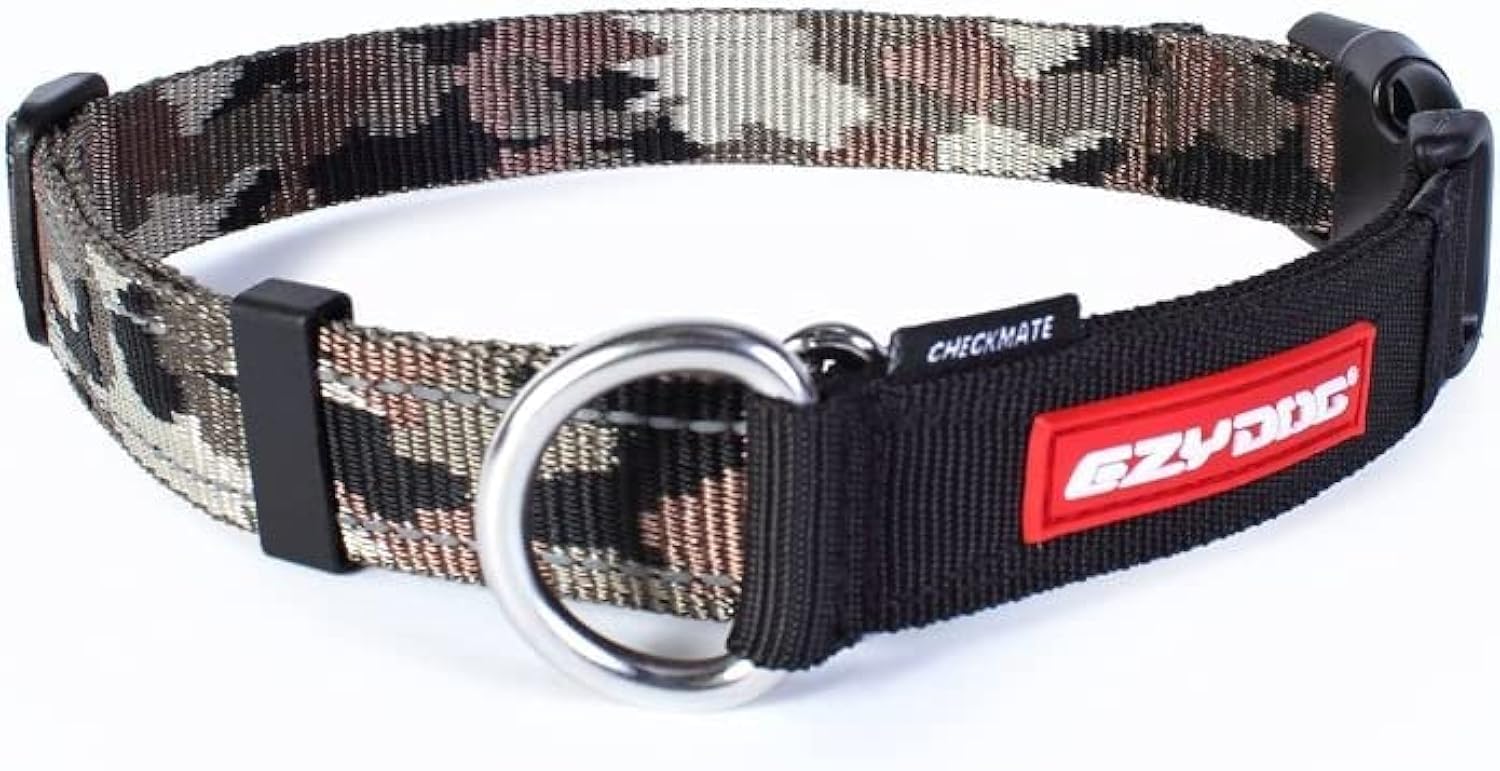
The EzyDog Checkmate uses a martingale cinch design that stays loose during normal wear but tightens evenly when the dog pulls — preventing escape without applying localized choke pressure. The welded stainless steel D-ring is a standout detail: it won’t bend or snap under repeated heavy strain, unlike cheap cast rings. Reflective stitching runs the entire length, making low-light visibility genuine rather than a gimmick.
Owner reports confirm this collar survives 1.5 to 2 years of daily use on strong breeds like huskies and pit bulls. The quick-release buckle allows fast on/off — a benefit for dogs that dislike overhead handling. However, the heavy D-ring can migrate to the underside of the neck, reversing the tag position, which some owners find mildly annoying.
For dogs with narrow skulls and thick necks — typical of sighthounds, huskies, and bully mixes — this martingale provides the anti-slip security that a standard buckle collar simply can’t match. The nylon webbing is stout without being abrasive, and the cinch range is wide enough to accommodate fur thickness variation.
Why we love it
- Welded stainless hardware resists deformation under high pull force
- Reflective stitching improves visibility in dusk and dawn walks
- No‑resize martingale dials in perfect fit after initial adjustment
Good to know
- Heavy D‑ring may swing to underside, flipping the tag orientation
- Not ideal as a standalone primary collar for dogs that roll in mud
2. Carhartt Nylon Duck No Pull Dog Harness

Carhartt brings its workwear heritage into the dog world with a 500-denier polyester shell coated with Rain Defender DWR, meaning it sheds light rain and resists soaking through during wet grass walks. The martingale chest strap provides the no-pull function by cinching across the sternum when the dog pulls — this shifts pressure to the chest instead of the throat, preserving the trachea from damage.
The over-the-head yoke design paired with a single buckle on the belly makes quick fitting possible even with an excited dog. Spacer mesh backing along the belly strap adds ventilation — a notable detail for dogs in warm climates. Owners report this harness works immediately with strong pullers like pit bulls and Labrador retrievers, often eliminating pulling on the first walk.
One caution: if not adjusted correctly, the armpit area can rub and cause chafing. The duck fabric is stiff initially and needs a break-in period. For flat-faced breeds like French bulldogs, this harness fits well thanks to the martingale chest action that doesn’t rely on snout contact.
Why we love it
- DWR coating repels rain and mud for all‑weather durability
- Single buckle design allows fast on/off even with an excited dog
- Martingale chest strap shifts pressure to the body, not the throat
Good to know
- Improper fit can cause armpit chafing — adjust before first long walk
- Duck fabric is stiff initially and requires breaking in
3. PetSafe Gentle Leader No-Pull Dog Headcollar
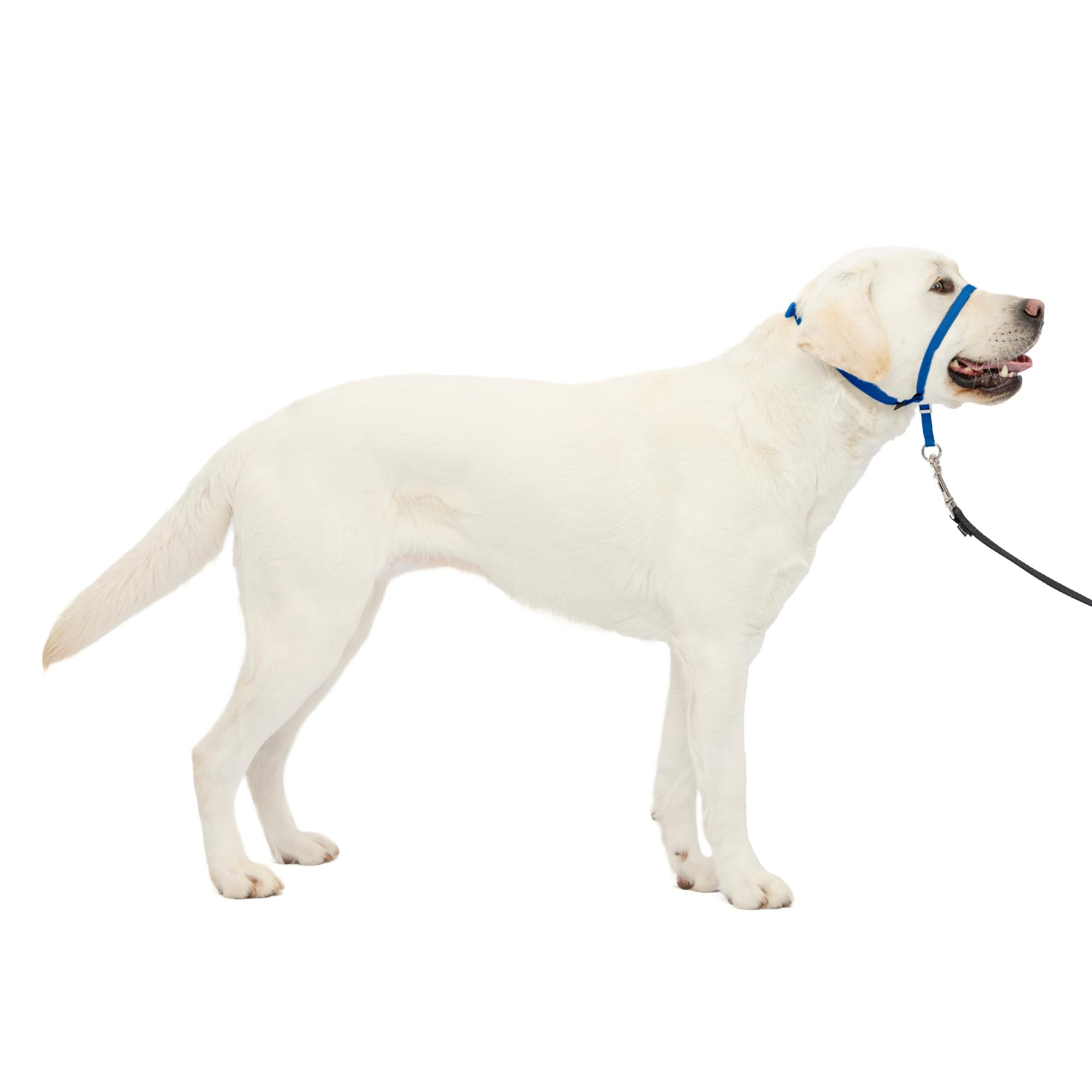
The PetSafe Gentle Leader is the most widely verified no-pull solution among the five products, with owner reports citing a 90%+ reduction in pulling and lunging within the first few walks. The design, created by a veterinary behaviorist, uses minimal strap surface area to keep the dog cool while a padded neoprene nose loop sits comfortably above the soft tissue of the snout.
Where this collar shines is its immediate interruptive effect on the dog’s instinct to pull forward. When the dog pulls, the halter rotates the head downward, turning the shoulders and redirecting momentum mid-stride. Owners of strong 50-75 pound mixes consistently describe the change as “instant” and “dramatic.” The quick-snap neck strap and adjustable nose loop let you dial in the fit in about two minutes.
One known trade-off: dogs may paw at the nose loop or roll on the ground to remove it. A common workaround is attaching the leash to both the halter and a backup chest harness using a double-ended clip. The Gentle Leader also will not fit brachycephalic breeds like pugs, bulldogs, or boxers with extremely short snouts — measure the muzzle circumference carefully before ordering.
Why we love it
- Veterinary behaviorist design redirects pulling by turning the head
- Padded neoprene loop prevents rubbing on the nasal bridge
- Quick‑snap neck closure and adjustable loop for fast fitting
Good to know
- Does not fit short‑snouted breeds like pugs, bulldogs, or boxers
- Some dogs paw at the loop — pairing with a backup harness helps
4. Coastal Pet Walk ‘n Train Dog Head Halter
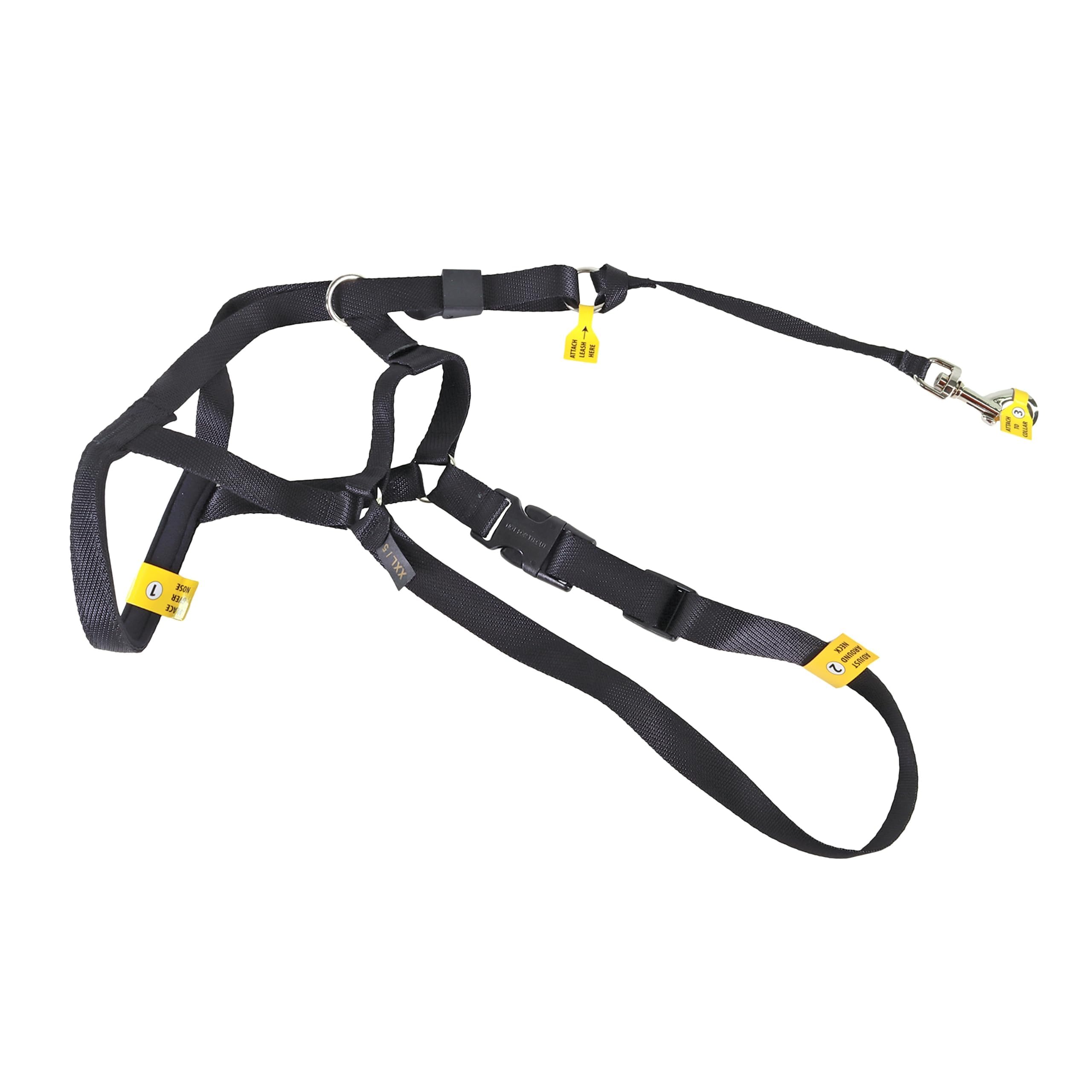
The Walk ‘n Train head halter uses side straps to position the nose loop correctly at the snout midpoint, allowing the dog to open its mouth fully for panting and drinking — a meaningful comfort advantage over halters with fixed geometry. The safety loop clips directly to the dog’s existing collar, providing a backup attachment point if the halter loosens or the dog tries to paw it off.
Owner accounts confirm it works effectively on boxer mixes and bulldog-type breeds whose snout shape falls between normal and brachycephalic. The nose loop tightens slightly when the dog pulls and automatically loosens when the dog relaxes, reinforcing calm walking behavior without constant correction. The multi-purpose utility extends to nail trims and controlling reactive barking at delivery trucks.
The sizing inconsistency is the main complaint: the Large fits a boxer-mastiff well but the Small is still too loose for a 15-pound schnauzer, so an XS would be needed for toy breeds. The nose padding is adequate, though some owners report light fur loss on the bridge after extended walks — a sign that the strap may need loosening or that a different size would fit better.
Why we love it
- Side strap design allows full panting and drinking while worn
- Safety loop clips to existing collar for backup security
- Nose loop self‑loosens when dog stops pulling, reinforcing calm
Good to know
- Smallest size still too large for toy breeds under 15 pounds
- Extended wear may cause light fur wear on the nasal bridge
5. CMIYUYNG No Pull Dog Collar with Cap
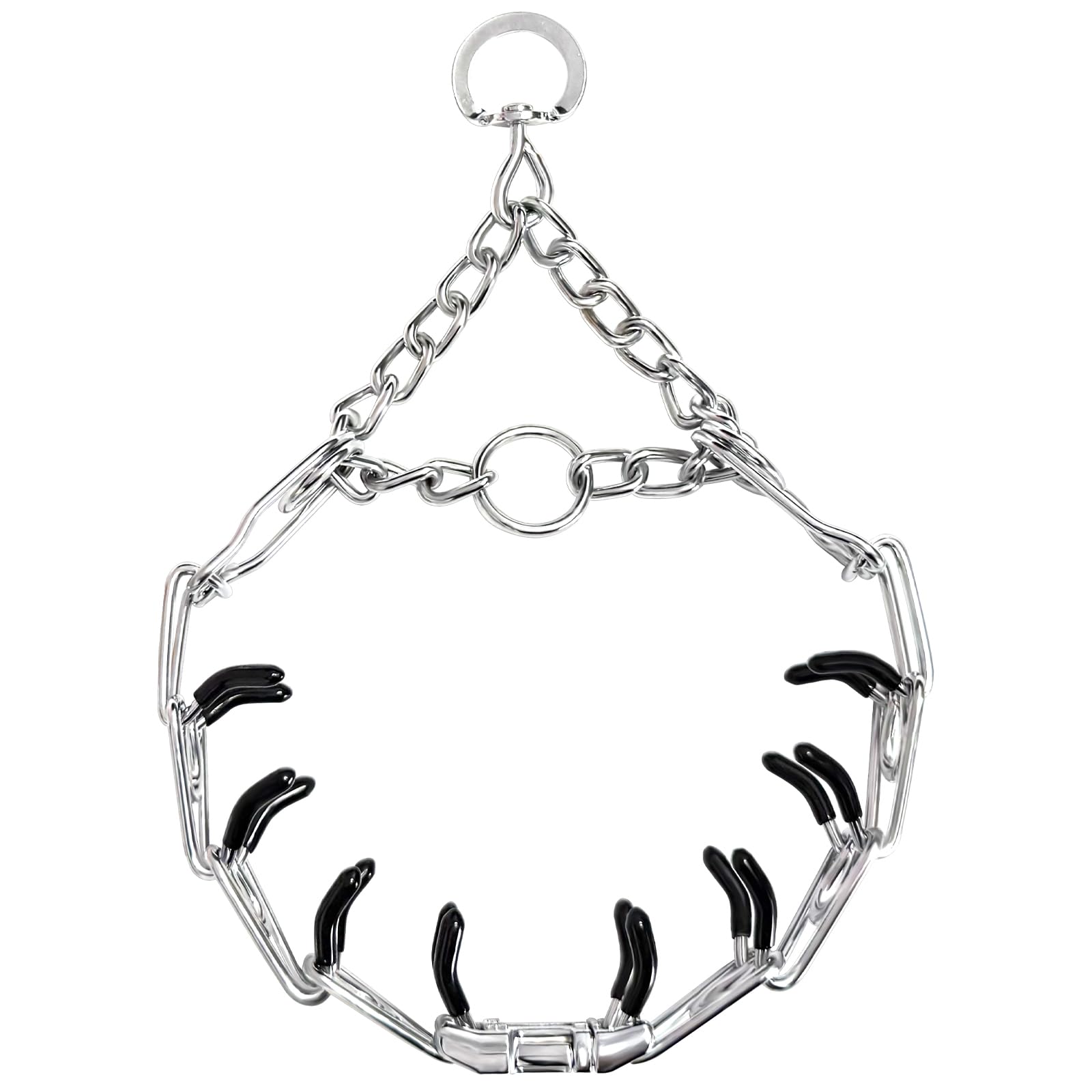
This martingale-style collar uses stainless steel chain links with soft rubber caps covering each link’s contact point — the rubber acts as a cushion against the dog’s fur while still providing the audible and tactile correction mechanism that some trainers prefer during obedience work. The quick-release buckle at the connection point allows fast removal without fishing a martingale loop over the head.
The collar comes with two additional links, so you can add or remove segments to achieve a precise fit between 17 and 21 inches for the M/L size. Owners report that their dogs responded immediately — stopping the self-choking behavior they displayed with flat buckle collars. The stiff link construction keeps the collar from bunching into a knot, a common failure point with chain-style collars.
The main durability caveat: the black finish on the rubber caps fades to a bronze tone after roughly 8 months of daily outdoor use, and the collar must be dried thoroughly before storing to prevent rust on the chain links. This is a solid entry-level tool for training scenarios where you want correction without pain, especially for medium breeds that need a clear tactile boundary cue.
Why we love it
- Rubber‑capped links provide gentle correction without pinching fur
- Adjustable link system lets you dial in precise neck circumference
- Quick‑release buckle enables fast on/off without sliding over head
Good to know
- Black finish on rubber caps fades to bronze after extended sun exposure
- Chain links can rust if stored wet — dry thoroughly after use
FAQ
Can a head halter damage my dog’s neck or spine?
How do I measure my dog’s neck for a martingale collar?
What type of no-pull collar works best for a brachycephalic breed like a bulldog or pug?
Final Thoughts: The Verdict
For most owners dealing with a strong-pulling dog, the no pull collar for dogs winner is the PetSafe Gentle Leader because its veterinary-behaviorist head halter design immediately redirects pulling instinct without damaging the trachea. If you need an escape-proof option for a narrow-headed breed, go with the EzyDog Checkmate Martingale — its welded D-ring and reflective stitching hold up over years of daily use. And for water-loving dogs that charge through mud and rain, nothing beats the Carhartt Nylon Duck No Pull Harness with its DWR coating and martingale chest strap.