
Nyjer seed is expensive, and the wrong feeder turns half of it into lawn litter. A feeder designed for these tiny, oil-rich seeds makes the difference between a feeding station that empties in a week and one that turns every seed into a meal for goldfinches, house finches, and pine siskins.
I’m Mo Mahin — the founder and writer behind Furric. I’ve compared the construction materials, port designs, and mesh tolerances of dozens of feeders, cross-referenced them with owner reports, and studied how the shape of a feeding port affects seed waste and bird access.
After evaluating metal mesh tubes, polycarbonate cylinders, and die-cast aluminum models across five top designs, I’ve settled on the five most reliable options to help you find the best nyjer seed feeder for your backyard setup.
How To Choose The Best Nyjer Seed Feeder
Nyjer seed is tiny, so a feeder built for sunflower seeds will waste your money. The port openings, perch depth, and material must match the slender beak of a goldfinch to keep seed inside the tube and off the ground.
Port Design & Seed Waste
Look for feeding ports with small openings, ideally under ¼ inch wide, that force the bird to extract one seed at a time. Mesh tubes naturally limit seed flow because the bird clings to the screen and pecks. Avoid wide plastic ports that let nyjer spill every time a bird lands.
Construction Material & UV Resistance
Polycarbonate tubes are lightweight and clear but become brittle after two seasons in direct sunlight. Anodized aluminum and powder-coated steel mesh feeders last five years or longer. If you hang the feeder in full sun, prioritize metal construction.
Seed Capacity & Moisture Management
Nyjer goes rancid faster than sunflower seed, especially in humid weather. A capacity between 1 and 2.5 pounds forces you to refill frequently, which keeps the seed fresh. Drainage holes in the bottom tray prevent moisture buildup that clumps seed and promotes mold.
Mounting & Squirrel Resistance
Metal mesh feeders are naturally squirrel-resistant because rodents cannot chew through the screen and struggle to cling to the smooth surface. Plastic-tube feeders need a baffle above or a pole system with a cone guard to keep squirrels from gnawing through the cap or perches.
Quick Comparison
On smaller screens, swipe sideways to see the full table.
| Model | Category | Best For | Key Spec | Amazon |
|---|---|---|---|---|
| Stokes Select Finch Screen Feeder | Premium | Long-term durability & easy cleaning | 14.4 oz weight, cast alloy caps | Amazon |
| Woodlink Audubon Die Cast Aluminum Feeder | Premium | Rugged aluminum build, minimal assembly | 13″ length, sliding top lid | Amazon |
| Gtongoko Metal Mesh Tube Feeder | Mid-Range | All-metal squirrel resistance, 2.5 lb capacity | 2.5 lbs seed, 6″ diameter tray | Amazon |
| Stokes Select Thistle Tube Feeder | Mid-Range | Polycarbonate durability, easy visual seed level | 1.6 lb capacity, roofed ports | Amazon |
| Audubon 8 Port Thistle Tube Feeder | Budget | Entry-level price, 8 feeding stations | 2 lb capacity, 15″ height | Amazon |
In‑Depth Reviews
1. Stokes Select 38171 Finch Screen Bird Feeder with Metal Roof

The Stokes Select Finch Screen Feeder uses die-cast alloy caps on both ends, which give it a heft that plastic-tube feeders lack. The metal roof sheds rain, and the wire-mesh body lets birds cling anywhere on the surface, which reduces competition at individual ports. Owners report that goldfinches and house finches empty it within hours of a fresh fill, confirming that the open mesh allows faster access than tube designs.
The twist-off top and removable bottom cap make cleaning straightforward — you can run a bottle brush through the mesh tube in under a minute. Some owners note that the metal roof does not create a waterproof seal, and high winds can bounce seed out of the open-bottom design. Adding a foam base disc or using it on a pole with a seed catcher resolves the waste issue for most setups.
At 14.4 ounces, it feels substantial when hanging, and the cast alloy components resist rust far better than stamped steel parts. This feeder is the best choice if you want a long-term investment that handles heavy daily finch traffic without cracking or fading in the sun.
Why we love it
- Die-cast alloy top and bottom outlast plastic feeders by years
- Wide mesh surface allows many birds to feed simultaneously
- Easy twist-off caps make cleaning and refilling quick
Good to know
- Metal roof does not fully seal against rain; some seed waste possible
- Not squirrel-proof on its own; needs a baffle for pole mounting
2. Woodlink NAWLNT Audubon Die Cast Aluminum Finch Screen Tube Feeder

The Woodlink Audubon feeder uses a die-cast aluminum top and bottom with a wire mesh tube, and its 13-inch length holds about one pound of seed. The sliding top lid is a clever touch — it locks in place without threads, so it stays secure on windy days but slides open easily when you need to pour seed in. Owners consistently report that finches attack it immediately after hanging, which suggests the mesh size and perch feel are exactly what goldfinches prefer.
The feeder comes fully assembled and ready to hang, which is rare in this category. The mesh diameter is wider than typical thistle feeders, which some owners say causes more seed spillage than a tube with small ports. An attachable seed-catching plate, sold separately, solves this if you want to recover fallen seed for doves or juncos that feed below.
At a weight of only 0.04 pounds for the mesh body plus the alloy caps, it is the lightest premium feeder in this lineup. The aluminum construction will never rust or fade, and the lack of plastic threads means no stripped caps after two seasons. It is the right pick if you want a no-assembly, near-indestructible feeder that stays put through snow and heat.
Why we love it
- Die-cast aluminum caps are rust-proof and thread-free
- Comes fully assembled; no tools needed to hang
- Sliding lid stays locked in wind but opens easily
Good to know
- Mesh holes are larger than tube ports; some seed waste reported
- Seed-catching tray sold separately if you want to reduce spillage
3. Gtongoko Finch Bird Feeders for Outdoors 2.5 LB Capacity Squirrel Proof Metal Mesh Tube
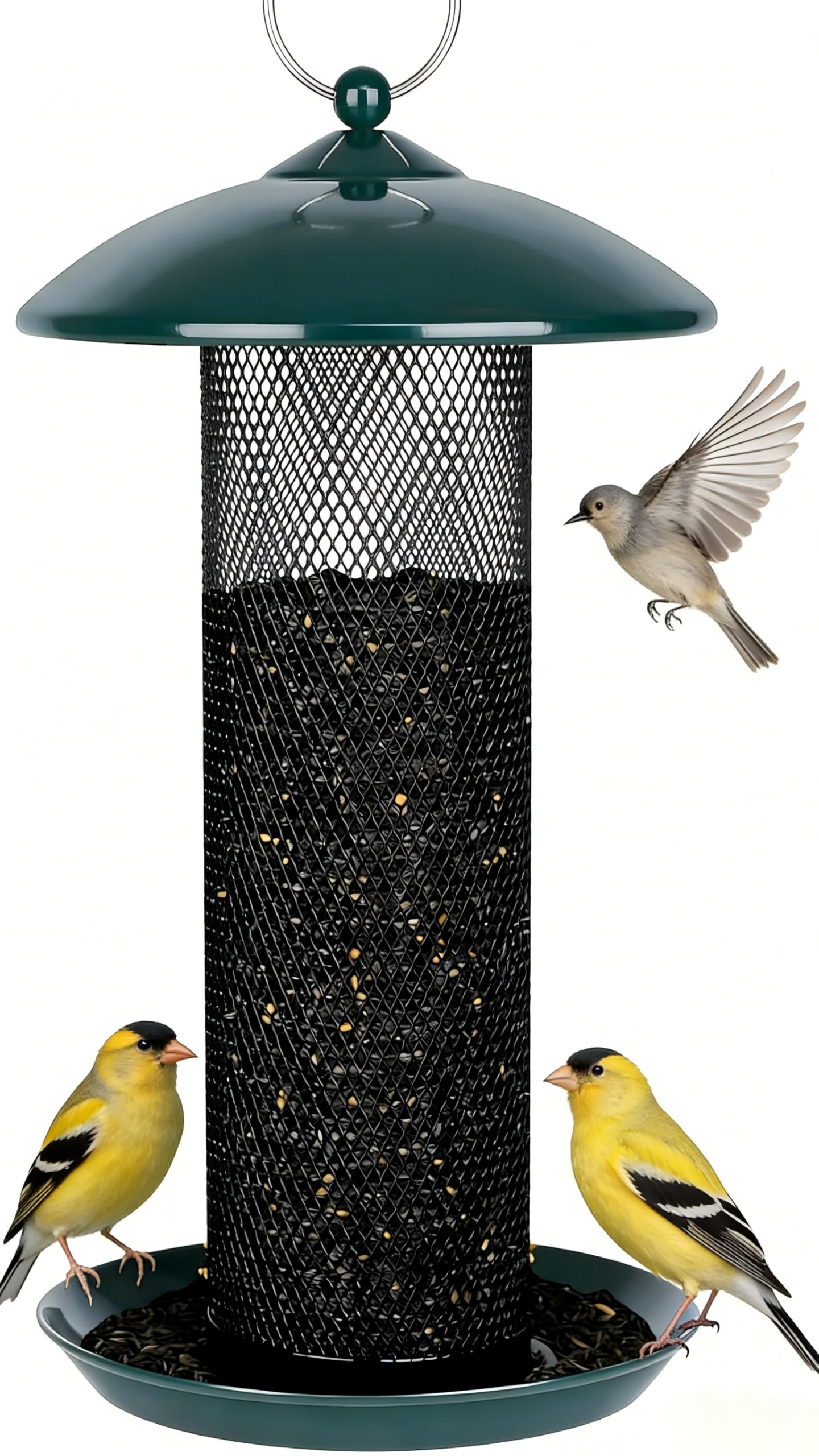
The Gtongoko feeder uses no plastic or wood — the body is a powder-coated steel mesh tube with a metal cap and a 6-inch diameter tray at the base. The 2.5-pound seed capacity is the largest in this roundup, which means fewer refill trips, but nyjer users should note that a full tube takes longer to empty, and seed at the bottom can go stale if the feeder gets heavy rain. The bottom tray has 12 drain holes to mitigate moisture, and owners confirm that the seed stays dry during normal weather.
The all-metal construction makes it genuinely squirrel-resistant. Squirrels cannot chew through the mesh, and the smooth metal cap gives them nothing to grip. However, a few owners report that the top and bottom twist off too easily — birds hopping on the feeder can unscrew the sections, dumping seed onto the ground. Tightening the caps firmly before hanging reduces this issue, but it remains a design weakness.
Assembly is tool-free: you twist the cap off, fill the mesh tube, and twist the cap back on. The 360-degree perch surface lets finches cling anywhere on the mesh, and the large tray provides stable footing for birds that prefer to eat while perched rather than clinging. If you have a backyard with multi-species traffic and want a feeder that resists both squirrels and UV degradation, this is the most cost-effective all-metal option.
Why we love it
- All-metal build resists squirrels and sun damage
- 2.5-pound capacity reduces refill frequency
- Bottom tray with drain holes keeps seed dry
Good to know
- Caps can unscrew under bird activity; needs firm tightening
- Some units show rust after 4 months of continuous outdoor use
4. Stokes Select Thistle Tube Bird Feeder with Six Feeding Ports, Yellow

The Stokes Select Thistle Tube Feeder uses a rust-proof polycarbonate tube with six feeding ports, each covered by a small roof that sheds rain away from the seed. The yellow color is not decorative — goldfinches are visually attracted to bright yellow, and multiple owners confirm that switching from a blue or green feeder to this yellow model brought in new finch visitors within days. The 1.6-pound capacity is a practical middle ground between small daily-refill feeders and large tubes that risk stale seed.
The perches are deliberately small, which prevents larger birds like pigeons and grackles from landing and monopolizing the ports. The polycarbonate material holds up well in sun, but owners who kept the feeder for three-plus seasons note that the plastic can become brittle and crack under heavy storm impact. The bottom cap does not screw off completely, which makes cleaning the lowest inch of the tube difficult without disassembly.
At under 0.4 pounds, it is one of the lightest feeders in this list, and the integrated hanging loop makes setup instant. If you want a feeder that specifically signals goldfinches with color and keeps out large birds through port size, this Stokes Select model delivers consistent results at a reasonable investment level.
Why we love it
- Yellow color attracts goldfinches faster than neutral tones
- Small perches exclude pigeons and large bully birds
- Rust-proof polycarbonate resists weather well
Good to know
- Plastic can become brittle after several seasons in sun
- Bottom portion is difficult to clean without partial disassembly
5. Audubon NATUBE9 15 Audubon 8 Port Thistle Tube Finch Birdfeeder
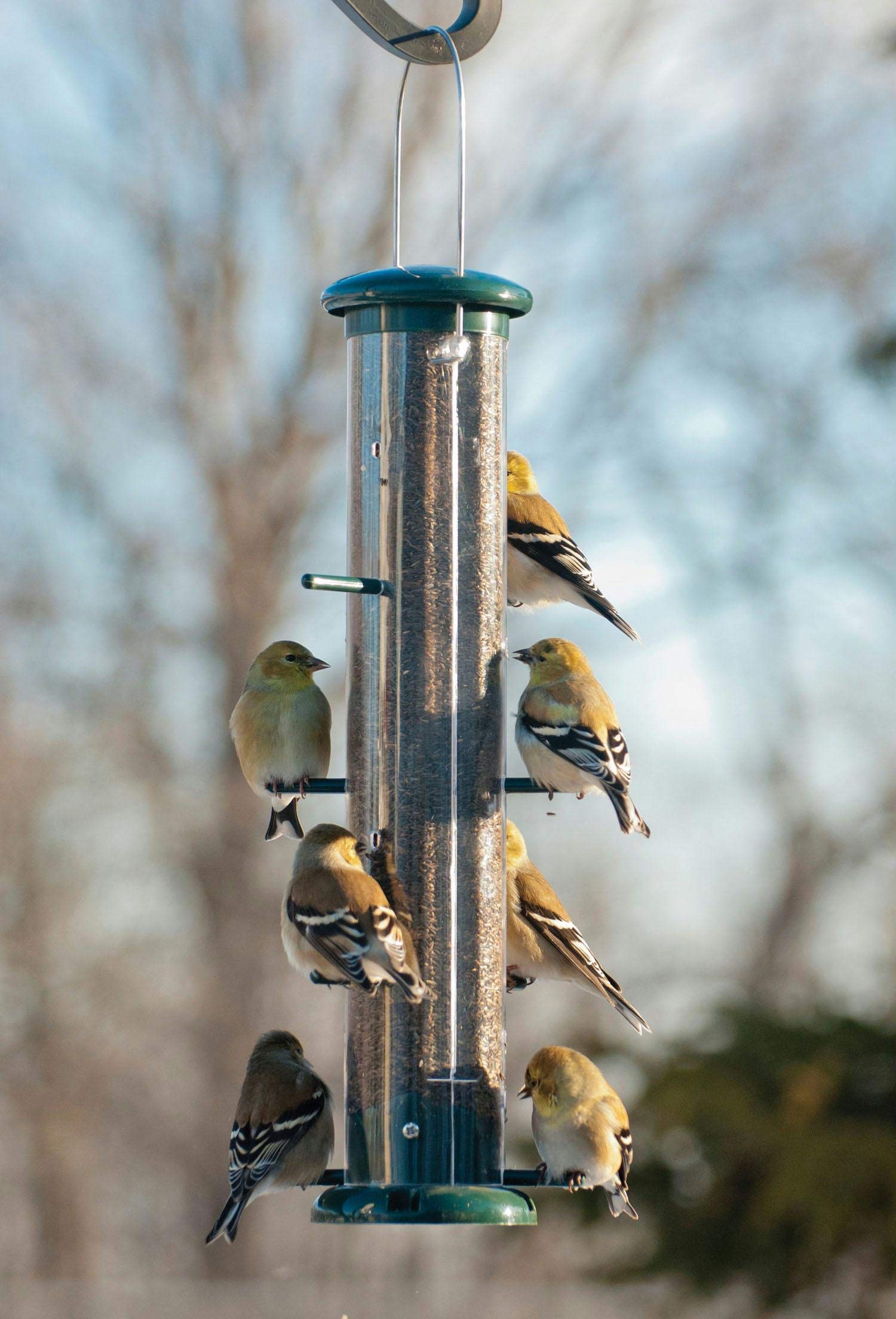
The Audubon 8 Port Thistle Tube Feeder is the most affordable entry point for nyjer feeding, with a 2-pound capacity and eight feeding stations spaced along a 15-inch green plastic tube. The angled bottom design pushes every last seed toward the lower ports, which reduces the amount of inaccessible leftover seed that you typically throw away with straight-bottom tubes. Owners report that finches find the feeder within an hour of hanging, which confirms that the port openings are sized correctly for small-beaked birds.
The perches are made of plastic and can shift position when birds land, though they snap back into place after feeding. Some owners note that the clear plastic tube, while helpful for checking seed levels, allows the sun to heat the interior, which can accelerate seed spoilage in hot climates. The plastic construction also means that a determined squirrel can chew through the tube, and several owners report cracking after two seasons of use.
Assembly takes seconds — the tube slides onto the central rod, and the metal hanger screws into the top cap. If you are new to nyjer feeding and want to test whether finches visit your yard before investing in a premium mesh feeder, this Audubon model gives you reliable performance at a price that makes the trial risk-free.
Why we love it
- Eight ports support multiple finches feeding at once
- Angled bottom minimizes wasted seed at the base
- Transparent tube lets you see seed level at a glance
Good to know
- Plastic tube can crack after two seasons in direct sun
- Perches shift under bird weight; not lock-in place
FAQ
What size feeding ports are best for nyjer seed?
Can I use nyjer seed in a regular sunflower seed feeder?
How do I keep nyjer seed from spoiling in wet weather?
Why do goldfinches ignore my feeder even though I use fresh nyjer?
Final Thoughts: The Verdict
For most gardeners, the nyjer seed feeder winner is the Stokes Select 38171 Finch Screen Feeder because its cast alloy caps and wire mesh body deliver the best balance of durability, easy cleaning, and finch appeal. If you want a totally rust-proof, no-assembly feeder that will survive years of weather, grab the Woodlink Audubon Die Cast Aluminum Feeder. And for tight-budget start or a high-capacity yard setup, nothing beats the all-metal Gtongoko 2.5 LB Mesh Feeder.