
If you have spent money on vet bills for dry, flaky cat skin, hot spots from scratching, or a dull coat that feels rough to the touch, you know the frustration of finding a solution that actually works. The right fatty acid supplement can be the turning point between a miserable, itchy pet and one with a glossy coat and calm, healthy skin.
I’m Mo Mahin — the founder and writer behind Furric. I spend my time comparing the molecular profiles of pet supplements, studying the bioavailability of different omega delivery systems, and cross-referencing thousands of owner reviews to find out which products actually deliver on their label claims rather than just marketing hype.
This guide evaluates five contenders that range from straightforward single-source salmon oils to blended hemp formulas, so you can find the best oil for cats that fits your cat’s specific needs and your feeding routine.
How To Choose The Right Oil For Cats
Not all fish oils are created equal, and the difference between a helpful supplement and a pantry-shelf bottle of rancid fat comes down to three specific factors: the source of the oil, the delivery method, and the concentration of active omega-3 fatty acids.
Source matters — wild caught vs farmed salmon
Wild Alaskan salmon and Norwegian salmon raised in controlled ocean environments both offer high omega-3 content. The key difference is the absence of artificial colors and toxins in responsibly sourced oils. Products that explicitly state “wild caught” or “sustainably raised” on the label tend to have higher natural astaxanthin levels, which act as antioxidants for your cat’s immune system.
Delivery method — liquid pump vs softgel capsule
Cats are notoriously picky about texture and taste. Liquid oils in pump bottles can be mixed directly into wet food with minimal fuss, but the oil can make the fur greasy if the cat self-cleans afterward. Softgel capsules require piercing or hiding in food, and some cats refuse to eat the capsule whole. Your choice here depends entirely on your cat’s eating behavior.
Concentration — EPA and DHA per serving
The therapeutic benefit comes from the milligrams of EPA and DHA per daily dose, not the total bottle volume. For a cat weighing roughly 10 pounds, look for a product that delivers at least 80 mg of combined EPA and DHA per serving. Anything below that is unlikely to produce noticeable coat or joint improvements.
Quick Comparison
On smaller screens, swipe sideways to see the full table.
| Model | Category | Best For | Key Spec | Amazon |
|---|---|---|---|---|
| Best Paw Nutrition Wild Alaskan Salmon Softgels | Softgel Capsule | High-potency omega dosing in a no-mess format | 210 mg total omega-3 per capsule | Amazon |
| ZIXAOK Alaskan Salmon Liquid Oil | Liquid Pump | Budget-friendly liquid for multi-cat households | 8.8 oz bottle with pump top | Amazon |
| Deley Naturals Salmon Oil Plus | Liquid Pump | Balanced omega-3 support for sensitive skin cats | 8 oz bottle, wild Alaskan & Pollock oil blend | Amazon |
| CHARLIE & BUDDY Hemp and Salmon Oil | Liquid Dropper | Cats needing calming support plus coat health | Blend of hemp oil and salmon oil | Amazon |
| Nature’s Diet Norwegian Salmon Oil | Large Liquid Pump | Long-lasting supply for appetite enhancement | 32 oz bottle, sustainably sourced | Amazon |
In‑Depth Reviews
1. Best Paw Nutrition Wild Alaskan Salmon Softgels
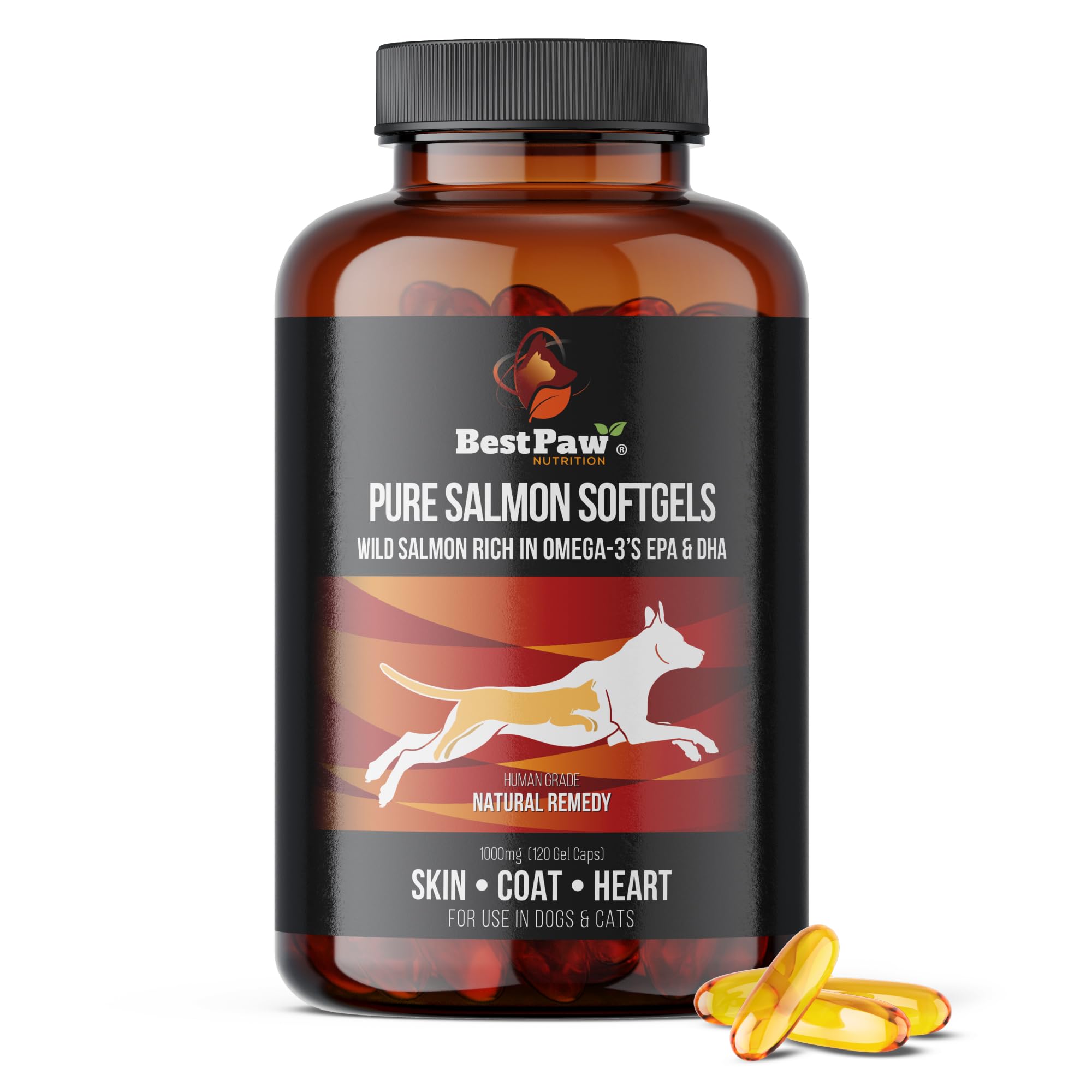
This product delivers 210 mg of total omega-3 fatty acids per 1000 mg softgel, including 92 mg DHA and 87 mg EPA, which is a higher concentration than most liquid alternatives on a per-volume basis. The wild Alaskan salmon source also provides 50 mcg of naturally occurring astaxanthin per capsule, doubling the antioxidant content of lower-dose versions. Owner reports consistently describe visible improvements in coat softness and reduced itching within two to three weeks, with one verified review noting that a 16-year-old cat stopped chewing its skin completely after starting the regimen.
The softgel format is the primary differentiator here: there is no oily residue on bowls, no risk of the oil turning rancid after opening, and no mess from a pump that can leak during shipping. For finicky cats that refuse to eat capsules, you can pierce the softgel and squeeze the oil onto food, though this adds a step. The 120-count bottle provides roughly four months of daily dosing for a single cat at half a capsule per day, making it a strong long-term value.
One limitation is that some cats dislike the gelatin capsule itself, requiring the owner to cut it open, which partially defeats the convenience factor. Additionally, the capsule size at 1000 mg may be too large for very small cats to swallow whole. Starting with half the recommended dose for the first week helps the digestive system adjust and minimizes the risk of loose stools.
Why we love it
- High EPA/DHA concentration per capsule — more effective per dose
- No mess or rancidity risk compared to liquid oils
- Naturally sourced astaxanthin for immune support
Good to know
- Some cats refuse to eat the capsule whole and require piercing
- 1000 mg capsule may be too large for very small cats
2. ZIXAOK Alaskan Salmon Liquid Oil
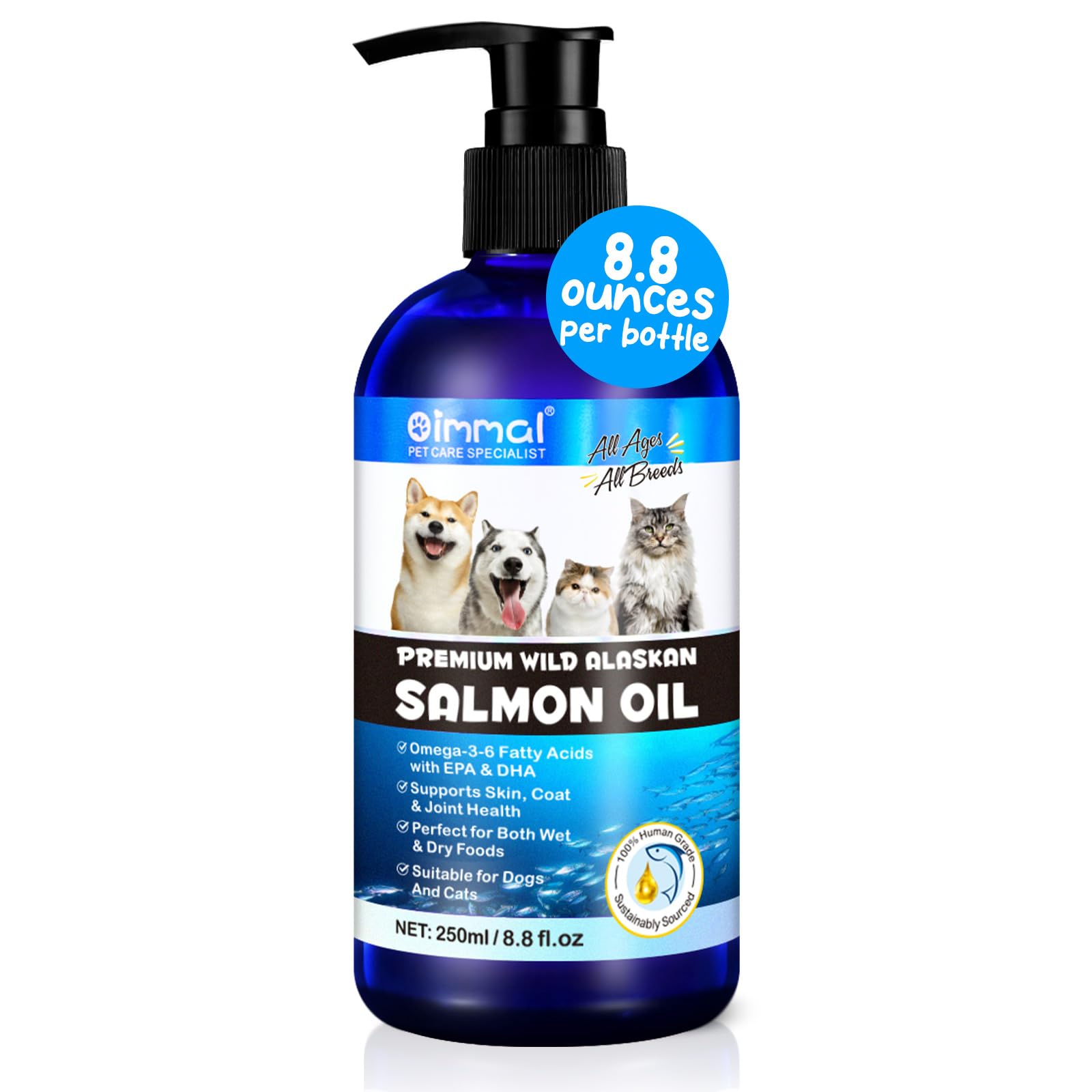
ZIXAOK positions itself as an entry-point liquid oil with an 8.8-ounce bottle and a pump top that makes dispensing onto wet or dry food straightforward. The formula includes added Vitamin C alongside the omega-3 fatty acids, which is an unusual addition for a fish oil supplement and may appeal to owners looking for extra immune support. Verified reviews indicate that cats develop glossier fur with less dander and experience fewer hairballs after consistent use, suggesting that the oil helps with skin hydration and digestive passage of fur.
The pump mechanism is a mixed bag — it reduces the mess of pouring from a bottle, but several reviews noted that the oil can leak around the pump threads during shipping or storage. Once opened, the liquid format means the bottle must be refrigerated after opening to prevent the oil from going rancid, which is an extra step some owners find inconvenient. Cats in the reviews generally accepted the taste well, though a small number of picky eaters were reluctant.
A practical consideration for multi-cat households is the dosage flexibility — the liquid allows you to adjust serving size precisely per cat, which is harder with pre-measured softgels. However, the product’s labeling does not specify the exact milligrams of EPA and DHA per pump serving, making it harder to gauge therapeutic potency compared to the softgel option. If your cat is prone to oily fur after self-grooming, the liquid format may require more frequent baths.
Why we love it
- Affordable entry price for multi-cat households
- Added Vitamin C provides extra immune support
- Pump top allows adjustable dosing per cat
Good to know
- Requires refrigeration after opening to prevent rancidity
- Reported pump leakage during shipping
- No exact EPA/DHA per pump listed on label
3. Deley Naturals Salmon Oil Plus
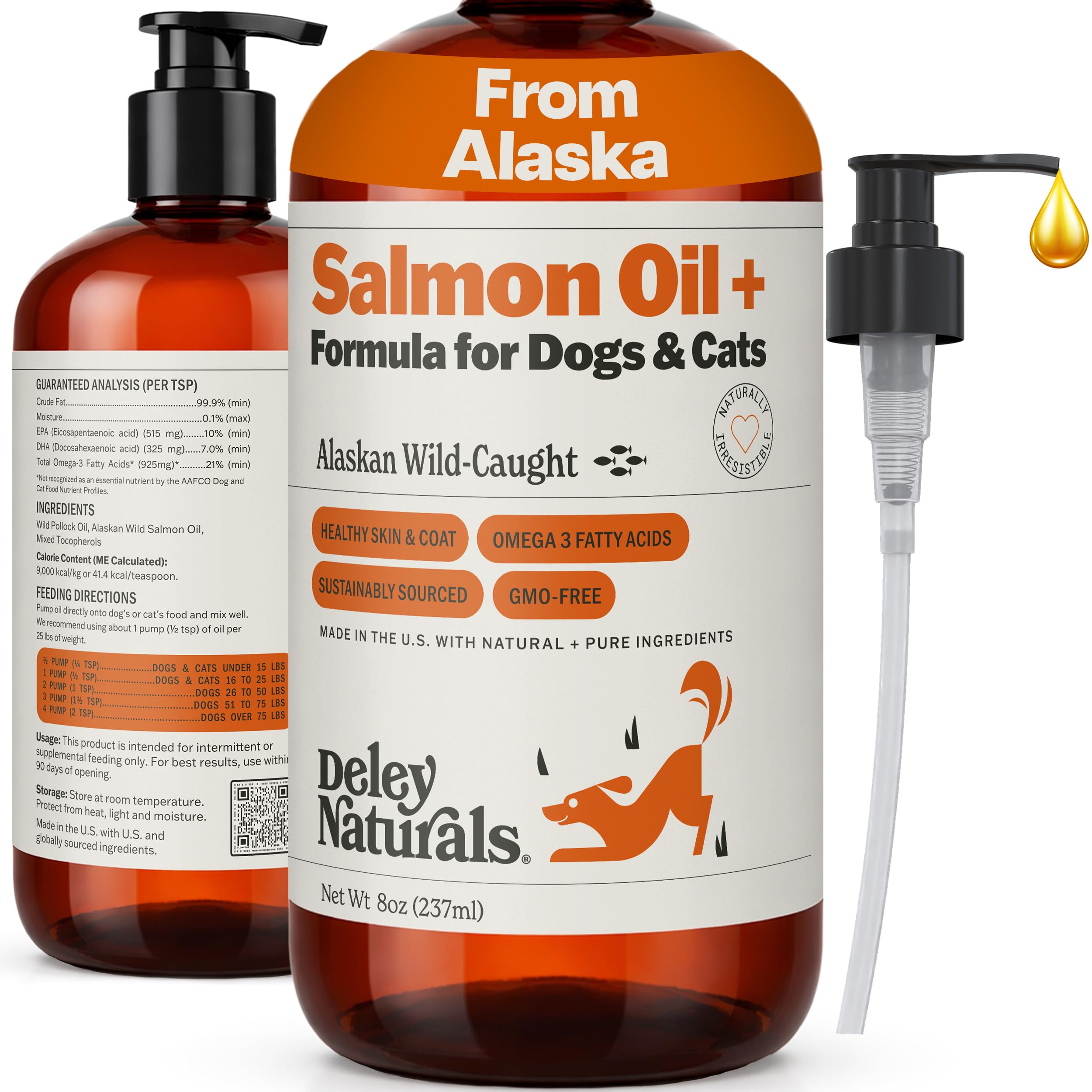
Deley Naturals uses a blend of wild Alaskan salmon oil and wild Pollock oil, which broadens the fatty acid profile slightly compared to single-source salmon oils. The product is manufactured under strict cGMP standards, giving it a quality assurance edge for owners concerned about purity. Verified owner feedback highlights that the oil stopped paw-licking behavior in a Doodle breed, and long-term users report that arthritis in senior dogs did not progress over four years of daily use, suggesting genuine anti-inflammatory efficacy that translates to cats as well.
The pump bottle design is widely praised for convenience — the one-handed dispensing mechanism makes it easy to add to meals without spills. Cats seem to accept the “Salmon Oil Plus” flavor well, with the manufacturer noting that even picky eaters enjoy the taste. For cats with allergy-related skin irritation, the omega-3 content helps reduce inflammation at the cellular level, leading to less scratching and a cleaner home environment with reduced shedding.
The 8-ounce bottle size is smaller than some competitors, so multi-cat households may go through it relatively quickly. One verified review from a dog owner noted that dosage instructions could be more specific for different breed sizes, and some cats may experience transient stomach upset if given too much too quickly. Starting with a small amount and gradually increasing over a week is recommended to allow the digestive system to adapt.
Why we love it
- cGMP certified for purity and potency
- Pump bottle is easy to use with one hand
- Dual-source oil provides broader nutrient profile
Good to know
- Smaller bottle size requires more frequent repurchase
- Dosage instructions could be clearer for different sized pets
4. CHARLIE & BUDDY Hemp and Salmon Oil
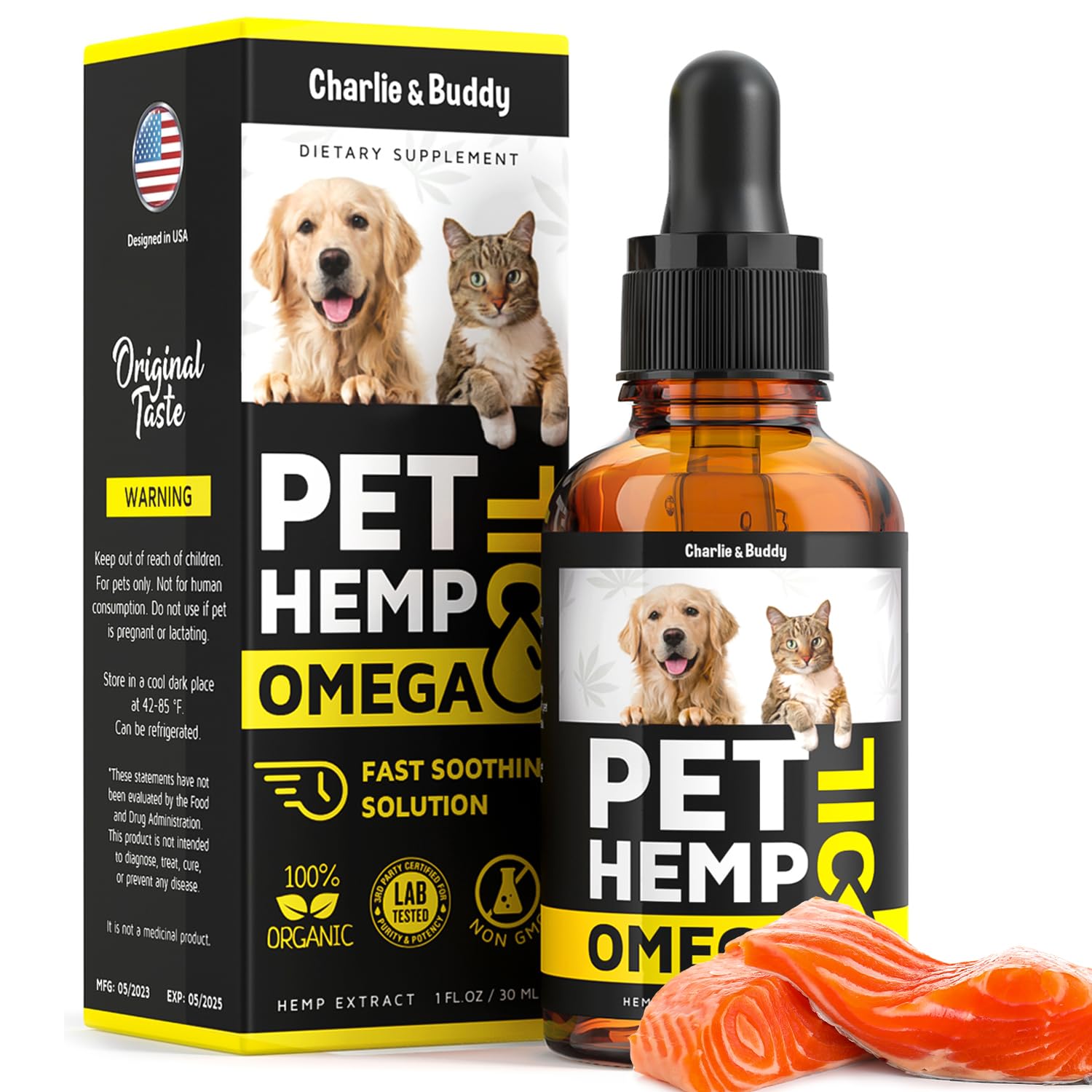
This product stands out because it combines hemp seed oil with salmon oil, delivering omega-3, 6, and 9 fatty acids plus Vitamins B and E in a single dropper bottle. The hemp component is marketed for anxiety and stress relief, which several verified reviewers confirmed — one noted reduced anxiety and improved coat shine, while another used it to manage a dog’s spinal pain without recurring vet injections. For cats that experience stress during travel, vet visits, or loud events like fireworks, the calming effect of CBD-free hemp seed oil can be a useful addition on top of the skin and coat benefits.
The dropper format allows precise dosing, but it also introduces a potential issue: the oil has a noticeable taste that some cats resist. One reviewer explicitly stated the oil “has an unpleasant taste” and their cat tried to avoid oral dosing, though the same reviewer acknowledged the oil was effective for pain management. Mixing the oil into a particularly strong-smelling wet food can help mask the taste. The dropper also requires careful handling to avoid dripping oil on surfaces.
Because this is a 2-in-1 formulation, the concentration of salmon oil per dose is lower than a pure salmon oil product, so if your primary goal is omega-3 potency for coat health, a dedicated salmon oil may deliver faster results. However, for a cat that needs both skin support and mild calming assistance, this blend removes the need to purchase two separate supplements. The 0.2-pound bottle is compact and travel-friendly.
Why we love it
- Dual-action formula addresses both skin health and anxiety
- Dropper allows precise micro-dosing for small cats
- Cold-pressed hemp oil for maximum nutrient retention
Good to know
- Some cats dislike the taste and may resist eating
- Lower salmon oil concentration than pure salmon products
- Small bottle may not last long for multi-pet households
5. Nature’s Diet Norwegian Salmon Oil

The 32-ounce bottle from Nature’s Diet is the largest volume option in this lineup, sourced from sustainably raised Norwegian salmon. The larger bottle size makes it ideal for multi-cat households or for owners who want to reduce purchase frequency. The oil is naturally colored (no artificial dyes), and the pump mechanism delivers measured servings without the guesswork. Verified reviews consistently mention that coats become shinier and softer within days, with one reviewer noting that a puppy’s dandruff and itching resolved within five days of starting the supplement.
An interesting feature is the appetite-enhancing effect reported by several owners — the salmon oil makes meals more appealing for picky or elderly cats that have lost interest in food. This dual function (coat health plus appetite stimulation) is particularly valuable for cats recovering from illness or undergoing medical treatment. The oil has a mild fish smell that does not overwhelm the room, and most pets accept it eagerly.
The primary downside is a recurring complaint about the bottle leaking during shipping, with one reviewer losing approximately four ounces of oil due to a faulty seal. Transferring the oil to a separate airtight container upon arrival is a practical workaround. Additionally, some cats strongly dislike the taste — one reviewer’s cat “hates it” while the same owner’s dog loved it — so testing with a small amount before committing to the large bottle is wise. The 32-ounce size also requires refrigerator space, which may be a constraint in smaller kitchens.
Why we love it
- Largest bottle size at 32 oz — best for multiple cats
- Natural appetite enhancement for picky or sick cats
- No artificial colors or toxins, sustainably sourced
Good to know
- Bottle leak issues reported during shipping
- Requires significant refrigerator space
- Some cats strongly dislike the taste
FAQ
How long does it take to see results from salmon oil in cats?
Can I give my cat too much fish oil?
What is the difference between salmon oil and fish oil for cats?
Is liquid oil or softgel capsules better for cats?
Final Thoughts: The Verdict
For most cat owners, the best oil for cats winner is the Best Paw Nutrition Wild Alaskan Salmon Softgels because it delivers the highest measured EPA and DHA per serving in a format that completely eliminates the mess and rancidity risks of liquid oil. If your cat refuses capsules and you need a liquid option, grab the Deley Naturals Salmon Oil Plus for its reliable pump design and cGMP quality certification. And for cats that struggle with both skin issues and anxiety, nothing beats the combined hemp-salmon approach of the CHARLIE & BUDDY Hemp and Salmon Oil.