
A stray cat’s survival isn’t about luck. It’s about having a dry, insulated shelter with a second escape route the moment a raccoon or coyote pokes its nose in. The difference between a house cats actually use and one they avoid comes down to three measurable things: the R-value of the insulation, the presence of a dual-exit layout, and whether the floor keeps them off frozen ground.
I’m Mo Mahin — the founder and writer behind Furric. I study hardware specifications, compare thermal performance across wood, composite, and HDPE materials, and analyze long-term owner feedback from colony caregivers who manage outdoor cats through actual winters.
After comparing the construction methods, insulation systems, and escape-door designs of the top options, the right outdoor house for cats depends on whether you need passive thermal mass, active heating, or a maintenance-free composite that shrugs off rain for a decade.
How To Choose The Best Outdoor House For Cats
An outdoor cat shelter is a durable good that sits exposed to rain, snow, and UV radiation 365 days a year. Choosing the wrong material or skipping the second exit means the house either rots in one season or traps a cat inside when a predator arrives. Here are the three specifications that separate a safe, long-lasting shelter from a disposable box.
Material: Wood vs. Composite vs. HDPE
The material determines the shelter’s lifespan and maintenance burden. Solid fir wood houses (like the GEGURI or GUTINNEEN models) look classic but require annual waterproofing treatment and are prone to warping if left in standing water. ECOFLEX composite (found in the New Age Pet Albany) is a wood-polymer blend that resists rot, mold, and insect damage without any coating — it carries a 10-year warranty and cleans with a garden hose. HDPE plastic (used in the Generic stackable house) is the lightest option, scratch-resistant, and completely impervious to moisture, but it offers less passive thermal mass than wood or composite.
Dual Escape Doors: Non-Negotiable for Colony Cats
A cat that feels trapped inside a single-entrance shelter will refuse to enter it. The second door — typically a 6-inch-by-8-inch opening on the opposite side — gives the cat a backup route if a predator blocks the main entrance. Every product in this guide that targets feral or colony use includes two exits. The K&H Heated House and the New Age Pet Albany both provide clear plastic door flaps that seal against wind while allowing the cat to push through easily.
Insulation System: Passive vs. Active Heating
Passive insulation relies on trapped air layers. The GUTINNEEN model uses a 0.78-inch-thick sponge liner bonded to the interior walls, while the New Age Pet Albany uses double-wall panels and an elevated floor to create an air gap beneath the cat. Active heating, found in the K&H Heated House, adds a 20-watt MET safety-listed warming pad that activates only when the cat sits on it — the pad itself is waterproof and draws very little power, but it requires access to a standard 110-volt outlet. For caregivers who cannot run extension cords to the shelter, a passive-insulated unit filled with straw (not hay, which wicks moisture) is the more reliable approach.
Quick Comparison
On smaller screens, swipe sideways to see the full table.
| Model | Category | Best For | Key Spec | Amazon |
|---|---|---|---|---|
| New Age Pet ECOFLEX Albany | Composite | Long-term outdoor durability | 10-year composite warranty | Amazon |
| K&H Pet Products Heated Kitty House | Heated/Fabric | Sub-zero winter protection | 20W MET-listed heated pad | Amazon |
| GUTINNEEN Insulated Wood House | Wood/Insulated | Maximum passive thermal mass | 0.78″ foam inner liner | Amazon |
| GEGURI Weatherproof Wood Shelter | Wood/Classic | Budget entry-level wood shelter | Fir wood + asphalt roof | Amazon |
| Generic HDPE Stackable Shelter | Plastic/Stackable | Multi-cat colonies, tight spaces | Tool-free snap assembly | Amazon |
In‑Depth Reviews
1. New Age Pet ECOFLEX Albany Outdoor Cat House

The Albany stands alone in this lineup for its material science. ECOFLEX is a wood-polymer composite that does not warp, rot, or splinter the way solid fir does after a single wet season. Owners consistently report the house surviving two, three, even five years of continuous outdoor exposure with nothing more than occasional hosing. The 10-year manufacturer warranty backs up that claim — no other shelter in this comparison offers half that coverage.
Dual escape doors are included, and you can choose which side the second door faces during assembly. The interior measures 17 inches wide by roughly 17 inches deep — enough for one adult cat or two kittens who tolerate each other. The elevated floor keeps the sleeping surface off damp ground, and the double-wall panels create a natural insulation pocket that works well with optional straw or a heated pad. Assembly takes about five minutes with no tools; the panels snap together using integrated tabs.
The trade-off is that the ECOFLEX surface, while easy to clean, does not have the same tactile warmth as wood. Some colony caregivers note that the front-door trim can loosen if the house is frequently moved. But for a set-it-and-forget-it shelter that will outlast every other option here, the Albany is the most durable choice per dollar spent.
Why we love it
- 10-year warranty is unmatched in this category.
- Dual escape doors with included vinyl flaps.
- Tool-free assembly in under five minutes.
Good to know
- Front trim piece can detach if moved frequently.
- Composite surface does not feel as warm as wood.
2. K&H Pet Products Heated Outdoor Kitty House

When the temperature drops below freezing, a passive shelter relies entirely on the cat’s own body heat and whatever insulation is packed inside. The K&H Heated House eliminates that gamble with a 20-watt waterproof heated pad that activates only when a cat sits on it. The pad is MET safety listed — the entire product, not just the electrical cord, passes UL-style testing — and operates on standard 110-volt household current.
The house itself is a heavy-duty polyester fabric with a plastic-frame skeleton, measuring 22 inches deep by 19 inches wide by 17 inches tall. Two 6-by-8-inch exits on opposite sides include removable clear vinyl door flaps. Assembly uses heavy-duty hook-and-loop fasteners and takes roughly fifteen minutes. Owners who have kept these houses operational since 2017 report that adding a layer of reflective insulation (such as a windshield sunshade) between the fabric and the frame dramatically improves heat retention on the coldest nights.
The main limitation is that the fabric walls offer minimal passive insulation on their own. Several customers note that the sides feel cold to the touch in sub-zero conditions, requiring the aftermarket insulation hack mentioned above. The heated pad also attracts insect attention in warm months — ants and earwigs have been reported nesting under the pad. For caregivers running a winter-only colony who can manage the extension-cord logistics, this is the warmest option available.
Why we love it
- Heated pad is MET-listed for electrical safety.
- Pad warms only when cat sits on it — energy efficient.
- Two exits with clear vinyl flaps for weather sealing.
Good to know
- Fabric walls need added insulation for extreme cold.
- Heated pad can attract insects during warm months.
- Requires access to a 110-volt outlet.
3. GUTINNEEN Insulated Wooden Cat House

This is the only wood shelter in the group that ships with built-in thermal insulation. The interior walls are lined with a 0.78-inch-thick closed-cell foam sponge covered by a soft liner, creating a dead-air barrier that significantly reduces heat loss compared to bare wood or HDPE. The roof is slanted and covered with asphalt shingles that shed rain and snow effectively — a critical detail because standing water on a flat roof accelerates wood rot.
The exterior dimensions are the largest in this roundup at 23.6 inches long by 20.9 inches deep by 18.3 inches tall, with enough interior volume for a cat weighing up to 25 pounds or multiple kittens. The floor is elevated and the base is treated for water resistance, though several owners noted small gaps between floorboards that let wind whistle through; adding a piece of foam board or an outdoor rug underneath solves the issue. The GUTINNEEN also includes a removable bottom panel for cleaning, which the GEGURI model lacks.
Despite the insulated liner, the solid wood construction means the house is heavy and awkward to move once assembled. Some reviewers who rehab possums and other small wildlife found the creatures preferred burrowing underneath the elevated floor rather than entering the interior. For a passive shelter that prioritizes thermal mass and structural rigidity over portability, this unit delivers the best cold-weather performance without electricity.
Why we love it
- 0.78-inch foam liner provides real passive insulation.
- Asphalt shingle roof sheds rain and snow effectively.
- Largest interior volume of any house reviewed here.
Good to know
- Floor boards may have small gaps that need sealing.
- Heavy construction makes relocation difficult.
- Solid wood requires periodic waterproofing treatment.
4. GEGURI Weatherproof Wood Cat House
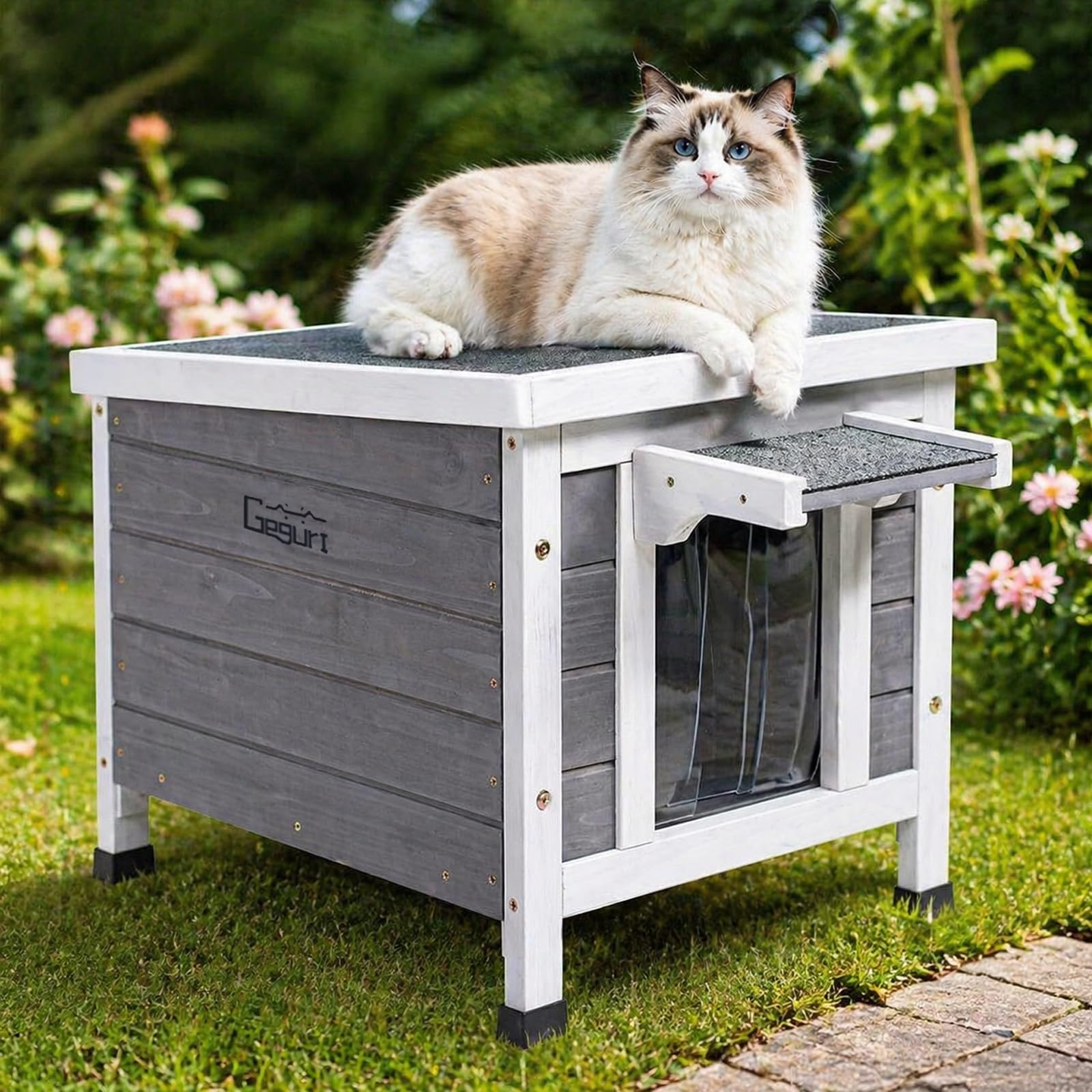
The GEGURI offers the most approachable entry point into a solid-wood shelter. Its fir wood frame is paired with an asphalt roof overhang that extends past the front door — a thoughtful detail that keeps rain from blowing directly into the entrance. Three vent openings on the sides provide cross-ventilation that reduces condensation buildup, a common problem in sealed wood enclosures during spring and fall.
The interior is compact at 16.5 inches deep by 20.2 inches wide by 16.9 inches tall, making it better suited for a single cat or a small apartment balcony than a multi-cat colony. Assembly uses pre-drilled holes and included hardware and takes roughly 20 to 30 minutes. Several owners noted that the bottom panel does not have pre-drilled attachment points, so adding a few screws to secure the floor is a smart first modification. The removable floor itself makes cleaning straightforward — a feature the GEGURI shares with the more expensive GUTINNEEN model.
The fir wood is not pressure-treated, so this house benefits from an annual coat of outdoor waterproofing sealant (Thompson’s WaterSeal or similar). One reviewer reported adding a clear vinyl flap over the door to improve weather resistance after five days of continuous rain left the interior dry but the wood surface visibly damp. For a first-time buyer who wants a classic wood aesthetic without a premium investment, the GEGURI works well if paired with proactive maintenance.
Why we love it
- Asphalt roof overhang keeps entrance dry in rain.
- Removable floor simplifies cleaning.
- Three ventilation vents reduce interior condensation.
Good to know
- Untreated fir wood needs annual waterproofing.
- Bottom panel lacks attachment holes — add screws.
- Presence of door flaps may deter shy cats initially.
5. Generic HDPE Stackable Cat Shelter
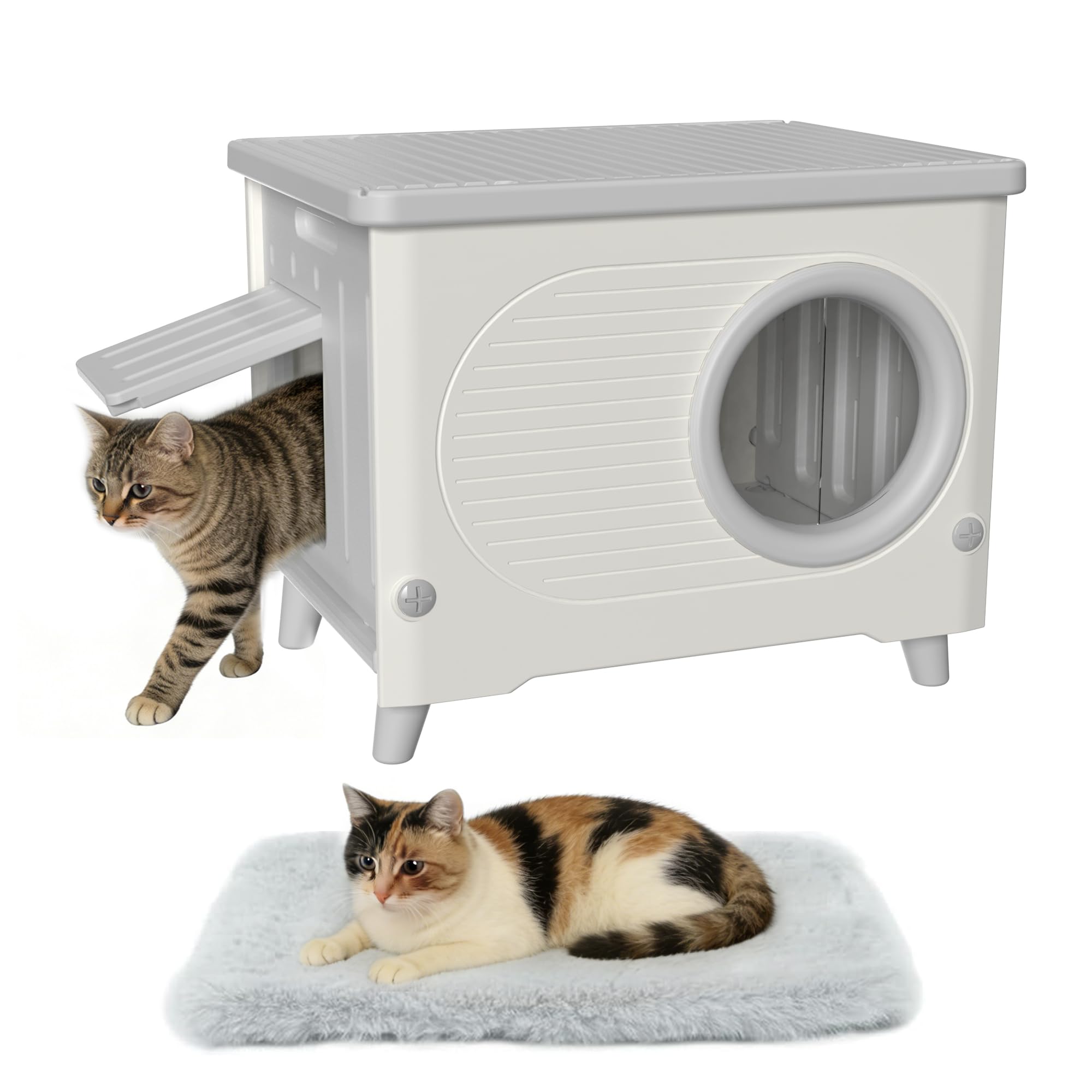
HDPE is the material that laughs at moisture. This shelter uses high-density polyethylene with a dual-layer hollow wall that provides basic insulation through the air gap between layers. The round burrow-style entrance — a 6-inch circular opening — mimics the natural entrances cats seek in the wild, which can feel more secure to skittish feral cats than a square flap door.
Assembly is genuinely tool-free: the pieces press together with interlocking tabs, and the whole unit comes together in under five minutes. The elevated base lifts the floor off wet ground, which is critical for moisture-prone installations like barn corners or patio edges. The shelter is also stackable — two units can be stacked vertically to save floor space in a colony setting. A soft cushion is included in the box, though most colony caregivers will replace it with straw for better moisture management.
The trade-off for the lightweight, rot-proof construction is a lack of thermal mass. The HDPE walls do not hold heat the way wood or composite does, so this shelter works best in mild climates or as a supplemental unit in a colony where a well-insulated primary shelter handles freezing nights. One owner noted that angled rain can still reach the interior through the round entrance, and that adding a clear flap would improve weather sealing. For a low-maintenance, movable shelter that can be hosed clean in seconds, this is the most practical option for summer use or temporary placement.
Why we love it
- Tool-free snap assembly in under five minutes.
- HDPE is completely impervious to rot and moisture.
- Stackable design saves space in multi-cat colonies.
Good to know
- HDPE walls offer minimal thermal insulation in winter.
- Round entrance lacks a flap to block angled rain.
- Weight is light — may need anchoring in windy areas.
FAQ
Should I remove the door flaps to help shy cats enter?
Can I use a heated pad in a wood shelter safely?
How do I convince a feral cat to use a new shelter?
What is the minimum interior size for a single outdoor cat?
Final Thoughts: The Verdict
For most gardeners, the outdoor house for cats winner is the New Age Pet ECOFLEX Albany because its composite material eliminates wood rot, its 10-year warranty removes long-term risk, and its dual escape doors satisfy the primary safety concern for colony cats. If you need active heating for sub-zero winters, grab the K&H Heated Kitty House and pair it with reflective insulation panels. And for a budget-friendly wood shelter that handles a single cat on a covered porch, nothing beats the straightforward construction of the GEGURI Weatherproof House with an annual coat of sealant.