
An outside cat house is a multi-season investment in your cat’s safety, but the difference between a shelter that lasts three years and one that degrades after one rainy winter comes down to material density, insulation strategy, and escape-door engineering. Most budget shelters treat “weatherproof” as a marketing label rather than a structural promise.
I’m Mo Mahin — the founder and writer behind Furric. I analyze owner feedback, compare insulation layers and dimensional specs, and study how different materials hold up against freezing temperatures and prolonged UV exposure to identify which outdoor cat houses actually deliver long-term durability.
After examining assembly quality, waterproofing features, and real-world insulation performance across 50-plus customer reports, I’ve narrowed the field to the seven most reliable options. This guide covers everything you need to confidently pick the best outside cat house for your specific setup and climate.
How To Choose The Best Outside Cat House
Selecting an outdoor cat shelter requires evaluating more than just curb appeal. The right choice balances insulation strategy, material durability, and access design to match your local climate and the cat’s temperament.
Material and Construction Quality
Fir wood houses offer a natural aesthetic and good insulation when paired with foam panels, but they require sealing or painting to prevent moisture absorption. HDPE (high-density polyethylene) models are virtually maintenance-free, resist scratching and fading, and clean with a wipe. Fabric-based shelters are lightweight and affordable but may not withstand heavy snow loads or aggressive scratching over multiple seasons.
Insulation and Weatherproofing
Look for all-round foam insulation covering walls, roof, and floor — a .6-inch foam layer can maintain a 20°F temperature differential against outside air. Asphalt shingled roofs shed rain effectively and prevent pooling, while sloped designs reduce wind-related heat loss. An elevated base (at least 2 inches off the ground) prevents moisture wicking and keeps the floor dry during snowmelt.
Escape Door Configuration
Feral and semi-feral cats require a secondary exit to avoid feeling trapped by predators or dominant animals. A rear or side escape door measuring at least 4×5 inches provides a clear flight path without compromising the structure’s thermal envelope. Clear PVC flaps over both entrances reduce drafts while allowing cats to see outside before committing to exit.
Quick Comparison
On smaller screens, swipe sideways to see the full table.
| Model | Category | Best For | Key Spec | Amazon |
|---|---|---|---|---|
| Rockever Large Wooden Shelter | Wood | Year-round feral colonies | 25.4″ D x 20.5″ W x 25.2″ H | Amazon |
| FunXplore All-Round Foam Shelter | Wood | Winter insulation | 0.6″ foam sandwich walls | Amazon |
| PetsCosset 2-Story Cat House | Wood | Feeding + resting combo | 27.3″ L x 23.5″ W x 37.8″ H | Amazon |
| FunXplore Dual-Escape Insulated | Wood | Predator-safe zones | 3-layer wall: fir + foam + ply | Amazon |
| HDPE Plastic Cat Shelter | Plastic | Tool-free setup | 21″ D x 15″ W x 16″ H | Amazon |
| Clawsable Heated Fabric Shelter | Fabric | Sub-zero temps with heater | 13″ D x 17″ W x 18.5″ H | Amazon |
| Aivituvin Kitty Balcony House | Wood | Multi-cat colonies | 29.5″ D x 29.5″ W x 33.5″ H | Amazon |
In‑Depth Reviews
1. Rockever Large Wooden Cat Shelter
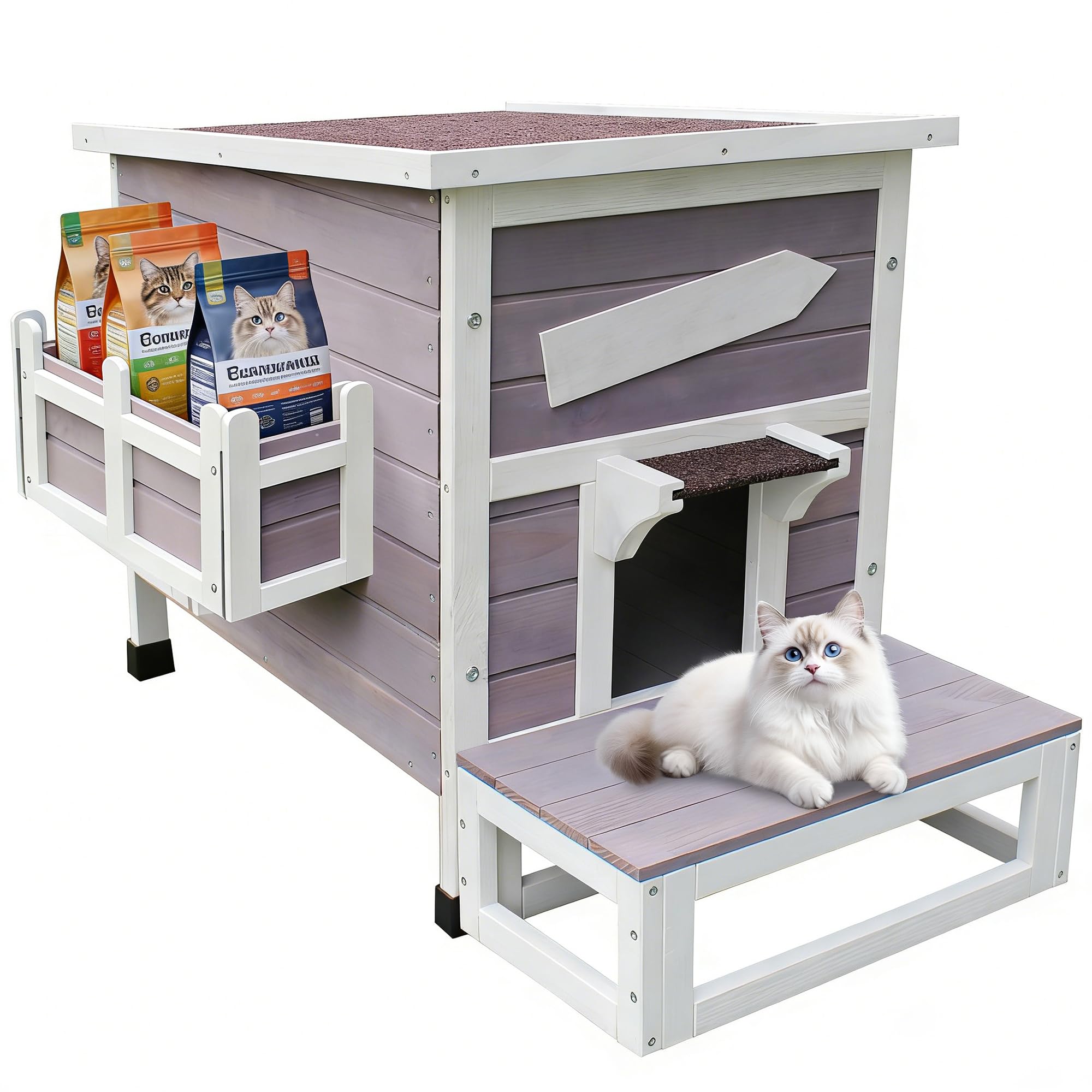
This wooden shelter from Rockever delivers the most complete weatherproofing package in this lineup, featuring genuine asphalt shingles, a sloped roof, and a windproof PVC curtain over the main entrance. The 25.4-inch depth and 25.2-inch height accommodate two adult cats without feeling cramped, while the side shelf doubles as a supply storage spot or a perch for sunbathing.
The dual-exit design includes a rear acrylic escape flap that prevents drafts better than fabric curtains. Owner reports consistently mention dry interiors after heavy Pacific Northwest rain, and the openable hinged roof allows for deep cleaning without dismantling the structure. The 26.94-pound weight gives it substantial wind resistance once assembled.
Assembly requires a Phillips screwdriver and roughly 45 minutes, with pre-drilled holes aligning well according to most buyers. Some owners recommend adding a foam insulation panel to the floor for winter use in areas below 20°F, but the basic structure holds up well across three seasons without modifications.
Why we love it
- Genuine asphalt shingle roof sheds rain effectively
- Locking hinge on roof stays secure in high winds
- Planter box adds aesthetic value to backyard placement
Good to know
- Assembly can take 2+ hours if following instructions strictly
- Best placed under partial cover for extreme storm events
2. FunXplore All-Round Foam Cat House
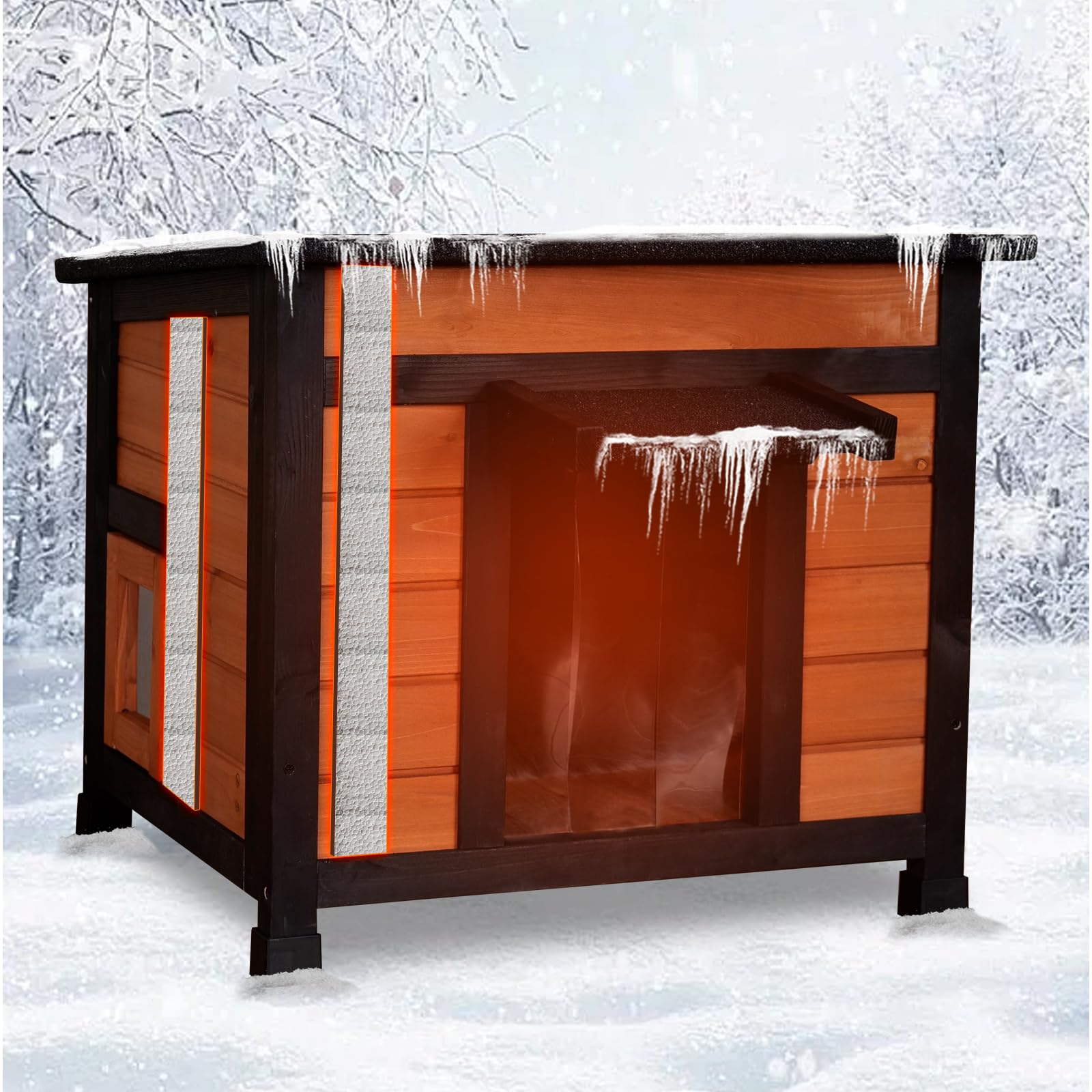
What sets this model apart from standard wooden shelters is the six-sided foam insulation — a .6-inch layer sandwiched between fir wood and plywood on every wall, the roof, and the floor. The 23.58-inch width and 20.9-inch height provide enough room for larger cats to turn around comfortably, while the slatted bottom promotes airflow during warmer months.
The slanted asphalt roof prevents water accumulation, and the four plastic feet raise the structure 2 inches off the ground to block moisture wicking. Both entrances feature clear PVC curtains that reduce wind infiltration without obstructing the cat’s outward view. Multiple owners report the shelter maintaining a 15-20°F temperature differential during overnight freezes.
Assembly uses pre-drilled holes and takes roughly 15 minutes with a screwdriver. A few buyers noted that the wood can feel thin before assembly, but the interlocking structure becomes rigid once fully secured. The pine scent dissipates within three days, and the plastic door flaps may need to be temporarily taped open until the cat acclimates.
Why we love it
- Six-sided foam sandwich design insulates better than any single-wall shelter
- Elevated feet keep the floor dry during snowmelt and rain
- Slatted floor allows summer ventilation without compromising structure
Good to know
- Lightweight enough to tip in strong gusts if not weighted
- PVC curtains may need temporary removal for shy cats
3. PetsCosset 2-Story Cat House

This two-story wooden shelter integrates a feeding station on the upper level and a sleeping area below, addressing the common problem of food attracting insects into the resting zone. The 27.3-inch length and 37.8-inch height make it the tallest model in this comparison, with an outside jumping platform that encourages cats to perch and survey their territory before entering.
The asphalt roof opens on a hinge for quick access to the feeding level, and the pull-out floor panel simplifies bedding changes without requiring the owner to crouch or reach. The lower resting area sits 2.95 inches off the ground, reducing contact with damp soil. The lockable main door gives caregivers secure access for daily cleaning routines.
Assembly takes roughly one hour with a cordless drill, and pre-drilled holes line up accurately. Some owners reported that the roof hinge screws can loosen if over-tightened with a drill, recommending hand-tightening in the final turns. The soft Chinese fir wood benefits from an annual coat of sealant in humid climates, but the structure has held up through a full year of Appalachian weather according to long-term reviews.
Why we love it
- Separated feeding and resting zones reduce pest attraction
- Pull-out floor makes bedding changes effortless
- Jumping platform satisfies cats’ natural perching instinct
Good to know
- Size is tight for two adult cats in the lower compartment
- Roof hinge screws require careful manual tightening
4. FunXplore Dual-Escape Insulated Shelter
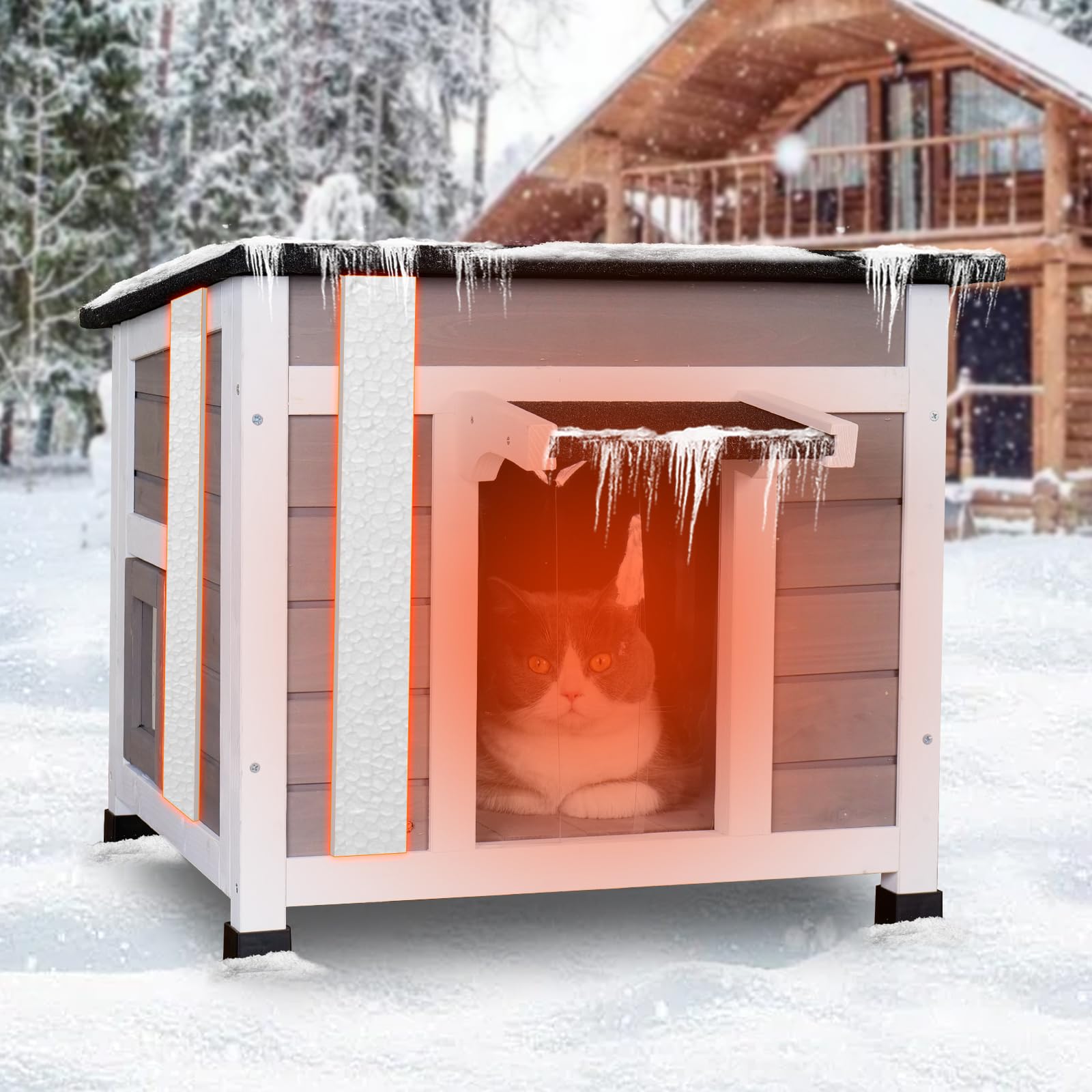
This model uses a three-layer wall construction — solid fir wood, high-density foam, and plywood — that delivers twice the thermal retention of single-panel wooden shelters at a price point that undercuts most premium options. The 20.28-inch depth and 20.9-inch height create a compact footprint suitable for porches, balconies, and small patios.
The dual-exit configuration includes a front PVC-curtained entrance and a rear escape door, giving feral cats the security of a backup exit without compromising insulation. The 100% waterproof asphalt roof combined with four raised plastic feet ensures the interior stays dry even during sustained rain. The openable roof and removable floor panel allow for tool-free interior cleaning.
Assembly takes roughly 15 minutes with the included stamped panels and step-by-step manual, though some owners found that pilot holes were not pre-drilled and needed to create their own. The fir wood panels benefit from an outdoor sealant application for extended longevity in wet climates. A six-month warranty covers manufacturing defects.
Why we love it
- Three-layer insulation rivals houses costing twice as much
- Dual exits provide critical predator avoidance for feral cats
- Hinged roof allows deep cleaning without disassembly
Good to know
- Some units ship without pre-drilled holes
- Chemical pine smell requires 2-3 days to fully air out
5. HDPE Plastic Cat Shelter
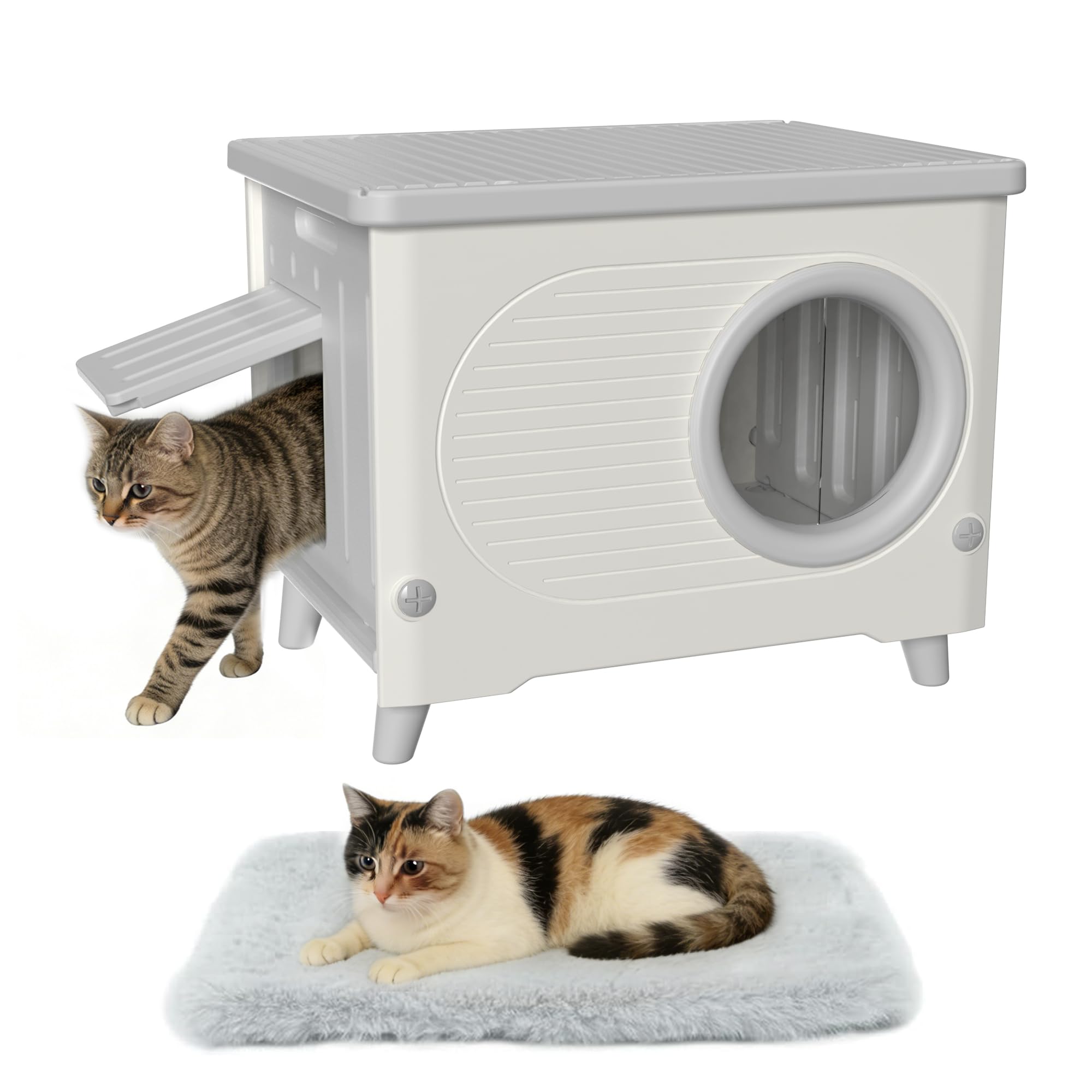
For caregivers managing multiple cats or needing a maintenance-free option, this HDPE plastic shelter requires zero tools for assembly — the pieces snap together like a puzzle in under ten minutes. The 21-inch depth and 16-inch height accommodate one adult cat comfortably or up to three kittens, with a stackable design that allows vertical expansion for colony management.
The dual-layer hollow shell provides basic insulation through trapped air, while the round burrow entrance aligns with natural feline behavior to reduce hesitation. The elevated base lifts the floor off damp ground by roughly 2 inches, and the smooth HDPE surface resists scratches, fading, and impact damage from raccoons or dogs. The included cushion adds immediate comfort without requiring separate purchases.
While the plastic construction lacks the insulation depth of foam-filled wooden models, owners in moderate climates (above 30°F) report dry, usable interiors throughout winter. The main limitation is angled downpour — the entrance lacks a full awning, so placement under an eave or deck overhang is recommended for maximum dryness. Cleaning requires only a damp cloth thanks to the non-porous surface.
Why we love it
- Tool-free snap assembly in under 10 minutes
- HDPE material never needs painting or sealing
- Stackable design fits multiple cats in minimal footprint
Good to know
- Limited insulation for climates below 30°F without added bedding
- Entrance lacks full awning for heavy angled rain
6. Clawsable Heated Fabric Cat House
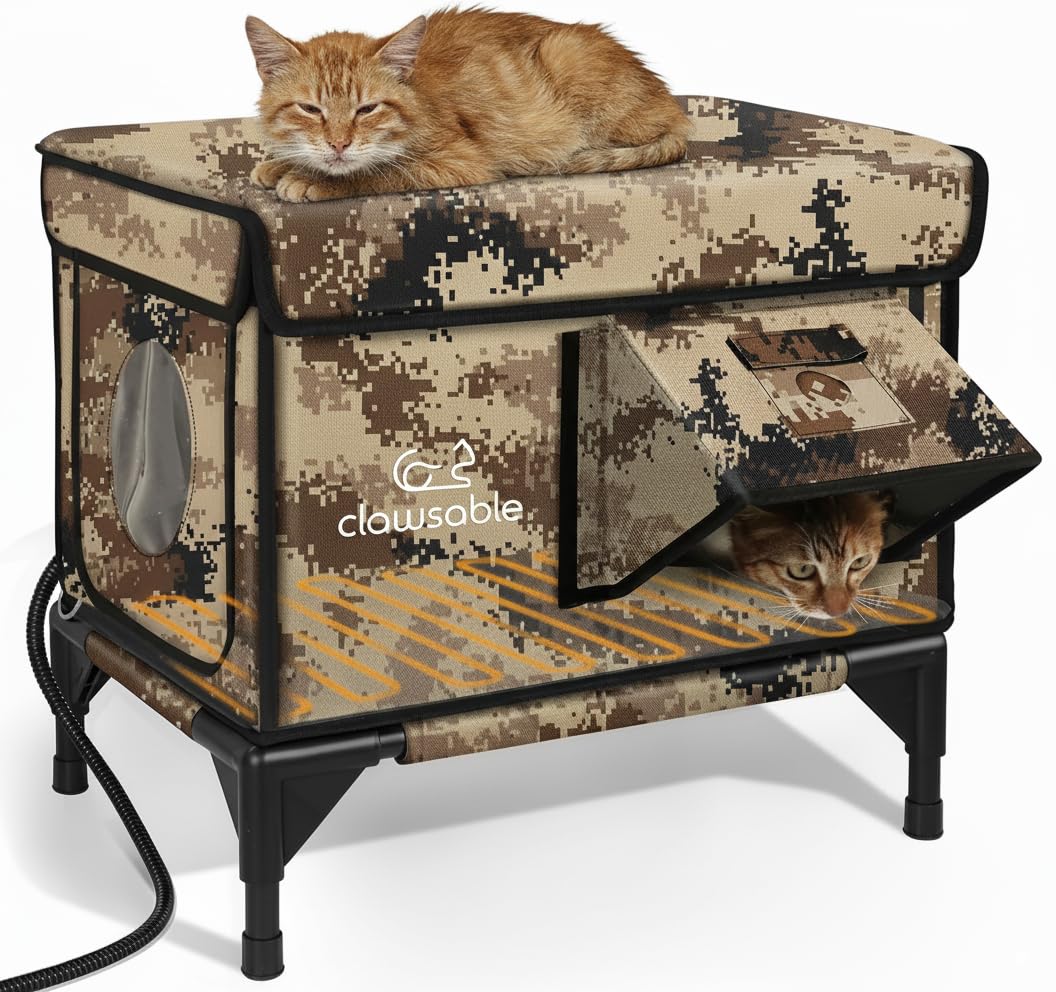
When temperatures drop below freezing, this fabric shelter with an integrated UL-tested heating pad provides the most reliable warmth in this comparison. The five-layer insulation system, combined with a windproof awning, maintains an interior temperature of 58°F when the outside air hits 35°F, according to verified owner measurements. The 13x17x18.5-inch footprint is compact enough for tight porch corners.
The exit-only escape door allows cats to flee predators while preventing cold air from rushing in. The removable heated pad is fully waterproof and chew-proof, with independent testing certification for safe outdoor use. The velcro-secured top panel pops open for daily cleaning without tools, making it practical for caregivers who check multiple shelters.
The shelter is best suited for single adult cats or a bonded pair of kittens — multiple owners note that two full-size cats find the interior snug. The fabric outer shell holds up well against rain and snow but may show wear faster than wood or HDPE in heavy scratching scenarios. A one-year warranty covers the heating element and structural components.
Why we love it
- UL-tested heating pad provides safe warmth in sub-zero conditions
- Escape-only door prevents drafts while allowing emergency exit
- Velcro top opens in seconds for daily cleaning and bedding checks
Good to know
- Compact interior fits one adult cat or two kittens snugly
- Fabric shell may not withstand persistent scratching long-term
7. Aivituvin Kitty Balcony House
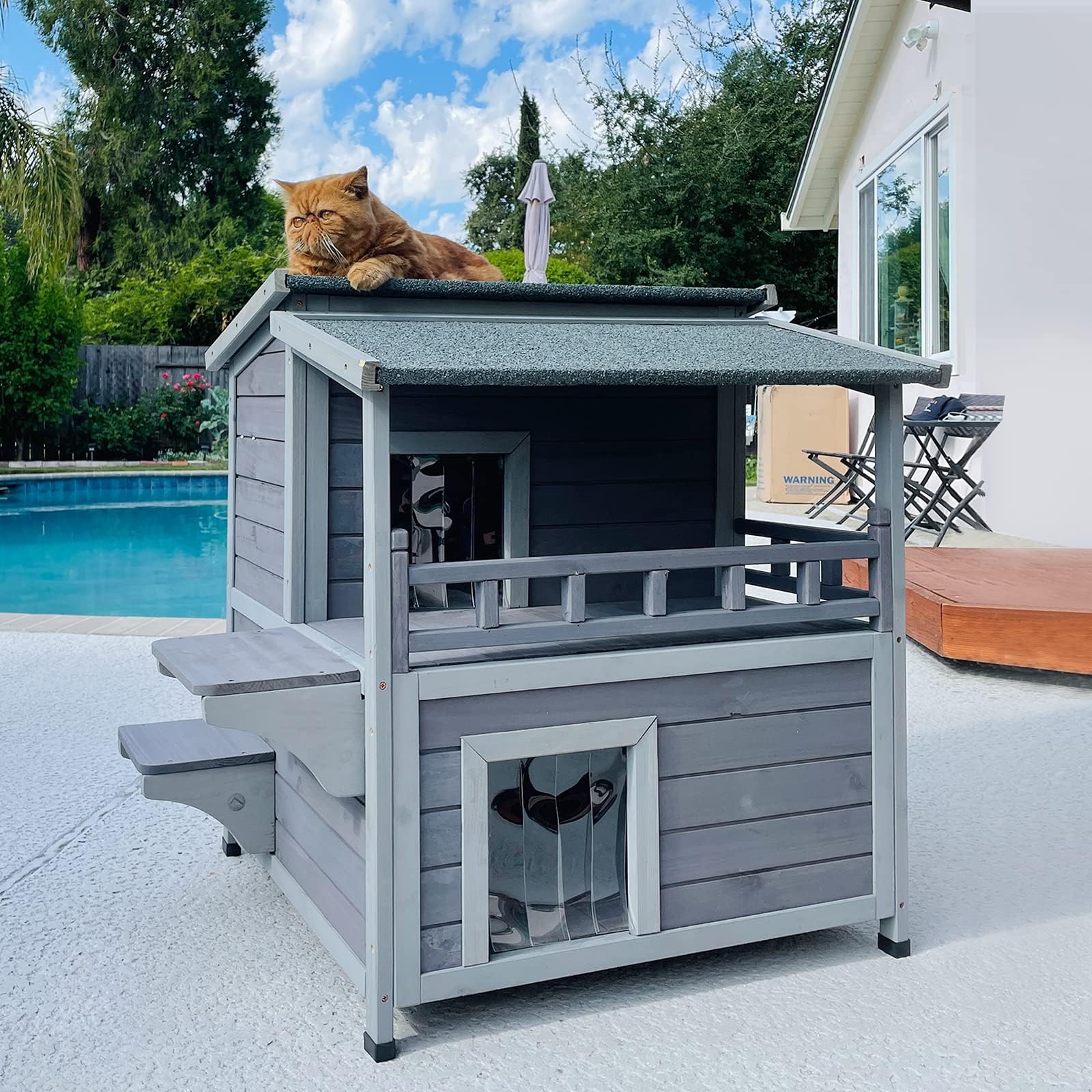
With a 29.5-inch square footprint and 33.5-inch height, this two-level wooden shelter offers the most spacious interior of any model reviewed, comfortably accommodating two to three cats under 15 pounds. The removable second-level floor allows owners to configure the shelter as two separate apartments or a single open loft by lifting the panel out.
The large balcony and two jump platforms create an engaging entry sequence that outdoor cats find intuitive — owners report feral cats moving in the same day without coaxing. The asphalt roof and raised moisture-proof floor with plastic feet provide standard weather protection, while the PVC curtain over the main entrance blocks wind without obstructing visibility. The smallest front door doubles as a secondary escape route.
Assembly involves dowels and pre-drilled holes that align well, though the roof hinge requires two people for proper installation because it lacks a 90-degree stop. The Chinese fir wood emits a strong paint smell that dissipates over several days. Several owners added their own foam insulation panels since the manufacturer does not offer an insulated version, but the basic structure provides adequate shelter for moderate climates between 25°F and 95°F.
Why we love it
- Removable floor converts between one open loft and two separate rooms
- Large balcony and jump platforms encourage immediate use by feral cats
- Spacious 29.5-inch square interior fits multiple cats comfortably
Good to know
- Roof hinge needs two people for installation
- Strong paint smell requires several days of airing out
FAQ
How do I get a feral cat to use a new outdoor shelter?
Should I use straw or hay inside an outdoor cat house?
Can outdoor cat houses overheat in summer sun?
What size entrance works best for feral cats?
How do I prevent predators from accessing the shelter?
Final Thoughts: The Verdict
For most gardeners and cat caregivers, the best outside cat house winner is the Rockever Large Wooden Shelter because its genuine asphalt roof, dual exits, and roomy 25.4-inch interior deliver the best balance of weatherproofing and durability across all seasons. If you need maximum insulation for harsh northern winters, grab the FunXplore All-Round Foam Shelter with its six-sided foam core. And for multi-cat colonies where space and quick cleaning matter most, nothing beats the Aivituvin Kitty Balcony House with its removable floor configuration and large balcony.