
Your parrot’s lifespan, feather quality, and energy levels depend almost entirely on one daily decision: what goes in the bowl. The wrong blend shortens their life by years, while the right formulation supports immune function, vibrant plumage, and digestive health. The market is flooded with seed mixes that look colorful but deliver empty calories and rancid fats.
I’m Mo Mahin — the founder and writer behind Furric. I have spent years analyzing ingredient panels, studying avian nutritional requirements, cross-referencing USDA organic certifications, and parsing thousands of verified owner reviews to separate genuinely healthy formulations from marketing-driven filler products in the companion bird food space.
After evaluating the nutritional profiles, ingredient sourcing, and real-world feeding success of the top contenders, I have narrowed the field to the five formulations that deliver balanced nutrition without compromise — and I present them here as the definitive guide to best parrot food.
How To Choose The Best Parrot Food
Selecting a parrot food is not about picking the most colorful bag. It requires understanding the birds specific nutritional needs, the role of pellets versus seeds, and the quality of ingredients used. Focus on these factors to make an informed decision.
Understand Pellet vs. Seed Diets
A seed-only diet is the single most common health mistake bird owners make. Seeds are high in fat and low in essential vitamins and minerals, and birds often selectively eat only the tastiest seeds, leaving behind the nutritious ones. A nutritionally complete pellet, on the other hand, delivers uniform nutrition in every bite, preventing selective feeding and nutrient deficiencies. Look for a food that either is primarily pellet-based or clearly recommends pellets as at least 70% of the diet.
Inspect the Ingredient List for Fillers and Preservatives
Flip the bag over and read the ingredients. Avoid foods listing corn, soy, or peanuts as primary ingredients — these are common fillers and potential allergens. Reject any food containing artificial colors (Red 40, Yellow 5, Blue 2), preservatives like BHA, BHT, or ethoxyquin, and added sugars or sulfites. The best formulations use whole grains, vegetables, fruits, and legumes preserved naturally with rosemary extract, Vitamin E (mixed tocopherols), or citrus oils.
Check for Certifications and Sourcing Claims
Certifications like USDA Organic and Non-GMO Project Verified provide a genuine baseline for ingredient quality. Organic certification means the grains and vegetables were grown without synthetic pesticides or fertilizers, and the food contains no genetically modified ingredients. Cold-pressed manufacturing processes — as opposed to high-heat extrusion — preserve more natural enzymes and nutrients, making the food more digestible and shelf-stable.
Quick Comparison
On smaller screens, swipe sideways to see the full table.
| Model | Category | Best For | Key Spec | Amazon |
|---|---|---|---|---|
| TOP’s Parrot Food Mini Pellets | Pellet | Premium organic nutrition | USDA Organic, Non-Corn Based | Amazon |
| ZuPreem Natural Parrot Pellets (2-Pack) | Pellet | Complete daily pellet diet | No Artificial Colors, 6 Lbs | Amazon |
| Kaytee Fiesta Big Bites | Blend | Enriching variety mix | Prebiotics & Probiotics | Amazon |
| ZuPreem Sensible Seed Blend | Blend | Transitioning seed addicts | Seed & Pellet Blend | Amazon |
| Bird Street Bisto Parrot Food | Cookable | Wholesome cooked meals | Four Flavor Variety Pack | Amazon |
In‑Depth Reviews
1. TOP’s Parrot Food Mini Pellets
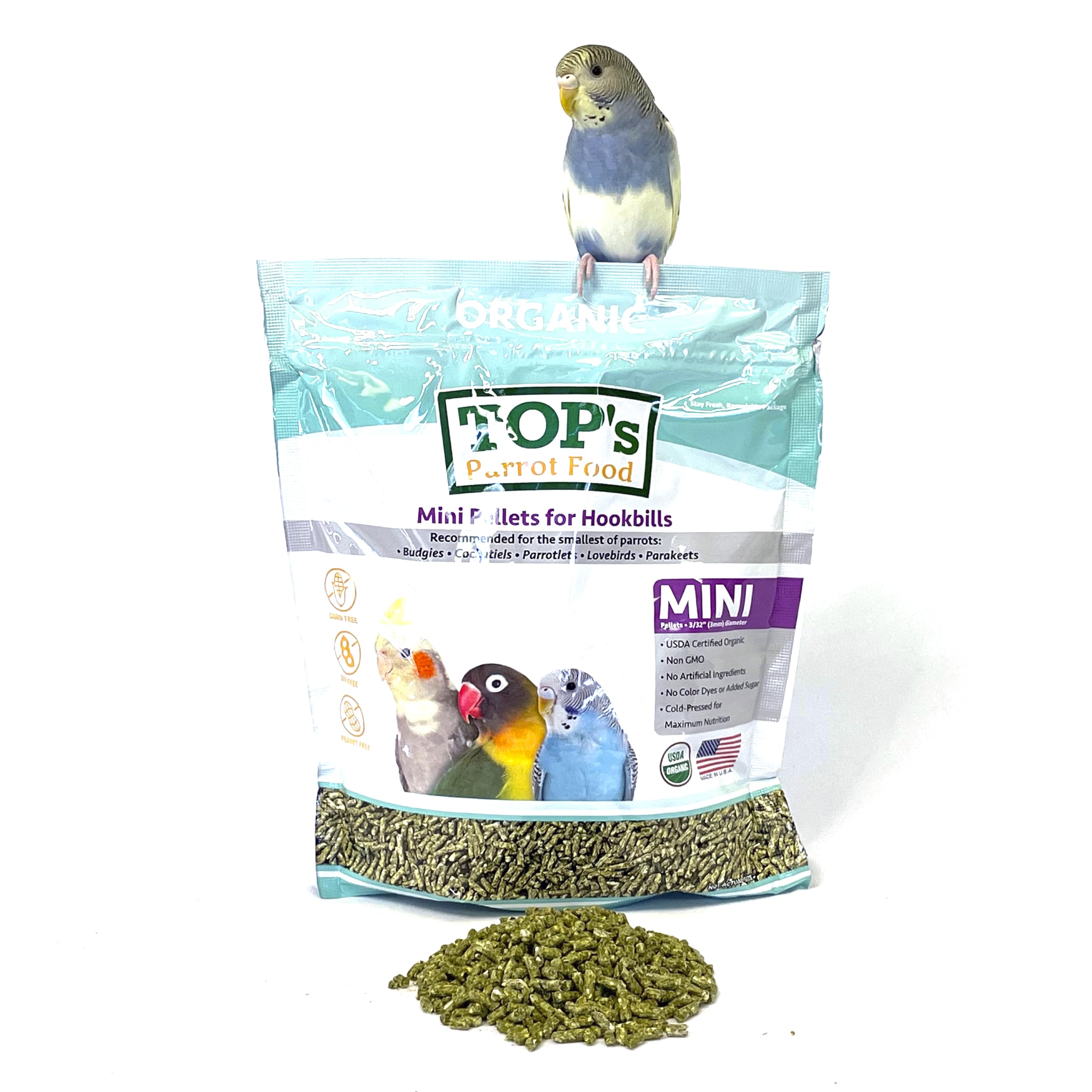
This is the cleanest pellet option available. TOP’s is the only non-corn based, USDA Certified Organic complete diet pellet on the market. Most competitors use GMO corn as their primary filler ingredient, which offers little nutritional value and can contribute to liver stress over time. TOP’s formula instead uses human-grade organic grains, vegetables, and legumes cold-pressed to retain natural enzymes and vitamins.
The mini pellets measure just 3/32 of an inch in diameter, making them ideal for budgies, parrotlets, lovebirds, and cockatiels. Verified owners consistently report improved feather condition, brighter eyes, and more active behavior after switching from commercial seed mixes. The food is free of soy, peanuts, BHA, BHT, ethoxyquin, and all artificial colors — the only preservatives come from natural rosemary, rose hips, and citrus peel.
The one practical drawback is that some owners of very small birds — specifically parakeets — have found the mini pellets slightly too large for their beaks, resulting in initial rejection. Crushing the pellets slightly during the transition period solves this. A four-pound bag lasts roughly four months for a single budgie, making the per-day cost very reasonable for the ingredient quality offered.
Why we love it
- Only USDA Organic certified complete pellet on the market
- No corn, soy, peanuts, or artificial preservatives
- Cold-pressed manufacturing keeps natural nutrition intact
- High owner satisfaction with feather and energy improvements
Good to know
- Mini size may still be too large for some small parakeets
- Premium ingredient cost is higher than basic seed mixes
2. ZuPreem Natural Parrot Pellets (2-Pack)
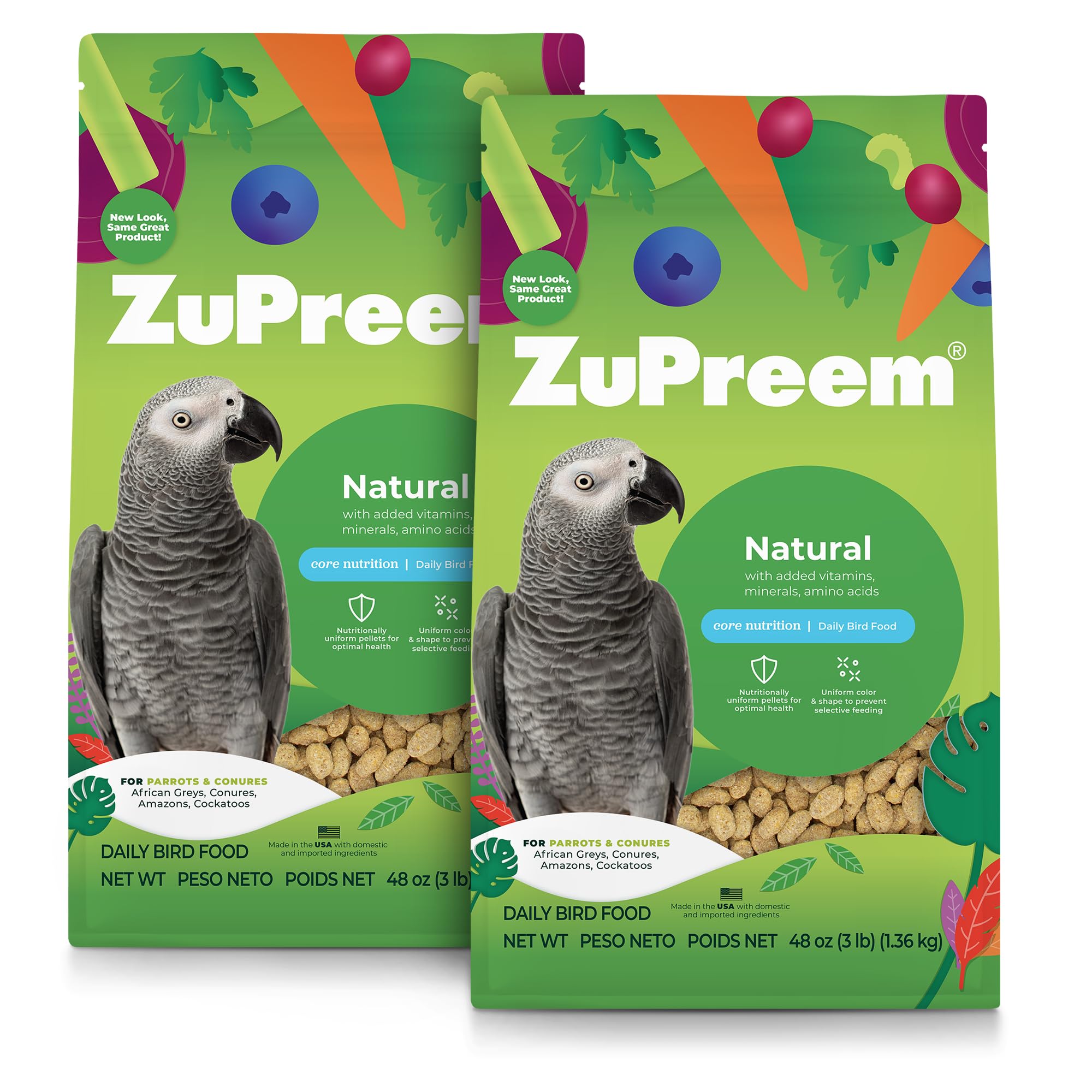
ZuPreem Natural is the gold standard for transitioning seed-rejecting birds onto a complete pellet diet without the struggle. Unlike the brightly colored ZuPreem Fruit Blend which contains artificial dyes, this Natural formula gets its color from real ingredients like carrots and celery. The pellets are specially sized for African Greys, Amazons, Eclectus, Conures, and small Cockatoos.
The 2-pack provides six pounds of food total, which represents excellent value per pound for a nutritionally complete, no-artificial-color pellet. The formula is fortified with essential vitamins, minerals, and amino acids specifically to support feather health, immune function, and digestion. A single verified owner reported successfully converting six African Greys from an unhealthy seed diet to these pellets over an eight-year period with zero health issues.
Transition instructions are straightforward: mix increasing amounts of pellets with the current food over seven to ten days. Some stubborn birds require extra patience, but the uniform savory pellet texture and lack of bright coloring helps acceptance. The low-fat profile is appropriate for medium to large parrots who tend toward obesity on seed-heavy diets.
Why we love it
- Zero artificial colors or flavors
- Excellent 2-pack value for 6 lbs total
- Proven track record for converting seed-addicted birds
- Fortified specifically for medium and large parrot species
Good to know
- Not certified organic; contains corn and soy
- Transition from seeds can take up to two weeks
3. Kaytee Fiesta Big Bites Small Parrot & Conure Food

Kaytee Fiesta Big Bites is designed for owners who want a visually stimulating, texturally varied diet that encourages natural foraging behavior. The blend contains larger premium ingredients — whole grains, seeds, real pieces of pineapple, carrot, and coconut — specially selected for small parrots and Conures. This is not a complete pellet diet; it is a fortified blend meant to be a significant portion of the daily diet.
The nutritional profile includes added prebiotics and probiotics for digestive support and omega-3 fatty acids for skin, feather, brain, and heart health. This food is backed by over 150 years of Kaytee’s pet nutrition experience. The larger chunk sizes reduce waste compared to fine seed mixes, and the inclusion of dried fruits and vegetables provides natural antioxidants that support the immune system.
The primary limitation is that, like all seed-containing blends, it allows for selective feeding — birds may eat the tasty pieces and leave the more nutritious grains behind. It is best used as a foraging supplement or enrichment component in conjunction with a complete pellet base. Owners of smaller birds like Conures and Parakeets report high engagement and reduced boredom at feeding time.
Why we love it
- Encourages natural foraging behavior with varied textures
- Contains real fruit and vegetable pieces
- Fortified with prebiotics, probiotics, and omega-3s
- Reputable brand with decades of formulation expertise
Good to know
- Selective feeding possible — birds may pick out favorite pieces
- Not a complete pellet diet; best as a supplement
4. ZuPreem Sensible Seed Blend
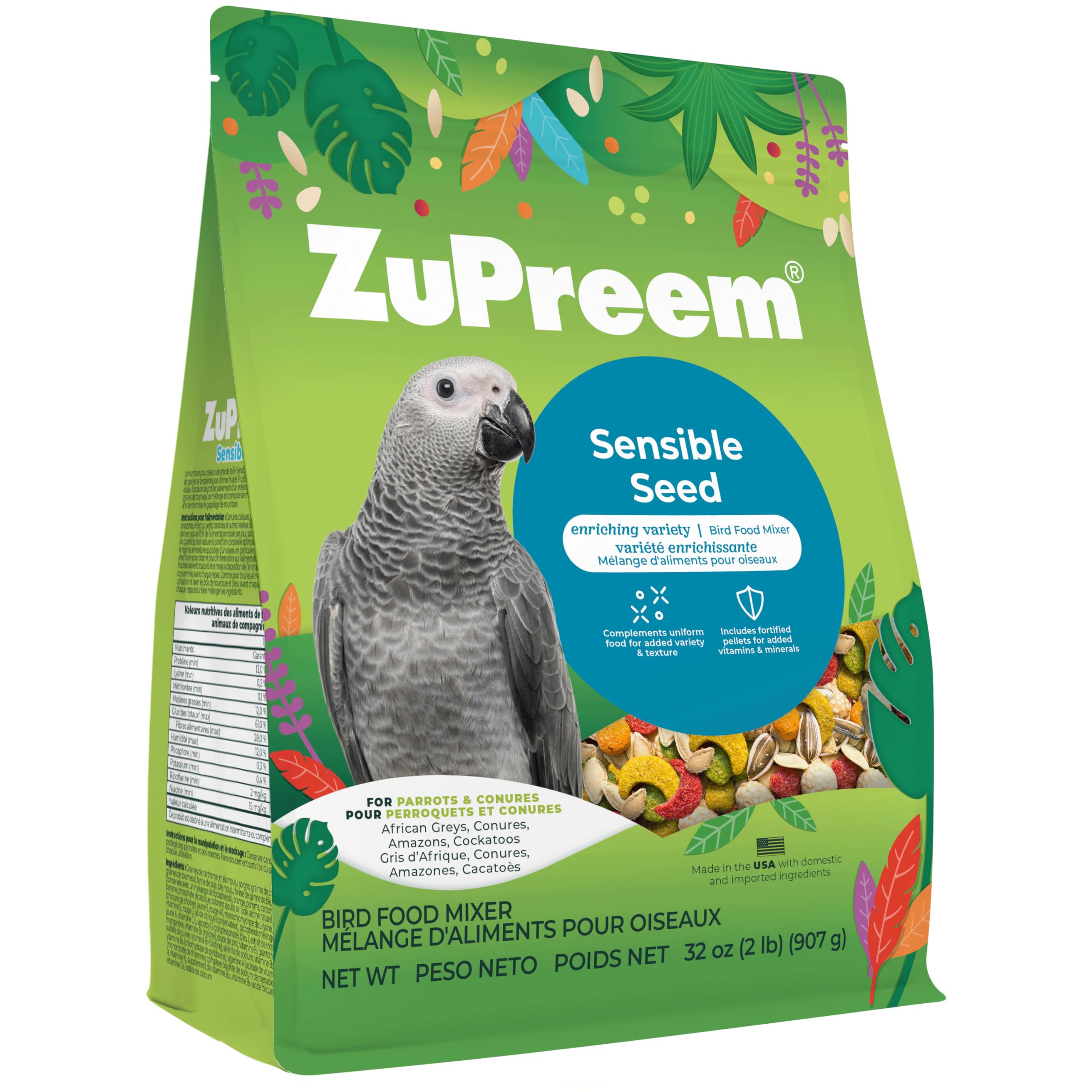
ZuPreem Sensible Seed is a targeted solution for the bird owner caught in the transition zone between all-seed and all-pellet. The bag combines pellets with a curated selection of seeds — safflower, white milo, squash seeds, and whole buckwheat — plus ground corn to provide some nutritional variety. The manufacturer recommends serving this blend as up to 30% of the bird’s total diet.
This blend is specifically designed to be an intermediate step, not a permanent destination. The idea is to reduce the seed component slowly while increasing the pellet portion. It works best for African Greys, Conures, Caiques, Senegals, and Amazons. The ground corn and buckwheat provide a better nutrient profile than standard seed mixes, though corn remains a controversial filler ingredient for some owners focused on organic diets.
Verified owners who use this product appreciate the interactive feeding experience — the variety of textures and shapes encourages foraging behavior and fights boredom. The 2-pound bag size makes it an accessible entry point for owners unsure how their bird will respond. It is not a complete diet on its own, so pairing it with a primary pellet like ZuPreem Natural is recommended for balanced daily nutrition.
Why we love it
- Ideal stepping stone from all-seed to all-pellet diet
- Enriches feeding experience with varied textures
- Suitable for multiple medium and large parrot species
- Backed by a 100% satisfaction guarantee
Good to know
- Contains corn and peanuts (potential allergens)
- Intended as only 30% of the diet, not a standalone food
5. Bird Street Bisto Parrot Food

Bird Street Bistro takes a completely different approach: cookable parrot food. This variety pack contains four blends — Viva La Veggies, Apple Berry, Southern Feast, and Cinna Spice Delight — that you prepare in three to fifteen minutes by simply adding hot water. The ingredients are 100% natural with no fillers, sugars, or sulfites. Each blend includes freeze-dried fruits, air-dried vegetables, whole grains, low-fat nuts, and health-promoting spices like Ceylon Cinnamon.
The cooked format offers unique benefits: the warm, soft texture mimics the fresh food parrots would encounter in the wild, making it highly palatable even for picky eaters. The inclusion of blueberries provides Vitamin C and K for feather health, while coconut offers essential minerals. Ceylon Cinnamon is specifically noted for supporting heart health. This food is suitable for all sizes from parakeets to macaws.
The main limitation is the higher cost per serving compared to dry pellets. Additionally, because it is a cooked food, leftovers must be refrigerated and used within a few days, which requires more planning than scooping dry food from a bag. However, for owners wanting to provide the freshest, most natural diet possible without the labor of preparing individual ingredients, this variety pack delivers a level of nutrition and variety that dry formulations cannot match.
Why we love it
- All-natural ingredients with no fillers, sugars, or sulfites
- Cookable in 3-15 minutes for a warm, fresh meal
- Four distinct flavors prevent diet boredom
- Includes health-spices like Ceylon Cinnamon
Good to know
- Higher cost per serving compared to dry pellets
- Requires refrigeration and quicker consumption after cooking
FAQ
Can I feed my parrot only seeds?
How do I know if my parrot is allergic to corn or peanuts?
What is the difference between cold-pressed and extruded pellets?
Final Thoughts: The Verdict
For most bird owners, the best parrot food winner is TOP’s Parrot Food Mini Pellets because it is the only USDA Organic, non-corn based, cold-pressed complete diet pellet available — delivering the highest ingredient purity with zero artificial additives. If you need a proven, budget-friendly pellet option for medium to large parrots, grab the ZuPreem Natural Parrot Pellets 2-Pack. And for enrichment and variety that mimics wild foraging, nothing beats the Bird Street Bisto Variety Pack for freshness and ingredient transparency.