
A parrotlet’s tiny body burns energy fast, but its liver is fragile — seed blends loaded with sunflower and peanuts wreck their health quickly. The wrong bag of food shortens lifespan more than any other care mistake, yet most commercial mixes are just junk dressed up with colorful packaging. You need a formula that delivers dense nutrition without the cheap fillers that cause obesity and fatty liver disease in these miniature parrots.
I’m Mo Mahin — the founder and writer behind Furric. My research compares protein-fat ratios, ingredient sourcing standards, and pellet-versus-seed nutritional density specifically for small hookbills, drawing on feeding trial data and owner-reported health outcomes from thousands of verified purchases.
After analyzing dozens of formulas, I’ve identified the five most reliable options to help you choose the best parrotlet food for your bird’s unique metabolic needs.
How To Choose The Best Parrotlet Food
Parrotlets have the highest metabolic rate per gram of any parrot species, but their small size means even minor nutritional imbalances cause outsized damage. Selecting the right food requires understanding three specific metrics that generic bird food guides ignore.
Protein Content and Fat Ceiling
Aim for a formula with 14-18% crude protein and no more than 8% crude fat. Parrotlets require quality amino acids for feather regeneration, but excess fat — especially from sunflower and peanuts — leads to obesity and lipoma formation. KikiBirds’ 16% protein and 7% fat profile hits this sweet spot precisely. Anything above 10% fat should only be used as a treat, never as a staple.
The Corn and Soy Problem
Most mass-market pellets list corn as the first ingredient because it’s cheap, not because it’s nutritious. Corn has a high glycemic index that disrupts a parrotlet’s glucose regulation, and genetically modified corn is a common allergen trigger. Soy adds unnecessary phytoestrogens that can interfere with reproductive hormones. The cleanest formulas — like TOP’s line — explicitly exclude both ingredients and use oat groats, barley, and buckwheat as the carbohydrate base.
Pellet Size and Crunch Factor
A parrotlet’s beak measures roughly 8-10 millimeters. Pellets larger than 6 millimeters force the bird to chip pieces away, creating waste and reducing intake. The ideal pellet diameter sits around 3/32 inch (roughly 2.4mm), which fits the beak channel and crumbles easily. Cold-pressed pellets, such as those from TOP’s Mini Pellet line, retain more natural enzymes because they aren’t cooked at high temperatures, improving digestibility.
Quick Comparison
On smaller screens, swipe sideways to see the full table.
| Model | Category | Best For | Key Spec | Amazon |
|---|---|---|---|---|
| TOP’s Mini Pellets 4 lbs | Cold-Pressed Pellet | Complete daily nutrition | 3/32″ pellet, corn-free | Amazon |
| Volkman Avian Science Diet 8 lbs | Seed Mix | Foraging enrichment | Saffron-forward seed mix | Amazon |
| KikiBirds Premium Seed Mix 1 lb | Husked Seed Mix | Low-fat seed option | 16% protein, 7% fat | Amazon |
| Psittacus Minor Pellets 1 lb | Extruded Pellet | European import formula | 100% non-GMO, no dyes | Amazon |
| TOP’s Napoleon’s Seed Mix 1 lb | Organic Seed | Certified organic blend | USDA Organic, human-grade | Amazon |
In‑Depth Reviews
1. TOP’s Parrot Food Mini Pellets 4 lbs

TOP’s Mini Pellets are the only USDA Certified Organic complete pellet on the market that uses zero corn as a binding agent, which alone puts it ahead of Roudybush and Harrison’s for parrotlet owners who want a clean ingredient deck. Each pellet measures 3/32 inch — roughly the width of a parrotlet’s beak — and the cold-pressing process preserves natural enzymes that high-heat extrusion destroys. The formula relies on oat groats, barley, and hulled millet for carbohydrates instead of GMO corn, and natural preservatives like rosemary extract and rose hips replace synthetic BHA and BHT.
Owner reports consistently mention that birds transition more willingly to this pellet than to extruded competitors because the texture resembles crushed seeds rather than uniform kibble. The 4-pound bag lasts roughly four months for a single parrotlet, making the per-serving cost competitive even at the premium price point. Some owners of particularly small beaked parrotlets note that each pellet still requires breaking into three pieces, though this is less labor-intensive than the 6mm pellets from other brands.
The bag seals tightly and the cold-pressed pellets retain a fresh, grassy aroma rather than the stale grain smell of mass-produced pellets. Multiple long-term users report their birds maintained stable weight and vibrant feathering through the full bag cycle. For owners who want one bag that covers 100% of a parrotlet’s daily nutritional needs without supplements, this is the safest bet.
Why we love it
- Cold-pressed, not heat-extruded — natural enzymes survive the process
- Zero corn or soy, eliminating GMOs and fillers
- USDA Organic certification provides third-party verification
- Mini diameter matches parrotlet beak size closely
Good to know
- Some parrotlets still need pellets broken smaller
- Premium pricing makes it a higher upfront investment
- Strong natural scent may seem unusual at first
2. Volkman Avian Science Diet Parrotlet Food 8 lbs
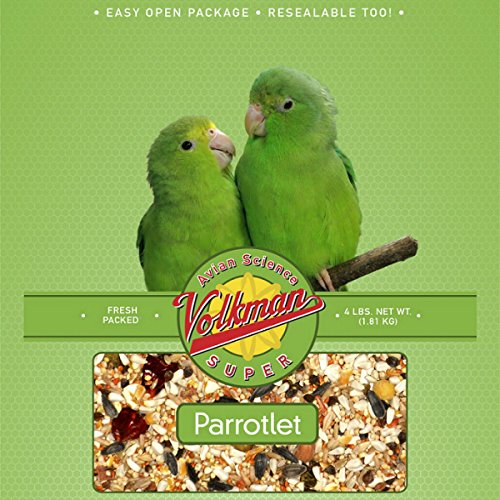
Volkman’s Parrotlet formula is the only species-specific seed mix that puts safflower at the front of the ingredient panel rather than sunflower, which makes a meaningful difference for long-term liver health. Safflower seeds deliver essential fatty acids at roughly half the fat content of black oil sunflower, reducing caloric density while still satisfying a parrotlet’s natural foraging instincts. The 8-pound bag is the largest volume in this lineup, giving owners the lowest per-ounce cost among all five products reviewed here.
The seed profile includes canary grass seed, white millet, oat groats, and hulled millet, with small amounts of dried vegetables like carrot and pepper providing texture variety. Long-term owners report their birds staying on this mix for eight to ten years without health declines, as long as fresh vegetables and a high-quality pellet supplement the diet. The mix is dust-free and arrives in a heavy-duty resealable bag that protects against moisture in humid climates.
Because this is a seed-based product, it should not constitute more than 30% of a parrotlet’s total daily intake. Owners feeding seed as the primary diet need to monitor fat intake closely — the safflower-forward formula helps, but it isn’t a complete pellet replacement. Many owners use this specifically as a foraging reward or bedtime snack to keep birds actively working for their food.
Why we love it
- Safflower, not sunflower, is the primary seed ingredient
- 8-pound bag offers exceptional bulk value
- Encourages natural foraging behavior with varied textures
- Dust-free formulation reduces respiratory irritation
Good to know
- Seed-only — must be supplemented with pellets and fresh foods
- Small amounts of dried corn present in the blend
- Fat content requires portion control for sedentary birds
3. KikiBirds Premium Parrot Food 1 lb
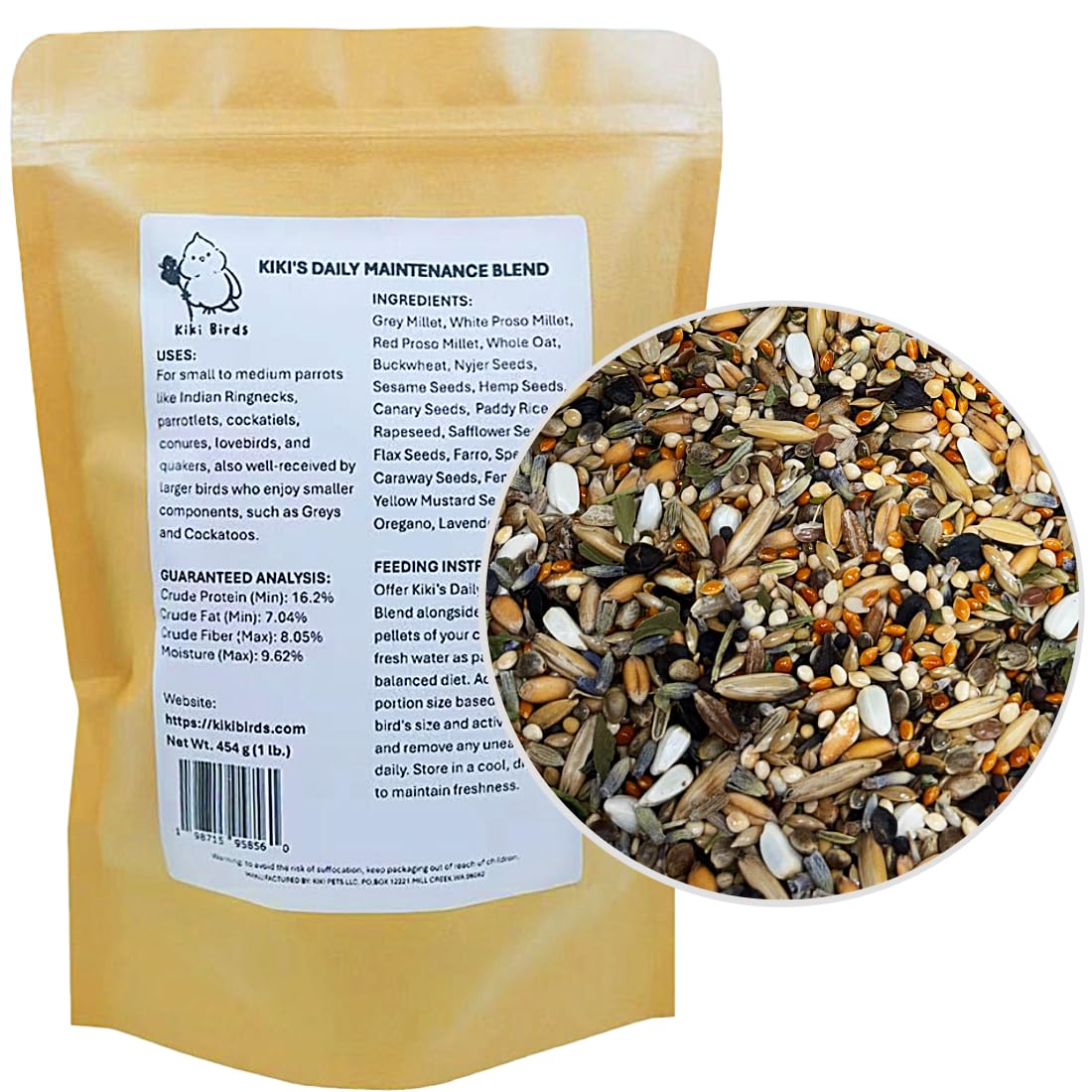
KikiBirds achieves a 16% protein and 7% fat ratio using buckwheat, flaxseed, and hemp seed as primary ingredients — a nutritional profile that aligns perfectly with what avian nutritionists recommend for parrotlets. The seed blend contains no corn, soy, sunflower, or peanuts, which eliminates the three most common allergens and fat bombs found in standard parakeet mixes. Every seed in the bag is husked, meaning the bird must crack each piece open individually, providing both mental stimulation and beak exercise that mimics wild foraging behavior.
Customers consistently describe the mix as smelling “fresh and fragrant” compared to the stale, dusty odor of competing blends. The inclusion of rapeseed (canola) adds omega-3 fatty acids that support feather quality, while the absence of artificial vitamins means the nutrition comes from whole food sources rather than synthetic coatings. Reviewers note that even picky birds who normally flip seeds out of their bowl will eat the entire mix once they recognize the texture difference.
At 1 pound, this bag is a trial-sized investment for owners unsure whether their bird will accept a non-standard seed blend. The packaging comes from a Washington State facility that dates every bag, and the resealable zipper maintains freshness longer than the typical double-tape seal. The main trade-off is that the small black hemp seeds can get flipped out by birds who prefer larger pieces — a minor behavioral quirk rather than a quality issue.
Why we love it
- Precise 16% protein and 7% fat suited to parrotlet metabolism
- Husked seeds provide natural beak exercise
- No corn, soy, sunflower, or peanuts means no cheap fillers
- Omega-3s from flax and hemp support feather condition
Good to know
- Small bag size needs more frequent reordering
- Some birds flip out the tiny hemp seeds
- Not a complete diet — pair with pellets for balanced nutrition
4. Psittacus Minor Pellets 1 lb

Psittacus Minor is an extruded pellet manufactured in Europe exclusively for lovebirds, parrotlets, and green-cheek conures, and its nutritional density reflects the stricter additive regulations enforced by the European Food Safety Authority. The formula provides a fruity natural flavor without artificial coloring or synthetic antioxidants, relying instead on natural tocopherols for preservation. Each pellet is sized for the bite force of a 30-gram bird, and the extrusion process cooks the grains thoroughly to improve starch digestibility — an important factor for birds transitioning from a seed-heavy previous diet.
Multiple owner reports highlight that fussy birds who rejected other brands — including a documented case of a caique parrot who refused countless seed-to-pellet transitions — accepted Psittacus Minor almost immediately. The 450-gram bag is compact, and the manufacturer recommends storing opened pellets in an airtight container in a cool, dry location to preserve the natural flavor volatiles. Owners who paired these pellets with Psittacus Silex Grit reported smoother digestion and less undigested seed in droppings during the transition period.
The primary limitation is availability and bag size. Psittacus is a specialty European import, and stock can fluctuate on Amazon. The 1-pound bag is smaller than the TOP’s 4-pound offering, meaning owners will reorder more frequently. The fruity scent, while appealing to humans, contains natural flavor compounds that could theoretically trigger foraging behavior — some owners noted their birds became more active after switching to this brand.
Why we love it
- European manufacturing standards — no artificial dyes or synthetic preservatives
- Fruity natural scent attracts even the most resistant birds
- Extruded pellet improves digestibility over raw seed
- Species-formulated specifically for small hookbills
Good to know
- Smaller bag size requires more frequent purchases
- European import can have variable Amazon stock
- Fruity flavor may not suit birds accustomed to bland pellets
5. TOP’s Napoleon’s Seed Mix for Small Hookbills 1 lb

TOP’s Napoleon’s Seed Mix carries USDA Organic certification and qualifies as human-grade — meaning the oats, millet, and flax seeds inside are processed to the same standard as food intended for human consumption. This is a significant quality differentiator because USDA Organic certification prohibits synthetic pesticides and fertilizers at every stage of the growing and handling process. The label explicitly states no BHA, BHT, or ethoxyquin are added, and no artificial colors or sugars are used to enhance the appearance or taste of the seeds.
Owners of wheat-sensitive birds confirm this mix is wheat-free, which makes it a viable base for parrotlets with gluten or grain allergies. The bag includes oat groats, which are larger and more filling than the dust particles found in economy seed blends. Multiple owners report that even extremely picky budgies and parrotlets will eat the entire mix, ignoring only the flax seeds — a common pattern since flax’s texture is unfamiliar to most parrots raised on standard mixes.
The versatility of the feeding method is a standout feature: you can feed the seeds dry, or soak one part seed to three parts water for 8-10 hours to activate sprouting enzymes that increase nutrient bioavailability. Adding a splash of raw apple cider vinegar during soaking and rinsing before serving mimics the natural fermentation process that wild birds encounter. The 1-pound bag is an excellent test size, and owners who confirm acceptance can transition to the larger 3-pound bag for better per-serving economics.
Why we love it
- USDA Organic Certified — no synthetic pesticides or fertilizers
- Human-grade processing ensures the highest food safety standards
- Wheat-free, corn-free, and soy-free for allergen-sensitive birds
- Can be soaked or sprouted to boost enzymatic nutrition
Good to know
- 1-pound bag is small for multi-bird households
- Most birds ignore the flax seeds, creating some waste
- Seed-only diet requires pellet and fresh food supplementation
FAQ
Can parrotlets eat the same food as budgies or cockatiels?
How much food does a single parrotlet eat per day?
What signs indicate the food is too fatty for my parrotlet?
Final Thoughts: The Verdict
For most parrotlet owners, the best parrotlet food winner is the TOP’s Parrot Food Mini Pellets 4 lbs because its cold-pressed, corn-free, USDA Organic formula covers every nutritional requirement in a beak-appropriate size with zero fillers. If you want a bulk seed mix that encourages natural foraging behavior, grab the Volkman Avian Science Diet Parrotlet Food 8 lbs and use it as a supplement to a pellet foundation. And for a low-fat seed option with a precise 16% protein ratio, nothing beats the KikiBirds Premium Parrot Food 1 lb as a trial blend or rotational component.