
A seed-heavy diet is the single fastest way to shorten your cockatiel’s lifespan. Fatty, low-calcium seeds create obese, feather-plucking birds with fatty liver disease. The switch to a nutritionally complete pellet is the one dietary change avian vets agree on. But not all pellets are created equal — ingredient quality, pellet size, and processing method separate the foods that heal from those that simply fill a bowl.
I’m Mo Mahin — the founder and writer behind Furric. I’ve spent years cross-referencing ingredient labels, analyzing macronutrient profiles, and studying owner-reported health outcomes across dozens of bird food formulations to separate marketing fluff from genuine avian nutrition.
After reviewing the top contenders, the data is clear: the best pellets for cockatiels balance correct pellet diameter, cold-pressed or low-heat extrusion, and a protein-to-fat ratio that mimics a cockatiel’s natural semi-arid diet without relying on GMO corn or artificial preservatives.
How To Choose The Best Pellets For Cockatiels
Not all parrot pellets suit a cockatiel’s smaller beak and faster metabolism. Three specific variables determine whether a bag of pellets will improve your bird’s health or end up as cage-floor dust.
Pellet Diameter and Texture
A cockatiel’s beak is designed for cracking small grass seeds, not wrestling with large parrot-sized nuggets. Pellets sized 3/32” to 1/8” are ideal. Any larger forces the bird to work excessively, leading to rejection and wasted food. Crunchy, dense pellets encourage foraging, while soft, crumbly pellets create mess and potential respiratory dust.
Ingredient Purity: Corn, Soy, and the “GMO” Question
Most budget pellets use GMO corn and soybean meal as cheap protein fillers. Corn is high in sugar and omega-6 fatty acids, contributing to fatty liver disease in sedentary cockatiels. Premium formulations replace corn with quinoa, millet, sesame seeds, and legumes. An organic or non-GMO certification is a strong signal, but the ingredient list itself — specifically the absence of corn as the first ingredient — tells the real story.
Processing Method: Extruded vs. Cold-Pressed
High-heat extrusion (the most common method) breaks down heat-sensitive vitamins like thiamine and vitamin A, which manufacturers then must spray back onto the pellets. Cold-pressed or low-temperature extrusion preserves natural nutrient profiles and avoids the need for synthetic coating. Cold-pressed pellets also have a tighter crumb structure, reducing dust and waste.
Quick Comparison
On smaller screens, swipe sideways to see the full table.
| Model | Category | Best For | Key Spec | Amazon |
|---|---|---|---|---|
| TOP’s Mini Pellets | Premium | Health-conscious owners wanting organic | 3/32″ cold-pressed, no corn or soy | Amazon |
| Mazuri Small Bird | Mid-Range | Birds transitioning from seed | Mixed particle size, flaxseed omega-3s | Amazon |
| Psittacus Mini | Mid-Range | European formula, low-fat diet | Non-GMO, 9-15% body weight intake | Amazon |
| Kaytee Forti-Diet Egg-Cite | Mid-Range | Birds needing extra protein & fatty acids | Real egg protein, omega-3s, honey | Amazon |
| LAFEBER’S Classic Avi-Cakes | Value | Treats, enrichment, picky eaters | Non-GMO, human-grade, avi-cake form | Amazon |
In‑Depth Reviews
1. TOP’s Parrot Food Mini Pellets
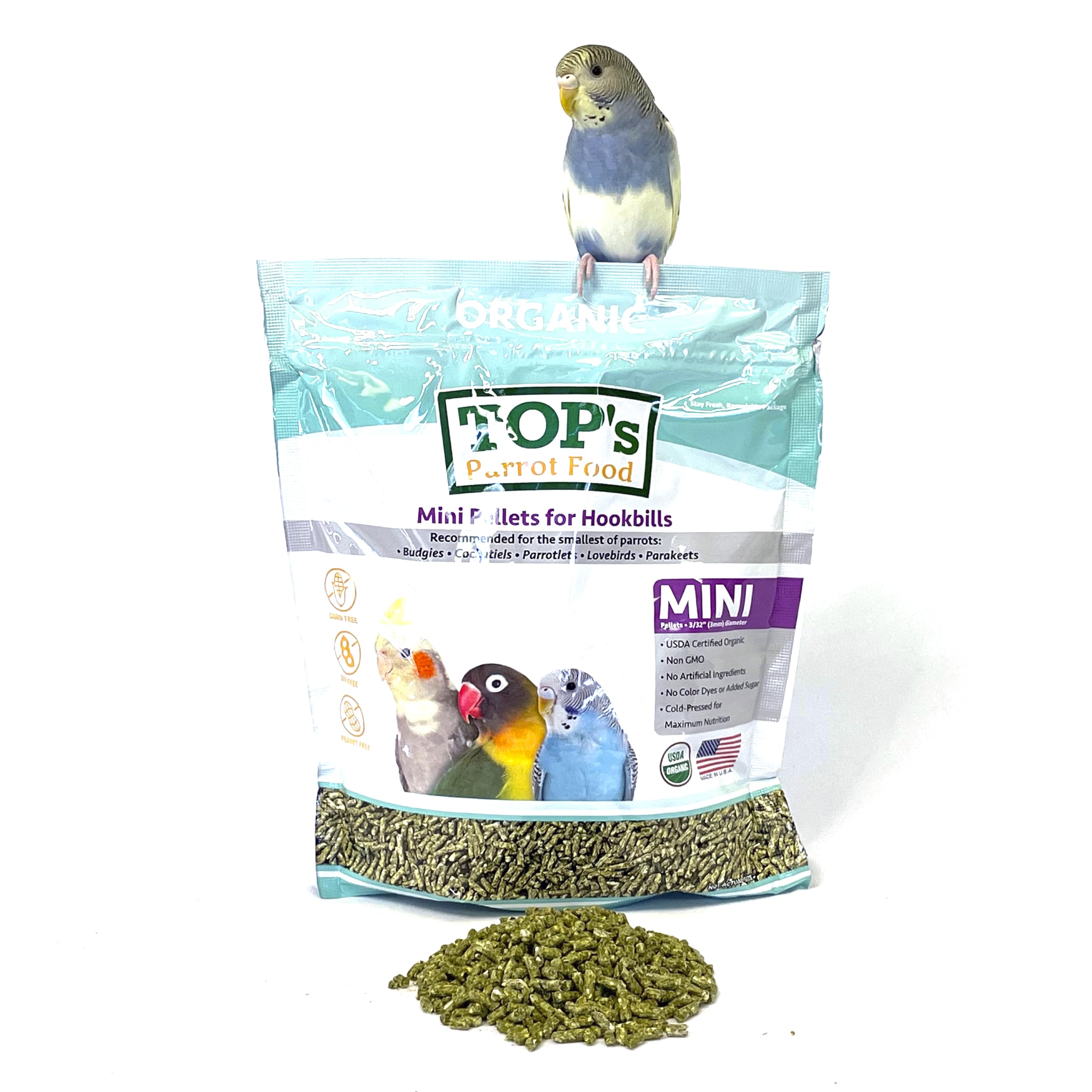
TOP’s Mini Pellets are the only USDA-certified organic complete diet in this lineup, and the ingredient list reads like a health-food store aisle — organic sunflower seed, quinoa, pumpkin, dandelion leaf, kelp, rose hips, and cayenne. No corn, no soy, no GMOs. The 3/32-inch diameter is nearly perfect for cockatiels, though some smaller individuals may still need to break them. The cold-pressed method preserves natural vitamins without synthetic spray-coating, and owners consistently report less waste and more consistent consumption compared to extruded pellets.
The fresh, herbal smell (described as “natural greens” by multiple buyers) differs from the sweet vanilla aroma of mainstream pellets, which can throw off seed-addicted birds during transition. A three- to four-week gradual mixing with seeds usually solves this. Owners of 20+ year old cockatiels on TOP’s report noticeably brighter feathers and more active behavior within two months of switching.
The 1-pound bag is expensive per ounce, but the dense nutrition means birds eat less volume while getting more. One budgie owner reported a 4-pound bag lasting four months. For the guardian willing to pay for organic, GMO-free, cold-pressed nutrition, this is the benchmark against which other pellets should be measured.
Why we love it
- USDA organic, cold-pressed, no corn, soy, or added sugar
- Dense nutrition reduces waste volume significantly
- Highly positive long-term health reports from experienced owners
Good to know
- Small cockatiels may still need to break 3/32″ pellets in half
- Price per bag is higher than any other option here
2. Mazuri Nutritionally Complete for Small Birds

Mazuri’s “mixed particle size” approach is deliberately designed to stimulate natural foraging behavior — your cockatiel must sort through small, medium, and larger crumbles to find preferred bites. This mental engagement is valuable for bored indoor birds prone to feather plucking. The inclusion of ground flaxseed provides a direct source of omega-3 fatty acids for skin and feather health without relying on fish oil.
The formula is marketed as a veterinary diet with no artificial colors or flavors, and the price per pound sits comfortably in mid-range territory. Real owner reports note that while smaller particles are eagerly eaten, the larger pieces in the mix can be challenging for a standard cockatiel beak — one owner explicitly described this as “better suited for a slightly larger bird.” The bag holds 2.5 pounds, which for a single cockatiel lasts roughly six to eight weeks.
A 25-year-old cockatiel that had stopped eating entirely began eating again after being offered Mazuri — a testament to both the palatability and the appeal of the varied texture. If your cockatiel is a picky eater that needs foraging enrichment, this mix encourages active feeding better than uniform pellets.
Why we love it
- Mixed sizes encourage natural foraging and mental stimulation
- Ground flaxseed provides reliable omega-3 source
- Strong anecdotal success with geriatric and picky birds
Good to know
- Larger pieces may be too big for some cockatiels to comfortably manage
- Not organic or specifically non-GMO certified
3. Psittacus Mini Complete Pellet Diet

Psittacus Mini is a European-manufactured extruded pellet engineered specifically for species that naturally consume seeds with low fat content — cockatiels, sun conures, and Galah cockatoos. The formula is 100% non-GMO with no artificial coloring or synthetic antioxidants, and it smells distinctly fruity (several owners describe it as smelling like apples) which helps mask the “medicine” odor that dissuades seed-addicted birds.
The packaging is compact — a 450-gram bag (roughly 1 pound) — and the company warns that this pellet should constitute no less than 70-80% of the total diet by weight. It is designed for non-reproductive maintenance periods, meaning the fat and protein levels are intentionally low to prevent obesity during inactive months. Owners of 27-year-old cockatiels report the pellet size is “just right,” and the fruity aroma and flavor appear to accelerate seed-to-pellet transitions.
A small number of owners noted a desire for slightly cleaner ingredient sourcing — the formula is non-GMO but not organic, and the ingredient list does include corn as a component (though not the primary filler). For the guardian specifically targeting low-fat nutrition during winter months or for an overweight bird, the Psittacus Mini hits a precise macronutrient target that generalist pellets miss.
Why we love it
- Low-fat formula specifically designed for cockatiel-sized birds
- Fruity aroma and flavor ease seed-to-pellet transitions
- Non-GMO with no artificial preservatives or colors
Good to know
- Contains corn as an ingredient, though not dominant
- 1-pound bag is small; frequent reordering needed for multi-bird homes
4. Kaytee Forti-Diet Egg-Cite for Cockatiels

Kaytee Forti-Diet Egg-Cite delivers what its name promises: high-quality animal protein from real egg plus honey for palatability. The chunk form is larger than a uniform pellet — more like a bite-sized piece — and the omega-3s are included explicitly for skin and feather health. For a cockatiel in heavy molt or one recovering from feather damage, the protein-density in this formula supports feather regrowth better than grain-heavy alternatives.
The 5-pound bag is the largest in this comparison, making it the most economical option on a per-pound basis. Owners consistently report their cockatiels “love” this food; one owner described switching to Kaytee after a seed-only diet and seeing immediate acceptance. The egg-and-honey flavor profile is strongly appealing, which is a double-edged sword — birds love it, but it can make transitioning away from this food difficult.
The chunk form means some pieces exceed the ideal 1/8-inch diameter for cockatiels. Birds that prefer small, uniform pellets may crack and drop larger chunks, creating mess. Avian nutritionists generally favor a formulated pellet over a chunk mix for consistent daily nutrition, but for a bird that rejects uniform pellets entirely, Kaytee’s taste-first approach works well.
Why we love it
- Real egg provides superior animal-based protein for feather condition
- 5-pound bag offers the best cost-per-day value here
- High palatability works well for seed-to-diet conversions
Good to know
- Chunk form creates more waste than uniform pellets
- Contains corn as a primary ingredient
5. LAFEBER’S Classic Avi-Cakes
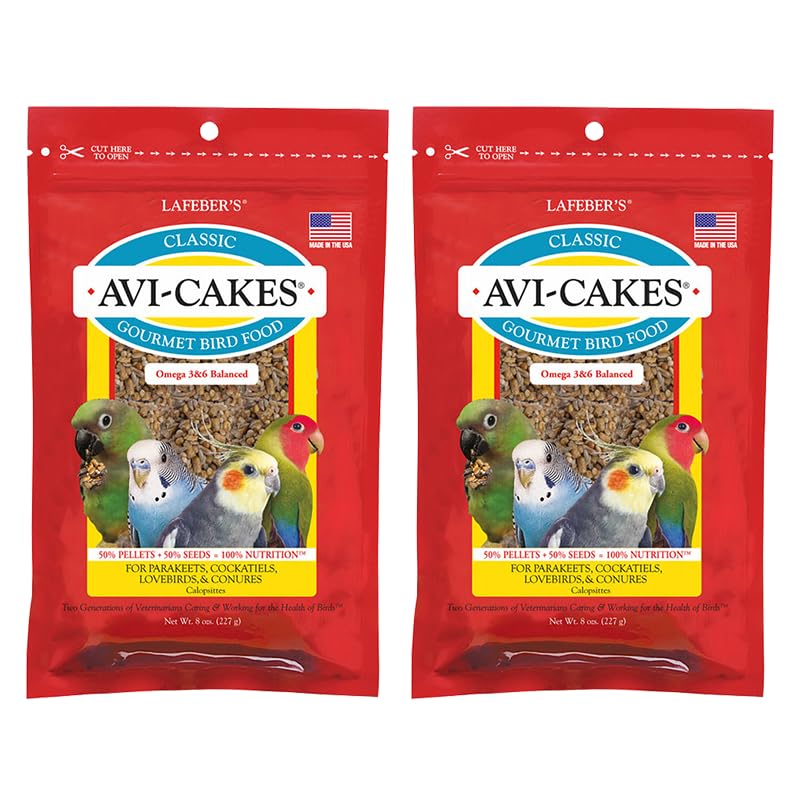
LAFEBER’S Avi-Cakes are not a traditional loose pellet — they are baked cakes of seeds, grains, and vegetables bound together with a non-GMO human-grade ingredient matrix. This structure makes them ideal as a training reward, a treat, or a transitional food for a cockatiel moving from a seed diet to pellets. Birds have to work to break off pieces, which provides beak exercise and foraging enrichment.
The 8-ounce pack of two cakes is relatively small; owners of single cockatiels reported a pack lasting roughly one week when used as a supplement. The human-grade ingredient claim means no artificial preservatives, colors, or flavors. Multiple reviewers with geriatric cockatiels (one owner had a 20-year-old amputee bird) reported the cakes were one of the few foods their birds consistently accepted alongside fresh greens and eggshells.
As a primary diet, Avi-Cakes lack the precise macronutrient balance of a complete pellet — they are best understood as a high-value enrichment food rather than a nutritional foundation. Owners looking for a complete daily pellet should pair this with one of the higher-tier options above, or use it during the adjustment period to make the new diet more appealing.
Why we love it
- Baked cake format provides mental enrichment and beak exercise
- Non-GMO, human-grade ingredients with no artificial additives
- Highly effective for coaxing picky eaters during diet transitions
Good to know
- Not a nutritionally complete primary diet — treat/supplement only
- Small package size requires frequent repurchase
FAQ
How many pellets should my cockatiel eat per day?
Can I mix different pellet brands in one bowl?
Are colored pellets safe for cockatiels?
Why does my cockatiel throw pellets on the floor?
Final Thoughts: The Verdict
For most guardians, the best pellets for cockatiels winner is the TOP’s Mini Pellets because it delivers organic, cold-pressed, corn- and soy-free nutrition in a size that fits a cockatiel’s beak with minimal waste. If you want a mixed-texture foraging experience to combat boredom, grab the Mazuri Small Bird. And for a budget-friendly enrichment treat that makes seed-to-pellet transitions painless, nothing beats the LAFEBER’S Classic Avi-Cakes.