
Ticks aren’t just a backyard nuisance—they bring Lyme disease, anaplasmosis, and a creeping unease every time your dog scratches or your kid runs through tall grass. A spray that looks good on a bottle but fails after the first rain is worse than no spray at all; it gives you false confidence while those eight-legged vectors keep feeding. The difference between effective tick control and wasted money comes down to two things: residual kill duration and whether the active ingredient actually breaks the tick’s life cycle on contact.
I’m Mo Mahin — the founder and writer behind Furric. I don’t test these formulas in a backyard over a weekend; I dig into the EPA registration data, parse the percent active concentrations, cross-reference owner accounts of tick die-off timelines, and compare coverage specs across concentrate, ready-to-spray, and natural oil formulations to find which products deliver a measurable reduction in tick pressure on your property.
Whether you need a synthetic barrier that holds for weeks or a plant-based perimeter safe for free-roaming pets, this analysis of the top five contenders will help you pick a pesticide for ticks that matches your tolerance for toxins and your lawn’s actual exposure level.
How To Choose The Best Pesticide For Ticks
A tick pesticide must do more than kill on contact—it needs to persist on foliage and ground litter long enough to intercept questing nymphs and adults that migrate into your yard over several days. Synthetic pyrethroids and natural oils behave very differently in sunlight, rain, and heat, so matching the chemistry to your property’s conditions is the first decision.
Active Ingredient and Concentration
The two main classes are synthetic pyrethroids (permethrin, bifenthrin) and plant-derived oils (cedarwood, lemongrass, peppermint). Pyrethroids provide residual control that can last two to four weeks, whereas natural oils typically break down faster and require more frequent reapplication. Look for a labeled percentage—a 10% permethrin concentrate is far more potent than a 0.5% essential oil blend.
Application Format and Coverage
Concentrates require mixing with water in a tank sprayer and give you precise control over dosage across large properties. Ready-to-spray hose-end bottles save time but lock you into a fixed dilution ratio. Pre-diluted trigger sprays work for spot treatments but burn through quickly if you need full-yard coverage. Check the square footage rating on the label—some cover 5,000 sq ft per bottle, others only 1,000.
Residual Duration and Rainfastness
A label that says “kills on contact” without specifying residual control means the spray stops working once it dries. Premium formulations bond to plant waxes and resist wash-off from light rain. If your area gets frequent showers, opt for a product that explicitly states it remains active for two weeks or more after drying.
Quick Comparison
On smaller screens, swipe sideways to see the full table.
| Model | Category | Best For | Key Spec | Amazon |
|---|---|---|---|---|
| Durvet Permethrin EC 10% | Synthetic Concentrate | Large property barrier control | 10% permethrin concentrate | Amazon |
| Cedarcide YardSafe | Natural Hose-End | Pet-safe full yard treatment | 5,000 sq ft per 32 oz | Amazon |
| Eco Defense Flea Tick Mosquito Spray | Natural Hose-End | Quick hose-attach application | 5,000 sq ft ready-to-spray | Amazon |
| Harris Flea and Tick Killer Spray | Synthetic RTU Spray | Indoor and perimeter spot treatment | 1-gallon ready-to-use spray | Amazon |
| Cedarcide All-Purpose Bug Spray | Natural RTU Spray | Personal and pet spot application | 16 oz ready-to-use spray | Amazon |
In‑Depth Reviews
1. Durvet Permethrin EC 10-Percent

Durvet Permethrin EC is a 10% emulsifiable concentrate that ticks don’t build quick resistance to because it attacks their nervous system on contact. At one ounce per gallon of water, you get a potent barrier spray that stays active on grass and leaf litter for up to four weeks when applied correctly. Users report dramatic mosquito and tick knockdown after one treatment, with many saying they saw zero ticks for the rest of the season when reapplied every 21 days.
This concentrate is designed for use on livestock, kennels, and large perimeter zones around homes. It mixes easily with water in any pump sprayer and covers thousands of square feet from a single 16-ounce bottle, making it the most cost-effective option for serious tick pressure on acreage. The product is labeled for use on dogs, horses, cattle, and multiple livestock species, though you should keep cats away from treated areas until the spray has dried completely.
The strong chemical odor is temporary and dissipates after drying, but users recommend wearing gloves and a mask during mixing. A few buyers noted that it can harm beneficial insects like bees if sprayed on blooming flowers, so precise targeting is essential. For anyone managing a wooded property or tall-grass border where ticks breed relentlessly, this is the most reliable synthetic option available.
Why we love it
- Extremely economical — a 16-oz bottle makes gallons of finished spray
- Proven residual activity for up to 28 days on vegetation
- Versatile for use on livestock, kennels, and perimeter yards
Good to know
- Must be diluted; not a ready-to-use product
- Toxic to bees and aquatic life if misapplied
- Strong scent during application requires ventilation
2. Cedarcide YardSafe
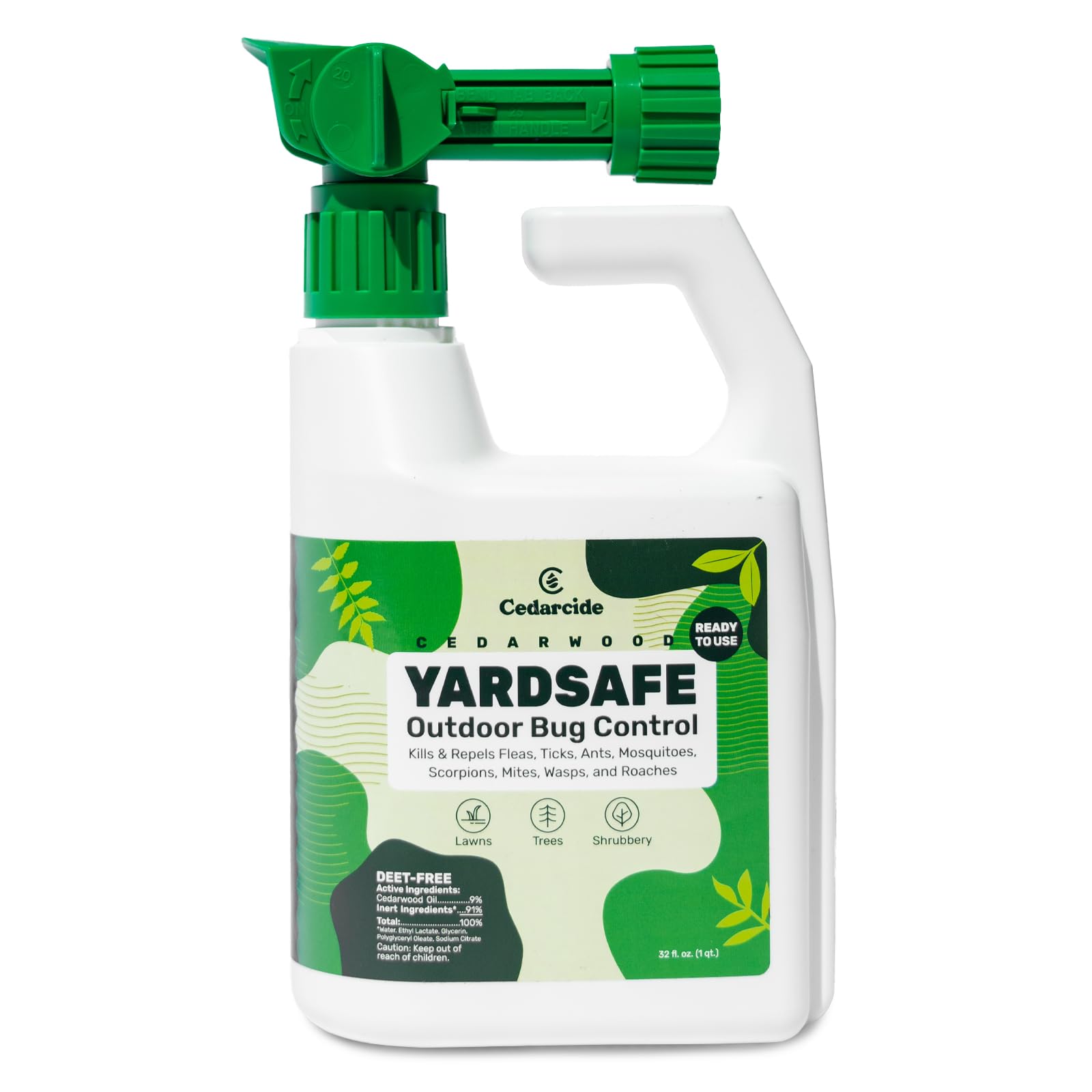
Cedarcide YardSafe uses cedar oil and lemongrass essential oils as its active ingredients, creating a natural barrier that ticks find repulsive on contact. The 32-ounce bottle attaches directly to a garden hose and covers up to 5,000 square feet, making it one of the easiest full-yard treatments for homeowners who want to avoid synthetic chemicals around children and pets. Many users report that ticks disappeared from their property within days and stayed gone for weeks with monthly reapplication.
The formula is rainfast once dry and does not require any waiting period before the family goes back outside. Owners of sensitive dogs and free-roaming cats appreciate that YardSafe won’t cause neurological reactions like permethrin-based sprays can, especially around felines. The cedar scent is pleasant—think of a fresh woodchip pile—and it doubles as a mosquito and chigger deterrent, which expands its value beyond tick control alone.
Because the active ingredients are natural oils, the residual duration is shorter than synthetic pyrethroids. Some users in hot, humid climates found they needed to reapply every 10 to 14 days rather than monthly. A few reviewers received the blue container version (9% cedar oil) instead of the white one with added lemongrass and noted reduced effectiveness. Stick with the white formula for the broader-spectrum coverage.
Why we love it
- No synthetic chemicals — safe for pets, kids, and beneficial insects
- Hose-end sprayer makes large-area application fast and effortless
- Pleasant cedar scent that doesn’t smell like a toxic chemical dump
Good to know
- Natural oils break down faster than synthetic pesticides
- May need reapplication every two weeks in heavy rain
- Some users report inconsistency between bottle versions
3. Eco Defense Flea, Tick, and Mosquito Spray

Eco Defense uses plant-based oils (peppermint, rosemary, and other botanicals) formulated into a ready-to-spray hose-end bottle that treats up to 5,000 square feet without any mixing or measuring. The spray targets adult ticks, larvae, and eggs, which means it breaks the reproductive cycle rather than just knocking down the active population. Owners of multiple dogs reported that their yards stayed tick-free for weeks after a single application, with no adverse reactions in their pets.
The application process is nearly frictionless: screw the bottle onto a garden hose, turn the water on, and walk the perimeter. Users highlight that the spray smells fresh and herbal rather than chemical, making it comfortable to apply without a respirator. The label suggests reapplication every 30 to 45 days, but reviewers in tick-heavy zones found that a 21-day interval delivered more consistent control, especially during peak spring and fall activity.
Some buyers received bottles with faulty spray nozzles that leaked or failed to siphon properly, which turned the application into a wet mess. A handful of users in heavy mosquito regions noted that while tick control was solid, the product did not eliminate mosquitoes as effectively. For a pure tick-focused solution that prioritizes safety and ease of use, this is a strong natural contender.
Why we love it
- Zero wait time after spraying — kids and pets can go right back outside
- Targets tick eggs and larvae, not just adults
- Mild, pleasant botanical scent
Good to know
- Reported quality-control issues with spray nozzle assembly
- Weaker on mosquitoes than dedicated mosquito sprays
- Natural formula may require more frequent reapplication
4. Harris Flea and Tick Killer Liquid Spray

Harris Flea and Tick Killer is a ready-to-use synthetic spray that kills ticks on contact when dry and continues to provide residual control for weeks after application. The one-gallon jug includes an extended trigger sprayer that reaches into baseboards, under furniture, and along door thresholds where ticks hitch a ride inside. Pet owners in tick-heavy regions reported that their dogs stopped scratching within an hour of the spray drying on carpets and bedding, and tick sightings dropped to zero after a thorough interior perimeter treatment.
The formula is odorless and non-staining, which makes it usable on upholstery, pet beds, and curtains without leaving visible residue or a chemical smell. It is EPA-registered for use in homes with people and pets, giving users confidence that the active ingredients are approved for indoor living spaces. The one-gallon size provides enough volume for multiple treatments, making it a practical option for households that need to reapply after vacuuming or laundering treated fabrics.
The biggest complaint across reviews is the spray nozzle, which many users found prone to clogging or losing prime after partial use. Some had to switch the liquid into a separate sprayer to get consistent flow. Additionally, the product is not for sale in Connecticut due to state regulations, so residents there will need an alternative. For indoor tick control on a budget, the formula itself performs well, but the delivery system requires patience.
Why we love it
- Odorless and non-staining on fabrics and upholstery
- Long residual kill continues working after the spray dries
- EPA-registered for use in homes with pets and children
Good to know
- Spray nozzle is unreliable and often fails mid-bottle
- Not available for sale in Connecticut
- Better suited for indoor/perimeter use than full-yard coverage
5. Cedarcide All-Purpose Bug Spray

Cedarcide All-Purpose Bug Spray is a 16-ounce ready-to-use spray made from cedarwood essential oil and other botanical extracts. It kills a broad range of insects on contact and deters ticks, fleas, ants, and mosquitoes from entering treated areas. Users spray it directly on clothing, pet bedding, patio furniture, and even their own skin as a repellent, with many reporting that ticks stopped crawling onto them during walks through wooded trails after pre-treating their pant legs and shoes.
The formula is non-toxic and safe for use on dogs and cats once dry, which makes it a go-to for people who want a chemical-free option they can carry in a backpack or keep in the car. The cedarwood scent is strong but pleasant, and it lingers on fabrics for hours, providing a sensory barrier that bugs actively avoid. Multiple reviewers used it on ant trails and spider infestations indoors with immediate knockdown results.
Because this is a ready-to-use spray in a small bottle, it is not designed for large-area yard treatment. Users who tried to cover an entire acre with the pint-sized sprayer ran out quickly and found the cost per square foot high compared to concentrates or hose-end options. A few also noted that the water-based version is less potent than Cedarcide’s original oil-based formula, requiring more frequent application for lasting tick control. For spot treatment or personal protection, it is a clean, effective tool.
Why we love it
- Safe to spray directly on pets, clothes, and skin
- Works as both a repellent and contact killer
- Light, natural scent that doesn’t feel harsh indoors
Good to know
- Small volume — not economical for full-yard spraying
- Water-based formula is less persistent than oil-based version
- Some users found it needed daily reapplication for heavy tick zones
FAQ
How often should I reapply a pesticide for ticks in my yard?
Can I use a pesticide for ticks indoors on carpets and pet bedding?
Do natural tick pesticides actually kill ticks or just repel them?
Final Thoughts: The Verdict
For most homeowners facing regular tick pressure, the pesticide for ticks winner is the Durvet Permethrin EC 10% because it delivers unmatched residual duration at a per-treatment cost that undercuts every ready-to-use spray. If you want a natural formula that won’t worry pet owners or beekeepers, grab the Cedarcide YardSafe. And for spot-treating indoors or treating a small yard without mixing chemicals, nothing beats the convenience of the Eco Defense Flea, Tick, and Mosquito Spray.