
Finding a probiotic that actually survives a dog’s acidic stomach and colonizes the gut is the difference between a supplement that works and one that just passes through. The market is flooded with blends that look good on the label but lack the colony-forming units (CFUs) and strain diversity to make a real impact on digestion, stool quality, or immune function. Pet owners are often left chasing symptoms—gas, loose stools, itching—without a reliable, daily solution.
I’m Mo Mahin — the founder and writer behind Furric. I’ve spent years analyzing veterinary formulation data, comparing CFU counts across hundreds of pet supplement SKUs, and studying aggregated owner feedback to find which pet probiotics deliver measurable gastrointestinal improvements.
Whether your pet suffers from chronic diarrhea, intermittent vomiting, or a dull coat linked to poor nutrient absorption, this guide breaks down the most effective strains and delivery forms. After hours of cross-referencing specs, you’ll know exactly which best pet probiotics option fits your dog or cat’s specific needs.
How To Choose The Best Pet Probiotics
Selecting the right probiotic requires looking past marketing fluff and focusing on the three pillars that separate effective supplements from placebos: strain types, CFU viability, and delivery form. A dog with chronic soft stool needs a different bacterial profile than a cat with post-antibiotic gut imbalance.
Strain Survivability and Colony-Forming Units
Not all bacteria make it past the stomach’s bile acids. Strains like Bacillus coagulans and Enterococcus faecium are spore-forming, meaning they have a protective shell that ensures they reach the intestines alive. Look for a minimum of 1 billion CFU per serving for noticeable stool-firming effects. Higher counts (2.5 billion+) are beneficial for acute diarrhea recovery.
Delivery Form and Palatability
Powders are the most versatile — they mix into wet food without texture issues, making them ideal for finicky felines or small-breed dogs. Soft chews work best for dogs who view supplements as treats, but they often contain lower CFU counts due to heat exposure during manufacturing. Capsules are rare in pet probiotics but can be hidden in pill pockets for dogs that refuse powder.
Prebiotic Synergy
A probiotic alone is like planting seeds in dead soil. Ingredients like fructooligosaccharides (FOS), chicory root, or pumpkin provide the fiber that feeds the good bacteria, allowing them to multiply. Formulas that combine probiotics with prebiotics (synbiotics) consistently show faster improvements in stool quality and reduced gas in owner reports.
Quick Comparison
On smaller screens, swipe sideways to see the full table.
| Model | Category | Best For | Key Spec | Amazon |
|---|---|---|---|---|
| Purina FortiFlora | Premium | Vet-recommended diarrhea relief | 100M CFU Enterococcus faecium | Amazon |
| WEALLIN 200-Count Chews | Mid-Range | Long-term value with 6 probiotic strains | 200 soft chews per bottle | Amazon |
| Royal Canin Probiotics | Mid-Range | Veterinarian-developed powder packets | 1.13B CFU Saccharomyces boulardii | Amazon |
| Only Natural Pet | Mid-Range | Dog and cat dual-species formula | 2.5B CFU per gram with FOS | Amazon |
| Rx Biotic by Rx Vitamins | Premium | Hypoallergenic & vet-approved daily care | Flavorless powder, vegetarian source | Amazon |
In‑Depth Reviews
1. Purina Pro Plan Veterinary Supplements FortiFlora Daily Probiotics

FortiFlora is the most veterinarian-recommended probiotic supplement in the U.S., and for good reason — it uses a single targeted strain, Enterococcus faecium SF68, at a guaranteed 1×10^8 CFU per sachet. This strain has published efficacy for managing acute diarrhea and restoring gut flora balance in both puppies and adult dogs. The powder format mixes invisibly into wet kibble, and the liver flavor base ensures even picky eaters don’t reject their meal.
Owner reviews consistently report stool firming within 48 to 72 hours, especially for dogs with antibiotic-induced colitis or stress-related loose stools. The 30-count box provides a full month of daily supplementation, aligning with the typical veterinary prescription cycle for dietary management of digestive upset. Because it’s a single-strain product, it’s less likely to cause gas or bloating in dogs with very sensitive GI tracts.
It’s worth noting that FortiFlora contains no prebiotic fiber — you may need to add a source like canned pumpkin for dogs that require extra bulking. Some owners also mention the packets are slightly underfilled when compared to premium brands, but the clinical track record makes this a first-line choice for acute cases.
Why we love it
- Veterinarian-tracked efficacy for diarrhea management
- Easy powder format requires no refrigeration
- Liver flavor is highly palatable for most dogs
Good to know
- Single-strain formula lacks prebiotic synergy
- Not suitable for cats despite small packet size
2. WEALLIN 200 PCS Probiotics for Dogs Soft Chews
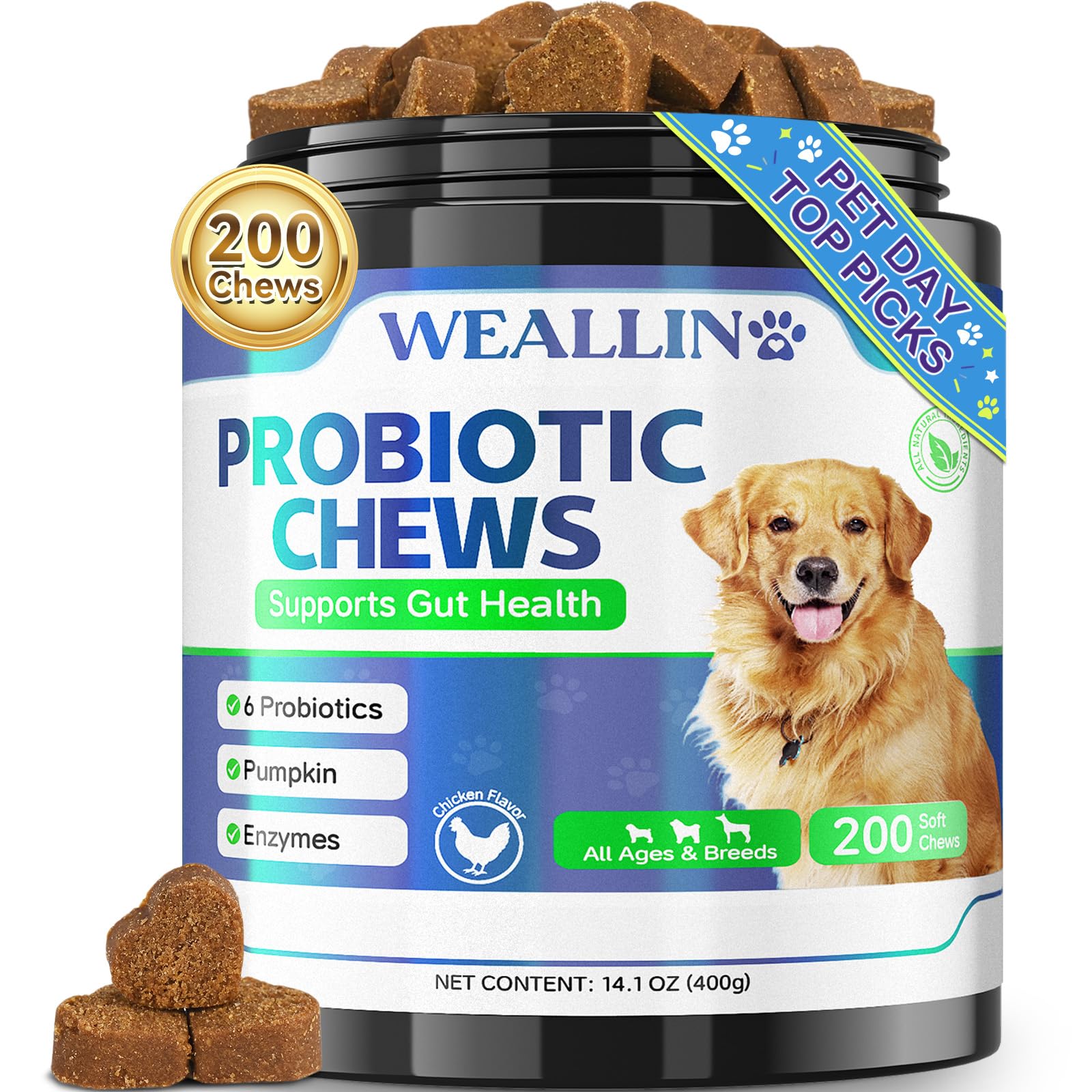
WEALLIN packs six distinct probiotic strains — including Lactobacillus rhamnosus, Bacillus coagulans, and Bacillus subtilis — into a chicken-flavored soft chew that dogs genuinely seem to enjoy. The 200-count bottle delivers a 2–3 month supply, depending on your dog’s weight, which makes it one of the most cost-effective options for multi-pet households. The inclusion of pumpkin, flaxseed meal, and chicory root provides prebiotic fiber to help feed the introduced bacteria.
Owner feedback highlights noticeable improvements in energy levels and coat quality after about three weeks of use — likely due to better nutrient absorption from a balanced gut microbiome. Several reviewers noted that their dogs’ chronic yeast infections and paw licking subsided, which aligns with the immune-modulating effects of Bacillus subtilis. The chews are soft enough to break apart for small breeds but hold together well enough to use as training rewards.
One consideration is the chicken flavor — dogs with poultry allergies will need an alternative. Additionally, the CFU per chew isn’t listed explicitly, but owner reports suggest efficacy comparable to mid-tier powders. If your dog refuses powders or capsules, these chews offer a stress-free daily solution.
Why we love it
- Six-strain diversity with prebiotic fiber source
- 200 chews deliver exceptional value per dose
- Works as a daily treat — no force-feeding needed
Good to know
- Chicken base unsuitable for poultry-allergic pets
- Exact CFU count per chew is not on the label
3. Only Natural Pet Probiotic Dog and Cat Supplement

Only Natural Pet stands out because it’s explicitly formulated for both dogs and cats — a rare feature in the probiotic chew category. Each serving delivers 2.5 billion bio-available microorganisms per gram, anchored by a prebiotic base of fructooligosaccharide (FOS) for sustained bacterial colonization. The bacon flavor is designed to appeal to both species, though cat owners should note the chew size might require breaking into quarters for smaller felines.
Long-term users report that this formula excels at managing intermittent loose stools and helping dogs on antibiotics avoid the common post-treatment GI crash. The inclusion of digestive enzymes (amylase, protease, cellulase) adds a layer of support for breaking down proteins and fibers, making it a solid choice for senior pets with declining pancreatic function. Multiple owners mentioned that their dogs’ flatulence decreased significantly within the first week.
On the downside, some cats reject the bacon flavor outright — cats are notoriously finicky about novel tastes. The chews are also more crumbly than competing brands, leaving residue in the bag. For multi-pet households where both a dog and a cat need daily gut support, this is the most convenient single-bottle solution available.
Why we love it
- Formulated for both dogs and cats in one chew
- 2.5B CFU with FOS prebiotic for gut colonization
- Includes digestive enzymes for senior pet support
Good to know
- Bacon flavor may be rejected by discerning cats
- Chews tend to crumble, creating powder in the bag
4. Royal Canin Probiotics for Dogs Digestive and Immune Health
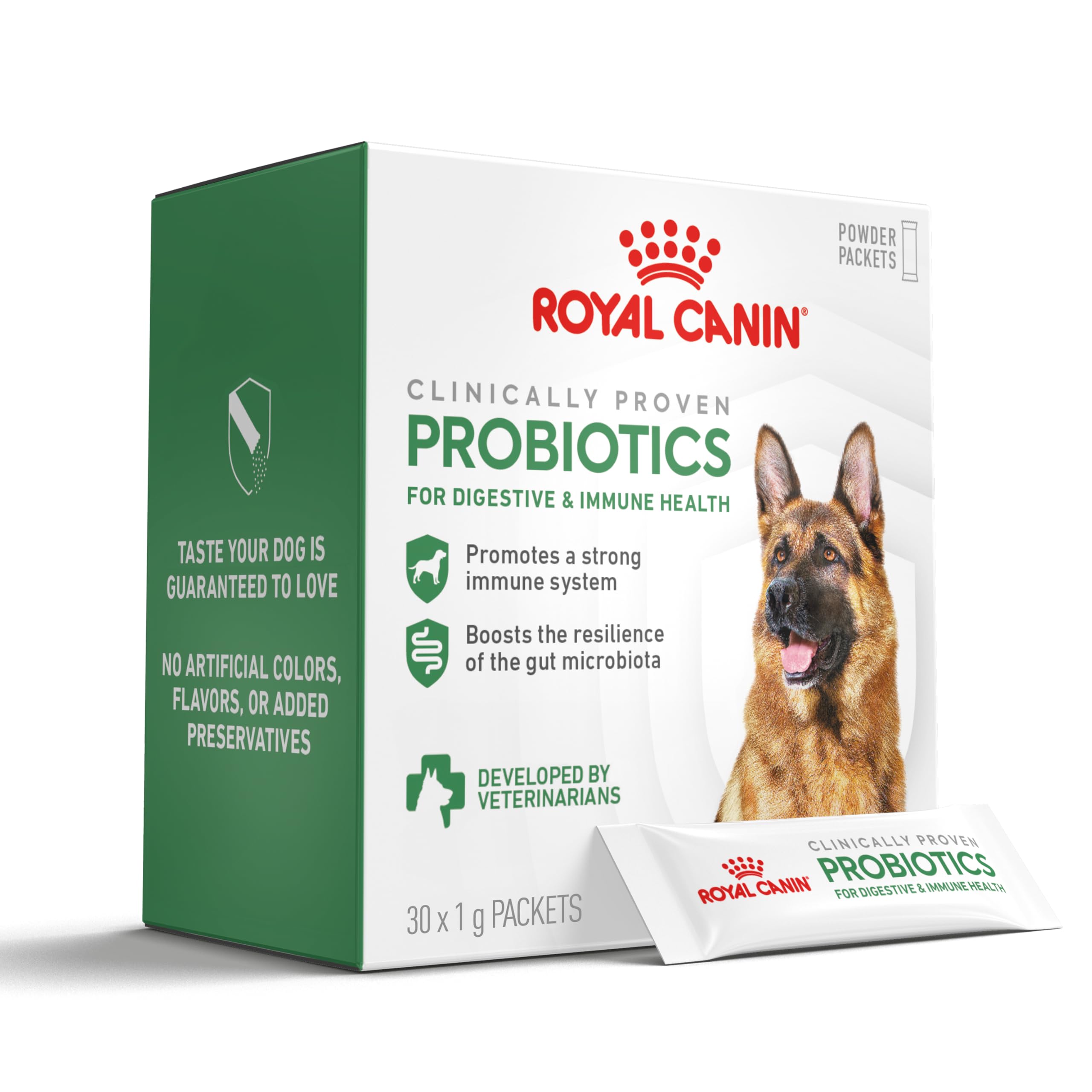
Royal Canin’s approach is distinct: it uses a live yeast probiotic, Saccharomyces boulardii CNCM I-1079, rather than bacterial strains. Yeast probiotics are naturally resistant to antibiotics and stomach acid, making them ideal for dogs on concurrent antibiotic therapy or those with chronic colitis. Each 1-gram packet delivers 1.13×10^9 CFU, which is on the higher end for a single-serve sachet. The powder is odorless and flavorless, allowing it to be sprinkled over dry kibble without changing the taste profile.
Owner reviews from owners of elderly shih tzus and German shepherds with inflammatory bowel disease describe near-immediate resolution of loose stools — often within 24 hours of the first dose. The yeast strain also exhibits anti-inflammatory properties in the intestinal lining, which may explain why some dogs tolerate kibble better after starting this supplement. The 30-count box matches a monthly cycle, and the packets are individually sealed for freshness.
Some owners, however, felt the effect plateaued after a few months, suggesting that bacterial diversity might be needed for long-term maintenance. The yeast probiotic does not colonize the gut permanently — it works as a transient protector — so daily administration is necessary. For acute digestive flare-ups or antibiotic recovery, this is a top-tier choice.
Why we love it
- Antibiotic-resistant yeast strain survives GI transit
- Odorless and flavorless — no food rejection
- Clinically proven for colitis and stress-related diarrhea
Good to know
- Transient colonization requires daily dosing
- May need bacterial strain rotation for long-term use
5. Rx Vitamins Rx Biotic Probiotic Powder for Dogs and Cats

Rx Biotic by Rx Vitamins is a premium, hypoallergenic probiotic powder engineered for pets with multiple food sensitivities. It is flavorless, vegetarian-sourced, and free from common allergens like dairy, soy, gluten, and corn — making it one of the few options safe for pets with environmental or dietary triggers. The powder is ultra-fine and dissolves completely in wet food, leaving no gritty residue that finicky cats might detect.
Adopters of this product report long-term stabilization of stool quality, with many noting that their dogs’ chronic soft poop episodes reduced to zero after consistent use. One owner of a standard poodle with a sensitive stomach saw a full 6-month period without any diarrhea episodes after starting this supplement. The manufacturer also includes a warranty, which signals confidence in the product’s manufacturing consistency. The 2.12-ounce container provides roughly 60 daily servings for a 50-pound dog.
The main drawback is the price point — it sits at the top of the spectrum, making it less accessible for multi-pet households. Some owners also mention that the powder clumps slightly if exposed to moisture in the bag, so proper storage is essential. For pets with confirmed allergies or extremely sensitive GI tracts, this is the safest, most reliable daily powder on the market.
Why we love it
- Hypoallergenic and free from top allergens
- Flavorless formulation suits both dogs and cats
- Ultra-fine powder dissolves without detection
Good to know
- Premium pricing limits multi-pet feasibility
- Powder clumps if bag seal is not airtight
FAQ
How long does it take for pet probiotics to work?
Can I give my cat a probiotic formulated for dogs?
What is the difference between a probiotic and a prebiotic?
Should I use probiotics if my pet is on antibiotics?
Final Thoughts: The Verdict
For most dog owners seeking a reliable, vet-backed solution for loose stools, the best pet probiotics winner is the Purina Pro Plan FortiFlora because its Enterococcus faecium strain has the strongest clinical track record for acute diarrhea management. If you prefer a soft chew that doubles as a daily treat with six-strain diversity, grab the WEALLIN 200-Count Chews. And for multi-species households or allergy-prone pets, nothing beats the hypoallergenic safety of Rx Biotic by Rx Vitamins.