
A pigeon’s digestive system depends on two separate inputs: a daily seed mix for energy and a mineral grit for grinding food in the gizzard. Many keepers grab a single bag, assuming all-in-one is better, but the most balanced approach treats these as separate nutritional channels—one providing calories, the other supplying calcium and trace minerals for shell strength and bone density.
I’m Mo Mahin — the founder and writer behind Furric. I’ve spent years comparing feed formulations, analyzing guaranteed analyses, and studying owner reports across specialist loft forums to understand exactly which protein percentages, pea inclusions, and grit compositions deliver real results for racing homers, fancy breeds, and backyard flocks alike.
Whether you’re maintaining a breeding loft or caring for a single rescued bird, the right pigeon feed provides the precise nutritional foundation your birds need to stay healthy, active, and strong.
How To Choose The Best Pigeon Feed
Pigeon feed is a straightforward consumable, but small formulation differences—pea percentage, seed size, protein floor, and mineral density—have outsized effects on crop function, eggshell quality, and flight stamina. The two most important distinctions are whether a product is a complete seed mix or a grit supplement, and whether it avoids corn for warmer months.
Understand the Grit vs. Seed Mix Distinction
Seed mixes provide carbohydrates and protein. Grit provides the insoluble particles (oyster shell, granite, charcoal) that lodge in the gizzard and physically grind seeds. A pigeon needs both. If you only feed seed, the bird cannot fully break down whole grains, leading to undigested pass-through and potential crop impaction. Grit should be offered free-choice in a separate dish, not mixed into the daily ration.
Check the Pea Content and Protein Percentage
Field peas are the protein anchor in premium pigeon feed formulations. A mix containing 22% to 25% peas delivers a crude protein reading of 13% to 13.25%, which supports feather molting, squab growth, and muscle maintenance during racing season. Mixes with lower pea content or higher corn volumes shift the carbohydrate‑to‑protein ratio toward fat gain, which is undesirable for active birds.
Evaluate Seed Size for Your Breed
Smaller breeds such as Old German Owls, Frillbacks, and Barbary doves struggle with large whole corn kernels or oversized field peas. A mix with fine millet, oat groats, and smaller lentils ensures every bird consumes a balanced diet rather than picking around big pieces. Conversely, large racing homers can handle whole corn and broad peas without issue. Match the particle size to your loft’s breed composition.
Quick Comparison
On smaller screens, swipe sideways to see the full table.
| Model | Category | Best For | Key Spec | Amazon |
|---|---|---|---|---|
| Morning Bird Pigeon Grit | Grit Supplement | Digestion & bone support | 4.5 lbs (3-Pack, 1.5 lbs each) | Amazon |
| Des Moines No Corn Pigeon Mix | Seed Mix | Summer feeding, no-corn diet | 8 lbs, 13% protein, 22% peas | Amazon |
| Des Moines Dove Mix w/ Pellets | Complete Feed | Doves & small pigeons | 8 lbs, 40% protein pellets | Amazon |
| Des Moines Red Pigeon Grit & Mineral-Plus | Grit Supplement | Mineral intake & shell strength | 8 lbs, anise flavor | Amazon |
| Des Moines Premium 22 Pigeon Mix | Seed Mix | Variety & fussy eaters | 8 lbs, 25% peas, 22 grains | Amazon |
In‑Depth Reviews
1. Morning Bird Pigeon Grit (3-Pack)
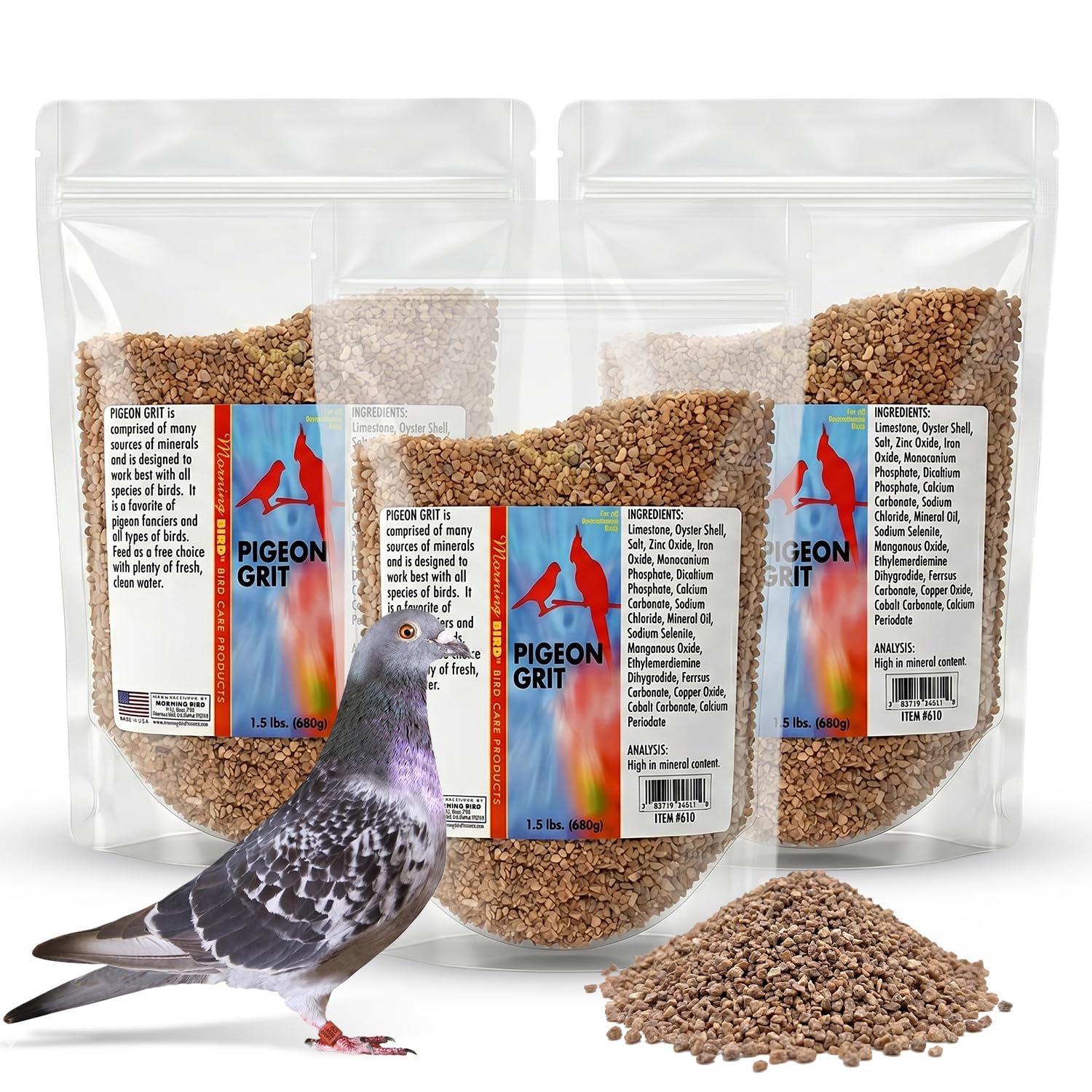
This 4.5-pound three-pack of grit is the single most practical entry point for any pigeon keeper who does not yet have a dedicated mineral supplement. Each 1.5-pound bag comes in a resealable plastic pouch that locks out humidity, so you can open one bag at a time while the other two stay fresh. The granule texture is fine enough for small breeds yet abrasive enough to support gizzard grinding, and owners report that even picky birds consume it eagerly when offered free-choice.
The grit formulation includes oyster shell and granite chips, providing the calcium carbonate needed for strong eggshells in breeding hens and the insoluble silica required for mechanical digestion. One reviewer noted that an elderly pigeon regained mobility and vigor after switching to this grit, which suggests the mineral profile effectively supports bone density in aging birds. The product is manufactured in Morgan Hill, California, with consistent particle sizing across batches.
A handful of owners observed that some oyster shell pieces are flat and sharp-edged, which could pose a risk for very young squabs with tender crops. If you are feeding nestlings under three weeks old, crush the grit slightly finer with a rolling pin before offering it. Beyond that minor precaution, this three-pack delivers the best grit value per pound in this lineup, and it pairs perfectly with any of the seed mixes below.
Why we love it
- Resealable bags maintain freshness across multiple feedings
- Fine granule size works for small breeds and large homers alike
- Made in the USA with consistent mineral composition
Good to know
- Some oyster shell pieces arrive flat and sharp-edged
- Three-pack format may be excess for a single-bird household
2. Des Moines Feed No Corn Pigeon Mix (8 lbs)

This no-corn formula is the smartest mid-range choice for keepers who want a clean, low-carbohydrate seed mix without paying premium-tier prices. The ingredient list reads: milo, hard red winter wheat, Canadian field peas, white proso millet, and buckwheat. With corn removed from the equation, the carbohydrate load drops to approximately 69%, which makes this blend especially suitable for summer months when pigeons tend to overconsume high-starch grains and become lethargic or overweight.
The 13% crude protein floor is anchored by the 22% field pea inclusion, providing a steady supply of lysine and methionine for feather regrowth during molt. Owners of German Owl pigeons and Racing Homers specifically praise the seed quality, noting that the mix stays fresh and free of dust or mold. One reviewer mentioned that the seeds arrived clean enough to feed immediately without rinsing, which reduces prep time for multi-bird lofts.
A recurring note from buyers is that the milo and whole wheat pieces are relatively large, and some smaller pigeon breeds struggle to pick them up. If you keep Toy Modenas or Oriental Frills, consider crushing the larger seeds or mixing this with a finer millet-based feed. The 8-pound bag is a practical volume for two to three birds lasting roughly three to four weeks, and the resealable packaging holds freshness well between feedings.
Why we love it
- No corn reduces summer weight gain and feed waste
- High pea content supports steady protein intake during molt
- Clean, dust-free seeds straight from the bag
Good to know
- Large seed pieces may be too big for very small breeds
- Requires separate grit supplement for complete nutrition
3. Des Moines Feed Dove Mix with Pigeon Pellets (8 lbs)

This dove mix is unusual because it incorporates 40% protein pigeon pellets into a grain base, effectively creating a complete feed that reduces selective eating. Pigeons and doves naturally pick out preferred seeds first, leaving nutritionally valuable grains uneaten. The pellet inclusion ensures that every mouthful delivers a balanced ratio of crude protein (13%), fat (3.5%), and fiber (6%), regardless of which seeds the bird chooses to eat first.
The grain base contains milo, white proso millet, wheat, safflower, oat groats, buckwheat, flax, and Austrian winter peas, creating a diverse seed profile that mimics a wild foraged diet. Owners of ringneck doves and small pigeons report that this mix produces almost zero waste—birds eat the pellets and seeds completely rather than flinging them onto the floor. One reviewer specifically mentioned that the fine seed size eliminated the mess of scattered husks that other blends left behind.
The main drawback is that the porcine meat and bone meal inclusion makes this feed non-vegetarian, which matters if you prefer a plant-only diet for ethical or religious reasons. Additionally, the pellet component can become stale faster than whole seeds in humid environments. Store this bag in a cool, dry container and use it within six weeks of opening to maintain palatability. For keepers who prioritize a clean loft floor, this mix is the most effective waste-reducing option in this guide.
Why we love it
- Pellet inclusion prevents selective eating and reduces waste
- Fine seed size suits small doves and toy pigeon breeds
- Complete nutritional profile reduces need for additional supplements
Good to know
- Contains porcine meat and bone meal—not plant-based
- Pellets can lose freshness faster than whole seeds in humidity
4. Des Moines Feed Red Pigeon Grit & Mineral-Plus Mix (8 lbs)
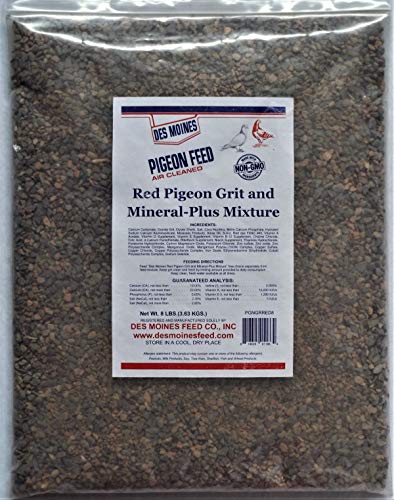
This 8-pound bulk grit bag is the right choice for larger lofts where the Morning Bird three-pack would run out too quickly. The anise-scented formula acts as a mild attractant, encouraging shy eaters to consume the mineral mix consistently. Owners consistently report that their pigeons “go crazy” for this grit, which suggests the anise flavoring successfully masks the bitter taste of granite and limestone that birds sometimes reject in unscented alternatives.
The mineral-plus designation implies a broader trace element profile than standard oyster shell grit, likely including iron, manganese, and zinc that support feather pigmentation and immune function. One reviewer with a mixed flock noted that the grit is nearly the only one their birds fight over, and they had to provide a second bowl to keep aggressive eaters from monopolizing the dish. That level of palatability is rare in mineral supplements and speaks to the formulation’s appeal.
The 8-pound packaging is a simple heat-sealed bag without a resealable closure, so you will need to transfer the grit into an airtight container after opening to prevent moisture absorption. Some keepers also reported that a small percentage of the pieces are too large for medium and small pigeons, causing birds to pick them out and fling them aside. If you keep primarily small breeds, sift the grit through a quarter-inch mesh before offering it to reduce waste.
Why we love it
- Anise scent attracts picky birds to consume grit consistently
- Bulk 8-pound size suits multi-bird lofts and reduces reorder frequency
- Broad mineral profile supports feather health and immune function
Good to know
- Bag lacks a resealable closure; transfer to a container after opening
- Some pieces are too large for small pigeon breeds
5. Des Moines Feed Premium 22 Pigeon Mix (8 lbs)

This 22-grain mix is the most diverse seed blend in this guide, incorporating Canadian field peas, maple peas, Austrian peas, lentils, roasted soybeans, hemp seed, flax, brown rice, vetch, and several corn varieties. The 25% pea content delivers a 13.25% crude protein floor, the highest in this lineup, making it the best choice for breeders, racers, or any keeper focused on maximizing muscle development and feather quality during peak season.
The variety serves a practical purpose beyond nutrition: fussy eaters that ignore monotone blends often eat eagerly from this mix because the rotating textures and flavors keep them engaged. One reviewer noted that their Barbary doves preferred this mix even over millet spray, which is a strong endorsement given that millet spray is typically a dove’s gold standard. Owners of larger breeds like Racing Homers and Giant Runts report that their birds seem more energetic and maintain better body condition on this blend compared to simpler mixes.
The trade-off is that several seeds in this blend—whole corn, large lentils, and whole soybeans—are too big for small fancy breeds like Old German Frills and Parlor Rollers. Multiple owners of small birds mentioned needing to pick out the large pieces or switch to a finer mix after ordering this one. If your loft contains only large breeds, this is the premium pick worth the extra spend. If you have mixed sizes, reserve this for the big birds and use the Des Moines No Corn Mix for the small ones.
Why we love it
- Widest grain diversity reduces boredom and encourages consistent eating
- Highest pea content (25%) supports peak protein for breeding and racing
- Fresh, hearty aroma indicates high-quality seed storage
Good to know
- Large seeds unsuitable for small fancy pigeon breeds
- Higher fat content (5.75%) may require portion control in summer
FAQ
Can pigeons survive on seed alone without grit?
What does “no corn” mean in a pigeon feed label?
How often should I change the grit in my pigeon’s cage?
Is a 13% protein pigeon feed enough for breeding pairs?
Final Thoughts: The Verdict
For most pigeon keepers, the smartest starting point is the pigeon feed combination of the Morning Bird Pigeon Grit three-pack paired with the Des Moines No Corn Pigeon Mix because this covers both grit digestion and a clean seed base without corn fillers or oversized grains. If you need a bulk grit that attracts fussy eaters, the Des Moines Red Grit & Mineral-Plus offers anise scenting and a wider mineral profile at 8 pounds. And for racing homers or breeding lofts that demand the highest pea content and grain diversity, the Des Moines Premium 22 Mix delivers the most complete seed-based nutrition in this guide.